

Note: This article contains affiliate links. If you click on these links and make a purchase, I may earn a small commission at no extra cost to you. This helps support my research and content. Read my full affiliate disclosure here.
Picking the right Honda Accord radiator matters because the cooling system keeps your engine running reliably and prevents damage from overheating. A properly matched radiator restores cooling capacity and reduces the chance of recurring leaks or temperature spikes. This guide covers our seven shortlisted radiators for the Honda Accord and explains the practical strengths each type brings. We evaluated cooling performance, construction quality, and ease of installation to help you find the workhorse replacement that fits your needs. Read on for clear buying guidance before you choose a unit.
Looking for other parts? See all Honda Accord parts & accessories.
Top Picks at a Glance
| Best Reviewed A top-rated pick with lots of positive feedback | PHILTOP Radiator Compatible with 2008–2012 Honda Accord 2.4L (With Transmission Oil Cooler) |  |
| Most Popular A crowd favorite that many people choose with confidence | Readair Radiator Assembly with Transmission Oil Cooler for Honda Accord 2.4L (2003–2007) |  |
| Best Quality Built to a higher standard if you want something more solid | Denso 2213229 Radiator (center position) |  |
| Best Budget The cheapest option that still gets the job done reliably | Torchbeam Aluminum Replacement Radiator for 2003–2007 Honda Accord 2.4L |  |
| Most Sold A high-volume bestseller chosen again and again | KAX CU2990 Engine Cooling Radiator for 2008–2012 Honda Accord 2.4L |  |
| Best Value for Money The sweet spot between price and what you get | DWVO Complete Radiator Compatible with 2008–2012 Honda Accord 2.4L L4 |  |
| Best Overall The best all-around choice for most situations | TRQ Radiator, Aluminum Core, Direct-Fit for 2008–2012 Honda Accord 2.4L |  |
1. PHILTOP Radiator Compatible with 2008–2012 Honda Accord 2.4L (With Transmission Oil Cooler)
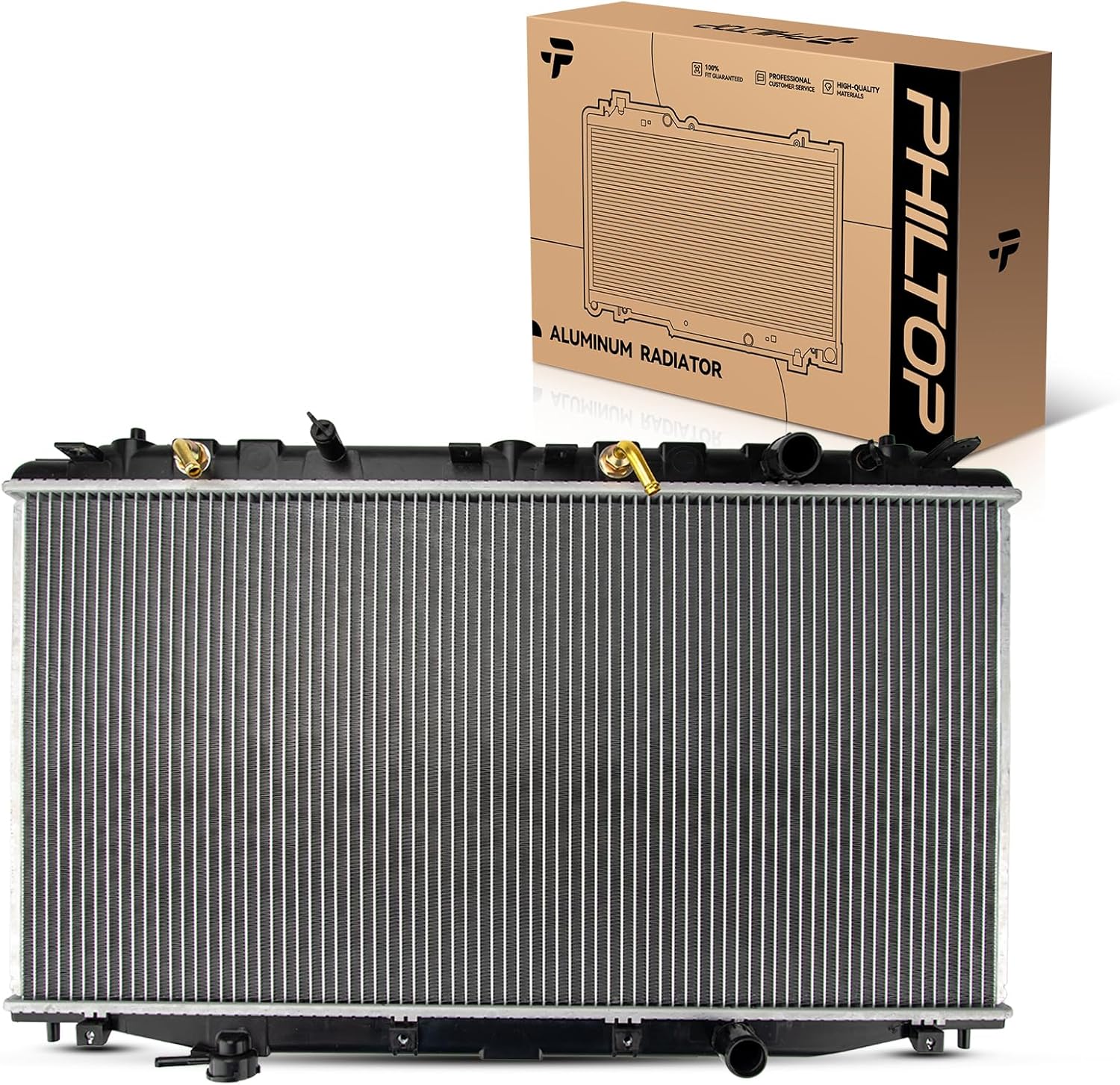
| Vehicle fitment | 2008–2012 Accord 2.4L, 2012–2015 Crosstour 2.4L |
|---|---|
| Core material | High-density aluminum |
| Includes | Transmission oil cooler |
| Certification | IATF16949 |
This PHILTOP radiator replaces the factory unit for 2008–2012 Honda Accord 2.4L (and 2012–2015 Crosstour 2.4L) and includes a transmission oil cooler to match the original layout. It is built with a high-density aluminum core and multi-layer cooling fins designed to improve heat dissipation and keep the engine at an optimal temperature during normal driving and towing. The package ships with foam corner supports to protect the core in transit and the unit is presented as vehicle specific fit to simplify installation into the stock mounting points. Real-world benefits include reliable cooling performance, a close-to-factory fit that reduces modification, and a full replacement that restores both engine and transmission cooling functions. Limitations are typical of aftermarket radiators: finish and small fitment details can vary versus factory parts so careful pre-checks of hose and sensor locations are advisable, and professional installation is recommended if you are not experienced with coolant system service.
Best for: Reliability-focused buyers who prioritize restoring factory cooling performance on a Honda Accord 2.4L and want a direct replacement that minimizes installation surprises.
Less Ideal for: Buyers seeking upgraded performance radiators for racing or extreme duty applications or those who require documented warranty coverage from the manufacturer.
- Vehicle-specific replacement designed to match factory mounting and plumbing for the listed Accord and Crosstour models.
- High-density aluminum core and multi-layer fins for improved heat dissipation under normal and heavy-load driving.
- Includes transmission oil cooler so both engine and transmission cooling functions are restored.
- Protective foam packaging to reduce shipping damage risk and help the radiator arrive ready to install.
- Aftermarket finish and small dimensional tolerances may differ slightly from factory parts requiring verification before installation.
- No explicit warranty information provided in the product details.
Verdict A budget-friendly, reliability-minded replacement that restores factory cooling and transmission oil cooling for the Accord 2.4L with minimal modification.
2. Readair Radiator Assembly with Transmission Oil Cooler for Honda Accord 2.4L (2003–2007)

| Compatible vehicle | Honda Accord 2.4L 2003–2007 |
|---|---|
| Transmission oil cooler | Included |
| Core thickness | 16mm |
| Core width | 28-1/4 inch |
| Inlet/outlet diameter | 1-1/4 inch |
This Readair radiator is a direct replacement for the 2003–2007 Honda Accord 2.4L and includes a brass transmission oil cooler built into the assembly. It installs in place of the factory unit and is intended for owners who want a ready-to-fit replacement rather than a custom solution. The radiator uses an aluminum core with TIG-welded joints and reinforced plastic inlet/outlet tanks and the manufacturer reports leak testing and a treated coating for corrosion resistance. Practical benefits include an integrated transmission cooler to avoid separate plumbing and a design that matches common factory mounting points for a straightforward swap. Some users report excellent fit and value while others note occasional quality-control failures like cracks in the tank, so careful inspection at installation is advisable. Expect a typical DIY or shop install time similar to changing any full radiator and be prepared to verify fittings and O-rings during hookup.
Best for: Convenience-driven buyers who want a factory-style, ready-to-install radiator replacement that minimizes fitment hassle and reduces shop time.
Less Ideal for: Buyers seeking the highest-end, longest-lasting all-metal performance radiators or those who prefer custom cooling upgrades should consider higher-tier alternatives.
- Direct-fit design for Honda Accord 2.4L (2003–2007) simplifies replacement and reduces modification.
- Integrated brass transmission oil cooler removes need for a separate cooler and lines.
- Aluminum core with TIG-welded joints and coated finish for improved heat transfer and corrosion resistance.
- Shipped protected and commonly arrives ready for installation with factory-style mounting points.
- Inconsistent quality control reported by some buyers, including rare tank cracks or leaks.
- Plastic inlet/outlet tanks mean long-term durability may lag behind full all-metal radiators.
Verdict A convenient, direct-fit radiator with an integrated transmission cooler that makes replacing a worn Accord radiator fast, but check for quality issues at installation.
3. Denso 2213229 Radiator (center position)

| Brand | Denso |
|---|---|
| Model | RADIATOR |
| Manufacturer Part Number | 2213229 |
| Position | Center |
This Denso radiator is a direct-fit replacement intended for Honda Accord applications and installs like a factory-quality unit. It comes preassembled with transmission fittings attached, a pre-installed radiator cap, and a drain plug which speeds installation and reduces parts hunting. In real-world use it restores proper cooling performance and aligns with factory mounting points so the fan shroud and hoses slide into place with minimal adjustment. Buyers should note some owners trimmed shroud holes slightly and replaced old mounting bolts if corroded, so a brief test-fit and a few common hand tools are advisable. The unit is painted for corrosion resistance and backed by Denso’s OE-focused manufacturing approach, which tends to deliver long service life and reliable heat rejection. If shipping damage occurs it can be a concern, so inspect packaging on arrival. For performance-oriented buyers the radiator provides dependable cooling capacity while keeping installation straightforward.
Best for: Performance-oriented buyers who prioritize reliable, factory-quality cooling upgrades and a replacement that restores OEM fit and function for a Honda Accord.
Less Ideal for: Shoppers who want a universal or heavily upgraded performance radiator with larger core capacity or custom fittings should consider performance-specific aftermarket options instead.
- Factory-quality, direct-fit design that aligns with factory mounting points for straightforward installation
- Ships with pre-installed radiator cap, drain plug, and transmission line fittings to reduce additional parts
- Painted exterior for added corrosion resistance
- Built by a supplier with OE manufacturing heritage, improving long-term reliability and fit
- May require minor trimming or adjustments to the fan shroud area on some vehicles
- Mounting hardware bolts are not replaced so corroded fasteners may need to be sourced separately
Verdict A reliable, factory-quality direct-fit radiator that restores OEM cooling performance for Honda Accord owners seeking top build quality.
4. Torchbeam Aluminum Replacement Radiator for 2003–2007 Honda Accord 2.4L

| Fitment | 2003–2007 Honda Accord 2.4L |
|---|---|
| Core material | Aluminum core |
| Leak testing | 100% leak tested |
| Includes | Transmission oil cooler passages |
This Torchbeam radiator is a direct-replacement style unit made to restore cooling for 2003–2007 Honda Accord 2.4L engines. It uses a high-density aluminum core with multi-layer fins to improve heat dissipation and comes leak-tested to reduce the risk of immediate coolant loss. The radiator ships with protective foam in the corners and includes the transmission oil cooler passages where applicable, so it fits into the factory cooling circuit without additional plumbing. Typical use is straightforward: remove the old radiator, install the Torchbeam unit, reconnect hoses and fans, and refill the system; some owners may need a helper or guidance from an installation video for alignment and mounting. Practical advantages are improved thermal stability over a failing core and a low purchase cost that makes replacement economical. Limitations include occasional mismatch of fan shroud or sensor boss locations on certain cars and the need to verify that fan mounts and temperature sensor provisions match your Accord before installation.
Best for: Budget-conscious buyers who need a low-cost, functional replacement to restore cooling on a 2003–2007 Honda Accord 2.4L and prefer to replace rather than rebuild an old radiator.
Less Ideal for: Buyers who want an exact factory-quality plug-and-play replacement without any possibility of fitment adjustments or who prefer OEM-brand parts for warranty-backed fit and finish.
- Engineered with a high-density aluminum core for better heat dissipation than many worn stock radiators
- 100% leak tested before shipping to minimize early coolant loss
- Includes transmission oil cooler passages for integrated cooling when fitted
- Protective foam packaging reduces risk of shipping damage to fins and end tanks
- Fitment can vary for fan shroud holes and temperature sensor bosses on some vehicles requiring modification or returns
- Aftermarket fitment may require careful verification of mounting points before installation
Verdict A practical, low-cost radiator that restores cooling for 2003–2007 Accord 2.4L owners but verify fan shroud and sensor provisions before installing.
5. KAX CU2990 Engine Cooling Radiator for 2008–2012 Honda Accord 2.4L

| Compatible vehicles | 2008-2012 Accord 2.4L |
|---|---|
| Manufacturer | KAX |
| Item model number | CU2990 |
| Manufacturer Part Number | 2232RDT005BUS |
This KAX CU2990 radiator is a direct replacement intended for the 2008–2012 Honda Accord 2.4L and is built to mirror factory part compatibility. It installs in place of the listed OEM numbers and is constructed with an aluminum core, multi-louvered high-density fins and PA66 GF30 plastic tanks to improve heat transfer while resisting corrosion. The unit is TIG welded and factory pressure tested to reduce the risk of leaks and is packaged with reinforced shockproof materials for safe delivery. In use it serves the standard role of engine coolant heat rejection and should restore proper operating temperature and fan performance when the original radiator is worn or leaking. Expect straightforward installation for mechanically competent technicians, but the manufacturer recommends professional installation. Limitations include dependence on accurate vehicle fitment checks and the usual caution that aftermarket radiators can vary slightly from factory parts in minor details such as mounting bosses or hose orientations, which can affect very tight installations.
Best for: Risk-averse mainstream buyers who prioritize a factory-style replacement to restore reliable cooling on a Honda Accord 2.4L and prefer parts that match original part numbers and undergo leak testing.
Less Ideal for: Buyers seeking a performance-upgrade radiator or a lightweight race-oriented unit should consider purpose-built alternatives instead of this direct replacement.
- Built to replace multiple factory part numbers for a direct-fit installation on the listed Accord 2.4L applications
- Aluminum core with high-density multi-louvered fins for improved heat dissipation
- TIG welded construction and factory leak/durability testing to minimize early failures
- Reinforced shockproof packaging reduces risk of shipping damage
- Requires careful vehicle fitment confirmation because some users report fit issues on non-matching vehicles
- Manufacturer recommends professional installation, which adds labor cost for DIY owners
Verdict A practical, factory-style replacement radiator for the 2008–2012 Honda Accord 2.4L that focuses on leak-tested reliability rather than performance upgrades.
6. DWVO Complete Radiator Compatible with 2008–2012 Honda Accord 2.4L L4

| Compatible vehicles | 2008-2012 Honda Accord 2.4L L4 |
|---|---|
| Manufacturer part number | DWRD1078 |
| OEM part numbers | 19010R70A51, 19010R70A53 |
This DWVO complete radiator is built as a direct replacement for the 2008–2012 Honda Accord 2.4L and is intended to restore cooling performance after a failed or leaking factory radiator. It uses an aluminum core with multi-louvered fins and TIG-welded connections to improve heat transfer and resist leaks, and ships with foam padding and a user manual to protect the unit during installation. In practice it functions like a typical aftermarket replacement: it delivers effective cooling and can save several hundred dollars versus dealer parts, and many buyers report straightforward fit and reliable operation. Expect some variability in fitment detail on a small number of units that may require minor trimming or adjustment during installation. The radiator does not include a radiator cap and professional installation is recommended if you are not experienced with cooling-system work. For a cost-conscious shopper who needs a working, durable replacement, this radiator strikes a practical balance between price and function.
Best for: Practical optimizers who prioritize solid, budget-conscious repairs that restore factory cooling without paying dealer prices.
Less Ideal for: Buyers seeking an exact factory-branded part or those who want fully guaranteed professional-fit replacements sold through a dealer channel should consider OEM options instead.
- Direct-fit design for 2008–2012 Honda Accord 2.4L aimed at matching factory replacement mounting points
- Aluminum core with multi-louvered fins for improved cooling efficiency
- TIG-welded connections and treated coating intended to reduce leaks and corrosion
- Lower cost compared with dealer or name-brand factory replacements
- Radiator cap is not included so an existing cap or separate purchase is required
- Some units have required minor trimming or adjustments to fit exactly in the engine bay
Verdict A cost-effective, direct-replacement radiator for 2008–2012 Accord 2.4L owners who want reliable cooling performance without dealer pricing.
7. TRQ Radiator, Aluminum Core, Direct-Fit for 2008–2012 Honda Accord 2.4L

| Core Thickness | 0.63 in |
|---|---|
| Core Row Quantity | 1 |
| Core Material | Aluminum |
| Transmission Oil Cooler | Included |
| Fitment | 2008-12 Honda Accord 2.4L; 2012-15 Crosstour 2.4L |
This TRQ radiator is a one-row, down-flow replacement built to match factory fitment for the 2008–2012 Honda Accord 2.4L and Crosstour 2.4L. It installs as a direct replacement with preassembled tanks and mounting points, so it is typically used when an original radiator has failed or started leaking. Notable features include an aluminum core, a built-in transmission oil cooler and molded plastic tanks, which together offer good heat transfer while keeping the unit lightweight. The practical benefits are straightforward: accurate fitment reduces installation time, the aluminum core provides reliable cooling, and the included transmission cooler means you do not need a separate unit. Limitations to be aware of are the single-core design, which is standard for stock cooling but offers less margin under extreme towing or heavy-load conditions, and plastic tanks that can be less durable than full-metal radiators over very long service life. Some buyers report needing to swap or adapt transmission line fittings on certain vehicles, so expect minor connector work in rare cases.
Best for: Balanced buyers who want a reliable, factory-style replacement that fits correctly and simplifies installation for routine driving and maintenance.
Less Ideal for: Drivers who plan frequent heavy towing, track use, or need a heavy-duty all-metal performance radiator should consider higher-capacity or all-metal options instead.
- Direct-fit design matches factory mounting points for easy installation
- Aluminum core delivers effective heat transfer for stock driving conditions
- Includes integrated transmission oil cooler, avoiding separate components
- Preassembled unit reduces installation time and need for modifications
- Single-row core provides less cooling margin under heavy towing or extreme loads
- Plastic tanks may not last as long as full-metal alternatives in high-heat environments
Verdict A sensible, factory-style aluminum radiator that balances fitment and cooling for most Honda Accord owners but is not aimed at heavy-duty or performance use.
Choosing the Right Honda Accord Radiator: Key Factors to Consider
Core Material and Construction
The core material determines heat transfer and longevity. Aluminum cores transfer heat more efficiently and weigh less, while copper cores can offer different repair characteristics. The soldering or brazing method and the number of cooling tubes affect both thermal performance and resistance to vibration.
Construction quality also influences how well the radiator handles road salts, coolant chemistry, and temperature cycling. Look for robust end tanks and reinforced seams to minimize the chance of cracks or leaks over time.
Cooling Capacity and Core Design
Cooling capacity depends on core thickness, fin density, and tube arrangement. A thicker core or higher fin count can increase heat rejection, which is important if you drive in hot climates or tow loads that raise engine temperature.
However, denser fins can clog more easily in dusty environments, so consider core design that balances airflow and heat transfer for the typical driving conditions you encounter.
Fitment and Mounting Compatibility
Correct fitment ensures the radiator mounts securely and aligns with factory hoses and fan shrouds. Fitment affects installation time and the likelihood of leaks caused by misaligned hoses or improperly seated sensors. Confirm mounting point alignment, hose inlet/outlet locations, and provision for any factory brackets.
A radiator that matches factory dimensions will simplify installation and reduce the risk of additional modifications being required.
Corrosion Resistance and Longevity
Radiators sit in a harsh environment and are exposed to coolant additives, road salts, and moisture. Materials and coatings that resist corrosion extend service life and reduce the chance of internal or external leaks. Consider anodized surfaces, corrosion-resistant alloys, and protective finishes on tanks and fittings.
Longevity also depends on how well the radiator tolerates coolant chemistry and thermal cycling without developing pinhole leaks or seam failures.
Ease of Installation and Serviceability
Ease of installation affects whether you can replace the radiator yourself or need professional help. Look for units that include necessary mounting hardware, compatible drain petcocks, and properly placed sensor ports. Serviceable features like accessible bleed points or straightforward hose connections save time when performing a coolant change or future repairs.
Good documentation and clear instructions reduce installation errors and help ensure the cooling system is bled correctly after installation.
Compatibility With Cooling System Components
A replacement radiator should work smoothly with the existing water pump, thermostat, and cooling fans. Differences in core flow patterns or pressure tolerances can affect how the rest of the system performs. Ensure any replacement accepts the factory fan shroud and sensor locations to preserve proper temperature regulation.
Matching coolant capacity and flow characteristics helps maintain expected engine warm-up behavior and sustained cooling under load.
FAQ
How do I know if my Honda Accord radiator is failing?
Common signs include persistent coolant loss, visible leaks beneath the car, and repeated engine overheating. You may also notice discolored coolant or steam from the engine bay. If you see any of these symptoms, have the cooling system inspected to identify whether the radiator or another component is the cause.
Can I replace the radiator myself on a Honda Accord?
Many owners with basic mechanical skills can replace the radiator, provided they follow the correct steps for draining, disconnecting hoses, and refilling the system. Proper bleeding of air and securing all fittings is important to prevent overheating or leaks. If you are unsure about alignment or sensor connections, consider professional assistance.
How does radiator core material affect performance?
Core materials influence heat transfer efficiency, weight, and corrosion resistance. Some alloys conduct heat better and are lighter, which can improve cooling and fuel economy slightly. Corrosion-resistant finishes and quality brazing extend service life. The best choice depends on your usage conditions and priorities for durability versus repairability.
Do I need to flush the coolant when replacing the radiator?
Flushing the cooling system during a radiator replacement is often recommended to remove accumulated debris and old coolant. A clean system helps the new radiator perform as intended and reduces the risk of internal blockages. After installation, refill with the correct coolant mixture and bleed air from the system according to the vehicle's procedure.
Will a higher-capacity radiator prevent all overheating issues?
A higher-capacity radiator can improve cooling margins, especially under heavy loads or hot weather, but it may not cure all overheating causes. Other factors such as a failing thermostat, weak water pump, clogged passages, or restricted airflow can also cause overheating. A holistic inspection of the cooling system is the best approach.
How We Chose the Best Honda Accord Radiator
We focused on criteria that directly affect long-term performance on a Honda Accord. Primary filters included core material and construction quality, heat dissipation capacity measured by core design, and compatibility with Accord mounting and hose layouts. Durability factors such as corrosion resistance and reinforcement at stress points were key. Ease of installation and the availability of compatible mounting hardware influenced the shortlist, as did the unit's ability to accept factory coolant flow and sensors. We excluded units with unclear fitment information, those lacking clear specs on core design or materials, and any radiator intended for multiple unrelated vehicle families without specific Accord fitment. The final selection prioritizes radiators that balance thermal efficiency, structural durability, and straightforward installation for an accurate, practical replacement choice.
Our full evaluation process is outlined in our review methodology.
Conclusion
When choosing a Honda Accord radiator, prioritize fitment accuracy, material quality, and the core design that matches your driving conditions. Tradeoffs typically involve balancing thicker cores and higher heat rejection against susceptibility to clogging and added weight. Also consider installation ease and long-term corrosion resistance. Focus on a unit that aligns with factory mounting and sensor locations to minimize installation issues and maintain reliable engine temperature control.
Explore More:
- Check out all Honda Accord parts & accessories
- Explore Radiators Maintenance & Repair Guides
- Explore Cooling System
- Browse all Auto Parts
