

Note: This article contains affiliate links. If you click on these links and make a purchase, I may earn a small commission at no extra cost to you. This helps support my research and content. Read my full affiliate disclosure here.
If your Honda Pilot is showing electrical quirks or weak starts, choosing the right alternator matters for dependable charging and long-term reliability. A correct alternator keeps the battery topped, powers accessories, and prevents unexpected breakdowns.This guide covers seven shortlisted alternators that meet the common needs of Honda Pilot owners. We evaluated them on electrical output, build quality, fit and ease of installation, and durability. Read on to understand the key factors that separate a dependable replacement from a temporary fix.
Looking for other parts? See all Honda Pilot parts & accessories.
Top Picks at a Glance
| Best overall The best all-around choice for most situations | DB Electrical Remanufactured 130A Alternator (fits Honda/Acura Denso-style) |  |
| Best quality Built to a higher standard if you want something more solid | DynaVim Parts Alternator 130A Compatible with 3.5L V6 Honda Odyssey/Pilot/Ridgeline (2011–2015) |  |
| Best Value The sweet spot between price and what you get | PHILTOP Alternator compatible with 2012–2015 Honda Pilot (130A, 12V) |  |
| Best Budget The cheapest option that still gets the job done reliably | GDSMOTU 130A Alternator for Honda Pilot/Odyssey/Ridgeline (3.5L) |  |
| Highest Rated A top-rated pick with lots of positive feedback | SINTLY Alternator 130A with 6-Groove Pulley for Honda 3.5L (11573N) |  |
| Most popular A crowd favorite that many people choose with confidence | ASTOU 130A Alternator Compatible with Honda Odyssey/Pilot/Ridgeline and Acura Models |  |
| Best Seller A high-volume bestseller chosen again and again | EnTurbo Alternator Compatible with 2005–2008 Honda Pilot (Replacement for 11150N) |  |
1. DB Electrical Remanufactured 130A Alternator (fits Honda/Acura Denso-style)

| Amperage | 130 Amps |
|---|---|
| Voltage | 12 Volts |
| Condition | Remanufactured |
| Regulator Clock | 11:00 |
This DB Electrical remanufactured alternator is built as a Denso-style replacement for Honda and Acura charging systems and is intended to restore proper battery charging and electrical operation on supported vehicles. It installs in place of the factory alternator and includes internal regulator and fan placement matching the original layout so belt alignment and mounting are straightforward for common Honda engine bays. The 130 amp output is suitable for stock electrical loads on affected Pilots and other listed models, and multiple OEM part numbers are referenced for fit. Buyers report a mix of outcomes: many users get a correctly fitting unit that clears charging faults at a lower cost than dealership parts, while some experience packaging damage or early failures with individual remans. The alternator uses a solid pulley with six grooves and standard negative polarity, so it pairs with factory belts and wiring when the correct pulley is installed. Expect real-world savings and OEM-style fit when you get a properly inspected reman, but be prepared to verify pulley fit and test charging after installation since reman quality can vary.
Best for: Balanced buyers who want a cost-conscious, factory-style replacement for a Honda Pilot and are comfortable verifying fit and testing charging after installation.
Less Ideal for: Those who prioritize brand-new parts with guaranteed lifespan or who prefer dealer-installed replacements and full OEM warranties should consider new or dealer options instead.
- Designed to match Denso-style mounting and electrical layout for direct replacement on compatible Honda/Acura models
- 130 amp output suitable for stock Honda Pilot electrical loads
- Includes internal regulator and factory‑style terminal layout for straightforward wiring
- Solid 6‑groove pulley design that aligns with common accessory belts
- Lower cost than dealer remanufactured alternators when the unit performs as expected
- Remanufactured units show variable quality control so some buyers report early failures
- Some packages arrive with cosmetic or plastic damage requiring inspection before installation
- Pulley or outer diameter differences reported — pulley swap may be needed for noise or belt alignment
Verdict: A budget-friendly, factory-style reman alternator that often restores charging on Honda Pilots but requires careful fit and post-install testing due to variable reman quality.
2. DynaVim Parts Alternator 130A Compatible with 3.5L V6 Honda Odyssey/Pilot/Ridgeline (2011–2015)

| Voltage | 12V |
|---|---|
| Amperage | 130Amp |
| Rotation | CW (Clockwise) |
| Regulator | Internal (IR) |
| Pulley | 6-Groove |
This DynaVim Parts alternator is a direct-fit replacement for 3.5L V6 Honda models and supplies 130 amps at 12 volts with an internal regulator and internal fan. It is typically used to replace a failed or weak factory alternator and get the vehicle charging system back to full capacity. Key features include clockwise rotation, a 6-groove pulley, and internal voltage regulation which simplifies installation and reduces wiring changes. In practice it fits like a factory-style unit and reviewers report straightforward installs and reliable charging under normal driving conditions. Packaging is noted as robust and the unit comes with a one-year warranty. Limitations to consider are that installation can be tight on some Pilot engine bays and a few buyers noted inspection concerns on arrival, so expect to verify the unit before installation. Long-term durability is generally positive in user reports but a couple of comments suggest being prepared for variable longevity compared with higher-cost OE-brand replacements.
Best for: Performance-oriented buyers who prioritize restoring full charging capacity and reliable electrical performance in their Honda Pilot 3.5L V6 for towing, accessories, or high electrical loads.
Less Ideal for: Buyers seeking a lifetime warranty, guaranteed OEM-brand longevity, or those who prefer professional-shop-installed premium remanufactured alternators should consider other options.
- 130 amp output suitable for factory electrical loads and accessories
- Internal regulator and fan simplify installation and reduce external wiring changes
- 6-groove pulley and clockwise rotation match factory pulley configurations
- Multiple customer reports of good fit and immediate restoration of charging function
- May arrive in packaging that looks like a return for some buyers requiring inspection on receipt
- Tight engine bay access on some Pilot and Odyssey installations can make DIY replacement more difficult
Verdict: A strong-value, factory-style 130A replacement that restores charging performance for 3.5L V6 Honda Pilots but may require extra care during installation and inspection.
3. PHILTOP Alternator compatible with 2012–2015 Honda Pilot (130A, 12V)

| Amperage | 130 Amps |
|---|---|
| Voltage | 12 Volts |
| Position | Front |
| OEM Part Number | 11573N, 1042101240, 31100RV0A01 |
This PHILTOP alternator is a direct-fit replacement designed to restore charging performance on 2012–2015 Honda Pilot models. It supplies up to 130 amps at 12 volts, so it handles standard electrical loads and charging duties without modification. The unit is CNC-machined with copper windings and an external insulating coating, and the listing highlights durability testing for vibration, salt spray, and wide temperature extremes—details that matter if you use the vehicle in varied climates. Built-in overload protection and high-voltage insulation help protect the vehicle electrical system during faults. Installation is typical for a front-position alternator and should be straightforward for a home mechanic or shop familiar with Honda charging systems. Limitations to note are that it is a replacement part rather than an upgraded high-output unit, so it will not increase available amperage for heavy accessory installs, and there are isolated reports of arrival damage so inspect the connector and housing on receipt.
Best for: Practical optimizers looking for a reliable, factory-quality replacement that restores charging reliability without spending extra for performance upgrades.
Less Ideal for: Drivers planning to add high-draw accessories or those who need an alternator with substantially higher amperage should consider a performance or high-output unit instead.
- Direct-fit for 2012–2015 Honda Pilot applications for straightforward installation
- 130 amp output suitable for factory electrical loads and battery charging
- CNC-machined construction with copper windings and insulation for reliable electrical performance
- Built-in overload protection and tested resistance to vibration, temperature, and salt spray
- Not a high-output upgrade so it will not support large aftermarket electrical accessories
- Some customers reported arrival damage to plastic connectors or housing, so unpack and inspect before installation
Verdict: A cost-conscious, factory-style replacement alternator that restores charging reliability for 2012–2015 Honda Pilot owners but does not increase electrical capacity.
4. GDSMOTU 130A Alternator for Honda Pilot/Odyssey/Ridgeline (3.5L)

| Amperage | 130Amp |
|---|---|
| Voltage | 12V |
| Rotation | CW |
| Pulley | 6-Groove Decoupler |
| Regulator | Internal (IR) |
This GDSMOTU alternator is a budget-focused, direct-replacement unit intended for Honda Pilot 3.5L (2012-2015), Odyssey 3.5L (2011-2013) and Ridgeline 3.5L (2012-2014). It delivers 130 amps at 12 volts, uses a 6-groove decoupler pulley and clockwise rotation, and includes an internal regulator. Typical use is a one-for-one swap to restore charging to a vehicle with a failing alternator. The construction details list die-cast aluminum housings and copper windings, which suggests reasonable durability for everyday driving. Buyers will appreciate the higher-than-basic output compared with small replacement units and the widespread fitment notes for common Honda V6 engines. Expect some installation work on marginal fits since a few owners reported needing minor clearance grinding or alignment adjustments. A handful of users also noted intermittent charging or lower-than-factory amperage in rare cases, so verify charging voltage and harness connections after install. For a cost-conscious repair this alternator offers a practical balance of performance and value when matched to the specified Honda 3.5L models.
Best for: Budget-conscious Honda owners who need a low-cost replacement alternator to get a 3.5L V6 Pilot, Odyssey, or Ridgeline back on the road quickly and accept modest DIY installation work.
Less Ideal for: Owners seeking a guaranteed factory-identical replacement or long-term high-mileage reliability without any fitment work should consider a factory-quality remanufactured alternator or dealer unit instead.
- 130 amp output suitable for typical V6 electrical loads
- Die-cast aluminum housing and copper windings for basic durability
- Includes internal regulator and decoupler pulley for smoother accessory drive
- Specifically listed to fit Honda Pilot, Odyssey, and Ridgeline 3.5L V6 engines
- Some units require minor trimming or fitting adjustments during installation
- A few reports of intermittent charging or lower-than-factory amperage
Verdict: A cost-effective 130A replacement alternator that restores charging for Honda 3.5L V6 models with acceptable performance for budget repairs.
5. SINTLY Alternator 130A with 6-Groove Pulley for Honda 3.5L (11573N)
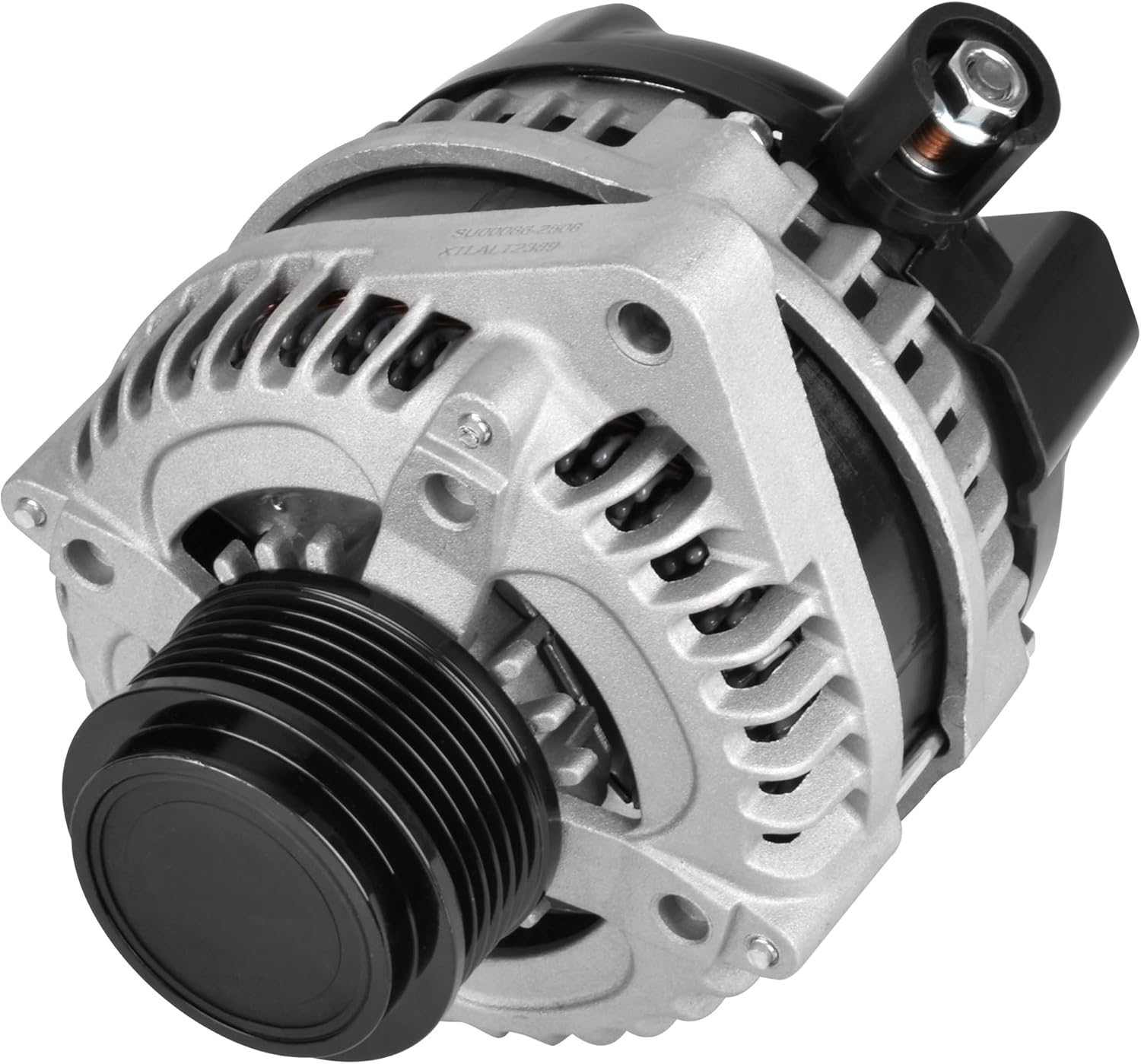
| Voltage | 12V |
|---|---|
| Amperage | 130A |
| Rotation | CW |
| Number of Grooves | 6-Groove Pulley |
This SINTLY alternator is a direct-replacement unit designed for Honda 3.5L V6 models and provides a 12V, 130A output with clockwise rotation and a 6-groove pulley. It is intended to replace the factory unit without modification, so typical use is a one-to-one swap during a repair to restore charging performance. Notable features include factory-spec mounting and contact points, a machined exterior, and what the manufacturer describes as premium materials for durability. In practice the higher 130A output is helpful if you run accessories or if the original alternator was underperforming, and reported installs show straightforward fit and function on compatible Hondas. Limitations are that it is a single-application replacement so buyers must confirm exact vehicle fitment and pulley/groove count before ordering, and long-term durability claims rest on limited public runtime data compared with long-established factory suppliers. Expect an alternator that restores charging reliability with a focus on straightforward installation for Honda 3.5L owners.
Best for: Reliability-focused buyers who prioritize restoring factory charging performance on a Honda 3.5L V6 and want a drop-in replacement that minimizes installation headaches.
Less Ideal for: Buyers seeking a performance-upgrade alternator with higher output or multi-vehicle compatibility, or those who prefer components from long-established factory suppliers for long-term proven track records.
- Direct-replacement design matched to factory mounting and contact points for straightforward installation on Honda 3.5L V6 models
- 130A output suitable for vehicles with heavier electrical loads or added accessories
- 6-groove pulley matches common Honda accessory belt setups to avoid pulley swaps
- Machined exterior and manufacturer-stated premium materials aimed at improved wear resistance
- Limited long-term field data compared with established factory suppliers
- Requires confirming exact OEM part cross-reference and vehicle year before purchase
Verdict: A practical, factory-fit 130A replacement alternator for Honda 3.5L V6 owners who want a reliable, drop-in charging solution.
6. ASTOU 130A Alternator Compatible with Honda Odyssey/Pilot/Ridgeline and Acura Models

| Output | 130 Amp |
|---|---|
| Voltage | 12 Volts |
| Pulley | 6-Groove Pulley |
| Position | Front Inner |
| Regulator | Internal Regulator (IR) |
This ASTOU alternator is a new, high-output replacement intended to restore charging and electrical system reliability on compatible Honda and Acura V6 vehicles. It delivers 130 amps at 12 volts, uses a 6-groove pulley with an internal fan and internal regulator, and is advertised as a bolt-in unit that connects to the factory wiring harness. In real-world use it supplies stable charging for ignition, fuel systems, and modern electronics while the aluminum die-cast housing and upgraded stator/rotor aim to resist deformation. Buyers should expect typical installation work in tight engine bays; a few users noted minor fitment tweaks such as adjusting a spacer or grinding a bushing to seat the lower bolt. Quality is mixed in reports—many vehicles charge normally after installation but there are isolated cases of damaged shipments, connector differences between versions, or early failures. This alternator is best for owners who want a ready-made replacement that largely avoids core cores and reman plumbing but should be installed with basic mechanical competence and a voltage check after fitment.
Best for: Convenience-driven buyers who need a ready-made, high-output replacement to quickly restore charging without rebuilding a core and who prioritize straightforward, mostly plug-and-play fitment.
Less Ideal for: Those who want a guaranteed factory-sourced part, need coverage for long-term heavy-duty use without risk, or prefer professional installation to resolve fitment or connector variations.
- High 130 amp output suitable for V6 Honda electrical loads
- Built-in regulator and internal fan for cooling and voltage control
- Aluminum die-cast housing and reinforced internals for heavier-duty use
- Direct-replacement design that plugs into the factory wiring harness
- Some units require minor fitment adjustments during installation
- Reports of inconsistent connector versions and occasional shipping damage
- Mixed longevity reports with isolated early failures
Verdict: A cost-effective, high-output direct-replacement alternator that restores charging quickly for compatible Honda/Acura V6 models but may need minor fitment adjustments and careful inspection on arrival.
7. EnTurbo Alternator Compatible with 2005–2008 Honda Pilot (Replacement for 11150N)

| Brand | EnTurbo |
|---|---|
| Manufacturer Part Number | QN171561 |
| Fitment (model years) | 2005-2008 Honda Pilot 3.5L |
| Customer Reviews | 4.3 out of 5 stars |
This EnTurbo alternator is a bolt-in replacement intended for 2005–2008 Honda Pilot 3.5L applications and delivers the basic job of restoring charging system function. It installs like a factory replacement for owners replacing a failed unit and is commonly used during routine charging-system repairs. Notable aspects include matching part-number coverage for common Pilot alternator references and manufacturer testing claims aimed at reliability. Reviewers report mostly smooth, quiet operation and straightforward installation with factory-style fit. Practical benefits are that it brings a stopped charging system back to normal, can save you the cost of a dealer unit, and is backed by a one-year replacement policy. Limitations to consider are occasional fitment quirks reported by some buyers that required minor modification to a bushing and the one-year coverage may be shorter than extended aftermarket warranties from other brands. If you expect long-term performance beyond basic restoration, factor that into your decision.
Best for: Risk-averse, mainstream Honda Pilot owners who prioritize reliable, factory-style replacements and want a straightforward repair that gets the charging system working again without dealer markup.
Less Ideal for: Do not choose this if you need long-term extended warranty coverage or expect completely maintenance-free, guaranteed lifetime performance from an aftermarket unit.
- Designed to match common Honda Pilot replacement part numbers for mid-2000s V6 models
- Mostly bolt-in installation with many buyers reporting easy fit and quiet operation
- Manufacturer states components are tested to meet factory-quality standards
- Lower cost alternative to dealer units while restoring charging system function
- Some users reported a protruding bushing that required minor grinding for proper fit
- Coverage is limited to a one-year manufacturer replacement period
Verdict: A cost-effective, factory-style replacement alternator for mid-2000s Honda Pilot owners who want a reliable fix without dealer pricing, but check fit carefully and note the one-year replacement coverage.
Choosing the Right Honda Pilot Alternator: Key Factors to Consider
Amperage Output and Electrical Load
Alternator amperage determines how much electrical current is available to charge the battery and run accessories. Choosing an alternator with output equal to or slightly higher than the original specification helps ensure the battery stays charged during heavy loads such as air conditioning, audio systems, or towing.
Undersized output can lead to a drained battery and repeated starting problems, while excessively oversized units may be unnecessary and harder to fit. Match output to your typical accessory use and consider a higher-rated unit only if you run consistently heavy electrical loads.
Regulator and Voltage Stability
The voltage regulator keeps charging voltage within a safe range for the battery and electronics. A high-quality regulator maintains steady voltage under changing engine speeds and accessory loads, preventing overcharging or undercharging that shortens battery life.
Internal regulators that are well-protected and heat-resistant tend to last longer. If you frequently use power-hungry accessories, prioritize alternators with stable regulation and low voltage fluctuation.
Mechanical Fit and Pulley Compatibility
Correct mounting and pulley match are essential for a trouble-free installation. The alternator must align with the accessory belt path and use the correct pulley diameter and spline to avoid belt wear or slippage. Improper fit can cause noise, belt damage, or premature bearing failure.
Check mounting bolt locations, electrical connector types, and pulley style. If you plan to reuse the original pulley or hardware, confirm compatibility to avoid additional parts or modifications.
Build Quality and Internal Components
The quality of bearings, diodes, and wiring inside an alternator affects reliability and service life. Sturdier bearings reduce wear from vibration, while robust diode assemblies handle current without overheating. Good insulation and corrosion-resistant materials protect against environmental damage.
Look for alternators with proven construction practices and materials suitable for engine-bay conditions. Better components generally mean fewer failures and longer intervals between replacements.
Ease of Installation and Serviceability
How straightforward an alternator is to install affects labor time and potential for installation errors. Units that offer clear connector types, accessible mounting points, and minimal need for bracket changes simplify the process for DIYers and technicians alike.
Consider whether the alternator allows reuse of existing hardware or requires transfer of components such as pulleys. Serviceable designs that permit diode or regulator replacement can extend the life of the alternator and lower long-term maintenance needs.
Warranty and Support
A meaningful warranty provides protection against early failures and indicates manufacturer confidence. Warranty terms that cover electrical defects and premature wear can reduce the cost and hassle of replacements if issues arise.
Also consider the availability of customer support and clear return policies. Good documentation and accessible technical support help resolve fitment or performance questions quickly.
How We Chose the Best Honda Pilot Alternator
We focused on alternators that match the electrical and mechanical demands of the Honda Pilot platform. Key evaluation criteria included rated amperage output relative to stock specifications, regulator quality and stability, build materials and bearing design, and compatibility with the Pilot's mounting and pulley setup. We also considered expected service life based on component durability and common failure modes, plus the ease of installation for DIYers and technicians.Units that required unspecified modifications, nonstandard mounting, or had inconsistent output under load were excluded. We prioritized alternators that maintain safe battery charging across typical accessory loads and that use reliable regulators and diodes. Long-term reliability, clear fitment information, and reasonable ease of access during installation were decisive factors in selecting the final seven options.
Our full evaluation process is outlined in our review methodology.
FAQ
What are common alternator symptoms on a Honda Pilot?
Common signs include dim or flickering lights, a battery warning light, slow engine cranking, and electronic accessories behaving erratically. These symptoms often appear gradually and can vary with engine speed.
How can I test an alternator before replacing it?
You can check charging voltage at the battery with the engine running; typical charging voltage is around 13.5 to 14.8 volts. Load testing with headlights and accessories on can reveal voltage drops. For definitive results, a bench or professional load test is useful.
Is it worth rebuilding an alternator versus replacing it?
Rebuilding can be cost-effective if the housing and rotor are in good condition and only components like brushes or diodes failed. However, rebuilds depend on the quality of parts and labor, and a new unit may offer longer reliability in some cases.
How difficult is alternator installation on a Honda Pilot?
Installation difficulty varies by year and engine layout but is often moderate. Access to mounting bolts and the belt tensioner is the main challenge. Someone with basic mechanical skills and the right tools can often complete the job in a few hours.
Will upgrading to a higher-output alternator harm my Pilot?
Upgrading to a higher-output unit is usually safe if it fits correctly and the regulator maintains proper voltage. Unnecessary oversizing can complicate fitment or add stress to mounting points, so match output to your actual electrical needs.
Conclusion
When choosing a replacement alternator for a Honda Pilot, prioritize correct amperage output, stable voltage regulation, and a mechanical fit that matches the vehicle's mounting and pulley setup. Balance build quality and ease of installation against long-term reliability when making your choice.Consider warranty coverage and serviceability as part of the overall value. Addressing the alternator symptoms early and selecting a unit that meets the Pilot's electrical demands will reduce the chance of repeat failures and keep the vehicle reliably powered.
Explore More:
- Check out all Honda Pilot parts & accessories
- Explore Alternators Maintenance & Repair Guides
- Explore Electrical System
- Browse all Auto Parts
