

Note: This article contains affiliate links. If you click on these links and make a purchase, I may earn a small commission at no extra cost to you. This helps support my research and content. Read my full affiliate disclosure here.
A failing wheel speed sensor can disrupt ABS function, trigger warning lights, and make traction systems behave unpredictably. For Honda Pilot owners, picking the right ABS wheel speed sensor matters because proper fit and reliable signal output are necessary for safe braking and stable stability control operation.This guide shortlists the top sensor options that meet common fitment and diagnostic needs. We evaluated candidates for signal consistency, fit accuracy, and durability to help you find sensors that restore correct readings. Read on to see the top picks and the practical factors to weigh when replacing a sensor.
Looking for other parts? See all Honda Pilot parts & accessories.
Top Picks at a Glance
| Best Reviewed A top-rated pick with lots of positive feedback | SDYYDS Front Left & Right ABS Wheel Speed Sensor (pair) for Honda Pilot 2003-2004 |  |
| Most Popular A crowd favorite that many people choose with confidence | TRQ Front Left ABS Wheel Speed Sensor — Driver Side (fits 2006–2008 Honda Pilot) |  |
| Best Quality Built to a higher standard if you want something more solid | TRQ Front ABS Wheel Speed Sensor Set (2-Piece) |  |
| Best Budget The cheapest option that still gets the job done reliably | A-Premium ABS Wheel Speed Sensor for Honda Pilot (Front Left/Right, Set of 2) |  |
| Most Sold A high-volume bestseller chosen again and again | Hiolpen ABS Wheel Speed Sensor 4‑Piece Kit for 2009–2011 Honda Pilot |  |
| Best Value for Money The sweet spot between price and what you get | Auto Parts Port Set of 2 Front ABS Wheel Speed Sensors for Honda Pilot / Acura MDX |  |
| Best Overall The best all-around choice for most situations | A-Premium Front ABS Wheel Speed Sensor 2‑PC Set (57455TZ5A02) |  |
1. SDYYDS Front Left & Right ABS Wheel Speed Sensor (pair) for Honda Pilot 2003-2004

| Fitment | Honda Pilot 2003-2004 |
|---|---|
| Location | Front Left & Right |
| Terminal Quantity | 2 Pins |
| Wiring Harness | Included |
These SDYYDS ABS wheel speed sensors replace the front left and right sensors on 2003–2004 Honda Pilot vehicles and are sold as a two-piece kit with wiring harnesses and mounting grommets. They are plug-and-play replacements intended to match factory connectors and terminal layouts so installation requires minimal modification and is suitable for typical DIY brake or ABS repair. Notable features include OEM-style connectors, a protective sleeve on the harness to reduce abrasion, and included clips and grommets to help route and secure the wiring like the factory installation. In practical use they restore wheel speed input for the ABS and traction systems so dash ABS warnings and related drivability faults clear once the faulty sensors are replaced. Limitations to consider are that they are aftermarket parts from a newer brand with limited long-term track record and the listing notes a 12 month warranty which is shorter than some extended warranties; for best results take care with connector seating and routing during installation to avoid contamination or damage.
Best for: Reliability-focused buyers who prioritize restoring correct ABS and traction-system function on a 2003–2004 Honda Pilot with a straightforward, factory-like replacement.
Less Ideal for: Drivers seeking an OEM-branded part with a long documented service history or extended manufacturer-backed warranty should consider factory-quality alternatives.
- Direct-fit plug-and-play design for front left and right replacement on specified Honda Pilot years
- Includes wiring harness, grommets and clips to match factory routing and secure the cable
- OEM-style connectors and terminals for a water-tight electrical connection
- Protective sleeve on wiring to reduce abrasion and potential damage during installation
- From a newer aftermarket brand so long-term durability beyond the warranty period is less proven
Verdict A practical plug-and-play sensor pair that restores ABS function on 2003–2004 Honda Pilot fronts with factory-style connectors and included harness hardware, though it is an aftermarket option with limited long-term provenance.
2. TRQ Front Left ABS Wheel Speed Sensor — Driver Side (fits 2006–2008 Honda Pilot)

| Fitment | 2006–2008 Honda Pilot, front left driver side |
|---|---|
| Mounting Type | Flange Mount |
| Output Type | electrical signal |
| Material | Acrylonitrile Butadiene Styrene |
| Exterior | Machined |
This TRQ front left ABS wheel speed sensor is a direct-replacement driver-side unit for 2006–2008 Honda Pilot vehicles. It provides the electrical speed signal the ABS and traction systems use to monitor wheel rotation and restore proper braking and stability behavior when the original sensor fails. The sensor ships pre-assembled with mounting flange and factory-style connectors so installation is a straightforward DIY job: remove the wheel, unbolt the old sensor, plug in the harness, and secure the clips. Practical benefits include clear fitment guidance for the Pilot, a machined exterior for consistent alignment, and access to TRQ’s DIY video library to simplify the job. Limitations to be aware of are occasional fitment variance reported on some vehicle applications and the need to verify the Pilot’s exact model year and submodel before ordering; some users also noted that wiring slack can be tight on certain chassis, which may require careful routing. For a convenience-minded buyer who wants a ready-to-install replacement that restores ABS and traction function, this sensor is a solid value option.
Best for: Convenience-driven buyers who prioritize an easy, ready-to-install replacement to quickly clear ABS or traction errors and get their 2006–2008 Honda Pilot back on the road with minimal fuss.
Less Ideal for: Owners who prefer dealer parts for guaranteed factory-original components or those who need a sensor for Pilot model years outside 2006–2008 should consider alternatives.
- Direct-fit driver-side sensor specified for 2006–2008 Honda Pilot for fast, straightforward replacement
- Pre-assembled with mounting flange and factory-style electrical connector to reduce installation time
- Machined exterior and matching connector/hangers improve alignment and compatibility
- TRQ provides DIY videos to guide installation for convenience-focused owners
- Some users report occasional fitment or wiring slack issues on certain vehicle applications
- Not interchangeable across different wheel positions or years outside the specified 2006–2008 Pilot fitment
Verdict A convenient, pre-assembled direct-fit front left ABS sensor for 2006–2008 Honda Pilot owners who want a quick DIY replacement to restore ABS and traction function.
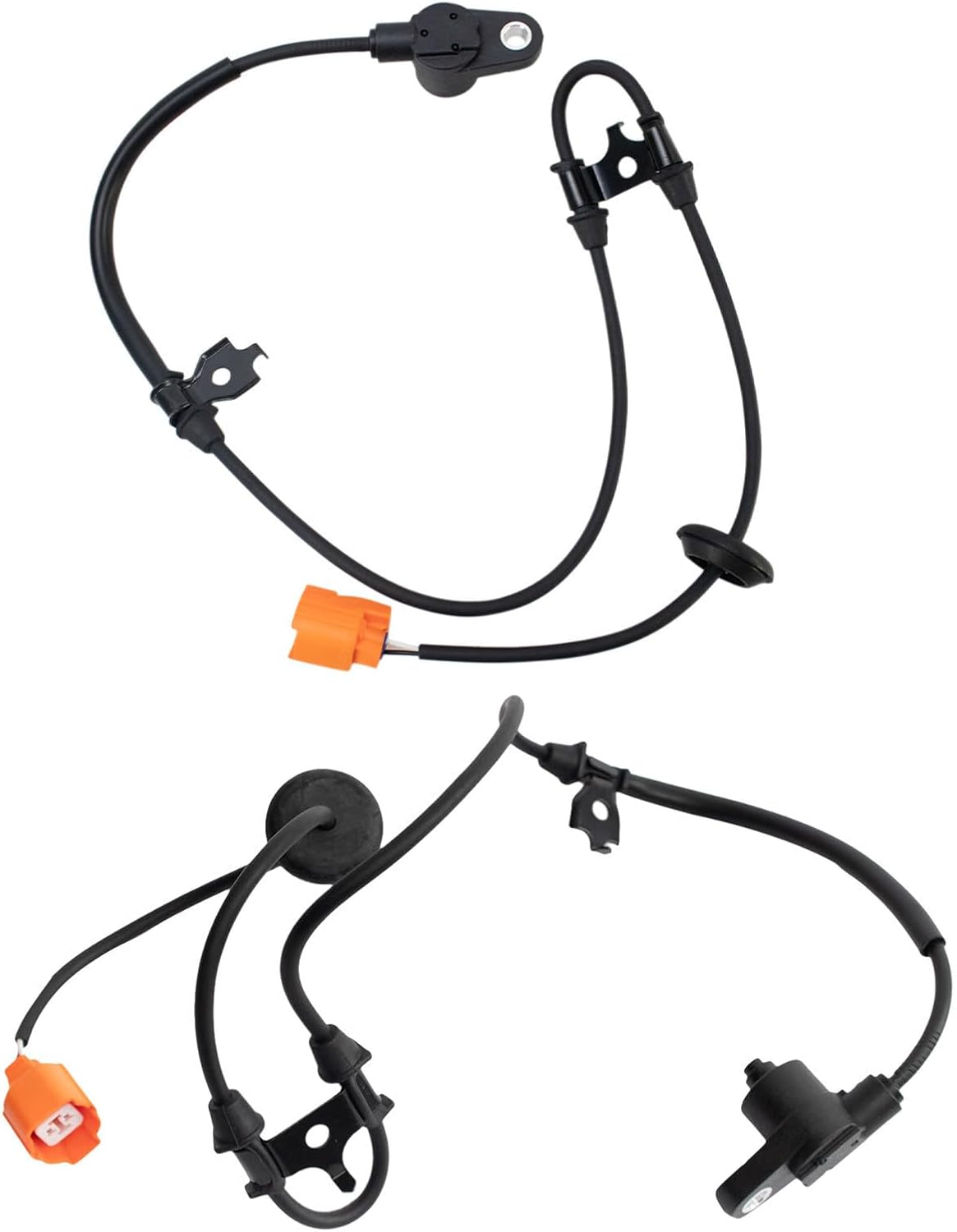
3. TRQ Front ABS Wheel Speed Sensor Set (2-Piece)
| Manufacturer | TRQ |
|---|---|
| Material | Acrylonitrile Butadiene Styrene |
| Mounting Type | Flange Mount |
| Quantity | 2 Piece |
This TRQ two-piece front ABS wheel speed sensor kit supplies both driver and passenger side sensors as direct replacements to restore wheel speed input to the ABS and traction control systems. It is intended for straightforward swap-ins and is sold as a matched pair so both sides have comparable signal behavior. TRQ highlights pre-assembled components and a flange-mount design that simplify installation and reduce time in the garage, and the manufacturer provides DIY videos to guide fitment. In practice this means a technician or competent DIYer can replace faulty sensors without modifying mounting points or running new wiring. The set targets front sensors only, so it fixes issues like ABS warning lights and inconsistent speed readings but will not address rear-sensor faults. Fitment and calibration depend on following vehicle-specific instructions, and buyers should confirm compatibility with their 2005 Honda Pilot before purchase. The product balances the convenience of direct-fit replacement and aftermarket value with the usual caveat that sensor longevity can vary with road and environmental conditions.
Best for: Performance-oriented buyers who prioritize restoring precise ABS and traction control behavior on their Honda Pilot and prefer a matched front-sensor replacement that minimizes installation time.
Less Ideal for: Buyers needing a full four-sensor replacement or seeking sensors with documented enhanced environmental ratings should consider other options.
- Sold as a matched two-piece kit to restore both front wheel speed inputs at once
- Pre-assembled, flange-mount design intended for direct-fit installation
- Manufacturer provides DIY installation videos to assist home mechanics
- Machined exterior and factory-style fitment aimed at consistent signal performance
- Covers front driver and passenger sensors only and not rear sensors
- No explicit lifespan or environmental sealing specification provided
Verdict A matched, direct-fit front sensor kit that helps performance-focused Honda Pilot owners quickly restore accurate ABS and traction control inputs.
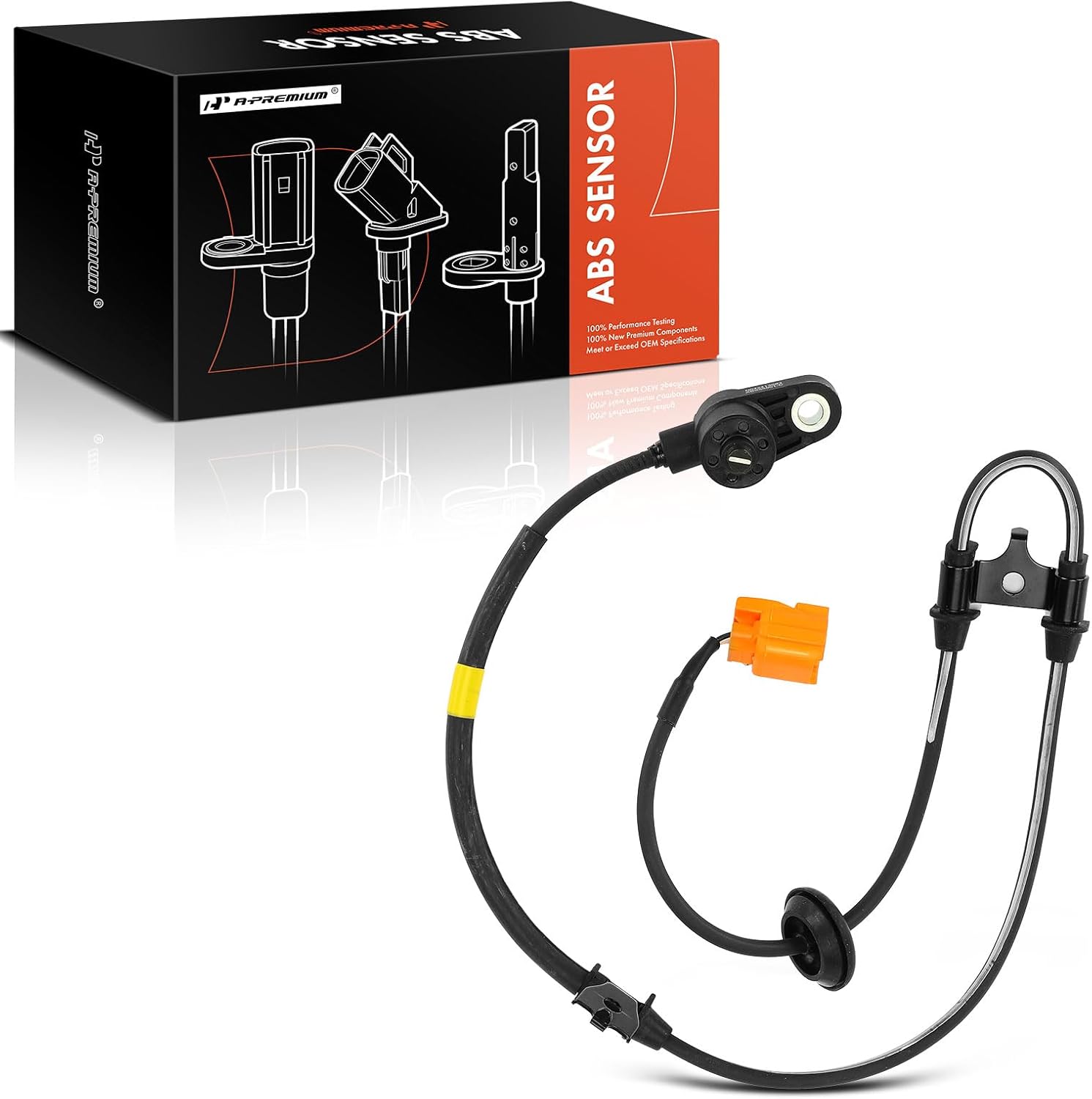
4. A-Premium ABS Wheel Speed Sensor for Honda Pilot (Front Left/Right, Set of 2)
| Vehicle fitment | Honda Pilot 2006, 2007, 2008 |
|---|---|
| Quantity | Set of two pieces |
| Location | Front Left and Right |
| Mounting Type | Flange Mount |
| Output Type | electrical signal |
This A-Premium ABS wheel speed sensor is a direct replacement intended for the front left and right positions on 2006–2008 Honda Pilot models and is sold as a set of two. It converts wheel rotation into an electrical signal for the vehicle stability and ABS control modules, so it is typically used when a faulty sensor triggers ABS or traction control warnings. The sensors use a flange-mount design with two-terminal bullet connections for straightforward installation at the hub. Practical benefits include factory-style fitment references listed for common Honda part numbers and a one-year unlimited-mileage guarantee for peace of mind. Expect simple swap-in installation for routine repair jobs and restoration of ABS functionality without recalibration in most cases. Limitations are that these are aftermarket parts and fitment depends on matching the listed reference numbers, and occasional calibration or clearing of fault codes may be required after replacement.
Best for: Budget-conscious Honda Pilot owners seeking a low-cost, do-it-yourself replacement to silence ABS or traction-control warnings and get the vehicle back to normal operation.
Less Ideal for: Drivers who prioritize long-term OEM parity or who prefer parts that come with extended manufacturer support should consider higher-end or dealer-sourced sensors.
- Sold as a set covering both front left and right positions for immediate repair of ABS warnings
- Flange-mount design and two-bullet terminal make mechanical connection and electrical hookup straightforward
- Lists multiple factory reference numbers to help confirm fitment for Honda Pilot models
- Backed by a one-year unlimited-mileage guarantee from the manufacturer
- Aftermarket component so long-term durability may vary compared with factory-quality sensors
- Requires matching vehicle reference numbers to ensure correct fitment
Verdict A cost-conscious replacement that restores ABS wheel-speed sensing for 2006–2008 Honda Pilot front wheels, best for DIY repairs where budget matters.
5. Hiolpen ABS Wheel Speed Sensor 4‑Piece Kit for 2009–2011 Honda Pilot

| Vehicle fit | 2009, 2010, 2011 Honda Pilot 3.5L |
|---|---|
| Quantity | 4 sensors (front right, front left, rear right, rear left) |
| Mounting type | Flange Mount |
| Output type | Push-Pull |
| Material | Plastic, rubber |
This Hiolpen kit supplies four ABS wheel speed sensors intended to replace the front and rear left/right sensors on a 2009–2011 Honda Pilot 3.5L. The sensors monitor wheel rotation and send pulse signals to the ABS module so the system can prevent wheel lockup and maintain stability during braking. Typically installed when a wheel speed sensor fails or triggers a dashboard ABS warning, the kit comes as complete sensor assemblies with flange mounts and push-pull electrical outputs for direct swap-in replacement. In practice the plastic and rubber construction keeps the parts lightweight and corrosion resistant, and receiving four sensors at once simplifies a full-axle service. Limitations are typical of aftermarket sensor kits: fitment depends on matching the listed OEM part numbers and careful routing and connector matching during installation, and long-term durability can vary compared with factory parts. Routine inspection and careful electrical connections are important after fitting to avoid intermittent ABS warnings.
Best for: Risk-averse mainstream buyers who prioritize restoring safe, factory-like ABS function on a Honda Pilot with minimal fuss and prefer replacing all sensors at once to reduce return visits.
Less Ideal for: Buyers seeking an exact factory-sourced sensor with guaranteed OEM lifespan or those who prefer individual sensor purchases for selective repairs should look elsewhere.
- Includes four sensors to service both front and rear wheels in one purchase
- Sold specifically for 2009–2011 Honda Pilot 3.5L for straightforward compatibility when part numbers match
- Flange mount design and push-pull output match common factory-style installations
- Plastic and rubber construction offers corrosion resistance and lighter weight
- Aftermarket construction may not match long-term durability of factory-quality parts
- Requires verifying OEM part numbers and proper connector fit during installation
Verdict A convenient four-piece aftermarket kit to replace all Honda Pilot wheel speed sensors at once, best when you need a direct, risk-averse repair rather than an OEM-sourced part.
6. Auto Parts Port Set of 2 Front ABS Wheel Speed Sensors for Honda Pilot / Acura MDX

| Material | Acrylonitrile Butadiene Styrene |
|---|---|
| Mounting Type | Flange Mount |
| Output Type | Push-Pull |
These two front ABS wheel speed sensors replace factory items and are intended for direct swap-in on compatible Honda Pilot (and Acura MDX) front wheels. They connect via the same flange mount and push-pull output style as the original sensors, so installation is typically straightforward for a DIYer or a technician replacing an obvious failed sensor. The ABSR-grade plastic housings keep cost and corrosion risk down while providing the basic signal reliability needed for the ABS and traction systems to function. Practical benefits include buying both left and right sensors together and matching OEM part numbers for quick fit confirmation. Limitations are typical for budget aftermarket sensors: the ABS plastic construction is less robust than higher-end materials and long-term durability in harsh conditions may be lower, and the set does not include installation hardware beyond the sensors themselves. For a cost-conscious owner who needs a like-for-like replacement and wants to avoid sourcing two single sensors separately, this set offers sensible value.
Best for: Practical optimizers who prioritize getting reliable, low-cost factory-style replacements without overspending and who prefer the convenience of a matched two-piece front sensor set.
Less Ideal for: Drivers seeking premium, heavy-duty sensors for extreme off-road or long-term high-mileage use should consider more robust aftermarket or OEM options.
- Sold as a matched left and right front sensor pair for convenience
- Designed to match listed OEM part numbers for straightforward fit verification
- Flange mount and push-pull output mirror factory fit for easy installation
- Low-cost ABS plastic construction reduces replacement expense
- Acrylonitrile butadiene styrene housing may be less durable than higher-end materials in extreme conditions
- Packaging does not include additional hardware or accessories that some installations may require
Verdict A budget-friendly matched front sensor pair that reproduces factory fit and function for practical Honda Pilot replacements, with modest durability trade-offs.
7. A-Premium Front ABS Wheel Speed Sensor 2‑PC Set (57455TZ5A02)

| Vehicle fitment | Honda Pilot 2016-2020; Ridgeline 2017-2020; Passport 2019-2020; Acura MDX 2014-2020 |
|---|---|
| Connector pins | 2 Pins |
| Location | Front Left and Right (Driver and Passenger Side) |
This A-Premium front ABS wheel speed sensor pair is a direct replacement set for the front left and right positions on compatible Honda Pilot and related models. It is used to replace failed or intermittent factory sensors that trigger ABS, traction control, or speed-signal faults. The sensors come with a two-pin connector and are designed to match factory fit and mounting style so installation follows the vehicle's original wiring and mounting points. In practice the sensors restore reliable wheel-speed readings, which clears fault codes and brings back normal ABS/brake assist behavior. Materials and manufacturing are described as factory-quality, and the package targets front-side replacement so you can change both sensors at once. Limitations include dependence on correct vehicle fitment—you must confirm the part number and year—and the product is an aftermarket part, so long-term durability can vary compared with a new factory replacement. Expect a straightforward swap for routine repairs but check plug compatibility during installation.
Best for: Balanced buyers who want a practical, cost-effective repair that restores ABS and traction control behavior without extra upgrades, and who value a ready-to-install two-sensor front replacement.
Less Ideal for: Buyers seeking a brand-new factory sensor from the vehicle manufacturer or those who prefer professional-only replacement options for warranty reasons should consider alternatives.
- Sold as a two-piece set for replacing both front sensors at once.
- Uses the factory-style mounting and 2-pin connector for straightforward installation.
- Listed to fit Honda Pilot 2016–2020 and compatible Acura/Honda models, reducing fitment guesswork.
- Aftermarket unit so long-term durability may differ from a new factory replacement.
- Fitment still requires checking OEM reference numbers to ensure correct match.
Verdict A practical two-piece front sensor set that simplifies replacing failed wheel-speed sensors on supported Honda Pilot-era models while keeping install work minimal.
Choosing the Right Honda Pilot ABS Wheel Speed Sensor: Key Factors to Consider
Fitment and Connector Compatibility
Correct mechanical fit matters because the sensor must align precisely with the tone ring or reluctor to generate an accurate pulse signal. A sensor that does not seat at the right depth or uses an incompatible mounting tab can yield weak or inconsistent readings.
Electrical connector compatibility is equally important. Mismatched pins or nonstandard housings can cause poor contact or require splicing that increases long-term failure risk. Confirm the sensor’s connector shape and pinout match the vehicle harness to avoid unreliable connections and extra installation work.
Signal Output and Diagnostic Reliability
Sensors must produce a clean, consistent voltage or frequency signal under varying wheel speeds to prevent false ABS or VSA warnings. A sensor with poor signal fidelity can trigger intermittent fault codes or make speed readings jump, complicating diagnostics.
Look for specifications or documentation about signal characteristics and testability. Reliable sensors make it easier to verify operation with a multimeter, oscilloscope, or scan tool and help distinguish sensor faults from wheel bearing or tone ring problems.
Sealing and Environmental Durability
Wheel speed sensors are exposed to water, road salt, debris, and heat cycles. Good sealing and robust molding around the sensing element and connector prevent moisture ingress and corrosion, which are common failure modes.
Materials that resist abrasion and thermal degradation reduce the chance of premature failure. Consider sensors with reinforced wiring boots and corrosion-resistant contacts to improve longevity in typical driving conditions and during winter exposure.
Installation Ease and Mounting Hardware
Some sensors come with the required mounting bolts, dust shields, or grommets that simplify installation. A sensor that includes the correct hardware and clear orientation markings reduces the risk of improper installation, which can cause signal problems.
Ease of access to the mounting point on the vehicle varies by wheel location and suspension design. Sensors designed for straightforward replacement save time and reduce likelihood of damaging the harness or surrounding components during installation.
Compatibility With Diagnostic Procedures
Choose sensors that support standard diagnostic checks, such as straightforward resistance or AC voltage tests, and that respond predictably during wiring tests. Sensors that behave consistently during bench or in-vehicle diagnostics help pinpoint the root cause of ABS-related codes.
If the sensor documentation includes test values or procedures, that makes it easier to confirm proper operation and to rule out wiring or control module issues without extensive troubleshooting.
Long-Term Reliability and Material Quality
Material and assembly quality affect how long a sensor will function without issues. Sensors built with durable plastics, corrosion-resistant contacts, and strain-relieved wiring are less likely to fail from vibration or environmental stress.
Consider how the sensor is protected where it mounts and where cables route relative to moving suspension parts. Higher-quality construction reduces the chance of abrasion, connector fretting, or insulation breakdown over time.
FAQ
What are common signs of a failing ABS wheel speed sensor on a Honda Pilot?
Common signs include the ABS or traction control warning lights illuminating, inconsistent speedometer readings, or reduced traction control function. You may also notice that braking feels different under heavy stops, or the vehicle’s stability control engages unexpectedly. These symptoms often indicate a faulty signal rather than a brake hydraulic issue.
Can I drive with a bad wheel speed sensor?
You can often drive short distances with a faulty sensor, but safety systems like ABS and traction control may be disabled or degraded. That increases stopping distances and reduces electronic stability interventions during slippery conditions. It is usually best to address the issue promptly to restore full braking and stability functionality.
How do technicians diagnose a faulty ABS sensor?
Technicians typically scan for trouble codes, inspect the sensor and wiring visually, and perform electrical checks such as resistance or AC voltage tests while spinning the wheel. They also check the tone ring for damage or debris. These steps help determine whether the sensor, wiring, or the tone ring is the root cause.
Is it necessary to replace the sensor and tone ring together?
Replacement depends on condition. If the tone ring is damaged, corroded, or missing teeth, replacing it is important because a new sensor may still produce faulty readings with a compromised tone ring. If the tone ring is intact and clean, often only the sensor needs replacement.
Will replacing the sensor clear ABS codes automatically?
Replacing the sensor may not clear stored codes by itself. After replacement, a scan tool is usually used to erase codes and verify the issue is resolved. If the system still detects a problem, further testing of wiring and the control module may be necessary.
How can I tell if the wiring to the sensor is causing the problem?
Look for visible damage, corrosion, or connector looseness, and perform a wiring continuity and resistance check. An ABS sensor wiring test while manipulating the harness can reveal intermittent faults. Proper grounding and clean contacts are essential for a reliable sensor signal.
How We Chose the Best Honda Pilot ABS Wheel Speed Sensor
We screened options based on fitment accuracy, electrical signal integrity, mounting and connector compatibility, and environmental durability. Fitment accuracy ensures the sensor seats correctly and aligns with the tone ring or reluctor for proper pulse generation. Electrical signal integrity and connector compatibility reduce the risk of intermittent faults and false codes. Durability criteria included resistance to moisture, road debris, and high under-hood temperatures so the sensor maintains performance over time. We also prioritized products with clear installation guidance and standardized electrical specifications to simplify diagnostic and replacement steps.We excluded units that lacked verifiable specifications, unclear connector fit, or insufficient sealing against contaminants. Products that required vehicle-specific modifications or adapter wiring were not considered. The final shortlist favors sensors that address real-world failure modes and make it practical to diagnose and restore ABS and speed-sensing functionality in the Honda Pilot.
Our full evaluation process is outlined in our review methodology.
Conclusion
When selecting a sensor for a Honda Pilot, prioritize correct fitment, connector compatibility, and consistent signal output. Those elements have the biggest impact on restoring ABS, ABS-related warnings, and traction control behavior.Balance durability and ease of installation against diagnostic clarity. Choosing a sensor that seals well, matches the vehicle’s connector, and provides predictable testable outputs reduces troubleshooting time and helps keep safety systems functioning reliably.
Explore More:
- Check out all Honda Pilot parts & accessories
- Explore ABS Wheel Speed Sensors Maintenance & Repair Guides
- Explore Electrical System
- Browse all Auto Parts
