

Note: This article contains affiliate links. If you click on these links and make a purchase, I may earn a small commission at no extra cost to you. This helps support my research and content. Read my full affiliate disclosure here.
If your 2003-2008 Subaru Forester is showing signs of dimming lights, a weak battery, or electrical glitches, the alternator is often the culprit. Picking the right alternator matters because it affects charging reliability, drivability, and long-term electrical system health. This guide focuses on alternators suited to the 2003–2008 Forester and explains which features and specifications matter for routine driving and towing loads.Below we shortlist the top alternator options for this Forester generation and evaluate them by output consistency, fitment accuracy, and durability. Use the quick product summaries to find a direct-fit replacement or a higher-output option, then consult the buying factors and testing tips to make a confident choice.
Looking for other parts? See all Subaru Forester parts & accessories.
Top Picks at a Glance
| Best Overall The best all-around choice for most situations | SHUMERAL 23700AA380 12V 90A Alternator Replacement (5-Groove, Clockwise) |  |
| Best Quality Built to a higher standard if you want something more solid | Bosch AL4304X Remanufactured 90A Alternator |  |
| Best Value The sweet spot between price and what you get | KAC 90A Replacement Alternator (13889N) for Subaru Forester/Outback/Legacy/Baja/Impreza |  |
| Best Budget The cheapest option that still gets the job done reliably | KAC 90A Replacement Alternator for 2000–2005 Subaru (Direct Fit) |  |
| Highest Rated A top-rated pick with lots of positive feedback | TadaMark 90A Replacement Alternator for 2.5L Subaru (manual transmission fitments) |  |
| Most Popular A crowd favorite that many people choose with confidence | DB Electrical 400-48053 Alternator — Direct-Fit 12V 90A for Subaru 2.5L |  |
| Best Seller A high-volume bestseller chosen again and again | A-Premium 12V 90A Alternator for Subaru Forester and Impreza (5-Groove, Clockwise) |  |
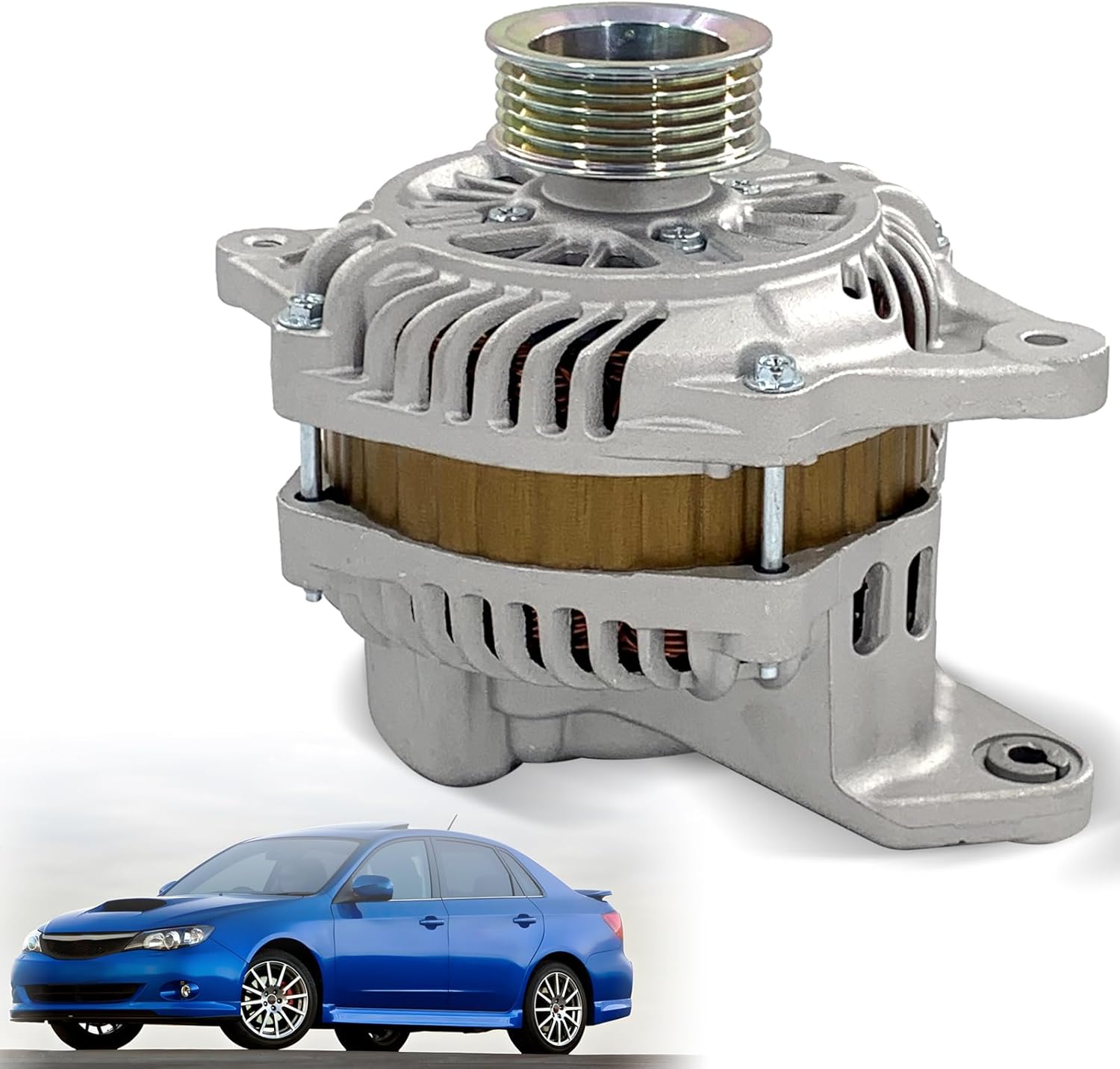
1. SHUMERAL 23700AA380 12V 90A Alternator Replacement (5-Groove, Clockwise)
| Voltage | 12V |
|---|---|
| Amperage | 90A |
| Rotation | CW (Clockwise) |
| Number of Grooves | 5-Groove Clutch Pulley |
This SHUMERAL alternator is a factory-replacement style unit designed for 2.5L Subaru Forester (2006–2010) and Impreza, plus the Saab 9-2X, delivering 12 volts and 90 amps through a 5-groove clockwise clutch pulley. It is intended to swap into the vehicle's original alternator location and restore charging performance for daily driving, accessory use, and battery maintenance. Notable features include high-temperature materials, rubber seals, and upgraded bearings aimed at reducing vibration, friction, and noise for longer service life. The 90A output is suitable for stock electrical loads and modest accessory use but may be limiting if you run high-draw audio or aftermarket lighting without additional charging capacity. Installation is typical for alternator replacements and should fit the factory mounting and connector patterns listed in the fitment notes, though confirm electrical connector and pulley direction before buying. The unit comes from a specialty brand and includes seller support for issues, making it a practical choice for owners seeking a straightforward replacement that balances durability and cost.
Best for: Buyers who want a reliable, like-for-like alternator replacement for a 2.5L Subaru Forester or Impreza and prioritize factory-style fit and quiet, durable operation.
Less Ideal for: Not a good choice for owners who need higher charging capacity for power-hungry audio systems or extensive aftermarket electrical accessories.
- Direct-replacement fit for specified 2.5L Subaru Forester and Impreza applications
- Factory-style 90A output suitable for stock electrical loads
- 5-groove clockwise clutch pulley matches many OEM belt setups
- High-temperature materials and sealed bearings to reduce noise and extend life
- Seller support available for troubleshooting or fitment questions
- 90A output may be insufficient for heavy aftermarket electrical loads
Verdict: A practical, factory-style 12V/90A replacement that restores dependable charging and quiet operation for 2.5L Subaru Forester and Impreza owners.
2. Bosch AL4304X Remanufactured 90A Alternator

| Amperage | 20 Amps |
|---|---|
| Manufacturer | Bosch |
| Model | Reman Alternator |
| Exterior | Machined |
This Bosch AL4304X is a remanufactured 90-amp alternator intended as a factory-quality replacement for compatible Subaru and Saab applications. It is used to restore charging system performance by replacing a worn unit and supplying stable electrical output for the battery and vehicle electronics. Bosch remanufacturing replaces bearings, brushes, clutch pulley, and other wear parts, then subjects each unit to exhaustive multi-point inspections and full-load testing so output and reliability closely match factory specifications. For a performance-minded owner, its higher-confidence testing and extensive parts replacement reduce the risk of early failure and voltage variance that can affect power-hungry accessories. Keep in mind this is a remanufactured unit rather than a new alternator, so visual finish or original-production markings may differ from new parts and it is only compatible with specific vehicle fitments; verify fitment before purchasing. Installation follows the same steps as a standard alternator swap and delivers immediate restoration of charging capacity when matched to the vehicle.
Best for: Owners who want a reliable, factory-grade replacement that restores stable charging for a 2003–2008 Subaru Forester while prioritizing tested performance over buying brand-new parts.
Less Ideal for: Buyers seeking a brand-new, out-of-box alternator or those needing compatibility outside the specified Subaru Forester fitment should look elsewhere.
- Remanufactured with many new internal components for extended service life
- Full-load and multi-point testing to ensure factory-quality charging performance
- Direct replacement form factor for straightforward installation in compatible vehicles
- Includes new self-lubricating brushes and bearings to reduce maintenance needs
- Remanufactured unit may differ cosmetically from a new alternator and may lack original factory markings
Verdict: A thoroughly tested Bosch remanufactured 90A alternator that restores reliable, factory-level charging for performance-focused Forester owners.
3. KAC 90A Replacement Alternator (13889N) for Subaru Forester/Outback/Legacy/Baja/Impreza

| Amperage | 90 A |
|---|---|
| Voltage | 12 volts |
| Position | Front |
| Item model number | 13889N Alternator |
This KAC alternator is a direct-replacement style unit rated at 90 amps and designed for several early 2000s Subaru platforms including Forester 2003-2005. It supplies charging power to the battery and electrical systems and is intended to be installed in place of the factory alternator. Notable features include pure copper windings, a built-in regulator and fan (IR/IF), a five-groove pulley, and claims of vibration resistance and high-voltage insulation for durability. In everyday use it should restore proper charging, run quietly, and tolerate a wide temperature and salt-spray environment for longer service life. Installation looks straightforward for a competent DIYer or shop since the unit is CNC machined for a close fit and lists common OEM part numbers for cross-reference. Limitations are that this is a single-output 90A unit, so it may not support heavy accessory loads or extensive audio/amplifier setups without upgrading, and fitment must be confirmed against the exact engine and year before purchase.
Best for: Buyers wanting a reliable, factory-style replacement to restore charging performance on older Subaru Forester and related models who prioritize fitment and long-term durability over higher-output upgrades.
Less Ideal for: Drivers planning major electrical upgrades, high-powered audio systems, or who need a higher-output alternator for heavy accessory loads should consider a high-output performance unit instead.
- 90 A output suitable for stock charging needs on covered Subaru models
- 100% pure copper windings for improved conductivity and durability
- Includes internal regulator and fan for stable voltage control
- CNC machined housing and vibration resistant design for close factory fit and durability
- 90A capacity may be insufficient for vehicles with high electrical demand or heavy aftermarket audio
- Fitment limited to specific early 2000s Subaru models and requires verification
Verdict: A solid factory-style 90A replacement for early 2000s Subaru Forester and similar models that restores reliable charging with durable construction.
4. KAC 90A Replacement Alternator for 2000–2005 Subaru (Direct Fit)

| Amperage | 90 A |
|---|---|
| Voltage | 12 V |
| Position | Front |
| Rotation | CW |
This KAC alternator is a direct-fit replacement built to swap into compatible early-2000s Subaru engines without modification. It delivers 90 amps at 12 volts with a clockwise rotation and S5 groove pulley, and the listing highlights full copper windings, a rectifier, premium bearings, and wide-temperature tolerance aimed at reliable charging and quieter operation. Installation is straightforward for a home mechanic or shop since the unit is labeled a factory-style fit and comes with a regulator and fan type preassembled. For buyers on a budget it provides the core charging capability needed to restore electrical system performance and keep batteries charged under normal driving loads. Limitations to consider are mixed user feedback on longevity and the midrange seller rating, so expect to check fitment carefully and be prepared to test output after installation. This is a practical value option when you want a like-for-like replacement rather than an upgraded high-output unit.
Best for: Buyers seeking an affordable, straightforward replacement to restore charging on an early-2000s Subaru without upgrades or special installation needs.
Less Ideal for: Do not choose this if you need higher-output charging for heavy accessories, performance electrical loads, or if you require a long-term warranty-backed premium unit.
- Direct-fit, factory-style design for straightforward installation on listed Subaru models
- 90 A output suitable for stock electrical loads and normal driving conditions
- Features full copper windings and premium bearings aimed at durability and quiet operation
- Includes built-in regulator and correct pulley/rotation to match factory setup
- Mixed customer feedback suggests variable long-term reliability compared with higher-end replacements
Verdict: A practical, budget-friendly direct-fit alternator to restore factory charging on compatible early-2000s Subaru Forester and similar models.
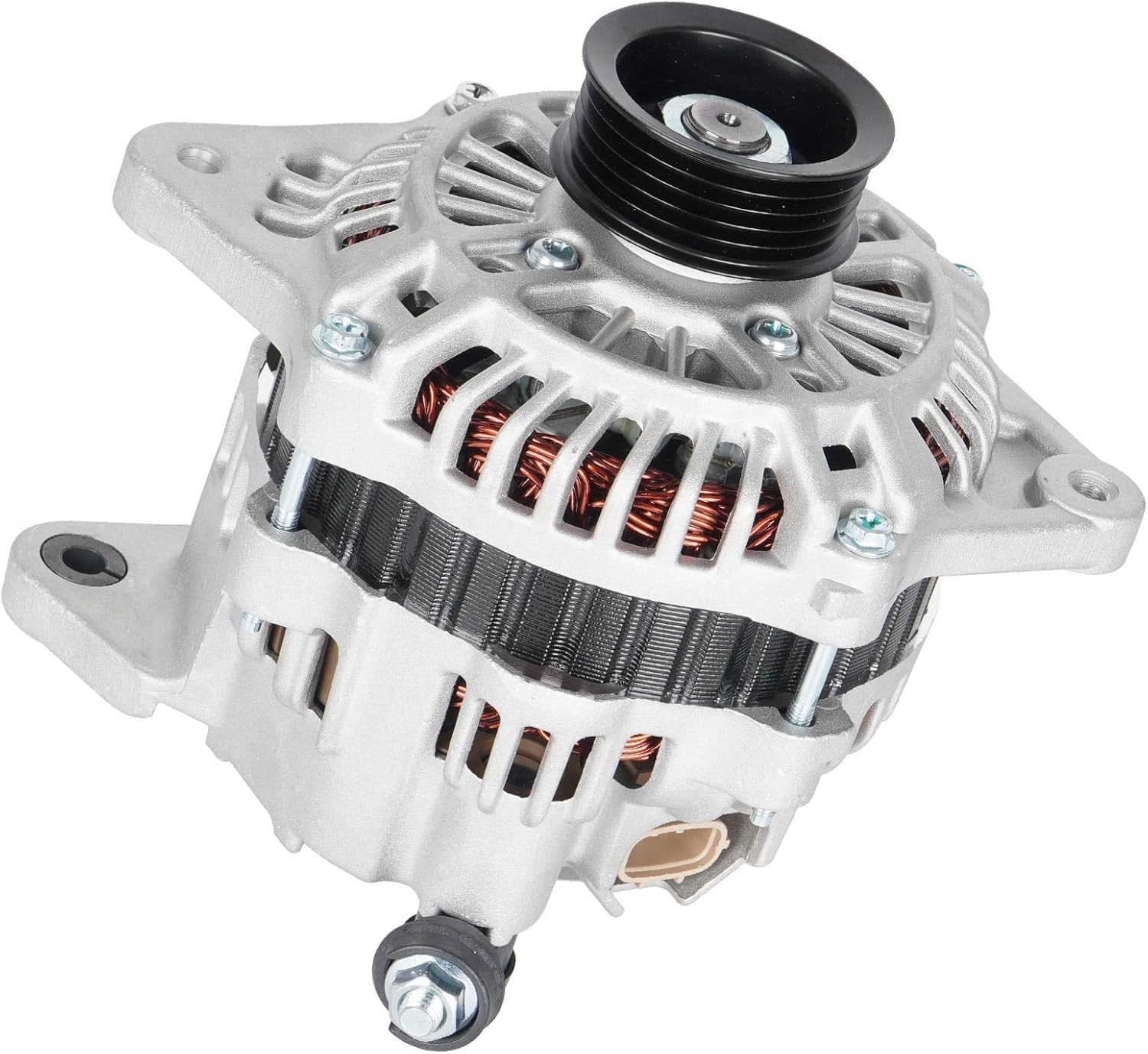
5. TadaMark 90A Replacement Alternator for 2.5L Subaru (manual transmission fitments)
| Voltage | 12 volts |
|---|---|
| Amperage | 90 |
| Rotation | CW |
| Regulator | IR |
This TadaMark 90A alternator is a direct replacement designed for non-turbo 2.5L Subaru engines and the Saab 9-2X manual-transmission application. It supplies up to 90 amps at 12 volts, uses a clockwise rotation, and includes an internal regulator and fan, so it replaces the factory charging component with a single-unit swap. Typical use is as a like-for-like replacement when the original alternator fails or weakens; installers will appreciate that the pulley class and clock position match common Subaru mounting orientations. The practical benefit is restored charging performance for lights, accessories, and battery charging without needing modifications. Limitations to note are fitment restrictions: it is specified for non-turbo 2.5L variants and several manual-transmission models, so vehicles outside those exact applications or turbocharged engines will need a different part. Buyers should also verify pulley and connector details against their vehicle before installing.
Best for: Drivers seeking a dependable, factory-style charging replacement for non-turbo 2.5L Subaru vehicles who prioritize restoring original charging performance without modifications.
Less Ideal for: Owners of turbocharged engines, vehicles with unknown clock/pulley differences, or those who need higher-output alternators for heavy electrical upgrades should look elsewhere.
- Provides 90 amps at 12 volts to restore charging for accessories and battery maintenance
- Includes internal regulator and fan for an integrated, ready-to-install replacement
- Designed with matching rotation and clock position for direct fit on specified Subaru 2.5L engines
- Covers multiple OEM reference numbers for easier verification against original part
- Not compatible with turbocharged 2.5L Subaru engines or unspecified transmission variants
Verdict: A practical, factory-style 90A replacement that restores reliable charging for non-turbo 2.5L Subaru models without modification.
6. DB Electrical 400-48053 Alternator — Direct-Fit 12V 90A for Subaru 2.5L

| Voltage | 12V |
|---|---|
| Amperage | 90A |
| Rotation | CW |
| Regulator | Internal (IR) |
This DB Electrical 400-48053 alternator is a direct-replacement charging unit built to match factory-style fit and function for supported Subaru models. It provides a 12V, 90-amp output with clockwise rotation and an internal regulator, so it installs like a factory part and supplies steady charging for the vehicle electrical system. Typical use covers restoring charging after a failed alternator or upgrading a worn unit; installation is straightforward for anyone comfortable with basic engine-bay work because the part is made as a direct fit with the same pulley class and clock position. Notable features include a machined exterior finish, internal regulator, and a design meant to meet OEM fitment numbers. Practical benefits are reliable charging under normal driving conditions and compatibility across specific Forester, Outback, Legacy, Baja, and Impreza model years. Limitations are that this is a standard 90A unit, so it may not support heavy aftermarket electrical loads without upgrades, and buyers should verify vehicle fit with the exact OEM part numbers before purchase.
Best for: Buyers who want a cost-conscious, factory-compatible replacement to restore reliable charging on early 2000s Subaru models and prefer parts with documented fitment to common OEM numbers.
Less Ideal for: Drivers planning major electrical upgrades or high-draw accessories who need higher-output or performance alternators should consider purpose-built high-amp units instead.
- Direct-fit design matching common Subaru OEM part numbers for straightforward installation
- 12V 90A output with internal regulator for steady charging of factory electrical systems
- Machined exterior and factory-style construction intended to meet OEM specifications
- Compatible with multiple Subaru models and model years listed by the manufacturer
- 90 amp output may be insufficient for vehicles with high-power audio or extensive accessory upgrades
Verdict: Choose this DB Electrical alternator if you need a reliable, direct-fit 12V/90A replacement that matches factory fitment for early 2000s Subaru Forester applications.
7. A-Premium 12V 90A Alternator for Subaru Forester and Impreza (5-Groove, Clockwise)

| Voltage | 12V |
|---|---|
| Amperage | 90A |
| Rotation | Clockwise |
| Pulley | 5-Groove Clutch Pulley |
| Condition | New components |
This A-Premium alternator is a direct-replacement unit designed to restore charging performance for compatible Subaru Forester and Impreza 2.5L models. It delivers a 12V, 90A output through a 5-groove clutch pulley with clockwise rotation, so it fits cars that use that pulley configuration and provides standard charging for the vehicle electrical system and battery. The unit is advertised as built from 100% new components and includes an unlimited-mileage one-year guarantee from the brand, which can ease concerns about early failure. Installers will appreciate the familiar pulley pattern and OEM reference numbers listed for cross-checking fitment. Buyers should note this is a non-vehicle-specific remanufactured-style aftermarket part rather than a dealer assembly, so fitment verification against your car's pulley and connector is important and professional installation is recommended to avoid installation errors. For drivers seeking to return a tired charging system to reliable operation, this alternator covers the common Forester/Impreza 2.5L charging needs without upgrades or extra features.
Best for: A cautious buyer who wants a straightforward replacement to restore reliable charging on affected Subaru 2.5L Forester or Impreza models and values a new-component build and a simple warranty for peace of mind.
Less Ideal for: Drivers seeking a higher-output or performance charging upgrade, or those who prefer to buy directly from a dealer-branded supplier, should consider other options.
- Designed specifically for Subaru Forester (2006–2010) and Impreza (2004–2010) 2.5L applications for easier compatibility checks
- Standard 12V/90A output suitable for stock electrical loads
- 5-groove clutch pulley with clockwise rotation matches common factory pulley configurations
- Constructed from all-new components rather than reused internals
- One-year unlimited-mileage guarantee from the brand
- Not a dealer or factory-brand alternator so cosmetic and minor fit differences are possible
- Requires confirmation of pulley groove count and electrical connector before purchase
Verdict: If you want a like-for-like, new-component replacement to restore reliable charging on compatible Subaru 2.5L Forester or Impreza models, this 12V/90A alternator is a practical choice.
Choosing the Right 2003-2008 Subaru Forester Alternator: Key Factors to Consider
Output Rating and Voltage Regulation
Alternator rated output, measured in amps, determines how much electrical load the charging system can support. For a Forester with original accessories, the factory output is usually sufficient, but if you run extra lights, a sound system, or towing accessories, a higher continuous amp rating prevents battery drawdown and dimming lights.
Voltage regulation quality matters as much as peak amperage. Consistent regulation keeps the system voltage within the correct range to avoid overcharging or undercharging the battery. Poor regulation can shorten battery life and cause erratic electronics behavior even if peak amps appear adequate.
Fitment and Connector Compatibility
Correct mechanical fit is essential for straightforward replacement. Mounting ear locations, bolt thread sizes, and pulley alignment must match the Forester's engine layout to avoid belt misalignment and undue stress on bearings.
Electrical connectors and harness plugs must match the Forester wiring to avoid splicing or adapter use. Choosing an alternator with factory-style connectors reduces installation time and lowers the risk of electrical faults after installation.
Pulley Type and Belt Drive Considerations
The pulley diameter and type affect charging speed and belt tension. A mismatched pulley can change alternator RPM relative to engine speed, causing undercharging at idle or over-speeding at highway RPMs. For vehicles with serpentine belts, pulley fit and any required clutch pulley must be compatible to preserve belt life.
If your Forester has an accessory-driven fan or modifications that alter belt routing, confirm the alternator pulley spec before buying. Proper pulley selection ensures reliable charging across the rev range and prevents premature belt wear.
Durability, Bearings, and Thermal Tolerance
Alternators operate in a hot engine bay, so component quality affects long-term reliability. High-quality bearings and sealed housings resist contamination and reduce noise or early failure. Brush design and regulator mounting also influence longevity, particularly for stop-and-go driving common in everyday Forester use.
Thermal tolerance matters if the Forester is used in mountainous or towing scenarios where under-hood temperatures run higher. Units with better heat dissipation and robust internal components will last longer under continuous load.
Serviceability and Maintenance
Consider how easy it is to test, repair, or rebuild the alternator. Some alternators allow access to brushes or regulators for inexpensive repairs, while others are sealed and must be fully replaced when a single component fails.
If you plan to do your own maintenance, look for alternators with accessible terminals and straightforward mounting. Availability of rebuild kits and clear testing points can reduce long-term ownership costs and downtime.
Warranty and Support
Warranty terms provide insight into expected reliability and post-sale support. A longer warranty can offset higher upfront cost by reducing risk of early failure. Confirm what the warranty covers, such as regulators, bearings, and electrical output, and whether it requires professional installation for coverage to remain valid.
Also consider vendor support for returns, technical questions about fitment, and replacement procedures. Good documentation and accessible support simplify troubleshooting if issues arise after installation.
Signs Your Forester Needs an Alternator
Most alternator failures give early warning signs that are useful to recognize before a breakdown. Common symptoms include dashboard battery or charge warning lights, flickering or dim headlights at idle, and a battery that repeatedly loses charge after a jump start.
Electrical accessories that act erratically, such as power windows moving slowly or interior lights dimming when audio power peaks, also point to charging problems. Identifying these signs early lets you test the alternator and replace it proactively to avoid being stranded.
- Dimming headlights at idle or under load
- Battery warning light on the dash
- Slow-cranking or repeated dead battery
- Accessory malfunctions or flicker
How To Test an Alternator on a 2003-2008 Forester
Basic testing can confirm whether the alternator is charging properly before removal. With the engine running, measure system voltage at the battery. Voltage should typically read near the expected charging range; a steady low reading indicates undercharging and an over-high reading suggests a faulty regulator.
Load testing while operating headlights and HVAC can show whether output holds under demand. If you see voltage collapse or wild fluctuation, that indicates an alternator or regulator problem. For DIY troubleshooting, also check the drive belt condition and tension because slippage can mimic alternator failure.
- Measure battery voltage at idle and at 2000 RPM
- Observe voltage stability under accessory load
- Inspect belt tension and pulley alignment
- Listen for grinding or whining bearing noise
Installation Tips and Common Pitfalls
When replacing an alternator on this Forester, disconnect the battery before starting and note the routing of the serpentine belt to avoid reassembly errors. Support the alternator during unbolting to prevent strain on wiring and harness connectors. Use a torque wrench on mounting bolts to the manufacturer's specs when possible.
Avoid common mistakes such as reusing a worn belt or neglecting to inspect the tensioner. Also confirm the new unit's pulley orientation and that the electrical connector seats fully. After installation, recheck system voltage and inspect for any unusual noises during a test drive.
- Always disconnect the negative battery terminal first
- Mark belt routing or take a photo before removal
- Replace a worn belt or tensioner during alternator service
- Check for secure connector engagement and correct bolt torque
When to Consider a Rebuild Versus Replacement
A rebuild can be cost-effective if the alternator has a failed bearing or worn brushes but the housing and core are otherwise sound. Rebuild kits for compatible alternators may include bearings, brushes, and voltage regulators and can restore function without a full unit swap.
However, if the core shows significant electrical damage, heavy corrosion, or a history of intermittent failures, a full replacement is often the more reliable long-term solution. Consider availability of quality rebuild kits and your familiarity with alternator service before choosing this route.
- Rebuild when mechanical wear is isolated and cores are intact
- Replace when electrical damage or repeated failures exist
- Weigh labor time and availability of quality parts for rebuilds
Matching Output to Accessory Loads
If you have upgraded audio gear, auxiliary lighting, or frequent towing needs, calculate the continuous current those accessories draw and compare it to the alternator's continuous amp rating. Oversizing by a modest margin prevents battery discharge during sustained high-load use and protects voltage regulation.
Avoid vastly overspecifying the alternator without considering pulley ratios and belt capacity. A higher-output alternator can be beneficial, but it must be mechanically compatible and properly cooled to function reliably in the Forester's engine bay.
- Add continuous amperage for each accessory to total expected load
- Allow a safety margin above calculated peak draw
- Confirm mechanical and thermal compatibility before upsizing
Still looking for the perfect fit?
Select your Subaru Forester configuration to see the most relevant Alternators recommendations
How We Chose the Best 2003-2008 Subaru Forester Alternator
We selected alternators for the 2003-2008 Subaru Forester using a focused editorial framework that emphasizes fitment, electrical performance, and long-term reliability. Primary evaluation criteria included matched physical fit and connector compatibility for the Forester electrical harness, rated output (amps) under typical Forester accessory loads, and consistent voltage regulation across common driving conditions.Durability factors such as bearing quality, brush and regulator design, and proven thermal tolerance were considered to gauge service life. We also evaluated ease of installation for DIY owners, including mounting points and pulley compatibility, plus warranty coverage and documented post-sale support. Where applicable, we considered options that simplify alternator testing and maintenance.We excluded alternators that required broad vehicle modifications, non-matching pulley ratios, or adapters for fitment. Units without clear voltage regulation specs or with poor documented reliability were also filtered out. The resulting list focuses on alternators that balance correct fit, dependable charging performance, and practical serviceability for the 2003–2008 Forester.
Our full evaluation process is outlined in our review methodology.
FAQ
How do I know if my Forester alternator is failing or the battery is bad?
Often the battery light and slow-cranking point to charging issues. Measure system voltage with the engine running; low or fluctuating voltage usually indicates the alternator. A dead battery that keeps losing charge after a proper charge suggests charging system failure rather than a single battery issue.
Can I test the alternator without removing it from the vehicle?
Yes. You can measure voltage at the battery with the engine running and under load to check charging performance. Observe voltage stability at idle and at higher RPMs. For more definitive diagnosis, a load tester or professional bench test can be used.
Is it worth rebuilding a Forester alternator instead of buying a new one?
Rebuilding can be cost-effective when problems are limited to bearings, brushes, or the regulator and the core is in good condition. If the alternator has extensive electrical damage or prior intermittent failures, a full replacement is usually more reliable.
Will a higher-output alternator cause problems on my Forester?
A higher-output unit can be beneficial if you carry extra electrical load, but it must match pulley and mounting specs. Incorrect pulley ratios or poor cooling can create belt issues or shorten alternator life, so confirm mechanical compatibility before upsizing.
What are common mistakes to avoid during alternator installation?
Common errors include not disconnecting the battery, reusing a worn drive belt, and failing to verify connector seating. Also avoid incorrect bolt torque and skipping a post-install voltage check to confirm charging performance.
How long should a replacement alternator last on a Forester?
Lifespan varies with driving conditions and load, but quality alternators typically last many years under normal use. Heat, heavy accessory loads, and worn belts shorten life, so regular inspection and timely belt replacement improve longevity.
Final Verdict
Prioritize alternator fitment and reliable voltage regulation when choosing a replacement for your 2003–2008 Forester. Match the rated output to your accessory load, confirm pulley and connector compatibility, and consider units with robust bearings and good thermal tolerance for long life.Weigh the tradeoff between rebuilding and replacing based on the nature of the failure and parts availability. Focus on consistent charging performance and proper installation to restore dependable starting and stable electrical operation for your Forester.
Explore More:
- Check out all Subaru Forester parts & accessories
- Explore Alternators Maintenance & Repair Guides
- Explore Electrical System
- Browse all Auto Parts
