

Note: This article contains affiliate links. If you click on these links and make a purchase, I may earn a small commission at no extra cost to you. This helps support my research and content. Read my full affiliate disclosure here.
Choosing the correct Honda Fit air filter matters because a properly sized, well-filtering unit helps preserve engine health and steady drivability. A clogged or poorly fitting filter can reduce airflow, worsen fuel economy, and increase wear over time. This guide covers seven shortlisted air filters chosen for durability, filtration effectiveness, and fitment reliability for the Honda Fit.Below you will find the top picks and the criteria we used to evaluate them, including filtration efficiency and installation compatibility.
Looking for other parts? See all Honda Fit parts & accessories.
Top Picks at a Glance
| Best Overall The best all-around choice for most situations | K&N High-Flow Lifetime Replacement Engine Air Filter (33-5027) |  |
| Best quality Built to a higher standard if you want something more solid | FRAM Extra Guard CA11949 Engine Air Filter for 2015–2020 Honda Fit (1.5L) |  |
| Best Value The sweet spot between price and what you get | Bosch Workshop Engine Air Filter (5197WS) — Compatible with Select Honda Fit |  |
| Best Budget The cheapest option that still gets the job done reliably | Bosch Workshop Engine Air Filter (5171WS) – Compatible with select Honda Fit |  |
| Highest Rated A top-rated pick with lots of positive feedback | ECOGARD XA6052 Engine Air Filter (fits 2009–2014 Honda Fit) |  |
| Most Popular A crowd favorite that many people choose with confidence | ECOGARD XA10424 Premium Engine Air Filter for Honda Fit (2015–2020) |  |
| Best Seller A high-volume bestseller chosen again and again | EPAuto CP182 Cabin Air Filter (replacement for Honda Fit and select models) |  |
1. K&N High-Flow Lifetime Replacement Engine Air Filter (33-5027)

| Brand | K&N |
|---|---|
| Model Number | 33-5027 |
| Fitment | Honda Fit L4-1.5L F/I, 2015-2018 |
| Product Grade | Replacement Part |
| Shape | Panel |
This K&N High-Flow replacement air filter swaps directly into the factory air box of compatible Honda Fit models to improve intake airflow and reduce recurring filter purchases. It uses multilayer cotton gauze media treated with oil to trap contaminants while allowing higher airflow than disposable paper elements, which can translate to a modest increase in throttle response and potential fuel economy gains in everyday driving. The filter is pre-oiled and ready to install and is marketed as washable and reusable for the life of the vehicle, with cleaning intervals measured in many tens of thousands of miles under normal conditions. Installation is straightforward and typically takes only a few minutes. Important limitations are that gains are generally subtle on small naturally aspirated engines and occasional re-oiling after cleaning is required to maintain filtration performance, so it is not a no-maintenance part. Buyers should also follow the recommended cleaning procedure to avoid over-oiling or under-cleaning the media.
Best for: Balanced owners who prioritize long-term value and modest performance improvements without major modifications and prefer a low-effort, maintainable upgrade.
Less Ideal for: Drivers seeking large horsepower gains, dramatic sound changes, or a completely maintenance-free solution should consider other power upgrades or stick with disposable filters.
- Washable and reusable design reduces landfill waste and recurring replacement cost
- Higher-flow multilayer cotton gauze media that can improve throttle response and potentially fuel economy
- Vehicle-specific fit engineered to drop into the factory air box for simple, tool-light installation
- Pre-oiled out of the box so it is ready to install
- Performance gains are typically small on a Honda Fit and may be imperceptible in normal driving
- Requires periodic cleaning and re-oiling to maintain filtration and airflow characteristics
Verdict: A long-lasting, vehicle-specific washable air filter that gives the Honda Fit a simple, low-cost way to improve airflow and reduce recurring filter replacements.
2. FRAM Extra Guard CA11949 Engine Air Filter for 2015–2020 Honda Fit (1.5L)

| Vehicle applications | 2015-2020 Honda Fit (1.5L) |
|---|---|
| Change interval | Up to 12,000 miles |
| Manufacturer | FRAM |
| Model | CA11949 |
The FRAM Extra Guard CA11949 is a direct-fit replacement air filter for the 2015–2020 Honda Fit 1.5L intended to keep intake air clean and protect engine components. It installs in the factory airbox in minutes and is typically used during routine maintenance at recommended intervals up to 12,000 miles. FRAM says its advanced filter media delivers roughly twice the engine protection versus a standard retail brand, which in practice means fewer particulates reaching the throttle body and intake tract and more consistent engine response between service intervals. The design emphasizes capture efficiency while maintaining airflow so drivability and throttle response remain stable. Practical benefits include simple DIY replacement, broad user reports of reliable fitment, and potential for steadier acceleration and fuel economy between changes. Limitations are that its 12,000-mile claim depends on driving conditions and may be shorter in dusty or severe environments, and this is a conventional paper-media filter rather than a high-flow performance or reusable element favored in tuned applications.
Best for: Performance-oriented owners who prioritize maintaining factory-level airflow and cleaner intake air to keep throttle response and engine performance consistent between service intervals.
Less Ideal for: Those seeking a reusable high-flow aftermarket element for performance tuning or drivers who routinely operate in very dusty conditions and need more frequent heavy-duty filtration.
- Vehicle-specific fit for 2015–2020 Honda Fit 1.5L for straightforward installation
- Filter media engineered for higher particle capture versus standard retail filters
- Rated for service intervals up to 12,000 miles under normal conditions
- Widely available replacement with consistent user reports of correct fit and easy swap
- 12,000-mile interval is conditional on driving environment and may require earlier changes in dusty conditions
- Not a reusable or high-flow performance filter for modified engines
Verdict: A straightforward, higher-efficiency factory-style replacement for Honda Fit owners who want reliable intake protection and easy DIY installation.
3. Bosch Workshop Engine Air Filter (5197WS) — Compatible with Select Honda Fit

| Model Number | 5197WS |
|---|---|
| Item Type Name | Air Filter |
| Fit Type | Vehicle Specific Fit |
| Product Grade | Replacement Part |
| Unit Count | 1.0 Count |
This Bosch Workshop engine air filter is a direct-fit replacement intended for select 2009–2013 Honda Fit applications. It uses a high-pleat cellulose media engineered for a large dirt-holding capacity while keeping air resistance low, so the engine still breathes efficiently. A molded polyurethane seal helps prevent unfiltered air bypass and resists heat and moisture, and the manufacturer claims roughly 98 percent particle capture for improved engine protection and steady performance. Typical use is simple: remove the airbox cover, swap the old filter for this unit, and reassemble — customers report fast, trouble-free installs. The practical benefit is straightforward engine protection and the potential for maintaining fuel economy without paying OEM pricing. Limitations include a basic cellulose media rather than premium synthetic or cotton performance designs and the fit is vehicle-specific so verification of trim/engine fitment is required before purchase.
Best for: Practical optimizers who want a reliable, budget-friendly replacement that restores engine protection and maintains fuel economy without paying for premium performance filters.
Less Ideal for: Drivers seeking high-performance or reusable washable filters should consider specialty or performance-brand alternatives instead.
- Vehicle-specific fit for Honda Fit models simplifies installation
- High pleat count and cellulose media provide large dirt-holding capacity
- Polyurethane seal reduces bypass and helps resist heat and moisture intrusion
- Uses conventional cellulose media rather than higher-end synthetic or performance media
- Fitment applies only to specified Honda Fit years and trims so you must confirm compatibility
Verdict: A reliable, budget-minded factory-quality replacement filter that protects the engine and preserves airflow for Honda Fit owners.
4. Bosch Workshop Engine Air Filter (5171WS) – Compatible with select Honda Fit

| Model Number | 5171WS |
|---|---|
| Included Components | Air Filter |
| Product Grade | Performance Part |
| Fit Type | Vehicle Specific Fit |
| Filtration Efficiency | 98% (manufacturer-stated) |
This Bosch Workshop engine air filter is a direct replacement designed for select Honda Fit models and is built to keep intake air free of damaging particles. It installs like a standard factory-style filter and is typically swapped during routine service or at oil-change intervals. Notable features include a high-pleat cellulose media that Bosch says delivers 98% filtration efficiency and a polyurethane foam seal to reduce bypass and resist heat and moisture. In real-world use that combination should help maintain engine performance and fuel efficiency while limiting abrasive wear. The filter is straightforward to fit and lightweight, making it convenient for DIY owners. It is marketed as a performance-grade, vehicle-specific option, but it is still an economy-friendly choice with many reviewers reporting easy installation and reliable fit. The main limitation is that it is only for compatible Honda Fit years and trims so confirm fitment before buying, and as a paper-media style filter it requires regular replacement compared with long-life aftermarket alternatives.
Best for: Budget-conscious owners who prioritize affordable, factory-style replacements and prefer a straightforward part they can install at routine service intervals.
Less Ideal for: Drivers seeking long-life or washable filters or those who need universal fitment across multiple vehicle models should consider other options.
- High pleat count for increased dirt-holding capacity
- Manufacturer-stated 98% filtration efficiency for small particles
- Polyurethane foam seal to minimize air bypass and resist heat and moisture
- Vehicle-specific fit intended for easy, no-tools replacement
- Fits only specified Honda Fit model years and trims so fitment must be verified
- Paper/cellulose media requires periodic replacement rather than being reusable
Verdict: A cost-conscious, vehicle-specific engine air filter that restores clean airflow and engine protection with simple DIY-friendly installation.
5. ECOGARD XA6052 Engine Air Filter (fits 2009–2014 Honda Fit)

| Compatible vehicle | Honda Fit 1.5L 2009-2014 |
|---|---|
| Replaces part number | 17220-RB0-000 |
| Model | XA6052 |
| Fit type | Vehicle Specific Fit |
The ECOGARD XA6052 is a direct-fit replacement engine air filter made for the 2009–2014 Honda Fit 1.5L. It installs in minutes and is used to prevent dust and debris from entering the intake, helping maintain throttle response and reduce engine wear between scheduled services. This filter is marketed as a factory-fit part and reviewers report consistent fit and easy installation without special tools. Practical benefits include improved airflow after replacing a clogged original filter and the ability to perform a low-cost DIY service during routine maintenance intervals. The product replaces several common part numbers, making it easy to match with service recommendations. Limitations are minimal but typical for disposable paper-style filters: it needs regular replacement per the vehicle manual and it does not offer washable or high-performance filtration media for track or high-dust applications.
Best for: Reliability-focused buyers who prioritize keeping their Honda Fit running cleanly with straightforward, low-effort maintenance and prefer a direct-fit replacement that matches factory-fit expectations.
Less Ideal for: Drivers seeking reusable, high-flow performance filters or those who frequently operate in extreme dusty conditions should consider specialty or upgraded filtration options instead.
- Vehicle-specific fit for 2009–2014 Honda Fit 1.5L for straightforward replacement
- Easy, tool-light installation suitable for DIY maintenance
- Restores airflow and helps reduce engine wear compared with a dirty filter
- Compatible replacement for common OEM part numbers listed for the Fit
- Disposable paper-media design requires periodic replacement rather than cleaning
- Not designed for high-performance or reusable filtration applications
Verdict: A reliable, factory-fit replacement air filter that makes DIY maintenance simple and helps preserve engine performance on the 2009–2014 Honda Fit.
6. ECOGARD XA10424 Premium Engine Air Filter for Honda Fit (2015–2020)

| Brand Name | ECOGARD |
|---|---|
| Model Number | XA10424 |
| OEM Equivalent Part Number | 17220-5R0-008 |
| Included Components | One Air Filter |
| Fit Type | Vehicle Specific Fit |
The ECOGARD XA10424 is a direct-fit replacement engine air filter made for the Honda Fit 1.5L (2015–2020). It installs in minutes and is intended to restore clean, efficient airflow to the engine to help maintain acceleration and fuel efficiency. The filter is built to the same basic shape and gasket fit as factory units and uses pleated filtration media to trap dirt and debris that would otherwise increase engine wear. Typical use is straightforward do-it-yourself maintenance at the 12,000-mile or annual service interval. Practical benefits include easy installation without special tools and compatibility with OEM-style housings, plus a reputable aftermarket brand with many positive user reports about fit and durability. Limitations are inherent to disposable paper-style filters: performance gains beyond restoring a clean filter are modest, and it must be replaced regularly to remain effective.
Best for: Convenience-driven owners who want a reliable, easy-to-install replacement that restores factory airflow without trips to a shop.
Less Ideal for: Buyers seeking high-performance reusable filters or those who want filtration upgrades beyond stock-level protection should consider alternative performance products.
- Vehicle-specific fit for Honda Fit 1.5L (2015–2020) simplifies installation
- Pleated filtration media restores clean airflow and helps protect the engine
- Factory-style gasket and shape provide reliable sealing in the airbox
- Easy DIY replacement that can be done in minutes with minimal tools
- Disposable paper filter requires regular replacement and does not offer reusable or performance-filter benefits
Verdict: A straightforward, factory-fit replacement air filter that makes quick DIY maintenance easy for Honda Fit owners.
7. EPAuto CP182 Cabin Air Filter (replacement for Honda Fit and select models)
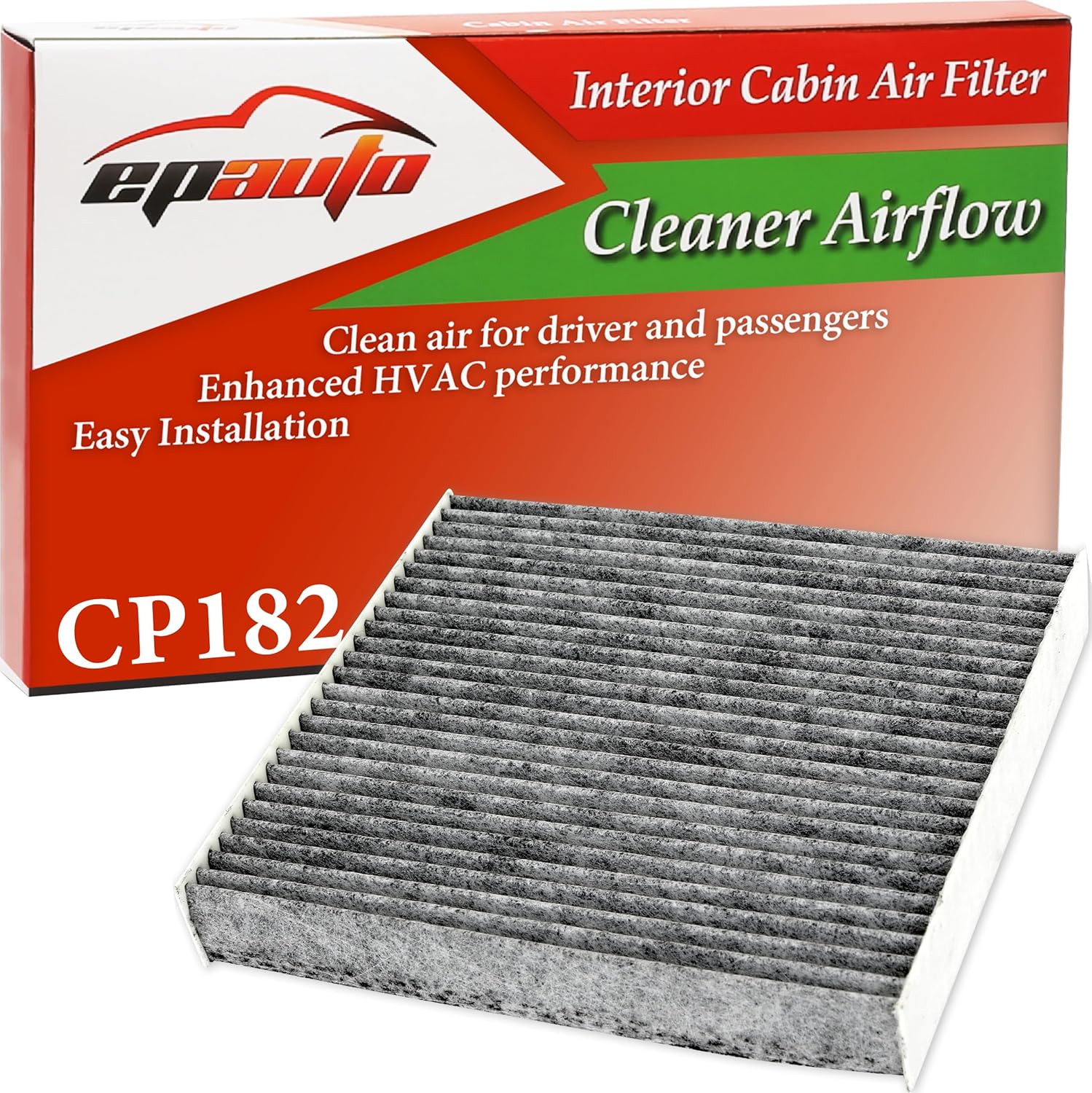
| Compatible models | Honda Fit 2009-2020 |
|---|---|
| Replacement for | FRAM CF11182 / Honda part 80292-TBA-A11 |
| Filter type | Cabin air filter with activated carbon |
| Recommended replacement | Every 12 months or 12,000 miles |
The EPAuto CP182 cabin air filter is a direct-fit replacement for the Honda Fit and similar Honda/Acura models, used to keep the vehicle cabin air cleaner and reduce odors. Installation is straightforward: drop the glove box, remove the cover behind it and slide the old filter out before inserting the new one, so owners can change it themselves in minutes. The filter includes activated carbon to help absorb odors and airborne contaminants and is marketed to improve HVAC performance and passenger comfort. Practical benefits include lower cost compared with factory replacements and wide model coverage across recent Fit years, making it easy to keep a fresh filter on a regular maintenance schedule. Some buyers report occasional fit tightness or minor trimming required on specific model years, so check fit before final installation. Recommended replacement interval is about once a year or every 12,000 miles, which aligns with routine service intervals for peace of mind.
Best for: A risk-averse mainstream buyer who values reliable, low-cost maintenance parts and wants a near-factory replacement that is simple to install and keeps cabin air fresh.
Less Ideal for: Drivers seeking higher-performance or specialty filtration such as HEPA-level or pollen-specific filters should consider purpose-built alternatives rather than this general replacement.
- Designed to match factory cabin filter shape for straightforward replacement in Honda Fit
- Contains activated carbon to reduce odors in the cabin
- Easy DIY installation with glove box access instructions provided
- Lower-cost alternative to factory-brand filters
- A small number of users report a slightly tight fit that required trimming or extra force to seat properly
Verdict: A budget-friendly, carbon-equipped cabin filter that makes DIY replacements easy for Honda Fit owners who prioritize dependable, regular maintenance.
Choosing the Right Honda Fit Air Filter: Key Factors to Consider
Filtration Efficiency
Filtration efficiency determines how well a filter captures dust, pollen, and road debris before air reaches the engine. Higher-efficiency media trap smaller particles, which reduces abrasive wear on engine components and helps preserve performance over time.
However, extremely dense media can restrict airflow if not engineered properly, so balance matters. Look for specifications or test data indicating particle capture rates and recommended replacement intervals based on driving conditions.
Fitment and Seal Quality
Correct fitment ensures the filter seals tightly in the airbox so all incoming air passes through the media. A poor seal or imprecise dimensions can allow unfiltered air to bypass the filter, negating its protective purpose and risking engine damage.
Measure or verify the exact Honda Fit dimensions and check gasket or flange design. A robust sealing surface and consistent manufacturing tolerances reduce the chance of leaks and make installation more reliable.
Media Type and Construction
Air filter media ranges from paper and cotton to synthetic blends, each with tradeoffs in airflow, filtration, and service life. Paper media often offers good initial filtration at low cost, while synthetic or multi-layer media can provide higher dust-holding capacity and more consistent performance under heavy use.
Construction quality, such as pleat depth, glue integrity, and frame stiffness, affects how long the filter maintains shape and efficiency. Choose media and construction that match your driving environment and maintenance preferences.
Airflow and Engine Performance
The filter must permit adequate airflow to support the Honda Fit engine's needs. If airflow is overly restricted, you may notice reduced throttle response or less-efficient combustion. Conversely, a very open filter that sacrifices filtration can let damaging particles reach the engine.
Seek a balance where the filter maintains good airflow while meeting filtration goals. Manufacturer airflow specs or independent test data can help assess this tradeoff.
Maintenance Interval and Ease of Replacement
How often you need to change the filter depends on driving conditions and media capacity. Filters with higher dust-holding capacity usually last longer between service intervals, reducing long-term maintenance hassle.
Also consider how easy it is to access and replace the filter in the vehicle. Filters designed for straightforward, tool-minimal swaps reduce the chance of improper installation and make routine checks more likely to happen.
Durability and Environmental Resistance
Durability includes frame rigidity, resistance to moisture, and long-term media stability. A filter that flexes or deforms can compromise the seal and allow contaminants through. Resistance to humid or oily environments also matters if you drive in coastal or industrial areas.
Choose filters with sturdy frames and media treatments suitable for expected conditions to ensure consistent protection across seasons and environments.
How We Chose the Best Honda Fit Air Filter
We focused on attributes that directly affect longevity, engine protection, and maintenance ease for Honda Fit owners. Key evaluation criteria included: filtration efficiency, to limit particle ingestion and protect internal components; fitment accuracy, to ensure proper sealing and prevent unfiltered air bypass; build quality and media type, since material construction influences both airflow and lifespan; ease of installation, for DIY-friendly swaps and correct seating; and maintenance interval guidance, reflecting how often the filter needs attention under different driving conditions.Products were excluded if they lacked clear sizing or fitment specifications for the Honda Fit, if construction details were unavailable, or if they used ambiguous media descriptions. We prioritized options with verifiable performance-related specs and clear compatibility information. This approach narrows the field to durable, well-specified filters that suit typical Fit driving environments.
Our full evaluation process is outlined in our review methodology.
FAQ
How often should I change the Honda Fit air filter?
Replacement frequency depends on driving conditions and media type. Under normal urban and highway use, many owners change the engine air filter every 12,000 to 30,000 miles, while dusty or off-road conditions require more frequent checks. Inspect the filter visually during routine maintenance and replace it when heavily soiled or if airflow seems restricted.
Can I use an aftermarket air filter in my Honda Fit?
Aftermarket filters are commonly used and can provide equivalent or improved filtration when they specify correct fitment and media properties. The important part is confirming the filter is sized and shaped for the Honda Fit airbox and meets reasonable filtration and airflow expectations. Review construction details and manufacturer specifications before choosing.
Does a cleaner air filter improve fuel economy in a Honda Fit?
A clean air filter helps maintain proper airflow and combustion efficiency, which can support steady fuel economy. The effect is usually modest unless the existing filter is heavily clogged. Regular maintenance to ensure good airflow is a practical step toward consistent fuel use.
Should I worry about cabin filters versus engine air filters?
Cabin filters and engine air filters serve different purposes: cabin filters clean the air entering the passenger compartment, while engine air filters protect the engine. Both should be maintained on their own schedules. If you notice reduced HVAC airflow or odors inside the vehicle, check the cabin filter; for engine performance issues or accelerated wear, inspect the engine air filter.
How do I know if an air filter fits my Honda Fit?
Confirm fitment by checking the filter dimensions and the vehicle application list provided by the manufacturer. The filter should match the airbox shape and seal surfaces precisely. If the product provides clear size specs and installation guidance for the Honda Fit, that increases the likelihood of proper fit.
Are reusable or washable filters a good choice for the Honda Fit?
Reusable filters can lower long-term waste and cost if properly maintained, but their performance depends on media quality and cleaning techniques. Some washable media may require specific oils or treatments after cleaning to restore filtration. Consider whether you are comfortable with the maintenance steps and whether the reusable option documents expected performance for the Honda Fit.
Conclusion
When choosing a Honda Fit air filter, prioritize correct fitment, reliable filtration efficiency, and construction quality. Balancing airflow needs against particle capture and maintenance frequency will help protect the engine and sustain performance.Consider your typical driving conditions and maintenance willingness when selecting media type. Regular inspection and timely replacement are the best ways to ensure the filter continues to protect the engine effectively.
Explore More:
- Check out all Honda Fit parts & accessories
- Explore Air Filters Maintenance & Repair Guides
- Explore Engine
- Browse all Auto Parts
