

Note: This article contains affiliate links. If you click on these links and make a purchase, I may earn a small commission at no extra cost to you. This helps support my research and content. Read my full affiliate disclosure here.
If your Hyundai Tucson is showing ABS-related warnings or inconsistent braking behavior, choosing the right ABS wheel speed sensor matters. A correct sensor restores accurate wheel-speed data to the vehicle control modules, which helps maintain ABS function, traction control, and overall braking stability in everyday driving. This guide covers seven shortlisted ABS wheel speed sensors specifically for the Hyundai Tucson. We evaluated each option for proper fitment, electrical signal consistency, and durability under driving conditions. Read on to understand the factors that informed these top picks and prepare to select the right replacement for your Tucson.
Looking for other parts? See all Hyundai Tucson parts & accessories.
Top Picks at a Glance
| Best Reviewed A top-rated pick with lots of positive feedback | Carbhub Rear ABS Wheel Speed Sensor 2-Pack for Hyundai Tucson (FWD) |  |
| Most Popular A crowd favorite that many people choose with confidence | GoSens ABS Wheel Speed Sensor for Hyundai Tucson (Front Right) |  |
| Best Quality Built to a higher standard if you want something more solid | BIG TIGER PARTS Rear ABS Wheel Speed Sensor 58980-C1100 (FWD Rear) |  |
| Best Budget The cheapest option that still gets the job done reliably | X AUTOHAUX Rear Hub Wheel ABS Speed Sensor (pair) |  |
| Most Sold A high-volume bestseller chosen again and again | GoSens 215b-1 ABS Wheel Speed Sensor (Front Right) |  |
| Best Value for Money The sweet spot between price and what you get | Auto Parts Port Front Left and Right ABS Wheel Speed Sensor Set for Hyundai Tucson (2016–2021) |  |
| Best Overall The best all-around choice for most situations | A-Premium Rear ABS Wheel Speed Sensor 2‑Pack for Hyundai Tucson (Rear) |  |
1. Carbhub Rear ABS Wheel Speed Sensor 2-Pack for Hyundai Tucson (FWD)

| Fitment | Hyundai Tucson 2016–2021 (FWD only) |
|---|---|
| Quantity | 2 pieces (rear left and right) |
| Manufacturer Part Number | 58980C1100 |
These two rear ABS wheel speed sensors are intended to replace failing factory sensors on Hyundai Tucson (2016–2021) FWD models to restore ABS and traction control function. Each sensor uses a factory-style connector and mounting points for plug-and-play installation, so they are typically swapped in place of the old sensor without cutting or splicing wires. The kit comes as a matched left and right pair which simplifies diagnosing a rear-sensor fault and getting both sides up to spec. Manufacturer images and descriptions emphasize quality control and ECU-friendly signal characteristics, which helps prevent persistent warning lights after installation. Limitations to note are fitment: this set is only for FWD Tucsons and will not work on AWD configurations, and aftermarket sensors can vary slightly in longevity compared with higher-cost factory parts. Expect quick symptom resolution for ABS/traction warnings when the sensor is the confirmed fault, but routine correct installation and connector care remain important for long-term reliability.
Best for: Reliability-focused owners who prioritize restoring correct ABS and traction control operation on a Hyundai Tucson 2016–2021 FWD and want a straightforward, OEM-style replacement without wiring work.
Less Ideal for: Owners seeking OEM-branded parts for warranty or maximum long-term durability, or anyone with an AWD Tucson since this part does not fit those models.
- Sold as a matched left/right pair for straightforward replacement of both rear sensors
- Factory-style connector and precise mounting points for plug-and-play installation
- Designed to restore ABS and traction control signaling to clear warning lights
- Manufacturer emphasizes quality control and ECU-compatible signal output
- Compatible only with front-wheel-drive Tucson models, not AWD
- Aftermarket sensor may not match the long-term durability of higher-cost factory replacements
Verdict A practical, plug-and-play rear sensor pair that reliably clears ABS/traction faults on FWD Hyundai Tucson 2016–2021, but not suitable for AWD models.
2. GoSens ABS Wheel Speed Sensor for Hyundai Tucson (Front Right)
| Compatible vehicles | Hyundai Tucson 2005-2009 |
|---|---|
| Position | Front Right |
| Manufacturer | GoSens |
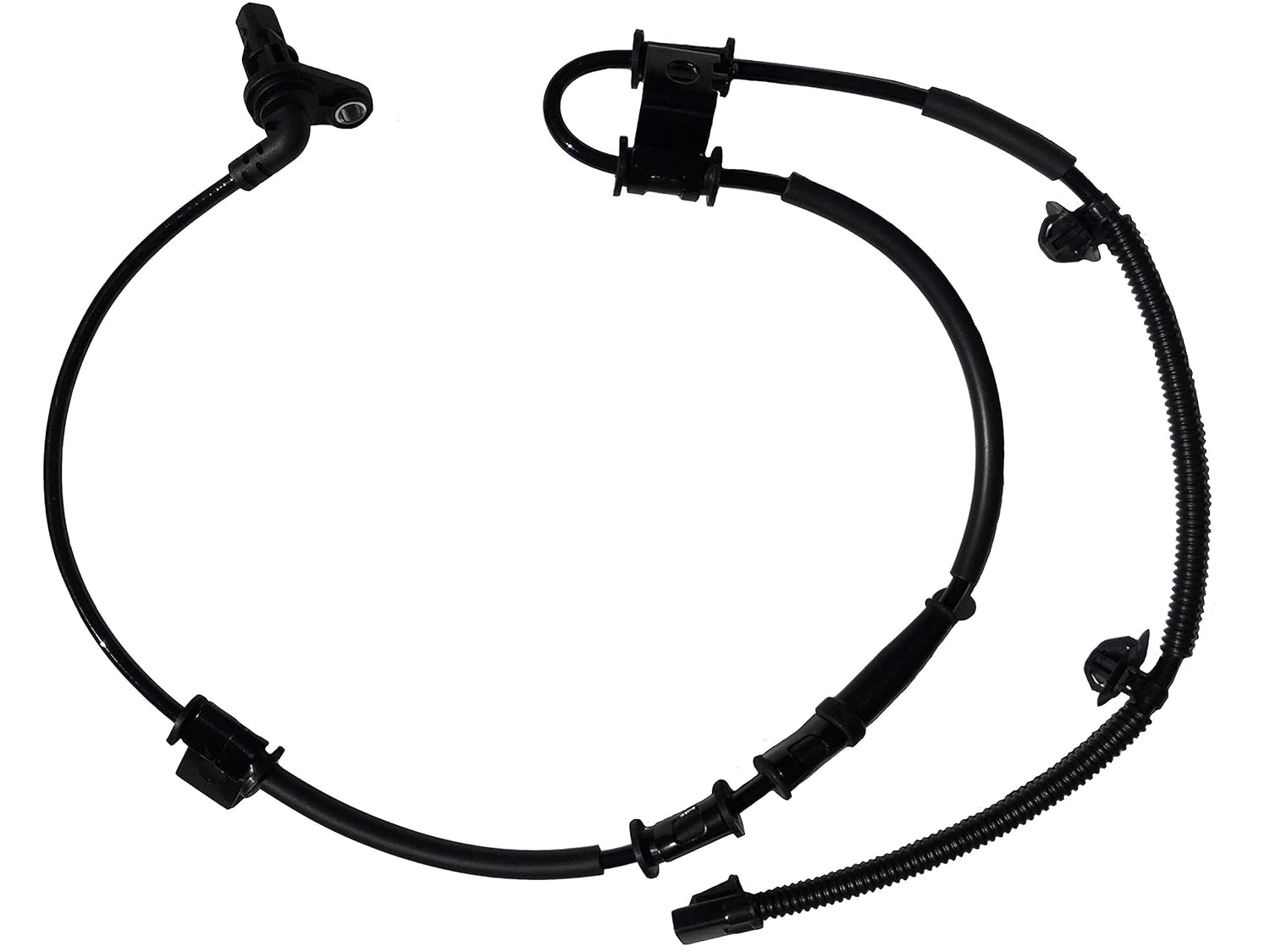
This GoSens wheel speed sensor is a direct-fit replacement for the front-right position on Hyundai Tucson 2005–2009 models. It detects wheel rotation and feeds that signal to the ABS/traction control system so those safety features and the vehicle computer operate correctly. Installation is typical for a wheel sensor: unplug the OEM connector, remove the mounting fastener, swap in the new sensor and reconnect the harness. The listing highlights vehicle-specific fitment which helps avoid compatibility guessing and the sensor arrives prewired for a straightforward swap. Practical benefits include restoring ABS and traction functionality and clearing speed-sensor-related fault codes without needing caliper or hub replacement. Limitations are typical of economy aftermarket sensors: long-term durability and exact factory-matching calibration can vary compared with higher-end factory-quality replacements, and you should verify connector type and mounting before ordering to ensure a clean fit.
Best for: Buyers who prioritize convenience and quick, vehicle-specific repairs and want a straightforward replacement to get ABS and traction systems back to working order with minimal fuss.
Less Ideal for: Drivers seeking an exact factory-quality long-term OEM replacement or those who prefer dealer parts and extended durability assurances should consider higher-end factory-quality sensors instead.
- Direct-fit for Hyundai Tucson 2005–2009 front-right position to simplify replacement
- Prewired connector designed to plug into the factory harness for faster installation
- Restores ABS and traction control signals to clear related warning lights
- Aftermarket sensor may not match long-term durability of higher-end factory-quality units
- Fitment depends on verifying connector and mounting details before purchase
Verdict A convenient, vehicle-specific front-right replacement that gets ABS and traction systems working again quickly, though it may not match premium factory-quality longevity.
3. BIG TIGER PARTS Rear ABS Wheel Speed Sensor 58980-C1100 (FWD Rear)

| Maximum Supply Voltage | 12 Volts |
|---|---|
| Mounting Type | Flange Mount |
| Output Type | Digital |
| Upper Temperature Rating | 125 Degrees Celsius |
This rear wheel speed sensor replaces the factory unit to restore ABS and traction control input on compatible Hyundai Tucson models. It mounts in the flange location and provides a digital output compatible with the vehicle wiring harness, so installation is the same as the original sensor and typically requires basic hand tools. Notable features include factory-quality fit and direct-fitment for FWD applications, a 12-volt supply rating that matches automotive electrical systems, and a high operating temperature rating suitable for engine bay and wheel-well conditions. In use the sensor delivers the wheel speed signal the ABS module expects, which corrects dashboard fault lights and returns normal braking and stability functions when the original sensor has failed. Limitations are that this part is intended for FWD (2WD) rear applications only and will not fit AWD/4WD variants, and buyers should verify exact vehicle year and axle fitment before ordering. The ABS sensor is a straightforward, serviceable replacement for restoring safety systems on affected vehicles.
Best for: Performance-oriented buyers who prioritize restoring precise ABS and traction control function on a Tucson to maintain optimal braking and stability behavior.
Less Ideal for: Drivers looking for a universal sensor or those with AWD/4WD Tucson models should seek a part specifically made for their drivetrain or a universal-fit solution with adapters.
- Direct-fit factory-quality replacement for rear FWD wheel speed sensing
- Digital output compatible with vehicle ABS module and wiring harness
- Designed to handle automotive temperatures up to 125 C
- Flange mount design matches the original sensor location for straightforward installation
- Not compatible with AWD/4WD rear axles
- Only sold as the sensor assembly without mention of additional mounting hardware or harness adaptors
Verdict A direct-fit, factory-quality rear ABS speed sensor aimed at performance-minded buyers repairing FWD Hyundai Tucson braking and stability systems.
4. X AUTOHAUX Rear Hub Wheel ABS Speed Sensor (pair)

| Manufacturer | X AUTOHAUX |
|---|---|
| Position | Rear |
| Manufacturer Part Number | a23062100ux0574 |
These two rear ABS wheel speed sensors are sold as a pair and intended to replace the plug-in sensor caps on compatible 2WD rear hub assemblies. They install at the rear left and right wheel hubs to restore wheel speed signal to the ABS/traction control system without replacing the entire hub. Notable features include a two-pin connector and a metal-sealed sensor tip aimed at improving wear resistance and lifespan compared with cheap plastic caps. In practical use the sensors are a simple swap-in for the factory part number listed, they resolve speed-sensor fault codes and return live wheel-speed data when wired and reset with a scan tool. Expect the usual limitations of an aftermarket cap: installation can be fiddly on some vehicles and long-term durability depends on driving conditions and installation quality. This kit is best when you want a low-cost repair that restores ABS functionality without a full hub replacement.
Best for: Budget-conscious owners seeking an inexpensive, practical fix to clear rear wheel speed sensor faults and restore ABS function on supported Hyundai Tucson 2WD models.
Less Ideal for: Drivers who prioritize long-term durability or want a factory-brand part for maximum longevity should consider OEM replacements or full hub assemblies instead.
- Sold as a pair so both sides can be serviced at once.
- Two-pin connector matches factory wiring for straightforward electrical fitment.
- Metal-sealed sensor tip for improved wear and scratch resistance compared with basic plastic caps.
- Direct replacement for the listed rear hub sensor part number to clear ABS speed faults without replacing the whole hub.
- Long-term durability is uncertain compared with higher-end OEM parts.
- Installation may require hub disassembly or limited access and is not always simple for DIY users.
Verdict A low-cost pair of rear wheel ABS speed sensor caps that restore ABS function on supported Hyundai Tucson 2WD models without replacing the entire hub.
5. GoSens 215b-1 ABS Wheel Speed Sensor (Front Right)

| Mounting Type | Flange Mount |
|---|---|
| Output Type | Push-Pull |
| Specific Uses For Product | Hyundai Tucson (2010-2014), Hyundai IX35 (2010-2014) |
| Material Type | Acrylonitrile Butadiene Styrene |
This GoSens 215b-1 ABS wheel speed sensor replaces the front-right factory unit on 2010–2014 Hyundai Tucson/IX35 models and feeds wheel speed data to the vehicle ABS and traction systems. It mounts with a flange and uses a push-pull output style that matches the original signal type, so installation is a direct factory-quality replacement for routine repairs. The ABS sensor is made from ABS plastic and comes as a single front-right unit intended for practical DIY or shop installation; that simplicity reduces diagnosis time when a faulty sensor triggers an ABS or traction fault. Expect the sensor to restore proper wheel-speed readings and clear related fault codes when wired and fitted correctly. Limitations are typical for aftermarket sensors: material is plastic rather than metal-reinforced, and long-term durability can vary compared with higher-end branded parts, so careful handling during fitment is important.
Best for: A buyer who prefers low-risk, straightforward repairs and wants a direct factory-style replacement to fix ABS or traction warnings on a Hyundai Tucson 2010–2014.
Less Ideal for: Drivers seeking heavy-duty or performance-grade sensors for off-road or high-mileage use should consider more rugged aftermarket or OEM options.
- Direct fit for Hyundai Tucson/IX35 2010–2014 front right position so no modification required
- Flange mount and push-pull output match factory-style installation and signal type
- Sold as a single replacement part which simplifies targeted repairs or DIY swaps
- Construction uses ABS plastic which may not be as durable as metal-reinforced aftermarket options
- Only the front-right sensor is included so additional purchases needed if multiple sensors are faulty
Verdict A straightforward, direct-fit front-right replacement sensor that restores ABS function on 2010–2014 Hyundai Tucson/IX35 but uses basic ABS-plastic construction rather than a heavy-duty design.
6. Auto Parts Port Front Left and Right ABS Wheel Speed Sensor Set for Hyundai Tucson (2016–2021)
| Mounting Type | Wheel Mount |
|---|---|
| Output Type | Push-Pull |
| Specific Uses For Product | automotive |
| Material Type | Plastic, Metal, Silicon |
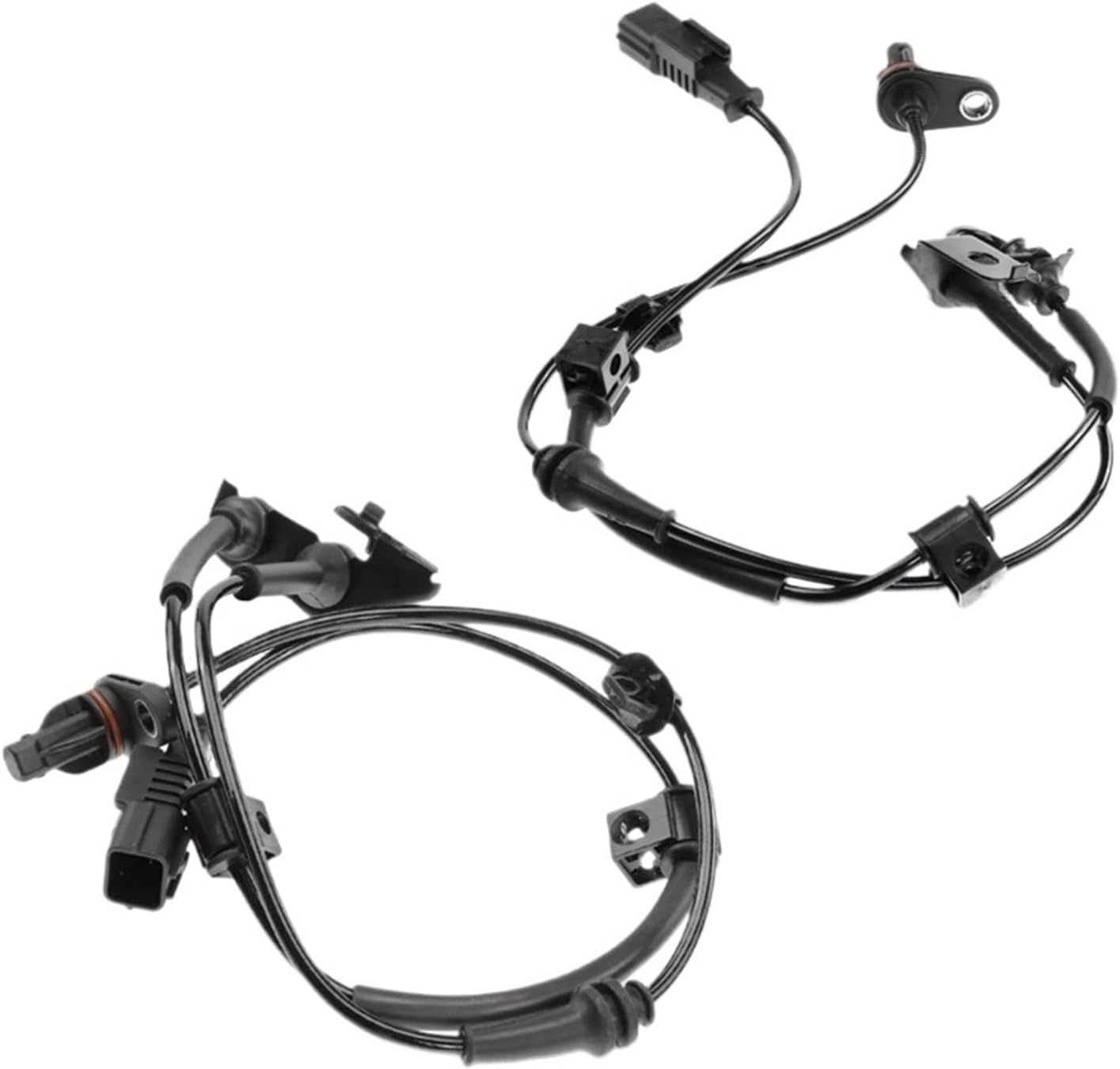
These two front ABS wheel speed sensors replace the factory front left and right units on 2016–2021 Hyundai Tucson vehicles and restore wheel-speed input to the vehicle's anti-lock braking and traction systems. They arrive as complete wheel-mount sensors with push-pull output and the standard electrical connector, so typical use is direct replacement during brake or ABS repairs or when an ABS warning light appears. The sensors are constructed from plastic, metal, and silicon and come as a matched pair to keep left and right signals consistent. Practical benefits include straightforward bolt-on installation and compatibility with the OEM part numbers listed, which helps avoid sensor mismatch and long diagnostic sessions. Limitations are that this is a direct replacement part set rather than an upgraded high-performance sensor, and buyers should confirm fitment to their VIN or compare the original part number before installation. The seller offers one-year replacement coverage for defective parts but labor and related service costs are not covered.
Best for: Practical optimizers who want a cost-effective, OEM-style replacement to quickly clear ABS warnings and restore normal braking and traction behavior on a Hyundai Tucson.
Less Ideal for: Drivers seeking performance upgrades, motorsport components, or lifetime coverage for parts and installation should consider higher-end or specialized sensor options.
- Sold as a matched left and right front sensor pair for consistent wheel-speed signals
- Direct-fit design to replace factory front sensors for 2016–2021 Hyundai Tucson
- Push-pull output and standard wheel-mount interface for straightforward installation
- Constructed from plastic, metal, and silicon for typical automotive durability
- Not an upgraded performance sensor—designed as a standard factory replacement
- Warranty covers part replacement only and excludes labor and other incidental costs
Verdict A matched, budget-friendly front sensor pair that restores factory-style ABS function on 2016–2021 Hyundai Tucson models without performance upgrades.
7. A-Premium Rear ABS Wheel Speed Sensor 2‑Pack for Hyundai Tucson (Rear)

| Vehicle fitment | Hyundai Tucson 2016–2021 (FWD only) |
|---|---|
| Mounting type | Plug Mount |
| Output type | Analog |
| Upper temperature rating | 257 Degrees Fahrenheit |
This two-piece A-Premium rear ABS wheel speed sensor set is a direct replacement intended for Hyundai Tucson 2016–2021 FWD models. It measures wheel speed with an analog output and plugs into the factory harness, so installation is typically swapping the old sensor at the hub and connecting the wiring. The sensors are produced to meet factory-style fit and thermal tolerance up to 257 degrees Fahrenheit, and the package includes both left and right rear units to restore ABS and traction control function without replacing the whole hub. In practice buyers report straightforward installs and immediate resolution of ABS warning lights when the wiring and mounting surfaces are in good condition. Limitations to note are that these are for FWD Tucson only and not compatible with AWD variants, and long-term durability will depend on road conditions and installation care; the sensor housing can be vulnerable if hammered into place. This kit is a practical, cost-effective option to get a nonfunctional rear-wheel sensor back to OEM-like operation on the specified Tucson models.
Best for: Balanced buyers who want a practical, factory-style replacement to restore rear ABS function on a 2016–2021 Hyundai Tucson FWD without paying for a full hub assembly.
Less Ideal for: Drivers seeking a sensor that fits AWD Tucson models or those who prefer a lifetime-tested OEM unit from a dealer should consider other options.
- Sold as a rear left/right 2-piece set so both sides can be serviced together.
- Plug-mount design with factory-style connector for straightforward replacement and direct wiring fit.
- Analog output and factory-grade temperature rating support normal wheel-sensing operation under typical driving heat.
- Multiple buyers report easy installation and successful clearing of ABS/traction warnings after replacement.
- Not compatible with AWD Tucson models, limited to FWD fitment only.
- Durability depends on careful installation since the sensor nose can be damaged if forced into the hub.
Verdict A cost-effective, factory-style rear sensor pair that restores ABS function on FWD Hyundai Tucson 2016–2021 models, provided installation is done carefully.
Choosing the Right Hyundai Tucson ABS Wheel Speed Sensor: Key Factors to Consider
Fitment and Connector Compatibility
Correct mechanical fit and an exact electrical connector match are critical because they determine whether the sensor will mount securely and plug into the existing harness without modifications. An improper fit can lead to poor sensor alignment, intermittent readings, and frustrated troubleshooting.
Confirming the connector type and harness length avoids the need for splicing or adapter solutions that can introduce corrosion points or signal loss. Look for sensors that specify fitment for the exact Hyundai Tucson model year or wheel-hub variant to minimize installation time and reduce the chance of misalignment.
Signal Accuracy and Electrical Specs
Wheel speed sensors provide real-time pulse signals to ABS and traction-control modules, so electrical characteristics such as voltage range, pulse frequency at specific wheel speeds, and resistance matter. A sensor that outputs consistent, factory-like signals helps prevent false ABS or speed-sensor codes and ensures stable braking behavior.
Reviewing resistance and output specifications helps determine compatibility with the vehicle control module. Sensors that vary markedly from expected electrical values can trigger diagnostic trouble codes or intermittent ABS activation, so prioritize parts with documented specs that match OEM ranges.
Durability and Environmental Resistance
Wheel speed sensors sit close to road debris, water, salt, and high temperatures, so robust sealing and sturdy housings affect long-term reliability. Corrosion-resistant terminals and strong strain relief on the cable reduce failure risk over time, especially in regions with winter road treatments or heavy off-road exposure.
Consider construction details like molded connectors, protective sheathing, and IP-rated sealing if available. These features reduce moisture ingress and abrasion damage that commonly lead to intermittent signals or outright sensor failure.
Mounting and Alignment Characteristics
Proper air gap and sensor-to-tone-ring alignment are necessary for consistent pulse generation. Some sensors have built-in alignment features or shoulder stops that make setting the proper gap easier during installation. Others require careful measurement and adjustment to achieve the correct clearance.
Difficulty obtaining or maintaining the correct gap can cause fluctuating readings and trigger ABS warnings. Look for sensors with clear mounting tolerances and installation guidance to reduce the risk of misalignment during fitting.
Connector and Harness Quality
The quality of the connector and harness affects long-term electrical reliability. Tight-fitting, corrosion-resistant connectors with secure locking tabs reduce the chance of intermittent contact from vibration or moisture. Longer or flexible harnesses can also make routing easier and reduce stress on the wire during wheel movement.
Poor connector fit or fragile locking mechanisms commonly lead to signal interruptions and recurring diagnosis. Prefer sensors with reinforced strain relief and robust terminals to minimize future maintenance.
Diagnostic Compatibility and Troubleshooting Ease
Sensors that produce predictable signals simplify both initial diagnostics and any follow-up testing. If you need to perform an ABS sensor wiring test or use a multimeter to check resistance and signal output, documented expected values can speed troubleshooting. Parts that behave consistently under load reduce false positives when reading ABS sensor codes.
Being able to compare measured values to published specs makes it easier to distinguish between sensor, harness, and module issues. Choose sensors with clear technical information to streamline diagnosis if problems reappear.
FAQ
What are common ABS sensor symptoms on a Hyundai Tucson?
Common symptoms often include an illuminated ABS warning light, intermittent traction-control warnings, or inconsistent braking behavior during hard stops. You may also notice speedometer flicker or sporadic loss of stability control functions. These issues usually prompt a diagnostic scan to identify the specific wheel sensor involved.
Where is the ABS wheel speed sensor location on a Hyundai Tucson?
On the Hyundai Tucson, each wheel speed sensor is mounted near the wheel hub or steering knuckle at each wheel. Front sensors are typically accessible from inside the wheel well, while rear sensors sit near the rear hub assembly. Exact placement can vary slightly by model year and drivetrain configuration, so consult vehicle-specific diagrams when planning work.
How do I test an ABS sensor wiring test on my Tucson?
A basic wiring test usually starts with a visual inspection for damaged insulation or corroded connectors. Use a multimeter to check resistance across the sensor leads and to confirm continuity to the control module. For dynamic testing, measure the sensor output while the wheel is rotated slowly to observe pulsed voltage output. Expect values and pulse behavior to align roughly with factory specifications.
Will replacing a wheel speed sensor clear ABS sensor code P0500?
Code P0500 relates to vehicle speed sensor issues and may be linked to a faulty wheel speed sensor in some cases. Replacing a defective sensor that is shown by diagnostics to be the cause can clear the code, but it often requires verifying the new sensor produces correct signals and then clearing codes with a scanner. If the underlying issue is wiring or the control module, changing the sensor alone may not resolve the code.
Is there a difference between OEM vs aftermarket wheel speed sensor choices?
OEM sensors are designed to meet original fit and electrical standards, which can simplify installation and reduce uncertainty. Quality aftermarket sensors can offer similar performance, but variability in connector fitment, harness length, and electrical specs is more likely. Look for aftermarket parts that provide clear compatibility and technical specifications to reduce risk.
How can I diagnose an ABS sensor faulty diagnosis without a scanner?
Without a scanner you can still perform basic checks such as visual inspection, resistance measurement with a multimeter, and a spinning-wheel test to observe a fluctuating voltage signal. Monitor for physical damage, connector corrosion, or torn wiring. These steps often reveal common failure causes, but a scanner gives more precise fault codes and is helpful for confirming the diagnosis.
How We Chose the Best Hyundai Tucson ABS Wheel Speed Sensor
We selected sensors that prioritize correct fitment to Hyundai Tucson wheel hubs and connectors, plus accurate electrical signal output that matches factory specifications. Durability under road conditions was a key filter, including resistance to moisture, dirt, and vibration. We also considered connector quality and harness length to ensure straightforward installation without splicing. Signal consistency under varied wheel speeds and temperature ranges was used to gauge reliability. Excluded items included generic sensors without clear fitment data for the Tucson, parts lacking electrical specification sheets, and sensors with known durability or connector issues. Our evaluation relied on technical compatibility, build quality, and documented functional reliability rather than price alone. Where possible we prioritized options that simplify installation and reduce risk of recurring ABS or traction-control faults.
Our full evaluation process is outlined in our review methodology.
Conclusion
Choosing the right ABS wheel speed sensor for a Hyundai Tucson means prioritizing correct fitment and reliable electrical output. Focus on sensors that match the vehicle's connector and mounting style, and that provide documented resistance and signal characteristics similar to factory values. Balance durability and ease of installation against the need for precise alignment and secure connectors. Clear technical information and robust construction reduce the chance of repeat faults and make future diagnosis simpler if ABS or speed-sensor codes reappear.
Explore More:
- Check out all Hyundai Tucson parts & accessories
- Explore Electrical System
- Browse all Auto Parts
