

Note: This article contains affiliate links. If you click on these links and make a purchase, I may earn a small commission at no extra cost to you. This helps support my research and content. Read my full affiliate disclosure here.
If you drive a Hyundai Tucson, picking the right car battery affects daily reliability and long-term ownership costs. A properly matched battery ensures consistent starting power in a range of temperatures and reduces the chance of unexpected breakdowns.This guide presents the top six shortlisted options for Hyundai Tucson car battery replacements. We evaluated each pick on electrical performance and durability, plus fitment and maintenance needs. Read on for the key factors that matter and to find a battery that suits your driving conditions and maintenance preferences.
Looking for other parts? See all Hyundai Tucson parts & accessories.
Top Picks at a Glance
| Best Reviewed A top-rated pick with lots of positive feedback | 1AUTODEPOT Group 48 (H6) 12V 70Ah AGM Car Battery, 760 CCA | 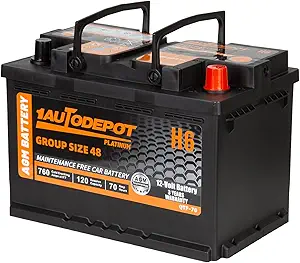 |
| Best Quality Built to a higher standard if you want something more solid | MARXON Group 94R H7 L4 12V 80Ah AGM Start‑Stop Car Battery |  |
| Best Budget The cheapest option that still gets the job done reliably | Autocessking H7 (Group 94R) 12V 80Ah AGM Start-Stop Car Battery |  |
| Most Sold A high-volume bestseller chosen again and again | 1AUTODEPOT Group 94R (H7) 12V AGM Car Battery, 80Ah, 850 CCA |  |
| Best Value for Money The sweet spot between price and what you get | Mighty Max Battery MM-H6 Group 48 12V 70Ah AGM Car Battery |  |
| Best Overall The best all-around choice for most situations | OPTIMA Batteries 35 RedTop Sealed AGM Starting Battery |  |
1. 1AUTODEPOT Group 48 (H6) 12V 70Ah AGM Car Battery, 760 CCA

| BCI Group Size | 48 |
|---|---|
| Rated capacity | 70ah |
| Cold Cranking Amps (CCA) | 760 |
| Reserve Capacity (RC) | 120 |
This 1AUTODEPOT Group 48 AGM battery is a direct replacement-style battery built for reliable starting and heavier electrical loads. It supplies 760 CCA and a 70 Ah rated capacity, which translates to confident cold-weather cranking and enough reserve to support accessories and occasional parasitic draw. The absorbed glass mat construction is non-spillable, vibration resistant, and claims up to twice the cycle life of standard flooded batteries, so you can expect longer service in typical driving conditions. It is designed for vehicles with start-stop systems and charges at standard automotive voltages. Installation is straightforward in compatible Hyundai Tucson battery trays when terminals and Group size match. Important limitations: the battery is heavy and requires care when handling, and fitment depends on confirming Group 48 terminal orientation and tray clearance for your Tucson model year. Long-term longevity will depend on charging system health and usage patterns.
Best for: Reliability-focused buyers who prioritize a dependable, long-lasting battery that handles cold starts and higher electrical loads in a Hyundai Tucson.
Less Ideal for: Drivers who need the lightest possible battery for performance weight reduction or those unwilling to check terminal layout and tray clearance for their specific Tucson model.
- High cold cranking amps (760 CCA) for reliable starting in cold conditions.
- AGM design provides better vibration resistance and lower self-discharge than flooded batteries.
- Built for start-stop equipped vehicles and higher accessory loads.
- Non-spillable, maintenance-free construction simplifies handling and reduces corrosion risk.
- Heavy unit which makes handling and installation more awkward without gloves or help.
- Compatibility requires verifying Group 48 dimensions and terminal orientation for your specific Tucson year and trim.
Verdict A solid, maintenance-free AGM replacement for Hyundai Tucson owners who want stronger starting power and longer service life than typical flooded batteries.
2. MARXON Group 94R H7 L4 12V 80Ah AGM Start‑Stop Car Battery
| Voltage | 12V |
|---|---|
| Capacity | 80Ah |
| Battery type | AGM |
| Group | BCI 94R / DIN H7 L4 |
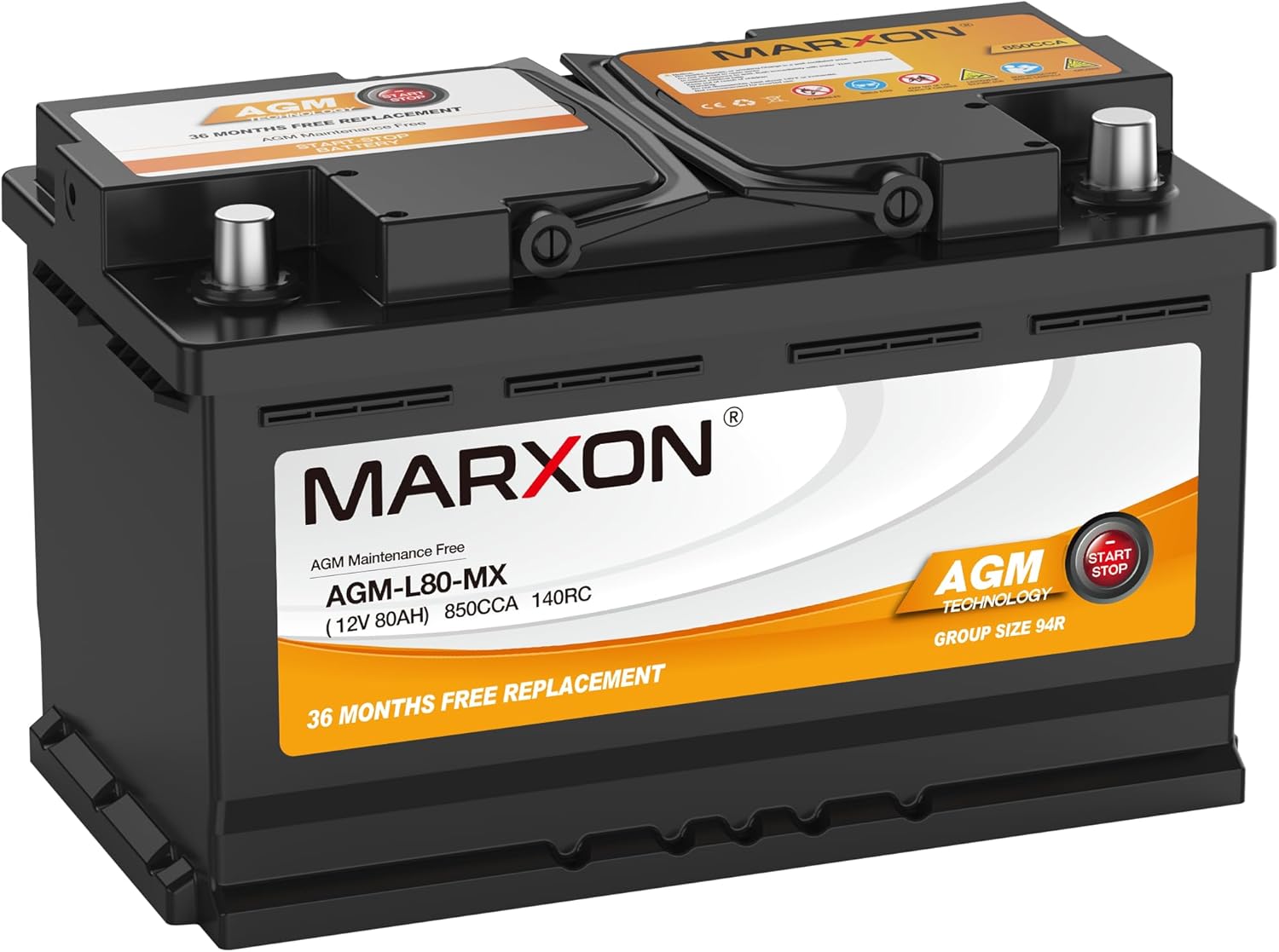
This MARXON Group 94R is a maintenance‑free AGM battery intended for vehicles with start‑stop systems that need reliable cranking and deeper cycling than a conventional flooded battery. It installs like a factory replacement for cars that use the BCI 94R / DIN H7 L4 footprint and provides faster charging acceptance and improved corrosion resistance according to the manufacturer. In everyday use it supplies strong cranking power for frequent stop‑start operation and handles parasitic drains better than standard lead‑acid batteries, which helps with modern Hyundai Tucson electrical loads when parked. Notable features are AGM construction for leak resistance, claimed faster charge acceptance versus SLA, and an 80 Ah capacity with high CCA suitable for heavier electrical systems. Limitations are that fitment and terminal orientation must match your Tucson year and trim, and some users report variation in measured capacity depending on chargers and testers, so expect to verify state of charge after installation and ensure your charging system is compatible with AGM charging profiles.
Best for: Performance‑oriented buyers who prioritize reliable start performance and robust electrical support for a Tucson with start‑stop or heavy accessories, and who expect factory‑replacement behavior with improved cycling.
Less Ideal for: Drivers who rarely use their vehicle and prefer the lowest upfront cost or who cannot confirm terminal layout and physical fit for their specific Tucson year should consider alternative options.
- AGM construction reduces risk of leakage and tolerates vibration better than flooded batteries
- Designed for start‑stop systems, offering stronger reserve power and deeper cycling capability
- Manufacturer claims faster charge acceptance than SLA batteries, reducing recharge time after discharge
- Maintenance‑free design removes need to add water or acid during service life
- Requires an AGM‑compatible charging profile and verification of fitment for specific Tucson model years
- Reported variance in measured state of charge from inexpensive testers means initial charging may be needed
Verdict A performance‑oriented AGM replacement for Hyundai Tucson models that need start‑stop capability and stronger reserve power, provided you confirm fitment and AGM charging compatibility.
3. Autocessking H7 (Group 94R) 12V 80Ah AGM Start-Stop Car Battery
| Battery Type | AGM Start & Stop |
|---|---|
| Voltage | 12 Volts |
| Capacity | 80 Ah |
| Cold Cranking Amps | 850 CCA |
| Group Size | 94R (H7) |
This Autocessking H7 Group 94R AGM is a starting battery built for reliable cold-weather starts and frequent engine stop-start cycles. It supplies 850 cold cranking amps and 80 Ah capacity, so it handles normal Tucson starting loads and offers extra reserve for short accessory use. The AGM construction and high-density negative paste mean better conductivity, improved cycle life versus conventional flooded batteries, and a sealed, maintenance-free design that reduces spill risk and vibration-related damage. It is specified as a Group 94R (H7) with left negative and right positive terminals, so confirm terminal orientation and tray fitment for a Hyundai Tucson before buying. Practical limits: this is a starting battery not intended for deep-cycle or heavy aftermarket audio loads, and its larger physical size and weight make handling and installation less convenient than smaller group batteries. For budget-focused buyers the battery packs strong starting performance and factory-style features at a lower cost, but plan for proper installation and disposal considerations.
Best for: Budget-conscious Hyundai Tucson owners who prioritize dependable starting performance and low maintenance cost over premium-brand features.
Less Ideal for: Drivers who need a battery for heavy deep-cycle use, extended accessory powering, or want the lightest possible option should consider specialty deep-cycle or lightweight alternatives.
- High 850 CCA rating for dependable cold starts.
- AGM design offers maintenance-free service and better vibration resistance.
- Start-stop AGM construction for improved cycle life over conventional batteries.
- Sealed, leak-proof construction increases safety during installation.
- Not suitable for deep-cycle applications like solar or long-duration auxiliary use.
- Group 94R size may require verification for fit in some Tucson model years.
- Heavy weight can make DIY installation awkward without help.
Verdict A cost-minded AGM start-stop battery that delivers strong starting power for Hyundai Tucson owners who need reliable, maintenance-free performance.
4. 1AUTODEPOT Group 94R (H7) 12V AGM Car Battery, 80Ah, 850 CCA

| BCI Group Size | 94R |
|---|---|
| Rated capacity | 80Ah |
| Cold Cranking Amps (CCA) | 850 |
| Reserve Capacity (RC) | 140 |
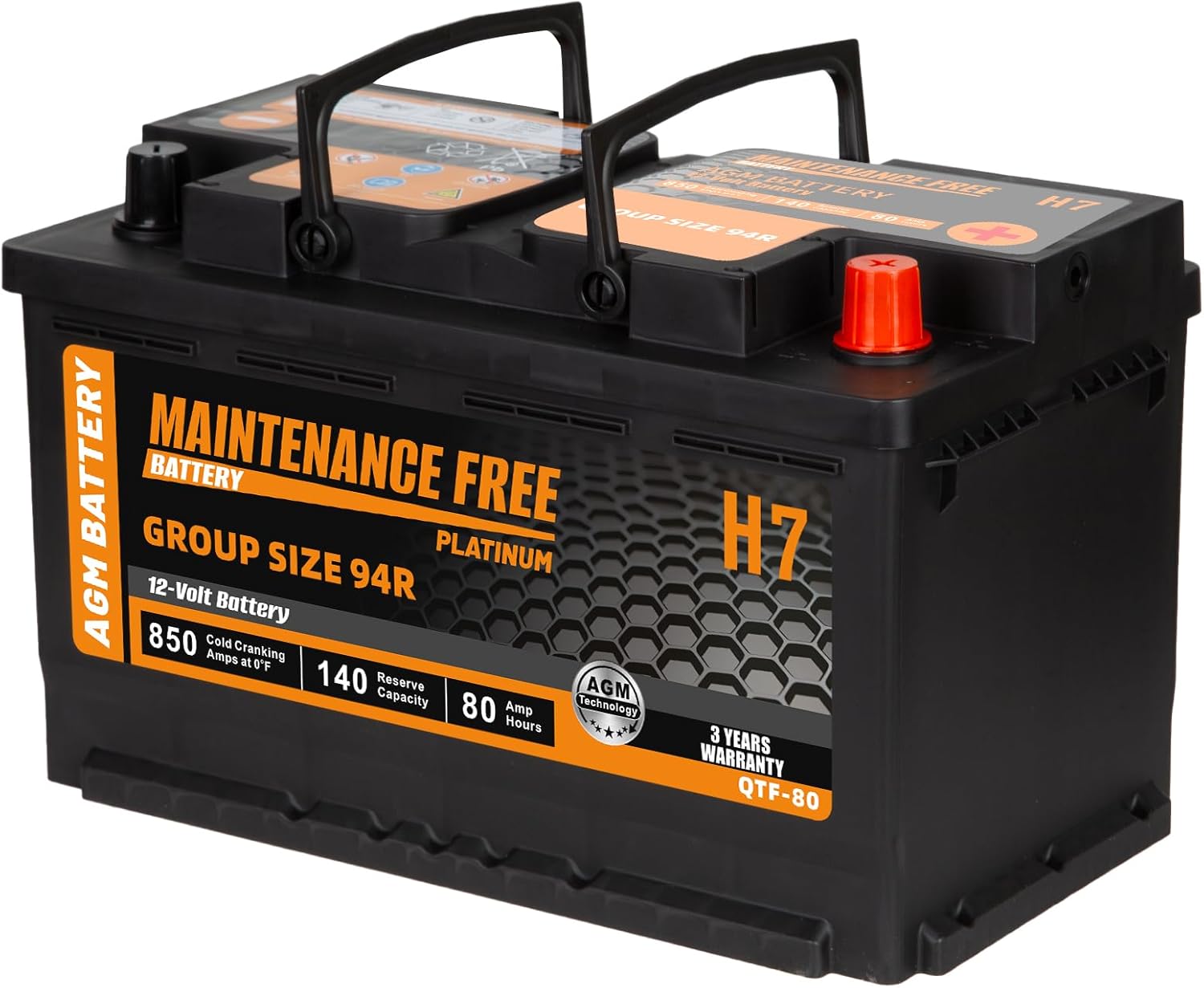
This 1AUTODEPOT Group 94R (H7) AGM battery is a direct-style replacement for Hyundai Tucson applications that accept a 94R/H7 battery. It provides 12 volts, 80 Ah capacity and a beefy 850 CCA rating for confident cold starts, plus a 140-minute reserve capacity for running accessories if the alternator is offline. As an AGM design it is non-spillable, vibration-resistant and better suited to start-stop and accessory-heavy setups than a standard flooded battery. Typical use is a straight swap into the Tucson battery tray where terminal orientation and Type A top-post terminals match factory layouts. Practical benefits include longer cycle life versus flooded batteries, lower self-discharge for vehicles stored for weeks, and improved heat and cold performance. Important limitations are its heavier weight and the need to confirm exact fit and terminal locations for your Tucson model year before purchase; vehicles originally spec'd for different group sizes or charging systems may require adapter hardware or a charging profile check.
Best for: Risk-averse mainstream buyers who prioritize a durable, maintenance-free battery with strong starting performance and low self-discharge for reliability-focused ownership.
Less Ideal for: Drivers who need a lighter weight or specialty battery form factor, or owners whose Tucson requires a different group size or factory-specified battery chemistry.
- High cold-cranking amps (850 CCA) for reliable starts in cold weather
- AGM construction offers non-spillable, vibration-resistant, maintenance-free operation
- 80 Ah capacity and 140 RC provide solid reserve for accessories and short alternator outages
- Designed for start-stop equipped vehicles and higher accessory loads
- Arrives fully charged and ready to install in most compatible vehicles
- Heavier than flooded batteries which makes handling and installation more awkward
- Requires verification of group size and terminal orientation to ensure fit in specific Tucson model years
Verdict A robust, maintenance-free AGM replacement that delivers confident starts and longer cycle life for Hyundai Tucson owners who need dependable, low-maintenance performance.
5. Mighty Max Battery MM-H6 Group 48 12V 70Ah AGM Car Battery
| Voltage | 12V |
|---|---|
| Capacity | 70 Amp Hours |
| Cold Cranking Amps | 760 CCA |
| Reserve Capacity | 120 minutes |
| Terminal | Stud Terminal |
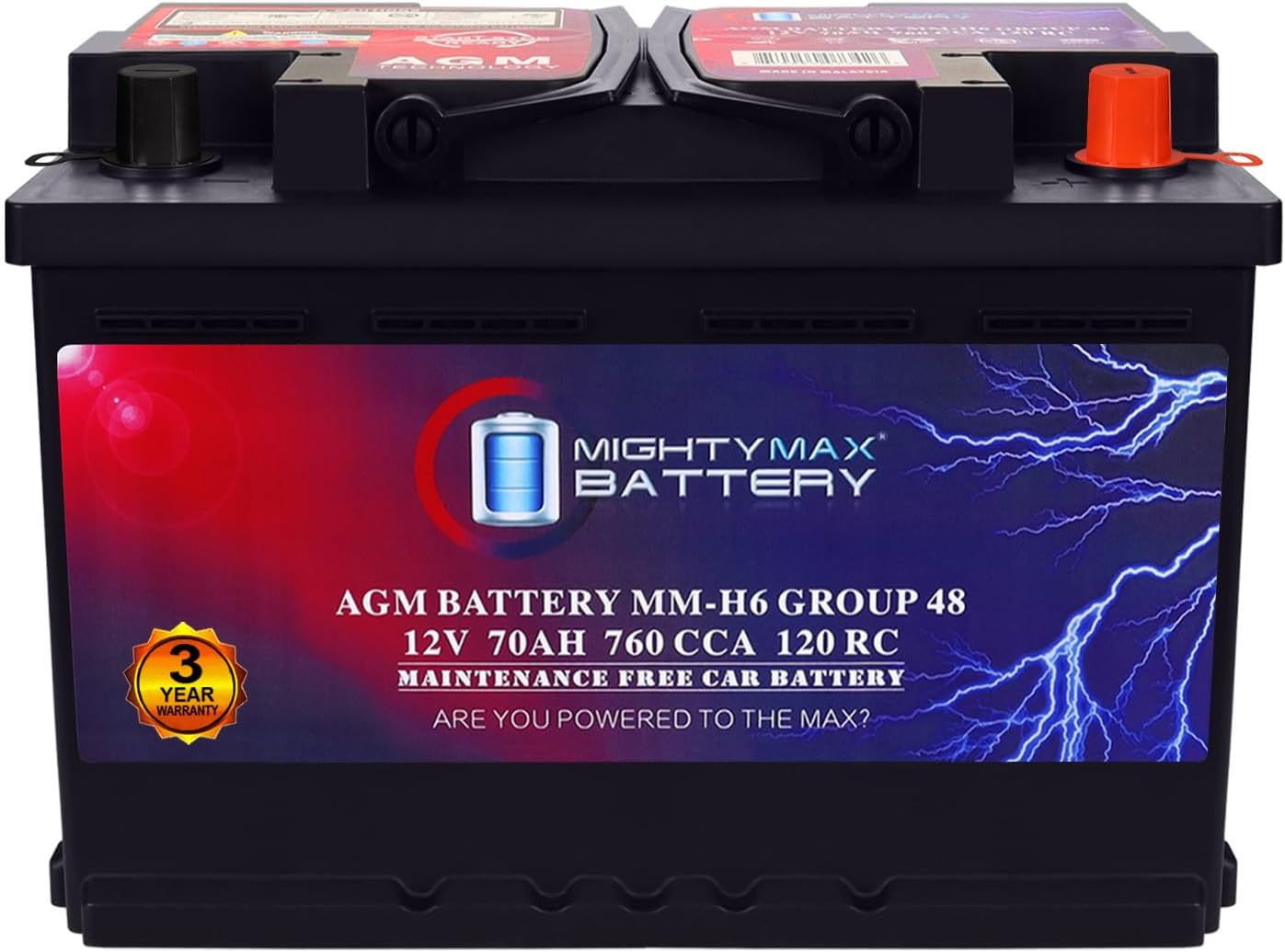
The Mighty Max MM-H6 is a sealed AGM replacement battery intended as a budget-friendly upgrade for vehicles that accept Group 48 sizing, including the Hyundai Tucson when that group fits the tray. It provides 760 CCA for strong cold starts and a 120-minute reserve capacity for short accessory-only runs. The AGM construction means it is spill-proof, mounts in multiple orientations and resists vibration, which simplifies installation and makes it a practical swap for everyday driving. Buyers will appreciate the included mounting screws and the manufacturer testing and safety certifications. Expect solid starting performance in a range of temperatures, but note some customer reports of early failures and a somewhat involved warranty claim process; that risk is the main downside compared with more established OEM replacements. For a practical optimizer focused on value, this battery offers many factory-replacement traits at a lower cost, provided you confirm Group 48 fitment and are comfortable with the seller warranty process.
Best for: Practical optimizers who want a cost-effective replacement battery with AGM benefits for routine driving and dependable starting in a Hyundai Tucson, prioritizing upfront value over brand prestige.
Less Ideal for: Drivers who prefer maximum long-term peace of mind and streamlined dealer warranty support should consider factory-quality replacements from established OEM battery suppliers instead.
- Sealed AGM design is spill-proof and allows multiple mounting orientations
- 760 CCA and 70 Ah capacity deliver strong starting power and usable reserve
- 120-minute reserve capacity supports accessory use and longer cranking
- Rugged construction resists shock and vibration for durable daily use
- Some reported early failures and inconsistent longevity in user feedback
- Warranty claim process may be cumbersome according to customer reports
Verdict A budget-minded AGM Group 48 battery that gives strong starting power and good reserve for a Hyundai Tucson but carries some risk of early failure and a less convenient warranty process.
6. OPTIMA Batteries 35 RedTop Sealed AGM Starting Battery

| Voltage | 12-Volt |
|---|---|
| Cold Cranking Amps | 720 CCA |
| Terminal | SAE Terminal |
| C20 Capacity | 44 AH |
| Reserve Capacity | 90 minutes |
The OPTIMA 35 RedTop is a sealed AGM starting battery built to deliver high cold-cranking power and durable service in everyday driving and tougher conditions. It uses SpiralCell technology to provide strong starting current and faster recharge compared with standard flooded batteries, and the sealed, non-spillable design allows flexible mounting and low maintenance. In a Hyundai Tucson this battery is typically used as a direct replacement to improve cold starts, reduce worry about vibration-related damage, and support basic electrical loads without regular topping up. Notable benefits include a long reserve capacity and resistance to vibration, which help in stop/start city use and light off-road or rough-road driving. Limitations are weight and size compared with some compact replacements and the higher upfront cost compared with conventional flooded batteries, and while AGM resists deep discharge better it is not intended as a deep-cycle solution for heavy accessory loads.
Best for: Buyers seeking a balanced, reliable factory-quality replacement that prioritizes dependable starting, low maintenance, and longer life for everyday Tucson driving and occasional rough-road use.
Less Ideal for: Drivers who need a lightweight performance lithium option, those who frequently deep-cycle the battery for heavy accessories, or owners prioritizing the lowest initial purchase cost.
- High 720 CCA cold-cranking ability for reliable starting in cold weather.
- Sealed AGM construction allows mounting flexibility and is maintenance free.
- SpiralCell design and high vibration resistance extend service life in rough-road use.
- Reserve capacity of 90 minutes provides sustained power for short accessory use when engine is off.
- Heavier and larger than many economy batteries which can complicate fitment in tight trays.
- Higher purchase cost compared with conventional flooded batteries.
- Not designed for repeated deep-discharge cycling or heavy auxiliary loads like winches or large audio systems.
Verdict A durable, maintenance-free AGM starter battery that delivers strong cold-start performance and long life for a Hyundai Tucson but carries a higher upfront cost and heavier weight.
Choosing the Right Hyundai Tucson Car Battery: Key Factors to Consider
Cold-Cranking Amps (CCA)
Cold-cranking amps measure the battery’s ability to start the engine in cold conditions. Higher CCA helps the starter turn the engine over when temperatures drop, reducing no-start risks during winter.
Choosing a battery with adequate CCA for your Tucson’s engine size and local climate is crucial. If you live in a cold region, prioritize higher CCA. In milder climates, a moderate CCA rating may be sufficient while still providing reliable starts.
Reserve Capacity
Reserve capacity indicates how long a battery can run essential systems if the charging system fails. A higher reserve capacity gives you more time to reach a safe location or complete a short trip without the engine running.
This matters for drivers who use a lot of accessories or who may experience alternator issues. Opt for a battery with enough reserve capacity to cover occasional heavy electrical loads and to provide a buffer during charging-system interruptions.
Physical Size and Terminal Layout
Batteries come in specific group sizes that determine fit in the battery tray and proper clamp placement. Terminal type and position affect cable reach and ease of installation.
Ensure the chosen battery matches the Tucson’s tray dimensions and terminal orientation. A mismatched size or terminals can cause installation problems or require adapter hardware, which may reduce reliability or complicate maintenance.
Battery Technology and Construction
Different internal constructions, such as flooded lead-acid versus absorbed glass mat, affect performance characteristics like vibration resistance, recharge rate, and maintenance needs. Construction quality influences durability under frequent start-stop cycles and rough road conditions.
Consider the technology that aligns with your driving habits. AGM designs often offer better vibration tolerance and lower maintenance, while conventional flooded batteries can be a reliable, cost-effective choice if regularly inspected and maintained.
Warranty and Expected Service Life
Warranty terms and expected lifespan give a sense of expected reliability and manufacturer confidence. A longer warranty often indicates a design intended for extended use, but actual life depends on driving conditions and maintenance.
Review warranty coverage for pro-rated versus full replacement periods and any required maintenance to keep the warranty valid. Anticipate tradeoffs between initial cost and projected replacement intervals when estimating long-term value.
Maintenance and Charging Requirements
Some batteries need periodic checks of electrolyte levels, while others are maintenance-free. Charging behavior also varies; some batteries tolerate partial charging better than others and recover faster after repeated short trips.
Think about how often you drive, whether trips are short or long, and whether you can perform routine checks. A low-maintenance battery suits drivers who prefer minimal upkeep, while more involved battery types may require scheduled charging and inspections to maximize lifespan.
FAQ
How often should I replace the battery in my Hyundai Tucson?
Battery lifespan often ranges from three to six years depending on climate, driving habits, and maintenance. If you notice slow starts, dashboard battery warnings, or dimming lights, those often indicate the end of service. Regular testing and visual checks help predict the right replacement timing.
How do I test a car battery to know if it needs replacing?
You can use a multimeter to check resting voltage and a load tester to assess performance under load. Resting voltage below about 12.4 volts often suggests reduced charge, while load testing reveals starting capability. Many auto shops and repair centers also offer quick diagnostic tests.
Can I install a new battery myself in a Hyundai Tucson?
Many people can perform a battery replacement with basic tools by disconnecting the negative terminal first and securing the new battery correctly. However, modern vehicles may have electrical systems that require care to avoid errors. If you are unsure, professional installation reduces risk.
What battery size and terminals should I look for?
Select the group size and terminal orientation specified for the Hyundai Tucson to ensure proper fit and cable reach. The correct physical dimensions and terminal layout prevent installation issues and maintain secure connections. Consult the vehicle’s manual or a fitment guide for exact specifications.
Does driving style affect car battery life?
Yes, frequent short trips and heavy use of electrical accessories can shorten battery life by preventing full recharge cycles. Conversely, regular longer drives allow the charging system to restore capacity. Temperature extremes also accelerate wear, so climate and driving pattern both influence longevity.
How We Chose the Best Hyundai Tucson Car Battery
We focused on batteries that meet Hyundai Tucson electrical demands and common real-world driving patterns. Key evaluation criteria included cold-cranking amps to ensure reliable starting in cold weather, reserve capacity to support accessories and short-term electrical loads, physical size and terminal layout to guarantee proper fitment, and overall build quality for long-term durability. We also considered cycle resistance for drivers who frequently use vehicle electronics, and manufacturer guidelines for maintenance and warranty coverage.We excluded batteries that do not match the physical tray dimensions or terminal configuration commonly used in the vehicle, units with insufficient CCA or reserve capacity for typical Tucson engines, and products with unclear warranty terms or poor construction details. Our shortlist prioritizes functionally compatible, well-built batteries that address both everyday starting reliability and longer-term lifespan.
Our full evaluation process is outlined in our review methodology.
Conclusion
Prioritize a battery that matches the Hyundai Tucson’s electrical demands and physical fit requirements. Focus on adequate cold-cranking amps for your climate, sufficient reserve capacity for accessory use, and the correct group size and terminal layout for straightforward installation.Balance expected service life and warranty terms against maintenance needs and your driving habits. Making choices around battery technology and upkeep will help you maximize reliability and reduce the likelihood of unexpected starting problems.
Explore More:
- Check out all Hyundai Tucson parts & accessories
- Explore Car Batteries Maintenance & Repair Guides
- Explore Electrical System
- Browse all Auto Parts
