

Note: This article contains affiliate links. If you click on these links and make a purchase, I may earn a small commission at no extra cost to you. This helps support my research and content. Read my full affiliate disclosure here.
If your 2011-2019 Ford Explorer is showing a rough idle, reduced fuel economy, or a persistent check engine light, a failing oxygen sensor is a common culprit. Choosing the right oxygen sensor matters because fitment, sensor response, and durability all affect drivability and emissions control on this generation of Explorer.This guide shortlists the top oxygen sensor options for the specified model years and explains the evaluation criteria we used, including fitment accuracy, diagnostic compatibility, and expected service life. Read on to understand how the right replacement can fix common O2 sensor symptoms and what to expect during installation.
Looking for other parts? See all Ford Explorer parts & accessories.
Top Picks at a Glance
| Best Overall The best all-around choice for most situations | Bosch 15383 Premium Oxygen Sensor (Direct Fit) |  |
| Best Quality Built to a higher standard if you want something more solid | Bosch 18088 Premium Fitment Oxygen Sensor |  |
| Best Value The sweet spot between price and what you get | A-Premium Downstream Heated Oxygen Sensor (4-Pin) |  |
| Best Budget The cheapest option that still gets the job done reliably | QIJIAUTO 234-4489 Downstream Oxygen Sensor |  |
| Highest Rated A top-rated pick with lots of positive feedback | BOSCH 17321 Premium Original Equipment Oxygen Sensor |  |
| Best Seller A high-volume bestseller chosen again and again | A-Premium Downstream Oxygen Sensor (FB5Z9G444A) |  |
1. Bosch 15383 Premium Oxygen Sensor (Direct Fit)

| Brand | Bosch |
|---|---|
| Material | Alloy Steel, Stainless Steel |
| Mounting Type | Threaded Mount |
| Output Type | electrical signal |
| Response Time | 5 seconds |
The Bosch 15383 is a premium direct-fit oxygen sensor intended as a one-for-one replacement on compatible late-model Ford and related vehicles. It includes a fast-acting heater to reach operating temperature within seconds, a double laser-welded stainless steel body for corrosion resistance, and factory-style connectors and pre-coated threads to simplify installation. In everyday use the sensor restores accurate air-fuel feedback to the engine control unit, which helps return drivability, fuel economy, and emissions performance after a worn sensor causes rough idle or increased consumption. The unit is fully bench-tested by Bosch and built to OEM fitment standards, so it typically drops into the stock harness without splicing. Limitations: it must match the vehicle engine and sensor position listed for fitment, and buyers replacing multiple sensors should verify wire count and connector type before ordering. For most owners addressing a single failed downstream or upstream sensor, this provides a reliable, long-lasting replacement.
Best for: Buyers who want a reliable, factory-style replacement to restore proper fuel trim and emissions control on compatible late-model Ford family vehicles, prioritizing fit-and-forget durability over low-cost generic parts.
Less Ideal for: People who need a universal or adjustable sensor for custom exhaust work or who are unsure about exact engine-specific fitment should look at alternative solutions.
- Direct-fit connectors and pre-coated threads make installation straightforward without modifications
- Fast-acting heater brings the sensor to operating temperature quickly for accurate short-trip performance
- Double laser-welded stainless steel body resists exhaust corrosion for longer service life
- 100% functional testing by Bosch ensures consistent performance out of the box
- Fitment depends on engine and sensor position so incorrect selection will require returns or a different part
Verdict: Choose this Bosch direct-fit oxygen sensor when you want a factory-quality replacement that installs easily and reliably restores fuel trim and emissions control on compatible Ford Explorers.
2. Bosch 18088 Premium Fitment Oxygen Sensor

| Material | Stainless Steel |
|---|---|
| Mounting Type | Flange Mount |
| Output Type | Digital |
| Response Time | 5 seconds |
| Maximum Supply Voltage | 5 Volts |
This Bosch 18088 oxygen sensor is a direct-fit replacement intended to restore accurate air-fuel sensing on compatible 2011-2015 Ford Explorers and similar vehicles. It installs using factory-style connectors and pre-coated threads so you can bolt it in without modifying harnesses or worrying about seizing. The stainless steel, submersible body and factory-level testing promise longer service life, while the fast-acting heater brings the sensor up to operating temperature in seconds to improve emissions control and closed-loop fuel trims sooner after startup. For a performance-minded buyer this means more consistent fuel delivery and cleaner exhaust readings after installation, which helps tuned engines and diagnostic troubleshooting. Limitations include that fitment varies by engine and sensor position so you must confirm the exact application, and this part is a direct replacement rather than a high-performance aftermarket sensor tuned for racing conditions.
Best for: Drivers focused on restoring or maintaining precise air-fuel control on a 2011-2015 Ford Explorer who want a reliable, factory-style replacement that installs easily and brings sensor operation up to temperature quickly.
Less Ideal for: Someone seeking an aftermarket sensor optimized for track use, custom tuning, or nonstandard exhaust setups should look at performance-specific options instead.
- Direct-fit connectors and pre-coated threads simplify installation and reduce risk of damage during replacement
- Fast-acting heater reaches operating temperature within seconds to stabilize closed-loop fueling quickly
- Stainless steel, submersible body resists exhaust corrosion for longer service life
- Factory-level testing ensures each sensor meets Bosch functional specifications
- Not a specialized high-performance sensor for motorsports tuning; designed as a factory-equivalent replacement
- Fitment depends on engine and sensor location so verification is required before purchase
Verdict: A dependable, factory-style direct-fit sensor that quickly reaches operating temperature to restore accurate fuel and emissions control on compatible Explorers.
3. A-Premium Downstream Heated Oxygen Sensor (4-Pin)

| Mounting Type | Threaded Mount |
|---|---|
| Output Type | Analog |
| Sensing Distance | 325 Millimeters |
| Material Type | Stainless Steel |
| Style Name | Downstream |
This downstream heated oxygen sensor replaces the factory unit to report post-catalyst oxygen levels back to the engine control system. It installs via a threaded mount and uses a 4-pin female connector, so it is typically plugged into the existing wiring harness and torqued into the exhaust pipe or flange. The stainless steel construction and heated element mean it reaches operating temperature faster and withstands normal exhaust conditions. Buyers will appreciate that it provides real-time oxygen readings for closed-loop fuel management and is offered with a one-year parts guarantee. Limitations include the need to confirm exact fitment for specific Explorer years and engine variants and the usual expectation that installation may need professional tools or access under the vehicle. This part is aimed at restoring proper sensor feedback rather than improving performance beyond factory behavior.
Best for: Buyers who want a reliable, cost-conscious replacement to restore proper oxygen sensing and fuel control on supported 2011–2019 Ford Explorer configurations without paying for dealer parts.
Less Ideal for: Drivers seeking performance upgrades or modified-exhaust solutions should look for sensors specified for tuning or custom applications instead.
- Direct threaded replacement with standard 4-pin connector for straightforward swap-in fit
- Heated sensor element reduces warm-up time and helps earlier closed-loop operation
- Stainless steel body resists corrosion from exhaust exposure
- Designed specifically as a downstream/post-catalyst sensor to report accurate exhaust oxygen levels
- Fitment varies by model year and engine; buyers must verify exact compatibility before purchase
Verdict: A practical, heated downstream replacement sensor that restores factory-style oxygen monitoring for compatible Ford Explorer models.
4. QIJIAUTO 234-4489 Downstream Oxygen Sensor

| Measuring Range | 0-20% |
|---|---|
| Mounting Type | Flange Mount |
| Output Type | Electrical Signal |
| Material Type | Metal |
| Wire Count | 4 |
This QIJIAUTO 234-4489 downstream O2 sensor is a direct-fit replacement meant to restore proper air-fuel feedback for affected Ford models from the 2011–2019 era. It installs where the factory downstream sensor sits and provides an electrical signal to the engine control system so closed-loop fueling and emissions monitoring can resume. The sensor is a 4-wire, flange-mount design with a protective coating intended to resist contamination and extend service life. Buyers on a budget will appreciate the straightforward fitment list covering Explorer, Edge, Taurus, Fusion and several Lincoln and Transit variants so you can replace a failed sensor without paying for a premium brand. Practical benefits include reduced check engine light triggers, smoother idle and the potential for improved fuel economy when the original sensor has degraded. Limitations are typical of value aftermarket sensors: long-term durability may vary compared with higher-end name-brand units and exact connector or harness differences mean verifying the plug and reference image before purchase is important.
Best for: Drivers who need an affordable, direct-fit downstream oxygen sensor to clear issues and restore normal engine operation on covered 2011–2019 Ford vehicles and similar models.
Less Ideal for: If you prioritize maximum long-term durability or race/track use, consider higher-end sensors with extended testing or branded warranties instead.
- Direct-fit listed for many 2011–2019 Ford and Lincoln applications so installation is usually plug-and-play
- 4-wire flange mount provides the heater circuit and signal needed for modern engines
- Protective coating on the sensing element aims to reduce poisoning and extend service life
- Economical option for replacing a failed downstream O2 sensor without expensive OEM pricing
- Build and long-term durability can be less consistent than premium branded sensors
Verdict: A budget-friendly, direct-fit downstream O2 sensor that gets a 2011–2019 Ford back to normal operation without the OEM price.
5. BOSCH 17321 Premium Original Equipment Oxygen Sensor

| Material | Stainless Steel |
|---|---|
| Mounting Type | Threaded |
| Output Type | Analog |
| Maximum Supply Voltage | 5 Volts |
| Upper Temperature Rating | 1200 Degrees Fahrenheit |
This Bosch 17321 oxygen sensor is a direct-fit replacement meant to restore proper air-fuel ratio feedback on compatible Ford and Lincoln models. It installs using factory-style threads and connectors and ships with threads pre-coated in anti-seize to simplify fitment. The sensor uses a stainless steel, double laser-welded body and a fast-acting heater so it reaches operating temperature quickly, which helps consistent closed-loop fueling shortly after startup. That translates into steadier idle, better fuel trim control, and reduced emissions compared with a degraded sensor. Bosch tests every unit for function, so the part is built with durability in mind for long service life in exhaust exposure. Limitations are typical for threaded replacement sensors: correct engine and sensor position must be confirmed for fit, and professional installation is recommended if access or O2 wiring differs from stock harness routing.
Best for: Buyers who prioritize long-term, factory-style reliability and want a tested replacement sensor that restores proper fueling and emissions control on covered Ford/ Lincoln models.
Less Ideal for: Drivers seeking a universal or multi-vehicle sensor solution or those who need sensors for vehicles outside the specified Ford/Lincoln fitment range should look elsewhere.
- True direct-fit connector and harness for straightforward installation
- Fast-acting heater reduces warm-up time for accurate readings sooner
- Double laser-welded stainless steel body resists exhaust exposure and corrosion
- Pre-coated threads with anti-seize simplify thread-in installation
- Fitment varies by engine and sensor position so you must verify exact compatibility before purchase
Verdict: Choose this Bosch direct-fit sensor if you want a factory-quality, durable replacement that restores reliable air-fuel sensing on 2011–2019 Ford Explorer and similar covered models.
6. A-Premium Downstream Oxygen Sensor (FB5Z9G444A)
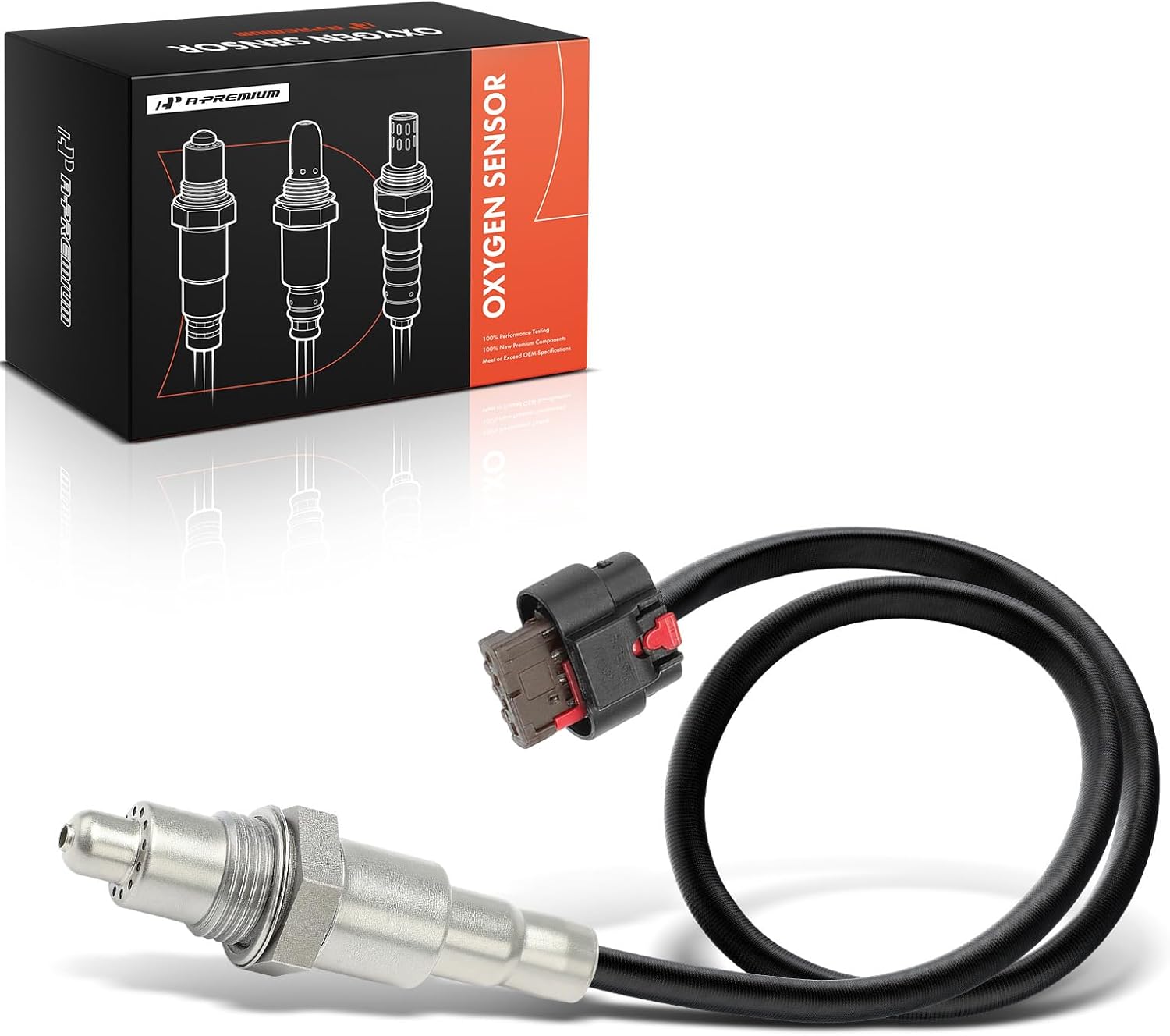
| Measuring Range | 0-20% O2 |
|---|---|
| Mounting Type | Threaded |
| Output Type | electrical signal |
| Upper Temperature Rating | 1650 Degrees Fahrenheit |
| Material Type | Metal, Ceramic, Polymer |
This A-Premium downstream oxygen sensor is a factory-replacement style heated sensor intended to measure exhaust oxygen after the catalytic converter and send an electrical signal to the engine control system. It is used where a downstream sensor has failed, during emissions troubleshooting, or after exhaust work that requires replacing a removed sensor. The sensor ships with a threaded mounting and a 4-wire female connector and a 750 mm lead to reach common factory harness routing. Construction mixes metal, ceramic, and polymer materials and the unit is rated for high exhaust temperatures. For buyers this means straightforward plug-and-play installation in compatible downstream ports and the ability to restore proper downstream oxygen readings for closed-loop emissions monitoring. Important limitations are that fitment must match the Explorer engine and sensor location exactly and professional installation may be needed if access is tight or if the connector differs from the factory part; the listing also includes a standard seller warranty that covers only the item cost. The sensor is practical for repairs but verify connector type and exact Explorer model year/engine before replacing the original component.
Best for: A buyer who wants a straightforward, risk-averse replacement sensor to restore proper downstream oxygen readings and emissions behavior on covered Explorer model years without sourcing OEM parts.
Less Ideal for: Do not choose this if you need an upstream sensor, are modifying the exhaust downstream electronics, or require a sensor with a nonstandard connector or wiring length not listed in the fitment.
- Direct-fit downstream replacement style for specified applications with threaded mounting
- Heated sensor with 4-wire electrical output for stable readings and compatibility with closed-loop systems
- 750 mm lead length to match common factory harness routing
- High temperature rating suitable for exhaust environments
- Compatibility depends on exact engine, year, and downstream bank so fit must be confirmed before purchase
Verdict: Choose this downstream heated oxygen sensor when you need a direct-fit, plug-in replacement to reliably restore downstream oxygen monitoring on supported Explorer model years.
Choosing the Right 2011-2019 Ford Explorer Oxygen Sensor: Key Factors to Consider
Fitment And Connector Match
Correct fitment is essential because the 2011-2019 Ford Explorer uses specific sensor lengths, thread pitches, and harness connectors depending on engine and exhaust routing. A sensor that does not seat correctly or requires splicing can cause exhaust leaks or poor electrical contact.
Always verify the sensor location—upstream (pre-catalyst) or downstream (post-catalyst)—and ensure the replacement matches the factory connector and wiring length to avoid modifications. Proper fitment reduces installation time and prevents issues like false oxygen sensor codes or intermittent signal loss.
Heater Circuit Reliability
Most O2 sensors for this Explorer era include an internal heater to bring the element up to operating temperature quickly. A reliable heater circuit shortens warm-up time, allowing the ECU to enter closed-loop operation sooner and improve emissions control during cold starts.
When the heater fails, the sensor may remain in a slow, cold state that produces sluggish readings and triggers diagnostic trouble codes. Check product specifications for heater voltage and amperage ratings to ensure compatibility with the vehicle electrical system and expected cold-start conditions.
Sensor Response Time And Accuracy
Response time defines how quickly the sensor voltage or signal changes with exhaust oxygen content. Faster response helps the ECU make timely fuel-trim adjustments, improving idle quality, throttle response, and fuel economy. For the Explorer, a sensor with consistent, repeatable output across a range of temperatures reduces the chance of stray fuel-trim corrections that cause rough running.
Accuracy over time matters as well; some sensors maintain tighter voltage windows and less drift, which supports stable long-term engine management and more reliable emissions readings.
Durability And Environmental Resistance
Exhaust components face high heat, vibration, and exposure to contaminants. A durable oxygen sensor for the Explorer should be built with robust internal elements and protective housings to resist thermal cycling and road debris.
Look for sensors with corrosion-resistant threads and connectors, and quality sealing to keep moisture and exhaust soot out of the sensing element. Durability affects service life and helps avoid repeated replacements due to premature failure.
Diagnostic Compatibility And Emissions Readiness
Replacements must allow the Explorer's ECU to run standard OBD-II readiness tests for catalyst and oxygen sensor monitoring. Sensors that mimic factory output characteristics help prevent false codes such as bank or circuit-specific faults.
If a sensor cannot reach expected heater cut-in or produces atypical voltages, it can prevent a monitor from setting to ready or trigger codes like heater circuit faults. Confirm that the replacement supports the expected voltage range and switching behavior for the Explorer's engine control system.
Installation Considerations
Installation difficulty varies by sensor location on the Explorer; upstream sensors are often easier to access than some downstream units tucked near the catalytic converter. Consider whether the replacement includes anti-seize on threads or requires special sockets for removal.
Also account for torque specs, connector retention clips, and whether the harness needs to be routed differently to avoid heat. Proper installation preserves sensor life and prevents exhaust leaks or connector damage.
Common Oxygen Sensor Symptoms On The Explorer
Several symptoms indicate oxygen sensor problems on a 2011-2019 Ford Explorer. A persistent check engine light with oxygen-sensor-related codes, rough idle, or a drop in fuel economy are common initial signs.
Other indicators include hard starting when cold, excessive emissions failed in diagnostics, and fluctuating RPMs at idle. Understanding symptom patterns helps prioritize whether the issue is upstream or downstream and whether the heater circuit might be at fault.
- Check engine light accompanied by O2-related fault codes
- Lower than normal miles per gallon
- Rough or unstable idle, especially during warm-up
- Sulfur or rotten-egg smell from the exhaust indicating catalyst stress
Upstream Versus Downstream Placement Explained
On the Explorer, upstream (pre-catalyst) sensors primarily inform the ECU's fuel control strategy, switching rapidly between lean and rich readings to allow closed-loop trimming. Downstream (post-catalyst) sensors are used largely to monitor catalyst efficiency and provide slower, more stable feedback.
When selecting a replacement, confirm whether the part is specified for upstream or downstream use. Function and expected response differ, so swapping positions can lead to diagnostic faults or degraded emissions control.
- Upstream sensors affect fuel trims and drivability
- Downstream sensors verify catalytic converter performance
- Fitment and signal behavior are not interchangeable between positions
Tools And Prep For Installing An O2 Sensor
A few basic tools cover most oxygen sensor installations on this Explorer: an oxygen sensor socket or a crowfoot on a ratchet, penetrating oil for stuck sensors, anti-seize compound (if not pre-applied), and a torque wrench to tighten to factory spec. A scan tool that shows real-time O2 sensor voltages helps verify correct operation after installation.
Prepare the vehicle by letting the exhaust cool to avoid burns and by disconnecting the battery if you will unplug electrical connectors. Plan for safe jacking and support if access from below is required.
- Oxygen sensor socket or crowfoot
- Penetrating oil and torque wrench
- Scan tool for live data verification
How Diagnostics Help Pinpoint Which Sensor Fails
On the 2011-2019 Explorer, diagnostic trouble codes often identify the bank and sensor position, for example bank 1 sensor 1, which narrows the search. Live-data monitoring reveals whether a sensor is switching or stuck at a low or high voltage, and whether the heater circuit reaches its expected draw and temperature.
Intermittent codes can indicate wiring or connector issues rather than the sensing element itself. Track freeze-frame data and observe sensor behavior through warm-up cycles to determine whether replacement is necessary.
- Use codes to identify bank and sensor position
- Check live voltage switching and heater circuit current
- Inspect wiring and connectors for corrosion or damage
When To Replace Wiring Or Connector Components
Sometimes symptoms blamed on the sensor element are actually caused by damaged wiring or corroded connectors. If harness insulation is brittle, pins are corroded, or connector retention is poor, replacement of the wiring or pigtail may be required.
Addressing electrical faults first can save cost and prevent repeated sensor failures. When replacing a sensor, inspect the mating connector and harness routing and repair or replace as needed to ensure a reliable signal.
- Inspect connector pins for corrosion
- Avoid cutting into factory harness unless necessary
- Use proper heat-resistant wiring and routing to prevent future damage
Maintaining The Exhaust System To Extend Sensor Life
Keeping the exhaust system free of leaks and minimizing contamination helps oxygen sensors last longer. Exhaust leaks upstream of a sensor can introduce outside air and skew readings, while oil or coolant leaks into the combustion chamber can foul the sensing element.
Regular maintenance of engine seals, PCV systems, and the catalytic converter reduces the burden on oxygen sensors and supports consistent emissions performance.
- Fix exhaust leaks promptly
- Address oil or coolant burning to avoid sensor fouling
- Replace sensors at the first sign of persistent diagnostic faults
Still looking for the perfect fit?
Select your Ford Explorer configuration to see the most relevant Oxygen Sensors recommendations
How We Chose the Best 2011-2019 Ford Explorer Oxygen Sensor
We focused on items that reliably restore the engine management signals the 2011-2019 Ford Explorer expects. Evaluation prioritized fitment accuracy for the Explorer year range and engine variants, correct electrical connectors and harness lengths, and sensor placement matching upstream or downstream locations. We also evaluated sensor response time and voltage/output characteristics because those affect closed-loop fuel trim and catalyst monitoring. Durability factors included materials, heater circuit reliability, and expected lifespan under urban and highway driving conditions. Diagnostic compatibility was another filter: sensors that support ECU readiness and do not trigger false oxygen-sensor-related codes were preferred. We excluded units lacking clear fitment data for the 2011-2019 Explorer or those without documented heater circuit specifications. In short, our selection favored correctly matched replacements with dependable electrical and thermal performance for this vehicle.
Our full evaluation process is outlined in our review methodology.
FAQ
How do I know if the oxygen sensor or the catalytic converter is the problem?
Often the sensor shows switching behavior in live data while the downstream sensor remains stable if the catalyst is working. If both sensors show abnormal readings or the downstream sensor mirrors the upstream signal too closely, the catalyst may be compromised. A diagnostic scan and observing readings during normal operation and warm-up help separate the two.
Can I drive the Explorer with a bad oxygen sensor?
You can usually drive short distances, but prolonged driving with a faulty oxygen sensor can increase fuel consumption, raise emissions, and potentially cause long-term damage to the catalytic converter. Addressing the issue promptly limits collateral damage.
What does code P0135 mean on my Explorer?
P0135 typically indicates a heater circuit malfunction for an oxygen sensor on bank 1. It often means the heater is not reaching operating temperature or there is a wiring/connectivity problem. Check the sensor heater, fuse, and connector before replacing the sensor element.
Is a wideband sensor necessary for the 2011-2019 Explorer?
Most factory systems on this Explorer use narrowband sensors for fuel trim and catalyst monitoring. Wideband units provide different outputs intended for tuning and air/fuel ratio measurement and are not a direct drop-in replacement for factory narrowband sensor circuits without ECU or gauge modifications.
How should I test an oxygen sensor before replacing it?
Use a scan tool to monitor sensor voltage or AFR data during warm-up and steady-state driving. For heater checks, measure resistance or current draw per factory specs. Visual inspection of the connector and wiring for damage is also important to rule out electrical issues.
Will replacing the oxygen sensor turn off the check engine light immediately?
Sometimes the light will go off after the ECU detects normal sensor behavior, which may occur after a few drive cycles. Clearing the code manually can speed this up, but the vehicle must complete readiness cycles for monitors to set.
Final Verdict
Prioritize correct fitment, heater circuit reliability, and sensor response when choosing an oxygen sensor for a 2011-2019 Ford Explorer. Address wiring and connector condition during replacement to avoid repeat failures.Balancing durability with accurate electrical and thermal performance will restore fuel control and emissions monitoring for the Explorer. Choose a properly matched sensor for the specific bank and position, and verify operation with live-data diagnostics after installation to ensure the repair resolved the issue.
Explore More:
- Check out all Ford Explorer parts & accessories
- Explore Oxygen Sensors Maintenance & Repair Guides
- Explore Engine
- Browse all Auto Parts
