

Note: This article contains affiliate links. If you click on these links and make a purchase, I may earn a small commission at no extra cost to you. This helps support my research and content. Read my full affiliate disclosure here.
Upgrading to 2 inch wheel spacers can change the look and handling of your Chevrolet Colorado while creating extra clearance for wider tires or aftermarket brakes. For Colorado owners a careful spacer choice matters because fitment, hub interface, and torque procedure all affect safety, ride quality, and wheel alignment.This guide presents our shortlist of the top 2 inch wheel spacers for Chevrolet Colorado and explains the criteria we used to evaluate them, including bolt pattern compatibility, hub-centric accuracy, materials and strength, and installation considerations. Read on to see which options suit different goals such as stance, clearance, or towing use before you start the install.
Looking for other parts? See all Chevrolet Colorado parts & accessories.
Top Picks at a Glance
| Best Overall The best all-around choice for most situations | KAX 6x120mm Hub-Centric 2" (50.8mm) Wheel Spacers, M14x1.5, 4-Pack |  |
| Best Quality Built to a higher standard if you want something more solid | Torchbeam 6x120mm 2" Hub-Centric Wheel Spacers (4 pcs) |  |
| Best Value The sweet spot between price and what you get | ECCPP 2" 6×120 Hub-Centric Wheel Spacers (66.9mm CB, 14×1.5 Threads) |  |
| Best Budget The cheapest option that still gets the job done reliably | SCITOO 2" 6×120 Hub-Centric Wheel Spacers with 14×1.5 Studs |  |
| Highest Rated A top-rated pick with lots of positive feedback | KUIPERAUTO 2" Hubcentric Wheel Spacers 6x120mm M14 x 1.5 (4PCS) |  |
| Most Popular A crowd favorite that many people choose with confidence | SCITOO 2" 6×120 Hub-Centric Wheel Spacers (4-Pack) with 66.9mm Bore and 14×1.5 Studs |  |
| Best Seller A high-volume bestseller chosen again and again | FLYCLE 2" 6×120 Hubcentric Wheel Spacers (66.9mm Bore) |  |
1. KAX 6x120mm Hub-Centric 2" (50.8mm) Wheel Spacers, M14x1.5, 4-Pack

| Bolt pattern | 6x120mm |
|---|---|
| Hub bore | 66.9mm |
| Thickness | 2 inch (50.8mm) |
| Thread pitch | M14x1.5 |
| Recommended torque | 85-90 ft/lbs |
These KAX 2-inch wheel spacers move the wheel outwards to widen the track and create clearance for larger tires or suspension modifications. Made from 6061-T6 aircraft-grade aluminum and CNC-machined, the spacers are hub-centric to help preserve wheel alignment and reduce vibration when fitted correctly. They come with a speced M14x1.5 thread pitch and recommended torque of 85-90 ft/lbs and are intended for vehicles with a 6x120mm bolt pattern and 66.9mm hub bore. In practice they are useful for drivers wanting a wider stance, improved perceived stability, or the ability to run more aggressive tire fits; installation requires proper measurement, occasional trimming of studs for bolt-on fitment, and re-torquing after 25–50 miles. The package emphasizes quality control and stronger grade 12.9 bolts, but buyers should have a competent shop handle installation to ensure safety and fitment for the specific vehicle. These are a practical mid-range option for owners seeking a reliable 2-inch spacer solution without custom fabrication.
Best for: Buyers who want a reliable, factory-quality 2-inch spacer to widen the stance or clear larger tires on a 6x120mm vehicle and who prioritize strength, fitment accuracy, and a professional installation.
Less Ideal for: Do not choose this if you want a universal spacer for multiple bolt patterns or if you plan to install without professional measurement and torque verification.
- 6061-T6 aircraft-grade aluminum construction for strength and corrosion resistance
- CNC precision machining and hub-centric 66.9mm bore to improve fitment and reduce vibration
- Supplied to match M14x1.5 stud thread and includes recommended torque spec for safer installation
- 2-inch thickness provides noticeable increase in track width for improved stance and clearance
- Uses grade 12.9 bolt specification for higher fastener strength
- May require trimming of wheel studs on some bolt-on installations which adds installation complexity
- Intended fitment is specific to 6x120mm/66.9mm applications so not universal
Verdict: A strong, CNC-machined 2-inch hub-centric spacer built for 6x120mm vehicles that delivers a wider stance and reliable fitment when installed professionally.
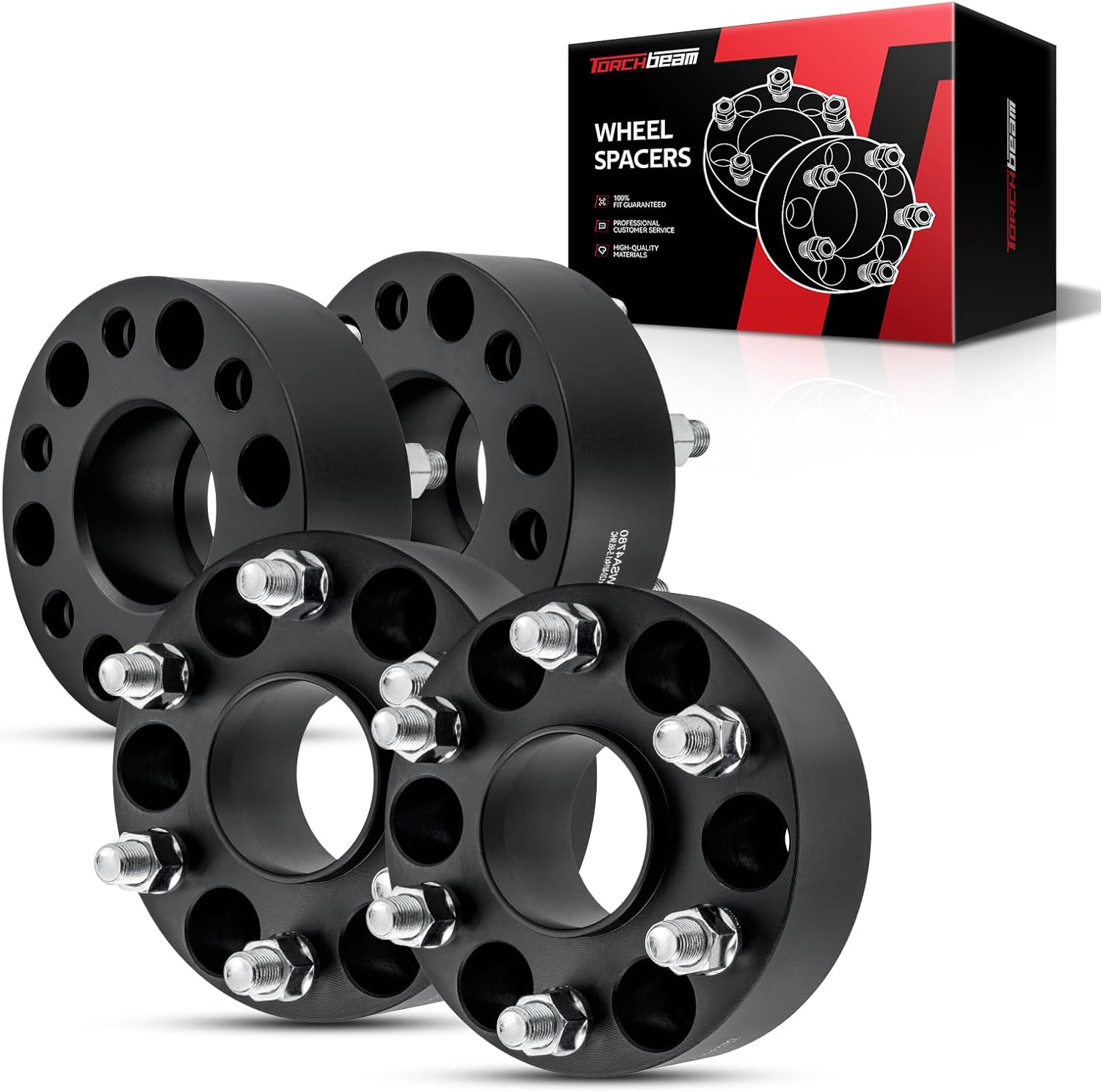
2. Torchbeam 6x120mm 2" Hub-Centric Wheel Spacers (4 pcs)
| Bolt pattern | 6x120mm |
|---|---|
| Thickness | 2 inch (50.8mm) |
| Center bore | 66.9mm |
| Stud/thread | M14x1.5 |
| Recommended torque | 85-90 ft/lbs |
These Torchbeam 2-inch (50.8mm) wheel spacers push the wheel out from the hub to widen track and improve stance, clearance, and handling for compatible 6-lug GM vehicles. Machined from 6061-T6 billet aluminum and CNC finished, the spacer set is hub-centric (66.9mm bore) and uses hardened 12.9-grade bolts with M14x1.5 threads for secure clamping. Typical use is bolt-on installation at each corner to gain wheel offset and tire clearance or to fit aftermarket wheels; the listing includes illustrated installation steps and recommends professional torque of 85-90 ft·lbs. Benefits in real driving include a broader contact patch feel and reduced scrub during aggressive cornering, plus corrosion-resistant hardware suited to tougher conditions. Limitations are the specific 6x120mm fitment and the need to confirm center bore and stud thread compatibility before purchase; installation requires proper torque tools and attention to wheel-torque rechecks after initial use. These are performance-focused spacers rather than a suspension upgrade, so expect handling changes but not suspension geometry correction.
Best for: Drivers seeking a bolt-on performance improvement to widen track and improve cornering feel on compatible 6-lug GM mid-size trucks and SUVs, prioritizing strength and factory-style fitment.
Less Ideal for: Drivers looking for suspension-level changes, vehicles with different bolt patterns or center bores, or those unwilling to perform proper torque checks and post-install maintenance.
- Billet 6061-T6 aluminum CNC-machined construction for strength and consistent fit
- Hub-centric 66.9mm bore for accurate wheel centering and reduced vibration risk
- Hardened grade 12.9 bolts with M14x1.5 threads for durable, corrosion-resistant clamping
- 2-inch thickness provides noticeable track widening for improved cornering stability
- Fitment limited to vehicles matching 6x120mm bolt pattern and 66.9mm center bore so compatibility must be verified
Verdict: If you want a durable, hub-centric 2-inch spacer to widen track and sharpen cornering on compatible 6x120mm GM trucks like the Colorado, this Torchbeam kit delivers a strong, bolt-on solution.
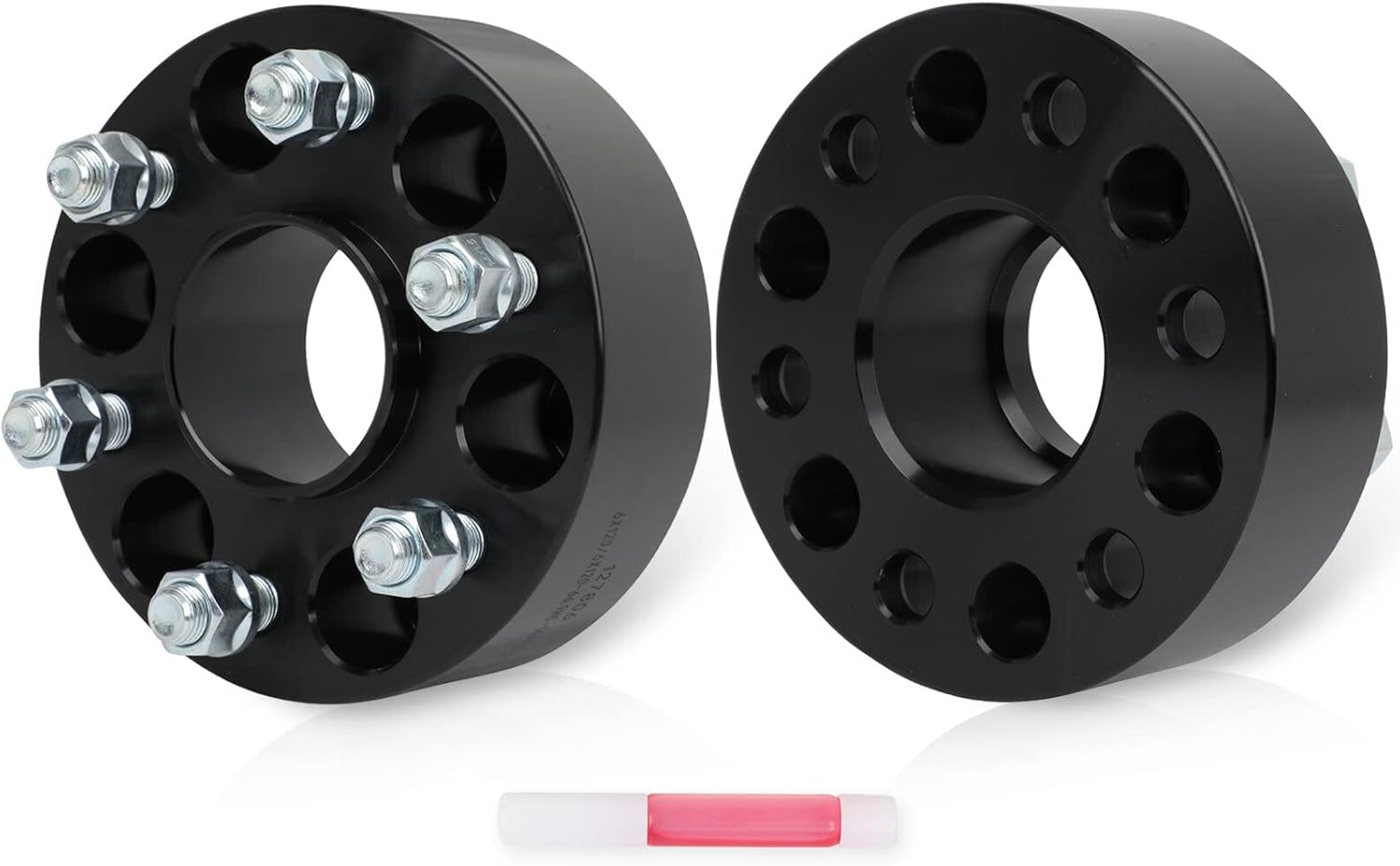
3. ECCPP 2" 6×120 Hub-Centric Wheel Spacers (66.9mm CB, 14×1.5 Threads)
| Bolt pattern | 6x120mm |
|---|---|
| Thickness | 2" |
| Thread pitch | 14×1.5 |
| Center bore | 66.9mm |
These ECCPP 2" 6×120 wheel spacers are designed to move wheels outward on compatible 6-lug vehicles while keeping the wheel centered on the hub. They are typical for adding clearance for larger tires or correcting offset when fitting aftermarket wheels. Built from forged 6061-T6 billet aluminum and CNC machined, the spacers use a hub-centric 66.9mm bore and 14×1.5 stud threads to match factory studs. The set includes open-end lug nuts and uses 10.9 grade studs rated for high tensile strength to maintain clamping force. In practice these spacers reduce the risk of vibration when installed to the recommended torque and with clean hub surfaces, and the anodized finish helps resist corrosion. Limitations to note are the need to verify bolt pattern and center bore before purchase, potential interference with factory stud length that may require shorter studs, and the usual requirement to follow torque spec to avoid issues. Installers should also confirm local regulations and suspension clearances before use.
Best for: Buyers who prioritize a practical, reliable way to correct wheel offset or gain clearance for the Colorado while keeping installation straightforward and maintaining factory-style centering.
Less Ideal for: Drivers looking for a cosmetic-only change with no concern for fitment details or those unwilling to check stud length, torque specs, or local fitment rules should consider alternatives.
- Forged 6061-T6 aluminum and CNC machining for strength and precise fit.
- Hub-centric 66.9mm bore helps center the wheel and reduce vibration when torqued correctly.
- Includes open-end lug nuts and uses high-strength 10.9 studs for secure clamping.
- Anodized finish improves corrosion resistance for longer service life.
- May require shorter studs or cutting factory studs if they extend past the spacer surface.
- Not a universal fit so buyers must verify bolt pattern, bore, and thread pitch before ordering.
Verdict: A solid, factory-style 2" hub-centric spacer option for Colorado owners who need reliable offset correction and wheel clearance while preserving wheel centering.
4. SCITOO 2" 6×120 Hub-Centric Wheel Spacers with 14×1.5 Studs

| Bolt pattern | 6×120 |
|---|---|
| Thickness | 2 inch |
| Thread pitch | 14×1.5 |
| Center bore | 66.9mm |
These SCITOO 2-inch wheel spacers let you widen the track of 6×120 trucks and SUVs to improve stance and cornering stability. They are hub-centric, CNC machined from forged aluminum and come with preinstalled grade 10.9 studs sized for a 14×1.5 thread pitch, which simplifies bolt-on installation for most owners. In practice the spacers push the wheels outward to reduce body roll and provide room for larger tires or a wider offset wheel without major modifications. The kit is aimed at DIY installers and includes studs long enough to clear most factory bolts, though some vehicles may require trimming or professional fitment if interference occurs. SCITOO recommends torquing to 85 to 90 ft-lbs and re-torquing after the first 50 to 60 miles. The product balances cost and features well, but buyers should verify the 66.9mm bore and stud specifications match their Colorado hub and wheel measurements before purchasing and follow the legal disclaimer about professional installation for safety.
Best for: Cost-conscious Colorado owners who want a reliable, DIY-installable 2-inch spacer to widen track, improve handling, or create clearance for different wheels or tires.
Less Ideal for: People who prefer a plug-and-play solution from a dealer-fit wheel upgrade service or who will not perform initial torque checks and periodic inspections themselves.
- CNC-machined, forged aluminum construction for strength with lower weight than steel
- Hub-centric design with 66.9mm bore for centered fitment
- Comes with grade 10.9 studs and pre-adjusted lengths to simplify installation
- Designed for 6×120 bolt pattern which matches Colorado wheel hubs
- May require trimming or checking for stud interference on some factory hubs or wheels
Verdict: A budget-friendly, hub-centric 2-inch spacer built for 6×120 trucks that gives Colorado owners an affordable way to widen stance and improve handling while remaining DIY-installable.
5. KUIPERAUTO 2" Hubcentric Wheel Spacers 6x120mm M14 x 1.5 (4PCS)

| Bolt pattern | 6x120mm |
|---|---|
| Center bore | 66.9mm |
| Stud thread | M14 x 1.5 |
| Thickness | 2 in (50.8mm) |
These KUIPERAUTO 2-inch wheel spacers move your wheels outward to improve stance and clearance while retaining a hubcentric fit to center the wheel on the hub. Made from 6061-T6 aluminum with 10.9-grade studs and a Dacromet surface treatment, the kit aims to balance light weight with corrosion resistance. Installation is straightforward for a competent DIYer: the spacers mount to the hub and use the supplied open nuts and thread-locking compound; the listing recommends using an impact wrench and tightening to the specified torque. For Chevy Colorado owners looking to add clearance for larger tires or change wheel offset, the 2-inch thickness provides a noticeable push without extreme modification. The main limitations are fitment specificity and the need to confirm bolt pattern and hub bore before ordering; these spacers are designed for 6x120mm applications with a 66.9mm bore and will not suit other patterns. Also, owners who prefer torque-wrench-only installs or want fully pre-coated hardware may need to source alternate fasteners.
Best for: Buyers who prioritize dependable, factory-quality wheel centering and corrosion resistance for a sensible 2-inch spacer upgrade on a Colorado-style vehicle and want a durable, DIY-installable solution.
Less Ideal for: Drivers seeking universal fitment across multiple vehicles or those who want pre-verified hardware and a torque-wrench-only installation workflow should look elsewhere.
- Hubcentric 66.9mm bore centers wheels for reduced vibration.
- 6061-T6 aluminum construction offers high strength with low added weight.
- Includes high-strength M14 x 1.5 studs and thread-locking compound for secure mounting.
- Dacromet surface treatment improves corrosion resistance compared with raw aluminum.
- Fitment limited to vehicles with 6x120mm bolt pattern and 66.9mm hub bore.
- Installation guidance recommends impact wrench rather than torque-wrench-only tightening.
Verdict: A robust, hubcentric 2-inch aluminum spacer built for reliable, centered fitment and corrosion-resistant service on 6x120mm GM midsize trucks.
6. SCITOO 2" 6×120 Hub-Centric Wheel Spacers (4-Pack) with 66.9mm Bore and 14×1.5 Studs

| Bolt pattern | 6×120 |
|---|---|
| Thickness | 2 inch |
| Center bore | 66.9mm |
| Thread pitch | 14×1.5 |
These SCITOO 2-inch wheel spacers move wheels outward to widen the track for a more aggressive stance and improved cornering stability on vehicles with a 6×120 bolt pattern. The kit includes four hub-centric spacers with a 66.9mm center bore and hardened 14×1.5 studs, and the seller specifies hot-forged aircraft-grade aluminum construction for strength while keeping weight down. Installation is typical for spacers: remove the wheel, fit the spacer to the hub, torque mounting hardware to spec and reinstall the wheel; the listing stresses checking fitment and using a professional if unsure. For a Colorado owner looking for a specific 6×120, model-matched spacer, these are marketed as precision engineered for balance and an OEM-like fit. Limitations to note are the need to confirm exact vehicle year/trim fitment, potential requirement for longer wheel studs or bolts depending on wheel and brake clearance, and that professional installation is recommended to prevent fastener issues.
Best for: Buyers who prioritize verified fitment and want a factory-style spacer to sharpen handling and achieve a wider stance on a Colorado with a 6×120 bolt pattern.
Less Ideal for: If you want a universal spacer for multiple different vehicles or plan to install without checking fitment and torque specs, this kit is not a good match.
- Made from hot-forged aircraft-grade aluminum for high strength-to-weight ratio
- Hub-centric design with 66.9mm bore promotes correct wheel centering
- Includes hardened, heat-treated studs rated to ISO/DIN 10.9 for durability
- Model-specific 6×120 bolt pattern aimed at precise fit and wheel balance
- May require longer lug bolts or studs depending on wheel and brake clearance
- Fitment must be confirmed for exact year/trim and professional installation is advised
Verdict: A model-specific, forged-aluminum 2-inch spacer kit that gives Chevrolet Colorado owners a factory-style way to widen track and improve cornering while retaining hub-centric alignment.
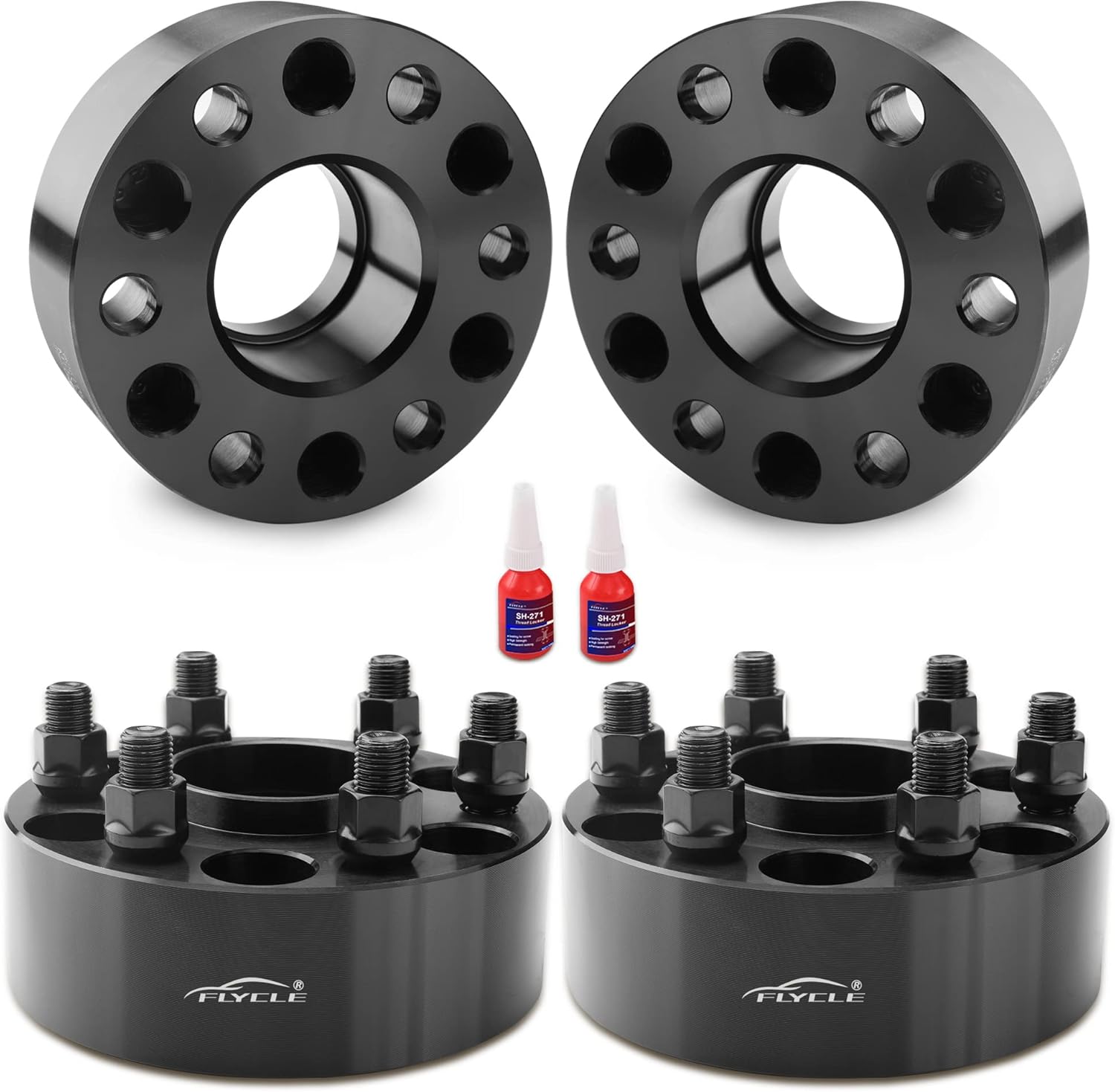
7. FLYCLE 2" 6×120 Hubcentric Wheel Spacers (66.9mm Bore)
| Thickness | 2 inch |
|---|---|
| Bolt pattern | 6x120mm |
| Center bore | 66.9mm |
| Material | 6061-T6 aluminum |
| Stud thread pitch | M14x1.5 |
These FLYCLE 2-inch wheel spacers move the wheel out by 2 inches using an integrated stud design to improve stance and create extra clearance for larger or wider tires. They are intended for hubcentric fitment with a 66.9mm center bore and 6×120 bolt pattern, and include M14x1.5 studs with recommended torque of 85 to 90 lb·ft. Built from forged 6061-T6 aluminum with CNC machining and anodized finish, the spacers offer corrosion resistance and precise fit where the vehicle and wheel match the listed specs. Installation is typical for spacer kits: remove the wheel, fit the spacer to the hub, torque to spec, then reinstall the wheel onto the new studs. Practical benefits include resolving brake caliper or suspension clearance issues and giving the truck a wider, more planted look. Limitations are that they only fit vehicles and wheels with the exact 6×120 pattern and 66.9mm bore, and they add unsprung mass and leverage to wheel bearings so correct torque, periodic recheck, and quality wheel fasteners are important for long-term reliability.
Best for: A cautious buyer who wants a factory-quality spacer to fix caliper or clearance interference and achieve a wider stance on a correctly matched Colorado or related GM SUV without aggressive modification.
Less Ideal for: Drivers seeking a universal spacer for multiple bolt patterns or those unwilling to follow torque and recheck procedures after installation should consider other wheel fitment solutions.
- Hubcentric 66.9mm bore for accurate centering with matching hubs and wheels
- Forged 6061-T6 aluminum construction with CNC machining for strength and precision
- Includes high-strength M14x1.5 studs and a recommended torque spec for consistent installation
- Anodized finish improves corrosion resistance compared with raw aluminum
- Compatibility limited to 6×120 bolt pattern and 66.9mm bore so fitment must be verified before purchase
Verdict: Choose these spacers if you want a precisely machined, hubcentric 2-inch solution to address clearance issues and give your Colorado a wider, factory-quality stance.
Choosing the Right Chevrolet Colorado 2 Inch Wheel Spacers: Key Factors to Consider
Bolt Pattern and Stud Fitment
Correct bolt pattern and stud or lug configuration is the foundation of a safe spacer fit. The spacer must match the Chevrolet Colorado bolt pattern precisely so lugs seat uniformly and torque loads distribute evenly. Even small misalignments can lead to uneven clamping force, which increases the risk of stud fatigue and wheel wobble.
When evaluating fitment, confirm whether the spacer uses the vehicle's existing studs, requires extended studs, or is a bolt-through design that uses longer lug bolts. Each approach affects installation complexity and whether additional hardware is needed. For Colorado owners, double-checking stud length, thread pitch, and whether the spacer is hub-centric will prevent fitment surprises during installation.
Hub-Centric Accuracy
Hub-centric spacers center the wheel on the vehicle hub, which reduces runout and helps prevent vibration at higher speeds. The mating surface between the spacer and the hub must be machined to exact tolerances so the wheel centers reliably. If a spacer is lug-centric instead, more dependence is placed on lug torque to center the wheel and the risk of minor misalignment increases.
Pay attention to how the spacer interfaces with both the hub and the wheel. A precisely machined center bore that matches the Colorado hub diameter is especially important when fitting wider wheels or tires; it maintains consistent concentricity under load and reduces the chance of shimmy or uneven tire wear.
Material and Manufacturing Quality
Spacers must withstand high repeated loads, so material choice and manufacturing process matter. Billet 6061-T6 aluminum or similarly rated alloys are commonly used because they balance strength and resistance to corrosion. The differences in manufacturing techniques such as CNC machining versus cheaper casting methods affect dimensional accuracy and fatigue performance.
Look for clear specifications on alloy grade, heat treatment, and if components are anodized or otherwise treated to resist corrosion from road salt and moisture. Consistent wall thickness, no visible porosity, and tight machining tolerances reduce the likelihood of premature failure and ensure the spacer performs reliably over time.
Spacer Thickness and Wheel Offset Effects
A 2 inch spacer alters your final wheel offset and track width, which changes scrub radius, steering feel, and load on suspension components. Understanding how the added width affects scrub radius is key; excessive changes can amplify steering effort or accelerate wear on bearings and CV joints. For load-carrying tasks or towing, consider whether the new offset places more stress on wheel bearings.
Also verify that with the spacer installed there is adequate clearance between the tire and suspension, brake calipers, and fenders. A spacer thickness guide or dimensional drawing helps you predict the new wheel position and prevents contact issues when turning or compressing the suspension.
Hardware and Installation Requirements
Quality installation hardware and clear instructions reduce the risk of improper mounting. Determine whether spacers include extended studs, longer lug bolts, or require a wheel-specific installation kit. Proper grade studs and bolts with correct thread engagement are essential for secure clamping force.
Consider also whether the spacer requires re-torquing after initial miles and if the manufacturer provides torque specs or recommended maintenance intervals. Having the correct tools and a torque wrench and following documented torque procedures will help maintain safe wheel retention.
Potential for Vibration and Maintenance
Any addition between wheel and hub introduces potential vibration if not perfectly concentric. Hub-centric spacers and precise machining minimize this risk, but owners should be aware that poor installation or incorrect torque can still lead to vibration. Regular checks of lug torque after the first 50 to 100 miles and periodic inspections for corrosion or looseness reduce long-term issues.
If you plan extended off-road use or frequent heavy loads, inspect spacer faces and hardware for wear and fatigue more often. Understanding the maintenance needs helps you mitigate vibration concerns and ensures the spacers remain safe over time.
Understanding Bolt Pattern and Colorado Fitment
Confirming the Chevrolet Colorado bolt pattern and stud details is the initial step before selecting a 2 inch spacer. The spacer must align perfectly with the hub and wheel stud holes so the wheel mounts flush without any gaps or interference.
Measure thread pitch, stud length, and center bore dimensions when possible. Small differences in these measurements can mean the difference between a straightforward install and needing additional hardware or machining.
- Verify thread pitch and stud engagement length prior to purchase
- Check center bore diameter to confirm hub-centric seating
- Account for whether the spacer uses existing studs or includes extended studs
Installation Steps and Common Pitfalls
A correct installation sequence reduces risk. Start by safely lifting and supporting the vehicle, removing the wheel, and cleaning the mating surfaces on the hub and wheel. Place the spacer, loosely fit hardware, then torque in a star pattern to the specified value.
Common mistakes include inadequate corrosion removal on mating surfaces, failing to use correct torque specs, and not re-torquing after initial use. Also beware of using incompatible hardware or over-tightening, which can damage threads or distort the spacer.
- Clean surfaces and remove rust or debris before mounting
- Use a calibrated torque wrench and follow the vehicle or spacer torque specs
- Re-torque lug nuts after the recommended initial driving interval
When to Choose Hub-Centric Over Lug-Centric
Hub-centric spacers are generally preferable when minimizing vibration and ensuring precise wheel centering are priorities. They take the centering role off the lug nuts and place it on a machined center bore interface between spacer and hub.
Lug-centric spacers can work but rely on lug torque to center the wheel and may be more prone to runout. Choose lug-centric only when you confirm lug engagement remains adequate and you accept a potentially higher need for monitoring and maintenance.
- Prefer hub-centric for high-speed driving and minimal vibration
- Lug-centric options may be acceptable for low-speed or aesthetic-only builds
- Confirm lug thread engagement depth when using lug-centric spacers
Assessing Clearance and Brake/Tire Compatibility
A 2 inch spacer moves the wheel outward and can create room for larger brakes or allow wider tires without rubbing. Before finalizing your choice, mock-fit or measure the distance between the tire and suspension components, brake calipers, and inner fender lips.
Consider dynamic clearance under compression and full steering lock. What clears when parked may not clear once the suspension compresses or during sharp turns, so allow a reasonable safety margin.
- Verify caliper and rotor clearance with intended wheel and tire combo
- Check inner fender spacing at full steering lock
- Allow extra clearance for suspension compression and wheel travel
Maintenance and Long-Term Inspection
After installing spacers, regular inspection helps catch issues early. Check lug torque after the initial miles and then at scheduled intervals. Inspect spacer faces for corrosion, hairline cracks, or loosening hardware, especially after heavy use or off-road driving.
If you notice any vibration, uneven tire wear, or unusual noises, re-check centric fit, hub mating surface cleanliness, and hardware torque before assuming the spacer is at fault. Proactive maintenance extends component life and keeps the wheel interface safe.
- Re-torque after first 50 to 100 miles and periodically afterwards
- Inspect for corrosion and hairline cracks every few months or after heavy use
- Address any vibration immediately by checking centric seating and torque
Legal and Safety Considerations
Adding wheel spacers can affect vehicle geometry and load paths. Check local regulations and safety guidelines regarding wheel modifications to ensure compliance. Some jurisdictions have rules regarding required testing or maximum spacer thickness.
Prioritize safety over aesthetics. If the spacer installation requires altering stud length beyond manufacturer recommendations or significantly changes wheel offset, consult a qualified technician to verify bearing and suspension load limits.
- Review local vehicle modification regulations
- Consult a professional for substantial offset changes
- Keep documentation of spacer specifications and installation for inspections
Still looking for the perfect fit?
Select your Chevrolet Colorado configuration to see the most relevant Wheel Spacers recommendations
How We Chose the Best Chevrolet Colorado 2 Inch Wheel Spacers
We prioritized fitment accuracy and structural integrity when narrowing the field to seven 2 inch wheel spacers for the Chevrolet Colorado. Primary evaluation criteria included bolt pattern and stud fitment specific to the Colorado, hub-centric vs lug-centric construction to reduce runout and vibration, and the material grade and manufacturing method that determine strength and fatigue life. We also assessed spacer thickness tolerance and machined face accuracy because consistent thickness matters for handling and alignment.Other important filters were hardware quality and included installation components, whether the spacer required extended studs or used a bolt-through design, and clear communication of torque specifications. We excluded any spacers lacking clear material specs or dimensional drawings, products without vehicle-specific fitment notes, and options with poor documented hardware quality. The final selection focuses on spacers that balance safety, durability, and the specific needs of Colorado owners seeking extra track width or clearance.
Our full evaluation process is outlined in our review methodology.
FAQ
Will 2 inch spacers fit without extended studs on my Colorado?
It depends on the existing stud engagement and whether the spacer design uses a bolt-through pattern or requires extended studs. Verify thread engagement depth and consult the spacer documentation. If engagement is inadequate, extended studs or longer lug bolts are necessary.
Do wheel spacers cause vibration on the Chevrolet Colorado?
Spacers can cause vibration if they are not hub-centric or if mating surfaces are dirty or corroded. Properly machined hub-centric spacers and correct torque procedures usually prevent vibration, but periodic checks are recommended.
How tight should I torque the lug nuts after installing spacers?
Follow the torque specs provided with the spacer or the vehicle's lug torque if the spacer uses original studs. Use a calibrated torque wrench and tighten in a star pattern. Re-check torque after the initial driving interval to ensure retention.
Can 2 inch spacers affect wheel bearing life?
Yes, changing wheel offset increases leverage on bearings and suspension components. Moderate increases like 2 inches can be acceptable if the rest of the system is in good condition, but heavier loads or frequent towing may accelerate wear.
Do I need a special installation kit for 2 inch spacers?
Some spacers include extended studs or a full installation kit while others rely on the vehicle's existing hardware. Confirm what is included and whether additional studs, bolts, or anti-seize are recommended before starting the install.
Will wider tires fit with 2 inch spacers on the Colorado?
A 2 inch spacer moves the wheel outward and can create clearance for wider tires, but you must measure for static and dynamic clearance against suspension, fenders, and steering components to ensure there is no rubbing.
Final Verdict
For most Chevrolet Colorado owners seeking a wider stance or additional clearance, a well-made 2 inch wheel spacer can be a practical solution when chosen for correct bolt pattern, hub-centric accuracy, and proper hardware. Prioritize spacers with clear machining tolerances, appropriate materials, and included or recommended installation hardware to reduce vibration risk and maintain safe wheel clamping.Balance the aesthetic or clearance gains against potential increases in bearing loads and the need for periodic maintenance. If you follow manufacturer torque guidance, confirm hub fitment, and perform routine inspections, you can choose a spacer that meets your stance and clearance goals while preserving safety.
Explore More:
- Check out all Chevrolet Colorado parts & accessories
- Explore Wheel Spacers Maintenance & Repair Guides
- Explore Wheels & Tires
- Browse all Auto Parts
