

Note: This article contains affiliate links. If you click on these links and make a purchase, I may earn a small commission at no extra cost to you. This helps support my research and content. Read my full affiliate disclosure here.
If you drive a 1997-2003 Ford F-150, choosing the right intake manifold matters for reliability, drivability, and engine longevity. Intake manifold issues on these model years can cause rough idle, loss of power, or coolant and vacuum leaks that affect multiple systems. You want a manifold that matches the factory geometry, seals cleanly against the head, and holds up to normal heat and vibration. This guide presents our top seven shortlisted intake manifolds for 1997-2003 Ford F-150 owners. We evaluated candidates for fitment accuracy, sealing reliability, material durability, and serviceability so you can pick an option that addresses common failure modes and supports your intended use. Read on for the factors that matter, practical installation notes, and common symptom checks to help you decide.
Looking for other parts? See all Ford F-150 parts & accessories.
Top Picks at a Glance
| Best Overall The best all-around choice for most situations | FORRIE Upper Intake Manifold Compatible with 5.4L Ford 615-188 (Excludes Coolant-Heated PCV) |  |
| Best Quality Built to a higher standard if you want something more solid | A-Premium Upper Intake Manifold for 5.4L V8 with Gaskets and Thermostat Kit |  |
| Best Value The sweet spot between price and what you get | Benefast Intake Manifold with Gasket Kit for 5.4L Ford 615-188 |  |
| Best Budget The cheapest option that still gets the job done reliably | KASBCY Upper Engine Intake Manifold (replaces 1L3Z-9424-AA) |  |
| Highest Rated A top-rated pick with lots of positive feedback | UnayKolb Upper Intake Manifold with Gaskets for 2000–2003 Ford F150 |  |
| Most Popular A crowd favorite that many people choose with confidence | Dorman 615-188 Plastic Intake Manifold with Gaskets and Thermostat |  |
| Best Seller A high-volume bestseller chosen again and again | DNA MOTORING Intake Manifold 615-188 Compatible with 2000-2003 Ford F-150 5.4L V8 |  |
FORRIE Upper Intake Manifold Compatible with 5.4L Ford 615-188 (Excludes Coolant-Heated PCV)

| Item model number | FIM001 |
|---|---|
| Manufacturer | Forrie |
| OEM Part Number | 2L1Z-9424-AA, 4C2Z-9424-CA, 5C2Z9424AA, 615188, 9C2Z9424AA |
This FORRIE upper intake manifold replaces the factory unit on many 5.4L Ford trucks and vans when the engine does not use a coolant-heated PCV assembly. It installs where the factory upper manifold sits and routes intake air to the cylinder heads while providing ports for PCV and sensor connections. The unit is marketed as a direct-fit aftermarket replacement and includes matching OEM part numbers to help confirm application. In real-world use it can restore lost compression and stop coolant-to-oil leaks caused by a failing factory manifold. Buyers report generally good fit and durability, though a minority encountered fitment details such as bolt hole alignment and throttle-body fastener length that required minor trimming or careful installation. This part is a budget-friendly alternative to higher-end replacement brands and is best for experienced DIYers or shops who can verify fit and address small installation adjustments. It is not suitable for engines equipped with the more complex coolant-heated PCV plumbing.
Best for: Buyers who want a budget-conscious, functional replacement manifold for a non–coolant-heated 5.4L Ford engine and are comfortable verifying fit and making minor installation adjustments if needed.
Less Ideal for: Owners who prefer an exact factory-quality rebuild with guaranteed fitment or those with coolant-heated PCV systems should choose a factory-quality or verified premium replacement instead.
- Direct-fit aftermarket replacement for many 5.4L Ford engines when not using coolant-heated PCV
- Matches multiple OEM part numbers to simplify application verification
- Includes tested components intended to restore intake sealing and stop coolant leaks
- Lower-cost alternative to premium replacement brands
- Not compatible with engines that have a coolant-heated PCV system
- Some users reported bolt alignment and throttle-body fastener length issues requiring minor modification
Verdict: A cost-effective direct-fit replacement for non–coolant-heated 5.4L Ford engines that restores intake sealing if you can verify fit and handle minor installation tweaks.
A-Premium Upper Intake Manifold for 5.4L V8 with Gaskets and Thermostat Kit

| Compatible engines | V8 5.4L Models |
|---|---|
| Port quantity | 8 |
| Material | Plastic |
| Includes | Gaskets, thermostat, O-ring, fittings, self tapping screws |
This A-Premium upper intake manifold is a full replacement assembly designed for Ford 5.4L V8 trucks and vans and is supplied with gaskets, a thermostat, an O-ring, and mounting hardware. It installs in place of the factory upper manifold and is intended for repairs or mid-life refreshes where the original unit is cracked or leaking. The manifold is molded plastic which makes it lighter and easier to handle than cast alternatives and the kit adds convenience by bundling seals and a thermostat so you can complete a top-end service in one job. Several buyers report straightforward bolt-on fitment for 2000–2004 F-150 and E-series applications, but some small details require attention: plastic mounting bosses are not always prethreaded and the supplied PCV elbow can fit loosely unless sealed with tape or RTV. That means a careful install and double-checking vacuum fittings is important to avoid leaks. For someone focused on restoring drivability rather than extracting power gains, this manifold is a practical, cost-conscious option with the usual caveats around plastic aftermarket parts.
Best for: Buyers who want a ready-to-install replacement manifold to restore engine sealing and drivability on 1997–2003 5.4L Ford V8 trucks while keeping labor and parts sourcing simple.
Less Ideal for: This is not aimed at owners seeking performance gains or custom airflow tuning; do not choose it if you want a high-flow aftermarket manifold for power increases.
- Complete kit includes intake, gaskets, thermostat and necessary seals for a single-job install
- Plastic construction is lightweight and easier to maneuver during installation
- Many buyers report direct fitment to 5.4L Ford V8 applications with minimal modification
- Self-tapping screws and included hardware let you reuse common fastener locations without sourcing extras
- Plastic mounting bosses are sometimes not threaded requiring drilling or careful thread-forming
- PCV elbow and some vacuum fittings may fit loosely and need sealing to prevent vacuum leaks
Verdict: A cost-effective, complete replacement upper intake manifold kit that restores sealing and drivability on 5.4L Ford V8 trucks with minimal parts hunting.
Benefast Intake Manifold with Gasket Kit for 5.4L Ford 615-188

| Manufacturer | Benefast |
|---|---|
| Manufacturer Part Number | 615-188 2L1Z-9424-AA 4C2Z9424CA |
| Fits Engines | V8 5.4L |
| ASIN | B0894FRW4K |
This Benefast intake manifold kit replaces the factory manifold on 5.4L Ford V8 engines and includes gasket parts needed for installation. It is intended to restore correct air‑fuel distribution when a leaking or cracked manifold causes rough idle, poor throttle response, or efficiency loss. Buyers typically use it as a direct replacement during an engine repair or while rebuilding the top end; installation requires disassembly of fuel rails and injectors and careful torqueing of fasteners. The listing references multiple compatible Ford vans, trucks, and SUVs with the 5.4L V8, and several buyer reports say fit and performance match factory parts closely. Notable features include a full gasket kit and replacement part numbers for cross reference. Expect to follow torque sequence instructions and to be cautious with self‑tapping coil screws, which some users found less robust than factory metal inserts. The part offers a cost effective option to return a 5.4L engine to normal operation but may need careful attention during installation to avoid cross‑threading or uneven sealing.
Best for: A buyer who wants a practical, lower‑cost replacement to restore a 5.4L Ford V8 that is showing symptoms of an intake leak and who is comfortable following torque specs or having a mechanic perform the swap.
Less Ideal for: Not the best choice for someone seeking a performance‑tuned manifold or for DIYers unwilling to manage careful reassembly of fuel rails and injector seating.
- Includes gasket kit so you can replace manifold and seals in one job
- Listed to fit a wide range of Ford 5.4L V8 applications for straightforward parts matching
- Many users report good fit and restored engine performance after installation
- Clear replacement part numbers provided for verification against factory references
- Some fastener locations use self‑tapping screws into plastic rather than metal inserts which requires careful torqueing
Verdict: A budget‑minded, gasket‑included direct replacement to get a 5.4L Ford V8 running smoothly again.
KASBCY Upper Engine Intake Manifold (replaces 1L3Z-9424-AA)
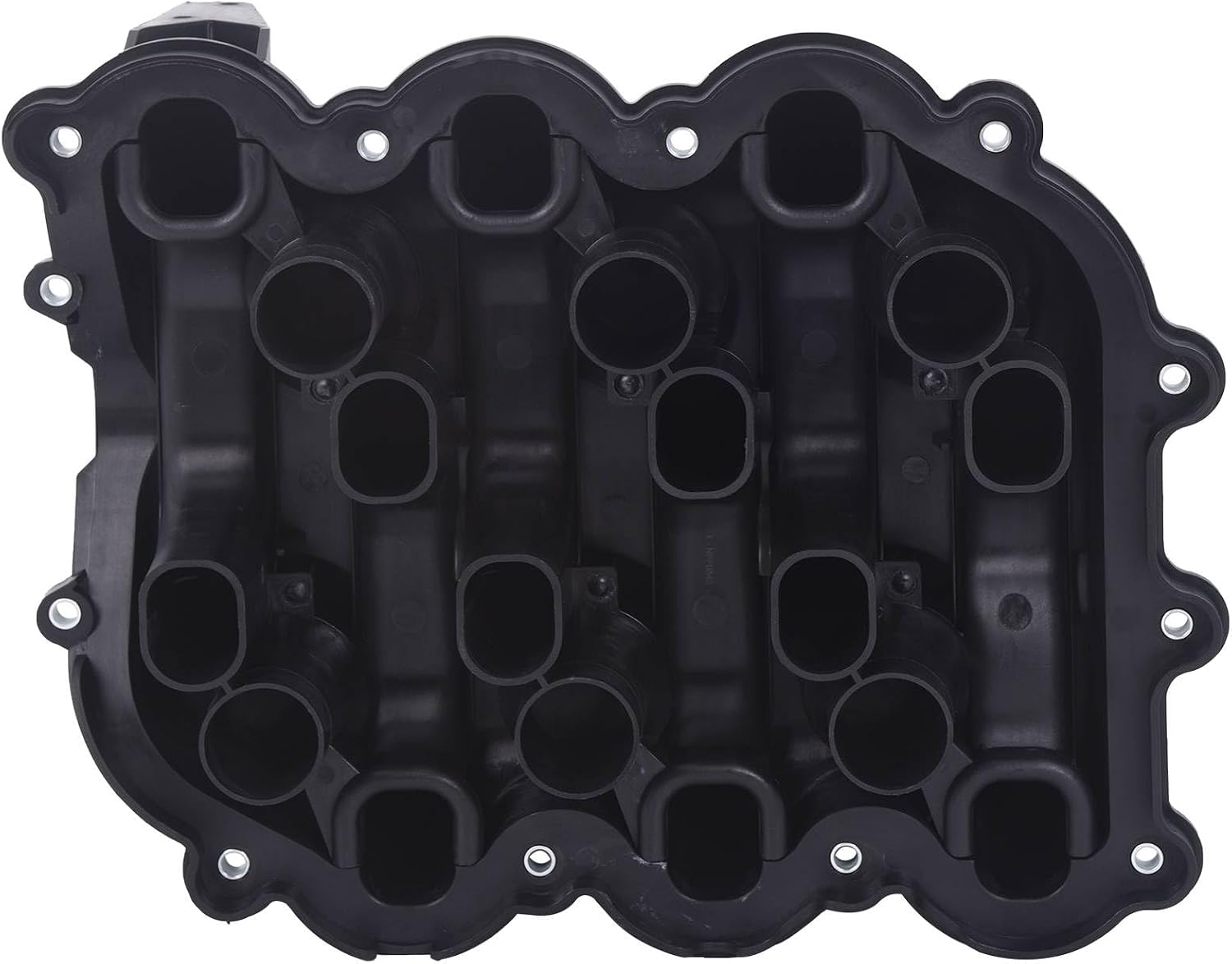
| Manufacturer | KASBCY |
|---|---|
| Model | Engine Intake Manifold |
| Item model number | 1L3Z-9424-AA |
| OEM Part Number | 1L3Z-9424-AA, 615-463, 615463, FD1416127 |
This KASBCY upper intake manifold is a budget-focused replacement that restores proper air distribution to the engine on compatible Ford applications. It is intended to replace the upper intake manifold assembly referenced by part number 1L3Z-9424-AA and installs where the factory unit sits to route intake air to the cylinders. The product emphasizes durable construction to handle heat and pressure, and the simpler design aims to make installation straightforward for a technician or an experienced DIYer. Practical benefits include returning engine efficiency and drivability without the expense of an OEM part, and the listing notes a one-year warranty for basic peace of mind. Limitations are typical of aftermarket replacements: fitment should be confirmed before purchase and finicky gasket surfaces or mating hardware may require care or reuse of factory components. For a budget repair this part is a sensible option, but buyers seeking guaranteed factory interchangeability or long-term performance parity may prefer a factory-quality replacement.
Best for: Buyers needing an affordable replacement intake manifold to get a 1997–2003 F-150 back on the road with minimal cost and who are comfortable verifying fitment and handling a straightforward replacement.
Less Ideal for: Shoppers seeking an exact factory-match or long-term performance parity without considering a factory-quality part should consider higher-end or dealer replacements instead.
- Direct replacement for part 1L3Z-9424-AA to simplify sourcing and fit checks
- Constructed to withstand engine heat and pressure for reliable short- to mid-term service
- Simplified design aimed at easier installation for mechanics and experienced DIYers
- Backed by a one-year warranty against manufacturing defects
- Compatibility must be verified before purchase and the seller asks for VIN to confirm fitment
Verdict: If you want a low-cost, serviceable replacement to restore intake airflow on a compatible Ford pickup, this KASBCY upper intake manifold is a practical budget choice.
UnayKolb Upper Intake Manifold with Gaskets for 2000–2003 Ford F150

| Material Type | Aluminum |
|---|---|
| Part Number | UKN02-039 |
This UnayKolb upper intake manifold replaces the factory upper runner assembly on 2000–2003 Ford F150 trucks and ships with the necessary gaskets for installation. Made from aluminum with an integrated coolant crossover, it is intended to resist corrosion and reduce vibration compared with cheaper stamped parts. Installation follows the same bolt pattern and sealing surfaces as the factory piece, so it fits like a direct replacement when the head and lower manifold are in good condition. For routine engine maintenance or to repair a cracked or leaking factory manifold, this part restores intake sealing and coolant routing without modifying other engine systems. Expect professional-level fitment for a straightforward swap, but keep in mind that long-term durability depends on proper torque, clean sealing surfaces, and matching the rest of the intake components. The kit is best used as a direct replacement on stock or lightly modified engines rather than as an upgrade for high-performance builds.
Best for: F150 owners prioritizing a reliable, like-for-like replacement to fix leaks or coolant crossover issues who want a durable aluminum manifold that installs without modifying the engine.
Less Ideal for: Drivers building high-performance or heavily modified engines who need upgraded flow characteristics or aftermarket tuning components.
- Aluminum construction with coolant crossover designed to resist corrosion and reduce vibration
- Includes gaskets for a single-purchase installation
- Made to match factory bolt pattern for direct replacement fit on 2000–2003 F150
- Manufactured to replace common failing factory manifolds and restore proper intake sealing
- Designed as a factory-style replacement, not intended for high-horsepower or heavily modified engines
Verdict: Choose this aluminum upper intake manifold to restore factory-style reliability and coolant routing on 2000–2003 Ford F150 trucks with a straightforward direct-replacement install.
Dorman 615-188 Plastic Intake Manifold with Gaskets and Thermostat

| Manufacturer | Dorman Products |
|---|---|
| Model | 615-188 |
| Engine fit | 5.4L V8 (select Ford) |
| Includes | Manifold, gaskets, thermostat, O-ring, fittings, self-tapping screws |
| Made in | USA |
This Dorman intake manifold is a direct replacement kit intended for Ford 5.4L V8 trucks and SUVs and includes the manifold, integrated gaskets, auxiliary coolant fitting, thermostat, O-ring and self-tapping screws. It swaps in where the factory part sits and is aimed at repairing coolant leaks and intake air leaks that commonly develop in older plastic crossover designs. The integrated gaskets that sit in the manifold reduce contact points with the cylinder head, which helps lower the chance of vacuum or coolant seepage compared with some aftermarket carriers. Dorman also updated the PCV nipple and thermostat to address common failure points. Installation is a substantial job and may require several hours and care with torque on the self-tapping fasteners, but users report the kit cures coolant leaks and restores drivability. Because it is a polymer unit with self-tapping hardware rather than metal inserts, installers should use the correct torque and be prepared to replace small brackets or bolts if corrosion is present during disassembly.
Best for: Buyers who prioritize proven replacements backed by many owner reports and who want a one-package fix to stop coolant and intake leaks on older Ford 5.4L engines, and who are comfortable with or can pay for a time-consuming installation.
Less Ideal for: If you need a quick roadside fix or prefer a long-term performance upgrade, look for a professional repair or an upgraded aftermarket performance manifold instead.
- Complete kit includes manifold, integrated gaskets, thermostat, O-ring and fittings so you avoid sourcing parts separately
- Integrated gaskets reduce potential leak points compared with carrier-gasket setups
- Made in the USA with design improvements over the original for reliable fit and function
- Updated PCV nipple and thermostat design to address common failure modes
- Installation is labor intensive and can take a full day for a DIYer with limited space around the engine
- Uses self-tapping screws into the plastic manifold instead of metal threaded inserts, requiring careful torque control
Verdict: A complete, well-documented replacement manifold kit that stops common coolant and vacuum leaks on 5.4L Ford engines while matching factory fit and function.
DNA MOTORING Intake Manifold 615-188 Compatible with 2000-2003 Ford F-150 5.4L V8

| Fitment | 00-03 F150, 00-05 F250/F350, Excursion, Expedition, E-Series 2003-2015 (5.4L V8) |
|---|---|
| Part Number | 615-188 / 2L1Z9424AA (crosses) |
| Design | One piece with molded intake gaskets |
| Material | Re-engineered reinforced ABS plastic |
This DNA MOTORING intake manifold is a factory-style direct replacement for 5.4L Ford trucks and vans from the 2000 to mid-2000s era. It is a one-piece design with intake gaskets molded into the manifold so you do not need separate gasket kits during installation. The part is made from reinforced ABS plastic intended to balance durability and cost, and it includes fittings for heated PCV systems when applicable. In practice the manifold is used to restore a leaking or cracked factory manifold and get a vehicle back to reliable operation; many DIYers and shops report straightforward bolt-up fitment and improved drivability after replacement. Important limitations are the plastic construction and included fasteners, which some installers find soft or prone to stripping, so careful torque control and reusing OEM bolts is advisable. Installation instructions are not included and professional installation is recommended if you are not comfortable with multi-hour engine work.
Best for: Buyers seeking a budget-friendly factory-style replacement to stop coolant or vacuum leaks and return an older 5.4L Ford truck to reliable daily use, and who prefer a straightforward direct-fit part over custom upgrades.
Less Ideal for: Drivers looking for a long-term performance upgrade or a metal intake replacement for maximum heat resistance should consider higher-end aftermarket or factory metal options instead.
- Direct replacement one-piece design with molded intake gaskets for easier install
- Compatible with a wide range of 5.4L Ford F-series and Econoline applications in the specified years
- Re-engineered reinforced ABS construction reduces cost while offering reasonable durability
- Includes fittings for heated PCV where required so fewer missing parts at install
- Plastic body and supplied self-tapping screws can be soft and risk strip or failure if over-tightened
- No installation instructions included which may complicate a DIY repair
Verdict: A cost-conscious, direct-fit replacement that restores a leaking 5.4L Ford intake manifold with easy gasket integration and acceptable durability for mainstream daily drivers.
Choosing the Right 1997-2003 Ford F-150 Intake Manifold: Key Factors to Consider
Fitment and Port Alignment
Correct fitment is the most important factor for the 1997-2003 Ford F-150 because even slight misalignment at intake or coolant passages leads to persistent leaks or poor airflow distribution. Verify that the manifold matches the cylinder-head port shape and bolt pattern precisely; a mismatch forces gasket compression changes that can cause vacuum loss or uneven sealing.
Port alignment also affects throttle-body mating and sensor placement. If the throttle interface or MAP/MAF location shifts, it can alter air-measurement signals and complicate tuning. For these trucks, choosing a manifold that replicates factory port geometry minimizes the need for additional adapters and reduces installation time.
Gasket Surfaces and Sealing Design
A robust sealing surface and proper gasket design determine how long the manifold stays leak-free. Look for continuous, machined gasket flanges or reinforced raised runners that distribute clamp load evenly across the cylinder-head mating face. On 1997-2003 F-150 engines, uneven flange surfaces can allow coolant or vacuum to seep at corners where fastener torque is low.
Consider whether the manifold uses integral formed gaskets, multi-layer steel gaskets, or conventional cork/rubber pieces. The right sealing approach limits ingress of contaminants into intake passages and reduces the chance of coolant mixing with intake air, a common concern on these model years.
Material and Thermal Stability
Material selection affects how the intake manifold responds to engine heat cycles. Cast aluminum resists deformation and conducts heat but can crack if inadequately designed around stress points. Composite or polymer manifolds reduce heat soak and are lighter, but must be engineered to resist long-term exposure to underhood temperatures.
For 1997-2003 F-150 use, favor materials proven to handle repeated heating and cooling without warping. Thermal stability also influences the torque retention of fasteners and the longevity of threaded inserts in tapped bosses.
Coolant and Vacuum Passage Integrity
Many intake manifolds on these F-150s incorporate coolant passages and vacuum ports. Integrity of those passages is critical to prevent coolant leaks into the intake and to preserve engine vacuum for accessories. Inspect how the manifold isolates coolant channels from intake runners and whether boss locations match OEM fittings.
A design that simplifies sealing of coolant passages reduces the number of potential failure points. Reliable vacuum port placement also makes diagnosing and repairing vacuum-related drivability issues easier, which is important for maintaining idle quality and throttle response.
Hardware and Torque Behavior
Fastener quality, boss strength, and recommended torque values directly affect sealing performance. Poorly designed bolt bosses can strip or pull through, especially on repeated service. Manifolds that include hardened inserts or use thicker flange material distribute clamping forces more evenly across the gasket.
Adhere to proper torque specs and sequence for the 1997-2003 Ford F-150 to avoid distortion. Consider whether the manifold requires special studs or torque-to-yield fasteners and whether replacement hardware is readily available to maintain a reliable seal.
Serviceability and Compatibility with Stock Components
Serviceability matters for routine maintenance and any future repairs. A manifold that allows straightforward access to spark-plug wells, sensors, and vacuum lines will reduce labor time and the likelihood of incidental damage during work. Also confirm compatibility with the stock throttle body, EGR passages if present, and intake sensors used on 1997-2003 F-150 engines.
Designs that preserve original sensor bosses and use standard hose fittings make it easier to return the truck to service without aftermarket adapters. This preserves drivability and reduces the chance of error during installation.
Common Symptoms of Intake Manifold Problems on 1997-2003 F-150s
Owners of 1997-2003 F-150s will often notice specific symptoms when an intake manifold or its gasket begins to fail. Typical signs include rough idle, loss of low-end torque, or visible coolant residue near the intake flange. Vacuum leaks from poor seals can also cause an elevated idle or surging under load.
- Hissing or whistling sounds at idle that indicate vacuum leaks
- Coolant puddling or white residue near the intake flange pointing to coolant seepage
- Check-engine light with misfire or lean codes related to airflow irregularities
- Poor throttle response or reduced torque at low RPM, often from uneven air distribution
Diagnosing an Intake Manifold Vacuum Leak
Start diagnosis with simple, low-cost checks. With the engine cold, inspect the intake manifold flange areas for visible coolant or oil staining and check vacuum hose connections for cracks. A smoke test or controlled carb cleaner/propane spray around the manifold flange while the engine idles can help locate leaks by observing changes in engine speed.
- Listen for distinct vacuum leak sounds with the hood open
- Use a hand-held smoke machine or compressed smoke to chase leaking areas
- Monitor live engine data for erratic intake air or MAP sensor readings while inducing small vacuum changes
Intake Manifold Gasket Replacement Tips
When replacing the intake manifold gasket on a 1997-2003 F-150, follow the correct torque sequence and values to avoid warping the flange. Clean both mating surfaces thoroughly and inspect for corrosion or pitting that may prevent a flat seal. Replace any worn studs or stripped threads and consider using thread inserts where repeated service has weakened bosses. Replace all related seals and O-rings rather than reusing old components, and double-check hose routing and vacuum fittings before starting the engine to reduce the chance of post-installation leaks.
- Clean mating surfaces with a nonabrasive solvent and light scotch-brite if necessary
- Use new gaskets and replace any aging rubber seals or O-rings
- Hand-start bolts to ensure correct alignment before final torqueing
Maintenance: Cleaning and Preventive Care
Regular inspection and periodic intake cleaning can extend manifold life and keep airflow paths clear. Carbon buildup in runners and EGR passages can affect idle quality and throttle response. Inspect vacuum ports and coolant passages for blockages and clear them carefully without damaging bosses or sensor fittings. When cleaning, avoid aggressive chiseling or scraping that could gouge flange faces. Gentle chemical cleaners followed by manual wiping and compressed air drying are effective for removing deposits without risking damage.
- Avoid harsh mechanical scraping on gasket surfaces
- Use appropriate intake-cleaning agents designed for internal intake passages
- Blow out passages with compressed air after solvent soak to remove loosened deposits
Torque Specifications and Fastener Sequence Overview
Following the correct torque sequence prevents distortion of the manifold flange and ensures even gasket compression. While exact torque numbers depend on fastener type and engine variant, the sequence typically moves from the center outwards in a crisscross pattern to distribute load. Use a calibrated torque wrench and follow any manufacturer notes about re-torque intervals. If the manifold uses torque-to-yield bolts, replace them rather than reusing. Also inspect bolt holes for elongation or damage that can compromise clamping force and replace hardware as needed to preserve sealing integrity.
- Work in stages to final torque rather than single-pass tightening
- Use thread lubricant where specified and clean threads before installation
- Replace torque-to-yield fasteners when required rather than reusing them
Still looking for the perfect fit?
Select your Ford F-150 configuration to see the most relevant Intake Manifolds recommendations
How We Chose the Best 1997-2003 Ford F-150 Intake Manifold
To assemble this list we applied filters aimed at real-world durability and correct fitment for 1997-2003 Ford F-150s. Primary evaluation criteria included fitment accuracy to the specified engine mounting points and intake ports, sealing performance at the intake manifold gasket surfaces, and resistance to heat-related warping or cracking. We prioritized manifolds made from materials and manufacturing processes known to tolerate the thermal cycles typical of this V8/V6 era. We also assessed serviceability factors such as how accessible coolant and vacuum passages are during routine maintenance, the presence of replaceable inserts or brass threads for fasteners, and compatibility with stock sensors and throttle-body interfaces. Sealing and torque behavior were examined through published torque specs and common installation procedures to reduce risk of vacuum or coolant leaks. Exclusions: we excluded manifolds that required substantial cylinder-head modification, nonstock mounting adapters, or that lacked clear fitment documentation for the 1997-2003 F-150. We did not consider options intended solely for racing applications that sacrifice drivability or emissions controls for peak power. The result is a curated set of choices balanced for installation practicality, leak resistance, and long-term reliability for owners of the 1997-2003 Ford F-150.
Our full evaluation process is outlined in our review methodology.
FAQ
How do I tell if my intake manifold gasket is leaking on a 1997-2003 F-150?
Common indicators include visible coolant near the intake flange, white residue, fluctuating idle, or a check-engine light with lean or misfire codes. A smoke test or spraying a small amount of carb cleaner around the flange while the engine is running can help reveal vacuum leaks.
Can I replace the intake manifold gasket myself on these model years?
Many mechanically inclined owners can perform the job with basic hand tools, a torque wrench, and a service manual for the proper sequence and specs. Expect to replace related seals and take care cleaning mating surfaces to ensure a reliable seal.
Will a cracked intake manifold cause coolant loss on my F-150?
Yes. Cracks or failures at coolant passages within the manifold can allow coolant into intake passages or external leaks at the flange. Look for coolant fouling on the manifold surface and coolant level drops without obvious radiator or hose leaks.
How important are torque specs when installing an intake manifold?
Very important. Incorrect torque or sequence can warp the flange and lead to leaks. Use a calibrated torque wrench and follow the recommended pattern, replacing torque-to-yield bolts when necessary to maintain proper clamping force.
Is cleaning the intake manifold necessary during replacement?
Cleaning is recommended to remove carbon or coolant residue that could prevent a flat seal. Use nonabrasive cleaners and compressed air to clear passages without damaging gasket faces or sensor bosses.
What are common causes of intake manifold vacuum leaks on these trucks?
Common causes include degraded gaskets, warped or corroded flange surfaces, brittle vacuum hoses, and cracked vacuum ports or fittings. Regular inspection helps catch issues before they cause drivability problems.
Final Verdict
For the 1997-2003 Ford F-150, prioritize manifold fitment, gasket sealing design, and material durability when choosing a replacement. These factors directly affect vacuum integrity, coolant isolation, and long-term serviceability. Balance ease of installation and hardware quality against the need for thermal stability and correct port alignment. Ultimately, pick an intake manifold that minimizes leak risk and preserves factory sensor and throttle interfaces. That approach reduces follow-up repairs and gives the most reliable drivability outcome for these F-150 model years.
Explore More:
- Check out all Ford F-150 parts & accessories
- Explore Intake Manifolds Maintenance & Repair Guides
- Explore Engine
- Browse all Auto Parts
