

Note: This article contains affiliate links. If you click on these links and make a purchase, I may earn a small commission at no extra cost to you. This helps support my research and content. Read my full affiliate disclosure here.
Upgrading the suspension on a 1995-2001 Ford Explorer can transform driving feel, towing stability, and off-road confidence. Whether you need to restore worn components, lift for extra ground clearance, or refine on-road handling, the right suspension kit ensures predictable behavior and long-term durability.This guide brings together seven top suspension kits shortlisted for the Explorer's specific chassis and common use cases. We evaluated fitment, component quality, ride characteristics, and installation practicality to highlight options suited to daily driving, light towing, or moderate off-road use. Read on to see which type of kit matches your goals and what to expect during installation.
Looking for other parts? See all Ford Explorer parts & accessories.
Top Picks at a Glance
| Best Overall The best all-around choice for most situations | Detroit Axle 12pc 4WD Front Wheel Bearing and Control Arm Suspension Kit |  |
| Best Quality Built to a higher standard if you want something more solid | Detroit Axle 10-piece Front Suspension Kit for 1998–2001 Ford Explorer / Mercury Mountaineer |  |
| Best Value The sweet spot between price and what you get | Detroit Axle Front 4‑Piece Suspension Kit (2 Upper Control Arms, 2 Lower Ball Joints) |  |
| Best Budget The cheapest option that still gets the job done reliably | SCITOO 8pc Front Suspension Kit with Control Arms, Ball Joints, Tie Rods and Sway Bar Links |  |
| Highest Rated A top-rated pick with lots of positive feedback | Detroit Axle Front 12‑Piece Suspension Kit (Front Upper/Lower Control Arms, Tie Rods, Sway Bars) |  |
| Most Popular A crowd favorite that many people choose with confidence | Detroit Axle Front End 14‑Piece Suspension Kit for 1998–2001 Ford Explorer / Mercury Mountaineer |  |
1. Detroit Axle 12pc 4WD Front Wheel Bearing and Control Arm Suspension Kit

| Set Name | 12pc |
|---|---|
| Bearing Type | Ball Bearing |
| Material Type | Alloy Steel |
| Warranty Description | 10 Year |
| Specification Met | ISO 9001 |
This Detroit Axle 12-piece front kit replaces the major front-end components on 4WD Ford Explorer-era trucks, combining two upper control arms with ball joints, lower ball joints, inner and outer tie rod ends, sway bar links, and two wheel bearing hub assemblies. It is intended for comprehensive front suspension refreshes where multiple worn parts cause looseness, noise, or uneven tire wear. Buyers will appreciate receiving matched components engineered to work together, plus the included hub assemblies that simplify bearing replacement and ABS sensor compatibility. The alloy steel construction and ISO 9001 reference suggest factory-style manufacturing controls, and the 10-year spare part availability is useful for long-term ownership. Installing the full kit is more efficient than sourcing individual parts, but it requires moderate mechanical skill and tools; shops can charge significant labor for a full front-end overhaul. The kit is focused on specific 4WD Ford/Mazda/Mountaineer fitments, so double-check exact model year and torsion-bar suspension details before ordering.
Best for: Buyers who want a balanced, all-in-one front suspension refresh for a 1995–2001 Ford Explorer-era 4WD vehicle and prefer replacing multiple wear items at once to restore steering feel and reduce noise.
Less Ideal for: If you only need a single component replaced or have a vehicle with a different suspension type, this full kit is overkill and a single-part replacement would be more appropriate.
- Complete front-end coverage: includes control arms, ball joints, tie rod ends, sway links, and hub assemblies so you can replace worn parts in one install.
- Hub assemblies include ABS sensor provision and 5-lug flange for direct fitment to specified 4WD applications.
- Alloy steel components built to ISO 9001 processes indicate consistent material and manufacturing controls.
- Saves time compared with sourcing matching individual parts and reduces compatibility guessing for the covered model range.
- Not a quick DIY for beginners because full front suspension and hub work require specialty tools and alignment after installation.
- Fitment is specific to certain years and torsion-bar suspension configurations so it will not fit all Explorer-era vehicles.
Verdict: Choose this kit when you want a single, matched package to fully rebuild the front suspension and hub assemblies on a 4WD Explorer-era vehicle for consistent, factory-style performance.
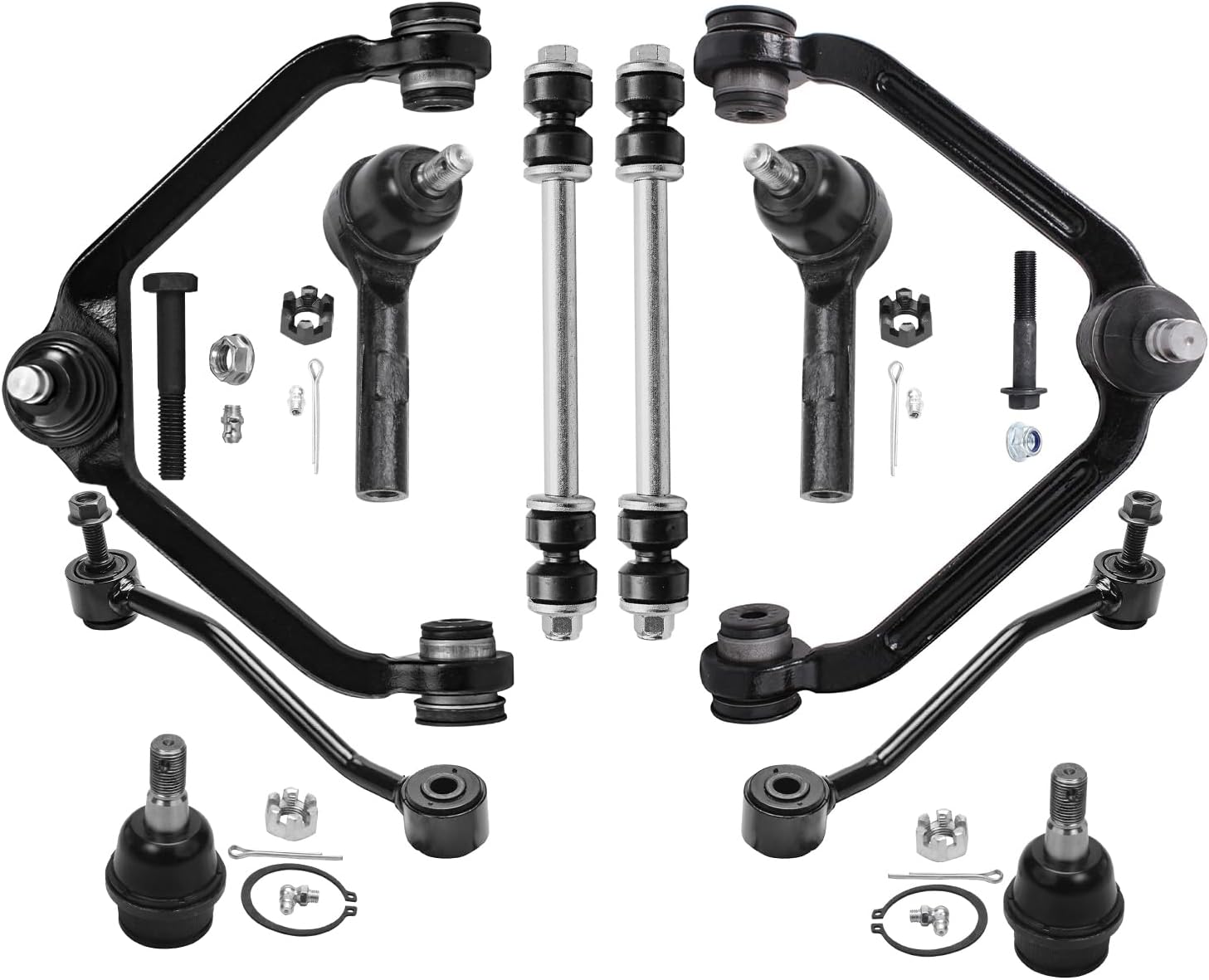
2. Detroit Axle 10-piece Front Suspension Kit for 1998–2001 Ford Explorer / Mercury Mountaineer
| Fit Type | Vehicle Specific Fit |
|---|---|
| Auto Part Position | Front Upper |
| Material Type | Alloy Steel |
| Unit Count | 10.0 Count |
This Detroit Axle 10-piece front suspension kit is a full-replacement bundle for the front end on 1998–2001 Ford Explorer and Mercury Mountaineer vehicles that come with a one-piece right upper control arm design. It supplies two upper control arms with integrated ball joints, two lower ball joints, two outer tie rods, and four front/rear sway bar links so you can refresh steering and suspension components in a single job. For a performance-minded owner the practical benefit is consistent steering geometry and reduced play after the worn parts are replaced, which improves handling response and straight-line stability. Components are alloy steel and come vehicle-specific to fit the listed years, which simplifies installation compared with sourcing individual parts. Expect the usual caveats for full kits: some parts are direct replacements rather than uprated performance designs, so aggressive track use may reveal limits compared with dedicated performance arms and bushings. Installation is a multi-hour job that typically requires basic shop tools and alignment after assembly.
Best for: Buyers who want to restore tight steering and handling on a late 1990s Explorer or Mountaineer with a single kit and prefer a practical, vehicle-specific replacement over sourcing individual parts.
Less Ideal for: Drivers seeking race-ready, heavy-duty performance suspension upgrades or custom geometry control arms should look for aftermarket performance-specific components instead.
- Complete front-end coverage in one kit reduces parts hunting and ensures matched components
- Includes upper control arms with preinstalled ball joints for faster assembly
- Alloy steel construction offers solid durability for street and light performance use
- Vehicle-specific fit for 1998–2001 Explorer and Mountaineer simplifies installation and reduces fitment guesswork
- Parts are replacement-style rather than purpose-built performance uprated components
Verdict: A convenient, vehicle-specific kit to restore steering precision and front suspension function on 1998–2001 Ford Explorer and Mercury Mountaineer models.
3. Detroit Axle Front 4‑Piece Suspension Kit (2 Upper Control Arms, 2 Lower Ball Joints)

| Manufacturer | Detroit Axle |
|---|---|
| Position | Front Upper |
| Item Weight | 12.39 pounds |
| Manufacturer Part Number | 80002-4A-DA |
This Detroit Axle front suspension kit supplies two upper control arms and two lower ball joints as direct-fit replacements for compatible 1995–2001 Ford Explorer and related torsion‑bar trucks and SUVs. The parts are made from a premium alloy and are described as reinforced for higher structural strength and corrosion resistance, which helps them stand up to repeated impact loads and road wear. Installation is intended to be straightforward because the pieces are direct replacements that use the factory mounting points. In real-world use this kit restores steering geometry and front-end stability after worn arms or ball joints cause play, uneven tire wear, or a loose steering feel. Limitations include that fitment is specific to torsion-bar suspension models listed and the kit does not include hardware like control arm bushings beyond what is shown, so you may need additional parts for a full front-end refresh. Buyers should also verify exact year and submodel fit before ordering.
Best for: Buyers who want a cost‑effective, ready-to-install replacement kit to restore front-end stability and steering feel on the specified Explorer and compatible torsion-bar trucks without sourcing individual parts.
Less Ideal for: Drivers who need parts for non torsion-bar suspension variants or those seeking a full rebuild with all bushings, bolts, and alignment parts included should consider a more comprehensive kit or OEM dealer options.
- Direct-fit replacement designed for listed Ford Explorer and compatible torsion-bar models
- Premium alloy construction aimed at improved wear resistance and corrosion protection
- Reinforced structural design to better handle impact loads and extend service life
- Includes both upper control arms and lower ball joints needed to address common front-end wear
- Fitment limited to the specific torsion-bar models and years listed, not universal across all Explorer/Ranger variants
Verdict: A practical, factory-style replacement kit that restores front-end control on the listed 1995–2001 Explorer and compatible torsion-bar models with minimal fuss.
4. SCITOO 8pc Front Suspension Kit with Control Arms, Ball Joints, Tie Rods and Sway Bar Links

| Fit Type | Vehicle Specific Fit |
|---|---|
| Auto Part Position | Bottom |
| Auto Part Orientation | Drivers Side |
| Material Type | Alloy Steel |
This SCITOO front suspension kit supplies the common wear items needed to refresh the front end on 1995–2001 Ford Explorer models. The kit includes driver and passenger upper control arms with ball joints, lower ball joints, outer tie rod ends, and sway bar end links so you can replace multiple failure points in one job. Parts are made from alloy steel and arrive pregreased which speeds installation and reduces initial maintenance. For a budget-focused repair the kit is convenient because it groups matched components and avoids sourcing parts separately. Expect the parts to restore steering feel and reduce bump feedback, but note this is a direct replacement style kit rather than a performance upgrade so it will not change ride height or handling characteristics dramatically. Professional installation is recommended to ensure alignment and correct torque on suspension fasteners. The one-year replacement coverage offers short-term protection if a part is defective.
Best for: Drivers repairing the front suspension on an older Explorer who want a single, budget-friendly kit that replaces the most common worn components at once.
Less Ideal for: Shoppers seeking performance suspension upgrades, adjustable components, or long-term heavy-duty commercial use should consider specialty or upgraded parts instead.
- Comprehensive kit covers upper control arms, lower ball joints, tie rod ends, and sway bar links for a coordinated front-end refresh
- Parts arrive pregreased to simplify installation and reduce initial break-in maintenance
- Made from alloy steel for improved durability over cheap stamped pieces
- Vehicle-specific fit for 1995–2001 Ford Explorer and related models reduces compatibility guesswork
- Designed as direct replacement parts so it does not offer performance or handling upgrades
Verdict: A cost-conscious, all-in-one front suspension kit that replaces the common worn components on 1995–2001 Ford Explorer models to restore steering and ride comfort.
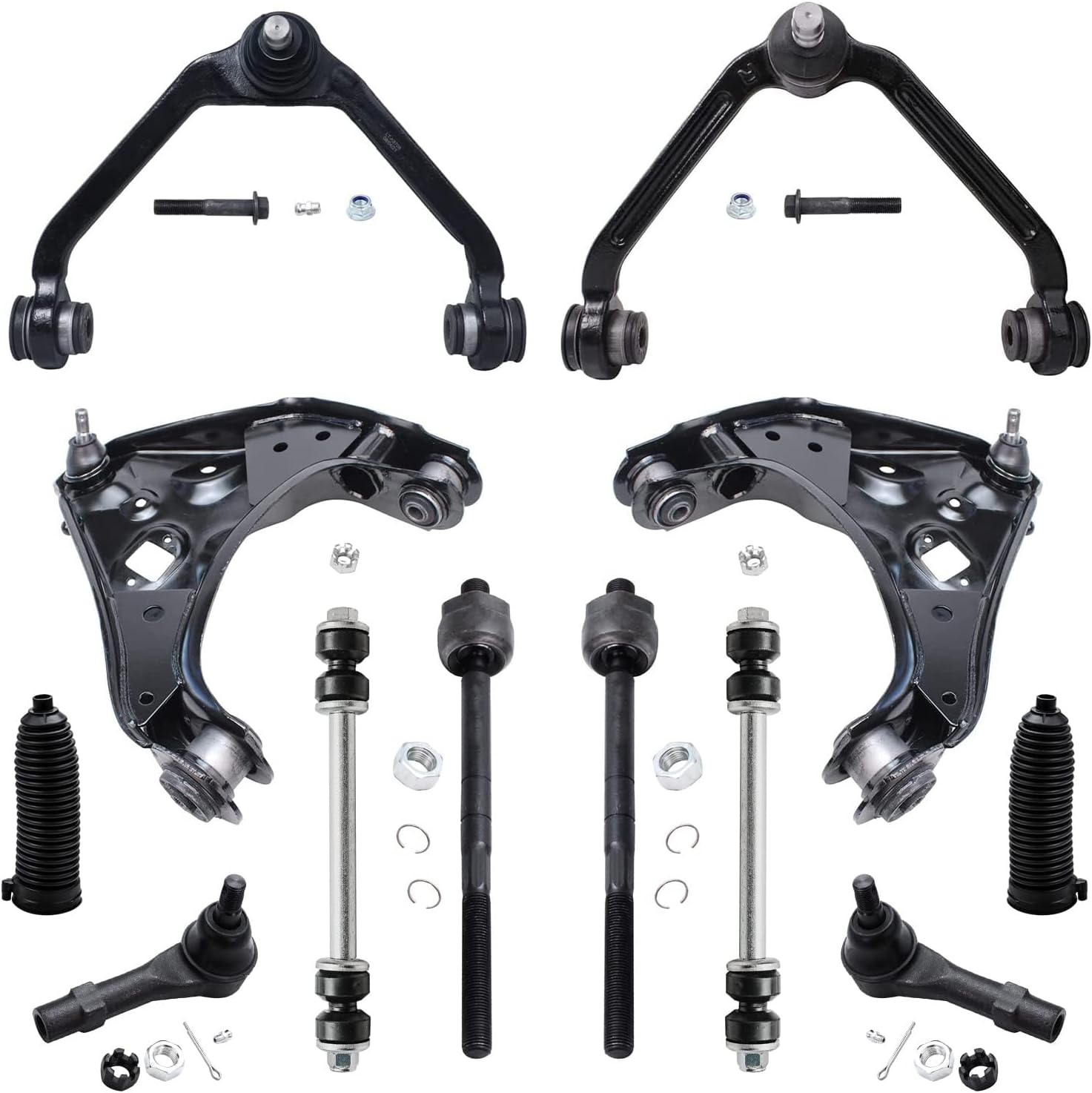
5. Detroit Axle Front 12‑Piece Suspension Kit (Front Upper/Lower Control Arms, Tie Rods, Sway Bars)
| Position | Front Upper |
|---|---|
| Item model number | 80679-12A |
| Manufacturer | Detroit Axle |
| Special Features | Replacement for select 1995–2011 Ford Explorer/Ranger and compatible Mazda/Mercury torsion‑bar models |
This Detroit Axle 12‑piece front suspension kit bundles the common wear parts needed to refurbish the front end on compatible Ford Explorer and other torsion‑bar trucks. It includes upper and lower control arms with ball joints, inner and outer tie rod ends, sway bars, and rack boots for a full front-end refresh. In practice the kit simplifies a repair by supplying matched components so you do not have to source parts individually, and the parts are tested for impact, wear, and fatigue to meet factory-quality fitment expectations. Fitment is specific to torsion‑bar front suspensions so installation follows standard front-end replacement procedures and is suitable for a DIY mechanic with basic tools or a shop. The kit’s main limitation is that it is tailored to torsion‑bar models only and will not fit coil-spring versions, so confirm your suspension type before buying. The included components help restore steering response and reduce play compared with worn originals, making it a straightforward way to bring a high‑mileage front end back to safe, predictable operation.
Best for: Buyers who prioritize a reliable, factory‑quality front suspension refresh and want a single kit that restores steering and control without sourcing multiple parts.
Less Ideal for: People with coil‑spring front suspensions or those who need single replacement pieces rather than a full matched kit.
- Complete front‑end coverage with control arms, ball joints, tie rod ends, sway bars, and rack boots included
- Components undergo impact, wear, and fatigue testing for consistent factory‑quality fit and durability
- Matches torsion‑bar front suspensions so all included parts are intended to work together out of the box
- Simplifies repair logistics by supplying a matched set rather than sourcing multiple separate parts
- Only compatible with torsion‑bar suspension models and not suitable for coil‑spring setups
Verdict: Choose this kit when you want a tested, matched front suspension set to reliably restore steering feel on torsion‑bar Explorer family vehicles.
6. Detroit Axle Front End 14‑Piece Suspension Kit for 1998–2001 Ford Explorer / Mercury Mountaineer

| Manufacturer | Detroit Axle |
|---|---|
| Position | Front Upper |
| Manufacturer Part Number | 80679-14A |
| Included Components | 4 control arms w/ball joints, 4 tie rod ends, 4 sway bar end links, 2 boots |
This Detroit Axle 14-piece front suspension kit bundles the common wear items you need when overhauling the Explorer/Mountaineer front end. The kit includes upper and lower control arms with ball joints, inner and outer tie rod ends, sway bar end links, and protective boots and clamps, so it covers both steering and stabilizer components in one purchase. In practice the parts install like factory replacements and are aimed at restoring steering feel and eliminating clunks or looseness caused by old bushings and joints. Detroit Axle states the parts undergo impact and fatigue testing and the kit is backed by a long warranty, which adds confidence for cautious buyers. Know that this is a full front‑end replacement kit for specific model years rather than a performance upgrade, so you should not expect upgraded handling or heavy‑duty components for lifted or off‑road builds. Fitment is limited to the listed Ford Explorer and Mercury Mountaineer years, so confirm your model before buying.
Best for: Buyers restoring ride quality and steering precision on 1998–2001 Ford Explorers or Mercury Mountaineers who prefer a single vetted kit to replace multiple worn front‑end parts and reduce uncertainty during repairs.
Less Ideal for: Drivers looking for performance suspension upgrades, heavy‑duty components for off‑road use, or fitment outside the specified model years should look elsewhere.
- Comprehensive kit includes control arms, ball joints, tie rod ends, sway bar links, and boots for a full front‑end refresh.
- Parts designed and tested to meet factory‑style fit and durability claims, simplifying repair decisions.
- Covers the usual failure points in one purchase which reduces parts sourcing and potential fitment mismatches.
- Includes protective boots and clamps to help extend joint life after installation.
- Not a performance or heavy‑duty upgrade—components are replacement quality, not strengthened for lifted or off‑road use.
Verdict: If you need a single, tested kit to replace worn front control arms, tie rods, and sway links on a 1998–2001 Explorer/Mountaineer, this Detroit Axle 14‑piece set is the practical choice.
Choosing the Right 1995-2001 Ford Explorer Suspension Kit: Key Factors to Consider
Fitment and Model Year Coverage
Correct fitment is the single most important factor when selecting a suspension kit for a 1995-2001 Ford Explorer. The Explorer across those years retained similar suspension mounting points, but small differences in optional equipment and trim can change whether a part is direct-fit. Confirm that a kit explicitly lists compatibility with the 1995-2001 range and any relevant trim or axle options.
A kit that matches factory mounting locations reduces modification time and avoids the need for specialty brackets. Fitment also affects alignment specifications; a kit that fits properly makes it easier to achieve correct toe, camber, and caster settings. For owners who plan to install the kit themselves, precise fitment minimizes fabrication and the risk of improper installation that could compromise safety.
Component Completeness
Kits vary from full strut-and-spring assemblies to partial packages that only include select items. A complete suspension components kit for this Explorer should ideally include matched springs, struts or shocks, and any upper mounts, bushings, or hardware needed for installation. When those pieces are sold separately you may find hidden costs and additional downtime while sourcing parts.
Choosing a comprehensive kit simplifies installation and helps ensure that damping and spring rates are matched for the intended application. For example, lift kits often require extended sway bar links or brake line brackets; lowering kits may need different bump stops. Paying attention to what is included prevents surprises and improves long-term reliability.
Intended Use and Ride Character
Decide whether the priority is comfort, load-carrying, off-road capability, or sharper handling. A performance suspension or coilover kit tuned for response will typically use firmer damping and stiffer springs, improving cornering at the cost of ride comfort on rough roads. Lift kits are optimized for ground clearance and articulation, and may alter steering geometry in ways that are acceptable off-road but noticeable on pavement.
For towing or regular heavy loads, look for spring rates and shock valving designed to resist sag and maintain control under weight. For a daily-driven Explorer, prioritize kits that reduce body roll while preserving a compliant ride. Understanding intended use ensures you choose spring and damper characteristics that match real-world needs.
Corrosion Resistance and Long-Term Durability
The 1995-2001 Explorer often sees exposure to road salt and wet conditions, so corrosion resistance is important for longevity. Look for steel components with protective coatings, zinc plating, or powder-coated finishes, as well as stainless or sealed hardware. Rubber bushings should resist oil and ozone degradation; some kits offer polyurethane bushings for improved longevity but with slightly firmer NVH characteristics.
Durable finishes and replaceable wear items reduce lifecycle cost and simplify future repairs. Kits that use greaseable or replaceable mounts make long-term maintenance easier and mitigate common failure points such as strut mounts and sway bar links.
Adjustability and Tuning Options
Adjustability matters if you want to fine-tune ride height or damping for mixed use. Coilover-style kits allow precise height and sometimes damping adjustment, which is useful for owners who split time between on-road driving and light trail work. Some lift or lowering kits provide fixed spacers or springs with a single ride height change, which is simpler but less flexible.
Consider whether adjustable shocks or preload-capable springs are appropriate for your goals. If you tow intermittently or carry variable loads, adjustable damping helps dial out excessive squat or harshness. Keep in mind that more adjustable systems typically require more setup time and baseline alignment after installation.
Serviceability and Parts Availability
Select kits that use commonly available replacement components and standard fasteners. The 1995-2001 Explorer benefits from parts that can be sourced from established suppliers and that offer straightforward replacement of wear items such as shocks, struts, and bushings. Avoid proprietary one-off components that complicate future repairs.
Kits with documented installation guides, torque specs, and accessible mounting hardware reduce shop time and the risk of improper maintenance. Availability of replacement springs or dampers and clear interchange information helps keep maintenance costs predictable over the vehicle's life.
How Different Kit Types Affect Explorer Handling
Strut-and-spring kits that replicate original geometry tend to restore factory handling characteristics and are a common choice for owners looking to renew ride quality without changing vehicle dynamics. They simplify alignment and usually require only standard suspension tools for installation.
Coilover kits offer the most tuning flexibility by allowing changes to ride height and often damping. For the 1995-2001 Explorer, coilovers can sharpen response and reduce body roll, but they may transmit more road harshness into the cabin if not tuned appropriately.
Lift kits increase ground clearance and suspension travel but can alter steering geometry. When lifting an Explorer, check for effects on driveline angles and whether additional components like extended brake lines or sway bar links are needed.
- Strut-and-spring kits: easiest route to OE ride and fitment
- Coilover kits: best for adjustability and performance tuning
- Lift kits: necessary for clearance and improved off-road capability
Preparing Your Explorer for a Suspension Install
Before starting any suspension work, inspect key chassis and steering components for wear. Tie rods, ball joints, control arm bushings, and sway bar links should be in good condition; replacing worn parts at the same time prevents premature wear on new suspension components.
Gather required tools and a factory or aftermarket service manual for torque values and disassembly order. Lifting the vehicle safely with jack stands and using spring compressors for strut removal are essential safety steps. If a kit includes new hardware, use it rather than reusing old, corroded fasteners.
Plan for a post-installation alignment. Changes in ride height or component stiffness will alter alignment angles, and getting a professional alignment after installation ensures predictable steering and tire wear.
- Inspect and replace worn steering and suspension wear items first
- Use proper safety equipment and follow torque specs
- Schedule an alignment after installation
Common Installation Challenges and How to Avoid Them
Rusted fasteners are common on older Explorers and can make disassembly difficult. Applying penetrating lubricant ahead of time and having replacement hardware on hand prevents delays. In some cases, heated removal or careful cutting is necessary, but plan for this before beginning the job.
Misrouting or insufficient length of brake lines and ABS wiring can occur when lifting the vehicle. Confirm that any lift kit includes instructions regarding brake line extensions or relocation brackets. If instructions are not clear, measure required clearances while the suspension is at full droop and full compression.
Incorrect spring orientation or missing isolators can produce noise and premature wear. Follow kit diagrams carefully and reuse any spring seats or insulators if the kit does not supply new ones.
- Penetrating oil and replacement bolts mitigate rusted fastener issues
- Verify brake line and ABS wiring lengths when lifting
- Install isolators and follow torque sequences to avoid noise
Maintaining Your New Suspension Over Time
Regular inspections after the first 500 miles and then at routine service intervals help catch settling or hardware loosening. Check fastener torque and condition of rubber bushings or polyurethane mounts. Early detection of issues prevents uneven tire wear and handling degradation.
Keep moving parts lubricated where applicable and address any unusual noises promptly. If your kit uses adjustable components, record baseline settings for height and damping so you can revert if changes introduce undesirable behavior.
When servicing brakes or other components near suspension parts, inspect mounts and shock bodies for leaks or corrosion. Replacing worn shocks and springs as a matched set preserves intended ride characteristics.
- Recheck torque and hardware after initial break-in
- Monitor bushing condition and shock performance
- Keep records of adjustable settings
Towing And Load Considerations For The Explorer
If you tow regularly with your 1995-2001 Explorer, select a kit rated to handle the added tongue weight and trailer load. Springs with higher spring rates or helper leafs help control rear sag under load and preserve steering geometry while towing.
Shock valving that resists bottoming under load is important for maintaining control and preventing excessive rear bounce. Some kits offer optional heavier-duty shocks or valving choices tailored to load-carrying duty.
Consider whether additional supportive components such as steering dampers or upgraded sway bar end links are needed when increasing spring rates. These supplementary items can maintain predictable handling while carrying heavy loads.
- Higher-rate springs reduce rear sag when towing
- Heavier-duty shocks resist bottoming and improve control
- Supplementary steering or stabilizing components may be necessary
Still looking for the perfect fit?
Select your Ford Explorer configuration to see the most relevant Suspension Kits recommendations
How We Chose the Best 1995-2001 Ford Explorer Suspension Kit
We started by focusing on products designed specifically for the 1995-2001 Ford Explorer platform and then applied performance and durability filters relevant to this generation. Primary evaluation criteria included fitment accuracy to original mounting points, corrosion-resistant finishes and bushing materials, and the completeness of the kit so fewer additional parts are required during installation. We also assessed ride and handling characteristics as reported by owners and installers, looking for balanced damping that reduced body roll without making the ride harsh. Ease of installation and the availability of clear instructions or kits that include necessary hardware were prioritized to reduce shop time. Long-term serviceability, such as readily available replacement components and adjustability where relevant, factored into rankings. Exclusions: we omitted partial kits that required multiple separate purchases to be roadworthy, and any components that were generic universal-fit items rather than Explorer-specific assemblies. The result is a curated set of seven kits that represent common buyer needs for this vehicle: restoring OE feel, lifting for clearance, lowering for handling, and performance-oriented upgrades.
Our full evaluation process is outlined in our review methodology.
FAQ
How do I know if my Explorer needs a full suspension kit or just shocks and springs?
It often depends on overall component condition and goals. If bushings, mounts, and control arms are worn, a full kit that includes those items restores proper geometry. For mild ride degradation, replacing matched shocks and springs may be enough.
Will lifting the suspension affect my Explorer's steering or alignment?
Lifting changes suspension geometry and can affect toe and caster. Proper lift kits address these changes with correct-length links or brackets, but an alignment after installation is required to restore correct steering behavior.
Can I install a suspension kit at home or should I use a shop?
Many owners can install a strut-and-spring kit with the right tools and safety precautions, but jobs requiring spring compressors or modifications are best handled by a shop. A professional installation reduces the risk of incorrect assembly and ensures a proper alignment.
How soon should I get an alignment after installing new suspension components?
Get an alignment as soon as the installation is complete and the vehicle is on its wheels. Changes in ride height or component stiffness can alter alignment angles immediately, so delaying alignment can accelerate tire wear.
Are polyurethane bushings a good idea for my Explorer?
Polyurethane bushings last longer and reduce deflection, which improves steering precision. They can increase noise and transmit more vibration into the cabin compared with factory rubber, so weigh longevity against comfort.
What maintenance should I plan for after installing a new suspension kit?
Inspect fasteners and mount condition after the first 500 miles, then at regular service intervals. Monitor shock bodies for leaks, check bushing wear, and keep records of any adjustable settings to assist future servicing.
Final Verdict
Prioritize fitment and the kit type that matches how you use your 1995-2001 Ford Explorer. If you want to restore factory handling, a matched strut-and-spring package that covers necessary mounts and hardware is the safest choice. For greater adaptability, coilovers or adjustable kits let you tune ride height and damping for mixed on-road and light off-road use.Balance durability, serviceability, and ride character when making a final decision. Ensure rust-resistant finishes, readily available replacement parts, and a plan for professional alignment after installation to keep the Explorer predictable and safe. With the right priorities, you can select a suspension upgrade that delivers the handling, clearance, or load-carrying improvement you need.
Explore More:
- Check out all Ford Explorer parts & accessories
- Explore Suspension Kits Maintenance & Repair Guides
- Explore Suspension & Steering
- Browse all Auto Parts
