

Note: This article contains affiliate links. If you click on these links and make a purchase, I may earn a small commission at no extra cost to you. This helps support my research and content. Read my full affiliate disclosure here.
Upgrading the cat-back exhaust on your 1997-2004 Dodge Dakota can change how the truck breathes, how it sounds, and how it performs under load. The right cat-back exhaust system trims backpressure, uses durable materials, and bolts up to the factory connection points so installation is straightforward for most owners.This guide covers our five shortlisted cat-back exhaust systems selected for the Dakota model years 1997 through 2004. We focus on fitment, construction quality, and the sound profile so you can match a system to your daily driving, towing, or weekend-project goals. Read on for a breakdown of evaluation criteria and practical installation and maintenance notes before the product list.
Looking for other parts? See all Dodge Dakota parts & accessories.
Top Picks at a Glance
| Best Quality Built to a higher standard if you want something more solid | MagnaFlow Street Series Cat-Back Exhaust System 15735 |  |
| Best Value The sweet spot between price and what you get | BRExhaust Direct-Fit Replacement Cat-Back Exhaust Kit |  |
| Best Budget The cheapest option that still gets the job done reliably | BRExhaust Direct-Fit Replacement Cat-Back Exhaust System Kit |  |
| Highest Rated A top-rated pick with lots of positive feedback | MAC Cat-Back Exhaust System for Dodge Dakota Quad Cab 4×4 (131" Wheelbase) |  |
| Most Popular A crowd favorite that many people choose with confidence | Magnum Exhaust Flowmaster Original 40 Dual Truck Cat-Back Kit (no tips) |  |
1. MagnaFlow Street Series Cat-Back Exhaust System 15735
| Compatible with Vehicle Type | Car, Truck, Van |
|---|---|
| Installation Type | Bolt-On |
| Automotive Fit Type | Vehicle Specific Fit |
| Material Type | Stainless Steel |
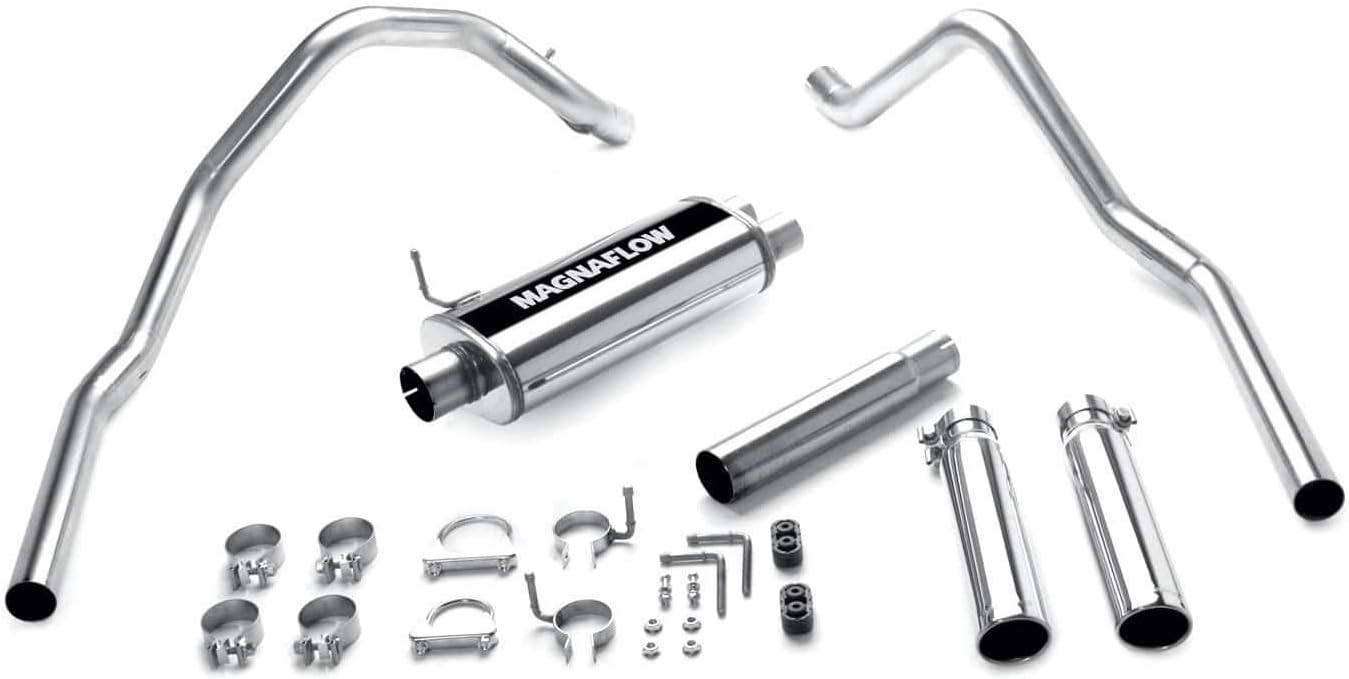
The MagnaFlow Street Series cat-back (15735) replaces the factory rear exhaust from the catalytic converter back with a stainless-steel system tuned for a fuller, throaty tone and improved exhaust flow. It is a vehicle-specific bolt-on designed for 1997–1999 Dodge Dakota models and ships with the necessary hardware for DIY installation. MagnaFlow highlights dyno-proven gains from reduced backpressure and precision robotic construction that should hold up well against corrosion. The Street Series focuses on interior and exterior sound as much as performance, so expect a noticeable change to the exhaust note along with modest horsepower and torque improvements under load. Fitment is claimed to be OEM-like thanks to 3D scanning, which makes installation straightforward for someone with basic tools, but final alignment may still require minor adjustments. This system is built in stainless steel and covered by a limited lifetime construction warranty, which adds confidence for long-term ownership. It is aimed at drivers who want stronger sound and cleaner flow without swapping headers or modifying the engine management.
Best for: Buyers who prioritize a richer exhaust tone and measurable flow improvements on a 1997–1999 Dodge Dakota and want a bolt-on system they can install or have installed without changing other driveline components.
Less Ideal for: Drivers seeking a subtle, nearly stock sound or those looking for a universal or multi-vehicle exhaust option should consider different systems.
- Vehicle-specific bolt-on design for straightforward installation on 1997–1999 Dodge Dakota
- Durable stainless-steel construction with corrosion resistance
- Tuned Street Series muffler delivers a deeper, resonant exhaust tone
- Dyno-tested design intended to improve exhaust flow and modestly increase performance
- Includes necessary hardware for do-it-yourself installation
- Designed only for 1997–1999 Dodge Dakota so it is not a universal fit
- Street-oriented sound may be louder than preferred for daily commuting or long trips
Verdict: If you want a durable, bolt-on cat-back that deepens the exhaust note and improves flow on a late-90s Dodge Dakota, this MagnaFlow Street Series system is a focused, performance-minded choice.
2. BRExhaust Direct-Fit Replacement Cat-Back Exhaust Kit
| Fitment scope | Cat-back replacement from behind last catalytic converter |
|---|---|
| Construction | Mandrel-bent aluminized steel |
| Fitment type | Direct-fit, multi-piece adjustable design |
| Included hardware | Clamps, gaskets, nuts, bolts and instructions |
| Warranty | Two year coverage |
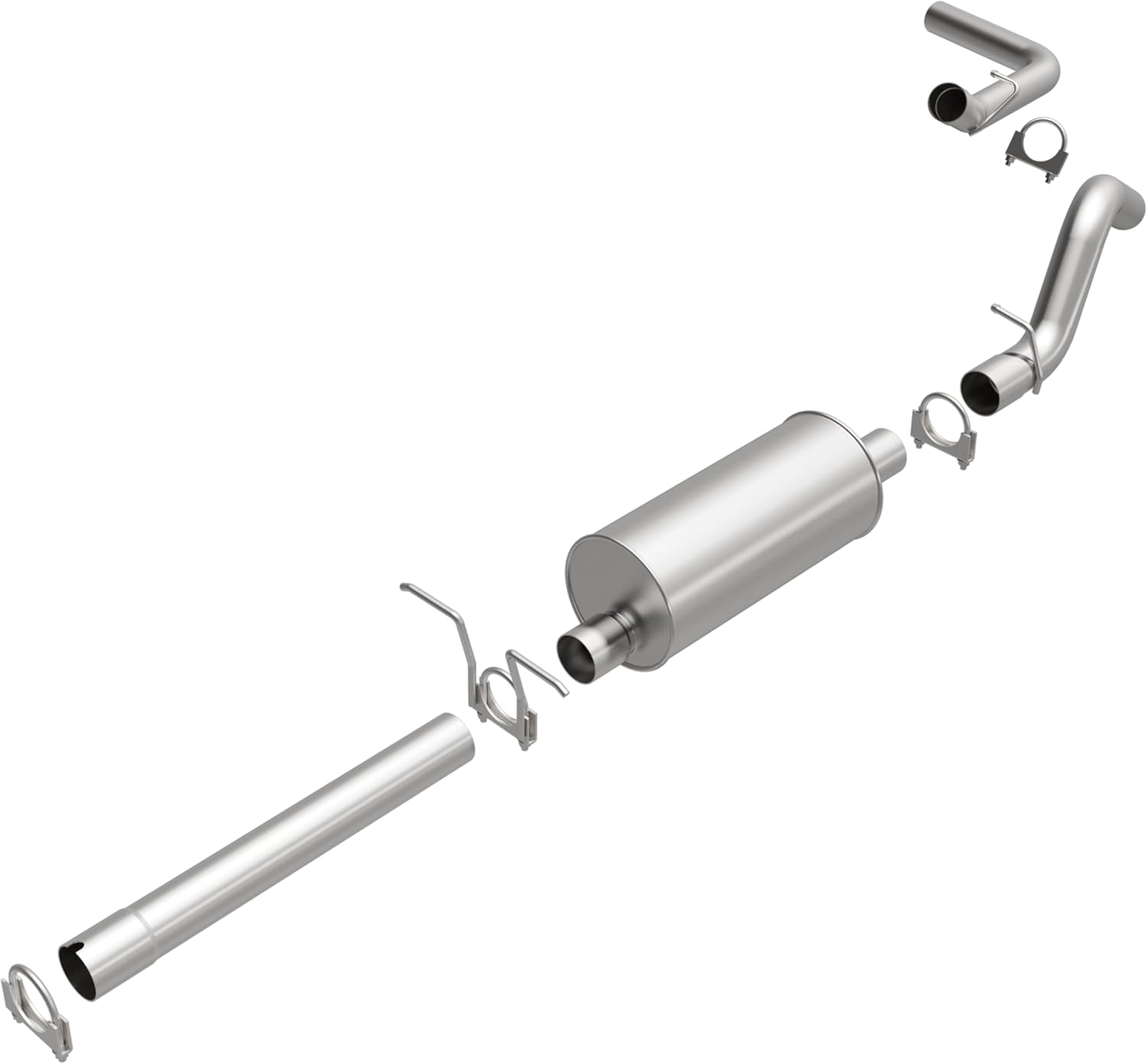
This BRExhaust cat-back kit replaces the exhaust from behind the last catalytic converter with a mandrel-bent, multi-piece system meant to match factory fit and function. It is supplied as a single box containing pipes, clamps, gaskets, and hardware so you can complete a bolt-on installation without cutting or welding. The multi-piece, adjustable layout helps route the pipes around axles and brackets on older trucks, which simplifies alignment and reduces the need for hangar modifications. The aluminized steel construction offers improved corrosion resistance over plain steel, and the kit is described as leaving emissions equipment intact so factory compliance is maintained. Practical buyers should note the finish is painted aluminized steel rather than stainless, and while the kit includes all necessary hardware, achieving a perfect fit may still require minor adjustment during installation on higher-mileage frames. A two-year coverage is offered for the aluminized system.
Best for: Buyers wanting a practical, no-frills replacement that restores factory exhaust routing and fit with minimal fabrication; ideal for DIY installers focused on reliability and straightforward installation.
Less Ideal for: People seeking a long-term premium finish or maximum corrosion resistance should consider stainless systems or high-end aftermarket options.
- Direct-fit, bolt-on multi-piece design allows installation without cutting or welding
- Includes all clamps, gaskets, nuts, and bolts in one packaged kit for streamlined DIY install
- Mandrel-bent tubing preserves exhaust flow for better performance and reduced restriction
- Aluminized steel construction improves corrosion resistance compared with plain steel
- Designed to keep emissions equipment intact for continued compliance
- Aluminized painted finish is less durable and corrosion-resistant than stainless steel options
Verdict: A practical, bolt-on cat-back kit that restores factory-style fit and flow for Dodge Dakota owners who prioritize easy DIY installation and reliable performance.
3. BRExhaust Direct-Fit Replacement Cat-Back Exhaust System Kit

| Model | Direct-Fit Exhaust System Replacement Kit |
|---|---|
| Manufacturer | BRExhaust |
| Item model number | 106-0437 |
| Exterior | Painted |
| Date First Available | January 5, 2022 |
This BRExhaust cat-back kit replaces the exhaust from just behind the last catalytic converter and is built as a mandrel-bent, multi-piece system to ease installation around axles and crossmembers. It arrives as a single-box package containing pipes, clamps, gaskets, and hardware plus instructions, so a competent DIYer can bolt it on without fabrication. The aluminized-steel construction is corrosion resistant for longer life than thinner budget pipes, and the adjustable joints help dial in fitment on older trucks. Because it retains all emissions equipment, it keeps the vehicle compliant. Expect no performance tuning or aggressive sound changes since this is engineered as a direct replacement for factory quality rather than a high-flow performance upgrade. The included two-year coverage for aluminized versions gives extra peace of mind, but installers should still verify fit to specific year and engine variants before purchase.
Best for: Buyers looking for an affordable, factory-quality replacement that a capable DIYer or independent shop can install to restore fit, function, and emissions compliance on a 1997–2004 Dodge Dakota.
Less Ideal for: Shoppers seeking an aggressive sound or substantial horsepower gains should consider aftermarket performance-specific systems instead.
- Direct-fit, multi-piece design simplifies bolt-on installation around chassis obstacles
- Complete single-box kit includes pipes, clamps, gaskets, and hardware
- Mandrel-bent tubing for smoother exhaust flow than crushed-bend replacements
- Aluminized steel construction offers improved corrosion resistance over plain steel
- Retains emissions equipment to maintain compliance
- Not a performance-focused high-flow system so gains in power are minimal
Verdict: A budget-friendly, direct-fit cat-back kit that restores factory fit and emissions compliance with hardware included, making it a practical DIY replacement for 1997–2004 Dodge Dakotas.
4. MAC Cat-Back Exhaust System for Dodge Dakota Quad Cab 4×4 (131" Wheelbase)

| Fitment | Dodge Dakota Quad Cab 4×4, 131" wheelbase |
|---|---|
| Engine compatibility | 4.7L & 5.9L |
| System type | Cat-back |
| Includes | Ext pipe, muffler, tail pipe, 3 clamps |
This MAC cat-back system replaces the factory rear exhaust on Dodge Dakota Quad Cab 4×4 trucks with a 131" wheelbase and 4.7L or 5.9L engines. It includes the extension pipe, muffler, tail pipe, and three clamps so you get the major components needed for a direct-style replacement. Typical use is as a full rear-section swap when the original muffler or piping has rusted or been damaged; the kit is meant to restore exhaust routing and backpressure to factory-like performance. The AP OE style design favors fitment and straightforward installation over performance tuning, so expect a similar sound and drivability to the factory system. Benefits include getting all rear components in one package and reduced installation complexity versus sourcing parts individually. The main limitations are fitment specificity to the 131" wheelbase Quad Cab 4×4 and that the kit is focused on replacement function rather than increased flow or a sportier sound profile.
Best for: Buyers who need a direct replacement to restore factory exhaust function on a 1997–2004 Dodge Dakota Quad Cab 4×4 with a 131" wheelbase and prioritize reliability and correct fitment.
Less Ideal for: Drivers seeking a performance-oriented or louder aftermarket exhaust or owners of Dakotas with a different wheelbase or body configuration.
- Complete cat-back kit includes extension pipe, muffler, tail pipe, and clamps for a single replacement purchase
- AP OE style fitment that restores factory exhaust routing and drivability
- Simplifies installation by providing matching components designed for the specified Dakota configuration
- Only fits 4-door Quad Cab 4×4 Dakota with a 131 inch wheelbase and the listed engines
- Not engineered for increased flow or performance gains compared with performance cat-back systems
Verdict: Choose this kit if you want a complete, factory-style cat-back replacement that restores reliable exhaust routing and fitment for a 131" wheelbase Dodge Dakota Quad Cab 4×4.
5. Magnum Exhaust Flowmaster Original 40 Dual Truck Cat-Back Kit (no tips)

| Outlet Connection Size | 3 Inches |
|---|---|
| Compatible with Vehicle Type | Truck |
| Material Type | Stainless Steel |
| Shape | Oval |
This cat-back kit pairs a Flowmaster Original 40 Series muffler with mandrel-bent dual 2.5" tailpipes to give a deeper, aggressive exhaust note and improved flow compared with a single stock muffler. It is intended to be installed on light- and medium-duty gas trucks that originally had a single inlet muffler; the pipes are aluminized for corrosion resistance and come cut and swedged for slip-together assembly. Typical use is as a replacement/upgrade from the muffler back, exiting under the rear frame and designed to clear a factory receiver hitch and spare tire. Notable features include the Flowmaster 40 internals for that classic rumble, multi-depth insulated hangers, and mandrel bends that help reduce backpressure. This kit is not a complete direct-fit system for every truck and may require trimming of tailpipes and professional fabrication during installation, so expect some shop time. The package does not include exhaust tips and only the muffler is produced by Flowmaster, so buyers seeking a turnkey, vehicle-specific bolt-on for a 1997-2004 Dodge Dakota should plan on additional parts and professional installation.
Best for: Buyers who want the characteristic Flowmaster 40 sound and improved flow and are comfortable paying a shop to adapt a generic cat-back to a 1997–2004 Dodge Dakota.
Less Ideal for: Drivers looking for a simple bolt-on, vehicle-specific kit or a fully finished installation without shop modifications should consider a dedicated Dakota-specific system instead.
- Flowmaster 40 muffler delivers signature deep, throaty tone.
- Mandrel-bent 2.5" piping improves exhaust flow versus cheap crush-bent pipe.
- Aluminized steel piping increases corrosion resistance for longer life.
- Cut and swedged tailpipes plus insulated hangers simplify assembly and mounting.
- Not a complete direct-fit kit; fabrication or trimming is likely required.
- Does not include exhaust tips and only the muffler is Flowmaster-branded.
Verdict: Choose this kit if you want Flowmaster 40 sound and better exhaust flow and are prepared to have a professional adapt the system to your 1997–2004 Dodge Dakota.
Choosing the Right 1997-2004 Dodge Dakota Cat-back Exhaust System: Key Factors to Consider
Fitment And Compatibility
Correct fitment is essential for a bolt-on cat-back exhaust on a 1997-2004 Dodge Dakota. Variations in frame rails, hanger locations, and rear-axle clearance across model years and cab/bed configurations can change how a system mounts. Choosing a system with explicit fitment for your Dakota year range reduces the need for cutting, welding, or custom hangers.
Pay attention to inlet flange type and pipe diameter where the system connects to the catalytic converter or midpipe. An incorrect inlet may require an adapter that can create leaks or vibration points. Confirm whether the kit includes hangers, clamps, and hardware to match your truck's existing mounting points.
Material And Corrosion Resistance
Material choice directly affects longevity, especially in regions that use road salt or see frequent moisture exposure. Stainless steel systems typically resist rust far better than standard aluminized steel and will retain appearance and structural integrity longer. Look at the gauge of tubing and whether joints are welded or clamped; fully welded mandrel-bent sections are more durable and less likely to separate under stress.
Consider finish and coating as well. Polished or brushed stainless provides additional protection, while lower-cost aluminized options may be more economical but could require earlier replacement. Warranty terms often reflect confidence in materials and can be a useful selection factor.
Pipe Diameter And Flow Characteristics
The selected pipe diameter affects backpressure and engine responsiveness. For the 3.9L, 4.7L, and other engines used in 1997-2004 Dakotas, a modest increase in tubing diameter over stock can reduce restriction without sacrificing low-end torque. Oversizing pipe diameter can reduce exhaust gas velocity and harm low-speed drivability, so choose a diameter matched to the engine and intended use.
Mandrel bends maintain consistent internal diameter through curves, preserving flow. Systems with smoother transitions, properly sized resonators or mufflers, and attention to packing materials will yield more predictable power and sound characteristics across the rev range.
Muffler Design And Sound Profile
Muffler type determines the exhaust note and whether you will experience drone during cruising. Straight-through designs and chambered mufflers each produce distinct tones; straight-through typically offers a freer flow and deeper tone, while chambered styles can tame rasp and provide a more refined sound. Consider the truck's use: towing and daily driving often benefit from a balanced, non-intrusive tone, whereas performance-oriented use may favor a louder, more aggressive note.
Look for systems that offer different muffler options or include resonators to control drone. The physical placement of the muffler and tailpipe orientation also affect how sound projects and whether it will be noticeable inside the cab.
Installation Complexity And Hardware
Installation difficulty ranges from simple clamp-on swaps to jobs requiring cutting, welding, or lowering the fuel tank for access. For many owners, a kit that includes factory-compatible hangers, bolts, and clamps reduces shop time and cost. Review whether the system uses slip-fit joints with clamps or welded flanges; slip-fit makes alignment easier but must be tightened properly to avoid leaks.
Also consider whether the kit requires special tools or alignment jigs. If you plan to install the system yourself, pick a design that aligns with common garage tools and leaves margin for minor adjustments.
Warranty And Documentation
A clear warranty and solid installation instructions are valuable for long-term ownership. Warranty coverage signals manufacturer confidence in materials and workmanship, and it may cover failures from corrosion or manufacturing defects. Good documentation reduces installation errors and clarifies what modifications, if any, are permitted without voiding coverage.
Check the warranty duration and what it covers. Also look for readily available replacement components such as hangers, clamps, or tailpipe tips so repairs are straightforward if damage occurs.
Why A Cat-Back System Matters For Dakota Owners
A cat-back exhaust replaces the section of exhaust from the catalytic converter back to the tailpipe, which directly influences backpressure, exhaust scavenging, and sound. For the 1997-2004 Dodge Dakota, a properly chosen system can improve throttle response and reduce exhaust restriction without changing emissions control hardware upstream.
Because these Dakota models are often used for towing or hauling, minimizing backpressure while maintaining usable low-end torque is a practical benefit. An appropriately sized cat-back can also improve exhaust gas evacuation under load, which helps keep engine temperatures in check during sustained towing runs.
- Replaces piping from catalytic converter to tailpipe
- Affects tone, backpressure, and gas flow
- Can improve throttle response under load
Installation Tips For 1997-2004 Dakota Cat-Backs
Prepare the truck by letting the exhaust cool and raising the vehicle safely with jack stands or a lift. Inspect hanger conditions and note the factory routing before removing old parts. Seized bolts can be eased with penetrating lubricant and a short heat application if needed.
Align the new system loosely before tightening clamps to ensure hangers and multiple joints fit without stress. If the kit uses slip-fit connections, slide them together fully and rotate components to achieve correct tailpipe orientation before final tightening. After installation, check for leaks with a hand over joints while a helper runs the engine at idle, and re-torque hardware after a short break-in period.
- Use penetrating oil on rusted hardware
- Hand-tighten and align before final torque
- Re-check clamps and hangers after initial heat cycles
Sound And Drone Management
Sound character depends on muffler style, resonator presence, and pipe diameter. If you want a deeper, throaty tone without cabin drone at highway speeds, look for systems that pair a straight-through muffler with a dedicated resonator. Chambered mufflers can soften rasp at higher RPMs while still allowing a fuller sound under acceleration.
Placement of the resonator and the muffler relative to the cab changes perceived loudness inside the truck. Minor cabin drone at specific RPMs can often be addressed by swapping or adding a resonator rather than replacing the entire system, so consider systems that make resonator placement or addition straightforward.
- Resonators reduce drone without killing tone
- Muffler type determines cabin sound character
- Tailpipe exit location affects how sound projects
Maintaining Your Cat-Back For Long Service Life
Regular inspections for leaks, loose clamps, and surface corrosion help catch problems early. Tighten clamps after exposure to salt or extended vibration and replace worn rubber hangers to prevent undue stress on welded joints. If your system is aluminized steel, keep an eye on discoloration and flaking that can signal accelerated corrosion.
Cleaning polished stainless tips and flushing junctions with water after exposure to salty roads will help preserve finish. Address small leaks promptly; a slow exhaust leak can accelerate local corrosion and cause hanger stress that leads to broader failure.
- Inspect clamp torque and hanger condition annually
- Clean exposed tips to prevent corrosion buildup
- Repair small leaks early to avoid larger failures
Matching Pipe Size To Engine And Driving Style
Selecting the right pipe diameter is a trade-off between flow and velocity. For typical engines used in 1997-2004 Dakotas, moderate increases over stock size improve high-rpm flow without sacrificing low-end torque. Very large diameters can reduce exhaust gas velocity and degrade responsiveness, particularly if the truck is used for towing or city driving.
Consider the engine displacement, cam profile, and whether the truck is regularly towing. A performance-oriented Dakota with cam or induction changes may benefit from a slightly larger diameter, while a daily-driven or work truck will usually be best served by a conservatively upsized or stock-equivalent diameter.
- Moderate upsizing balances flow and torque
- Towing needs favor velocity over maximum flow
- Match diameter to engine modifications and use case
Still looking for the perfect fit?
Select your Dodge Dakota configuration to see the most relevant Cat-back Exhaust Systems recommendations
How We Chose the Best 1997-2004 Dodge Dakota Cat-back Exhaust System
We prioritized systems with clear fitment for 1997-2004 Dodge Dakota chassis and exhaust routing. Fitment compatibility was a primary filter because exhaust geometry and hanger locations vary across years and configurations; systems that required extensive fabrication were excluded.Material and corrosion resistance were a second major criterion. We favored exhausts built from thicker-gauge stainless steel or aluminized options with corrosion-resistant joinery and well-formed bends to reduce leak risk and extend service life.Flow and sound characteristics were evaluated by design features rather than measured dyno numbers. Systems with mandrel-bent tubing, straight-through or chambered muffler options, and properly sized pipe diameters were scored higher because these traits predict usable gains and desirable tone without excessive drone.Ease of installation and availability of correct hangers, clamps, or bolt-on flanges was another filter. Systems that required specialized adapters or cutting of factory components were deprioritized. Noise compliance and practicality for street use influenced selections; excessively loud or race-only systems were excluded. Finally, we considered warranty coverage and manufacturer documentation as signals of build confidence.
Our full evaluation process is outlined in our review methodology.
FAQ
Will a cat-back exhaust improve my Dakota's horsepower?
It often depends. A well-designed cat-back can reduce backpressure and improve airflow, which may yield modest horsepower and torque gains, particularly at higher RPMs. Gains are typically greater when combined with intake or tuning changes.
Is installation something I can do at home?
Usually yes for bolt-on cat-back systems if you have basic hand tools and a safe way to raise the truck. Kits that require cutting or welding are more advanced. Plan for penetrating oil, new gaskets or clamps, and assistance to hold sections during alignment.
How loud will a cat-back make my Dakota?
Loudness varies by muffler type and presence of resonators. Straight-through designs tend to be louder and more aggressive, while chambered mufflers and resonators tame volume and reduce cabin drone. Choose based on how you use the truck and local sound regulations.
Should I choose stainless steel over aluminized steel?
Stainless steel generally offers superior corrosion resistance and longer life, especially in wet or salted-road environments. Aluminized steel can be a cost-effective option but may show corrosion earlier and might need replacement sooner in harsh conditions.
Will changing the cat-back affect emissions on my Dakota?
A true cat-back system replaces only the piping downstream of the catalytic converter and does not alter emissions-control hardware upstream. Ensure the system ties into the factory outlet correctly; modifications to catalytic components can affect emissions compliance.
How can I minimize exhaust drone after installation?
Use or add a resonator, select a muffler designed to cancel specific frequencies, and verify tailpipe length and orientation. Minor drone is often corrected by adjusting resonator placement rather than replacing the entire system.
Final Verdict
Prioritize fitment and material quality when choosing a cat-back exhaust for a 1997-2004 Dodge Dakota. Fitment ensures a straightforward installation and prevents interference with chassis components, while material choice and weld quality dictate long-term durability. Balance pipe diameter and muffler style to match towing needs and the desired sound profile. If you want a reliable everyday setup, favor conservative diameter increases, robust stainless construction, and a muffler that controls drone. For more aggressive performance or sound, accept trade-offs in cabin noise and select systems designed for higher flow.
Explore More:
- Check out all Dodge Dakota parts & accessories
- Explore Cat-back Exhaust Systems Maintenance & Repair Guides
- Explore Exhaust & Emissions
- Browse all Auto Parts
