

Note: This article contains affiliate links. If you click on these links and make a purchase, I may earn a small commission at no extra cost to you. This helps support my research and content. Read my full affiliate disclosure here.
If your 2005-2009 Dodge Dakota is showing exhaust noise, poor throttle response, or a check engine light tied to exhaust issues, the manifold could be the source. Choosing the right exhaust manifold affects engine performance, emissions, and long-term durability on these V6 and V8 engines. The wrong unit can lead to recurring leaks, warped mating surfaces, or fitment headaches.This guide covers the top shortlisted exhaust manifolds for the 2005-2009 Dodge Dakota and explains the practical tradeoffs you should weigh. We evaluate each option for fitment accuracy, sealing reliability, thermal resistance, and ease of installation to help you pick the best replacement for your truck. Read on to see the selection and the criteria used to narrow the list.
Looking for other parts? See all Dodge Dakota parts & accessories.
Top Picks at a Glance
| Best Overall The best all-around choice for most situations | Dorman 674-416 Passenger Side Exhaust Manifold with Gasket and Hardware |  |
| Best Quality Built to a higher standard if you want something more solid | Dorman 674-913 Exhaust Manifold Kit with Gaskets and Hardware |  |
| Best Value The sweet spot between price and what you get | A-Premium Right Side Exhaust Manifold Kit with Gasket for V6 3.6L/3.7L |  |
| Best Budget The cheapest option that still gets the job done reliably | Roneeson Right Exhaust Manifold with Gasket Kit |  |
| Highest Rated A top-rated pick with lots of positive feedback | Dorman 674-909 Driver Side Exhaust Manifold Kit with Gaskets and Hardware |  |
1. Dorman 674-416 Passenger Side Exhaust Manifold with Gasket and Hardware

| Compatible with Vehicle Type | Car |
|---|---|
| OEM Equivalent Part Number | 662911; 53032418AC; 53032418AD |
| Automotive Fit Type | Vehicle Specific Fit |
| Material Type | Alloy Steel |
| Included Components | Exhaust Manifold, 1 Manifold Gasket, 2 Bolts, 2 Nuts |
This Dorman passenger-side exhaust manifold is a direct-fit replacement designed to restore exhaust routing and sealing on compatible Dodge and Mitsubishi trucks from the mid-2000s. It ships with the manifold gasket and the bolts and nuts needed for installation so you can complete the repair in one visit to the garage. Made from alloy steel and reverse-engineered from factory parts, the manifold aims to resist warping and cracking that lead to leaks and exhaust noise. In practice it is used as a like-for-like replacement when the original manifold is cracked or leaking or when replacing a failed downpipe connection. The main benefit is convenience: the included hardware and vehicle-specific fit reduce parts searching and installation time. Limitations are typical of aftermarket replacements: surface finish and fit can vary slightly from the factory unit and professional installation is recommended to ensure proper sealing and torque of fasteners. This part is best when you want a practical, lower-cost repair that gets the exhaust system back to factory routing and function.
Best for: Buyers who want a straightforward, cost-effective repair solution that restores exhaust sealing and routing on mid-2000s Dodge Dakota vehicles without sourcing extra parts.
Less Ideal for: Those seeking an exact factory-origin part or a cosmetically finished manifold for show vehicles should look for alternative factory-sourced replacements.
- Includes gasket and necessary bolts and nuts for a single-order repair
- Vehicle-specific fit intended to match factory mounting points
- Alloy steel construction designed to resist warping and cracking
- Reverse-engineered design to simplify installation and fitment verification
- Finish and exact fit may differ from the original factory part requiring minor adjustments during installation
Verdict: A complete, vehicle-specific replacement that simplifies mid-2000s Dodge Dakota passenger-side manifold repairs by including the gasket and hardware for one-stop installation.
2. Dorman 674-913 Exhaust Manifold Kit with Gaskets and Hardware

| Manufacturer | Dorman Products |
|---|---|
| Model | 674-913 |
| Vehicle Service Type | Car |
| Includes | Gaskets and downpipe hardware |
This Dorman exhaust manifold kit replaces the factory passenger-side manifold on specified Chrysler, Dodge, and Mitsubishi vehicles and ships with the gaskets and downpipe hardware needed for a single-order repair. It is designed as a direct-fit replacement, with machined exterior surfaces and manufacturing intended to match the original manifold's fit and function. Typical use is a bolt-on replacement when the original manifold is cracked, warped, or leaking; having all required parts in the box simplifies the shop or DIY install and reduces downtime. Practical benefits include durable construction aimed to resist warping and leaking and elimination of additional trips to source gaskets or bolts. For a performance-minded buyer the part provides reliable exhaust routing and a stable flange seal, though it is a like-for-like replacement rather than a performance header, so it will not increase flow or horsepower on its own. Install requires normal exhaust work and teardown of the old manifold, and buyers should confirm exact trim fitment before purchase.
Best for: Drivers who want a dependable, vehicle-specific replacement that simplifies repairs and restores factory exhaust sealing without sourcing extra parts.
Less Ideal for: Enthusiasts seeking increased exhaust flow or horsepower should consider aftermarket headers or dedicated performance manifolds instead.
- Includes all necessary gaskets and downpipe hardware for a one-order, complete repair
- Precision-engineered to match factory fit and simplify installation
- Durable construction intended to resist warping, cracking, and leaking
- Machined exterior finish for consistent mounting surfaces and flange alignment
- Designed as a direct replacement and does not improve exhaust flow or add performance gains
Verdict: If you need a straightforward, complete passenger-side exhaust manifold replacement for specified Dodge Dakota years, this Dorman kit gets the job done with factory-style fitment and all required parts included.
3. A-Premium Right Side Exhaust Manifold Kit with Gasket for V6 3.6L/3.7L
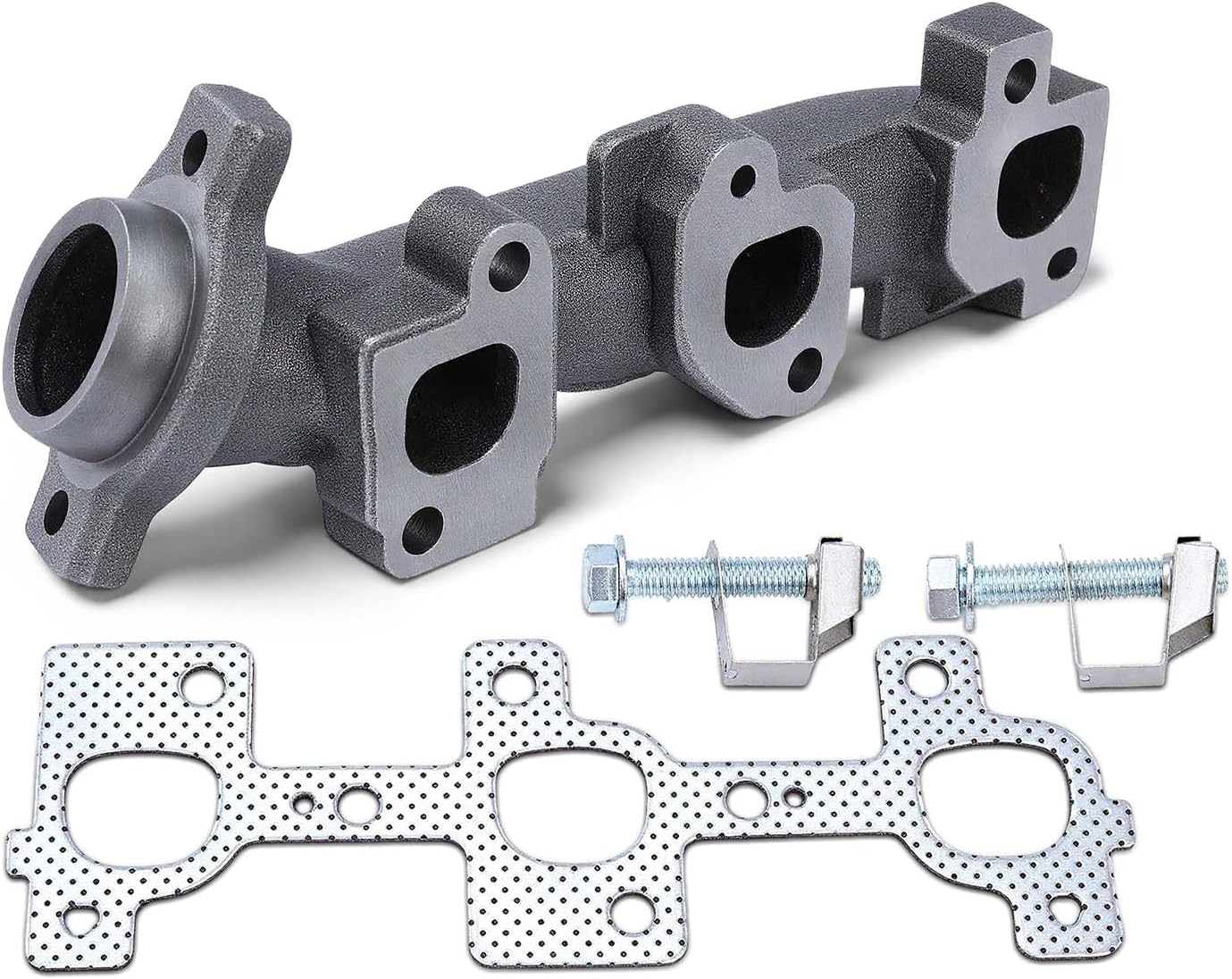
| Material Type | Metal (Cast Iron) |
|---|---|
| Fitment | V6 3.6L and 3.7L applications |
| Included | 1x Manifold, 1x Gasket, 2x Nuts, 2x Bolts |
| Fitment Type | Direct Replacement |
This A-Premium right-side exhaust manifold is a direct replacement built from cast iron for V6 3.6L and 3.7L applications and comes with a gasket and basic mounting hardware to simplify installation. It installs where the factory manifold mounts to the head and channels exhaust from the cylinder head into the exhaust system; the cast iron construction prioritizes durability and heat resistance for long-term highway and daily driving use. The kit omits a heat shield but includes two nuts and two bolts to replace worn fasteners, which can speed up a routine repair. Because it follows original specifications, fitment is intended to be straightforward on the listed model years and should require minimal modification when used as a like-for-like replacement. Buyers should note this is a single-side manifold sold as a repair kit rather than a performance upgrade, and professional installation may be advisable if bolts are seized or additional components are corroded.
Best for: Buyers who want a practical, factory-style replacement to restore exhaust routing and eliminate leaks on V6 Dodge/Ram/Dakota/Raider trucks without chasing performance gains.
Less Ideal for: Drivers seeking a performance upgrade, full system replacement, or a complete dual-side repair solution should look for dedicated performance manifolds or full kits instead.
- Cast iron construction offers strong heat resistance and durability for regular driving.
- Sold as a kit with gasket and replacement nuts and bolts to streamline a repair job.
- Built to match original specifications for direct-replacement fit on listed V6 engines.
- Includes packing in a stronger box to reduce shipping damage risk.
- Does not include a heat shield, which may be needed if the original was removed or damaged.
Verdict: A straightforward cast-iron right-side replacement manifold kit that gets a V6 Dodge/Ram/Dakota/Raider back to factory-level exhaust sealing with minimal fuss.
4. Roneeson Right Exhaust Manifold with Gasket Kit

| Brand | Roneeson |
|---|---|
| Model | 53032418AE |
| Fitment | Right side for specified 3.6L/3.7L V6 models |
| Item Weight | 8.35 pounds |
This Roneeson right-side exhaust manifold is a direct replacement designed for 3.6L and 3.7L V6 applications in mid-2000s Dodge Dakota, Durango, Ram 1500 and Mitsubishi Raider models. It replaces factory part numbers listed and ships with a gasket kit to let you swap the manifold without sourcing extra hardware. In typical use it restores the exhaust outlet on the right bank, sealing leaks that cause noise, poor idle, and reduced efficiency. The unit appears cast and machined to match the stock mating surfaces, so installation follows standard replacement steps and can be completed by a competent DIYer or an independent shop. Because it is a single-side aftermarket part, fit depends on matching the exact year and engine variant. Buyers should expect the usual aftermarket variability in finish and long-term corrosion resistance compared with higher-end options. For budget repairs or restoring driveability without upgrading components, it is a practical choice that covers multiple model years and common part numbers.
Best for: Buyers seeking a low-cost, practical repair to stop exhaust leaks and restore normal idle and noise levels on compatible mid-2000s Dodge Dakota and similar vehicles.
Less Ideal for: Drivers who want a long-term premium corrosion-resistant upgrade or a performance-oriented manifold should consider higher-grade or specialty options instead.
- Includes gasket kit for a single, ready-to-install replacement
- Listed to replace common OEM part numbers for easier fit verification
- Covers a range of mid-2000s model years and 3.6L/3.7L V6 engines
- Cast construction that matches factory mating surfaces for straightforward installation
- Aftermarket finish and corrosion resistance may not match higher-end factory-quality manifolds
Verdict: A budget-friendly, ready-to-install right-side replacement manifold that restores exhaust sealing for compatible mid-2000s Dodge and related V6 vehicles.
5. Dorman 674-909 Driver Side Exhaust Manifold Kit with Gaskets and Hardware

| Position | Center |
|---|---|
| Automotive Fit Type | Universal Fit |
| Manufacturer | Dorman Products |
| OEM Part Number | 101498; 53030809; 53030809AD |
This Dorman 674-909 driver-side exhaust manifold kit replaces the factory unit and is designed to restore exhaust routing and sealing on compatible vehicles. It ships with all necessary gaskets and downpipe hardware so you can complete the repair in one visit rather than sourcing parts separately. The manifold is machined and engineered to match original fit and function, which helps speed installation and reduces the risk of leaks or misalignment. For everyday driving the durable construction resists warping and cracking that typically force repeat repairs, and the included hardware simplifies reinstalling the downpipe. Expect a straightforward bolt-on fit when matched to the listed Dodge Dakota model years and trims, but double-check vehicle trim before buying. This is an aftermarket replacement rather than a factory part, so while it aims to match factory fitment and save cost, installers should inspect mating surfaces and torque to spec during installation.
Best for: Buyers who prioritize a reliable, do-it-once repair for affected Dodge Dakota model years and want a ready-to-install manifold kit that minimizes follow-up trips for missing parts.
Less Ideal for: Drivers seeking a cosmetic or high-performance upgraded manifold or those who prefer an exact factory-sourced replacement should consider other options.
- Includes all required gaskets and downpipe hardware for a one-order, complete repair
- Machined construction engineered to match factory fit and function for easier installation
- Durable materials designed to resist warping, cracking, and leaking
- Covers specific Dodge and related vehicle model years listed for direct fitment
- Aftermarket part so material grade and long-term corrosion resistance may differ from original factory parts
Verdict: Buy this kit if you want a practical, ready-to-install replacement that includes gaskets and hardware to restore exhaust sealing and avoid repeat repairs on the specified Dodge Dakota years.
Choosing the Right 2005-2009 Dodge Dakota Exhaust Manifold: Key Factors to Consider
Fitment and Bolt Pattern
Accurate fitment is essential for a 2005-2009 Dodge Dakota because even small misalignments can cause leaks or stress on studs. Confirming the bolt pattern and port spacing matters because the factory exhaust layout leaves little room for correction once installed. A manifold that matches the factory flange profile reduces the chance you will need to re-tap holes, use extender studs, or modify the exhaust downpipe.
Poor fitment often leads to installation delays and additional costs. For many owners, the difference between a direct-fit unit and a generic piece is the amount of labor required. Direct-fit components also help maintain correct sensor placement for oxygen sensors and EGR components, which affects drivability and emissions compliance.
Material and Thermal Durability
Material choice directly affects how the manifold handles repeated heating and cooling cycles common in normal driving and towing. Cast iron is heavy but resists warping and handles heat well; some modern alloys and stainless steels resist corrosion and can offer longer life in humid or salty environments. Pay attention to how the manufacturer addresses thermal stress at the flange and collector junctions because these are frequent crack initiation points.
A component with good thermal durability reduces the chance of hairline cracks that produce intermittent leaks and ticking noises. For a Dakota that tows or sees frequent short trips, thermal resilience is especially important because rapid temperature swings accelerate metal fatigue.
Sealing Method and Gasket Quality
The interface between the manifold and the cylinder head is the most common source of exhaust leaks. Look for manifolds designed with flat, machined flange faces and properly sized bolt bosses to ensure even clamp force. Some replacements include upgraded multi-layer steel gaskets or pre-installed sealing rings which improve the initial seal and accommodate minor surface imperfections on the head.
Inferior gaskets or poorly machined flanges lead to leaks that manifest as ticking sounds at idle, reduced exhaust scavenging, and potential check-engine lights. Choosing a manifold with a solid sealing strategy saves you from repeat gasket purchases and re-torquing procedures.
Collector and Port Design
The shape and finish of the ports and collector affect exhaust flow and noise characteristics. Smooth port transitions and matched port sizes help maintain scavenging efficiency across the RPM range. For the 2005-2009 Dakota, where drivability and low-end torque are valued, overly large collectors or poorly matched ports can reduce torque and make the truck feel less responsive.
Engineering choices at the collector also determine how the manifold mates to the downpipe. A collector with proper alignment reduces stress on the mounting flange and helps ensure a robust connection that resists leaks over time.
Compatibility With Sensors and Accessories
Exhaust manifolds must accommodate oxygen sensors, EGR passages, and heat shields present on the 2005-2009 Dakota. Verify that any replacement provides correct bung locations and clearance for wiring harnesses. A manifold that forces sensor relocation or requires aftermarket extension harnesses introduces failure points and can complicate emissions compliance.
Heat shield mounting points and clearances for steering and suspension components are equally important. A well-designed manifold will preserve factory routing and prevent unintended contact with vulnerable components, reducing the chance of heat-related damage.
Ease of Installation and Maintenance
Manifolds that simplify installation reduce labor time and the risk of broken studs or stripped threads. Features that help include accurately placed bolt holes, pre-threaded bosses, and clear provisions for heat shields and sensors. Consider whether the manifold allows installation without removing major accessories; fewer disassembly steps lower the chance of introducing new issues during replacement.
Also think about future maintenance. A design that provides good access to fasteners and sensors makes later inspections or repairs easier, which is valuable if your Dakota is used for towing or heavy-duty work that increases wear on exhaust components.
Common Exhaust Manifold Symptoms On A 2005-2009 Dakota
Exhaust manifold problems often begin with audible symptoms. A ticking or popping noise at idle that changes with engine load usually indicates a small leak at the flange or a cracked flange surface. You might also notice a change in exhaust tone or increased cabin noise when the manifold fails to seal properly.
Performance indicators include reduced low-end torque and rough running under load. An exhaust leak upstream of oxygen sensors can skew fuel-trim readings and trigger a check engine light. Visibility of soot or carbon staining at the flange is another telltale sign that the manifold is leaking.
Heat-related symptoms can be subtle. Excessive heat transfer to nearby components may cause melted insulation on wiring or discoloration of nearby metalwork. In severe cases a cracked manifold can allow hot exhaust gases to affect intake components or vacuum lines.
- Ticking or popping noises that change with RPM
- Reduced throttle response or low-end torque
- Check engine light related to oxygen sensors
- Soot or carbon buildup around the flange
- Heat damage to nearby wiring or components
Diagnosing An Exhaust Manifold Leak
Start with a visual inspection around the flange and collector for hairline cracks, soot, or gaps. Use a flashlight and mirror to inspect hard-to-reach areas. Pay attention to the condition of the manifold-to-head gasket and to any loose or broken studs.
A practical live test is to run the engine at idle and carefully feel for escaping gases around the manifold flange area while keeping hands and face at a safe distance. Listening with a length of hose can also help localize a high-frequency leak. For more precise diagnosis, monitoring live exhaust oxygen sensor readings can reveal abnormalities caused by an upstream leak, though this requires a scan tool.
If you suspect a crack, a controlled smoke test or applying soapy water while the engine is cold and cranking can help identify the leak location. Always allow the engine to cool fully before touching exhaust components and take proper safety precautions.
- Visual inspection for soot and cracks
- Listen for high-frequency leaks with a hose
- Monitor oxygen sensor data for anomalies
- Use smoke testing or soapy water for pinpointing leaks
Repair Options: Replace, Repair, Or Swap
Minor flange imperfections or gasket failures can sometimes be addressed by replacing the gasket, resurfacing the flange, or using stud extenders when a stud breaks. However, visible cracks or extensive warping usually justify full manifold replacement because repairs are often temporary and can permit future leaks.
Swapping to a better-built replacement that matches factory mounting points is typically the most reliable long-term solution. When swapping, ensure the replacement maintains correct oxygen sensor bungs and provisions for heat shields. Keep in mind that headers and universal-fit components are not covered here and may require additional modifications.
If you choose to repair rather than replace, prioritize proper welding by a technician experienced with exhaust components and use materials suited to thermal cycling. Poor weld repairs can fail quickly and may be difficult to detect before leakage returns.
- Gasket replacement for minor leaks
- Flange resurfacing for slight warpage
- Full manifold replacement for cracks or severe warpage
- Professional weld repairs only as a last resort
Installation Considerations For 2005-2009 Dakota Owners
Plan the job to minimize interference with accessories. Some Dakota layouts allow manifold removal with the intake and rocker covers in place, while others require more disassembly. Always consult repair documentation for torque specs and sequence to avoid distorting the flange when tightening fasteners.
Use high-quality fasteners and consider replacing rusted studs or corroded hardware during the job. Anti-seize on studs and correctly torqued nuts prevent future breakage and make later removal easier. Replace gaskets and inspect mating surfaces for flatness before installing the new manifold.
Observe heat shield and sensor reinstallation carefully. Misrouted wiring or missing heat shields can expose components to higher temperatures and shorten their service life. Verify O2 sensor placement and clearances before final torque.
- Follow torque specs and tightening sequence
- Replace corroded studs and use anti-seize
- Confirm sensor and heat shield clearances
- Inspect mating surfaces and use new gaskets
Maintenance Tips To Extend Manifold Life
Regularly inspect the manifold flange area for signs of soot, loose fasteners, or thermal discoloration. Early detection of small leaks prevents escalation into cracks. Keep under-hood components clean to spot new issues more quickly.
Address engine misfires and tuning issues promptly because unburned fuel increases thermal stress on exhaust components. Also, limit short trip driving when possible as frequent cold starts accelerate thermal cycling. When replacing the manifold, choose materials and gaskets rated for the operating environment you expect, such as towing or off-road use.
When reinstalling heat shields, ensure they are secure and not bent into contact with the manifold. Proper heat shielding reduces localized thermal fatigue on both the manifold and adjacent components.
- Inspect flange and fasteners regularly
- Fix misfires quickly to reduce thermal stress
- Use environment-appropriate materials for replacements
- Maintain heat shields to prevent hot spots
Still looking for the perfect fit?
Select your Dodge Dakota configuration to see the most relevant Exhaust Manifolds recommendations
How We Chose the Best 2005-2009 Dodge Dakota Exhaust Manifold
We focused on objective, vehicle-specific criteria relevant to 2005-2009 Dodge Dakota owners and excluded items that do not directly affect real-world fit or longevity. Editorial filters prioritized precise fitment to the 2005-2009 Dakotas, flange flatness and surface finish, and compatibility with factory sensors and exhaust routing. Durability measures included material selection and resistance to thermal cycling that commonly causes cracks in this application. We also weighed sealing performance, including flange thickness and the quality of supplied gaskets or flange preparations, because repeated exhaust manifold leaks are a common failure mode on these engines.Installation practicality was another decisive factor. We gave preference to manifolds that minimize disassembly, provide accessible mounting points for heat shields and sensors, and match factory bolt patterns to reduce installation time and the risk of stud breakage. Noise and flow characteristics were considered through design features such as smooth port transitions and collector sizing. Exclusions: we did not consider universal-fit headers or manifolds intended for other model years or makes, and we excluded items lacking clear fitment information for the 2005-2009 Dakota.In short, selections reflect fit, sealing, thermal durability, and serviceability—criteria that most affect ownership experience for Dodge Dakota trucks in this year range.
Our full evaluation process is outlined in our review methodology.
FAQ
What are the signs my 2005-2009 Dakota manifold needs replacement?
Common signs include a ticking noise at idle that changes with RPM, visible soot or carbon at the flange, reduced low-end torque, and a check engine light related to oxygen sensor readings. Heat damage to nearby wiring can also indicate a failing manifold.
Can I replace just the gasket instead of the entire manifold?
If the issue is limited to a gasket leak and the flange faces are flat and undamaged, replacing the gasket can be a viable fix. However, if there is any flange warping, hairline cracks, or repeated leaks, a full replacement is usually more reliable.
How do I safely check for a small exhaust leak on my Dakota?
Start with a visual inspection for soot and cracks. With the engine running and at a safe distance, listen for escaping gases and use a length of hose to localize high-frequency leaks. For precise detection, a smoke test performed with proper precautions can reveal leak locations.
Are weld repairs on an exhaust manifold a good long-term solution?
Weld repairs can work if performed by someone experienced with exhaust metals and thermal cycling, but they are often temporary. Repaired areas can re-crack if the underlying causes, like warpage or poor flange mating, are not addressed.
Do I need to replace studs or bolts when installing a new manifold?
It is usually wise to replace severely corroded or damaged studs and bolts. Fresh fasteners help ensure proper clamping force and reduce the risk of stud breakage during future service. Use anti-seize where appropriate and follow torque specifications.
Will an exhaust manifold leak affect my Dakota's emissions or fuel trims?
Yes. Leaks upstream of oxygen sensors can alter sensor readings and cause incorrect fuel-trim adjustments, which may trigger a check engine light and affect emissions. Addressing manifold leaks helps restore proper sensor input.
Final Verdict
For a 2005-2009 Dodge Dakota, prioritize fitment accuracy, flange sealing, and thermal durability when choosing an exhaust manifold. These factors most directly affect noise, drivability, and the chance of repeat leaks. Consider the installation process and whether the unit preserves stock sensor locations and heat-shielding to avoid collateral issues.Balance immediate needs against long-term durability: a direct-fit, well-machined manifold with solid gasket provisions will usually save time and money compared with short-term repairs. Use the factors outlined above to select the option that best matches how you use your Dakota and how long you expect the solution to last.
Explore More:
- Check out all Dodge Dakota parts & accessories
- Explore Exhaust Manifolds Maintenance & Repair Guides
- Explore Exhaust & Emissions
- Browse all Auto Parts
