

Note: This article contains affiliate links. If you click on these links and make a purchase, I may earn a small commission at no extra cost to you. This helps support my research and content. Read my full affiliate disclosure here.
If you drive a 1997-2004 Dodge Dakota, worn or warped rotors can mean longer stopping distances, pedal pulsation, and noisy braking. Replacing your brake rotors with correctly fitted, durable units restores braking performance and helps maintain even pad wear. This guide covers the top seven brake rotors suited to the 1997-2004 Dakota, shortlisted for fit, construction quality, and long-term reliability. We'll explain the key evaluation criteria used, common wear symptoms to watch for, and practical steps to choose the right rotor for your driving style and service budget. Read on to compare the top picks and learn what matters when replacing rotors on this Dakota.
Looking for other parts? See all Dodge Dakota parts & accessories.
Top Picks at a Glance
| Best Overall The best all-around choice for most situations | Detroit Axle Brake Kit for 2003–2004 Dodge Dakota (Front & Rear Rotors with Ceramic Pads) |  |
| Best Quality Built to a higher standard if you want something more solid | R1 Concepts eLINE Front and Rear Brake Kit for 2003-2004 Dodge Dakota |  |
| Best Value The sweet spot between price and what you get | PM Auto Front 287mm Brake Disc Rotor (front) |  |
| Best Budget The cheapest option that still gets the job done reliably | Detroit Axle Front Brake Rotors (pair) for 1997–2002 Dodge Dakota / 1998–2002 Durango |  |
| Highest Rated A top-rated pick with lots of positive feedback | Bendix Premium PRT5147 Front Brake Rotor |  |
| Most Popular A crowd favorite that many people choose with confidence | Detroit Axle Front Brake Kit with Ceramic Pads and Rotors for 2003–2004 Dodge Dakota |  |
| Best Seller A high-volume bestseller chosen again and again | Detroit Axle Front Brake Kit with Ceramic Pads and Vented Rotors |  |
1. Detroit Axle Brake Kit for 2003–2004 Dodge Dakota (Front & Rear Rotors with Ceramic Pads)
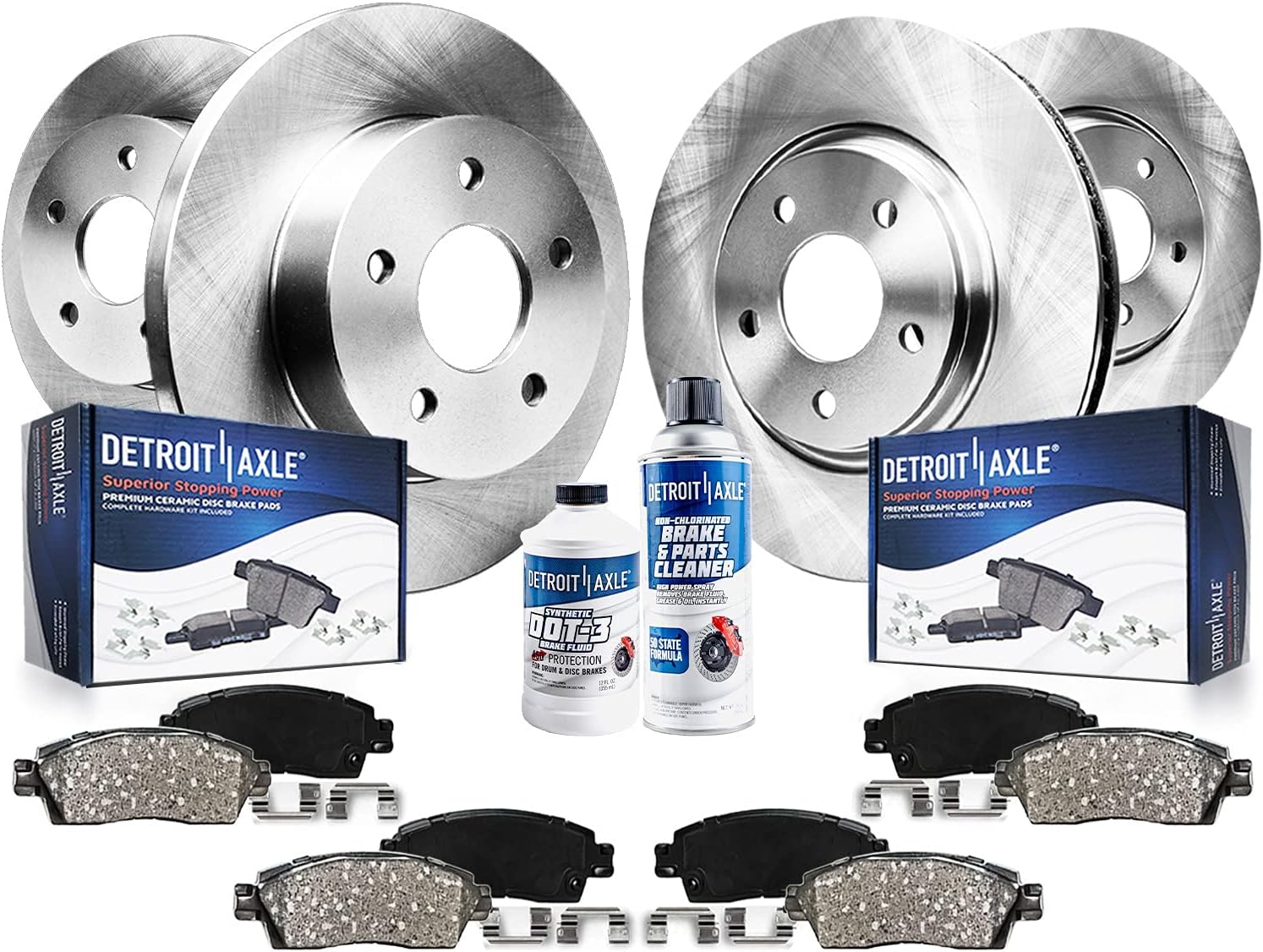
| Fitment years | 2003-2004 Dodge Dakota |
|---|---|
| Kit contents | Front and rear rotors, front and rear ceramic pads, hardware, cleaner, brake fluid |
| Rotor feature | Vented with zinc plating |
| Warranty | 10 Year |
This Detroit Axle kit supplies everything needed to refresh the front and rear brakes on a 2003–2004 Dodge Dakota: two front and two rear vented rotors, matching ceramic pads with hardware, a brake cleaner spray, and a bottle of brake fluid. The rotors are zinc plated to resist corrosion and feature ventilation slots to help dissipate heat for more consistent braking under load. Ceramic pads typically run quieter and produce less dust than semi-metallic pads, and the included hardware makes swapping pads straightforward for a DIY mechanic or a shop doing a paired rotor-and-pad replacement. The package is aimed at direct-fit replacement so no modifications should be necessary. Limitations to note are inherent to this class of aftermarket kits: ceramic pads may not offer the same initial bite as performance or heavy-duty compounds under extreme towing use, and vented rotors can be heavier than drilled alternatives. For a balanced, factory-style refresh of stopping components on the specified Dakota model years, this kit covers the essentials and simplifies installation.
Best for: Buyers who want a straightforward, balanced brake refresh that replaces rotors and pads together for reliable everyday stopping and easier installation.
Less Ideal for: Drivers who need maximum track-level performance or heavy-duty towing braking should consider performance-oriented pads or rotors designed for high thermal loads.
- Complete kit includes front and rear rotors plus matching ceramic pads and installation hardware
- Vented rotors with zinc plating improve cooling and resist surface corrosion
- Includes brake cleaner and fluid so you have consumables needed for a full service
- Direct-fit machining and locating holes designed for bolt-on installation without modifications
- Ceramic pads prioritize low noise and dust over aggressive initial bite for heavy towing or track use
Verdict: This all-in-one kit is the practical choice for a balanced, factory-style brake overhaul on 2003–2004 Dodge Dakota models.
2. R1 Concepts eLINE Front and Rear Brake Kit for 2003-2004 Dodge Dakota

| Compatible vehicle years | 2003-2004 Dodge Dakota |
|---|---|
| Includes | Front and rear rotors, pads, hardware, shoes |
| Rotor material | G3000 iron grade |
| Pad formulation | Super Heavy Duty, 100% copper free |
This R1 Concepts eLINE kit supplies everything needed to refresh braking on a 2003–2004 Dodge Dakota, with matched blank rotors, Super Duty pads, and the necessary hardware and shoes. The rotors are mill-balanced and made from G3000 iron grade for consistent stopping and reduced vibration, while the Super Heavy Duty pads use a copper-free formulation aimed at heavy loads, towing, and off-road use. Installation is direct-fit to factory specifications so no modifications are required, which keeps the swap straightforward for a DIYer or a shop. In everyday driving the pads are tuned to limit dust and noise, yet they are engineered to handle repeated high-load stops better than standard economy pads. The kit covers both front and rear components so you restore balanced braking across the truck, but buyers should note these are blank rotors without slots or cross-drilling, so they prioritize durability and quiet operation over aggressive heat dissipation for track use. Backed by a one-year manufacturer warranty, this kit is a solid route to heavier-duty, reliable braking for Dakotas used in towing or mixed on/off-road conditions.
Best for: Drivers who prioritize stronger, more durable braking for towing, hauling, or light off-road use and want a turnkey front-and-rear replacement that fits the 2003–2004 Dakota without modifications.
Less Ideal for: If you plan on frequent high-speed track sessions or want maximum brake cooling and bite, look for performance rotors with slots or drilled patterns instead.
- Complete kit includes front and rear rotors, Super Duty pads, hardware, and shoes for one purchase
- Mill-balanced G3000 iron rotors reduce vibration for smoother stops
- Super Heavy Duty pads are copper-free and formulated for towing, hauling, and off-road stresses
- Direct-fit design follows factory specifications for straightforward installation
- Rotors are blank (no slots or cross-drilling), so they are less optimized for extreme track heat dissipation
Verdict: A full front-and-rear kit that delivers durable, low-dust braking tuned for towing and off-road use on 2003–2004 Dodge Dakotas with easy direct-fit installation.
3. PM Auto Front 287mm Brake Disc Rotor (front)

| Included Components | Brake Disc Rotor |
|---|---|
| Material Type | Cast Iron |
| Exterior Finish | Rust Preventative |
| Compatible with Vehicle Type | Vehicle Specific Fit |
These PM Auto front brake rotors are direct-fit replacements designed for 1997–2002 Dodge Dakota and some 1998–2002 Durango front brake applications. Made from cast iron with a rust-preventative coating, each rotor provides the standard mass and friction surface drivers expect from a factory-style disc. Installation follows normal rotor replacement steps and the rotor is intended to match factory mounting points for a straightforward swap when fitment is verified. The rust-preventative finish helps reduce surface corrosion during storage and first few months of use, and the unitized cast construction delivers predictable pedal feel and heat capacity consistent with everyday driving and light towing. Limitations are typical for plain cast rotors: they do not include slotting or drilling for aggressive cooling or bedding benefits and may require initial break-in to avoid early noise. Verify vehicle fitment with the VIN or fitment tool before purchasing to ensure correct application.
Best for: Buyers who want a straightforward, factory-quality front rotor replacement for routine driving and occasional light towing and prioritize a correct fit and predictable braking feel.
Less Ideal for: Do not choose this rotor if you need upgraded cooling, reduced warp under heavy track use, or performance-oriented rotors for aggressive driving.
- Vehicle-specific fit for targeted Dodge Dakota/Durango front applications
- Cast iron construction offers reliable, factory-style braking performance
- Rust-preventative exterior finish reduces early surface corrosion during storage and initial use
- No performance features such as drilled or slotted surfaces for enhanced cooling or debris clearance
Verdict: A simple, factory-style cast-iron front rotor that delivers reliable, vehicle-specific replacement performance for everyday Dodge Dakota braking needs.
4. Detroit Axle Front Brake Rotors (pair) for 1997–2002 Dodge Dakota / 1998–2002 Durango

| Fitment years | 1997-2002 Dakota; 1998-2002 Durango |
|---|---|
| Quantity | 2 front rotors |
| Exterior finish | Zinc plated |
| Compatible vehicle type | Trucks |
These Detroit Axle front rotors are a direct-fit replacement kit that includes two ventilated disc rotors intended for 1997–2002 Dodge Dakota and 1998–2002 Durango front applications. The rotors are vented to help dissipate heat and reduce fade during repeated stops, and the silver zinc plating helps resist surface corrosion and keeps wheel areas cleaner. Machined locating holes and a factory-style fit mean installation should be straightforward with no modification on properly prepared hubs. The listing calls out ceramic material and testing for wear and fatigue, which suggests they are built to meet common replacement standards rather than high-performance demands. For budget-focused repairs these rotors offer a sensible balance of corrosion resistance, predictable fitment, and quieter bedding with compatible pads, but they are conventional replacement rotors so drivers seeking improved performance under heavy towing or track use should consider performance-oriented options instead.
Best for: Buyers who need an affordable, factory-quality front rotor replacement for routine street use and want reliable fitment without aftermarket modifications.
Less Ideal for: Not the best choice for drivers who frequently tow heavy loads, do repeated hard braking, or want upgraded track-capable rotors.
- Direct-fit pair sold for front axle makes installation simple
- Vented design improves heat dissipation to reduce brake fade
- Zinc plating resists surface corrosion and reduces visible wheel dust
- Machined locating holes for accurate alignment and easier installation
- Designed as a standard replacement and not optimized for heavy towing or performance driving
Verdict: A budget-friendly, direct-fit front rotor pair that gives dependable, corrosion-resistant replacement for routine Dodge Dakota and Durango use.
5. Bendix Premium PRT5147 Front Brake Rotor

| Included Components | (1) Bendix Rotor |
|---|---|
| Material Type | Cast Iron |
| Exterior Finish | Machined |
| Automotive Fit Type | Vehicle Specific Fit |
The Bendix Premium PRT5147 is a direct-fit front brake rotor engineered to match factory fit, form, and function for Dodge Dakota (1997–2002) and Durango (1998–2002). Made from high-grade cast iron with a machined face and dynamic balancing, it is used as a one-for-one replacement during routine rotor or brake service. The rotor’s vented design and attention to heat dissipation help reduce fade during repeated stops while the machined finish and balancing minimize vibration and noise after installation. Because it is a single rotor unit it is straightforward for DIY installers or professional shops to swap in without modifying calipers or hubs. Limitations are typical of plain cast rotors: they are not coated for long-term corrosion resistance and will require periodic inspection for wear, warpage, or surface rust in salty climates. If you want a reliable, factory-style replacement that focuses on consistent braking and quiet operation, this rotor delivers predictable, maintenance-friendly performance.
Best for: Buyers who prioritize a reliable, factory-style replacement rotor for routine brake service on the specified Dodge Dakota and Durango model years and want predictable stopping performance with minimal fuss.
Less Ideal for: Drivers seeking high-performance or appearance-focused rotors such as slotted, drilled, or coated rotors for enhanced cooling or corrosion resistance should consider alternative specialty rotors.
- Vehicle-specific fit for listed Dodge Dakota and Durango years for an easy direct replacement
- High-grade cast iron construction for durable, consistent braking under normal driving
- Machined finish and dynamic balancing to reduce vibration and noise after install
- Vented design for improved heat dissipation to help resist brake fade during repeated stops
- No corrosion-resistant coating so rotors can show surface rust in wet or salted-road environments
Verdict: Choose this rotor when you want a dependable, factory-quality front brake replacement that restores quiet, consistent stopping for 1997–2002 Dodge Dakota and 1998–2002 Durango.
6. Detroit Axle Front Brake Kit with Ceramic Pads and Rotors for 2003–2004 Dodge Dakota

| Fitment | 2003-2004 Dodge Dakota (front) |
|---|---|
| Kit contents | 2 rotors, 2 ceramic pads, hardware, brake cleaner, brake fluid |
| Rotor type | Vented with ventilation slots |
| Pad material | 100% ceramic |
| Finish | Zinc plated |
This Detroit Axle front brake kit is a direct-fit replacement for 2003–2004 Dodge Dakota front brakes and bundles two vented disc rotors with ceramic pads plus a can of brake cleaner and a bottle of brake fluid. The rotors are zinc plated to resist corrosion and feature ventilation slots to help dissipate heat and shed moisture, which supports consistent stopping during normal driving and light towing. The ceramic pads are metal-free, come with installation hardware, and are designed for quiet operation with reduced dust compared with semi-metallic pads. Expect straightforward bolt-on installation when replacing both front rotors and pads together, and the included fluids let you top up during service. This kit is tuned for everyday driving rather than heavy track use, so drivers who push brakes hard or require performance-graded compounds may want a performance rotor or pad option. Also note the kit targets the 2003–2004 Dakota front application only, so confirm fitment before buying for other years or positions.
Best for: Buyers who prioritize a reliable, low-dust, factory-style front brake replacement for 2003–2004 Dodge Dakota and want a full kit that simplifies a one-shop brake service.
Less Ideal for: Drivers seeking track-capable components, heavy-duty towing brake packages, or upgrades with aggressive friction compounds should consider specialized performance parts instead.
- Complete kit includes rotors, ceramic pads, hardware, brake cleaner, and brake fluid for a full front service.
- Vented, slotted rotors improve cooling and help reduce fade during repeated stops.
- Zinc plating on rotors reduces visible corrosion and wheel dust over time.
- 100% ceramic pads produce low dust and are quieter than many semi-metallic options.
- Designed for standard/passenger and light-duty use rather than high-performance or heavy towing applications.
Verdict: If you want a straightforward, low-dust front brake service kit that fits 2003–2004 Dodge Dakota and restores quiet, OEM-style stopping, this Detroit Axle kit is a convenient all-in-one option.
7. Detroit Axle Front Brake Kit with Ceramic Pads and Vented Rotors
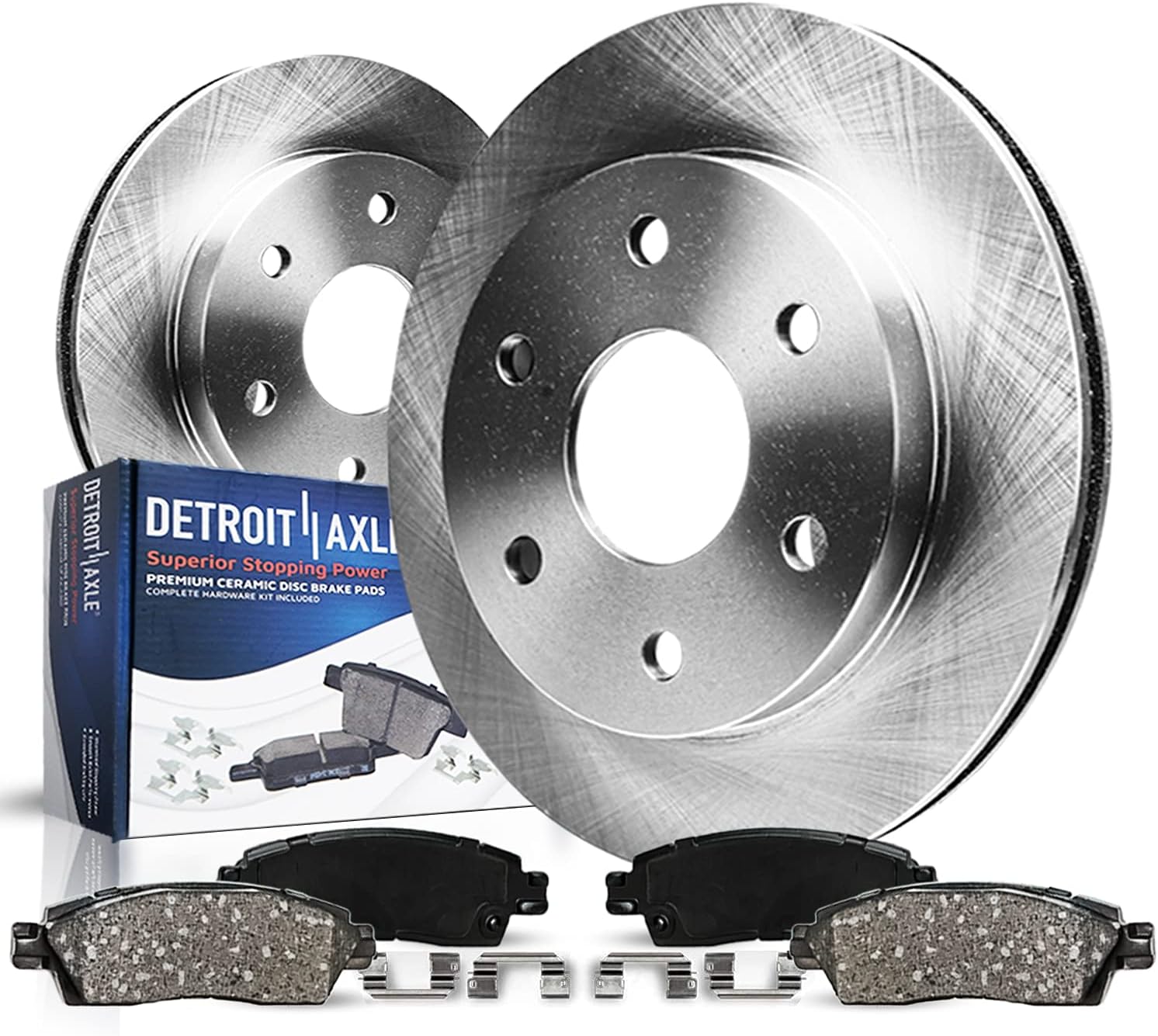
| Fitment | 2000-2002 Dodge Dakota, 2000-2002 Dodge Durango |
|---|---|
| Kit contents | 2 front vented rotors and 2 front ceramic pads with hardware |
| Orientation | Front |
| Part interchange | R-5382 P-820 |
| Warranty | 10 Year |
This Detroit Axle front brake kit provides a direct-fit replacement for the 2000–2002 Dodge Dakota and Durango front brakes by pairing two vented disc rotors with a set of ceramic pads and installation hardware. The rotors are zinc plated to resist corrosion and have venting intended to improve cooling and reduce moisture buildup during repeated stops. The ceramic pads are designed for quieter operation and consistent initial bite, which makes the kit a straightforward option for routine brake service or a complete front brake refresh. Fitment is machined to align with factory locating holes so installation should not require modifications. Practical limitations are that this is an aftermarket replacement rather than a factory part and the kit does not include calipers or additional hardware beyond basic pad fittings, so inspect your calipers and hardware if they are worn. For buyers prioritizing a reliable, low-noise swap that restores stopping performance, this kit covers the common needs for these Dodge models without extra performance frills.
Best for: Buyers who want a dependable, ready-to-install brake refresh that restores factory-style stopping and minimizes noise without chasing performance upgrades.
Less Ideal for: People seeking high-performance or track-oriented braking upgrades or those who need a full caliper rebuild kit should consider other options.
- Direct-fit replacement machined to factory locating holes for straightforward installation
- Vented rotors improve heat dissipation and help reduce brake fade under repeated use
- Zinc plating on rotors offers corrosion resistance to limit visible wheel dust and rust
- Ceramic pads are formulated for lower noise and predictable pedal feel
- Does not include calipers or extended hardware beyond basic pad fittings
Verdict: A straightforward, corrosion-resistant front brake kit that reliably restores quiet, factory-quality stopping for 2000–2002 Dodge Dakota and Durango owners.
Choosing the Right 1997-2004 Dodge Dakota Brake Rotors: Key Factors to Consider
Fitment and Bolt Pattern
Correct fitment is the first priority for the Dakota because an incorrect bolt pattern, hub bore, or hat height can prevent proper wheel mounting or cause vibration. Always confirm the rotor dimensions match the vehicle side (front or rear) and model years in the 1997-2004 range. Small differences in hat thickness or centering lip can change the wheel runout and lead to pedal pulsation.
Fitment affects installation time and safety. Rotors that match factory specifications remove the need for adapters or machining. When fitment is accurate, you also avoid issues with brake caliper clearance and the wheel's inner face contacting the rotor edge.
Material and Casting Quality
Rotor material and how it is cast influence thermal conductivity, wear rates, and resistance to cracking. Higher-quality castings use controlled metallurgy to reduce porosity and improve heat transfer during repeated braking events. For the Dodge Dakota, a rotor that handles the truck's weight and any towing or heavy-load use without glazing or developing heat spots will last longer.
Inferior castings can warp more quickly and produce uneven wear patterns that shorten pad life. Look for rotors specified with grade or manufacturing tolerances that indicate consistent material quality rather than generic descriptions.
Thickness, Minimum Spec, and Machining
Rotor thickness directly relates to service life and the ability to absorb and dissipate heat. A rotor that starts thicker provides more material to machine if resurfacing is an option and delays reaching the minimum thickness limit. For the 1997-2004 Dakota, verify the as-new thickness and the specified minimum thickness to ensure acceptable life span between service intervals.
Machining tolerances at the factory affect runout and how the rotor seats against the hub. Rotors finished to tighter flatness and runout specs reduce the chance of brake pulsation and uneven pad contact.
Surface Design: Plain, Slotted, or Drilled
Surface design changes how the rotor evacuates heat, gases, and debris from the pad surface. Plain rotors provide a larger contact area and tend to be quieter and longer-wearing for regular street driving. Slotted rotors help clear gas and dust quickly and aid pad bite under repeated stops, which can benefit hauling or frequent heavy braking. Drilled rotors can improve initial wet braking but may be more prone to crack initiation under extreme heat cycles.
For a Dakota used in everyday driving or occasional towing, matching the rotor surface to braking demands and noise tolerance is important. Consider how often you tow or perform repeated downhill braking before choosing a surface pattern.
Corrosion Protection and Finishes
Rust and corrosion around the hat and friction surfaces can make rotors harder to remove and accelerate uneven wear. Coatings on non-friction areas, like zinc plating or e-coating, help prevent rust on the hub seat and edge. For vehicles driven in wet or salted-road conditions, corrosion protection reduces the risk of stuck rotors and makes future servicing easier.
A finish that protects mounting surfaces without affecting the friction faces provides both functional longevity and a cleaner appearance during routine inspections.
Manufacturer Tolerances and Warranty Support
Consistent manufacturing tolerances reduce variations between left and right rotors which otherwise cause brake pull or pedal pulsation. Tolerance information, such as maximum lateral runout and thickness variation limits, can be an indicator of quality control. Additionally, warranty and replacement policies reflect confidence in a rotor's expected life and can be useful when assessing long-term value.
While warranty terms do not replace correct installation and maintenance, a clear warranty can provide recourse if premature failure occurs.
Common Brake Rotor Wear Symptoms on the Dakota
Brake rotors on the 1997-2004 Dakota typically show a few recognizable symptoms as they wear. Vibrations felt through the brake pedal or steering wheel during braking often indicate uneven rotor thickness or runout caused by warping or heavy localized wear. A steady squeal or metallic scraping can suggest severe surface scoring or worn pads contacting rotor edges.
Other signs include reduced braking bite, longer stopping distances, or a pulsating pedal. Visual inspection may reveal grooves, heat spots, or rust buildup, which help determine whether resurfacing or replacement is the right choice.
- Pedal pulsation during moderate braking
- Squeal or scraping noises under braking
- Visible grooves or discoloration on the rotor face
- Uneven pad wear or reduced braking effectiveness
How to Measure Rotor Thickness and When to Replace
Measuring rotor thickness is a straightforward way to determine remaining service life. Use a micrometer or caliper to measure at several points radially around the rotor face and compare the smallest reading to the manufacturer minimum thickness specification for the Dakota application.
If any reading is at or below the minimum specified thickness, replacement is required. Even if thickness is above minimum, significant variation between measurement points or visible cracks means replacement is safer than resurfacing.
- Clean the rotor surface before measuring
- Take measurements at multiple locations and use the lowest value
- Compare readings to the specified minimum thickness for the 1997-2004 Dakota
Resurfacing Versus Replacement: Practical Guidance
Resurfacing can restore a rotor that has minor scoring or slight thickness variation, provided the rotor remains above the minimum thickness after machining. For the Dakota, resurfacing may be appropriate when the rotor shows moderate wear but no cracks and the remaining thickness will support safe braking after machining.
However, if rotors have deep grooves, heat cracks, excessive lateral runout, or are at the minimum thickness, replacement is the safer choice. Modern replacement rotors are often not significantly more expensive than machining when you factor in labor and the risk of recurring issues.
- Resurface only when post-machining thickness exceeds minimum spec
- Replace if there are heat cracks, deep scoring, or excessive runout
- Consider replacement for long-term reliability if rotors have been resurfaced multiple times
Single-Piece Versus Two-Piece Rotors for Truck Use
Single-piece rotors are the factory-style construction for most 1997-2004 Dakota applications and offer simplicity, predictable behavior, and lower cost. Two-piece rotors separate the hat from the friction ring, which can reduce unsprung weight and allow different materials for the ring, improving heat management in some cases.
For everyday driving and light towing, single-piece rotors generally provide the durability and ease of installation most Dakota owners need. Two-piece designs can be beneficial if you regularly perform heavy towing or frequent high-speed stops and want a rotor that reduces heat transfer to the hat area.
- Single-piece: simpler, durable, typically less expensive
- Two-piece: potential weight savings and improved heat handling
- Choose based on driving load and serviceability preferences
Maintenance Tips to Maximize Rotor Life
Proper maintenance extends rotor life and ensures consistent braking. Regularly inspect pads for even wear and replace pads before they become excessively thin; worn pads accelerate rotor damage. Keep mounting surfaces clean and use anti-seize on hub faces if recommended to ease future removal and prevent rust bonding.
Also, ensure wheel lug nuts are torqued to specification. Over-torquing can warp rotors over time. If you notice vibration after installing new rotors, double-check hub runout and wheel mounting to rule out installation issues.
- Inspect pads and rotors during every brake service
- Clean hub faces and apply recommended anti-seize sparingly
- Torque lug nuts to factory specifications to avoid distortion
Still looking for the perfect fit?
Select your Dodge Dakota configuration to see the most relevant Brake Rotors recommendations
How We Chose the Best 1997-2004 Dodge Dakota Brake Rotors
We selected products based on criteria that matter specifically to owners of the 1997-2004 Dodge Dakota. First, fitment accuracy was prioritized to ensure bolt pattern, hub size, and hat thickness match the Dakota's front or rear applications without modification. Second, material and casting quality were evaluated because rotor metallurgy affects heat dissipation and susceptibility to cracking under heavy use. Third, rotor thickness and machining tolerances were considered since these determine service life and the ability to meet minimum thickness specifications. Fourth, rotor design choices such as plain, slotted, or drilled patterns were weighed for how they influence pad bedding, gas evacuation, and noise for typical Dakota driving. Fifth, corrosion protection and coating were factored in to reduce rusting and seizing on hubs in regions with road salt. We excluded units that required hub modifications, nonstandard wheel clearances, or that lacked clear fitment data for the 1997-2004 Dodge Dakota. The shortlist favors rotors that balance durability, heat management, and straightforward installation for typical on-road and light-duty truck use.
Our full evaluation process is outlined in our review methodology.
FAQ
How often should I inspect rotors on my 1997-2004 Dodge Dakota?
Inspect rotors at least every time you change brake pads or every 12,000 miles, whichever comes first. More frequent checks are wise if you tow, haul, or do a lot of stop-and-go driving.
Can I resurface a rotor with light grooves on my Dakota?
You can resurface a lightly grooved rotor if the resulting thickness after machining stays above the minimum specification and there are no cracks. If machining would reduce thickness below the limit, replacement is required.
Are slotted or drilled rotors better for towing with a Dakota?
Slotted rotors often provide more consistent pad clearing and are a practical choice for towing and repeated heavy braking. Drilled rotors add wet-weather bite but can be more susceptible to cracking under heavy heat cycles.
What causes brake pedal pulsation after installing new rotors?
Pulsation often results from excessive lateral runout, uneven mounting surfaces, or wheel runout rather than the rotor itself. Ensure the hub and rotor mating surfaces are clean, and check rotor runout with a dial indicator during installation.
How do I know if a rotor has heat damage or cracking?
Heat damage appears as blue or discolored patches, and cracks may appear radiating from drilled holes or across the friction surface. Visible cracks or severe heat spotting indicate the rotor should be replaced.
Is it necessary to replace rotors when changing pads on my Dakota?
Not always. Replace rotors if they are below minimum thickness, have significant scoring, or display uneven wear. If rotors are within spec and flat, new pads can be installed and properly bedded to extend service life.
Final Verdict
When replacing brake rotors on a 1997-2004 Dodge Dakota, prioritize correct fitment, sufficient thickness, and appropriate surface design for how you drive. Balance the advantages of resurfacing against the long-term reliability of new rotors, and factor in corrosion protection if you operate in harsh environments. By focusing on machining tolerances, material quality, and proper installation practices, you can restore consistent braking performance and reduce the chance of repeat service. Choose the option that matches your towing and driving demands to get the best combination of safety and longevity.
Explore More:
- Check out all Dodge Dakota parts & accessories
- Explore Brake Rotors Maintenance & Repair Guides
- Explore Brake System
- Browse all Auto Parts
