

Note: This article contains affiliate links. If you click on these links and make a purchase, I may earn a small commission at no extra cost to you. This helps support my research and content. Read my full affiliate disclosure here.
If your Subaru Legacy GT is showing cooling system warning signs, choosing the right radiator matters for reliable daily driving and spirited use. A correctly selected radiator restores consistent engine temperature control, reduces the risk of overheating, and helps prevent costly downstream damage to the engine and head gasket.This guide covers the top shortlisted radiators for the Subaru Legacy GT, focusing on performance, durability, and fitment. We evaluated thermal capacity, construction quality, and installation practicality to help you pick a unit that suits your driving style and maintenance preferences. Read on for the factors that separate dependable replacements from ones that cause repeated service visits.
Looking for other parts? See all Subaru Legacy parts & accessories.
Top Picks at a Glance
| Best Overall The best all-around choice for most situations | SCITOO Radiator Replacement (OEM 2777) for Subaru 2.0L/2.5L Models |  |
| Best Quality Built to a higher standard if you want something more solid | Koyorad VH091662 Aluminum Racing Radiator |  |
| Best Value The sweet spot between price and what you get | Alpaspare 2778 Direct-Fit Aluminum Radiator for Subaru |  |
| Highest Rated A top-rated pick with lots of positive feedback | CM COMPRESSOR Complete Radiator for Subaru Legacy / Outback (2005–2009) |  |
| Most Popular A crowd favorite that many people choose with confidence | SCITOO Engine Cooling Radiator Replacement for Subaru Legacy/Outback/WRX |  |
| Best Seller A high-volume bestseller chosen again and again | DWVO Complete Radiator for Subaru Legacy/Impreza/Forester/Crosstrek (CU13092) |  |
1. SCITOO Radiator Replacement (OEM 2777) for Subaru 2.0L/2.5L Models

| Manufacturer Part Number | 127659-5206-1103424261 |
|---|---|
| OEM Part Number | 2777 |
| Core Rows | 1 Row |
| Engine Oil Cooler Included | Yes |
| Compatible Engines | 2.0L and 2.5L H4 |
This SCITOO radiator is a direct-fit replacement intended for Subaru 2.0L and 2.5L applications and installs like a factory-style radiator. It replaces the OEM 2777 unit and is built with a single-row aluminum core and integrated engine oil cooler, so it handles normal cooling and oil-temperature duties without needing separate components. Typical use is as a like-for-like repair when the original radiator leaks, corrodes, or is damaged; the precision fit claims mean hose and mounting points should line up with factory locations. Buyers will appreciate the full-aluminum construction for corrosion resistance and the included oil cooler function which saves installation time compared with adding an aftermarket cooler. Limitations include the single-row core which may offer less cooling margin under heavy towing, track use, or significant engine modifications, and the product does not include a transmission oil cooler. Expect a straightforward replacement for standard driving conditions but consider a thicker or multi-row unit if you need higher sustained cooling capacity.
Best for: Buyers looking for a reliable, factory-style replacement radiator for routine driving and road use who prioritize an easy swap and corrosion resistance.
Less Ideal for: Drivers who run heavy-duty towing, motorsport, or significantly modified engines that need extra cooling capacity should choose a larger or multi-row performance radiator instead.
- Direct-fit design that matches factory mounting points for easier installation
- All-aluminum single-row core for corrosion resistance and efficient heat transfer in typical use
- Integrated engine oil cooler eliminates separate oil-cooler plumbing and simplifies replacement
- Single-row core provides less cooling headroom than multi-row radiators under heavy load
Verdict: A straightforward, factory-style aluminum replacement radiator that makes a fast, corrosion-resistant repair for Subaru 2.0L/2.5L vehicles needing a like-for-like swap.
2. Koyorad VH091662 Aluminum Racing Radiator
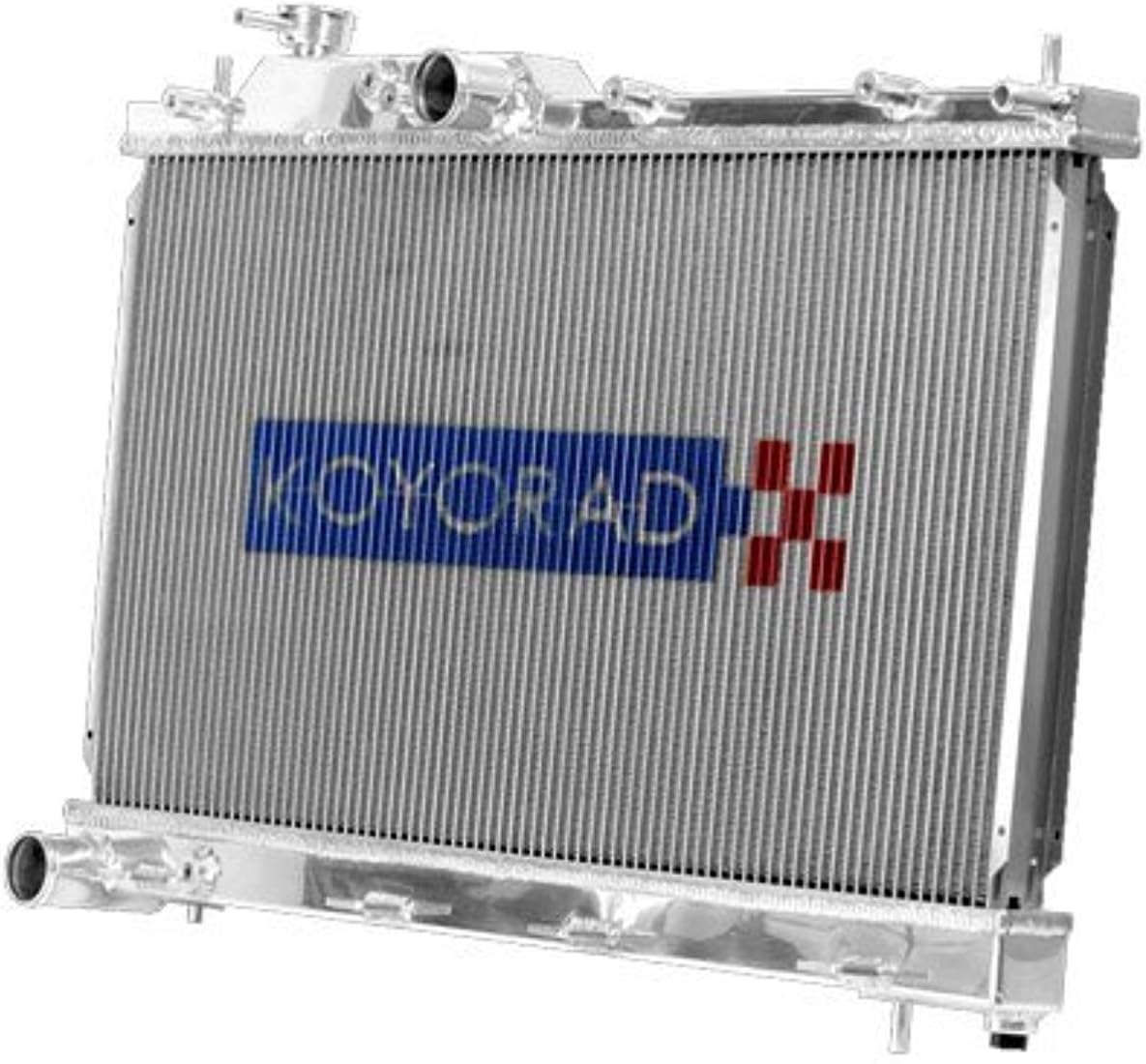
| Brand | Koyorad |
|---|---|
| Model | VH091662 |
| Core thickness | 36mm Hyper Core |
| Construction | All-aluminum, Nocolok brazed |
| Includes | 3 piece fittings and o-rings |
The Koyorad VH091662 is a direct-fit aluminum racing radiator designed for high-heat Subaru turbo applications, including the Legacy GT. It uses Koyorad's 36mm Hyper V core that increases surface area and airflow for improved heat rejection compared with many stock units. The radiator is a factory-fit, bolt-in replacement that retains stock fan shrouds and mounts, so installation typically requires no engine modifications and keeps existing cooling plumbing. Koyorad brazes the cores and supplies a three-piece accessory kit with fittings and o-rings, which helps simplify swap projects. In practice this radiator is best for spirited street driving, towing or occasional track use where higher cooling capacity and a compact profile matter; the tighter 36mm core is intended for confined engine bays. The main limitations are that it is a purpose-built performance unit so benefits are most noticeable under sustained load, and buyers should verify fit for specific model years and transmission or turbo configurations before ordering.
Best for: Buyers who prioritize stronger, compact cooling for spirited driving, towing, or occasional track use on their Subaru and want a bolt-in upgrade that improves sustained-temperature control.
Less Ideal for: Drivers looking for a cost-focused, purely street-oriented replacement who will not push the cooling system hard or those unwilling to confirm exact model-year fitment before ordering.
- 36mm Hyper V core increases surface area for better heat rejection in high-load conditions
- All-aluminum construction and Nocolok brazed core for durability and corrosion resistance
- Factory-fit direct bolt-in design retains stock fan shrouds and mounts for easier installation
- Includes a 3-piece accessory kit with fittings and o-rings to aid installation
- Performance gains are most apparent under sustained high-load or track conditions rather than normal daily driving
- Fit and compatibility vary by year and configuration so confirmation before purchase is necessary
Verdict: Choose this radiator if you need a compact, factory-fit aluminum upgrade that keeps coolant temperatures down during spirited driving or track use.
3. Alpaspare 2778 Direct-Fit Aluminum Radiator for Subaru

| Model fitment | Various Subaru models 2005-2017 (listed) |
|---|---|
| Manufacturer | Alpaspare |
| Material | Aluminum |
| OEM part references | 45111AJ10A, 45119AG020, 67730 (and others listed) |
This Alpaspare 2778 radiator is a direct, drop-in replacement built to fit several Subaru platforms without modification. It is made from aluminum and shipped as a complete radiator that aligns with factory mounting points, hose connections, and hardware so installation is straightforward for a competent DIYer or a shop. The listing emphasizes pressure, leak, and thermal-cycle testing and claims OEM-quality cooling performance, which should restore proper coolant temperatures during daily driving and heavier loads. Notable features include matching inlet/outlet diameters and compatibility with multiple Subaru OEM part numbers, simplifying parts lookup. Practical benefits are ease of installation, corrosion-resistant aluminum construction, and a design intended to meet factory cooling capacity. Important limitations are that this is a single radiator core option offered for specific Subaru models and years only, so buyers must confirm exact model and transmission fitment before ordering, and finish or bracket details may vary from the original unit.
Best for: Buyers who prioritize a practical, straightforward replacement that restores factory cooling performance with minimal installation hassle and who prefer a durable, tested aluminum unit over repairing the original radiator.
Less Ideal for: Those seeking multiple core thickness or performance-upgrade radiator options or users who need universal-fit parts for different vehicles should consider other choices.
- Direct 1:1 fit to original mounting points and hose connections for listed Subaru models
- Aluminum construction designed for improved corrosion resistance and durability
- Claims factory-level pressure, leak, and thermal-cycle testing for reliability
- Matches OEM inlet and outlet diameters to simplify plumbing and installation
- Compatibility limited to the specific Subaru model years listed so fitment must be checked carefully
- Only one core/thickness option is provided which may not match every repair preference
Verdict: A practical, tested aluminum direct-fit replacement that gets your Subaru back to factory cooling performance with minimal fuss.
4. CM COMPRESSOR Complete Radiator for Subaru Legacy / Outback (2005–2009)

| Core Material | Aluminum |
|---|---|
| Row | 1 |
| Tank Material | Plastic |
| TOC | Plated |
This complete radiator replaces the factory unit to restore proper cooling for 2005–2009 Subaru Legacy and Outback applications. It uses an aluminum core with multi-louvered fins and plastic tanks to deliver efficient heat transfer while remaining lightweight. The unit is pressure tested to help prevent leaks and is built to the same mounting and hose locations as the factory radiator for straightforward installation. In typical use it handles everyday commuting and higher-load driving by maintaining coolant temperatures and reducing the risk of overheating. Expect a durable but budget-oriented construction: aluminum core improves cooling but plastic end tanks are less impact resistant than full-metal designs. The radiator ships as a full assembly so you do not need to transfer parts from the old unit, but professional installation is recommended if you are not comfortable draining and refilling the cooling system. For buyers prioritizing dependable, tested replacement cooling for their Subaru, this is a practical factory-style swap.
Best for: A buyer who wants a reliable, tested replacement that restores original cooling performance on a mid-2000s Subaru and values straightforward fitment over premium materials.
Less Ideal for: Drivers seeking a heavy-duty or performance upgrade for track use or extreme towing should consider full-metal or performance radiators instead.
- Aluminum core with high-density multi-louvered fins for improved heat dissipation
- Comes as a complete radiator assembly so no core transfer is required
- Pressure tested before shipping to reduce the chance of leaks
- Designed to match factory mounting and hose locations for straightforward fitment
- Plastic tanks are less durable than all-metal radiators during impacts or long-term heat cycling
Verdict: A pressure-tested, aluminum-core complete replacement radiator that reliably restores factory cooling performance for mid-2000s Subaru Legacy and Outback owners.
5. SCITOO Engine Cooling Radiator Replacement for Subaru Legacy/Outback/WRX

| Vehicle fitment | Legacy 2.5L 2010-2014; Outback 2.5L 2010-2014; WRX 2.0L 2015-2020 |
|---|---|
| Core type | Downflow aluminum core |
| Row count | 1Row |
| Inlet/outlet diameter | 1.56inch |
This SCITOO radiator is a direct-fit replacement intended for the front installation on specific Subaru models and engine sizes. It uses a high-density aluminum core with a single-row downflow design to accelerate heat transfer and resist corrosion, which helps keep coolant temperatures stable under everyday driving and moderate towing or spirited use. Installation is typical for a factory-style radiator and does not include a radiator cap or integrated oil coolers, so expect to reuse factory fittings or purchase those separately. The unit is built to minimize leaks and requires only routine visual checks and fin cleaning to maintain performance. Buyers should note this is a replacement part from an aftermarket brand rather than a factory component, so finish and mounting hardware can vary; confirming fitment for your exact year and trim before installation is important. For drivers who prioritize straightforward cooling performance and a durable aluminum core, this radiator offers a practical option that balances capability with simple upkeep.
Best for: Buyers who want a proven, durable replacement radiator that restores factory cooling performance with minimal maintenance and are comfortable verifying fitment before installation.
Less Ideal for: Drivers looking for a performance-upgrade radiator with larger cores, integrated oil coolers, or a direct factory-branded unit should consider higher-end or OEM options.
- High-density aluminum core for improved heat transfer and corrosion resistance
- Direct-replacement design made to match factory mounting and inlet/outlet positions
- One-row downflow core keeps the unit compact for stock engine bays
- Low maintenance requirement aside from periodic fin cleaning
- Constructed to resist leakage for reliable day-to-day cooling
- Does not include a radiator cap or integrated transmission/engine oil cooler
- Aftermarket fit and finish may differ from factory parts requiring verification of mounting hardware
Verdict: A durable aluminum direct-replacement radiator that restores reliable cooling for the listed Subaru models while keeping installation and maintenance straightforward.
6. DWVO Complete Radiator for Subaru Legacy/Impreza/Forester/Crosstrek (CU13092)

| Compatible engines | 2.0L, 2.5L |
|---|---|
| Manufacturer part number | MADWVx6Z0v |
| OEM part numbers | 45111AG00A, 45111AG06A, 45111AJ07A, 45119SC000, F09TECS002 |
| Core material | Aluminum |
This DWVO complete radiator is a direct-fit replacement built for Subaru 2.0L and 2.5L applications covered by the listed OEM part numbers. It replaces the factory unit and installs in the same mounting points, with a TIG-welded aluminum core and PA66 GF30 inlet and outlet tanks for improved durability. The high-density multi-louvered fins increase cooling efficiency, which helps the engine run cooler under normal driving and mild towing or performance loads. The radiator ships with foam corner supports to prevent damage and includes an installation manual but not a radiator cap, and professional installation is recommended. For a buyer focused on reliability, this radiator offers corrosion protection from a treated coating and claims leak resistance from its construction. The main limitations are that it is an aftermarket part rather than a dealer unit and the condenser, hoses, or cap are not included, so expect to reuse or replace those separately during installation.
Best for: Buyers who prioritize a reliable, factory-style replacement that restores cooling performance without upgrading other components and prefer a sensible, long-term repair approach.
Less Ideal for: If you want a full coolant system refresh or an upgraded high-performance cooling solution, this standard replacement radiator is not the best choice.
- Direct-fit design matching factory mounting and OEM part numbers for straightforward replacement
- Aluminum core with multi-louvered fins for improved heat dissipation
- TIG-welded construction and reinforced PA66 GF30 tanks for enhanced durability
- Protective treated coating to resist corrosion and extend service life
- Radiator cap and associated hoses or fittings are not included, requiring separate purchase or reuse
- Aftermarket unit may have fitment or finish differences compared with dealer-sourced replacements
Verdict: A straightforward, factory-style aluminum replacement that restores reliable cooling for Subaru Legacy GT applications without requiring modifications.
Choosing the Right Subaru Legacy GT Radiator: Key Factors to Consider
Cooling Capacity and Core Design
Cooling capacity determines how effectively a radiator removes heat from the engine coolant, which is critical for preventing overheating during normal driving and spirited sessions. Core design, including number of rows, tube dimensions, and fin density, affects airflow resistance and heat transfer efficiency. For the Legacy GT, a core that balances dense fins with adequate airflow is ideal because too-dense cores can impede airflow in the factory shroud setup while too-sparse cores may not dissipate enough heat under sustained load.
Consider whether the radiator is a single-row, double-row, or triple-row core and how that interacts with the available fan and shroud. A larger core may offer better cooling but could add weight and require more clearance. Also assess whether the core uses aluminum or other alloys that improve thermal conductivity. Keep in mind that increased cooling capacity is particularly valuable if you tow, carry loads, or use the vehicle in warmer climates.
Fitment and Mounting Accuracy
Correct fitment is essential to avoid additional modifications and to ensure the factory hoses, brackets, and fans align properly. Radiators that match the Legacy GT's mounting points and hose locations minimize installation time and reduce the risk of leaks caused by stressed fittings. Pay attention to inlet and outlet diameters and positions, transmission cooler ports if equipped, and mounting tab geometry.
Poorly fitting radiators may require custom hoses, brackets, or trimming of the shroud, which can compromise reliability or airflow. Confirm that the replacement accepts factory fan assemblies and that accessory clearances for the overflow bottle and intake plumbing remain unchanged. A radiator that fits right reduces labor and the chance of vibration-related wear over time.
Material Quality and Corrosion Resistance
Material choice drives longevity. Aluminum cores and tanks are common because aluminum offers good thermal conductivity and resists rust better than steel. However, lower-grade materials or poor welds can lead to premature leaks. Examine tank construction methods such as brazed joints versus crimped seams, and whether the radiator uses epoxy seals or welded connections.
Corrosion resistance matters if the vehicle sees moisture, road salt, or infrequent coolant changes. Look for radiators with protective coatings or anodized finishes and reliable warranty terms that reflect manufacturer confidence. For the Subaru Legacy GT, a corrosion-resistant unit reduces the likelihood of slow coolant loss and the maintenance burden of repeated repairs.
Transmission Cooler Integration
Many radiators for vehicles equipped with automatic transmissions include integrated transmission cooler passages. If your Subaru Legacy GT has an automatic transmission, choose a radiator with appropriate transmission cooler ports sized and positioned for the factory lines. Proper integration maintains transmission operating temperature and prevents overheating that can accelerate fluid breakdown and wear.
If the radiator lacks built-in transmission cooling, you will need a separate external cooler, which adds plumbing complexity and potential leak points. Verify that ports are leak-tested and have suitable fittings for Legacy GT transmission lines to avoid adaptive routing or additional adapters that can compromise reliability.
Serviceability and Maintenance Features
Serviceability impacts long-term ownership cost and convenience. Features such as a clearly accessible drain petcock, standard filler neck orientation, and compatibility with routine coolant flush procedures make periodic maintenance quicker and less messy. Consider whether the radiator allows for simple removal without disturbing major components, which can reduce labor time during replacement or service.
Also evaluate how the radiator design affects coolant bleeding and whether the factory fill procedure still applies. If the unit changes the location of bled points or traps air pockets, you may need revised procedures during coolant replacement. For owners who prefer DIY maintenance, a radiator that simplifies flushing and bleeding is a practical advantage.
Warranty and Support
Warranty terms are an indirect measure of expected durability and manufacturer confidence. A generous warranty that covers leaks and manufacturing defects reduces risk for the buyer and indicates that the maker stands behind their construction. Check what is covered and the duration, and whether the warranty applies only to the original purchaser or is transferable.
Also consider the availability of technical support and clear installation documentation. Good installation guides and responsive support can be especially helpful if small fitment issues arise during installation on the Legacy GT. Warranties do not replace proper installation, but they provide recourse if the radiator fails under normal use.
Signs Your Legacy GT Radiator Needs Replacement
Recognizing early symptoms helps avoid engine damage. Common indicators include visible coolant leakage under the car, frequent low coolant warnings, or a recurring need to top off the reservoir. Pay attention to temperature gauge spikes during idling or slow traffic, which suggest the radiator is not shedding heat effectively.
Other signs are discolored or rust-streaked coolant, steam from the engine bay, and a damp or sweet smell around the front of the vehicle. If you notice overheating during highway driving or when climbing hills, that often points to reduced radiator performance rather than a thermostat issue alone.
- Persistent coolant puddles or drops under the front of the car
- Temperature gauge rising above normal during idle or slow driving
- Visible corrosion or damage to the radiator core or tanks
- Steam or sweet-smelling vapor from the engine bay
Preparing for Radiator Replacement on the Legacy GT
Plan the job by gathering the correct coolant, new hoses or clamps if needed, and basic hand tools. Park on level ground, let the engine cool completely, and disconnect the negative battery terminal if you will be removing fan assemblies. Position a drain container beneath the radiator and open the drain petcock or lower hose to capture used coolant for proper disposal.
Label hose positions and take photos of the fan and shroud arrangement to guide reassembly. If your Legacy GT has an automatic transmission, be ready to handle transmission fluid that may drain from integrated cooler lines. Replace any worn hose clamps and inspect the overflow bottle and hoses for cracks while the system is drained.
- Coolant type and quantity required for refilling
- Replacement clamps and hoses as preventative maintenance
- Protective gloves and eye protection when draining coolant
- Ensure the replacement radiator accepts factory fan mounts
Cooling System Maintenance Tips to Extend Radiator Life
Routine coolant changes using the proper mixture protect against corrosion and help maintain thermal performance. Over time, coolant additives degrade and allow electrochemical reactions that can accelerate core corrosion. Follow the recommended service interval and use the coolant type appropriate for Subaru engines to protect internal passages and seals.
Keep the exterior of the radiator clear of debris. Insects, leaves, and road grime reduce airflow through the fins and lower cooling effectiveness. Periodically inspect the core for bent fins and use a soft brush or low-pressure water to clean the surface without damaging the fins. Address minor leaks early to avoid larger failures.
- Flush coolant at manufacturer-recommended intervals
- Inspect and clean radiator fins seasonally
- Replace hoses before they fail if they show cracking or bulging
- Monitor thermostat and water pump for signs of related cooling issues
When to Choose an OEM-Style Vs Upgraded Radiator
An OEM-style radiator typically focuses on fitment accuracy and straightforward replacement without changes to the vehicle's cooling behavior. Choose an OEM-style unit if you prioritize plug-and-play installation and want to preserve factory cooling characteristics with minimal modifications.
Upgraded radiators offer higher cooling capacity, thicker cores, or improved materials for owners who push the engine harder, live in hot climates, or tow. Upgrades can lower operating temperatures but may require additional space or different fan strategies. For the Legacy GT, consider whether your driving habits justify the added cooling or if the factory-equivalent part better suits daily use.
- OEM-style: best for direct replacement and simple installation
- Upgraded cores: best for heavy-duty, performance, or hot-weather use
- Assess clearance and fan compatibility before selecting an upgraded unit
- Weigh incremental cooling benefits against potential fitment changes
Cost Drivers and What Affects Radiator Repair Cost
Radiator repair cost is influenced by material quality, core type, and whether additional components such as hoses, clamps, or fan assemblies must be replaced. Labor can be a significant part of the total cost if the cooling fan assembly or front-end components must be removed. DIY-savvy owners can reduce expense, but they should account for proper disposal of used coolant and potential safety risks.
Warranty coverage can offset repair cost for manufacturing defects. However, damage from external impacts, corrosion due to neglected maintenance, or improper installation is typically not covered. Factor in the value of buying a unit with a solid warranty when estimating long-term ownership costs for your Legacy GT.
- Material and construction quality affect replacement frequency
- Additional parts like hoses and clamps add to total cost
- Labor increases if fan shrouds or front parts require removal
- Warranty terms can reduce long-term repair expenses
Still looking for the perfect fit?
Select your Subaru Legacy configuration to see the most relevant Radiators recommendations
How We Chose the Best Subaru Legacy GT Radiator
We shortlisted radiators that meet the specific needs of Subaru Legacy GT owners by applying practical, vehicle-focused filters. Primary evaluation criteria included cooling capacity under load, which reflects core performance when the engine is hot or under boost; construction and materials, such as tubing, core type, and header quality, because those determine long-term durability and resistance to leaks; and fitment accuracy, ensuring proper hose and bracket alignment for the Legacy GT chassis and engine bay.We also prioritized ease of installation, including whether the radiator accepts factory fan shrouds and mounting points, plus maintenance considerations like drain petcock placement and service access for coolant flushes. Corrosion resistance and warranty coverage were used as proxies for longevity and owner protection. Units that required major modifications to mounts, fans, or cooling lines were excluded. We did not consider units that lacked clear compatibility with the Subaru Legacy GT or that used substandard core materials likely to fail prematurely.
Our full evaluation process is outlined in our review methodology.
FAQ
How can I tell if my Legacy GT radiator is leaking or if the coolant is coming from another part?
Check for coolant trails that lead to the radiator, inspect seams and hose connections for wetness, and look for wet spots on the front of the core. If the leak appears at a hose connection, tighten or replace the clamp after cooling. Persistent seepage from tanks or core areas usually indicates radiator failure rather than a hose issue.
Is it safe to drive my Legacy GT a short distance if the temperature gauge rises?
Driving a short distance at low speed may be acceptable in some cases, but it depends on how high the gauge rises and whether there are other symptoms like steam or loss of coolant. If the gauge approaches the red zone or you see steam, stop and let the engine cool to avoid serious damage such as head gasket failure.
Do I need a different radiator if I plan to use the Legacy GT for occasional track days?
Occasional track use increases heat loads, so consider a radiator with greater cooling capacity or improved core design. Ensure the replacement maintains proper fitment with the fan and shroud. Upgraded radiators can lower sustained temperatures but may require verification of clearance and mounting.
Can I replace the radiator myself and what should I watch for during installation?
Many owners can replace the radiator with basic tools, but be sure the engine is cool and the system is fully drained before disconnecting hoses. Label hoses and fasteners for accurate reassembly, bleed the cooling system correctly to prevent air pockets, and inspect or replace worn hoses and clamps while you have the system open.
How often should I perform a radiator coolant flush on the Legacy GT?
Flush intervals depend on coolant type and driving conditions, but following Subaru-recommended intervals or changing coolant every few years prevents additive depletion and corrosion. If you notice rusty or discolored coolant, plan a flush sooner to protect the radiator and internal engine passages.
Will an aftermarket radiator affect my Legacy GT's transmission cooling?
If your Legacy GT has an automatic transmission, ensure the aftermarket radiator includes compatible transmission cooler ports. An aftermarket unit without the correct ports will require a separate external cooler, which adds plumbing and potential leak points, so verify compatibility before purchase.
Final Verdict
Selecting the right radiator for a Subaru Legacy GT comes down to matching cooling capacity and fitment to your typical driving conditions. Prioritize a unit that offers reliable heat dissipation, durable construction, and accurate mounting to avoid installation headaches and recurring leaks. Take into account whether you need integrated transmission cooling, and favor materials and warranties that reduce long-term maintenance risk.Weigh the tradeoff between an OEM-style replacement for straightforward fitment and an upgraded core for more demanding use. Focus on the factors discussed here to choose a radiator that keeps your Legacy GT running cool and dependable.
Explore More:
- Check out all Subaru Legacy parts & accessories
- Explore Radiators Maintenance & Repair Guides
- Explore Cooling System
- Browse all Auto Parts
