

Note: This article contains affiliate links. If you click on these links and make a purchase, I may earn a small commission at no extra cost to you. This helps support my research and content. Read my full affiliate disclosure here.
If you plan to tow a small trailer, carry a bike rack, or add a cargo carrier to your Subaru Forester, choosing the right 2 inch receiver tow hitch receiver matters for safety and usability. The wrong hitch can reduce towing capacity, complicate installation, or limit what accessories you can use.This guide covers seven shortlisted 2 inch receiver options selected for Forester owners, focusing on fitment, towing capacity, and installation style. Read on to understand the tradeoffs between bolt-on designs and those that require more involved mounting, plus the criteria we used to evaluate each option before the product list.
Looking for other parts? See all Subaru Forester parts & accessories.
Top Picks at a Glance
| Best Overall Tow Hitch Receiver A well-rounded receiver balancing strength, fit, and install simplicity | CURT Class 3 Trailer Hitch 2-Inch Receiver for Select Subaru Forester |  |
| Best Budget Tow Hitch Receiver A low-cost receiver that provides basic towing capability and fit | BALOCEO 2" Class 3 Trailer Tow Hitch Receiver for 2014–2018 Subaru Forester |  |
| Best Premium Tow Hitch Receiver Higher-end construction, finish, and load ratings for demanding users | CURT Class 3 Trailer Hitch 2-Inch Receiver for Subaru Forester |  |
| Best 2-Inch Tow Hitch Receiver Specifically sized 2-inch receiver tube for common hitch accessories | Nilight Class 3 2" Receiver Trailer Hitch for Subaru Forester (2019–2025) |  |
| Best Heavy-Duty Tow Hitch Receiver Built for higher tongue weights and heavier towing demands | Curt Class 3 2-inch Trailer Hitch Receiver for Subaru Forester (2014–2018) |  |
| Best Low-Profile Tow Hitch Receiver A sleeker, lower-drop receiver that keeps rear clearance and appearance | CURT Class 3 Trailer Hitch 2" Receiver for Subaru Forester |  |
| Best Bolt-On Tow Hitch Receiver Designed for straightforward bolt-on installation with minimal modification | APS Class 3 Bolt-On Trailer Hitch Receiver for Subaru Forester (2019–2026) |  |
1. CURT Class 3 Trailer Hitch 2-Inch Receiver for Select Subaru Forester
Best Overall Tow Hitch Receiver

| Receiver size | 2-inch |
|---|---|
| Gross trailer weight | 3,500 lbs |
| Tongue weight | 525 lbs |
| Material | Carbon Steel |
| Finish type | Co-cured A-coat and powder coat |
This CURT Class 3 trailer hitch is a custom-fit 2-inch receiver designed for select Subaru Forester years and built for everyday towing tasks. It installs using the vehicle-specific mounting points so DIY mechanics can bolt it up cleanly without major modifications. Constructed from high-strength carbon steel with precise welding, the hitch is protected by a co-cured liquid A-coat plus a durable powder coat for improved resistance to rust, chipping, and UV. Rated for 3,500 lb GTW and 525 lb tongue weight, it covers most small campers, boat trailers, utility trailers, and cargo carriers you are likely to tow with a Forester. The receiver tube accepts common 2-inch hitch accessories and the design is tested to SAE J684 standards for safety. The main limitations are that fitment is vehicle-specific so you must verify the Forester model years it supports, and heavier towing beyond its rating will require a higher-capacity setup. For most Forester owners who tow occasionally, this hitch balances strength, corrosion protection, and straightforward installation.
Best for: Forester owners who want a durable, factory-style 2-inch receiver that is straightforward to install and rated for the typical small-camper, boat, or utility trailer loads.
Less Ideal for: Drivers who need maximum towing capacity for large travel trailers or who require a universal hitch that fits multiple vehicle models.
- Vehicle-specific design for a clean, bolt-on fit to select Subaru Forester models
- 3,500 lb gross trailer weight and 525 lb tongue weight covers common light towing needs
- Durable co-cured liquid A-coat plus powder coat finish for strong rust and chip resistance
- Constructed from high-strength carbon steel with precise welding and real-world testing to SAE J684
- Fitment is limited to select Forester model years so compatibility must be verified before purchase
- Not suitable for heavier towing demands above its 3,500 lb rating
Verdict: The best all-around tow hitch receiver that balances solid build quality, ease of installation, and versatile towing capacity for most DIY mechanics' needs.
2. BALOCEO 2" Class 3 Trailer Tow Hitch Receiver for 2014–2018 Subaru Forester
Best Budget Tow Hitch Receiver

| Vehicle fit | 2014–2018 Subaru Forester |
|---|---|
| Receiver size | 2 inches |
| Towing capacity | 3,500 lb |
| Tongue weight | 525 lb |
| Material | Alloy Steel |
This 2-inch Class 3 hitch receiver is a no-frills, vehicle-specific tow solution for 2014–2018 Subaru Forester models. It bolts to the Forester frame using the supplied hardware and is intended for DIY installers comfortable with basic hand tools or for installation by a shop. Constructed from alloy steel with a black powder coat, the receiver is rated to tow up to 3,500 pounds with a 525-pound maximum tongue weight, so it covers small trailers, cargo carriers, and bike racks. The package includes the hitch, mounting hardware, and an assembly manual, which helps simplify fitment and reduces guesswork. Because it is a dedicated fit, alignment and clearance around the bumper are straightforward, and the powder coating helps resist road corrosion. The main limitations are that professional installation is recommended if you lack experience and that there are no advanced features like integrated wiring or a removable ball mount included, so you will need to source electrical connectors and accessories separately.
Best for: DIY-minded Forester owners who want a straightforward, vehicle-specific hitch that delivers reliable, everyday towing capacity without extra features or premium price.
Less Ideal for: Buyers who need integrated wiring, a complete hitch kit with ball mount, or who plan heavy commercial towing should look at more fully featured or higher-capacity options.
- Vehicle-specific fit for 2014–2018 Subaru Forester simplifies installation
- Class 3 rating supports up to 3,500 lb towing and 525 lb tongue weight
- Powder-coated alloy steel construction resists rust and is durable for regular use
- Includes mounting hardware and an assembly manual to aid DIY installation
- Does not include wiring harness or removable ball mount accessories
Verdict: The best budget tow hitch receiver for DIYers who need reliable, no-frills towing performance and safe fitment without a high price tag.
3. CURT Class 3 Trailer Hitch 2-Inch Receiver for Subaru Forester
Best Premium Tow Hitch Receiver
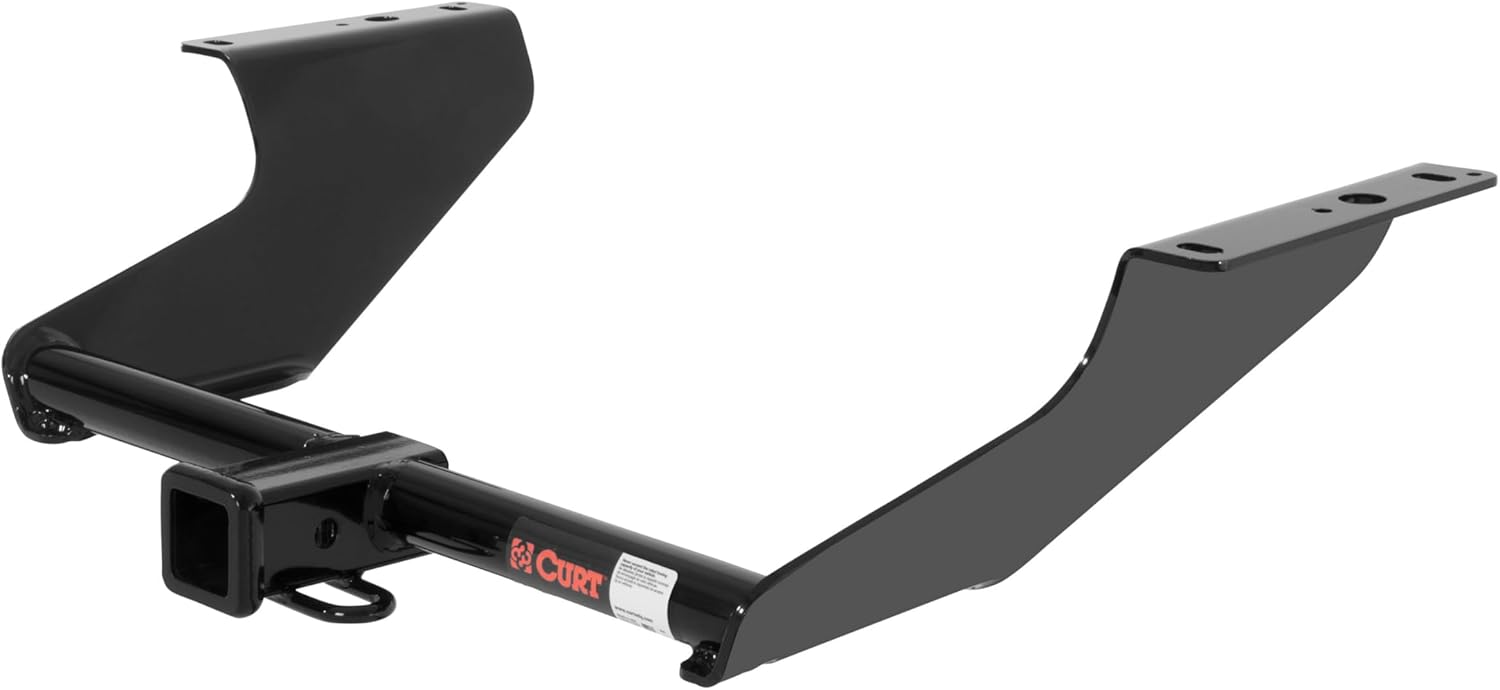
| Receiver size | 2-inch x 2-inch |
|---|---|
| Gross trailer weight | 4,000 lbs |
| Tongue weight | 400 lbs |
| Material | Carbon Steel |
| Finish | Co-cured liquid undercoat plus black powder coat |
The CURT Class 3 hitch is a custom-fit 2-inch receiver designed to restore factory-style towing capability to compatible Subaru Forester models. It installs at the rear of the vehicle and provides a 4,000 lb gross trailer weight (GTW) and 400 lb tongue weight (TW), making it suitable for hauling small campers, boat trailers, utility trailers and cargo carriers. Built from high-strength carbon steel with precise welding, the hitch uses a co-cured liquid undercoat plus a durable black powder coat for enhanced resistance to rust, chips and UV. That dual-layer finish and vehicle-specific engineering mean a clean fit and longer life in wet or salty climates. Installation is straightforward for common aftermarket hitches but still requires following the vehicle application notes and torque specs. Limitations are that fitment is vehicle- and year-specific so verify compatibility, and as a Class 3 2-inch receiver it is not intended for the largest towing jobs where higher-class hardware would be needed.
Best for: Buyers who want a long-lasting, factory-quality 2-inch receiver for a Subaru Forester and prioritize corrosion protection and robust construction over lowest cost.
Less Ideal for: If you need the highest towing classes or a universal hitch for multiple vehicle types, choose a heavier-class or multi-vehicle solution instead.
- Vehicle-specific design for a precise, factory-style fit
- 4,000 lb GTW and 400 lb TW suitable for most midsize trailer needs
- Dual-layer co-cured liquid undercoat plus powder coat for strong corrosion resistance
- Rugged carbon steel construction with precise welding for durability
- Compatibility limited to select Subaru Forester model years so fitment must be verified
Verdict: The best premium tow hitch receiver for buyers who prioritize superior materials, corrosion resistance, and higher load ratings and are willing to pay more for longevity and finish.
4. Nilight Class 3 2" Receiver Trailer Hitch for Subaru Forester (2019–2025)
Best 2-Inch Tow Hitch Receiver

| Receiver size | 2 inch |
|---|---|
| Class | Class 3 |
| Towing capacity | 3500 lbs |
| Tongue weight | 525 lbs |
| Fitment | Subaru Forester 2019-2025 |
This Nilight Class 3 trailer hitch provides a standard 2-inch receiver designed to bolt directly to the Subaru Forester (2019–2025) without drilling. It is rated for 3,500 lb gross trailer weight and 525 lb tongue weight, so it handles common light trailers, cargo carriers, and bike racks used by DIY owners. The hitch uses welded fastening points, safety chain loops, and a powder-coat finish intended to resist rust for longer service life. Installation is straightforward for a competent DIY mechanic: the vehicle-specific fit and bolt-on design eliminate trimming or body modification, though tight access under the bumper may require a jack and basic hand tools. Because it is a Class 3 2-inch receiver, it accepts the widest range of hitch accessories, making it a flexible choice for owners who swap ball mounts, racks, or carriers frequently. Keep in mind the stated weight limits when topping up loads and confirm torque specs during install, since no wiring or electrical components are included and heavier towing will need a weight-distributing setup and professional inspection.
Best for: DIY mechanics who need a factory-style, 2-inch receiver on a Subaru Forester and want a bolt-on hitch that accepts the widest range of mounts and accessories.
Less Ideal for: Drivers planning frequent heavy towing above the listed capacity or those wanting an integrated wiring solution should consider a heavier duty hitch or professional installation and wiring kits.
- Vehicle-specific bolt-on fit for Subaru Forester 2019–2025 eliminates drilling
- Standard 2-inch Class 3 receiver accepted by most ball mounts, bike racks, and cargo carriers
- 3,500 lb towing capacity and 525 lb tongue weight suitable for light trailers and heavy accessory loads
- Powder-coated finish and welded construction for corrosion resistance and durability
- No wiring harness or electrical components included for trailer lights
- Heavier towing setups require additional weight-distributing hardware not provided
Verdict: The best 2-inch tow hitch receiver for DIY mechanics who require the standard 2-inch receiver size for compatibility with the widest range of bike racks, ball mounts, and accessories.
5. Curt Class 3 2-inch Trailer Hitch Receiver for Subaru Forester (2014–2018)
Best Heavy-Duty Tow Hitch Receiver

| Maximum Towing Capacity | 4500 pounds |
|---|---|
| Tongue Weight | 675 pounds |
| Receiver Size | 2 inches |
| Material Type | Carbon Steel |
| Finish Type | Powder Coated |
This Curt Class 3 hitch is a vehicle-specific 2-inch receiver engineered for Subaru Forester 2014–2018 models. It bolts directly to the frame for a secure, factory-style fit and delivers a 4,500 pound maximum towing capacity with a 675 pound tongue weight, which makes it suitable for towing midsize utility trailers, boat trailers, and cargo carriers. The carbon steel construction and powder-coated finish provide corrosion resistance and long-term durability for regular towing use. Installation is bolt-on so no cutting or welding is required, which keeps fitment straightforward for DIY installers or professional shops. The reinforced Class 3 rating and higher tongue-weight rating give extra confidence when hauling heavier loads, though buyers should confirm their vehicle's towing package and brakes to match heavier trailers. This hitch focuses on strength and compatibility rather than extra features like integrated wiring or accessories, so plan to add wiring, ball mounts, or anti-rattle hardware separately if needed.
Best for: Buyers who prioritize reinforced towing capacity and a strong, vehicle-matched hitch for regularly hauling heavier trailers with a Subaru Forester from 2014 to 2018.
Less Ideal for: Shoppers who want a complete kit with wiring and hitch accessories included or who need lighter-duty, universal hitch options for occasional use.
- Vehicle-specific bolt-on design for direct fit to Subaru Forester 2014–2018
- 4,500 lb towing capacity with 675 lb tongue weight for heavier towing needs
- Carbon steel construction with powder-coated finish resists corrosion
- Class 3 2-inch receiver supports common heavy-duty hitch accessories
- Does not include wiring harness, ball mount, or other towing accessories
Verdict: The best heavy-duty tow hitch receiver for users who need elevated towing and tongue-weight capacity, reinforced construction, and confidence when hauling heavier loads.
6. CURT Class 3 Trailer Hitch 2" Receiver for Subaru Forester
Best Low-Profile Tow Hitch Receiver

| Receiver size | 2" |
|---|---|
| Gross Trailer Weight | 3,500 lbs |
| Tongue Weight | 525 lbs |
| Material Type | Carbon Steel |
| Finish Type | Gloss, Powder-Coated |
This CURT Class 3 trailer hitch is a vehicle-specific, low-profile 2" receiver designed to mount close to the Forester’s bumper while providing a factory-integrated look. It is intended for everyday towing tasks like small campers, utility trailers, boat or ATV haulers within its 3,500 lb gross trailer weight and 525 lb tongue weight limits. Built from carbon steel with precise welding and a co-cured plus powder-coat finish, the hitch resists rust and chips for long-term service. Its concealed main body preserves rear ground clearance and keeps the vehicle appearance clean when not towing, and the 2" receiver accepts standard ball mounts, racks, and carriers. Installation is vehicle-specific which simplifies fit and alignment but still requires proper torqueing and hardware during install. Buyers should verify exact year compatibility for the Forester and remember not to exceed the lowest-rated component in their towing setup. The design favors discreet integration and reliable mid-range towing rather than heavy commercial use.
Best for: Buyers who prioritize a discreet, close-to-bumper hitch that preserves rear ground clearance and vehicle appearance while allowing regular recreational towing on a Subaru Forester.
Less Ideal for: Drivers who need maximum heavy-duty towing capacity, commercial-grade hitches, or multi-vehicle compatibility should look for higher-class or different-fitment options.
- Vehicle-specific design for a close-to-bumper, factory-integrated fit
- 2" receiver supports common ball mounts, cargo carriers and bike racks
- Rated 3,500 lb GTW and 525 lb tongue weight for typical recreational towing
- Durable co-cured undercoat plus powder-coat finish for corrosion and chip resistance
- Precisely welded carbon steel construction for strength and longevity
- Not intended for heavy commercial towing beyond its published weight ratings
Verdict: The best low-profile tow hitch receiver for buyers who want a discreet, close-to-bumper mount that preserves rear ground clearance and vehicle appearance while still providing towing capability.
7. APS Class 3 Bolt-On Trailer Hitch Receiver for Subaru Forester (2019–2026)
Best Bolt-On Tow Hitch Receiver

| Maximum Towing Capacity | 3500 pounds |
|---|---|
| Pull Force | 3500 pounds |
| Material Type | Carbon Steel |
| Finish Type | Powder Coated |
This APS Class 3 hitch is a bolt-on, vehicle-specific receiver made to fit Subaru Forester models from 2019 through 2026. It installs using the vehicle's existing mounting points with the included hardware and DIY instructions, so a competent DIY mechanic can typically complete the job without specialized tools or extensive cutting. Constructed from carbon steel with a powder-coated finish and additional E-coating, it emphasizes corrosion resistance for longevity in wet or salty climates. The hitch is rated for 3500 pounds maximum towing and a 525-pound tongue weight, making it suitable for light trailers, bike racks, and cargo carriers. Notable extras include a free rubber hitch cover and a limited three-year warranty. Expect a straightforward, less invasive installation compared with weld-on alternatives, though finishing and torque checks are necessary to meet safety standards. This hitch is vehicle-specific, so installation and fitment are simplified, but the heavier steel construction adds weight during handling when installing alone.
Best for: DIY mechanics who want a fast, less invasive bolt-on hitch that uses existing mounting points for a reliable install on a Subaru Forester 2019–2026.
Less Ideal for: People who need a lighter-weight portable carrier or who plan to tow at the upper limits frequently and require commercial-grade towing hardware.
- Vehicle-specific bolt-on design for a precise fit with Subaru Forester 2019–2026
- 3500 lb towing capacity and 525 lb tongue weight suitable for trailers, bike racks, and cargo carriers
- Triple-layer corrosion protection with E-coating and powder coat for improved durability
- Includes all mounting hardware, DIY instructions, and a rubber hitch cover for a complete install kit
- Item is heavy which can make solo installation awkward
Verdict: The best bolt-on tow hitch receiver for DIY mechanics seeking an easy-to-install option that uses existing frame holes or basic drilling for a faster, less invasive install.
Choosing the Right Subaru Forester 2 Inch Receiver Tow Hitch Receiver: Key Factors to Consider
Towing Capacity and Tongue Weight
Towing capacity and tongue weight determine what you can safely pull and how much downward force the receiver can carry on the hitch ball or accessory. For Forester owners this matters because the vehicle's own towing limit sets the upper boundary; selecting a receiver with ratings that exceed the vehicle rating does not increase the car's safe towing capability but does provide a margin of structural safety.
Pay attention to both gross trailer weight rating and tongue weight rating on the receiver. Tongue weight ratings influence accessory choices such as cargo carriers and bike racks. Mismatching these specs can lead to unsafe handling, premature wear on suspension components, and a higher risk of mounting failure under load.
Fitment and Mounting Method
How the receiver attaches to the Forester — bolt-on to factory points, requiring drilling, or using existing tow-prep holes — affects installation time and potential for vehicle modification. A bolt-on receiver that uses factory holes is usually faster to install and easier to remove if you want to revert the vehicle to stock condition.
If a receiver requires drilling or trimming of bumper components, plan for additional labor and potential paint or body protection needs. Confirming exact fitment for your Forester model year and any factory tow preparation is essential to avoid surprises during installation.
Corrosion Protection and Finish
Hitch receivers live close to road spray, salt, and moisture, so finish quality is critical for long-term durability. Powder coat, high-quality paint, and zinc or galvanic treatments reduce the risk of rust at welds and mounting points.
Choose receivers with consistent protective finishes and consider additional rust-inhibiting measures at cut edges and bolt holes. Better corrosion resistance reduces maintenance and helps preserve structural integrity over the life of the hitch.
Receiver Tube Size and Accessory Compatibility
A 2 inch receiver tube is a common size and supports many bike racks, cargo carriers, and ball mounts. Confirm that the receiver tube opening and included pin hole align with the accessory type you plan to use. If you intend to add weight-distributing hitches or larger accessories, check whether the receiver is rated and dimensioned to accept those components.
Also note whether extra anti-rattle hardware or hitch tighteners are needed for a snug fit. Compatibility with common 2 inch accessories helps future-proof the installation and expands the types of loads and gear you can carry.
Installation Complexity and Tools Required
Some 2 inch receivers install in under an hour with hand tools when they use factory mounting points, while others demand drilling, trimming, or temporary removal of bumper covers. Consider your comfort level with vehicle work, the availability of a lift or jack stands, and whether you will hire a shop.
Required tools often include torque wrenches, sockets, and sometimes cutting tools for bumper trimming. The installation complexity affects cost, time off the road, and whether you can perform the work at home or need professional help.
Hardware Quality and Warranty
The quality of included bolts, washers, and plates influences long-term fit and safety. High-strength grade bolts and lock washers reduce the likelihood of fastener loosening under vibration. Also review warranty coverage that applies to structural failures and finish corrosion.
A strong warranty and replaceable hardware policy can reduce lifetime ownership costs. Ensure you receive all necessary mounting bolts and torque specifications to achieve a safe, permanent installation on your Forester.
Understanding Class Ratings for 2 Inch Receivers
Class ratings for receivers provide a quick way to understand structural capability. Most 2 inch receivers that fit the Forester align with Class 3 parameters, which commonly cover many light towing tasks and larger accessories.
When evaluating options, compare both the stated gross trailer weight and tongue weight. Manufacturers sometimes publish conservative ratings; always cross-check with the Forester's towing limits in the owner's manual before planning a load.
- Class 3 commonly uses a 2 inch receiver tube and supports moderate towing loads.
- Verify both receiver and vehicle ratings; the lower of the two controls safe towing limits.
- Some receivers list dual ratings for accessory-only use versus towing with a ball mount.
Bolt-On Vs. Modified-Mount Designs
Bolt-on receivers that use factory attachment points are often the easiest to install and cheapest to fit because they avoid drilling. These designs minimize visible changes to the bumper and are straightforward to remove if needed.
Modified-mount or frame-hugging receivers can offer cleaner looks or higher capacity but may require trimming bumper components or drilling. Understand the tradeoffs between installation time, permanence, and appearance before choosing.
- Bolt-on: less invasive, easier to DIY, reversible.
- Modified-mount: may improve strength or clearance but often needs professional installation.
Corrosion Resistance for Year-Round Use
If you drive in areas with road salt or coastal spray, prioritize receivers with robust corrosion protection. Joints, welds, and cut edges are common failure points when protective coating is compromised.
Consider additional treatments after installation, such as seam sealers on exposed metal and periodic touch-up paint to stave off rust in the long term.
- Powder coat and zinc plating are common protective finishes.
- Inspect the hitch annually for paint chips and surface rust.
Accessory Fit: Racks, Carriers, and Ball Mounts
Think about the accessories you plan to use. Bike racks, cargo carriers, and ball mounts all place different demands on the receiver. Match the receiver's pin-hole alignment and tube clearance to the accessories you intend to mount to avoid compatibility headaches.
If you plan to use hitch-mounted spare carriers or bulky bike racks, check for adequate ground clearance and whether the receiver's geometry will interfere with rear sensors or bumper lines.
- Confirm pin hole size and position for anti-rattle pins and locks.
- Check clearance to bumper and rear fascia to avoid contact with accessories.
Maintenance and Long-Term Care
Regular maintenance extends the life of a hitch receiver. Keep mounting hardware torqued to spec, clean off road grime, and address any surface rust promptly. Lubricate moving parts like hitch pins and locks to prevent seizure.
After heavy use or winter seasons, inspect welds and weld-anchor points for signs of fatigue. Early detection of corrosion or loosening fasteners avoids costly repairs and maintains safe towing.
- Check torque on mounting bolts after the first 100 miles following installation.
- Store hitch-mounted accessories off the receiver when not in use to reduce corrosion risk.
Still looking for the perfect fit?
Select your Subaru Forester configuration to see the most relevant Tow Hitch Receivers recommendations
How We Chose the Best Subaru Forester 2 Inch Receiver Tow Hitch Receiver
We focused on objective fit, structural ratings, and real-world installation factors specific to the Subaru Forester when selecting the seven entries on this list. Our evaluation prioritized load ratings and towing capacity that match typical Forester towing limits, hardware and attachment methods that affect ease of install, corrosion protection for year-round use, and compatibility with common accessory interfaces like pin-and-clip and hitch-mounted racks.Concretely, we filtered options by published gross trailer weight and tongue weight ratings, verified mounting point alignment for Forester underbody structures, and favored receivers with robust finish treatments such as powder coat or zinc plating. We also considered the complexity of hitch receiver installation, including whether the design requires drilling or uses factory attachment points, and the availability of required hardware and installation instructions.Excluded from consideration were universal-fit receivers that lack specific Forester fitment guidance and any unit whose structural rating was below typical Class 3 thresholds for a 2 inch receiver. Final selections balance structural capability, corrosion resistance, and installation practicality for the vehicle.
Our full evaluation process is outlined in our review methodology.
FAQ
Can I install a 2 inch receiver on my Forester myself?
Often you can, especially if the receiver is a bolt-on design that uses factory mounting points. Expect to need common hand tools and a torque wrench. For designs that require drilling or bumper trimming, consider professional installation.
Will a 2 inch receiver increase my Forester's towing capacity?
No. A stronger receiver cannot safely raise the vehicle's manufacturer-rated towing capacity. Choose a receiver with ratings that meet or slightly exceed the Forester's limits for added structural margin.
How do I know which pin size and accessories will fit a 2 inch receiver?
Most 2 inch receivers use a standard pin hole size and accept common 2 inch accessories. Confirm the receiver's listed pin diameter and measure tube opening to ensure compatibility with your planned hitch-mounted gear.
Does corrosion on the hitch mean I need a replacement?
Surface corrosion can often be treated with cleaning and protective coatings. Replace the receiver if you find deep pitting, compromised welds, or structural weakening. Regular inspections help catch issues early.
Are bolt-on receivers reversible if I remove them later?
Yes. Bolt-on receivers that use factory holes can usually be removed with the original mounting bolts and leave little permanent alteration. Keep hardware and torque specs in case you reinstall in the future.
Final Verdict
Prioritize a receiver whose tow and tongue weight ratings match the Forester's limits, fit cleanly to factory mounting points, and offers durable corrosion protection. Balance the convenience of a bolt-on installation against any gains in strength or clearance that come with more permanent mounting designs.Make your final choice based on the loads you actually plan to carry and how often you will use hitch-mounted accessories. That approach helps ensure safe towing, easier installation, and long-term reliability for your Subaru Forester.
Explore More:
- Check out all Subaru Forester parts & accessories
- Explore Exterior Accessories
- Browse all Accessories
