

Note: This article contains affiliate links. If you click on these links and make a purchase, I may earn a small commission at no extra cost to you. This helps support my research and content. Read my full affiliate disclosure here.
If you own a 2003-2008 Subaru Forester and plan to haul a trailer, bike rack, or cargo carrier, choosing the right tow hitch receiver matters more than simply picking the cheapest option. The wrong receiver can compromise towing capacity, ground clearance, and installation simplicity. This guide covers the top shortlisted tow hitch receivers compatible with the 2003-2008 Forester and explains the criteria used to evaluate them. You will get clarity on fitment types, typical weight ratings, and installation approaches so you can pick a receiver that matches how you intend to use the vehicle. Read on for clear, vehicle-specific guidance to prepare your Forester for towing and accessory use.
Looking for other parts? See all Subaru Forester parts & accessories.
Top Picks at a Glance
| Best Overall Tow Hitch Receiver A well-balanced receiver offering fitment, strength, and ease of use | CURT Class 2 Trailer Hitch with 1-1/4-Inch Receiver for Subaru Forester |  |
| Best Budget Tow Hitch Receiver A low-cost receiver that meets basic towing requirements reliably | Gelacie Class 2 1.25" Trailer Hitch Receiver for 1998–2008 Subaru Forester |  |
| Best Premium Tow Hitch Receiver Higher-end construction, finishes, and features for long-term use | CURT Class 3 Receiver Hitch 13459 for Subaru Forester |  |
| Best Heavy-Duty Tow Hitch Receiver Built for higher tongue weights and frequent or heavy towing duty | CURT Class 3 Trailer Hitch 2" Receiver for Subaru Forester |  |
| Best Class III Tow Hitch Receiver Standard mid-range class with common 2-inch receiver opening and capacity | CURT Class 3 Trailer Hitch 2" Receiver for Select Forester |  |
1. CURT Class 2 Trailer Hitch with 1-1/4-Inch Receiver for Subaru Forester
Best Overall Tow Hitch Receiver

| Receiver size | 1-1/4-inch |
|---|---|
| Gross trailer weight | 3,500 lb GTW |
| Tongue weight | 350 lb TW |
| Material | Carbon Steel |
This CURT Class 2 hitch is a vehicle-specific receiver designed to add towing and cargo versatility to 2003–2008 Subaru Forester models. It bolts to factory mounting points and gives a standard 1-1/4-inch receiver for ball mounts, cargo carriers, and platform or standard bike racks. Built from carbon steel with robotic welding and a dual-coat finish, it resists rust and everyday wear better than plain painted hitches. The hitch is rated for 3,500 lb gross trailer weight and 350 lb tongue weight, which covers most small utility trailers, light boat trailers, popup campers, and common cargo accessories without overbuilding. Installation is intended for DIY mechanics and typically straightforward on this Forester when following the vehicle-specific fitment instructions. The main limitations are the smaller 1-1/4-inch receiver, which restricts heavier towing accessories, and the hitch’s light-duty class that is not suitable for medium or heavy trailers. For Forester owners who need a reliable, factory-fit receiver for lighter towing and load-carrying, this is a practical choice.
Best for: Forester owners who want a dependable, vehicle-specific receiver that balances solid build quality, corrosion resistance, and practical towing capacity for everyday light towing and accessory use.
Less Ideal for: Drivers who need to tow medium or heavy trailers, or who require a 2-inch receiver for larger hitch accessories, should choose a heavier-duty hitch instead.
- Custom-fit design for select Subaru Forester models simplifies installation and ensures proper alignment
- 3,500 lb GTW and 350 lb TW rating covers most light towing and common hitch-mounted cargo accessories
- Carbon steel construction with robotic welding for durable strength and consistent build quality
- Dual-coat finish (liquid A-coat plus black powder coat) provides strong corrosion and chip resistance
- Uses a 1-1/4-inch receiver which limits use with heavier ball mounts and larger hitch accessories
Verdict: The best all-around tow hitch receiver that balances build quality, towing capacity, installation ease, and corrosion protection for most DIY mechanics' needs.
2. Gelacie Class 2 1.25" Trailer Hitch Receiver for 1998–2008 Subaru Forester
Best Budget Tow Hitch Receiver

| Compatible vehicle years | 1998-2008 Subaru Forester |
|---|---|
| Receiver size | 1.25 inches |
| Maximum towing capacity | 3500 pounds |
| Material | Alloy Steel |
This Gelacie Class 2 receiver is a vehicle-specific bolt-on hitch for 1998–2008 Subaru Forester that expands the car's towing and cargo capabilities with a 1.25" receiver. Built from alloy steel with a powder-coated finish, it is intended for light towing tasks up to a 3,500 pound gross trailer weight and 350 pound tongue weight. Installation uses an included hardware kit and no drilling for most fits, so a competent DIYer can mount it in an afternoon, though professional installation is an option. The powder coat helps resist rust and road wear so the hitch stays functional through seasonal exposure. Because it is a simple receiver without integrated wiring or heavy-duty accessories, it works well for small trailers, bike racks, and cargo carriers but is not designed for frequent heavy towing or commercial use. If you want a low-cost, factory-style hitch that restores towing capability on the specified Forester years, this unit delivers the essentials with straightforward fitment and solid construction.
Best for: Buyers who need an affordable, factory-style hitch to enable light towing and bike or cargo carriers on a 2003–2008 Subaru Forester and prioritize easy fitment and basic strength over heavy-duty capability.
Less Ideal for: Drivers who tow heavy trailers frequently, need a 2" receiver, or require built-in wiring and advanced towing features should look at heavier-duty alternatives.
- Vehicle-specific bolt-on design for direct fit to 1998–2008 Subaru Forester
- Alloy steel construction with powder-coated finish for durability and corrosion resistance
- 3,500 lb gross trailer weight and 350 lb tongue weight rating suitable for light towing and cargo carriers
- Includes mounting hardware and manual to simplify installation
- No integrated wiring connector or electrical components included
- 1.25" receiver limits use to light-duty hitches and accessories
Verdict: The best budget tow hitch receiver for buyers who need a functional, cost-effective hitch that still meets standard strength and safety expectations for light towing tasks.
3. CURT Class 3 Receiver Hitch 13459 for Subaru Forester
Best Premium Tow Hitch Receiver

| Pull Force | 3500 pounds |
|---|---|
| Automotive Fit Type | Vehicle Specific Fit |
| Material Type | Carbon Steel |
| Finish Type | Gloss, Powder-Coated |
This CURT Class 3 receiver hitch is a custom-fit tow solution engineered for Subaru Forester applications. It mounts to factory attachment points to give a low-profile, concealed appearance while providing a 2" receiver ready for common towing tasks like small boats, utility trailers, and campers. Built from carbon steel with precise welds and a co-cured liquid A-coat plus powder coat finish, the hitch emphasizes durability and corrosion resistance for longer service life in wet or salty climates. It is rated for 3,500 lb GTW and 350 lb tongue weight, meeting SAE J684 testing for safety. Installation is straightforward for someone comfortable with undercarriage work and follows vehicle-specific mounting, which helps ensure correct fit and alignment. The hitch’s premium finish and vehicle-specific design justify a higher spend for buyers wanting a tougher, longer-lasting aftermarket receiver that blends with the vehicle. Note that fitment must be verified against the Forester year range and towing should always stay within the lowest-rated component limits.
Best for: Buyers who prioritize a durable, long-lasting receiver with a factory-integrated look and corrosion-resistant finish and are willing to pay a bit more for premium materials and fitment for their 2003–2008 Subaru Forester.
Less Ideal for: Shoppers who need a universal or multi-vehicle hitch solution or who want a basic, budget-oriented receiver for occasional light towing should consider simpler alternatives.
- Vehicle-specific design for a precise, low-profile fit
- 3,500 lb GTW and 350 lb tongue weight suitable for common light- to medium-duty towing
- Carbon steel construction with precise welding for strength
- Co-cured liquid A-coat plus powder coat finish for enhanced corrosion resistance
- No included hardware or accessories beyond the hitch; additional parts may be needed for full towing setup
Verdict: The best premium tow hitch receiver for users willing to pay more for superior materials, tighter tolerances, enhanced corrosion resistance, and longer-lasting finishes.
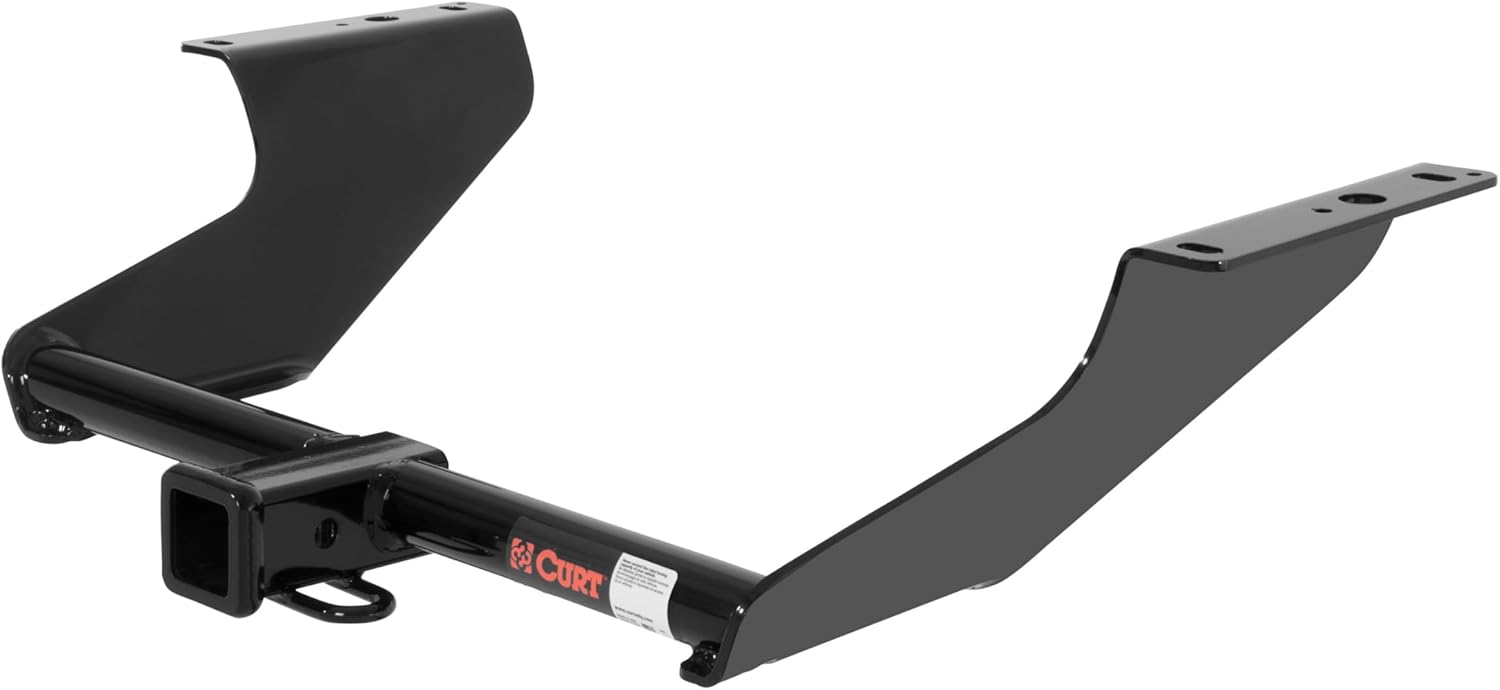
4. CURT Class 3 Trailer Hitch 2" Receiver for Subaru Forester
Best Heavy-Duty Tow Hitch Receiver
| Receiver size | 2" x 2" |
|---|---|
| Gross trailer weight | 4,000 lb GTW |
| Tongue weight | 400 lb TW |
| Material | Carbon Steel |
This CURT Class 3 hitch is a custom-fit rear receiver made to bolt into select 2003–2008 Subaru Forester mounting points, giving the car a standard 2" x 2" trailer receiver for towing. It is built from high-strength carbon steel with precise welding and a co-cured liquid A-coat plus black powder coat finish to resist rust and chips. In practice it provides the common Class 3 towing range—4,000 lb GTW and 400 lb TW—so it handles utility trailers, small campers, boat trailers and hitch-mounted cargo or bike carriers (verify tongue weight limits for hung accessories). Installation is straightforward for mechanically inclined buyers using existing vehicle attachment points, and the vehicle-specific design aims for a clean fit and alignment. The hitch is purpose-built for frequent towing on compatible Foresters and is manufactured and tested to industry SAE J684 standards, but it is limited to the Forester application list and offers the 2" receiver only, so heavier commercial towing or accessories requiring a larger receiver are not supported.
Best for: Mechanics or owners who regularly tow medium-duty loads with a 2003–2008 Subaru Forester and prioritize a strong, vehicle-specific hitch that installs like a factory-style replacement.
Less Ideal for: Drivers who need heavy commercial towing capacity, a larger receiver size, or a hitch for multiple vehicle types should look at higher-class or vehicle-agnostic options.
- Vehicle-specific design for a precise fit on compatible Subaru Forester model years
- Rated 4,000 lb GTW and 400 lb tongue weight suitable for common towing tasks
- Durable welded carbon-steel construction with co-cured undercoating and powder coat finish for corrosion resistance
- Standard 2" receiver provides broad compatibility with common hitch accessories
- Tested to SAE J684 standards for safety and on-vehicle performance
- Only fits the Forester years listed in the application info so compatibility must be verified
- 2" receiver and Class 3 rating are not intended for heavier commercial towing demands
Verdict: The best heavy-duty tow hitch receiver for mechanics who need a stronger, thicker-walled receiver designed to handle frequent towing and higher tongue or gross trailer weights.
5. CURT Class 3 Trailer Hitch 2" Receiver for Select Forester
Best Class III Tow Hitch Receiver

| Receiver tube size | 2" |
|---|---|
| Gross trailer weight | 3,500 lb |
| Tongue weight | 525 lb |
| Material Type | Carbon Steel |
| Finish Type | Gloss, Powder-Coated |
This CURT Class 3 trailer hitch provides a factory-style, vehicle-specific mount for compatible Subaru Forester models from the listed years. It installs at the rear of the vehicle to add a 2" receiver for hauling gear, bike racks, cargo carriers, small campers and light trailers. Notable features include a concealed main body for a near-OEM look, a co-cured liquid undercoat plus powder coat for corrosion resistance, and precise welding for strength and fit. CURT rates this hitch for 3,500 lb gross trailer weight and 525 lb tongue weight, which covers most light- to medium-duty towing tasks. The custom-fit design simplifies installation and keeps exhaust and bumper clearances clean. The primary limitations are that it is vehicle-specific so you must confirm year and trim fitment, and its Class 3 rating is not intended for heavy fifth-wheel or commercial towing. If you need a 2" receiver with dependable mid-range capacity and a factory-integrated appearance, this hitch is a practical choice for Forester owners planning occasional towing or accessory use.
Best for: Buyers who want a factory-integrated 2" receiver and mid-range towing capacity for a 2003–2008 Forester and prefer a durable, custom-fit hitch that blends with the vehicle.
Less Ideal for: Not intended for users who need high-capacity commercial or fifth-wheel towing or those seeking a universal or multi-vehicle hitch solution.
- Vehicle-specific design for a precise fit and near-factory appearance
- 2" receiver size covers common hitch accessories and mid-range towing
- Rated 3,500 lb GTW and 525 lb tongue weight suitable for most light trailers and campers
- Durable co-cured undercoat plus powder-coat finish for corrosion resistance
- Robust construction with precise welding for long-term strength
- Fitment limited to specific Subaru Forester years so you must verify compatibility
Verdict: The best Class III tow hitch receiver for buyers seeking the common 2-inch receiver size and mid-range towing capacity that fits most light- to medium-duty towing needs.
Choosing the Right 2003-2008 Subaru Forester Tow Hitch Receiver: Key Factors to Consider
Fitment and Mounting Pattern
Correct fitment is the foundation of safe towing on a 2003-2008 Subaru Forester. A receiver designed for the Forester aligns with factory frame attachment points and the rear bumper profile, preventing interference with exhaust, spare tire access, or rear sensors. Mismatched mounting patterns can require extra drilling or custom brackets, which increases installation time and the chance of alignment issues.
Fitment also determines load distribution. Receivers that sit close to the vehicle frame transfer loads more predictably and reduce stress on the bumper and underbody. When evaluating options, verify the model-year coverage and whether the receiver is listed as bolt-on or requires welding or trimming. For owners who prefer minimal modification, a true bolt-on receiver that uses existing holes is usually the safest choice.
Rated Towing Capacity and Tongue Weight
Towing capacity and tongue weight ratings tell you what the hitch can safely carry, and they must match or exceed the weight of your trailer and cargo. For the Forester, many common uses include bike racks, small utility trailers, or cargo carriers, so confirm the published capacity for both gross trailer weight and maximum tongue weight.
Remember that the vehicle's manufacturer towing limit and the hitch's rating both matter. If a hitch is rated higher than the vehicle, the Forester's limits still apply. Overloading the hitch or exceeding tongue weight can lead to handling problems, increased wear, or structural damage. Choose a receiver with a margin above your expected loads to allow for safe towing under real-world conditions.
Receiver Size and Hitch Class
Receiver opening size and hitch class determine what accessories and trailers you can attach. Common receiver sizes are 1-1/4-inch and 2-inch, which correspond to different accessory options. A 2-inch receiver typically supports higher tongue weight and a wider range of towing accessories, while a 1-1/4-inch receiver suits lighter uses like bike racks or small cargo baskets.
Hitch class indicates rated capacities and intended use. Select the class that matches your towing plan rather than upgrading solely for perceived strength. A larger class hitch may require different mounting considerations and affect ground clearance, so balance capacity needs with the physical fit on the Forester's rear bumper and suspension.
Installation Method and Hardware
How a receiver installs affects cost, time, and long-term reliability for a 2003-2008 Forester. Bolt-on receivers that use existing holes or require minimal drilling are simpler for DIYers and reduce the risk of incorrect alignment. Receivers requiring drilling or welding should be installed by experienced technicians and can complicate later removal or body repairs.
Check whether the receiver includes all necessary hardware, torque specifications, and clear instructions. Pay attention to whether the exhaust or spare tire must be removed during installation, and whether sway-control brackets or electrical mounting points are provided. Proper torqueing and use of locking hardware are critical for safe, long-term attachment.
Corrosion Resistance and Build Quality
Road salt, moisture, and debris accelerate corrosion on underbody components, so a receiver's finish and build quality significantly affect longevity. Look for heavy-gauge steel construction with quality welds and a protective coating such as powder coat or specialized rust-resistant plating.
Hardware quality matters too. Zinc-plated or stainless hardware resists corrosion better than plain steel. A well-finished receiver reduces the chance of structural weakening and minimizes future maintenance. For Forester owners in winter climates, prioritize coatings and materials rated for salt exposure to avoid premature deterioration.
Ground Clearance and Bumper Interference
The Forester has modest ground clearance, and adding a hitch receiver can change departure angles and scraping risk. Consider how the receiver profile affects rear ground clearance and whether it protrudes below the bumper or frame.
A low-hanging receiver can catch on steep driveways, curbs, or trail obstacles. Some receivers tuck tightly to the frame to preserve clearance, while others sit lower and may interfere with parking or off-road use. Choose a design that matches your typical driving conditions, and inspect rear bumper trim clearance when the hitch is installed.
Understanding Mounting Types: Bolt-On Versus Weld-On
Most Forester owners will encounter two primary mounting approaches: bolt-on and weld-on. Bolt-on receivers attach to existing frame points or use supplied brackets and hardware. They are generally easier to install, reversible, and better suited to DIY installation when instructions and hardware are complete.
Weld-on receivers provide a permanently attached solution and can be necessary for heavy-duty towing or where the frame requires reinforcement. However, welding must be performed by a qualified technician, and the vehicle may require additional corrosion protection at welded joints. For a 2003-2008 Forester, weigh the long-term needs of towing frequency and load against the invasiveness of weld-on installation.
- Bolt-on: minimal permanent modification, often reversible
- Weld-on: higher permanence, may be stronger if done correctly
- Bolt-on receivers may still require partial exhaust or heat shield removal during fitting
Electrical and Wiring Considerations
Towing requires a compatible electrical harness for tail lights, turn signals, and brake lights. When choosing a receiver, plan for wiring harness routing and a mounting location for a connector. Some installations provide factory-style harness integration points, while others need a plug-in module or dedicated wiring run.
Ensure the harness you plan to use matches the Forester's electrical connectors and includes provisions for trailer braking systems if you intend to tow heavier loads. Proper mounting keeps the connector accessible without exposing it to excessive road debris or moisture.
- Confirm connector type and location before drilling
- Plan for a weatherproof mount and strain relief for wiring
- Consider a prewired harness if you want quicker installation
Accessory Compatibility and Adapter Use
Think about what accessories you will use with the receiver. Bike racks, cargo carriers, and ball mounts have different shank sizes and weight distribution characteristics. Verify that accessory shank sizes match the receiver opening and that pin holes line up with common shank designs.
Adapters and reducers exist to allow different shank sizes to fit a receiver, but they can reduce rated tongue weight and introduce leverage that affects handling. Use adapters only when necessary and ensure they are rated for the combined load of vehicle and accessory.
- Match shank and pin hole sizes for secure attachment
- Avoid overusing adapters that lower towing capacity
- Check clearances with accessories installed to avoid bumper contact
Maintaining Your Receiver for Long Life
Routine inspection and maintenance prolong receiver life. Check mounting bolts for proper torque, inspect welds and paint for chips, and touch up exposed metal to prevent rust. After salt-season driving, rinse the receiver and hardware to reduce corrosion risk.
Store removable components like ball mounts or cargo carriers when not in use to reduce corrosion and avoid unnecessary loading on attachment points. Periodic lubrication of locking pins and use of anti-seize on threads makes future removal easier and reduces wear.
- Inspect fasteners and coatings twice a year
- Rinse salt and road grime after winter use
- Use anti-seize on threads and lubricate pins
How Receiver Choice Affects Resale and Vehicle Modifications
A well-chosen, properly installed receiver can be an asset when selling a Forester, particularly for buyers interested in outdoor gear or towing capability. Conversely, poorly executed installations or visible corrosion may reduce resale appeal.
If you plan future vehicle modifications, consider a receiver that is easily removable without damage to the bumper or frame. Document the installation and keep hardware and instructions with the vehicle to reassure future buyers that the receiver was professionally fitted.
- Keep installation records and hardware
- Prefer reversible bolt-on options for easier removal
- Address visible corrosion to maintain resale value
Still looking for the perfect fit?
Select your Subaru Forester configuration to see the most relevant Tow Hitch Receivers recommendations
How We Chose the Best 2003-2008 Subaru Forester Tow Hitch Receiver
We focused exclusively on tow hitch receivers that fit the 2003-2008 Subaru Forester and evaluated each candidate across several concrete, vehicle-specific criteria. First, fitment and mounting pattern: we prioritized receivers designed to match the Forester's frame attachment points and rear bumper geometry. Second, rated towing and tongue weight: each option was assessed for its published towing capacity and tongue weight rating to ensure it meets common towing needs for this model. Third, construction and corrosion resistance: we looked for robust materials and protective finishes suited to varying climates and road salt exposure. Fourth, installation method and hardware: ease of bolt-on installation, required drilling, and included hardware were important because they affect labor time and alignment. Fifth, hitch class and receiver size: we checked that receiver opening and class met typical Forester uses, from bike racks to light trailers. Options were excluded if they required major frame modification, offered unclear fitment, or lacked published capacity data. The end result is a curated set of receivers that balance fit, strength, and practical installation for Forester owners.
Our full evaluation process is outlined in our review methodology.
FAQ
What receiver size should I choose for a 2003-2008 Forester?
It depends on intended use. A 1-1/4-inch receiver suits light accessories like bike racks, while a 2-inch receiver supports heavier ball mounts and more towing options. Match the receiver size to the accessories and towing weight you plan to use.
Can I install a tow hitch receiver myself on this Forester?
Many owners can install a bolt-on receiver with common tools and a helper, provided the kit includes clear instructions and hardware. If drilling, welding, or exhaust removal is required, professional installation is recommended to ensure safety and correct alignment.
Will adding a receiver reduce ground clearance on my Forester?
Some receivers extend below the bumper and reduce rear ground clearance. Choose a low-profile design that tucks close to the frame to preserve clearance if you frequently encounter steep driveways or off-road conditions.
How do I know the hitch's towing capacity matches my Forester?
Compare the receiver's gross trailer weight and tongue weight ratings with the vehicle manufacturer's towing limits. The lower of the two limits governs safe towing, so ensure both ratings meet or exceed your trailer and cargo weight.
Do I need a special wiring harness when adding a hitch?
Yes. A proper wiring solution is required to power trailer lights and, if needed, electric trailer brakes. Look for harnesses that integrate with the Forester's connectors or provide a plug-and-play option compatible with the year range.
How often should I inspect the hitch receiver on my Forester?
Inspect the receiver and fasteners at least twice a year and after heavy use. Check for loose bolts, chipped coatings, or developing rust, and address any issues promptly to maintain safe towing performance.
Final Verdict
When selecting a tow hitch receiver for a 2003-2008 Subaru Forester, prioritize correct fitment, rated towing and tongue weight, and a mounting approach that matches your installation comfort level. Balance receiver size and class against the accessories and trailer weights you will use, and favor corrosion-resistant finishes if you drive in salted or wet conditions. Ultimately, choose a receiver with clear fitment documentation and mounting hardware so you get predictable performance without unnecessary vehicle modification. With those priorities in mind, you can confidently outfit your Forester for safe, reliable towing and accessory use.
Explore More:
- Check out all Subaru Forester parts & accessories
- Explore Exterior Accessories
- Browse all Accessories
