

Note: This article contains affiliate links. If you click on these links and make a purchase, I may earn a small commission at no extra cost to you. This helps support my research and content. Read my full affiliate disclosure here.
If you own a 2014–2018 Subaru Forester, the serpentine belt is a small part that has a big effect on daily reliability. A worn or poorly fitting belt can cause squeal, reduce accessory performance, or fail unexpectedly, leaving you stranded. This guide presents the top shortlisted serpentine belts that suit the Forester's accessory layout and common service needs.We evaluated candidates for durability, correct fitment, and noise control while considering ease of installation and compatibility with the Forester's belt routing and tensioner setup. Read on for the picks and the criteria used to narrow the field, so you can choose the right belt with confidence.
Looking for other parts? See all Subaru Forester parts & accessories.
Top Picks at a Glance
| Best Overall The best all-around choice for most situations | Goodyear 6-Rib Serpentine Belt 77.2" (Model 1060772) |  |
| Best Value The sweet spot between price and what you get | Loautong Belt Tensioner and Serpentine Belt Kit (6PK1960) for Subaru Forester/Impreza/Crosstrek 2014–2018 |  |
| Best Budget The cheapest option that still gets the job done reliably | MOCA AUTOPARTS Serpentine Belt 6PK1960 (fits select 2014–2016 Subaru Forester 2.5L) |  |
| Highest Rated A top-rated pick with lots of positive feedback | Sixity Auto Gates Micro-V Serpentine Belt for Subaru Forester 2.5L (2014–2018) |  |
| Most Popular A crowd favorite that many people choose with confidence | Top Drive 6PK1960 Premium EPDM Serpentine Drive Belt |  |
| Best Seller A high-volume bestseller chosen again and again | A-Premium 77.25 in Serpentine Drive Belt (6-rib) |  |
1. Goodyear 6-Rib Serpentine Belt 77.2" (Model 1060772)
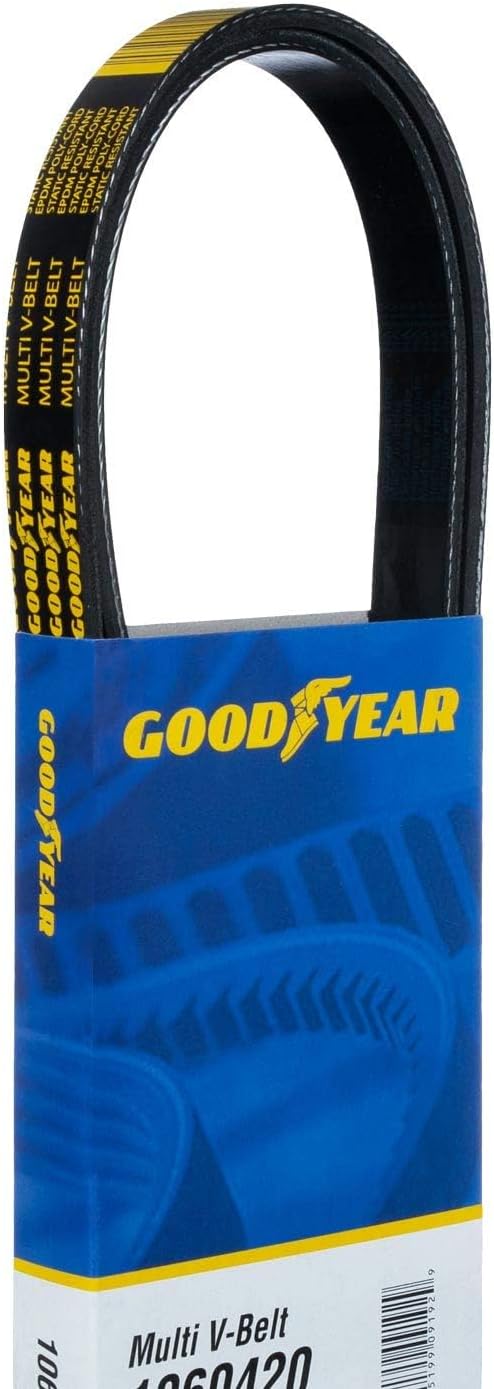
| Length | 77.2 inch |
|---|---|
| Rib count | 6-Rib |
| Material | EPDM rubber |
| Model | 1060772 |
This Goodyear 6-rib serpentine belt is a straightforward replacement belt intended to restore the accessory drive on compatible engines. It uses an EPDM rubber compound and synthetic tension members to resist wear, run quietly, and maintain neutral tracking under normal driving conditions. Typical use is as a direct-fit replacement during routine maintenance or when a worn or cracked belt is removed; the manufacturer recommends inspecting belts around 60,000 miles and replacing by 90,000 miles. The balanced twist cord construction and proprietary rubber formulation mean you get reliable, low-noise operation for commuting and light-duty driving. Because this listing is a specific 77.2-inch length, fitment must match the Forester pulley layout and routing before purchase; it is not a universal belt and will only work if that length and 6-rib profile match the vehicle requirements. Installation is simple for anyone comfortable with basic belt routing and tensioner release, and it provides a durable, OEM-quality feel for routine replacement cycles.
Best for: Buyers seeking a reliable, factory-quality replacement belt for routine maintenance on a Forester where a 77.2-inch, 6-rib belt is the correct fit; ideal for drivers who prioritize quiet operation and longevity.
Less Ideal for: Shoppers who are unsure of the correct belt length or need a belt for nonstandard or modified accessory layouts should look for a verified-fit part or consult fitment guides.
- EPDM rubber compound formulated for long life and quiet operation
- Synthetic tension members and balanced twist cord for stable tracking
- Designed to meet or exceed factory specifications for reliable replacement
- Clear, specific length and rib count for precise fitment when matched correctly
- Single fixed length means it will not fit vehicles that require a different belt size
Verdict: Choose this Goodyear 6-rib, 77.2-inch belt when your Forester requires that exact factory-style replacement for quiet, long-lasting accessory drive performance.
2. Loautong Belt Tensioner and Serpentine Belt Kit (6PK1960) for Subaru Forester/Impreza/Crosstrek 2014–2018

| Manufacturer | Loautong |
|---|---|
| Model | for Forester/Impreza 2014-2018 |
| Manufacturer Part Number | 6PK1960 |
| Package Contents | 1 tensioner, 1 serpentine belt |
This Loautong kit includes a replacement belt tensioner and a matching serpentine belt sized to OEM part 6PK1960, intended for Subaru Forester 2.5L and certain Impreza/Crosstrek 2.0L models from 2014 to 2018. It performs the basic job of maintaining proper belt tension and routing, which keeps the accessory drive running smoothly and reduces slip or squeal when installed correctly. The machined tensioner and bundled belt simplify a preventive service by replacing two wear items at once, and the kit is marketed with a 12-month limited coverage for defects. Expect straightforward installation for a mechanically inclined DIYer or a quick swap at a shop. Limitations are that the listing does not provide detailed material specs or a torque/tension calibration guide, so buyers should verify exact fitment against their VIN and follow factory torque specs during installation. The kit is a practical, value-focused option for routine maintenance, but it is not promoted as a premium, performance-oriented upgrade.
Best for: Practical owners who want a ready-made replacement kit to handle routine accessory drive maintenance on their 2014–2018 Subaru four-cylinder without hunting for individual parts.
Less Ideal for: Shoppers seeking a high-performance or heavy-duty upgrade for racing or severe-duty use should look for specialized parts with verified performance specs and materials.
- Includes both tensioner and serpentine belt for a coordinated replacement
- Machined exterior tensioner suggests consistent fit and function
- Fits specific 2014–2018 Subaru Forester/Impreza/Crosstrek four-cylinder applications
- Simplifies maintenance by replacing two common wear items in one kit
- No detailed material or performance specifications provided for the belt or bearing
- Instructions and torque specifications are not included in the listing
- 12-month coverage excludes normal wear and incorrect installation
Verdict: A convenient, value-focused kit that replaces both the tensioner and belt to restore proper accessory drive function on qualifying 2014–2018 Subaru four-cylinder models.
3. MOCA AUTOPARTS Serpentine Belt 6PK1960 (fits select 2014–2016 Subaru Forester 2.5L)

| Material Type | Rubber |
|---|---|
| Belt Style | serpentine |
| Unit Count | 1 Count |
| Part Number | ESP0368 |
This MOCA AUTOPARTS serpentine belt is a basic replacement belt sold as a single unit and intended to restore accessory drive function where the factory belt has worn or failed. It installs the same way as a factory-style belt, routing around the alternator, water pump, A/C and power steering pulleys on compatible engines. The belt's rubber construction and precision rib profile are designed to transfer load evenly across the accessory drive and keep components operating smoothly. For a budget-focused repair this belt gets the essential job done and includes common fitments for late-model Subaru Forester 2.5L engines listed in the manufacturer's description. Expect a no-frills part: packaging and fitment support are limited to standard aftermarket handling, and longevity may be lower than premium branded belts. If you want a cost-effective fix that restores function quickly and keeps maintenance affordable, this is a practical choice; for long-term durability you may prefer an upgraded premium option.
Best for: Buyers who need an affordable, plain‑spoken replacement to restore accessory drive function quickly and keep repair costs low.
Less Ideal for: Drivers seeking the longest-lasting, highest-performance belt or extensive warranty and support should consider premium or OE-branded alternatives.
- Direct replacement fit for listed vehicle applications including 2014–2016 Forester 2.5L according to the product description
- Precision rib profile intended to distribute load across accessory drive components
- Simple single-belt purchase makes it easy to replace a worn or broken belt without extra parts
- Sold as a basic aftermarket belt with limited packaging and support compared with premium brands
Verdict: If you want the cheapest practical way to get a working accessory belt on a compatible Forester, this MOCA serpentine belt restores function without frills.
4. Sixity Auto Gates Micro-V Serpentine Belt for Subaru Forester 2.5L (2014–2018)

| Compatible vehicles | Subaru Forester 2014–2018 2.5L H4 |
|---|---|
| Belt style | Serpentine Belt |
| Unit count | 1 Count |
This Gates Micro-V style serpentine belt from Sixity Auto is a direct replacement for the 2.5L Subaru Forester (2014–2018). It installs in place of the factory multi-rib belt to drive the alternator, power steering, water pump and A/C compressor and is meant to eliminate squeal and chirp caused by cracked or glazed belts. Typical use is a scheduled maintenance or belt failure swap; the belt’s Micro-V profile and precise rib spacing aim to match factory pulleys for smooth engagement and reduced slip. Practical benefits include quieter operation after installation and restored accessory function without modifying other components. The product ships with original-style packaging and fits the specified model years only, so confirm fitment before purchase. Limitations are that it is a single replacement belt with no hardware like tensioners or idlers included, and performance depends on pulley condition and correct routing during installation.
Best for: Buyers who prioritize a reliable, factory-style replacement to restore quiet, consistent accessory drive operation on a 2014–2018 Forester 2.5L.
Less Ideal for: If you are replacing multiple drive components at once or need upgraded performance under high load, consider a kit that includes tensioners or heavy-duty belts.
- Direct-fit Micro-V profile matched to factory pulley spacing for smooth engagement
- Designed to reduce belt squeal and chirp from glazing or cracking
- Restores accessory drive function without needing additional modifications
- Comes in original-style packaging consistent with brand presentation
- Does not include tensioner or idler pulleys so related worn parts must be replaced separately
- Fitment limited to Subaru Forester 2.5L models from 2014–2018 only
Verdict: Choose this direct-fit Micro-V serpentine belt to quietly and reliably restore accessory drive performance on 2014–2018 Forester 2.5L models.
5. Top Drive 6PK1960 Premium EPDM Serpentine Drive Belt

| Belt Material | EPDM |
|---|---|
| Cord Material | Polyester |
| Outside Circumference | 77.72 inches |
| Manufacturer | TOP DRIVE |
| Manufacturer Part Number | 6PK1960 |
The Top Drive 6PK1960 is a replacement serpentine belt made from EPDM with polyester cords that provides engine accessory drive for compatible vehicles. It installs like a standard belt and is intended to replace worn or broken factory belts on covered models; the EPDM compound resists heat, ozone, and weathering so it holds up to normal road use and temperature swings. The belt’s listed outside circumference and polyester cord construction aim to keep tension stable and reduce stretching compared with older materials. Expect straightforward fitment where the part number matches your vehicle and an installation that does not require special tools beyond common belt routing and tension procedures. Limitations are that fitment is specific to certain model years and engine setups, so you must verify the 6PK1960 reference against your Forester’s exact belt routing and pulleys before buying, and the listing does not provide extended mileage life claims or enhanced performance features beyond durable material construction.
Best for: Buyers who want a reliable, factory-replacement style serpentine belt backed by positive reviews and who will confirm the 6PK1960 reference against their vehicle before ordering.
Less Ideal for: Drivers seeking upgraded performance belts, nonstandard pulley configurations, or a universal fit option should look at specialty performance or vehicle-specific aftermarket belts instead.
- EPDM compound resists heat, ozone, and weathering for longer service life than older rubber formulations
- Polyester cord reinforcement reduces stretch and helps maintain proper belt tension
- Manufactured as a direct replacement reference (6PK1960) for straightforward swap on matched vehicles
- Lightweight and designed for easy, hassle-free installation with common tools
- Compatibility limited to specific model references so it is not a universal fit across all 2014-2018 Forester configurations
Verdict: A durable, factory-replacement EPDM belt that is a solid choice for buyers who prioritize a straightforward, reliable replacement when the 6PK1960 reference matches their vehicle.
6. A-Premium 77.25 in Serpentine Drive Belt (6-rib)

| Belt Material | EPDM |
|---|---|
| Cord Material | Polyester |
| Cross Section | K (6 ribs) |
| Effective Length | 77.25 in |
This A-Premium serpentine belt is a direct replacement designed to restore accessory drive function for compatible Subaru Forester and related fitments. Constructed from EPDM rubber with polyester cords and a six-rib K cross section, it aims to resist cracking, oil, and contamination while maintaining proper tension and alignment. Installation is straightforward for a technician or a knowledgeable DIYer and the belt’s precision sizing helps reduce vibration and noise when the tensioner is in good condition. Its materials and construction make it suitable for normal daily driving and moderate climate variation, and the listing recommends inspecting or replacing the tensioner during installation to ensure long-term reliability. Limitations to note are that long-term durability depends on the vehicle’s pulleys and tensioner condition and that this belt is a direct-fit replacement rather than a premium OEM-branded part, so buyers who prioritize factory-branded components may prefer other options.
Best for: A practical buyer who wants a reliable, direct-fit replacement for regular use on compatible Forester models and values a product that performs like a factory replacement without paying for a dealer-branded belt.
Less Ideal for: Not the best choice for owners seeking OEM-branded parts or those planning heavy-duty, high-mileage performance without also servicing pulleys and the tensioner.
- EPDM construction resists cracking, oils, and contaminants for everyday durability
- Polyester cord reinforcement for stable tension and reduced stretch
- Precision dimensions and 6-rib K profile help minimize vibration and noise
- Simple installation for technicians and experienced DIY mechanics
- Durability and ride smoothness depend on the condition of the vehicle’s pulleys and tensioner which may need separate service
Verdict: A cost-conscious, reliable direct-fit serpentine belt that restores accessory drive performance for compatible Forester models when installed with a healthy tensioner.
Choosing the Right 2014-2018 Subaru Forester Serpentine Belt: Key Factors to Consider
Correct Length and Rib Count
Getting the exact belt length and rib profile is essential because even a small mismatch can cause poor tension, accelerated wear, or belt slippage. The 2014–2018 Forester uses a specific routing and pulley arrangement; a belt with the wrong rib count may not seat properly in pulleys or may misalign on the alternator and idler, leading to squeal or glazing.
When a belt is too long it will run loose and stress the tensioner. If it is too short it can overload accessories and bearings. Confirming manufacturer-specified length and rib geometry prevents installation headaches and reduces the risk of premature failure.
Material Compound and Reinforcement
The belt compound determines how well it resists heat, oil exposure, and ozone cracking. EPDM compounds are common for modern serpentine belts because they offer better resistance to heat and ozone than older rubber formulations. Reinforcement cords that run longitudinally give tensile strength and keep the belt from stretching under load.
A belt with poor compound or weak reinforcement will develop cracks, chunks missing from ribs, or edge fray more quickly. For Forester owners who drive in varied climates, prioritize belts whose material specs cite heat-aging resistance and cord reinforcement to maximize service life.
Noise and Vibration Characteristics
Squeal, chirp, or periodic vibration are common complaints when a belt is not matched well to the pulley surfaces or when the rib profile does not engage smoothly. Noise often results from glazing, contamination, or a mismatched belt surface finish.
Look for belts with anti-squeal treatments, textured rib faces, or proven low-noise profiles. While some noise can be corrected by tensioner adjustment and pulley inspection, starting with a belt designed for quiet operation reduces the need for follow-up work.
Compatibility With Tensioner and Idler Geometry
The Forester's automatic tensioner and idler pulleys control belt tension and alignment. A belt must flex correctly around these components without overstressing the tensioner. Some belts are stiffer and can increase tensioner wear or cause uneven loading of idler bearings.
Consider belts that specify compatibility with automatic tensioners and note flexibility ratings. Proper compatibility helps preserve tensioner life and ensures the belt tracks centrally on all pulleys.
Resistance to Contamination and Edge Wear
Engine bays expose belts to oil, coolant, road grime, and salt, which accelerate degradation. Belts with compounds and coatings that resist oil absorption and that have reinforced edges prevent premature fraying and separation.
If you perform routine fluid maintenance or have experienced leaks, choose belts that call out contamination resistance. That reduces the chance of split ribs or sudden failure caused by chemical degradation.
Availability of Correct Fitment Information
Clear fitment data simplifies buying and installation. Belts should list compatible model years, engine options, and, when applicable, accessory configurations so you do not need to guess which length or profile fits your Forester.
Good fitment information also helps when planning a replacement job and ordering any needed tools or supplementary parts. Avoid belts with vague or incomplete fitment listings to reduce the likelihood of returns or extra trips.
When To Replace Your Forester's Serpentine Belt
Routine inspection intervals and symptoms should guide replacement timing rather than calendar dates alone. Look for visible cracking, rib separation, deep glazing on the rib faces, or chunks missing from the belt. A belt that has lost rib detail or shows signs of fraying at the edges should be scheduled for replacement promptly to avoid accessory failure.
- Inspect the belt for cracks or missing material along the ribs.
- Listen for persistent high-pitched squeal during cold starts or hard acceleration.
- Check for uneven wear where the belt contacts idlers or the alternator pulley.
Common Symptoms And What They Mean
Certain symptoms can point to belt problems but may also indicate related component issues. A loud squeal on startup that clears as the engine warms often indicates glazing or slight slippage. Continuous chirp or squeal under load can mean incorrect tension or a misaligned pulley. Deep rib cracking or missing chunks usually means the belt has reached the end of its service life and needs replacement.
If the power steering or A/C performance drops suddenly, or if the battery warning illuminates, the belt may be slipping or damaged. Always inspect pulleys and the tensioner during a belt diagnosis because failures in those parts can mimic belt wear.
- Squeal on startup: glazing or slight slippage.
- Continuous noise under load: tension or alignment issue.
- Loss of accessory performance: slipping or rib damage.
How Replacement Works On The Forester
Replacing the serpentine belt on the 2014–2018 Forester typically involves relieving tension with the automatic tensioner, routing the new belt to match the factory diagram, and reapplying tension. The tensioner arm has a square or hex boss for a breaker bar or socket to safely rotate it and remove the old belt.
Though the routing is straightforward, confirm routing against the factory belt diagram for your engine and accessory layout. If your Forester has additional accessories or an aftermarket pulley, double-check fitment and clearances before finalizing installation.
- Use a long breaker bar or appropriate tool on the tensioner to relieve tension safely.
- Confirm belt routing against the Forester-specific belt diagram before removal.
- Inspect pulleys and replace any noisy idlers or worn tensioner components at the same time.
Tensioner And Pulley Inspection Checklist
The tensioner and idler pulleys see the same forces as the belt and can hide problems that look like belt failure. Spin each pulley by hand if accessible to check for roughness or play. Listen for grinding or rumbling, which indicates bearing wear. Also check pulley faces for scoring or corrosion that can accelerate belt wear.
If the tensioner shows weak spring action or excessive movement when the engine is off, it may not maintain correct belt tension. Replacing worn tensioner or idler components at the time of belt replacement prevents early rework and helps the new belt last its expected service life.
- Spin pulleys to check for smoothness and absence of play.
- Look for corrosion or scoring on pulley faces.
- Check tensioner spring action for proper resistance.
Routine Maintenance Tips To Extend Belt Life
Keep the engine bay clean and promptly repair oil or coolant leaks. Contaminants shorten belt life and can cause hard-to-diagnose slipping or glazing. Regular visual checks during oil changes or service visits catch wear early and let you replace the belt before accessory damage occurs.
Maintain proper accessory alignment by addressing noisy bearings or wobbling pulleys. If you replace the belt, torque any accessory mounting bolts to spec to prevent misalignment. Follow the inspection schedule suggested in the Forester service recommendations for peace of mind and fewer roadside failures.
- Wipe away oil or grease from pulley faces during inspections.
- Address noisy bearings immediately to prevent belt damage.
- Follow scheduled inspections and replace the belt at signs of visible deterioration.
Still looking for the perfect fit?
Select your Subaru Forester configuration to see the most relevant Serpentine Belts recommendations
How We Chose the Best 2014-2018 Subaru Forester Serpentine Belt
We narrowed candidates by focusing on attributes that matter for the 2014–2018 Subaru Forester's accessory drive system. First, fitment accuracy was nonnegotiable: belts had to match the Forester's specified length, rib profile, and recommended material construction to ensure proper routing and contact with pulleys. Second, material quality and reinforcement were evaluated, emphasizing multi-rib EPDM compounds and tensile cords that resist cracking and edge fray under heat and age.Third, resistance to glazing and noise was assessed by reviewing manufacturer material specs and common user reports of squeal or chirp. Fourth, durability indicators such as heat-aging resistance and reinforcement type were used to estimate service life under normal driving and Subaru-specific operating conditions. Finally, compatibility with the Forester's tensioner and idler geometry and ease of installation were considered to minimize adjustment or supplemental parts.Excluded items included belts without clear fitment data for the 2014–2018 Forester, universal kits that require heavy modification, and belts with uncertain material specs. The final shortlist balances correct sizing, proven material construction, and quiet operation.
Our full evaluation process is outlined in our review methodology.
FAQ
How often should I replace the serpentine belt on a 2014–2018 Forester?
Replacement intervals vary with driving conditions, but many owners inspect the belt at major service intervals and replace it when signs of cracking, glazing, or rib loss appear. If you notice noise or visible damage, replace it regardless of age.
Can I reuse the old belt if it looks okay?
Reusing a belt with no visible damage and correct tension can be acceptable short-term, but any evidence of rib cracking, edge fray, or glazing suggests replacement. Reusing a borderline belt risks sudden failure.
What causes a serpentine belt squeal after replacement?
Squeal after replacement can come from incorrect routing, improper tension, contaminated pulley faces, or a misaligned accessory. Verify routing, clean pulley contacts, and confirm the tensioner is functioning correctly before assuming the belt is at fault.
Do I need to replace the tensioner when I change the belt?
Not always. Inspect the tensioner for smooth movement, proper spring resistance, and absence of bearing noise. Replace it if it shows weak spring action, rough pivot movement, or bearing noise, since a failing tensioner shortens belt life.
How can I check belt tension without special tools?
Relief and reapplication of tension are done using a breaker bar on the tensioner. For a quick check, observe the belt under moderate engine load for excessive movement or slipping. However, use the correct tool to relieve the tensioner when replacing the belt to avoid damage.
Will a contaminated pulley ruin a new belt?
Yes. Oil, coolant, or heavy grime on pulley faces can cause glazing and slippage that ruin a new belt quickly. Clean any contamination and address fluid leaks before installing a new belt to protect the replacement.
Final Verdict
For 2014–2018 Subaru Forester owners, priority should be fitment accuracy, material durability, and compatibility with the vehicle's tensioner and pulleys. A correctly sized belt made from a heat- and ozone-resistant compound reduces noise and extends service life. Inspect pulleys and the tensioner during replacement and address any contamination or bearing issues to protect the new belt.Balance quiet operation against durability when choosing a replacement, and prioritize belts with clear Forester fitment data. With the right fit and routine checks, you can avoid most accessory issues and keep the Forester running reliably.
Explore More:
- Check out all Subaru Forester parts & accessories
- Explore Serpentine Belts Maintenance & Repair Guides
- Explore Engine
- Browse all Auto Parts
