

Note: This article contains affiliate links. If you click on these links and make a purchase, I may earn a small commission at no extra cost to you. This helps support my research and content. Read my full affiliate disclosure here.
If you drive a 1998-2011 Ford Ranger, a worn or damaged CV axle can lead to vibration, noise, and eventual loss of drive to a front wheel. Choosing the right 1998-2011 Ford Ranger CV axle matters because fitment, joint quality, and proper sealing directly affect steering feel, highway stability, and the longevity of related components.This guide narrows the field to the top CV axles suited to the Ranger's front-end layout and common repair needs. We evaluated candidate parts for fit accuracy, joint durability, boot protection, and ease of installation so you can pick an axle that matches your repair goals. Read on for the shortlisted options and the criteria we used to vet them.
Looking for other parts? See all Ford Ranger parts & accessories.
Top Picks at a Glance
| Best Overall The best all-around choice for most situations | A-Premium Pair Front CV Axle Shaft Assembly for Ford Ranger and Mazda B3000/B4000 (4WD, Standard Suspension) |  |
| Best Value The sweet spot between price and what you get | PHILTOP Front CV Axle Shaft Assembly for 1996–2000 Ranger and 1998–1999 B3000/B4000 4WD |  |
| Best Budget The cheapest option that still gets the job done reliably | A-Premium Front Right CV Axle Shaft Assembly (Passenger Side) Compatible with Ford Ranger 2003–2011 4WD |  |
| Highest Rated A top-rated pick with lots of positive feedback | Maxfavor Pair Front CV Axle Shaft Assembly for 1995–2002 Ford Explorer / 2000–2002 Ranger (Driver & Passenger) |  |
| Most Popular A crowd favorite that many people choose with confidence | TRQ Front Driver and Passenger Side CV Axle Assembly Set (2-Piece) |  |
| Best Seller A high-volume bestseller chosen again and again | Detroit Axle Front Right CV Axle Assembly (Passenger Side) |  |
1. A-Premium Pair Front CV Axle Shaft Assembly for Ford Ranger and Mazda B3000/B4000 (4WD, Standard Suspension)

| Fitment | Ford Ranger 1996-2000 (4WD); Mazda B3000/B4000 1998-2000 (4WD) with pulse vacuum hub locks |
|---|---|
| Location | Front left and right |
| ABS Ring Included | Yes |
| Input/Output Spline Count | 27/27 |
These A-Premium CV axles replace both front left and right half-shafts and are intended for 4WD Ford Ranger and compatible Mazda B3000/B4000 trucks with factory-style suspension. They transfer drive torque from the differential to the front wheels and include ABS tone rings for vehicles that require wheel-speed sensor integration. The set ships with both shafts but not axle nuts, so plan to reuse factory nuts or source replacements. Compressed lengths and spline counts are listed for left and right sides which helps ensure a direct mechanical fit when matching to the vehicle. Typical installation is a direct swap at the wheel hub and differential end and is suitable for DIY mechanics comfortable with basic suspension work or for professional installation. The product comes with a one-year unlimited-mileage guarantee from the brand, but it is specified as incompatible with lifted suspensions and requires the listed pulse vacuum hub configurations on certain model years, so verify fitment carefully before purchasing.
Best for: Buyers who want a full front-axle replacement that restores drivetrain function and ABS integration on a 4WD Ranger or compatible Mazda with stock ride height and value a direct-fit, balanced solution.
Less Ideal for: Drivers running lifted trucks, modified drivetrains, or non-pulse vacuum hub setups should look for axles specified for those modifications or professional-specified upgrades.
- Sold as a matched pair covering both left and right front shafts for consistent wear and handling
- Includes ABS tone ring for vehicles with wheel-speed sensors
- Direct-replacement fitment for specified Ford Ranger and Mazda models when used with standard suspension
- Detailed reference numbers and spline counts provided to aid correct selection
- Axle nuts are not included so additional parts may be required for installation
- Not compatible with lifted suspensions or non-pulse vacuum hub setups
Verdict: If you need a matched, factory-style pair of front CV axles to restore drivetrain and ABS function on a 4WD Ranger or compatible Mazda with standard suspension, this A-Premium kit is a straightforward, value-focused choice.
2. PHILTOP Front CV Axle Shaft Assembly for 1996–2000 Ranger and 1998–1999 B3000/B4000 4WD

| Manufacturer | PHILTOP |
|---|---|
| Model | CV AXLE |
| Manufacturer Part Number | 1598SHA4025US |
| OEM Part Number | 662147,662148,ZZP025410,ZZP025410A,ZZP025400,ZZP025400A, F87Z3B437AA,F87Z3B436AA,F87Z3B437AB |
This PHILTOP front CV axle shaft assembly is a direct-fit replacement for selected 1996–2000 Ford Ranger and 1998–1999 Mazda B-series 4WD trucks that restores power delivery and steering at the front wheels. It ships as a complete half-shaft with preinstalled joints and boots so installation replaces the worn assembly quickly during a front-end repair. The listing emphasizes machined, ground components and dimensional inspection intended to match factory mating surfaces, which should reduce vibration and extend service life compared with poorly finished aftermarket parts. Use is straightforward: remove the old axle, swap in the PHILTOP unit and torque to factory specs; it is designed for trucks with pulse vacuum hub locks or standard hubs where noted. Limitations are typical of aftermarket axles: long-term durability depends on correct installation and intact boots, and fitment is limited to the exact model years and 4WD configurations listed, so confirm compatibility before buying.
Best for: Buyers who prioritize a practical, reliable replacement to restore front drivability on late-1990s Ranger or B3000/B4000 4WD trucks and want a ready-to-install assembly to minimize repair time.
Less Ideal for: People restoring different model years, 2WD trucks, or vehicles with unspecified hub systems should look for a part matched to their exact configuration.
- Complete half-shaft assembly with joints and boots preinstalled for faster swap-out
- Manufacturing steps like grinding and normalizing target improved surface finish and consistency
- Inspected to match key mating dimensions to reduce vibration and improve fit
- Listed specifically for 1996–2000 Ranger and 1998–1999 B3000/B4000 4WD configurations
- Fitment is restricted to the listed years and 4WD hub types so it will not work on other Rangers or drivetrains
Verdict: A ready-to-install, factory-quality replacement axle that gets late-1990s Ranger and B-series 4WD trucks back on the road with minimal hassle.
3. A-Premium Front Right CV Axle Shaft Assembly (Passenger Side) Compatible with Ford Ranger 2003–2011 4WD
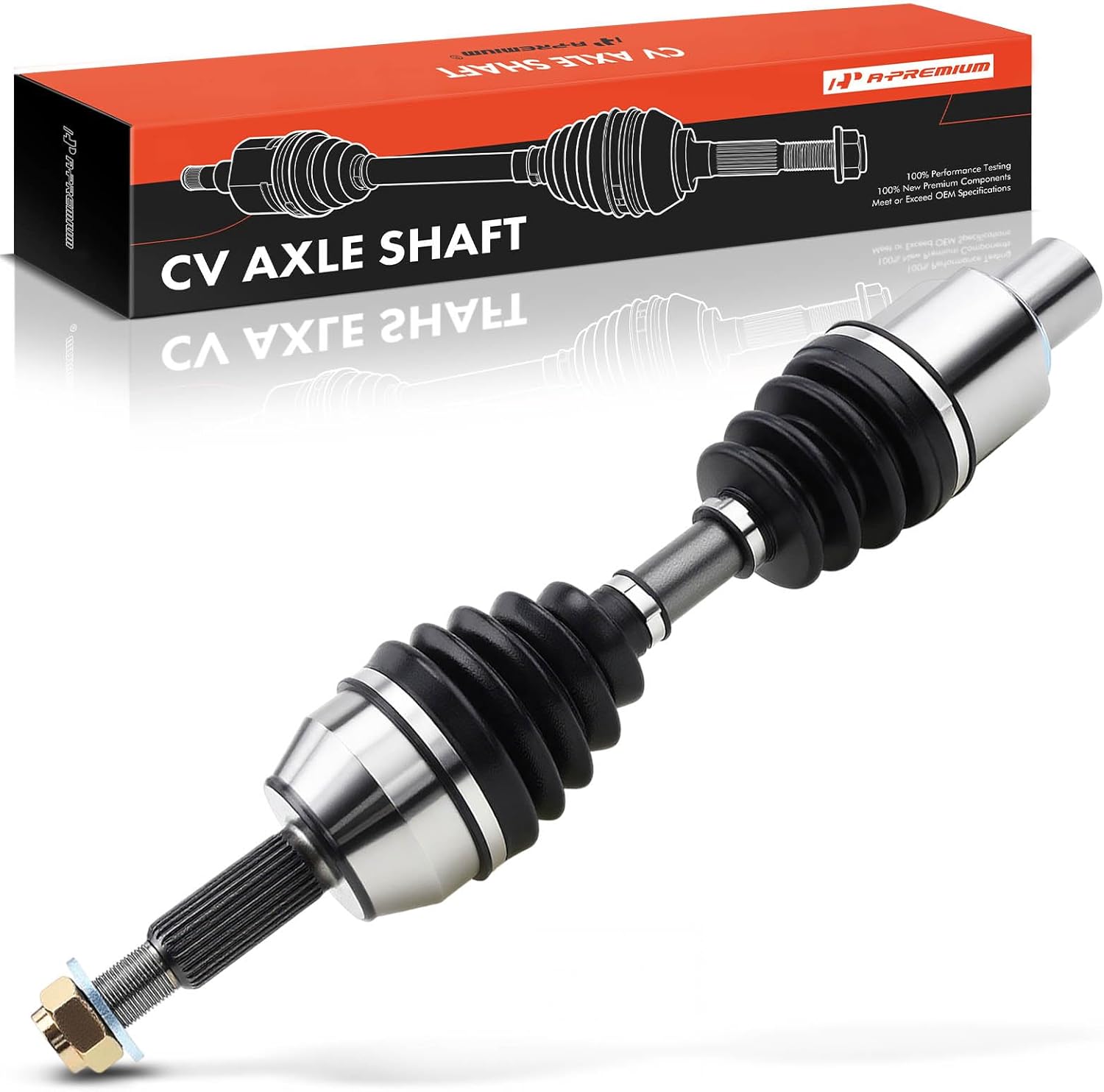
| Vehicle fitment | Ford Ranger 2003-2011 4WD; Explorer Sport Trac 2002-2005 4WD; Explorer Sport 2003 4WD |
|---|---|
| Location | Front Right (Passenger Side) |
| Axle nut | Included |
| Spindle nut thread size | M22 x 1.5 |
| Spline count | Input 27 / Output 27 |
This A-Premium front right CV axle shaft assembly replaces the passenger-side half-shaft on 4WD Ford Rangers (2003–2011) and similar Ford trucks. It is supplied with the axle nut and matches the factory spline counts so installation is straightforward for experienced DIYers or a mechanic. The unit omits an ABS tone ring, so it is best suited to vehicles that do not rely on that sensor or where the original tone ring is retained. Built as a ready-to-install assembly, it restores power transfer from the differential to the wheel and is intended to handle typical street and light off-road use for these models. A one-year unlimited-mileage guarantee provides basic coverage. Expect a no-frills, budget-focused replacement that saves on cost versus some premium branded shafts, but plan for a shop or moderate mechanical skill for safe installation and to verify fitment for ABS-equipped variants.
Best for: Buyers looking to replace a failed front-right CV axle on a 2003–2011 4WD Ford Ranger who prioritize a low-cost, direct-fit replacement and are comfortable having a mechanic complete the swap or doing moderate DIY work.
Less Ideal for: Those who need a factory-style replacement with an integrated ABS tone ring or who frequently tow heavy loads and want a heavy-duty upgraded axle should consider other higher-end options.
- Direct-fit design for Ford Ranger 2003–2011 4WD passenger side to simplify replacement
- Includes axle nut and matches factory spline counts for straightforward installation
- Ready-to-install assembly reduces the need to press boots or joints separately
- One-year unlimited-mileage guarantee offers basic post-purchase coverage
- Does not include an ABS tone ring which may require retaining the original ring or additional parts for ABS systems
Verdict: A practical, budget-friendly direct-fit front-right CV axle for 2003–2011 4WD Ford Rangers that restores drivability without premium frills.
4. Maxfavor Pair Front CV Axle Shaft Assembly for 1995–2002 Ford Explorer / 2000–2002 Ranger (Driver & Passenger)

| Fitment | 1995-2002 Ford Explorer, 2000-2002 Ford Ranger, 2001-2005 Mazda B2300/B3000/B4000, 1997-2001 Mercury Mountaineer |
|---|---|
| Position | Front left and front right (pair) |
| OEM Part Number | NCV11109 NCV11110 |
| Drive | FWD |
These Maxfavor front CV axle assemblies replace both driver and passenger side half-shafts for compatible Ford Ranger, Explorer and related models. They arrive fully assembled with neoprene boots, stainless-steel clamps, and moly grease pre-packed in the joints so installation is a straightforward direct-replacement job for typical DIY or shop repairs. The assemblies are designed with rolled threads and splines to match factory fitment and the boots claim improved protection against dirt and debris, which helps extend joint life under normal driving. Practical benefits include avoiding a teardown to rebuild the joints and getting both sides matched to reduce driveline vibration after replacement. Limitations to note are that fitment is vehicle-specific so you must confirm the part numbers and application before buying, and these are replacement aftermarket parts rather than factory-brand components which can mean small differences in finish or long-term durability compared with original manufacturer parts.
Best for: Buyers who prioritize a dependable, ready-to-install replacement to restore drivetrain function quickly and prefer parts built with protective boots and robust clamps for longer service life.
Less Ideal for: Those seeking an exact factory-brand part or who need a CV axle confirmed for vehicles outside the listed Ford, Mazda, and Mercury fitment range should look elsewhere.
- Arrives fully assembled for faster, simpler installation
- Neoprene boots and stainless-steel clamps resist dirt and corrosion
- Precision-rolled threads and splines for direct-fit compatibility
- Pre-filled with moly grease optimized for high-temperature performance
- Aftermarket part that may differ slightly from factory-brand components
Verdict: If you need a reliable, ready-to-install pair of front CV axles to quickly restore a Ranger-era Ford drivetrain, this kit delivers protective boots, factory-fit splines, and pre-greased joints for straightforward replacement.
5. TRQ Front Driver and Passenger Side CV Axle Assembly Set (2-Piece)

| Manufacturer | TRQ |
|---|---|
| Model | TRQ CSA82517 2 Piece CV Axle Assembly Set |
| Position | Front |
| OEM Part Number | 6L5Z3A427AA, 6L5Z3A428AA |
This TRQ two-piece front CV axle kit supplies both driver and passenger side assemblies as direct-fit replacements for compatible 4WD Rangers and related trucks. Each axle comes pre-assembled with neoprene boots and moly grease, so installation is straightforward and aimed at DIY mechanics who want to replace worn half-shafts without modifying the vehicle. The neoprene boots and factory-style grease shield improve durability compared to older stock parts and help reduce premature wear, while the precision-engineered construction targets OEM-level fit and alignment. Practical benefits include saving time during install, getting both sides in one purchase, and access to TRQ installation videos for step-by-step guidance. Limitations are typical of aftermarket axles: longevity depends on installation quality and driving conditions, and this kit applies only to the listed fitment so verifying compatibility before purchase is important.
Best for: Buyers who prioritize proven compatibility and social proof and want a ready-to-install, dual-axle replacement guided by manufacturer installation resources.
Less Ideal for: Drivers seeking a heavy-duty or performance-upgraded axle for significantly increased loads or off-road punishment should consider specialized performance parts instead.
- Includes both driver and passenger front CV axle assemblies for a complete front axle repair
- Pre-assembled with neoprene boots to improve durability over older stock materials
- Moly greased with a designed grease shield to limit premature wear
- Direct-fit, application-specific design intended to eliminate modification and simplify installation
- Manufacturer provides DIY installation videos to guide less experienced installers
- Service life is influenced by driving conditions and installation quality rather than being a guaranteed improvement over every factory unit
- Only fits the specified vehicle applications so fitment must be confirmed before buying
Verdict: A convenient two-piece, direct-fit front CV axle kit with improved boots and grease protection that is ideal for buyers who want a proven, ready-to-install replacement backed by strong user feedback.
6. Detroit Axle Front Right CV Axle Assembly (Passenger Side)

| Overall Length | 20.75" |
|---|---|
| Inner Spline | 27-1T |
| Outer Spline | 27 |
| Inner Shape | Female |
| ABS on Axle | No |
This Detroit Axle front right CV axle assembly is a ready-to-install replacement half-shaft for compatible 4WD/AWD Ford Ranger family vehicles and closely related models. It arrives as a complete axle shaft with inner and outer splines and a female inner coupling so you can swap it in without rebuilding the joint. Typical use is a like-for-like repair when a torn boot or worn joint causes vibration, clicking on turns, or grease loss. The axle lists specific spline counts and overall length for proper fitment and does not include an ABS tone ring, so it fits vehicles that do not require an ABS-equipped shaft. Detroit Axle backs the part with a long-term warranty and says the product undergoes impact, wear, and fatigue testing, which should reassure cautious buyers. Expect a straightforward replacement for a factory-style shaft, but confirm the spline count and ABS requirement for your truck before ordering because this assembly is not universal and will not suit vehicles needing an ABS-enabled axle.
Best for: Buyers who want a factory-style, ready-to-install replacement axle and prioritize a tested part with warranty protection for straightforward repair on covered Ford Ranger-era trucks.
Less Ideal for: Drivers with vehicles that require an ABS-equipped axle or those who need a universal or performance-enhanced half-shaft should look elsewhere.
- Complete axle assembly simplifies replacement without separate joint rebuilding
- Listed spline counts and overall length allow direct-fit match when spec-confirmed
- Undergoes impact, wear, and fatigue testing and includes a long warranty
- Designed specifically for front right passenger side applications on listed vehicles
- No ABS tone ring on the axle limits fitment to non-ABS applications
- Fit depends on correct spline count and construction details so cross-checking is required
Verdict: A tested, warranty-backed passenger-side CV axle built to replace a factory-style half-shaft on compatible 4WD/AWD Ranger-era trucks when an ABS tone ring is not required.
Choosing the Right 1998-2011 Ford Ranger CV Axle: Key Factors to Consider
Fitment and Spline Count
Correct fitment is the first priority when replacing a CV axle on a 1998-2011 Ford Ranger. Axle splines, flange bolt pattern, and overall length must match the Ranger's front hub and transmission or transaxle to avoid driveline binding or excessive endplay.
Mismatched splines or incorrect shaft length can cause premature wear of the hub bearing or transmission input, produce vibration at speed, or make installation impossible without additional machining. Always confirm vehicle year, axle side, and whether your truck uses the standard hub interface or any optional front-end configuration when selecting an axle.
CV Joint Type and Construction
The design of the inner and outer CV joints affects durability and noise characteristics. Robust joint designs with quality bearing surfaces and hardened internal components resist wear under heavy loads and steering articulation common on the Ranger.
A well-made joint will run smoothly with minimal slop. Poorly manufactured joints develop play that shows up as clicking on turns or a loose steering feel. Pay attention to whether the joints are cold-formed, heat-treated, or use precision-machined components as those manufacturing choices influence long-term performance.
Boot Quality and Clamping System
The CV joint boot is the primary defense against contamination. For the Ranger, boots that use thicker rubber or synthetic materials resist cracking from heat, oil exposure, and flexing. A torn boot quickly allows grease to escape and grit to enter, leading to joint failure.
Equally important is the clamping system. Crimp-style or double-clamp designs that hold the boot securely at both the joint and the shaft prevent leaks and slipping. When a boot is poorly clamped, grease loss leads to noise, increased friction, and ultimately replacement of the entire axle.
Shaft Straightness and Balance
A straight, well-balanced axle shaft reduces vibration at highway speed and lessens stress on wheel bearings. If the shaft is bent or out of balance, you will notice periodic vibration that worsens with speed and may accelerate wear on related components.
Manufacturing tolerances, straightening processes, and final inspection determine shaft quality. For a Ranger that spends time towing or carrying loads, a properly straightened and balanced half shaft replacement is a key factor in restoring smooth operation.
Corrosion Protection and Finish
The Ranger is often used in environments where road salt, moisture, and mud are common. Axles with corrosion-resistant coatings, plated splines, and sealed assemblies last longer under those conditions.
Rust can seize splines, degrade clamps, and undercut welded joints. Choosing an axle with good surface protection reduces the chance of premature failure and makes future removal easier if another repair is needed.
Warranty and Included Hardware
A transparent warranty and complete installation hardware reduce risk and downtime. Axles that come with replacement clamps, grease packs, and hub bolts simplify the repair and ensure you are not missing critical parts at install.
Warranty length and what it covers also indicate the manufacturer's confidence. While warranties do not replace proper fit and installation, they offer recourse if a component fails due to material or workmanship defects.
Common Symptoms and Diagnostics
Several clear symptoms indicate a failing CV axle on a 1998-2011 Ford Ranger. Clicking or popping sounds during sharp turns, vibration while accelerating, and grease splatter near the wheel well point toward joint wear or a torn boot. A torn boot often precedes full joint failure because contaminants enter and grease escapes.
Diagnose by inspecting boots at the inner and outer joints for cracks, splits, or missing clamps. Check the shaft for visible bends and spin the wheel with the vehicle safely lifted to feel for play at the joint. Road testing at low and highway speeds can help reproduce vibration or noise that occurs under load.
- Clicking on turning often indicates an outer joint with worn bearings.
- Grease near the wheel arch or on the inside of the rim suggests a torn boot.
- Axle vibration at highway speed can indicate shaft imbalance or joint wear.
- Excessive play when moving the shaft by hand signals internal joint failure.
Repair Vs Replace: When To Change the Whole Axle
Deciding whether to rebuild a joint or replace the full axle depends on boot condition, extent of contamination, and labor considerations. If a boot is torn but the joint is otherwise intact and has minimal wear, a boot replacement and repack might be possible. However, if the joint has significant pitting, looseness, or has been contaminated for a while, full axle replacement is usually the more reliable option.
For the Ranger, replacing the entire axle assembly often saves time and ensures correct spline fit and balance. Full assemblies are typically pre-assembled, pre-greased, and sealed, which reduces the chance of installation error and provides a cleaner long-term repair.
- Boot torn but joint otherwise good: boot and grease may suffice.
- Visible pitting or looseness: replace the entire axle.
- Frequent short-term repairs: invest in a full assembly for durability.
Installation Tips for the 1998-2011 Ranger
Proper installation prevents early failure and ensures safe operation. Use a torque wrench and follow the vehicle torque specs for axle nut and hub bolts to avoid bearing preload issues or warped rotor surfaces. When pressing an axle into the transmission or differential, support the housing to prevent seal damage.
Replace any single-use fasteners or cotter pins and inspect the hub bearing for play while the axle is out. Clean mating surfaces and install new clamps to secure boots. After installation, test drive at varying speeds to confirm that any prior vibration or noise has been resolved.
- Always torque axle and hub fasteners to spec.
- Support the transmission/differential housing during removal and installation.
- Replace any damaged bearings or seals discovered during the job.
- Use new clamps rather than reusing old ones to ensure boot sealing.
Maintaining CV Axles to Extend Service Life
Routine visual inspections and proactive maintenance extend axle life. Periodically check boots for hairline cracks, especially after off-road use or exposure to chemicals and road salt. Early detection of boot damage allows for grease retention and often avoids a full joint failure.
If you perform underbody work, take the opportunity to clean the axle area and re-torque accessible fasteners. For Rangers used in heavy-duty conditions, consider more frequent inspections and, if applicable, choosing axles with enhanced boot materials or additional corrosion protection.
- Inspect boots every oil-change interval or after off-road trips.
- Clean accumulated grime to spot small tears or leaks early.
- Re-torque visible fasteners during routine maintenance checks.
Cost Considerations Beyond the Part
When budgeting for a CV axle replacement, account for related items that often need attention during the repair. Wheel bearings, axle nuts, hub bolts, and seals are commonly checked and sometimes replaced. Neglecting these parts can lead to a second visit or premature failure.
Labor time varies depending on shop and whether the hub bearing must be pressed or replaced. Doing the job yourself reduces labor costs but requires proper tools, such as a press or appropriate pullers, and knowledge of torque procedures to avoid damaging parts.
- Inspect and budget for hub bearings and seals when replacing axles.
- Factor in new clamps, nuts, and any single-use fasteners.
- Evaluate whether you have the tools and time for a DIY replacement.
Still looking for the perfect fit?
Select your Ford Ranger configuration to see the most relevant CV Axles recommendations
How We Chose the Best 1998-2011 Ford Ranger CV Axle
We prioritized parts and vendors that demonstrate consistent fitment for the 1998-2011 Ford Ranger and that use construction choices known to matter in this application. Key evaluation criteria included build quality of the CV joints and splines, boot material and clamp design, axle shaft straightness and finish, and compatibility with the Ranger's wheel bearing and hub interfaces. We also considered whether the assemblies were pre-greased and assembled to reduce installation time and contamination risk.Durability indicators such as heat-treated splines, choice of joint type, and corrosion-resistant coatings were weighed because these factors affect service life on vehicles that see salt, mud, or frequent trailer loads. Ease of installation and the completeness of supplied hardware were assessed to reduce likelihood of additional parts purchases during a repair. Warranty terms and manufacturer support were factored as a proxy for quality control.Exclusions: we excluded partial-repair components such as standalone boots or generic universal joints that do not match Ranger splines or hub interfaces. We also excluded axles lacking clear fitment documentation for the 1998-2011 Ranger. The resulting shortlist focuses on full axle assemblies that meet the vehicle-specific fit and durability expectations outlined above.
Our full evaluation process is outlined in our review methodology.
FAQ
What are the most common signs that a Ranger CV axle is failing?
Common signs include clicking or popping on turns, grease splatter near the wheel, and vibration during acceleration. These symptoms often indicate joint wear or a torn boot and should be inspected promptly.
Can I replace just the CV boot instead of the entire axle?
Sometimes a boot replacement and repacking the joint is sufficient if the joint has minimal wear and was not contaminated. However, if there is visible pitting, looseness, or prolonged contamination, a full axle replacement is usually the more reliable choice.
Will a bent axle shaft cause vibration at highway speed?
Yes, a bent or unbalanced shaft commonly produces vibration that increases with speed. Shaft straightness and balance are important factors to resolve highway vibration and to protect bearings and other front-end components.
How hard is it to install a front CV axle on a Ranger myself?
Difficulty depends on your tools and experience. Basic axle replacements can be done at home with jack stands and common hand tools, but tasks like pressing bearings or freeing a stuck axle may require specialty tools and mechanical experience.
What should I inspect while the axle is removed?
Check the hub bearing for play, inspect seals for leaks, examine the transmission or differential seal for damage, and verify the mating surfaces are clean. Replace any worn bearings or damaged seals to avoid repeat repairs.
Does a torn CV joint boot always mean the joint is ruined?
Not always. If the tear is recent and the joint shows no excess play or pitting, a boot replacement and fresh grease may salvage the joint. If contamination or grease loss occurred for a long period, internal damage is more likely and full axle replacement is safer.
Final Verdict
Prioritize fitment accuracy, joint construction, and boot protection when selecting a CV axle for a 1998-2011 Ford Ranger. These factors most directly influence steering feel, highway vibration, and long-term durability. Balance the tradeoff between upfront cost and expected service life by favoring assemblies with solid corrosion protection, reliable clamps, and clear fitment documentation.If you want the repair to last with minimal chance of rework, choose a full axle assembly that matches your Ranger's specifications, includes proper hardware, and offers a reasonable warranty. That approach reduces installation headaches and helps restore safe, vibration-free operation.
Explore More:
- Check out all Ford Ranger parts & accessories
- Explore Transmission & Drivetrain
- Browse all Auto Parts
