

Note: This article contains affiliate links. If you click on these links and make a purchase, I may earn a small commission at no extra cost to you. This helps support my research and content. Read my full affiliate disclosure here.
Choosing the right cabin air filter for a Honda Civic matters for comfort, air quality, and HVAC performance. A correctly matched filter reduces dust, pollen, and odors while keeping airflow steady so the heater and air conditioner work as intended. This guide presents the top shortlisted cabin air filters suited to the Honda Civic and explains the practical reasons each option made the list.We evaluated each candidate for filtration performance and installation simplicity, plus durability and material quality. Read on to see the top picks and the criteria used to assess them.
Looking for other parts? See all Honda Civic parts & accessories.
Top Picks at a Glance
| Best Reviewed A top-rated pick with lots of positive feedback | Puroma Cabin Air Filter with Activated Carbon (replacement for CP134) |  |
| Most Popular A crowd favorite that many people choose with confidence | ECOGARD XC35519 Cabin Air Filter (compatible with Honda Civic) |  |
| Best Quality Built to a higher standard if you want something more solid | K&N Lifetime Washable Cabin Air Filter (VF2033) |  |
| Best Budget The cheapest option that still gets the job done reliably | A-Premium Cabin Air Filter (Activated Carbon) — 2-Pack, Compatible with Honda Civic 2001–2005 | 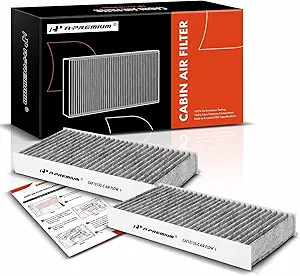 |
| Most Sold A high-volume bestseller chosen again and again | Bosch 6029C HEPA Cabin Air Filter |  |
| Best Value for Money The sweet spot between price and what you get | EPAuto CP135 Cabin Air Filter with Activated Carbon (replacement for select Honda Civic/CR-V/Element/Acura RSX/EL) |  |
| Best Overall The best all-around choice for most situations | FRAM Fresh Breeze Cabin Air Filter with Arm & Hammer Baking Soda, CF10134 |  |
1. Puroma Cabin Air Filter with Activated Carbon (replacement for CP134)

| Compatible replacement for | CP134 / CF10134 |
|---|---|
| Brand | Puroma |
| Item model number | CP134 |
| Manufacturer Part Number | HCF134N |
The Puroma cabin air filter is a direct-replacement style cabin filter built with multiple filter layers and an activated carbon layer to reduce odors while capturing dust and pollutants before they reach the HVAC system. For Honda Civic owners it installs the same way as the factory part and is intended for routine maintenance swaps — most users report an easy, tool-free change that takes a few minutes. The activated carbon helps neutralize smells when using recirculate and the denser pleated media improves particulate capture compared with thin, economy filters. That can reduce dust on vents and help the HVAC run without strain between service intervals. This is a value-focused aftermarket option that matches OEM fit and feel, but it is a basic replacement rather than a premium multi-stage filtration system with specialized microscopic filtration ratings. Expect the recommended replacement interval (about 12,000 miles or annually) to still apply in normal driving; drivers in very dusty or high-pollution areas should replace it more often.
Best for: Reliability-focused buyers who prioritize maintaining clean cabin air and consistent HVAC performance on a regular maintenance schedule for their Honda Civic.
Less Ideal for: Drivers seeking hospital-grade or HEPA-level cabin filtration or those who need documented microscopic filtration ratings should consider higher-end specialist filters instead.
- Activated carbon layer reduces cabin odors and mild fumes.
- Multi-layer pleated media captures road dust and common particulates.
- Designed to fit CP134/CF10134 applications for a factory-like installation and seal.
- Simple installation with airflow arrow makes DIY replacement quick and straightforward.
- Does not list a measured filtration efficiency or specific micron rating.
- Not a specialized high-efficiency medical-grade filter for allergy or clinical use.
Verdict A dependable, OEM-fitting replacement with activated carbon for Honda Civic owners who want fresher cabin air and easy DIY swaps.
2. ECOGARD XC35519 Cabin Air Filter (compatible with Honda Civic)

| Model | XC35519 |
|---|---|
| Manufacturer Part Number | XC35519 |
| OEM Part Number | 80292-SDA-A01 |
| Compatible Vehicles (excerpt) | Honda Civic, Accord, CR-V, Pilot, Ridgeline, Passport, Odyssey (see fitment) |
The ECOGARD XC35519 is a direct-fit replacement cabin air filter intended to refresh the passenger compartment air by filtering dust, pollen and other particulates. Installation is typically quick and simple through the glove box access on Honda Civics and similar models, and many users report a near plug-and-play fit and easy DIY swap. The filter’s pleated media provides effective particle capture to improve airflow quality and reduce allergens, though this version does not include activated carbon for odor removal. Build quality is generally adequate for routine maintenance, but a few owners note the frame can feel a bit flimsy and occasional minor trimming of tabs was needed on some vehicles. For drivers who change filters annually or in higher-pollution areas more often, the XC35519 offers an affordable, widely compatible option that restores cabin freshness without tools beyond basic glove box access.
Best for: Buyers who value convenience and straightforward maintenance will appreciate a filter they can swap quickly at home to keep cabin air fresh between service visits.
Less Ideal for: Drivers prioritizing odor control or heavy pollutant filtration should consider filters with activated carbon or specialized high-efficiency media instead.
- Compatible with many Honda models including Civic and fits via glove-box access for fast DIY installation
- Pleated filter media captures dust, pollen and common airborne particles to improve cabin air quality
- Affordable aftermarket option that matches factory replacement function for routine maintenance
- Does not include activated carbon so it will not significantly reduce odors
- Frame material can feel flimsy on some units and may require minor adjustment to fit perfectly
Verdict A convenient, cost-effective cabin filter for Honda Civics that restores basic air filtration and is easy to install at home.
3. K&N Lifetime Washable Cabin Air Filter (VF2033)

| Compatible Vehicles | Honda Civic (fitment-specific) |
|---|---|
| Material | Polyurethane |
| Reusable | Yes, washable |
| Included Components | Cabin air filter |
| Warranty Description | 10 Years – 100,000 Miles |
K&N’s Lifetime cabin air filter is a washable replacement designed to drop into the factory cabin air box and provide long-term filtration for compatible Honda Civic models. It is pre-treated to help control odors and is built from durable polyurethane so you can rinse and reuse it rather than buying disposable paper filters. In everyday use the filter tends to improve vent airflow and reduce musty cabin smells, which helps HVAC performance and passenger comfort. Installation is straightforward and usually takes only a few minutes with no tools. The main compromise is maintenance: keeping performance requires periodic cleaning, and the initial cost is higher than a disposable filter. A few users report minor fitment tuning in tight housings, so check fit during installation and trim small tabs only if necessary. For drivers focused on performance, the reusable design lowers airflow restriction over time and reduces recurring filter costs while cutting waste.
Best for: Performance-oriented buyers who prioritize steady airflow, HVAC efficiency, and lower long-term maintenance costs for their Honda Civic and are willing to perform occasional filter cleaning.
Less Ideal for: Buyers who prefer a zero-maintenance, throwaway solution or who do not want to perform any periodic cleaning should consider disposable filters instead.
- Washable and reusable design eliminates frequent replacements
- Pre-treated media helps reduce odors in the cabin
- Designed to fit factory cabin air box for direct swap installation
- Durable construction intended to last the vehicle's lifetime
- Can improve airflow through the HVAC system compared with some disposable filters
- Requires periodic cleaning to maintain filtration and airflow
- Higher upfront cost than single-use paper cabin filters
- Occasional minor fitment adjustments may be needed in tight housings
Verdict A performance-minded, washable cabin filter for Honda Civic owners who want improved airflow and long-term value at the cost of periodic cleaning.
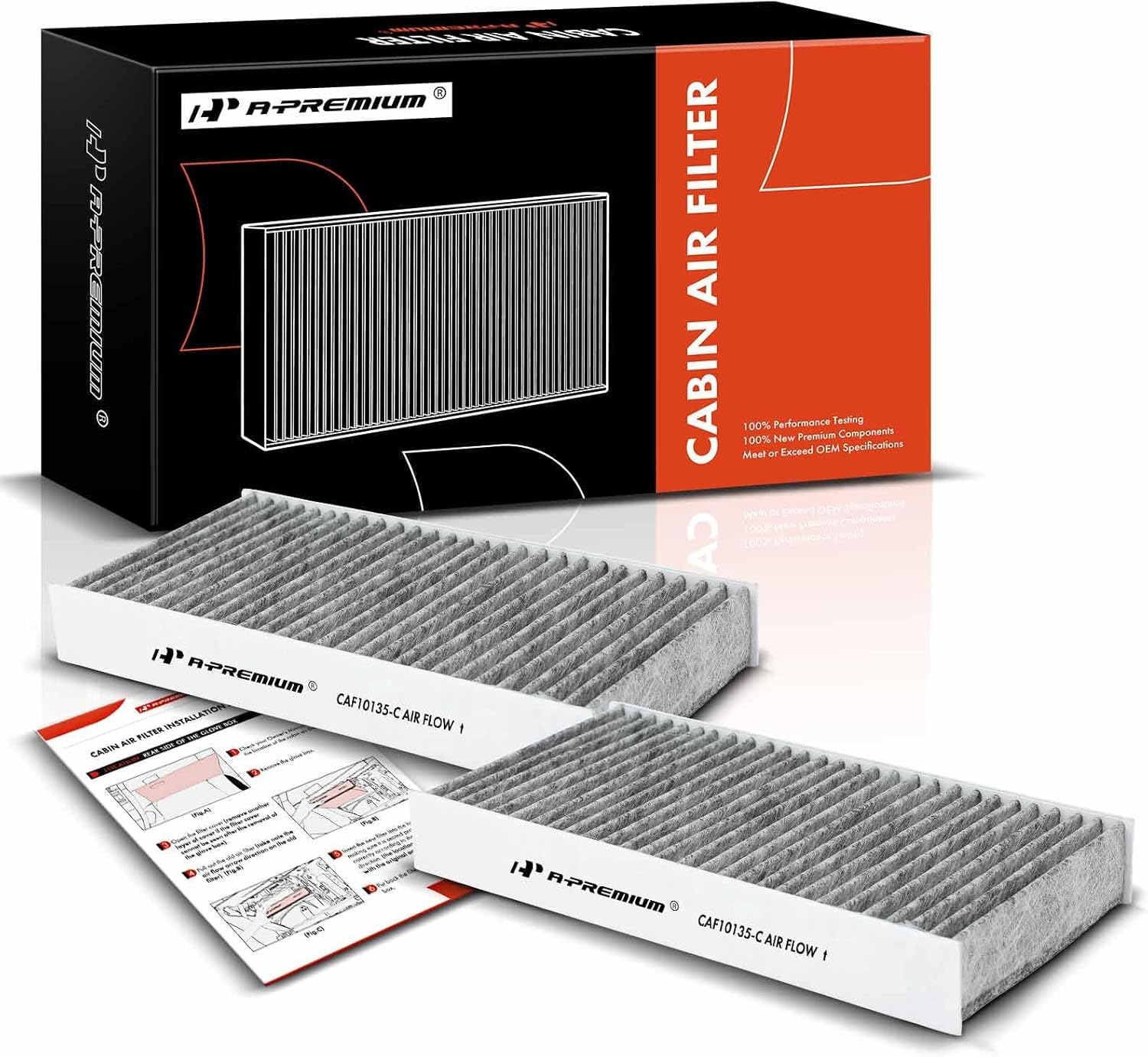
4. A-Premium Cabin Air Filter (Activated Carbon) — 2-Pack, Compatible with Honda Civic 2001–2005
| Vehicle fit | Honda Civic 2001-2005 |
|---|---|
| Pack quantity | 2 |
| Media | Activated carbon |
| Washable | No |
These A-Premium cabin air filters are a budget-friendly 2-pack made for 2001–2005 Honda Civic models and use activated carbon media to trap dust, pollen, smoke, and odors before they reach the cabin. Installation is straightforward for the Civic since the filters slide into the front cabin intake behind the glove box, and the set arrives ready to install with no cleaning or assembly required. The multi-layer filtration described increases particulate capture compared with a basic paper element and helps reduce unpleasant smells from outside. Because they are disposable and not washable or reusable, you will need to replace them on the vehicle maker recommended schedule or sooner in dirty environments. Fit reports indicate a close OEM-like fit for Civic installations, which keeps rattles and air bypass to a minimum. For drivers prioritizing low cost and improved air quality without aftermarket bells and whistles, these filters give clear, measurable benefits but lack reusable construction or premium high-efficiency ratings used by more expensive competitors.
Best for: Budget-conscious Civic owners who want a low-cost, easy-to-install replacement that noticeably improves cabin air quality without paying for premium or reusable filters.
Less Ideal for: Drivers seeking washable or long-life filters, those who require industry-standard high-efficiency ratings, or buyers wanting a universal multi-vehicle solution should look elsewhere.
- Activated carbon layer helps reduce odors and smoke in the cabin
- Sold as a 2-pack for a lower per-filter cost
- Reported to fit 2001–2005 Honda Civic with OEM-like fit
- Multi-layer media improves capture of dust, pollen and common particulates
- Not washable or reusable so filters must be replaced periodically
- No specific high-efficiency particle ratings provided
- Designed for naturally aspirated models only per listings
Verdict A low-cost, OEM-fit activated-carbon cabin filter 2-pack that improves air quality for 2001–2005 Honda Civic owners who want value over premium longevity.
5. Bosch 6029C HEPA Cabin Air Filter

| Brand | Bosch |
|---|---|
| Model | 6029C |
| Filtration efficiency | 99.97% at 0.3 microns |
| Media | Melt-blown electrostatic + static cotton layer |
The Bosch 6029C is a cabin air filter built to meet HEPA-level filtration and is intended as a direct-fit replacement for compatible Honda Civic years. It installs in the glove-box/filter housing like a standard cabin filter and uses a dense, melt-blown electrostatic layer plus an extra static cotton layer to capture very small particles. That construction gives it high filtration efficiency for pollen, dust, and many exhaust particles, and structural ribs help the filter keep its shape during service intervals. In practice you will notice reduced odors and fewer visible particulates entering the cabin, which is especially helpful during allergy season or in urban driving. The denser media can slightly reduce maximum fan output compared with inexpensive charcoal or paper filters, so you may need to run the blower a bit higher to reach the same ventilation. Also this is a single-filter replacement without added odor neutralizers, so it focuses on particle removal rather than scent control.
Best for: A risk-averse mainstream buyer who prioritizes proven filtration and respiratory protection for daily driving and wants a reliable, factory-quality replacement for a Honda Civic.
Less Ideal for: Buyers whose priority is maximum HVAC airflow or active odor removal should consider lightweight or odor-control filter alternatives instead.
- HEPA-level filtration rated to capture 99.97% of 0.3 micron particles
- Multi-layer media (melt-blown electrostatic plus cotton) increases particle trapping and capacity
- Structural ribs maintain filter shape and airflow consistency over the service interval
- Direct-fit design for compatible Honda Civic models makes installation quick and straightforward
- Denser HEPA media can reduce peak fan airflow compared with basic filters
- No chemical odor neutralizer included, so it does not actively eliminate persistent cabin smells
Verdict Choose this Bosch HEPA cabin filter if you want near-HEPA particle protection and a straightforward replacement for compatible Honda Civic models; skip it if you need maximum fan output or active odor control.
6. EPAuto CP135 Cabin Air Filter with Activated Carbon (replacement for select Honda Civic/CR-V/Element/Acura RSX/EL)

| Compatible models | Honda Civic (2001-2005), CR-V (2002-2006), Element (2003-2011), Acura RSX (2002-2006), EL (1997-2005) |
|---|---|
| Replacement for | Honda part numbers 80292-S5A-003, 80292-S5D-A01, 80292-SCV-A01 |
| Filter type | Cabin air filter with activated carbon |
| Recommended replacement | Every 12 months or 12,000 miles |
The EPAuto CP135 is a direct-fit cabin air filter intended to replace the factory unit in compatible Honda Civic, CR-V, Element and select Acura models. It installs behind the glove box using the same removable drawer as the original filter and is typically changed every 12 months or 12,000 miles. The filter media includes activated carbon to help absorb odors as well as pleated filtration to trap dust, pollen and road debris, which improves HVAC airflow and interior air quality. Practical features include a factory-compatible shape and a price point that makes regular replacement affordable compared with buying OEM parts. A small inconsistency reported by some users is that only one of the two filter pieces is sometimes marked with an airflow arrow, so you may need to align the pair visually during installation. The product is a budget-friendly option that performs like a straightforward factory replacement for older Civic models but does not add advanced particulate or allergen-specific filtration beyond standard pleated and carbon media.
Best for: Practical optimizers who prioritize sensible maintenance and low ownership cost will appreciate an affordable, easy-to-install cabin filter that restores interior air freshness without overspending.
Less Ideal for: If you need medical-grade allergen or ultra-fine particle filtration or want features beyond basic odor control, choose a higher-end filter designed specifically for those needs.
- Direct-fit design for compatible Honda and Acura models simplifies installation behind the glove box
- Activated carbon layer helps reduce cabin odors in addition to basic dust and pollen capture
- Pleated filter media provides good airflow while trapping common contaminants
- Affordable price makes regular replacement practical compared with factory parts
- One filter in the pair may be missing an airflow arrow which can require manual alignment during installation
- Filter provides standard particulate and odor control but is not a high-efficiency HEPA-level solution
Verdict A budget-friendly, factory-compatible cabin filter for older Honda Civics that improves cabin air and odor control without the cost of OEM parts.
7. FRAM Fresh Breeze Cabin Air Filter with Arm & Hammer Baking Soda, CF10134

| Part number | CF10134 |
|---|---|
| Filter type | Cabin air filter |
| Odor control | Arm & Hammer baking soda with activated carbon |
| Filtration claim | Filters up to 98% of dust and pollen |
The FRAM Fresh Breeze cabin air filter is a replacement passenger compartment filter designed for many Honda and Acura models, including multiple Civic years covered by the CF10134 fitment. It installs behind the glove box and is intended for a quick do-it-yourself change that typically takes about 15 minutes. The filter pairs activated carbon with Arm & Hammer baking soda embedded in the media to target odors entering through the ventilation system while also capturing up to 98 percent of dust, pollen and other particulates. Practical benefits include easier DIY maintenance, odor reduction for older ventilation systems, and broad compatibility across Honda and Acura lineups. Limitations are that it is a vehicle-specific fit so buyers must confirm the exact model year match, and odor control from any cabin filter has natural limits if the source is a mechanical smell or heavy contamination in the HVAC system. For balanced buyers who want straightforward maintenance and noticeable odor control, this filter is a sensible factory-replacement style option.
Best for: Balanced, practical buyers who prioritize straightforward maintenance and cleaner cabin air without chasing premium performance upgrades.
Less Ideal for: Drivers seeking industrial-strength odor elimination or those who prefer high-performance aftermarket filtration beyond standard replacement levels.
- Activated carbon plus Arm & Hammer baking soda targets and reduces common cabin odors
- Captures up to 98% of dust, pollen and other airborne contaminants
- Designed for quick installation behind the glove box for easy DIY replacement
- Fits a wide range of Honda and Acura model years listed for the CF10134
- Effectiveness against strong mechanical or persistent odors is limited
- Fitment must be checked carefully against the specific vehicle year and model
Verdict A user-friendly, factory-replacement cabin filter for Honda Civics that adds odor-reducing baking soda with solid particulate filtration for everyday driving needs.
Choosing the Right Honda Civic Cabin Air Filter: Key Factors to Consider
Filtration Efficiency
Filtration efficiency determines how well a cabin air filter captures airborne particles such as pollen, dust, and soot. Higher efficiency can noticeably reduce allergy triggers and make the cabin feel cleaner during heavy pollen seasons.
Efficiency also affects odor control when activated carbon or other absorptive layers are present. When choosing, look for filters that specify particle capture rates or multi-layer construction to balance particulate removal with airflow needs.
Fitment and Seal
Correct fitment is essential to prevent unfiltered air bypassing the filter element. A precisely sized filter that seats properly in the housing ensures all incoming air passes through the media rather than squeezing around the edges.
Poor sealing can lead to increased dust in vents and more strain on the blower motor. Verify dimensions and tab alignment for your Civic model year and inspect the housing interface to confirm a snug fit during replacement.
Airflow Impact
While dense media improve filtration, they can also restrict airflow if not designed properly. Greater restriction can reduce cabin airflow, force the HVAC system to work harder, and possibly reduce comfort or increase wear on the blower motor.
Choose filters that strike a balance between particulate capture and low resistance. Manufacturers that publish pressure drop or airflow performance give a clearer indication of real-world impact on the Civic’s ventilation.
Material Durability and Moisture Resistance
Filters located in the cowl area can be exposed to humidity and occasional water intrusion. Materials that resist collapse, mold growth, and fiber breakdown last longer and maintain performance over time.
Look for media treated for moisture resistance and a robust frame that holds shape during installation and use. Durability also affects how often you need to replace the filter and how consistently it protects the HVAC system.
Installation Complexity
Some cabin air filter replacements are straightforward, requiring just a glovebox drop or a simple access panel removal, while others need more disassembly. Ease of installation matters if you plan to replace the filter yourself and want a quick maintenance task.
Consider whether the filter includes clear orientation markings, replacement instructions, or design features that simplify alignment. Reduced installation time lowers the chance of incorrect seating and ensures a better long-term seal.
Additional Features and Media Types
Filters may offer activated carbon layers for odor adsorption, electrostatically charged media for improved fine particle capture, or multilayer constructions that separate larger and smaller particles. These features can enhance comfort but also affect airflow and lifespan.
Decide which features matter for your driving environment. For example, activated carbon helps with odors and gases, while electrostatic media often improves pollen and fine dust capture. Match the media type to your priorities for air quality and maintenance frequency.
FAQ
How often should I replace the Honda Civic cabin air filter?
Replacement frequency often depends on driving conditions and air quality. For typical urban driving, many owners change the filter every 12,000 to 15,000 miles or once a year. If you drive in dusty or high-pollen areas, more frequent replacement can maintain airflow and filtration performance.
What are common symptoms of a clogged cabin air filter?
Typical signs include reduced airflow from the vents, increased dust inside the cabin, unpleasant odors when the HVAC runs, or more frequent HVAC cycle time. You may also notice greater strain on the blower motor or diminished defrosting performance in humid conditions.
Can I install a cabin pollen filter myself on a Honda Civic?
Yes, many Civic cabin filter replacements are designed for owner installation with minimal tools. The process usually involves accessing the filter housing behind the glovebox or under a service panel and sliding the old filter out. Follow guidance for proper orientation and ensure the new filter seats fully for an effective seal.
Does a higher filtration rating always mean worse airflow?
Not always. While denser media can increase resistance, many filters are engineered to optimize both filtration and low pressure drop. Look for filters that report airflow or pressure drop characteristics, as those offer a clearer picture of real-world performance rather than relying on filtration rating alone.
How do I know the correct cabin air filter size for my Civic?
Filter size is tied to the vehicle model year and trim. Check the Civic’s owner manual or the housing dimensions to confirm the correct size. Many replacement filters list compatible model years or provide measurements to help ensure a proper fit.
How We Chose the Best Honda Civic Cabin Air Filter
We focused on filters that deliver reliable filtration for passenger comfort and protect the Civic’s HVAC system. Key evaluation criteria included filtration efficiency against common particles like pollen and dust, fitment accuracy to ensure secure sealing and correct dimensions, and ease of installation so owners can complete a replacement quickly. We also considered material durability to resist moisture and breakdown, plus airflow characteristics that balance filtration with minimal impact on blower performance.We excluded items that lacked clear fitment information specific to the Honda Civic, filters with unverified material specifications, and products that rely solely on marketing claims without supporting details. Our process prioritized measurable factors that matter in daily driving, rather than promotional features or unsubstantiated performance assertions.
Our full evaluation process is outlined in our review methodology.
Conclusion
Prioritize a cabin air filter that balances effective particle capture with low airflow restriction and reliable fitment. Filtration efficiency, seal quality, and material durability will most directly affect comfort, HVAC performance, and replacement frequency.Consider additional features like activated carbon or electrostatic media based on odor and allergy concerns, and choose a filter that is straightforward to install for long-term maintenance. Matching these factors to your driving conditions will yield the best day-to-day experience in a Honda Civic.
Explore More:
- Check out all Honda Civic parts & accessories
- Explore Cabin Air Filters Maintenance & Repair Guides
- Explore HVAC
- Browse all Auto Parts
