

Note: This article contains affiliate links. If you click on these links and make a purchase, I may earn a small commission at no extra cost to you. This helps support my research and content. Read my full affiliate disclosure here.
If you own a 2006-2010 Ford Explorer, the transmission fluid you choose directly affects shift quality, longevity, and repair risk. Using a formula that meets the vehicle's viscosity and friction specifications helps maintain smooth automatic engagement, reduce wear, and avoid slipping or harsh shifts that can lead to costly repairs. This guide highlights a short list of the top transmission fluids suited to the Explorer's 2006–2010 drivetrains, focusing on real-world benefits like thermal stability, shear resistance, and compatibility with Ford service specs.Below you will find the shortlisted options that earned editorial consideration, plus practical guidance on selection, service intervals, and installation tips to help you pick the right fluid for your driving needs.
Looking for other parts? See all Ford Explorer parts & accessories.
Top Picks at a Glance
| Best Overall Transmission Fluid A top all-around ATF that balances OEM compatibility and smooth shifting | Motorcraft XT105Q3LV Mercon LV Transmission Fluid, 5 qt |  |
| Best Budget Transmission Fluid An affordable ATF that covers basic lubrication and shifting needs | Valvoline MaxLife Multi-Vehicle Full Synthetic ATF, 1 Gallon |  |
| Best OEM MERCON LV Transmission Fluid Fluids formulated to meet Ford MERCON LV specifications for modern Ford gearboxes | Ford Motorcraft MERCON LV Automatic Transmission Fluid, 1 Quart |  |
| Best MERCON V Transmission Fluid ATF that meets the older MERCON V Ford specification for compatible transmissions | Ford Motorcraft MERCON V Automatic Transmission & Power Steering Fluid, 1 Quart |  |
| Best Full-Synthetic Transmission Fluid Premium full‑synthetic ATF for higher temperature protection and longer life | Valvoline Dexron VI/Mercon LV Full Synthetic ATF 1 Gallon |  |
| Best Gallon / Bulk Transmission Fluid Large-size jugs or multi‑pack ATF for value, multiple services, or shop inventory | Castrol Transmax ATF/CVT Universal Automatic Transmission Fluid, 1 Gallon (Pack of 3) |  |
1. Motorcraft XT105Q3LV Mercon LV Transmission Fluid, 5 qt
Best Overall Transmission Fluid
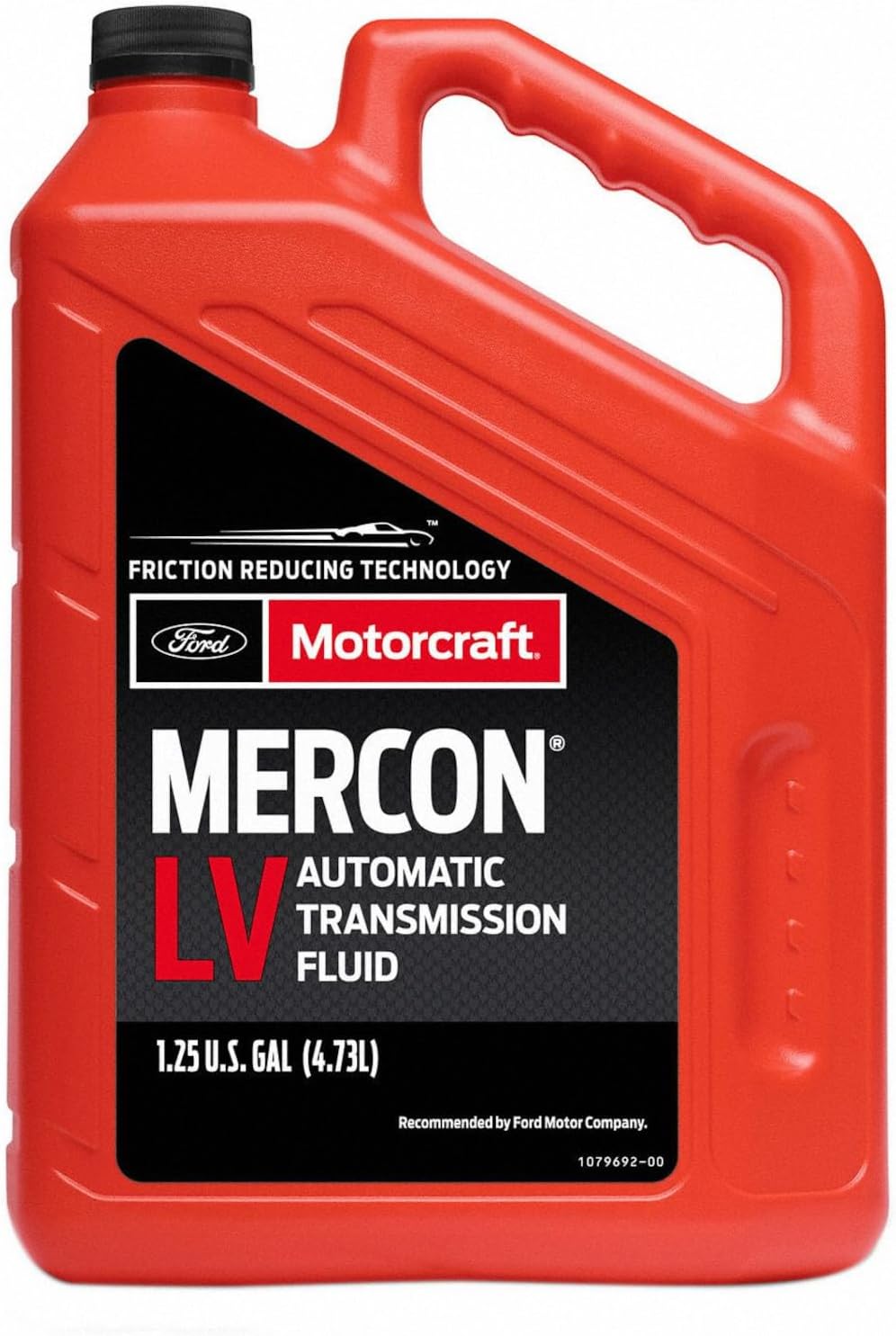
| Material | MERCON LV |
|---|---|
| Liquid Volume | 5 Quarts |
| Recommended Uses For Product | Ford and Lincoln vehicles that require MERCON LV type fluid |
| Flash Point | 421 Degrees Fahrenheit |
| Viscosity Level | High |
This Motorcraft Mercon LV fluid is a factory-intended transmission fluid sold in a 5-quart jug for routine fluid service on Ford and Lincoln vehicles that specify Mercon LV. It is formulated to maintain consistent shift feel and protect internal components by addressing corrosion and viscosity stability under normal driving conditions. For DIY fluid changes on a 2006–2010 Ford Explorer, the jug size covers a drain-and-fill or partial service and the manufacturer formulation matches factory recommendations so no additional additives are needed. Practical benefits include high viscosity stability and a flash point that indicates good thermal resistance. Limitations are that this is a vehicle-specific fluid type, so it should only be used where Mercon LV is specified, and a full flush or specialty performance needs may require professional service or different fluids. Expect straightforward use: drain, refill, and verify fluid level per the vehicle procedure for reliable everyday shifting behavior.
Best for: Buyers who want a single, factory-recommended transmission fluid for routine DIY maintenance on compatible Ford vehicles and prioritize reliable, stock shift feel.
Less Ideal for: Drivers seeking high-performance, racing, or non-Ford transmission applications should look at specialty fluids or consult a shop for alternative options.
- Factory-formulated for Ford and Lincoln models that require Mercon LV
- Comes in a 5-quart jug suitable for routine drain-and-fill DIY services
- High viscosity stability helps maintain consistent shift quality
- Designed to reduce corrosion inside the transmission
- Only appropriate for transmissions that call for Mercon LV specification
Verdict: Pick this slot if you want a single transmission fluid that meets common specs, delivers reliable shift quality, and works well for routine DIY fluid changes.
2. Valvoline MaxLife Multi-Vehicle Full Synthetic ATF, 1 Gallon
Best Budget Transmission Fluid

| Material | Synthetic |
|---|---|
| Liquid Volume | 1 Gallons |
| Viscosity | 1 |
| Flash Point | 394 Degrees Fahrenheit |
Valvoline MaxLife Multi-Vehicle ATF is a full synthetic transmission fluid formulated to cover a wide range of automatic and many CVT transmissions common in U.S. light-duty vehicles. It is typically used during routine transmission service to replace drained fluid or to top off a low level. The formula includes frictional enhancements for smoother gear engagements and conditioning agents that help maintain seal elasticity to reduce leaks, while anti-wear chemistry aims to extend transmission life and protect internal parts. Heat and viscosity stability mean the fluid holds consistent performance across a broad temperature range, which helps preserve shift quality in everyday driving. Trade-offs are limited but noteworthy: this is a one-gallon consumer pack aimed at standard service rather than bulk shop use, and while multi-vehicle coverage is broad, you should confirm compatibility with your Explorer's specific Ford transmission spec before use. For a 2006–2010 Ford Explorer needing a cost-conscious, factory-replacement-quality ATF for routine service, this product is a practical choice.
Best for: Buyers who need an affordable, factory-quality replacement ATF for routine maintenance and prefer a ready-to-use one-gallon bottle for DIY service on their 2006–2010 Explorer.
Less Ideal for: Shops or owners who perform frequent fluid changes and want bulk quantities or the absolute lowest per-gallon cost should consider larger-size or commercial pack options.
- Full synthetic formula for improved thermal and viscosity stability
- Additives to condition seals and reduce leaks
- Anti-wear chemistry aimed at extending transmission life
- Designed for broad multi-vehicle compatibility including many Ford specifications
- Sold as a single one-gallon bottle rather than multi-pack or bulk volume
Verdict: Choose this when you need a low-cost, reliable fluid for routine service without paying for premium additives or large-pack savings.
3. Ford Motorcraft MERCON LV Automatic Transmission Fluid, 1 Quart
Best OEM MERCON LV Transmission Fluid

| Specific Uses For Product | Automatic Transmission, Transfer Case, Power Steering System Lubrication (for Ford, Lincoln, and Mercury vehicles requiring MERCON LV type fluid) |
|---|---|
| Model Number | XT-10-QLVC |
| Flash Point | 421 Degrees Fahrenheit |
| Viscosity Level | High |
| Material | MERCON LV |
This Ford Motorcraft MERCON LV transmission fluid is a factory-quality fluid designed to match Ford MERCON LV specifications and preserve the intended shift feel in compatible transmissions. It is typically used for fluid top-ups and service fills in Ford, Lincoln, and Mercury vehicles requiring MERCON LV, and it is dyed red to make leak detection easier. The formula emphasizes thermal and oxidation stability, good low-temperature flow for cold shifts, and additives to reduce shudder and protect against wear, rust, and corrosion. That makes it a straightforward choice for routine maintenance and for technicians who want a fluid that follows factory guidance. The primary limitation is fitment: you must confirm MERCON LV is the specified fluid for your 2006-2010 Ford Explorer transmission, since using a different fluid spec can affect shift quality and component life. Also supplied in a one-quart bottle, so multiple quarts are needed for full drains.
Best for: Buyers who want a factory-recommended fluid to preserve the original shift feel and longevity of transmissions specified for MERCON LV in 2006–2010 Ford Explorers and similar Ford vehicles.
Less Ideal for: Drivers whose Explorer requires a different Ford transmission fluid specification or who need a multi-vehicle universal fluid for mixed-service fleets.
- Meets Ford MERCON LV specification for factory-compatible shifting
- Formulated for thermal, oxidation, and shear stability to protect transmission components
- Good low-temperature fluidity to maintain crisp shifts in cold weather
- Dyed red for easier leak detection during maintenance
- Sold in 1-quart bottles which requires buying multiple units for a full fluid change
Verdict: Use this slot if you want a fluid that specifically matches Ford MERCON LV requirements and preserves factory shift feel and component longevity.
4. Ford Motorcraft MERCON V Automatic Transmission & Power Steering Fluid, 1 Quart
Best MERCON V Transmission Fluid

| Brand | Ford |
|---|---|
| Unit Count | 32.0 Fluid Ounces |
| Specific Uses For Product | Automatic Transmission Lubrication, Power Steering System Lubrication |
| SAE J300 Viscosity Grade | 5W-40 |
This Motorcraft MERCON V fluid is a factory-quality transmission and power steering lubricant intended for Ford, Lincoln and Mercury vehicles that specify MERCON V. It is typically used as a direct replacement during transmission service or when topping off the power steering system. The formula uses hydroprocessed base oils and performance additives to deliver stable shifting across a wide temperature range, good thermal and oxidation resistance, and protection against wear, rust, foam and deposit formation. The fluid is dyed red to make leak spotting easier. Important limitations: do not use this product where MERCON SP, MERCON LV, CVT chain-type fluids, MERCON SP variants, FNR5 or Type-F fluids are specified, and it is not appropriate for transfer cases that require different MERCON grades. For older Ford transmissions that originally called for MERCON V, this offers the closest maintenance-compatible option and preserves intended shift feel.
Best for: Buyers maintaining late 2000s Ford Explorers or other Ford family vehicles that explicitly call for MERCON V who want a factory-aligned fluid to preserve original shift quality.
Less Ideal for: Drivers whose transmissions call for newer MERCON grades, CVT fluids, Type-F, or specialized transfer case oils should choose the specified alternative instead.
- Factory-recommended formulation for vehicles specifying MERCON V
- Designed for stable shifting and good low- and high-temperature performance
- Additives that resist oxidation, deposits, rust and foam
- Dyed red for easier leak detection
- Not compatible with MERCON SP, MERCON LV, CVT chain-type fluids, FNR5, Type-F, or transfer case applications
Verdict: Select this when your transmission calls for MERCON V spec fluid or when maintaining older Ford-compatible shift characteristics is important.
5. Valvoline Dexron VI/Mercon LV Full Synthetic ATF 1 Gallon
Best Full-Synthetic Transmission Fluid

| Material | Synthetic |
|---|---|
| Liquid Volume | 1 Gallons |
| Flash Point | 356 Degrees Fahrenheit |
| Manufacturer | Valvoline |
Valvoline Dexron VI/Mercon LV ATF is a full‑synthetic automatic transmission fluid formulated to meet the Dexron VI and Mercon LV specifications and back‑service where earlier Dexron fluids are recommended. In real use it reduces wear, resists deposits and oxidation, and provides improved thermal and viscosity stability so shifts stay consistent during highway cruising and in stop‑and‑go traffic. Notable features include enhanced anti‑shudder friction control for smoother gear engagements and anti‑wear additives that help protect clutch packs and valve bodies. For a 2006–2010 Ford Explorer this fluid gives stronger high‑temperature stability than conventional ATFs, which can extend service intervals and help during towing or frequent highway driving. The trade‑off is that full‑synthetic ATF is more costly than legacy fluids and offers no benefit if the vehicle manufacturer expressly requires a different, non‑Dexron formula for a specific transmission variant. Installers should confirm the Explorer transmission specification before topping off or performing a flush.
Best for: Buyers who prioritize extended fluid life and strong high‑temperature performance for everyday driving, highway mileage, or occasional towing in a 2006–2010 Ford Explorer.
Less Ideal for: Drivers who need a specific non‑Dexron transmission fluid specified by their transmission variant or those looking for the lowest upfront fluid cost.
- Full‑synthetic base stocks for improved oxidation and thermal stability.
- Meets Dexron VI and Mercon LV specs and is backward compatible with older Dexron recommendations.
- Enhanced anti‑shudder formulation for smoother, more consistent shifts.
- Anti‑wear additives to help protect transmission components under load.
- Higher cost compared with conventional or non‑synthetic ATFs.
Verdict: Choose a full‑synthetic formulation if you want improved oxidation resistance, better high‑temperature stability, and extended service intervals for demanding driving.
6. Castrol Transmax ATF/CVT Universal Automatic Transmission Fluid, 1 Gallon (Pack of 3)
Best Gallon / Bulk Transmission Fluid

| Unit Count | 384.0 Fluid Ounces |
|---|---|
| Liquid Volume | 3 Gallons |
| Material | Synthetic oils |
| Container Type | Jug |
Castrol Transmax ATF/CVT Universal is a full-synthetic transmission fluid formulated to work in many stepped automatic and continuously variable transmissions. Sold as a 3×1‑gallon pack, it is intended for routine fluid changes and shop stocking where multiple refills are needed. The formula includes friction‑modifying chemistry marketed as Smooth Drive Technology to help maintain consistent shift quality and reduce shudder in compatible transmissions, while additives target high‑temperature stability and copper corrosion protection. For routine service on a 2006–2010 Ford Explorer this pack provides the volume to complete multiple changes or service both transmission and top‑off needs without buying individual bottles. Limitations are that compatibility still depends on Ford specifications and any factory fill requirements, so users should verify the Explorer's required ATF spec before use; this product is positioned as a universal solution, not a vehicle‑specific factory replacement.
Best for: Owners and DIYers who perform regular transmission maintenance on 2006–2010 Ford Explorers and want a gallon or bulk pack to cover multiple drains or to keep spare fluid on hand.
Less Ideal for: Drivers seeking a factory‑specified Ford ATF labeled explicitly for a particular Explorer transmission or one who plans only a single, one‑time top‑up.
- Full synthetic formulation aimed at high temperature stability and oxidation resistance
- Pack of three 1‑gallon jugs supplies enough fluid for multiple services
- Formulated for both stepped automatic and CVT applications to simplify inventory
- Additive package claims improved friction control for smoother shifts
- Universal designation requires checking the Ford Explorer's specific ATF spec before use
Verdict: Opt for a gallon or multi‑quart pack when you plan multiple fluid changes, need to stock up, or want lower per‑quart cost for frequent maintenance.
Choosing the Right 2006-2010 Ford Explorer Transmission Fluid: Key Factors to Consider
Service Specification and Ford Approvals
Matching the fluid to Ford service specifications is essential because the Explorer's transmissions are tuned around specific friction and viscosity targets. Using a fluid that states compatibility with the recommended Ford spec reduces the risk of harsh shifts, slipping, or improper torque converter lockup. Look for clear technical documentation that lists applicable Ford part numbers or spec codes and avoid products that only claim generic ATF compatibility.
Approvals also indicate the manufacturer tested the fluid in relevant assemblies or against industry benchmarks. While aftermarket formulations can offer performance advantages, they must still meet the baseline requirements for the Explorer to ensure proper operation across temperatures and load conditions.
Viscosity and Shear Stability
Viscosity governs how the fluid flows through valve bodies, clutches, and the torque converter. If the viscosity is too low at operating temperature the fluid may not maintain adequate film strength, increasing wear. If it becomes too thick when cold, shift quality can be poor during warm-up. Shear stability measures the fluid's ability to resist viscosity loss from mechanical stress in high-mileage Explorers. A fluid with good shear stability will retain its protective thickness over longer intervals, reducing the likelihood of premature wear and maintaining consistent shift characteristics.
For older vehicles, choosing a fluid with documented shear resistance helps preserve transmission performance as internal tolerances evolve with wear.
Frictional Characteristics and Shift Quality
Friction modifiers and additive packages determine how smoothly clutch packs engage and disengage. The right frictional profile prevents slipping while avoiding abrupt, noisy, or harsh shifts. For the 2006-2010 Explorer, consistent engagement and predictable torque converter behavior are especially important for towing and daily driving scenarios. Fluids designed for the vehicle's service spec will typically provide the expected shift cadence.
When switching fluids, expect a short break-in window; however, large differences in frictional behavior can cause drivability issues. Choose fluids aimed at matching or improving the Explorer's original shift feel without introducing chatter or shudder.
Thermal Stability and Oxidation Resistance
Transmission fluid is exposed to elevated temperatures, particularly under load, towing, or in stop-and-go traffic. Thermal stability determines how well the fluid resists breakdown, varnish formation, and additive depletion. Oxidation leads to sludge, valve sticking, and degraded hydraulic performance. A fluid with strong thermal and oxidative resistance will maintain clean internal passages and predictable hydraulic response over longer drain intervals.
This is important for Explorers used in varied climates or towing, where heat cycles are frequent. Better thermal stability can also help protect seals and minimize the need for more frequent services.
Seal Compatibility and Material Support
Older vehicles can develop softer or more porous seals and gaskets. Some fluids contain additives that are harsh on certain elastomers, causing swelling, shrinkage, or leaks. Choosing a fluid that specifies compatibility with transmission seal materials used in Ford transmissions reduces the risk of post-service leaks. Compatibility also helps preserve servo and clutch piston sealing over time, maintaining hydraulic integrity and preventing slip.
If your Explorer has higher mileage and you are addressing leaks, prefer fluids noted for being neutral with common seal compounds to avoid worsening existing issues.
Intended Service Interval and Maintenance Plan
Consider how often you plan to change the fluid. Some formulas are formulated for extended intervals and claim longer life, while others are standard service fluids intended for more frequent changes. The right choice depends on your driving patterns: frequent towing, heavy city traffic, or harsh climates favor shorter intervals or premium fluids with stronger stability.
Also factor in whether you will perform a pan drain and filter change versus a full flush. Full exchanges can change the friction balance, so choose fluids compatible with both maintenance approaches to keep shifts consistent.
Which Explorer Transmissions Use These Fluids
The 2006-2010 Ford Explorer came with a range of automatic transmissions and some manual configurations in certain markets. Identifying your vehicle's transmission type is the first step to selecting the correct fluid. Check the service manual or the transmission identification information in the owner's documentation to confirm whether your Explorer requires an automatic transmission fluid with specific Ford service numbers.
Once the transmission type is known, focus on fluids that list compatibility with the corresponding service spec. Using the wrong formulation can change shift feel or damage friction elements, so verification before purchase and service is important.
- Confirm transmission type before selecting fluid
- Use owner manual or service documentation to find spec references
- Avoid assuming compatibility across different transmission models
When to Change Transmission Fluid in a 2006-2010 Explorer
Factory recommendations vary by transmission and usage, but many owners find routine fluid inspection and service beneficial by intervals tied to towing or heavy use. For moderate driving with minimal towing, change intervals can be longer, but for towing or frequent city driving, shorter intervals help preserve transmission life.
Look for visual signs such as dark, burnt-smelling fluid or metal particles in the pan during a drain. Those symptoms indicate oxidation or wear and warrant service regardless of mileage. Regular checks help prevent small problems from becoming major repairs.
- Inspect fluid color and smell at each service
- Shorten intervals for towing, high-load driving, or severe climates
- Address contamination or metal debris immediately
Changing Fluid: Drain and Filter Vs. Full Flush
A pan drain and filter replacement removes a portion of the old fluid and is less likely to disturb worn clutch surfaces. It is a conservative approach for high-mileage Explorers because it keeps some of the old fluid's friction balance intact.
A full system flush can replace nearly all old fluid but may alter the transmission's friction characteristics and can expose hidden leaks. If you choose a full flush, make sure the replacement fluid closely matches the friction profile the transmission expects and monitor for leaks after service.
- Pan drain + filter: conservative, preserves friction balance
- Full flush: replaces most fluid, may change shift feel
- Always refill to the correct level and check at operating temperature
Signs Your Explorer Needs a Fluid Change
Watch for delayed or harsh shifts, slipping under load, unusual noises, or a burnt odor from the transmission fluid. These symptoms often indicate degraded fluid or internal wear and should prompt inspection. In some cases, these signs can precede more serious mechanical issues but addressing fluid condition early reduces further damage.
Fluid color and particle presence during a drain are concrete indicators. Bright red, translucent fluid generally signifies good condition, while dark brown, gritty, or black fluid suggests oxidation or contamination.
- Harsh or delayed shifts during normal driving
- Burnt smell or dark, contaminated fluid on inspection
- Presence of metal particles when draining the pan
Maintenance Tips to Extend Transmission Life
Keep the cooling system and transmission cooler lines in good condition. Excessive operating temperatures accelerate fluid breakdown. Regularly inspect hoses and coolers for damage and ensure proper engine cooling to help the transmission run cooler.
Address external leaks promptly to maintain correct fluid levels. Low fluid can cause overheating and clutch slipping. Finally, use consistent fluid types with each service to avoid changes in frictional behavior that can affect shift quality.
- Maintain transmission cooling components
- Repair leaks and maintain proper fluid level
- Stick to compatible fluid types between services
Still looking for the perfect fit?
Select your Ford Explorer configuration to see the most relevant Transmission Fluids recommendations
How We Chose the Best 2006-2010 Ford Explorer Transmission Fluid
Our selection process focused on fluids that match the technical demands of the 2006-2010 Ford Explorer drivetrain and real-world durability. We prioritized formulas that meet or exceed Ford-specified viscosity grades and friction characteristics relevant to the Explorer's automatic transmissions. Key evaluation criteria included thermal stability to resist breakdown under load, shear resistance to maintain viscosity over time, and frictional properties that ensure consistent shift feel and torque converter lockup performance.We also considered compatibility with seals and gaskets to reduce leak risk, manufacturer technical approvals where applicable, and documented field performance in vehicles with similar mileage and use patterns. Fluids with unclear spec compliance, known compatibility issues with Ford transmissions, or lacking technical data were excluded. Our shortlist reflects products that balance long-term protection with the shift quality owners expect from their Explorer.
Our full evaluation process is outlined in our review methodology.
FAQ
How often should I check transmission fluid in my 2006-2010 Explorer?
Check the fluid level and condition at least every 6 months or 6,000 miles, whichever comes first, and before and after heavy towing. More frequent checks are wise if you drive in extreme heat or use the vehicle for towing.
Can I switch to a different ATF brand during a fluid change?
You can switch brands if the new fluid meets the Explorer's required service specifications and has compatible friction characteristics. When changing, consider performing a pan drain and filter to minimize the immediate shift changes that a full flush might cause.
What are the risks of using the wrong transmission fluid?
Using an incorrect formulation can cause harsh shifting, slipping, torque converter issues, or accelerated wear of clutch materials. Long term use of incompatible fluid may lead to hydraulic control problems and reduce transmission life.
Is a full transmission flush recommended for older Explorers?
A full flush can be beneficial if the fluid is heavily contaminated, but it may change the friction balance in a high-mileage unit. For older Explorers, many technicians recommend a pan drain and filter change as a cautious first step.
How do I tell if the fluid is burnt or degraded?
Degraded fluid often appears dark brown or black and can have a strong burnt odor. You might also notice grit or metal particles in the fluid during a drain, which indicates wear or contamination and warrants further inspection.
Does towing require a different fluid or service schedule?
Towing increases heat and load on the transmission, so use a fluid with strong thermal stability and consider shortening service intervals. Follow service recommendations for heavier usage and monitor fluid condition more frequently.
Final Verdict
Choosing the right transmission fluid for a 2006-2010 Ford Explorer means balancing spec compatibility with the vehicle's use. Prioritize fluids that match Ford service requirements, offer strong thermal and shear stability, and preserve proper frictional behavior to maintain smooth shifts and reliable operation. For higher-mileage or towing use, lean toward formulations with proven oxidation resistance and consider more frequent inspections.Make service decisions based on your driving style and the transmission's condition. When in doubt, a conservative pan drain and filter change with a spec-compliant fluid is a practical way to refresh fluid without risking abrupt changes to shift feel.
Explore More:
- Check out all Ford Explorer parts & accessories
- Explore Fluids & Chemicals
- Browse all Accessories
