

Note: This article contains affiliate links. If you click on these links and make a purchase, I may earn a small commission at no extra cost to you. This helps support my research and content. Read my full affiliate disclosure here.
If your 2008-2012 Honda Accord shows loose steering, uneven tire wear, or wandering at highway speeds, replacing the tie rod ends can noticeably restore steering precision and safety. This guide covers the top shortlisted tie rod ends chosen specifically for this Accord generation, explaining why each made the list and what to expect in terms of fitment and longevity.You will find options aimed at common owner priorities: durable joints, OEM-compatible fit, and parts that support straightforward alignment after installation. Below we highlight the evaluation criteria used and then walk through practical considerations to help you pick the best replacement for your driving needs.
Looking for other parts? See all Honda Accord parts & accessories.
Top Picks at a Glance
| Best Overall The best all-around choice for most situations | TRQ Front Outer Tie Rod Set, 2-Piece |  |
| Best Quality Built to a higher standard if you want something more solid | TRQ 4-Piece Front Inner and Outer Tie Rod Set for 2008–2012 Honda Accord |  |
| Best Value The sweet spot between price and what you get | Detroit Axle Front Tie Rod End Kit for 2008–2012 Honda Accord (4-piece) |  |
| Best Budget The cheapest option that still gets the job done reliably | Koxot 4‑Piece Front Inner and Outer Tie Rod Ends Kit for Honda Accord 2008–2012 |  |
| Highest Rated A top-rated pick with lots of positive feedback | MOOG ES800460 Outer Steering Tie Rod End |  |
| Most Popular A crowd favorite that many people choose with confidence | Detroit Axle Front Outer Tie Rods (pair) for 2008–2012 Honda Accord / 2009–2014 Acura TSX |  |
| Best Seller A high-volume bestseller chosen again and again | METRIX Premium Chassis Parts Front Inner Tie Rod End Kit (2 pc) — Fits 2008–2012 Honda Accord |  |
1. TRQ Front Outer Tie Rod Set, 2-Piece

| Position | Front Outer |
|---|---|
| Manufacturer | TRQ |
| Model | TRQ PSA55259 2 Piece Tie Rod Set |
| Manufacturer Part Number | PSA55259 |
| OEM Part Number | 53540TA0A01, 53560TA0A01 |
This TRQ two-piece kit replaces both front outer tie rods and is intended as a direct-fit factory-quality replacement for 2008–2012 Honda Accord and 2009–2014 Acura TSX. The set arrives as pre-assembled outer tie rods for driver and passenger sides, which speeds installation and reduces the need for modifications. TRQ highlights machined exterior components and provides compatibility reference numbers to match factory parts. In real-world use the parts suit DIYers and independent shops that want a like-for-like steering linkage swap without sourcing individual components. Practical benefits include saving time during a suspension job and getting both sides matched for consistent steering feel. Limitations are typical of aftermarket tie rod sets: you should still plan a professional alignment after installation and verify fitment against your vehicle build before starting. The kit does not include inner tie rods, so it is not a full steering overhaul solution.
Best for: Buyers who want a balanced, reliable replacement that closely matches factory steering components and prefer a straightforward DIY or shop installation for 2008–2012 Accord front outer tie rods.
Less Ideal for: Drivers seeking a complete steering overhaul or those who need upgraded performance or heavy-duty steering components should consider more comprehensive kits or specialty parts.
- Direct-fit pre-assembled outer tie rods for driver and passenger sides to simplify installation
- Machined exterior finish implies consistent manufacturing tolerances
- Includes both sides in one kit so steering geometry parts are matched
- Compatibility references provided to confirm correct replacement numbers
- Does not include inner tie rods or related steering components
- Requires a wheel alignment after installation to restore correct steering geometry
Verdict: A practical, matched two-piece front outer tie rod kit that makes replacing both sides straightforward for 2008–2012 Honda Accord owners seeking a factory-style swap.
2. TRQ 4-Piece Front Inner and Outer Tie Rod Set for 2008–2012 Honda Accord

| Position | Front Inner, Front Outer |
|---|---|
| Manufacturer | TRQ |
| Model | TRQ PSA55260 4 Piece Tie Rod Set |
| OEM Part Number | 53010TA0A01, 53540TA0A01, 53560TA0A01 |
This TRQ four-piece kit replaces both inner and outer front tie rods for the 2008–2012 Honda Accord and is offered as a direct-fit, preassembled replacement to simplify installation. Typical use is steering system repair or restoring steering feel after worn tie rods produce play or uneven tire wear. Notable features include machined exterior components, manufacturer part numbers that match factory references, and TRQ’s large library of installation videos to guide DIYers. In practice the set saves time because the preassembled pieces reduce disassembly and alignment prep, and the parts are intended to match factory fitment so no modification is needed. For a performance-minded buyer these units restore precise steering response lost to worn components, but they are replacement parts rather than upgraded performance-spec tie rods, so drivers seeking stiffer steering geometry or racing-grade materials should consider aftermarket performance products. Installation still requires basic suspension tools and a wheel alignment after fitment to ensure correct toe and tire life.
Best for: A practical, hands-on buyer who wants to restore factory steering precision on a 2008–2012 Accord quickly and prefers parts that make a DIY swap straightforward.
Less Ideal for: Drivers wanting upgraded, race-oriented tie rods or heavier-duty steering components for track use should look at specialized performance parts instead.
- Direct-fit kit covering both inner and outer front tie rods for complete replacement
- Preassembled components reduce installation time and simplify DIY repairs
- Machined exterior finish and factory reference part numbers for accurate fitment
- Extensive installation video library to support DIY installation
- Not a performance-grade or reinforced design for track or heavy-duty racing use
Verdict: Choose this kit if you want a complete, factory-fit replacement set that restores precise steering on 2008–2012 Honda Accords with minimal hassle.
3. Detroit Axle Front Tie Rod End Kit for 2008–2012 Honda Accord (4-piece)

| Fitment | 2008-2012 Honda Accord |
|---|---|
| Kit contents | 2 inner + 2 outer tie rod ends |
| Manufacturer | Detroit Axle |
| Material | Premium alloy |
This Detroit Axle kit replaces both inner and outer front tie rod ends on 2008–2012 Honda Accords, so it covers a full steering-end refresh in one purchase. The parts are described as direct-fit replacements and come from an aftermarket supplier that emphasizes factory-quality fit and alloy construction for corrosion resistance and strength. In practice this means an installer can swap the worn tie rods without needing modified components or bracket work, and the premium alloy material should resist wear and surface rust compared with basic replacements. The kit is useful for routine front-end steering repairs, alignment after installation, and restoring steering feel and tire wear characteristics. Limitations to note are that this is a vehicle-specific steering part so professional alignment is required after fitment, and the consumer must verify exact submodel fit before ordering. The kit includes two inner and two outer tie rod ends and aims to deliver a durable, serviceable replacement at a straightforward value point.
Best for: Buyers who want a practical, all-in-one steering repair for a 2008–2012 Accord and prioritize straightforward fit and durable materials over premium brand name parts.
Less Ideal for: If you prefer dealer-sourced parts, factory-brand steering components, or need multi-vehicle compatibility, this vehicle-specific aftermarket kit is not the best choice.
- Complete 4-piece kit replaces both inner and outer tie rod ends for a single-job purchase
- Designed as direct-fit replacements for straightforward installation
- Premium alloy construction claimed to improve corrosion resistance and durability
- Requires wheel alignment after installation which adds time and cost
Verdict: A convenient four-piece direct-fit kit that gives a practical, durable steering-end refresh for 2008–2012 Honda Accords.
4. Koxot 4‑Piece Front Inner and Outer Tie Rod Ends Kit for Honda Accord 2008–2012

| Fitment | Honda Accord 2008–2012 |
|---|---|
| Kit contents | 1 right outer, 1 left outer, 2 inner tie rod ends |
| Material Type | Alloy Steel, Aluminum |
| Unit Count | 4 |
This Koxot kit supplies both front inner and outer tie rod ends needed to refresh the steering linkage on 2008–2012 Honda Accord vehicles. Designed as a vehicle-specific fit, the set includes one right outer, one left outer, and two inner tie rod ends so you can replace both sides without hunting parts. Constructed from alloy steel and aluminum, the components aim to restore steering precision and reduce play that causes wandering or uneven tire wear. Installation is straightforward for anyone comfortable with basic suspension work and a wrench, though alignment after installation is required. The kit focuses on value so you get a complete front tie rod refresh at a lower cost than name-brand replacements, but you should expect aftermarket tolerances and check boot condition and thread fit during install. For routine street driving this kit should restore acceptable steering feel and safety, while drivers seeking enhanced longevity or performance-oriented parts may prefer heavier-duty alternatives.
Best for: Buyers looking to replace worn steering linkage on a 2008–2012 Accord on a tight budget who want a complete front kit that gets the car back to safe, predictable steering without buying individual parts.
Less Ideal for: Drivers wanting premium, heavy-duty, or performance-oriented steering components should look at higher-end branded options or upgraded parts designed for extended service life.
- Complete four-piece kit includes both inner and outer tie rod ends for the front, simplifying repairs
- Vehicle-specific fit for Honda Accord 2008–2012 reduces part-mismatch risk
- Alloy steel and aluminum construction balances strength and corrosion resistance
- Lower-cost factory-direct option compared with many aftermarket brand-name kits
- Aftermarket fitment may require careful inspection and fine adjustment during installation
Verdict: A budget-friendly, vehicle-specific four-piece tie rod kit that provides the essential parts to restore steering feel and fix play on 2008–2012 Honda Accords.
5. MOOG ES800460 Outer Steering Tie Rod End

| Compatible vehicles | 2008-2012 Honda Accord; 2009-2014 Acura TSX |
|---|---|
| Bearing type | Ball Bearing |
| Lubrication | Grease |
| Manufacturer | MOOG Chassis Products |
The MOOG ES800460 is an aftermarket outer tie rod end built to replace worn steering linkage on 2008–2012 Honda Accord and compatible Acura TSX applications. It installs in place of the factory outer, with precision tolerances intended to simplify alignment after fitment. Notable features include a greasable socket for flushing contaminants, a pressed-in cover plate to seal out debris, and a Belleville preload washer that keeps the bearing tight as components wear. MOOG also uses heat-processed ball studs and a metal-to-metal gusher bearing to reduce friction and extend service life. In practice this part is useful for someone repairing play or noise in the front end and wanting a durable, serviceable replacement that can be re-lubricated during maintenance. The product focuses on longevity and serviceability rather than being a low-cost throwaway. Buyers should expect to grease the fitting during installation and verify vehicle-specific fitment before ordering since correct trim and engine selection matter for compatibility.
Best for: A buyer who prioritizes a long-lasting, serviceable steering repair for a 2008–2012 Accord or compatible TSX and values parts designed to reduce wear and keep steering tight.
Less Ideal for: If you want a zero-maintenance, lifetime-use replacement or are repairing a different vehicle not listed in the compatibility, choose a different part or check exact fitment options.
- Greasable socket allows fresh lubricant to flush debris and extend life.
- Press-fit cover plate and seals reduce contamination and looseness.
- Heat-processed ball stud for improved fatigue strength versus untreated studs.
- Design includes preload washer and gusher bearing to maintain tightness and reduce friction.
- Requires manual greasing and some installations may need the grease fitting to be threaded separately.
Verdict: Choose the MOOG ES800460 when you need a serviceable, durability-focused outer tie rod end to restore tight, long-lasting steering on the specified Accord and TSX models.
6. Detroit Axle Front Outer Tie Rods (pair) for 2008–2012 Honda Accord / 2009–2014 Acura TSX

| Fitment | 2008–2012 Honda Accord; 2009–2014 Acura TSX |
|---|---|
| Quantity | 2x front outer tie rods |
| Grease fittings | Included |
| Manufacturer | Detroit Axle |
These Detroit Axle front outer tie rods replace worn outer tie rod ends on 2008–2012 Honda Accords and the compatible Acura TSX years. The kit includes two outer tie rods built to factory-style dimensions and is intended for steering linkage repair or an alignment correction after worn parts cause play or vibration. Notable features include grease fittings for easier periodic lubrication and construction claimed to pass impact and fatigue testing. In practice the parts install like a factory replacement and most DIYers can swap them with basic tools and a wheel alignment afterwards. Buyers report consistent fit and improvements in steering feel and vibration reduction. Limitations to note are that the kit does not include new jam nuts or OEM-style self-locking nuts and a proper washer may be needed on some knuckles, so retain or replace hardware as required during installation. Long-term durability looks promising based on user feedback but depends on proper installation and periodic greasing.
Best for: Buyers who prioritize proven fit and reliable, serviceable replacements and want parts with positive user feedback before installing themselves or passing to a local shop.
Less Ideal for: Drivers who need a full hardware refresh or prefer fully OEM-specified kits with self-locking nuts included should consider sourcing the missing fasteners separately or choosing a kit that includes them.
- Factory-style fit that matches original steering geometry for the listed Accord/TSX years
- Included grease zerks improve serviceability and allow easy periodic lubrication
- Reports of straightforward installation and immediate reduction in steering play or vibration
- Does not include jam nuts or the OEM self-locking nuts which some installations require
Verdict: A practical, serviceable factory-style replacement pair with grease fittings and strong user reviews for fixing steering play on 2008–2012 Accords.
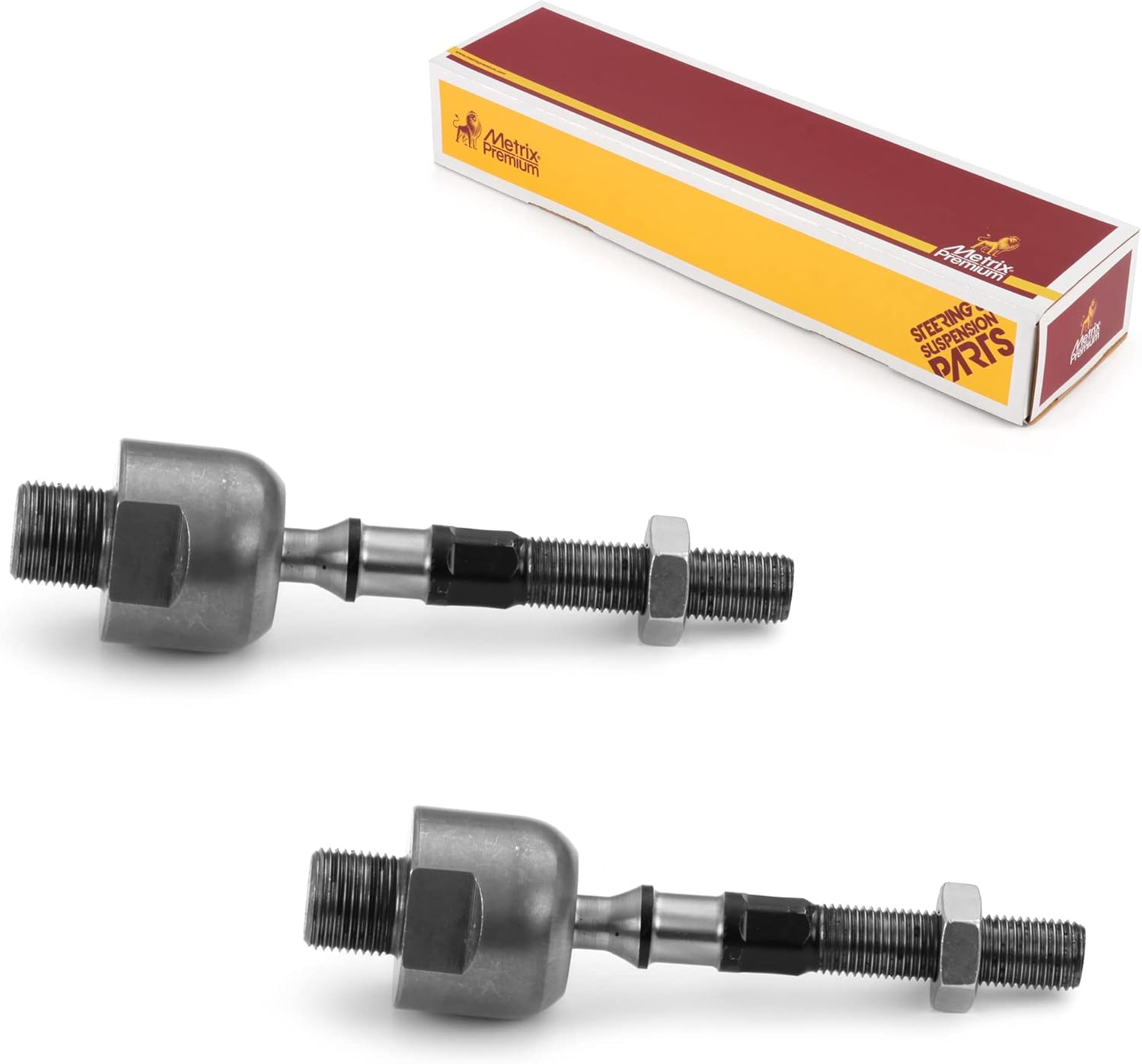
7. METRIX Premium Chassis Parts Front Inner Tie Rod End Kit (2 pc) — Fits 2008–2012 Honda Accord
| Compatible vehicle | 2008-2012 Honda Accord |
|---|---|
| Kit contents | 2x Front Inner Tie Rod End EV800461 |
| Pre-greased | Yes |
| Certifications | IATF 16949, ISO 9001 |
| Position | Front Inner |
This METRIX front inner tie rod end kit replaces the inner tie rods that connect the steering rack to the steering knuckle on 2008–2012 Honda Accord models. Supplied as a two-piece kit and pre-greased, the parts are intended for direct replacement and to restore steering precision and alignment. The design highlights include a greasable joint for periodic maintenance, corrosion-resistant coating, and aluminum construction claimed to resist heat and reduce corrosion. In practice that means easier lubrication during service and a component less prone to surface corrosion than untreated steel. METRIX notes factory-style fit and automotive-quality certifications, which should simplify DIY installs or professional swaps and reduce the chance of fitment surprises. Limitations to consider are that tie rod replacement requires a wheel alignment afterward and installation needs standard suspension tools; this part does not replace outer tie rods so both sides or related components may need attention. For buyers focused on minimizing risk, these meet standard quality controls and come as a matched pair for the front inner positions.
Best for: A cautious buyer who wants a direct-fit, factory-style replacement for the 2008–2012 Honda Accord and values parts built to industry quality standards for predictable, low-risk repairs.
Less Ideal for: Buyers seeking a complete steering overhaul or a full inner/outer tie rod kit in one purchase; also not for those who expect to avoid a follow-up wheel alignment after installation.
- Sold as a matched 2-piece kit for both front inner tie rods, simplifying replacement.
- Pre-greased and greasable design allows for easier maintenance and extended service life.
- Corrosion-resistant coating and aluminum construction reduce surface rust and improve longevity.
- Manufactured to IATF 16949 and ISO 9001 quality standards for consistent, factory-quality fitment.
- Does not include outer tie rod ends or related suspension parts so additional parts may be required for complete steering repair.
Verdict: Choose this METRIX inner tie rod kit when you want a factory-style, low-risk replacement for steering on a 2008–2012 Honda Accord backed by recognized quality certifications.
Choosing the Right 2008-2012 Honda Accord Tie Rod End: Key Factors to Consider
Fitment and Thread Specifications
Tie rod end fitment must match the 2008-2012 Honda Accord's factory taper, stud diameter, and thread pitch so installation is straightforward and the steering geometry can be returned to spec. An incorrect taper or thread can cause improper seating in the steering knuckle or rack, leading to safety issues or premature failure.
Check whether the replacement lists explicit compatibility with the 2008 through 2012 Accord and whether it includes the correct right- or left-hand threads where applicable. Proper fitment reduces installation time, prevents the need for adapters, and ensures that the vehicle accepts standard alignment adjustments after replacement.
Ball Joint Construction and Boot Design
The quality of the ball joint and protective boot directly affects longevity. A tightly molded, flexible boot that resists tearing keeps grease in and contaminants out, which reduces wear on the ball stud and socket.
Look for units with robust ball stud metallurgy and tight manufacturing tolerances. A poorly designed boot or low-quality ball surface will allow water and grit into the joint, accelerating wear and increasing the chance of looseness or clunking under steering loads.
Corrosion Resistance and Finish
Corrosion is a common enemy of suspension components, especially in regions that use road salt. A quality finish, such as zinc plating or other anti-corrosion coating, protects threads and the exposed body from rust that can seize hardware and make future servicing difficult.
Consider parts that specify corrosion-resistant treatment for the body and threads, and whether replacement studs or nuts are included. Items with poor finishes may look fine initially but can become a maintenance headache over a few seasons of exposure.
Serviceability: Greaseable Vs Sealed
Some tie rod ends come with grease fittings that allow periodic lubrication, while others are sealed-for-life units. Greaseable joints can be refreshed during routine maintenance and often last longer when maintained correctly. Sealed units reduce maintenance tasks and eliminate the risk of over-greasing, but once the grease is gone the whole unit needs replacement.
Decide based on how you maintain your Accord. If you perform regular under-vehicle service, a greaseable unit can extend service life. If you prefer a maintenance-free approach, sealed units simplify ownership but will require replacement sooner when the boot fails.
Durability Under Steering Loads
Tie rod ends take constant steering torque and lateral loads from normal driving and potholes. Durability depends on the internal bearing surfaces, stud hardness, and thread integrity. Components that use higher-quality metallurgy and tighter tolerances will resist deformation and play over time.
Consider whether the part is specified to meet or exceed OEM load ratings. A component that flexes or wears prematurely will introduce steering play, reduce precision, and contribute to uneven tire wear.
Ease of Installation and Alignment Impact
Replacing tie rod ends should allow a conventional alignment afterward. Parts that reproduce the factory length and adjustment range reduce the need for additional steering link replacements. Units that simplify clamping or include replacement nuts and hardware make the job faster and reduce error risk.
Also consider whether the design allows for final toe adjustments without hitting steering stops or requiring additional components. Ease of installation affects labor time and the likelihood of a correct alignment outcome.
Common Symptoms That Point to Tie Rod End Wear
Several driving cues typically indicate worn tie rod ends on a 2008-2012 Honda Accord. You may notice steering wander, excessive free play in the steering wheel, uneven or accelerated tire wear on either front corner, or a clunking noise when turning or driving over bumps. These symptoms often progress slowly, so paying attention to small changes helps catch problems early.
Regular visual inspections under the vehicle can also reveal torn boots, leaking grease, or visible play in the joint. Any of these signs should prompt a more detailed check and a possible plan to replace the worn component.
- Loose or vague steering feel at center
- Clunking or knocking noises when turning
- Excessive inner or outer front tire wear
- Visible boot damage or leaking grease
How Replacement Affects Alignment and Handling
Replacing a tie rod end directly affects toe settings because the tie rod controls wheel angle. After installing new tie rod ends, you should always perform a professional alignment or use accurate alignment tools to return toe to factory specification. Failure to do so can cause immediate tire wear and negate the benefits of the new part.
Properly fitted and adjusted tie rod ends will restore steering responsiveness and help maintain even tire contact patches under load, improving both handling confidence and tire life for Accord owners.
- New parts require toe verification and adjustment
- Correct adjustment reduces tire wear and steering drift
Maintenance Tips to Extend Tie Rod End Life
Simple habits can extend the service life of tie rod ends. Keep suspension components clean and inspect boots regularly for cracking or splits. If you drive on salted roads, rinsing the undercarriage periodically helps reduce corrosion of threads and bodies.
If you choose a greaseable unit, include the tie rod ends in routine chassis lubrication intervals. Avoid over-greasing which can tear boots, and replace any mounting hardware that shows corrosion or thread damage during service.
- Inspect boots and joints during oil changes
- Rinse undercarriage after winter exposure
- Lubricate greaseable joints per service schedule
DIY Vs Professional Replacement Considerations
For mechanically inclined owners, replacing an outer tie rod end on an Accord can be a doable weekend job if you have the right tools, such as a tie rod puller and torque wrench. Keep in mind the need for an accurate toe adjustment afterward. If you do the job yourself, mark the old tie rod's position to help get close for the alignment step.
Professional installation reduces the chance of installation errors and guarantees proper alignment equipment is used. It also eliminates the need to source specialty tools. Choose the route that matches your skill level and access to alignment services.
- DIY requires tie rod puller and torque wrench
- Always verify toe after installation
What to Expect During a Tie Rod End Inspection
An inspection begins with a visual check of the boot and housing for cracks, rust, or grease leakage. With the vehicle lifted and wheels off, technicians typically grasp the wheel at 3 and 9 o'clock and feel for lateral play that may indicate joint looseness. A pry bar can be used to detect movement at the tie rod stud and the rack end.
Inspecting the threads and included hardware is also important. Bent studs, damaged threads, or missing cotter pins or nuts should prompt immediate replacement of the affected hardware along with the tie rod end.
- Check for boot tears and leaking grease
- Feel for lateral play with wheel at 3 and 9 o'clock
- Inspect threads and mounting hardware condition
Still looking for the perfect fit?
Select your Honda Accord configuration to see the most relevant Tie Rod Ends recommendations
How We Chose the Best 2008-2012 Honda Accord Tie Rod End
We evaluated candidates against criteria that matter for a 2008-2012 Honda Accord and real-world ownership. Primary checks included fitment accuracy to the Accord suspension geometry for model years 2008 through 2012, using factory-style ball joint taper and thread specifications to ensure straightforward installation and correct steering geometry.Durability and material quality were weighed heavily. We favored units with corrosion-resistant finishes, adequate grease fittings or sealed boots, and high-grade studs and threads that resist stretching or galling under normal driving conditions.Joint performance and range of motion were assessed to confirm the replacement would not bind across standard suspension travel and steering angles. We also considered serviceability, such as whether the unit accepts grease or is sealed for maintenance-free life, and how that aligns with typical owner maintenance habits.Fitment testing included verification that parts allow standard tie rod end alignment adjustments without requiring aftermarket adapters. Exclusions: we did not include universal or generic, non-vehicle-specific tie rod ends that do not match Honda Accord taper or thread specifications, or units with unclear materials or missing durability details. Final selections balanced accuracy, longevity, and ease of installation.
Our full evaluation process is outlined in our review methodology.
FAQ
How can I tell if a tie rod end on my 2008-2012 Accord is bad?
Common indicators include loose or imprecise steering, clunking when turning, and uneven front tire wear. A visual inspection may show a torn boot or grease leakage. A more definitive check involves lifting the vehicle and checking for play at the joint by moving the wheel side to side.
Is replacing the outer tie rod end enough or should I replace both sides?
If only one side shows wear it is acceptable to replace just that side, but many owners replace both to ensure even steering response and matched service life. Consider the age and condition of the opposite side before deciding.
Will replacing tie rod ends affect my wheel alignment?
Yes. Any tie rod end replacement will change toe settings, so an alignment is necessary afterward to restore proper tire angle and prevent premature wear. Accurate toe adjustment is key to regaining correct handling characteristics.
Can I reuse the old jam nut when installing a new tie rod end?
Reusing a jam nut is possible if it is in good condition and not corroded, but replacing it with a new, properly rated nut is a safer practice. A fresh nut ensures proper clamping force and reduces the risk of thread damage during installation.
Are greaseable tie rod ends better than sealed units for an Accord?
Greaseable units can last longer if you perform regular chassis lubrication because fresh grease displaces contaminants. Sealed units are maintenance-free and simpler to own, but when their boot fails they require full replacement. Choose based on your maintenance habits.
What are typical signs of tie rod end wear during a road test?
During a road test look for wandering at steady speeds, a vague center in the steering wheel, or a knocking sound over bumps. These signs often become more obvious during slow tight turns or when transitioning from straight to a turn.
Final Verdict
When selecting tie rod ends for a 2008-2012 Honda Accord, prioritize correct fitment, robust joint construction, and a finish that resists corrosion. Decide between greaseable and sealed designs based on how you maintain the vehicle, and factor in ease of installation so proper toe adjustment can be achieved afterward.Balancing these considerations will restore steering precision and extend tire life. Focus on parts that reproduce factory geometry and provide durable protection against contaminants to make a confident, long-lasting choice.
Explore More:
- Check out all Honda Accord parts & accessories
- Explore Tie Rod Ends Maintenance & Repair Guides
- Explore Suspension & Steering
- Browse all Auto Parts
