

Note: This article contains affiliate links. If you click on these links and make a purchase, I may earn a small commission at no extra cost to you. This helps support my research and content. Read my full affiliate disclosure here.
If your Honda Civic feels loose in the front end or you notice uneven tire wear, a worn lower ball joint is a common cause. Replacing the lower ball joint can restore steering precision, reduce wheel vibration, and extend suspension life. This guide covers seven shortlisted lower ball joints chosen for fitment, durability, and ease of installation so you can get the Civic back on the road with predictable handling.Below you will find the top options for front lower ball joints, plus practical buying guidance on tools, common symptoms, and installation considerations to help you decide which part fits your needs.
Looking for other parts? See all Honda Civic parts & accessories.
Top Picks at a Glance
| Best Overall The best all-around choice for most situations | TRQ Front Lower Ball Joint (PSA72469) |  |
| Best Quality Built to a higher standard if you want something more solid | MOOG K9802 Front Lower Suspension Ball Joint |  |
| Best Value The sweet spot between price and what you get | RUIJU Front Lower Ball Joint Kit K500069 K500070 (2-piece) for 2006–2011 Honda Civic / Acura CSX |  |
| Best Budget The cheapest option that still gets the job done reliably | SCITOO Front Lower Ball Joint Suspension Kit (2 pcs) |  |
| Highest Rated A top-rated pick with lots of positive feedback | Detroit Axle Front Lower Ball Joint Pair for 2006–2011 Honda Civic / 2007–2010 Acura CSX |  |
| Most Popular A crowd favorite that many people choose with confidence | Detroit Axle Front Lower Ball Joints (2-pack) for Honda Civic / Acura ILX |  |
| Best Seller A high-volume bestseller chosen again and again | A-Premium Front Lower Ball Joint Pair for Honda Civic/CR-V/Integra (vehicle-specific fit) |  |
1. TRQ Front Lower Ball Joint (PSA72469)

| Manufacturer | TRQ |
|---|---|
| Model | TRQ PSA72469 Ball Joint |
| Position | Front Left Lower, Front Right Lower |
| Mounting Type | Bolt-In |
| Greaseable | No |
This TRQ front lower ball joint is a pre-assembled, bolt-in replacement intended to restore steering responsiveness and suspension stability on compatible Hondas and Acuras. It installs as a direct replacement for the factory unit and is typically used when worn ball joints cause clunking, uneven tire wear, or loose steering. Notable features include a machined exterior, an included dust boot, and a non-greasable design. For DIYers TRQ provides installation videos and the part is shipped ready to press into the knuckle, which saves time compared with multi-piece repairs. In real-world use the part delivers solid fit and finish for many buyers and improves steering feel, but several reports note low or absent grease at assembly and a few users experienced early failures, so plan to inspect lubrication before installation and expect to press the unit in or have a shop do the pressing. This part is a cost-focused, direct-fit option that balances ease of replacement with mixed longevity compared with premium name-brand or factory parts.
Best for: Buyers who want an affordable, ready-to-install replacement that restores steering control and is backed by clear fitment guidance and DIY resources.
Less Ideal for: Drivers seeking longest-possible service life or highest-end materials should consider premium branded or factory-quality alternatives instead.
- Direct-fit, pre-assembled bolt-in design simplifies replacement and reduces installation time
- Machined exterior and included dust boot help protect the joint from contamination
- Manufacturer provides DIY installation videos to guide home mechanics
- Non-greasable design and reported low assembly grease may reduce service life for some vehicles
- Requires a press or shop to install in many cases, adding labor or tool cost
Verdict: A budget-friendly, direct-fit front lower ball joint that makes DIY replacement straightforward and restores steering feel for compatible Honda Civics.
2. MOOG K9802 Front Lower Suspension Ball Joint

| Position | Lower |
|---|---|
| Manufacturer | MOOG Chassis Products |
| Model | BALL JOINT |
| Item model number | K9802 |
The MOOG K9802 is a front lower ball joint intended as a direct replacement to restore steering stability and suspension control on older Honda and Acura compact models. It installs where the control arm meets the steering knuckle to re-establish proper pivoting movement, reduce looseness, and help correct uneven tire wear caused by worn joints. MOOG highlights heat-treated studs and a press-fit cover plate for durability, plus a greasable socket and gusher bearing design where applicable to allow lubrication and reduce friction for longer service life. In practice this means improved steering feel and fewer front-end vibrations after replacement, and serviceability if your vehicle accepts a grease fitting. The part is built and tested for a precise fit to simplify installation, but buyers should confirm exact vehicle fitment and note that this is a single lower ball joint replacement so matching or alignment may be needed after install. The design targets reliable, everyday performance rather than upgraded track or heavy-duty use.
Best for: Buyers who want a reliable, factory-quality lower ball joint to restore steering precision and reduce front-end play on Honda Civic platforms while valuing durability and straightforward installation.
Less Ideal for: Drivers building track-focused, heavy-load, or off-road setups should consider performance or heavy-duty suspension components instead.
- Designed as a direct factory-style replacement for precise fit and easier installation
- Heat-treated ball stud for improved fatigue strength and longer life
- Greasable socket and gusher bearing design allow lubrication to reduce wear where fittings are provided
- Press-in cover plate helps seal out debris and minimize looseness
- Not engineered as a heavy-duty or performance racing part; aimed at everyday driving conditions
Verdict: Choose the MOOG K9802 when you need a durable, factory-style lower ball joint that restores steering feel and everyday driving reliability on older Honda Civic platforms.
3. RUIJU Front Lower Ball Joint Kit K500069 K500070 (2-piece) for 2006–2011 Honda Civic / Acura CSX

| Compatible models | Honda Civic 2006-2011, Acura CSX 2006-2011 |
|---|---|
| Package contents | 2pc front lower ball joint kit (right and left) |
| Manufacturer | RUIJU |
This RUIJU front lower ball joint kit supplies both right and left front lower ball joints intended as direct replacements for 2006–2011 Honda Civic and Acura CSX vehicles. Typical use is a suspension refresh when worn joints cause clunking, looseness, or uneven tire wear. The kit lists OEM cross-reference numbers and comes packaged as two pieces so you can replace both sides at once. Customers report straightforward fitment on correct models, a rust-resistant coating and hardware included to simplify installation by a competent DIYer or independent shop. Practical benefits are refreshed steering feel, reduced play, and a lower cost than many dealer parts. Limitations include occasional reports of inconsistent hardware quality and at least one case where additional fitting or different nuts were needed; confirm fitment before installation and have basic shop supplies handy. For a practical owner seeking an affordable factory-style replacement, this kit is a functional option but not a performance upgrade.
Best for: Drivers who prioritize a cost-effective, factory-style replacement for worn lower ball joints and are comfortable performing basic mechanical work or using an independent shop.
Less Ideal for: People seeking heavy-duty or performance-grade suspension components or those who want a guaranteed bolt-on solution for vehicles outside the stated 2006–2011 Civic and CSX fitment.
- Designed to match factory placement for front lower right and left positions on listed Civic and CSX years
- Includes both left and right ball joint kits so both sides can be replaced together
- Rust-resistant coating reported by users helps durability in wet climates
- Fits OEM part numbers listed so it integrates with existing suspension components
- Some customers reported lower quality or mismatched nuts and hardware
- A few buyers needed minor fitting or modification for exact seating on non-listed vehicles
Verdict: A practical, budget-friendly factory-style replacement kit for refreshing front lower ball joints on 2006–2011 Honda Civic and Acura CSX models.
4. SCITOO Front Lower Ball Joint Suspension Kit (2 pcs)

| Manufacturer | SCITOO |
|---|---|
| Model | 801975 |
| Position | Front |
| OEM Part Number | K9802 |
This SCITOO kit supplies two front lower ball joints intended to replace worn components on older Honda Civic, CR-V, Acura Integra, and Acura EL models. Installation replaces the pivot point between the lower control arm and steering knuckle so steering feel and front-end stability are restored. The parts arrive pregreased and use an electrophoretic coating for basic corrosion resistance, which simplifies installation and reduces prep work. For budget repairs the kit covers the common failure point without requiring a full multi-piece suspension overhaul. Expect factory-style fit where the seller’s compatibility list matches your year and model, but note this is an aftermarket replacement so finish and long-term durability can vary compared with higher-end branded parts. Professional installation is recommended to ensure proper torque and alignment after swap. If you need a low-cost, ready-to-install lower ball joint to stop noise and restore predictable steering on an older Civic or Integra, this kit performs that role well.
Best for: Buyers looking for an affordable, no-frills replacement to stop steering noise and restore front-end stability on older Honda or Acura compact models who prioritize cost and straightforward installation.
Less Ideal for: Drivers seeking long-life, heavy-duty performance or premium aftermarket components for high-mileage or modified vehicles should consider higher-end alternatives.
- Sold as a matched pair for both front lower ball joints to simplify repair
- Pregreased out of the box to reduce installation prep
- Electrophoretic coating provides basic corrosion resistance
- Compatibility targeted to specific older Honda and Acura model years
- Aftermarket construction may not match longevity of premium branded parts
- Limited to the front lower ball joint application only
Verdict: A cost-focused, ready-to-install pair of front lower ball joints that restores steering control on older Honda and Acura compact cars.
5. Detroit Axle Front Lower Ball Joint Pair for 2006–2011 Honda Civic / 2007–2010 Acura CSX

| Fitment | 2006-2011 Honda Civic; 2007-2010 Acura CSX |
|---|---|
| Kit contents | 2x front lower ball joints |
| Manufacturer | Detroit Axle |
| Customer rating | 4.4 out of 5 stars |
These Detroit Axle front lower ball joints are a straightforward replacement for worn lower joints on compatible Honda Civic and Acura CSX models. The kit includes two lower ball joints and is built to meet factory-style fit and durability expectations, with components tested for impact, wear, and fatigue. Typical use is direct suspension repair during a control-arm service or wheel-end rebuild; installers report mostly good fitment and long service life on properly matched vehicles. Notable features include a factory-style construction, grease fittings for periodic lubrication, and claimed ISO-certified manufacturing. In practice this yields competent steering feel and quiet operation when the parts seat correctly, and several users report high mileage with no issues. Limitations are vehicle-specific fitment sensitivity: a minority of buyers found incorrect match information or slightly undersize housings that require returns or shop intervention. Expect to verify fitment carefully before installation and to have standard press tools on hand for proper installation.
Best for: Buyers who prioritize a reliable, factory-quality replacement for worn lower ball joints and plan to have the parts pressed in by a shop or with proper tools.
Less Ideal for: If you need a universal or quick bolt-on fix without pressing tools, or you cannot confirm exact vehicle fitment, choose a different solution or consult a parts specialist first.
- Factory-style construction aimed at OEM-like fit and durability
- Grease fittings allow periodic lubrication to extend service life
- Includes both left and right lower ball joints for a complete front-side repair
- Undergoes impact, wear, and fatigue testing per manufacturer claims
- Fitment can be sensitive; some vehicles may need a different part despite listed compatibility
- Installation requires a press or proper tools; not ideal for simple bolt-on DIYs
Verdict: A cost-conscious, factory-style replacement pair for Civic/CSX owners who want durable, serviceable lower ball joints installed with proper press tools.
6. Detroit Axle Front Lower Ball Joints (2-pack) for Honda Civic / Acura ILX

| Fitment | 2013-2015 Acura ILX; 2012-2015 Honda Civic (1.5L/1.8L) |
|---|---|
| Position | Front Lower |
| Package | 2x Front Lower Ball Joints |
These Detroit Axle ball joints are a two-piece front lower replacement kit intended as a direct-fit repair for specified Civic and ILX model years. The kit includes both driver and passenger side lower ball joints and is built from a premium alloy with a reinforced structure aimed at resisting wear and rust. Installation is straightforward for a competent DIYer or technician since the parts are designed to match factory fitment and include the necessary hardware. In real-world use they restore steering feel and eliminate play when worn joints are the cause of noise or uneven tire wear. Several users report very good fit and immediate improvement after installation, while a minority with more demanding expectations found earlier wear or dimensional variability. There is no universal grease port on these joints, so add-on lubrication or inspection during installation may be prudent. For routine maintenance and budget-conscious repairs this kit delivers solid value, but drivers seeking longest-term longevity on high-mileage or heavy-duty vehicles may prefer higher-end factory-quality replacements.
Best for: Buyers who want a budget-minded, ready-to-install replacement that restores steering feel on specified Honda Civic and Acura ILX models while relying on user reviews and proven fitment.
Less Ideal for: Drivers who prioritize maximum long-term durability under heavy use or who prefer exact factory-spec parts for high-mileage restorations should consider premium OEM-style alternatives.
- Direct-fit design simplifies installation for the specified Civic and ILX years
- Premium alloy construction with enhanced structural strength for wear and corrosion resistance
- Includes both left and right front lower ball joints and necessary hardware
- Restores steering feel and reduces play and noise when replacing worn joints
- Some users reported limited initial grease and no service fitting, requiring added lubrication
- A few reports of dimensional variability versus factory parts which required extra work to secure fit
Verdict: A cost-conscious, direct-fit two-piece front lower ball joint kit that reliably restores steering feel on the listed Civic and ILX models.
7. A-Premium Front Lower Ball Joint Pair for Honda Civic/CR-V/Integra (vehicle-specific fit)
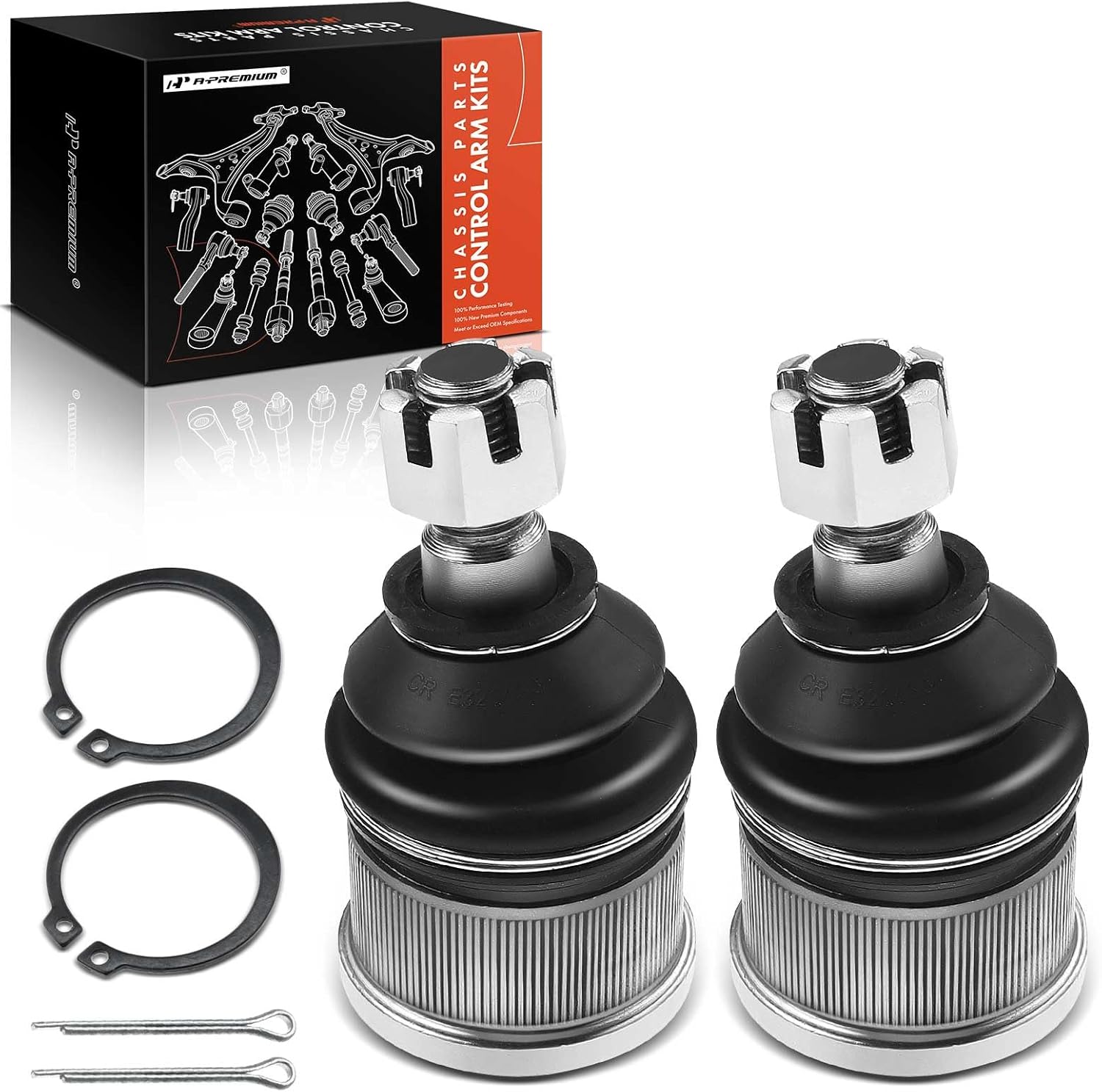
| Fit Type | Vehicle Specific Fit |
|---|---|
| Auto Part Position | Front Lower |
| Material Type | Alloy Steel |
| Pre-Greased | Yes |
This A-Premium front lower ball joint pair replaces the lower front ball joints on compatible Honda Civic, Civic del Sol, CR-V, Acura EL, and Integra models. Installed in the suspension lower control arm, these ball joints restore secure steering feel and reduce clunking, uneven tire wear, and steering wander that develop when original joints wear. The parts are made from alloy steel and come with metal retaining rings, castle nuts, and cotter pins to keep the joint secured over time. A rubber bushing helps damp vibration and noise, and the joints arrive pre-greased for immediate installation. Practical benefits include a straightforward swap for a failed ball joint and the included hardware that helps prevent bearing loss or contamination. Limitations to note are that these are aftermarket replacements rather than factory-brand units and do not include a grease fitting for future servicing, so long-term maintenance requires replacement rather than regreasing in place.
Best for: Buyers who prioritize a dependable, ready-to-install replacement that restores steering control and quiets suspension noise on the listed Honda and Acura models.
Less Ideal for: Drivers seeking a factory-brand original part or a serviceable ball joint with a grease fitting should consider other options.
- Vehicle-specific fit for listed Honda and Acura models reduces fitment guesswork
- Alloy steel construction and pre-greased joints allow immediate installation
- Includes metal rings, castle nuts, and cotter pins to secure the joint and resist contamination
- Rubber bushing helps damp road noise and vibration for a smoother ride
- No grease fitting provided so the joint cannot be re-greased in place for extended service life
Verdict: Choose this set when you want a complete, ready-to-install front lower ball joint replacement that restores steering stability on the listed Honda and Acura models.
Choosing the Right Honda Civic Lower Ball Joint: Key Factors to Consider
Fitment and Mounting Type
Correct fitment is essential because the lower ball joint must match the Civic's control arm geometry and mating surfaces. A part that appears similar can still have different stud lengths, taper angles, or mounting bolt patterns that affect alignment and steering feel.
Mounting type matters for installation difficulty. Press-fit lower ball joints require a ball joint press tool or a hydraulic press and some mechanical skill, while bolt-in or threaded designs simplify replacement and reduce labor time. Consider which approach aligns with your skill level and available tools.
Material Durability and Bearing Design
The materials used for the stud, housing, and bearing directly influence longevity. Hardened steel studs resist wear from the taper and nut interface, while a robust bearing design controls play over time. Sealed bearings or PTFE-lined interfaces can reduce internal wear and extend service intervals.
Boot and seal materials are critical to keep grit and moisture out. A higher quality nitrile or thermoplastic elastomer boot will resist cracking and help maintain lubrication, especially in harsher climates or where road salt is used.
Corrosion Protection and Finish
Lower ball joints are exposed to road splash and salt, so coatings and plating matter. Zinc plating, phosphate coatings, or e-coating on housing and studs slow corrosion that can seize press-fit joints or weaken fasteners.
Consider local driving conditions. If you drive in wet, coastal, or salted-road areas, prioritize parts with thicker coatings and corrosion-resistant hardware to avoid early failure and reduce future repair difficulty.
Serviceability and Installation Requirements
Think about whether you will install the part yourself or have it installed. Press-in joints typically need a ball joint press tool, bench or shop press, and time to avoid damaging the control arm. Bolt-in or replacement assemblies often require fewer specialized tools and can be faster to swap.
Also consider whether the joint is rebuildable or fully sealed. Rebuildable joints allow greasing during service, which can lengthen life if you plan periodic maintenance. Fully sealed units remove one maintenance task but commit you to replacement when the seal fails.
Noise, Play, and NVH Impact
A lower ball joint with too much initial play or one that develops wear quickly will cause clunks, looseness in steering, and increased wheel vibration. Design features that control endplay and reduce slop will help preserve steering feel and reduce noise across different road surfaces.
Inspect service descriptions for specifications on maximum allowable play and recommended break-in or torque procedures. Parts that maintain consistent preload and offer robust dust protection typically deliver quieter, more precise front-end behavior.
Compatibility With Alignment and Tire Wear
Replacing a lower ball joint can affect alignment settings, especially if the joint alters caster or camber slightly due to different stud taper or seating depth. Some replacements are engineered to match OEM geometry closely to minimize alignment correction.
If alignment is significantly altered, you may need a wheel alignment after installation to prevent uneven tire wear. Consider parts that promise OEM-equivalent geometry to reduce the chance of additional alignment labor.
Common Signs You Need a Lower Ball Joint
Recognizing symptoms early can prevent further suspension damage. Typical signs include knocking or clunking from the front when going over bumps, a wandering or loose steering feel, and visible movement when the wheel is rocked at the top and bottom. You may also notice uneven tire wear concentrated on the inner or outer edge.
Wheel vibration under certain speeds can come from worn joints that allow the wheel hub to move relative to the control arm. A careful inspection with the vehicle safely lifted and the wheel off can reveal play at the stud or torn dust boots that indicate a failing lower ball joint.
- Clunking noise over bumps or during turns
- Excessive free play in steering
- Uneven tire wear patterns
- Visible boot deterioration or grease leakage
- Wheel vibration at speed in some cases
Tools and Workshop Setup Needed
Replacing a Civic lower ball joint can be done in a home garage with proper tools, but preparation matters. A sturdy jack and stands, torque wrench, breaker bar, and a set of sockets and wrenches are baseline. If the joint is press-fit, a ball joint press tool or hydraulic press is typically required to remove and install without damaging the control arm.
Supplementary tools such as a pickle fork or tie rod separator, pry bars, and a bench vise improve safety and access. If you plan to reuse fasteners, have penetrating oil and wire brushes handy to free corroded hardware. Always follow safe lift procedures and torque to factory specifications during reassembly.
- Jack stands and quality jack
- Torque wrench and breaker bar
- Ball joint press tool or hydraulic press for press-fit joints
- Tie rod separator or pickle fork, pry bars
- Penetrating oil, wire brush, and shop rags
Greaseable Versus Sealed Lower Ball Joints
Greaseable joints include a zerk fitting that allows periodic lubrication, which can substantially extend service life when maintained. For owners who perform regular undercar maintenance, a greaseable lower ball joint provides an opportunity to flush contaminants and replenish lubricant.
Sealed joints require no routine greasing and simplify maintenance, but once the seal fails the entire unit must be replaced. If you prefer low-maintenance parts or do not perform undercar service regularly, sealed joints may be a better fit despite being non-serviceable.
- Greaseable: longer life with maintenance, requires access for greasing
- Sealed: maintenance-free until failure, simpler replacement
Installation Tips to Avoid Damage
When pressing in a new lower ball joint, support the control arm properly and use the correct adapters to avoid distorting or cracking the arm. Apply even, controlled force and verify the ball joint seats squarely in the housing. If using a hammer-based removal method, exercise caution to avoid damaging mating surfaces.
Torque fasteners to the manufacturer torque values and use new nuts or hardware if the original pieces show corrosion or deformation. After installation, check wheel bearing preload and steering linkage for binding, and plan for an alignment check to confirm suspension geometry.
- Support the control arm before pressing to prevent bending
- Use proper press adapters and apply steady force
- Replace corroded hardware and torque to spec
- Verify no binding in steering or hub before lowering
When to Replace Upper Versus Lower Ball Joints
On the Civic, front suspension designs sometimes use both upper and lower joints depending on model year and trim. The lower joint typically sees higher vertical loads and often shows wear earlier than the upper joint. If you detect play or noise, inspect both upper and lower joints to determine the primary source.
Replacing only the lower joint can be sensible if the upper is within spec and shows no signs of wear. However, if the upper joint is marginal or the mileage is high, replacing both can save labor down the line and ensure balanced front-end performance.
- Lower joints usually carry higher loads and wear faster
- Inspect both joints before deciding on single-unit replacement
- Consider replacing both if labor access or mileage justify it
Aftercare and Break-In Considerations
New lower ball joints generally do not require a formal break-in, but driving gently for the first few hundred miles helps seating and allows suspension components to settle. For greaseable units, follow manufacturer greasing intervals after initial installation to maintain lubrication and remove trapped contaminants.
Monitor alignment and tire wear over the next few weeks. If you notice persistent vibration or uneven wear, revisit torque checks and inspect for unintended preloads or seating issues that can alter geometry.
- Drive gently for initial seating period
- Grease greaseable joints per recommended intervals
- Recheck torque and alignment if vibration persists
Still looking for the perfect fit?
Select your Honda Civic configuration to see the most relevant Ball Joints recommendations
How We Chose the Best Honda Civic Lower Ball Joint
We focused on selection criteria that matter to Honda Civic owners who need a reliable lower ball joint replacement. Primary filters included precise fitment to Civic front suspension geometry and factory mounting points, verified by published compatibility data. Durability and material quality were evaluated through manufacturer specifications such as stud hardness, bearing type, and boot materials that affect contamination resistance and service life. Retention and preload design were considered to ensure steering geometry remains stable under load.Ease of installation was assessed by whether the joint supports press-fit removal versus bolt-in installation, and whether common service tools like a ball joint press tool or C-clamp are adequate. Corrosion protection and finish were included to estimate longevity in varied climates. Noise and NVH impact was considered by looking at design features that reduce play and minimize wheel vibration.We excluded items that lack clear Civic-specific fit data, universal-fit knockoffs without mounting spec disclosure, or parts intended exclusively for non-front locations. The final shortlist balances robust construction, accurate fitment, and realistic installation expectations for typical Civic owners.
Our full evaluation process is outlined in our review methodology.
FAQ
How do I tell if my Civic's lower ball joint needs replacing?
You will often notice clunking over bumps, looseness in steering, or uneven tire wear. With the vehicle lifted, check for vertical or lateral play by rocking the wheel; movement at the joint or a torn boot indicates replacement is likely needed.
Can I replace a lower ball joint without a press?
It depends on the joint's mounting type. Some lower joints are bolt-in and can be swapped with common hand tools. Press-fit joints usually require a ball joint press tool or hydraulic press to remove and install without damaging the control arm.
Should I replace the upper ball joint at the same time as the lower?
Not always. If the upper joint shows minimal wear and passes inspection, replacing only the lower joint is acceptable. However, if the upper is marginal or the vehicle has high mileage, replacing both can be more cost-effective by avoiding repeat labor.
Will changing the lower ball joint affect alignment?
Yes. Different seating depths or taper variations can slightly alter alignment settings. It is advisable to check wheel alignment after replacement and correct caster or camber if needed to prevent uneven tire wear.
Are greaseable lower ball joints better than sealed ones for Civics?
Greaseable joints can last longer with regular maintenance because you can replenish lubricant and flush contaminants. Sealed joints are maintenance-free but require full replacement when the seal fails. Your choice depends on whether you will perform periodic undercar maintenance.
What causes a lower ball joint to fail prematurely?
Contamination from torn boots, corrosion from road salt, lack of lubrication, and heavy impact loads are common causes. Driving through deep water or rough roads without periodic inspection accelerates wear.
Final Verdict
When choosing a lower ball joint for your Honda Civic, prioritize accurate fitment and a durable bearing and seal design to preserve steering precision and reduce wheel vibration. Decide between greaseable and sealed units based on your willingness to perform periodic maintenance and the local environment's corrosion risk. Finally, consider installation method and whether you have access to press tools; choosing a part that matches your installation capability will reduce labor headaches and ensure a reliable repair.
Explore More:
- Check out all Honda Civic parts & accessories
- Explore Ball Joints Maintenance & Repair Guides
- Explore Suspension & Steering
- Browse all Auto Parts
