

Note: This article contains affiliate links. If you click on these links and make a purchase, I may earn a small commission at no extra cost to you. This helps support my research and content. Read my full affiliate disclosure here.
If you own a 2006-2011 Honda Civic, choosing the right ball joint matters for steering feel, tire wear, and safety. These model years are commonly searched with the FA and FG generation code, and the components discussed here are selected to fit that chassis. The right 2006-2011 Honda Civic ball joint reduces play in the suspension, cuts down on uneven tire wear, and helps eliminate the steering wander or vibration that often shows up as ball joint symptoms.This guide shortlists the top options for front suspension ball joints and covers the key qualities you should prioritize. We evaluated fitment, durability, and ease of installation to create a concise set of recommended choices and help you decide whether to replace the upper or lower joint, use a full ball joint kit, or bring in a press tool and do the job yourself.
Looking for other parts? See all Honda Civic parts & accessories.
Top Picks at a Glance
| Best Overall The best all-around choice for most situations | MOOG K500069 Front Right Lower Suspension Ball Joint |  |
| Best Quality Built to a higher standard if you want something more solid | TRQ Front Lower Driver and Passenger Side Ball Joint Set |  |
| Best Value The sweet spot between price and what you get | Tensilearm Front Lower Ball Joint Kit (K500069/K500070) for 2006–2011 Honda Civic and 2006–2011 Acura CSX |  |
| Best Budget The cheapest option that still gets the job done reliably | PartsW Front Left and Right Lower Ball Joint Kit for Honda Civic 2006–2011 |  |
| Highest Rated A top-rated pick with lots of positive feedback | ETS Front Lower Ball Joint Kit (left & right) |  |
| Most Popular A crowd favorite that many people choose with confidence | Detroit Axle Pair Front Lower Ball Joints for 2006-2011 Honda Civic / 2007-2010 Acura CSX |  |
| Best Seller A high-volume bestseller chosen again and again | SCITOO Front Suspension Kit (8‑piece) for Honda Civic 2006–2011 |  |
1. MOOG K500069 Front Right Lower Suspension Ball Joint
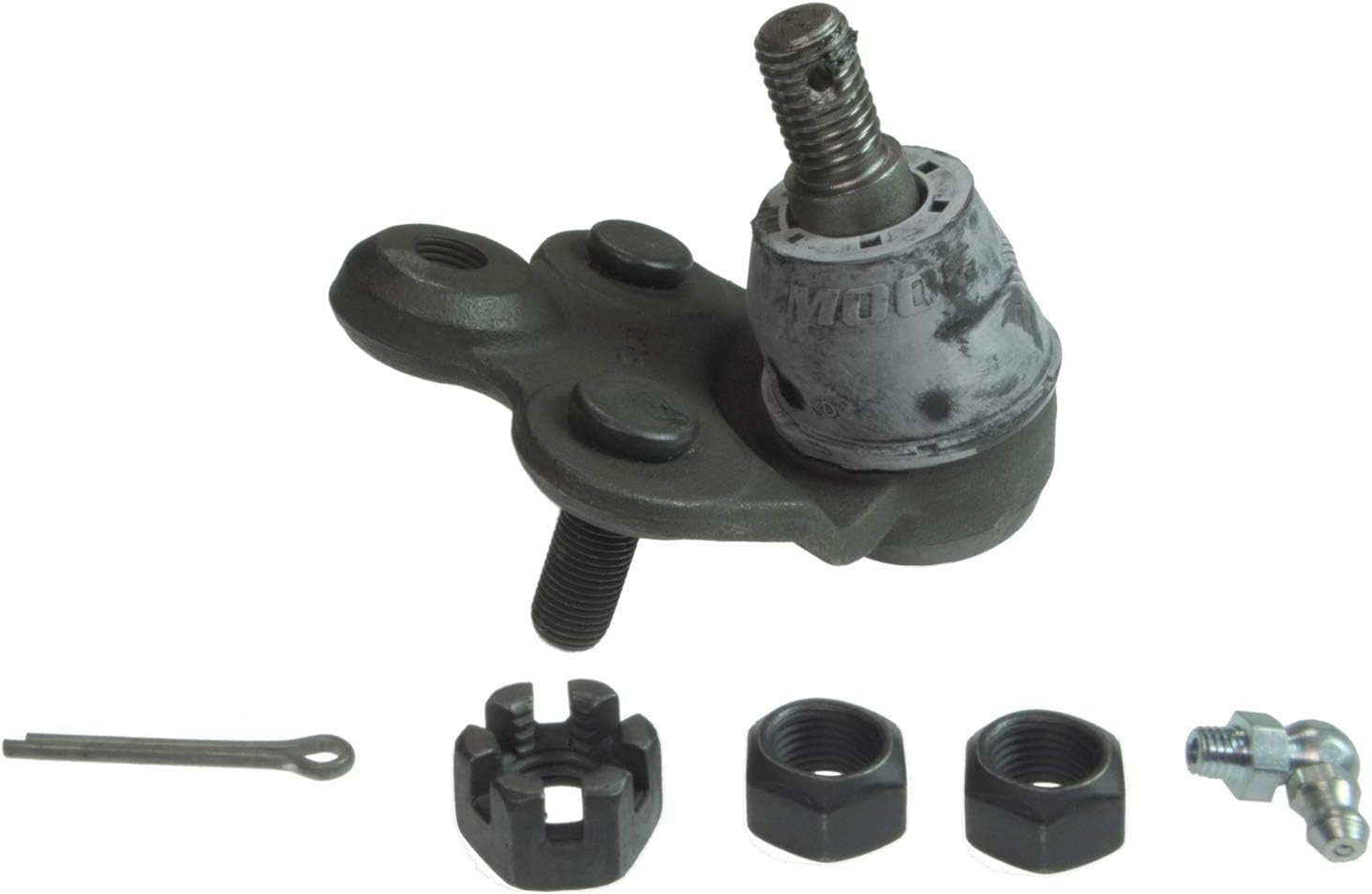
| Brand | MOOG |
|---|---|
| Model | Ball Joint |
| Position | Front |
This MOOG front right lower ball joint is a direct-fit replacement intended to restore proper pivoting between the control arm and steering knuckle on 2006–2011 Honda Civic vehicles. It is manufactured with heat-treated studs and a pressed cover plate where applicable to resist wear, and several designs include a greasable socket and gusher bearing to help reduce friction and extend service life. In practice this part addresses common symptoms of worn joints such as steering looseness, uneven tire wear, and front-end shimmy, and it installs like a factory-style component for routine suspension repairs. MOOG emphasizes durability and serviceability, so this joint is a sensible choice for regular drivers wanting a reliable, longer-lasting replacement without modifying the suspension. Buyers should inspect the part on receipt and press-fit areas during installation since a few reports note fitment or packing inconsistencies from individual sellers, but the part itself is engineered to match factory fit and function for Civic applications.
Best for: Buyers who want a reliable, factory-style replacement that restores steering feel and suspension stability on a daily-driven 2006–2011 Honda Civic without upgrading other suspension components.
Less Ideal for: Drivers looking for performance or heavy-duty off-road suspension upgrades should consider aftermarket options engineered specifically for extended load or competition use.
- Heat-treated ball stud for improved fatigue strength and resistance to premature failure
- Pressed-in cover plate where applicable to keep out debris and reduce looseness
- Greasable design and gusher bearing on applicable units for easier maintenance and reduced friction
- Designed as a direct-fit replacement for 2006–2011 Honda Civic for straightforward installation
- Some buyers report occasional packaging or press-fit issues that require inspection before installation
Verdict: A durable, factory-fit front lower ball joint that reliably restores steering stability and handling for 2006–2011 Honda Civic owners seeking a balanced, long-lasting replacement.
2. TRQ Front Lower Driver and Passenger Side Ball Joint Set

| Brand | TRQ |
|---|---|
| Model | TRQ PSA63299 2 Piece Ball Joint Set |
| Position | Front Lower |
| Compatibility | 2006-2011 Honda Civic |
This TRQ two-piece ball joint kit replaces both front lower driver and passenger side joints on 2006–2011 Honda Civic models. It is supplied as a matched pair with machined exterior surfaces and includes the nuts and cotter pins needed for installation, making it suitable for DIY or shop installs. In use the parts restore steering feel and remove play and squeaks when worn joints are replaced; several owners report tighter steering response and a quieter ride after fitting. The kit is advertised as a direct-fit replacement and TRQ provides installation videos to simplify the job. Some buyers note a very tight press fit that helps retention but may require a proper press or removal tool; a minority reported fitment or seating differences on certain control arms that needed minor shimming. For a performance-minded Civic owner looking to refresh front-end precision, these ball joints offer solid value and improved steering feedback, but make sure you have the right tools and verify fit before final torqueing.
Best for: Enthusiastic Civic owners who want firmer, more precise steering and are comfortable doing a DIY suspension job or working with a mechanic to refresh the front-end.
Less Ideal for: Buyers who need a drop-in, no-tool replacement or who cannot verify fitment in advance should consider alternatives or professional installation.
- Sold as a matched two-piece kit for both front lower sides, simplifying replacement
- Machined exterior and included hardware (nuts and cotter pins) for a complete install
- Designed as direct-fit for 2006–2011 Honda Civic front lower positions
- Strong press-fit retention reported to reduce play and improve steering response
- A few users reported dimensional differences requiring shims or washers to torque and secure the nut
- May require a press or specialty removal tool due to very tight fit
Verdict: A matched pair of factory-replacement lower front ball joints that sharpens steering feel on 2006–2011 Honda Civics for owners focused on improved handling and response.
3. Tensilearm Front Lower Ball Joint Kit (K500069/K500070) for 2006–2011 Honda Civic and 2006–2011 Acura CSX

| Compatible vehicles | Honda Civic 2006–2011; Acura CSX 2006–2011 |
|---|---|
| Included parts | Front lower driver and passenger side ball joints |
| Ball stud material | Steel |
| Bushing type | Rubber bushings |
| Grease fitting | Yes |
These front lower ball joints replace the driver and passenger side units on 2006–2011 Honda Civic and 2006–2011 Acura CSX models that use steel control arms. Each joint uses a steel ball stud and rubber bushings to absorb vibration and reduce noise, and a grease fitting for on-vehicle lubrication. In everyday use the parts restore steering stability and reduce uneven tire wear when worn originals cause looseness or clunking. The greased fitting and rust-resistant finish aim to extend service life compared with sealed disposable joints, but a few buyers reported the grease zerks can be difficult to access once assembled on some axles. Fitment is targeted to Civic/CSX control arms so installation is straightforward for a competent DIYer or a shop; however confirm the steel-arm requirement before purchase. This kit offers a budget-friendly way to return handling confidence, with the practical benefit of maintainable joints if access to the zerk is available after installation.
Best for: Buyers who want a cost-effective, maintainable front lower ball joint replacement to restore steering feel and reduce tire wear on 2006–2011 Civic/CSX models and prefer parts they can grease over time.
Less Ideal for: Drivers who need a sealed, maintenance-free joint or who have a vehicle configuration where zerk clearance is blocked should consider a different style or consult fitment details first.
- Designed specifically for 2006–2011 Honda Civic and 2006–2011 Acura CSX steel control arms
- Steel ball stud with rubber bushings to reduce vibration and noise
- Grease fitting allows periodic lubrication to extend component life
- Rust-resistant finish intended to improve durability during road use
- Grease zerks may be blocked or hard to reach after assembly on some vehicle axle configurations
Verdict: A budget-friendly, maintainable front lower ball joint kit that restores steering stability on 2006–2011 Civic and CSX models while letting you lubricate the joints to extend life.
4. PartsW Front Left and Right Lower Ball Joint Kit for Honda Civic 2006–2011

| Fitment | Honda Civic 2006-2011 All Models |
|---|---|
| Package includes | Front left and right lower ball joints |
| Manufacturer | PartsW |
| Exterior | Painted |
This PartsW lower ball joint kit replaces both left and right front lower ball joints on 2006–2011 Honda Civic models and is built to the original fit and design. It is precision-machined and performance-tested, with treated components and hardware intended to resist wear and restore proper suspension geometry. In practical use the kit aims to eliminate clunks and excessive play that cause uneven tire wear and degraded steering feel, and installing matching left and right joints helps reestablish vehicle balance. The parts are direct-fit replacements so a typical DIYer with basic suspension tools can install them without modification, but installation still requires safe support of the vehicle and torqueing to factory specs. The kit focuses on value rather than premium materials or extended-service features, so drivers wanting the cheapest reliable replacement will appreciate it while those seeking heavy-duty or performance-grade joints should look elsewhere.
Best for: Buyers wanting an affordable, direct-fit replacement to stop suspension noise and restore proper handling on a 2006–2011 Civic who prefer a value-focused part they can install or have installed quickly.
Less Ideal for: Drivers who need heavy-duty, performance, or extended-lifespan suspension components for track use or heavy-load driving should consider upgraded alternatives.
- Made to match factory design for direct fit on 2006–2011 Honda Civic lower front suspension
- Precision-machined and performance-tested components to reduce play and restore steering feel
- Includes both left and right lower ball joints so both sides can be serviced at once
- Hardware treated for increased strength and corrosion resistance
- Positioned as a budget replacement with no mention of heavy-duty or enhanced lifespan materials
- May not include premium seals or extended-service features found on higher-end aftermarket joints
Verdict: A practical, wallet-friendly direct replacement kit to fix worn lower ball joints and restore steering feel on 2006–2011 Honda Civics.
5. ETS Front Lower Ball Joint Kit (left & right)

| Fit Type | Vehicle Specific Fit |
|---|---|
| Auto Part Position | Front Lower |
| Material Type | Metal |
| Unit Count | 2.0 Count |
This ETS kit supplies both left and right front lower ball joints as a direct fit replacement for 2006–2011 Honda Civic and Acura CSX models. Designed and manufactured in Türkiye with assembly and engineering aimed at factory-quality fit, the pair is intended for routine suspension repairs or preventive replacement when worn joints cause looseness or uneven tire wear. The kit emphasizes precision fit to simplify installation and reduce alignment issues after changeover. Buyers get metal construction and vehicle-specific mating to the original mounting points, so handling and steering feel return to factory expectations when installed correctly. The package covers both sides which saves time sourcing parts separately. Limitations are that this is a basic replacement kit without grease fittings or advanced corrosion coatings, so longevity depends on road conditions and proper installation; professional installation or alignment after fitting is recommended to ensure correct suspension geometry.
Best for: Buyers who prioritize a reliable, factory-style replacement to restore steering and suspension feel on 2006–2011 Civic/CSX models and prefer parts made to OEM-compatible standards.
Less Ideal for: Drivers seeking premium lifetime-warranty performance upgrades, specialty greaseable joints, or corrosion-resistant finishes for off-road or salted-road use should consider other options.
- Vehicle-specific fit for 2006–2011 Honda Civic and 2006–2011 Acura CSX which simplifies installation
- Includes both left and right front lower ball joints so both sides can be serviced at once
- Manufactured in Türkiye with metal construction targeting factory-quality fit and durability
- Does not list grease fittings or enhanced corrosion protection which may affect service interval in harsh climates
Verdict: Choose this ETS kit when you want a dependable, vehicle-specific front lower ball joint replacement that restores factory steering feel for 2006–2011 Civic and CSX models.
6. Detroit Axle Pair Front Lower Ball Joints for 2006-2011 Honda Civic / 2007-2010 Acura CSX

| Fitment | 2006-2011 Honda Civic; 2007-2010 Acura CSX |
|---|---|
| Quantity | 2 front lower ball joints |
| Brand | Detroit Axle |
| Manufacturer Part Number | K500069_K500070 |
These Detroit Axle front lower ball joints replace the two lower ball joints on compatible 2006–2011 Honda Civic and 2007–2010 Acura CSX front suspensions. They are supplied as a pair and are built to mirror factory fit and function, with customers reporting generally good fitment and long service life when the part matches the vehicle. Typical use is a front suspension refresh or to eliminate looseness and popping in the front end; installers can press them into the control arm or use a ball joint press. Notable features include manufacturer testing for wear and fatigue and a grease fitting on many units, which helps with aftermarket serviceability. Practical benefits are lowered cost versus dealer parts and solid build quality when the correct application is selected. Limitations to consider are occasional fitment mismatch reported by some users and a few instances where the outer diameter or ball end clearance required adjustments or different installation techniques; double-check fitment notes and be prepared to use proper press tools during installation.
Best for: Buyers who want a budget-friendly factory-style replacement for worn lower ball joints on a 2006–2011 Honda Civic or 2007–2010 Acura CSX and who check fitment carefully before installation.
Less Ideal for: People who need guaranteed exact fit without any risk of fitment issues or those who prefer to rely only on dealer parts for every repair.
- Sold as a pair for a complete front-lower replacement
- Manufactured and tested for wear and fatigue to match factory performance
- Many units include grease fittings for periodic lubrication
- Widely reported good fit and long service life on matching Civic/CSX applications
- Some buyers reported fitment discrepancies that prevented proper installation in certain vehicles
- A small number of units may require press or minor modification work to seat correctly
Verdict: A cost-conscious, factory-style pair of front lower ball joints that delivers solid build quality for 2006–2011 Honda Civic and 2007–2010 Acura CSX when fitment is confirmed.
7. SCITOO Front Suspension Kit (8‑piece) for Honda Civic 2006–2011

| Fitment | 2006–2011 Honda Civic 1.8L |
|---|---|
| Kit contents | 2 lower control arms with ball joints, 2 inner tie rod ends, 2 outer tie rod ends, 2 sway bar end links |
| Materials | Alloy steel, stainless steel |
| Coating | Electrophoretic coating |
| Pre-greased | Yes |
This SCITOO front suspension kit bundles the parts you typically replace when restoring worn front-end components on a 2006–2011 Honda Civic 1.8L. It includes both lower control arms with ball joints, inner and outer tie rod ends, and front sway bar end links so you get matching components rather than mixing old and new parts. The parts are made from alloy and stainless steel with an electrophoretic coating and arrive pre-greased, which simplifies installation and reduces initial break‑in noise. For risk‑averse buyers the appeal is clear: factory-style replacements and multiple matched pieces reduce fitment guesswork and steering/ride inconsistencies that happen when only one side is changed. Expect typical workshop installation practices and torque checks; professional installation is recommended to ensure alignment. The kit covers the specific Civic years listed so confirm trim fitment before ordering. Note that this is an aftermarket kit rather than a direct factory-branded assembly and the one-year replacement policy is the stated support window.
Best for: Buyers who want a ready-made, matched front suspension refresh for a 2006–2011 Civic and prioritize low risk, predictable fitment and straightforward replacement over sourcing individual factory parts.
Less Ideal for: Owners seeking OEM-branded components with extended manufacturer warranties or those who only need a single replacement part rather than a full matched kit.
- Complete matched set replaces lower control arms, ball joints, inner and outer tie rod ends, and sway bar links together
- Pre-greased parts reduce initial installation work and help immediate function
- Alloy steel and stainless components with electrophoretic coating for corrosion resistance
- Designed for vehicle-specific fit to the 2006–2011 Honda Civic 1.8L to simplify compatibility
- Aftermarket supplier with a one-year replacement policy rather than long-term factory warranty
Verdict: If you want a low‑risk, matched front suspension refresh for a 2006–2011 Civic, this kit delivers the common control arm, tie rod, and sway bar parts in one package.
Choosing the Right 2006-2011 Honda Civic Ball Joint: Key Factors to Consider
Fitment and Chassis Compatibility
Accurate fitment is the top priority for 2006-2011 Honda Civic ball joint replacements. The FA and FG generation subframe and control-arm geometry require ball joints with the correct stud length, mounting pattern, and taper angle so the steering and suspension align correctly. Incorrect fitment can cause premature tire wear, accelerate other suspension component failure, or create handling oddities.
When checking fitment, confirm whether the joint is intended for the Civic's front lower or upper position since dimensions and mounting styles differ. Also verify whether the part is a direct bolt-in or requires a ball joint press tool. Choosing an exact-fit unit reduces installation time and limits the risk of needing additional parts or machining during replacement.
Material Quality and Corrosion Resistance
Ball joints operate in a high-wear environment exposed to water, salt, and road debris, so material choice affects longevity. Look for hardened bearing surfaces, plated or stainless hardware, and robust housing materials that resist pitting and corrosion. Seals should be made from durable elastomers that maintain flexibility in hot and cold climates.
Corrosion-resistant finishes and sealed designs extend service life and reduce the chance of joint seizure when removal is required. For Civic owners in harsh climates, prioritize units with clear corrosion protection and replaceable grease fittings where practical.
Seal Design and Lubrication
Effective sealing prevents contaminants from entering the bearing surface and keeps grease where it belongs, which is essential to prevent play and noisy operation. Some ball joints offer a zerk fitting for periodic greasing while others are sealed for life; each approach has trade-offs. Greaseable joints allow maintenance that can extend life but require accessibility and a routine greasing schedule.
Sealed joints reduce maintenance steps but must rely on high-quality internal grease and robust seals to meet lifespan expectations. Consider the expected service interval, local driving conditions, and whether you plan to perform routine chassis lubrication when choosing between greaseable and sealed designs.
Serviceability and Installation Method
Serviceability affects both labor time and whether you can complete the replacement yourself. Some ball joints are pressed into the control arm and need a ball joint press tool or a hydraulic press, while others are bolt-in assemblies that simplify DIY replacement. Knowing which installation method a particular joint requires informs tool purchases or whether to schedule professional service.
Also consider whether a ball joint kit includes replacement hardware such as castle nuts, cotter pins, or mounting bolts. Kits that provide all required hardware reduce the chances of delays during installation and ensure correct torqueing and securing methods for the Civic's suspension components.
Durability and Wear Characteristics
Durability is measured by the joint's resistance to developing play, maintaining smooth articulation, and avoiding noise like clunks or pops. Design features that improve durability include hardened ball studs, reinforced housings, and multi-lip seals. These elements slow wear from repeated steering and suspension movement over potholes and rough roads.
Consider expected mileage and driving style when balancing initial cost against expected lifespan. Civic owners who drive in urban conditions with many turns and speed changes may prioritize joints rated for higher cycle life, while those who perform regular inspections can accept shorter-life designs with easier replacement procedures.
Steering Feel and Alignment Stability
Ball joints are integral to steering precision and alignment. Excessive play in a worn joint can cause vague steering, wandering, or abnormal toe changes that accelerate tire wear. The correct joint maintains consistent geometry under load, preserving predictable steering response and alignment settings.
When selecting a unit, evaluate whether its design minimizes lateral play and maintains consistent engagement under cornering forces. This factor matters for everyday driving and for Civic owners who occasionally carry heavier loads or tow small trailers, as those conditions can amplify the effects of joint wear on alignment.
Upper Versus Lower Ball Joints: Which to Replace First
The upper and lower ball joints serve different roles and show wear in distinct ways. Upper joints usually carry less vertical load but are critical to maintaining steering axis geometry, while lower joints often endure greater forces and may exhibit symptoms earlier.
If you notice asymmetric tire wear or steering looseness on one corner, inspect both joints at that corner since they can fail in sequence. For routine maintenance, many owners choose to replace the lower joint first if it shows play, because it typically carries more load and is more likely to affect alignment and ride height.
- Inspect both joints during any suspension work to catch secondary wear.
- Replace the lower joint first if play is detected during a lifted wheel test.
- Consider replacing both joints on a control arm swap to avoid repeat labor.
DIY Replacement: Tools, Time, and Skill
Replacing a ball joint on a 2006-2011 Civic can be a moderate DIY job if you have basic mechanical skills and the right tools. A floor jack, jack stands, socket set, and torque wrench are essential. For pressed-in joints, a ball joint press tool is often necessary to remove and install the bearing without damaging the control arm.
Plan on a few hours per side for a first-timer. Work safely with the vehicle supported on stands and follow torque specifications. If a part is seized or the control arm shows corrosion, additional time and potentially a professional shop might be required.
- Required basic tools: jack, stands, sockets, torque wrench, pry bar.
- Specialty tool: ball joint press tool for pressed-in units.
- Allow extra time for rusty hardware or stuck joints.
When to Use a Ball Joint Kit
Ball joint kits bundle the joint with necessary hardware and sometimes include both upper and lower components for a single corner. These kits simplify the replacement process by supplying correctly sized nuts, cotter pins, and sometimes a new control-arm bushing. For owners who want a complete refresh of a corner of the suspension, kits reduce sourcing errors and ensure compatibility.
Kits are particularly helpful when you plan to replace both joints or when the original hardware is corroded. They also streamline warranty claims and make sure all fasteners meet the torque and safety requirements for the Civic.
- Kits reduce the risk of missing small but critical hardware.
- Consider a kit if the control arm will be serviced or removed.
- Kits can save time when replacing both upper and lower joints.
Common Symptoms and Diagnosis
Recognizing ball joint symptoms early prevents secondary damage. Typical signs include clunking noises over bumps, uneven tire wear, steering wander, and a loose or imprecise steering feel. Wheel vibration specifically felt through the steering wheel can indicate progressive play in the ball joint, though other suspension parts can produce similar symptoms.
A practical diagnosis method is a lift-inspection with a pry bar: with the wheel off the ground, apply upward and downward force to the tire while watching the joint for play. Excessive movement, visible torn seals, or grease leakage are clear indicators that replacement is needed.
- Listen for clunks on compression and rebound over bumps.
- Look for uneven inner or outer tire wear patterns.
- Check for grease leakage or torn dust boots during inspection.
Maintaining New Ball Joints
After installing new ball joints, follow a maintenance routine appropriate to the joint type. If the replacement has a grease fitting, add a light pump of chassis grease after the first few hundred miles and again at regular service intervals. For sealed units, monitor for early signs of wear but avoid attempting to open factory-sealed assemblies.
Re-torque the mounting hardware after initial road testing if the manufacturer suggests it, and recheck alignment if the suspension geometry was disturbed during replacement. Regular visual checks for boot integrity and corrosion will help catch issues before they escalate.
- Grease greaseable joints after initial road break-in and at intervals.
- Inspect dust boots and hardware at each oil change or tire rotation.
- Recheck wheel alignment after suspension work to protect tire life.
Alignment and Post-Installation Checks
Replacing a ball joint can alter toe and camber settings, so a post-installation alignment check is important. Even if the vehicle tracks straight immediately after the job, slight changes under load can lead to accelerated tire wear if not corrected. A professional alignment ensures the Civic's steering geometry is restored to factory tolerances.
If you cannot obtain an immediate alignment, avoid long highway trips and aggressive driving until you can confirm the steering is centered and tires are wearing evenly. Simple DIY checks like measuring steering wheel centering and observing steering response during a short test drive can catch obvious issues.
- Schedule an alignment after replacing any suspension joint that affects tie rod or control-arm geometry.
- Avoid high-speed driving until alignment is confirmed.
- Use alignment feedback to detect installation errors or bent components.
Still looking for the perfect fit?
Select your Honda Civic configuration to see the most relevant Ball Joints recommendations
How We Chose the Best 2006-2011 Honda Civic Ball Joint
We focused editorial selection on criteria that matter specifically for the 2006-2011 Honda Civic FA and FG chassis and typical owner needs. Primary filters included exact fitment to the FA and FG subframe and control arms, verified OEM-equivalent mounting points, and compatibility with the Civic's steering geometry. Durability measures assessed the use of corrosion-resistant materials, reinforced bearing surfaces, and long-life seals that limit contamination from road grime.We also weighed serviceability: whether the design allows bolt-in replacement or requires a press, and whether a full ball joint kit is available for paired repairs. Performance considerations included steering precision under load and resistance to developing play that leads to wheel vibration. Finally, we considered warranty coverage and manufacturer documentation for torque specs and installation guidance.Excluded from the list were units with unclear fitment for the 2006-2011 FA and FG chassis, components lacking material specifications, and products that require unspecified modifications to the control arm. The end result emphasizes exact-fit, durable options that balance longevity and ease of installation for Civic owners.
Our full evaluation process is outlined in our review methodology.
FAQ
How do I know if my Civic's ball joint needs replacing?
Common indicators include clunking noises over bumps, loose steering feel, uneven tire wear, or visible play when prying on the wheel while the car is lifted. Torn dust boots and grease leakage are also signs that the joint may be failing.
Can I replace a ball joint myself on a 2006-2011 Civic?
Yes, many owners can perform the replacement with basic automotive tools, but pressed-in joints require a ball joint press tool and moderate mechanical skill. Allow extra time for rusty hardware and follow safe jack-stand procedures.
Should I replace upper and lower ball joints at the same time?
It depends on condition. If both show similar mileage and wear, replacing both reduces rework and ensures consistent steering geometry. If only one shows play, replacing the worn unit is acceptable, but inspect the counterpart closely.
Does a greaseable ball joint last longer than a sealed one?
It often depends on maintenance. Greaseable joints can be extended with regular lubrication, but sealed units rely on factory grease and high-quality seals. In harsh environments, a greaseable joint you maintain can outlast a sealed unit.
Will replacing a worn ball joint fix wheel vibration?
Replacing a worn ball joint can eliminate wheel vibration caused by joint play, but vibration can stem from other components such as tires, wheel bearings, or alignment issues. Diagnose broadly if vibration persists after replacement.
Do I need a special tool to press a ball joint for my Civic?
Pressed-in ball joints typically require a ball joint press tool or hydraulic press for safe removal and installation. Bolt-in designs do not require a press but may still need standard suspension tools and torque equipment.
Final Verdict
For the 2006-2011 Honda Civic FA and FG chassis, prioritize exact-fit ball joints that match the Civic's mounting geometry and offer robust sealing or greasability depending on your maintenance plan. Focus on materials and design features that resist corrosion and minimize play to preserve steering precision and tire life.Balance ease of installation against long-term durability when deciding between bolt-in and pressed-in options. After replacement, verify alignment and perform initial checks to ensure the steering feel and tire wear are stable. With those priorities in mind, you can confidently choose a ball joint solution that restores safe, predictable handling for your Civic.
Explore More:
- Check out all Honda Civic parts & accessories
- Explore Ball Joints Maintenance & Repair Guides
- Explore Suspension & Steering
- Browse all Auto Parts
