

Note: This article contains affiliate links. If you click on these links and make a purchase, I may earn a small commission at no extra cost to you. This helps support my research and content. Read my full affiliate disclosure here.
If you drive a 2001-2005 Honda Civic, maintaining tight, predictable steering starts with sound suspension joints. Worn ball joints cause play in the front suspension, uneven tire wear, and can make the car feel loose at highway speeds. This guide focuses on ball joints suited to the 2001-2005 Civic range, commonly referenced as ES, EM, and EP chassis codes, and covers both upper and lower fitment options where applicable.Below are the top shortlisted ball joints selected for fitment, durability, and ease of installation. We also outline the symptoms that indicate a failed joint and the tools and techniques you should expect when replacing them.
Looking for other parts? See all Honda Civic parts & accessories.
Top Picks at a Glance
| Best Overall The best all-around choice for most situations | TRQ Front Steering & Suspension Kit (Lower Control Arms, Ball Joints, Tie Rods) |  |
| Best Quality Built to a higher standard if you want something more solid | Metrix Premium Chassis Parts Front Lower Ball Joint (Front Lower) |  |
| Best Value The sweet spot between price and what you get | TRQ Front Lower Ball Joint 2-Piece Set for 2001–2005 Honda Civic |  |
| Best Budget The cheapest option that still gets the job done reliably | PM Auto Front Lower Suspension Ball Joint (PMK90332) |  |
| Highest Rated A top-rated pick with lots of positive feedback | Detroit Axle Front Lower Ball Joints Kit (2) for 2001–2005 Honda Civic and Acura EL |  |
| Most Popular A crowd favorite that many people choose with confidence | Detroit Axle 14pc Front Suspension Kit for 2001-2005 Honda Civic |  |
| Best Seller A high-volume bestseller chosen again and again | Youxmoto Front Lower Control Arm Suspension Kit with Ball Joints and Tie Rods for Honda Civic 2001–2005 (Not Si) |  |
1. TRQ Front Steering & Suspension Kit (Lower Control Arms, Ball Joints, Tie Rods)

| Included Components | 2 Front Lower Ball Joints, 2 Front Lower Control Arms, 2 Front Outer Tie Rods |
|---|---|
| Fit Type | Vehicle Specific Fit |
| Auto Part Position | Front |
| Material Type | Alloy Steel |
| Pre-greased | Yes |
This TRQ front steering and suspension kit bundles the front lower control arms, lower ball joints, and outer tie rods into a single direct-fit replacement set for 2001–2005 Honda Civic vehicles. Designed as vehicle specific fit components, the parts arrive pre-greased and anti-corrosion coated so they are ready for installation and resist surface rust. The kit is intended for DIY or shop replacement when restoring worn front-end components to improve road feel and handling. Practical benefits include saving time sourcing individual parts, coordinated performance from matched components, and reduced prep work thanks to pre-assembled and pre-lubricated joints. Because it is a full lower-front kit, it addresses multiple wear points at once but requires proper alignment after installation and may be more than needed if only one small component is failing. Material choice of alloy steel and the inclusion of outer tie rods alongside control arms and ball joints make this a solid option for drivers who want a comprehensive, factory-style front-end refresh for the specified Civic years.
Best for: Buyers who want a balanced, single-solution repair that restores front-end handling and reduces the hassle of sourcing separate parts for a 2001–2005 Civic.
Less Ideal for: If you only need one small part or are on a strict budget, buying individual replacement pieces or a professional diagnostic to isolate the failed component may be a better choice.
- Complete front lower kit: control arms, lower ball joints, and outer tie rods included for coordinated replacement.
- Pre-greased joints reduce installation prep and initial maintenance.
- Anti-corrosion coating improves surface life in typical road conditions.
- Kit replaces multiple components at once so it can be more than needed for single-part repairs.
Verdict: A convenient, vehicle-specific front lower suspension kit that gives 2001–2005 Honda Civic owners a coordinated, ready-to-install replacement to restore handling and road feel.
2. Metrix Premium Chassis Parts Front Lower Ball Joint (Front Lower)
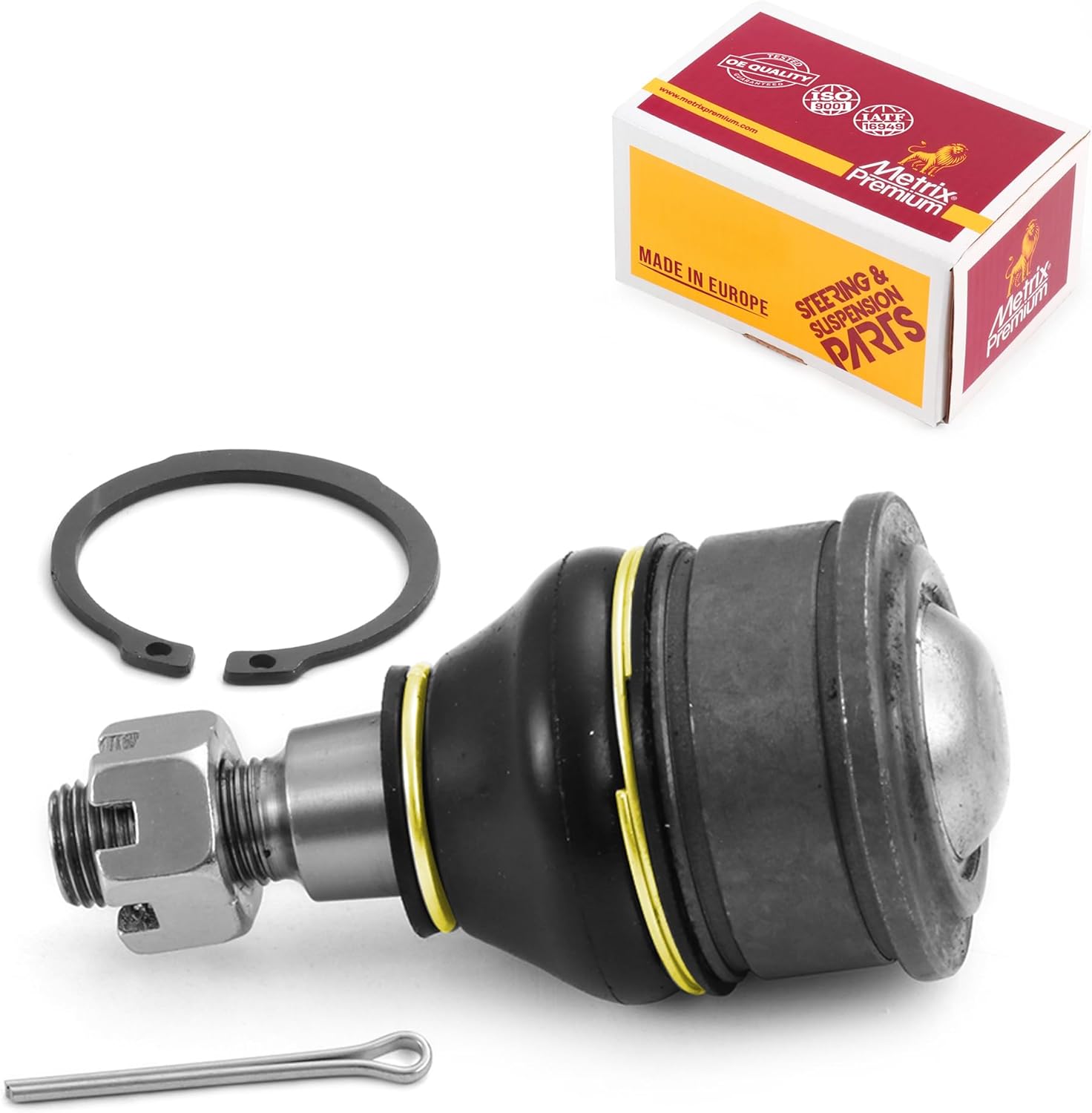
| Compatible models | 2001-2005 Acura EL, 2001-2005 Honda Civic Coupe & Sedan |
|---|---|
| Material | Steel |
| Position | Front Lower |
| Manufacturer part number | 42719MT |
This Metrix front lower ball joint replaces the worn lower joint in 2001–2005 Honda Civic and Acura EL front suspension. It is a steel, machined unit supplied with a cotter pin and designed to bolt into lower control arms that use bolts rather than factory rivets. The joint is greasable, which lets you service it for longer life, and the manufacturer highlights corrosion protection and heat-treated components for durability. In practice the part installs like a standard pressed-in/bolted lower ball joint and is suitable for DIY mechanics or shops doing a front suspension refresh. User reports indicate reliable fitment and quiet operation once installed, though a few buyers noted boot cracking over time on high-mileage vehicles and one report of a loose fit on an incompatible control arm. If you want a factory-quality replacement with serviceable grease zerk and European manufacturing claims, this part delivers straightforward, long-lasting performance for daily-driven Civics; just confirm your arm uses bolts and replace both sides when servicing the front suspension to preserve handling balance.
Best for: Buyers focused on restoring or maintaining sharp steering and suspension feel on 2001–2005 Civic/Acura EL platforms who want a serviceable, factory-quality replacement they can install themselves or have installed by a shop.
Less Ideal for: Drivers who need suspension upgrades for heavy-duty or off-road use or those with riveted lower control arms that require different replacement hardware.
- Factory-style machined steel construction for solid fit and durability
- Greasable design with grease zerk allows periodic maintenance to extend service life
- Includes cotter pin and hardware for a complete replacement installation
- Corrosion-resistant coating and heat-treated stud aimed at long-term reliability
- Some users reported the protective boot cracking after extended use
- Not compatible with riveted lower control arms that cannot accept bolt-in replacements
Verdict: A serviceable, factory-style front lower ball joint made for 2001–2005 Civic/Acura ELs that restores steering precision and allows periodic greasing for longer life.
3. TRQ Front Lower Ball Joint 2-Piece Set for 2001–2005 Honda Civic

| Position | Front Lower |
|---|---|
| Quantity | 2 Piece |
| Manufacturer | TRQ |
| Model | TRQ PSA63145 2 Piece Ball Joint Set |
| OEM Part Number | 51210S5AJ20, 51210S5AJ30, 51215S5AJ20, 51215S5AJ30, 51220S5A003 |
This TRQ kit supplies both driver and passenger front lower ball joints as direct-fit replacements for 2001–2005 Honda Civic models. It is typically used when worn joints produce steering looseness, clunking, or squeaks; the preassembled components and included hardware aim to simplify DIY swaps. Notable features are factory-style machined exterior, a two-piece quantity for both sides, and detailed fitment notes for Civic trims from 2001 through 2005. In practice the parts restore steering feel and reduce noise when installed correctly, and TRQ’s online installation videos make the job easier for a home mechanic. Some buyers report a very tight press-fit that stays secure, while a minority encountered fitment variance requiring additional washers or attention to nut engagement. Expect a straightforward replacement most of the time, but plan for basic tools, a press or suitable removal method, and a careful fit check during installation to ensure the nut and cotter pin seat properly.
Best for: Buyers who prioritize a practical, cost-effective repair that returns tight steering and quiets suspension noise and who plan to perform the replacement themselves or supervise a straightforward shop install.
Less Ideal for: If you want an upgraded performance or heavy-duty suspension component for aggressive driving or towing, choose a reinforced or performance-specific joint instead.
- Direct-fit two-piece kit covers both front lower joints for one service interval
- Machined exterior and preassembled components simplify installation and alignment
- Extensive fitment list for 2001–2005 Honda Civic trims reduces guesswork
- Includes necessary hardware so fewer parts are needed from the hardware store
- Manufacturer provides step-by-step installation videos for DIY support
- Some units have reported dimensional variance requiring washers or fitment adjustments
Verdict: A practical, ready-to-install two-piece front lower ball joint kit that restores steering response and quiets suspension on 2001–2005 Honda Civics.
4. PM Auto Front Lower Suspension Ball Joint (PMK90332)

| Fit Type | Vehicle Specific Fit |
|---|---|
| Material Type | Cast Iron, Rubber |
| Unit Count | 1.0 Count |
This PM Auto front lower ball joint replaces the factory lower front joint on 2001–2005 Honda Civic models and the 2001–2005 Acura EL. It is a single-unit replacement made of cast iron with a rubber component where applicable and ships as one count. In use it serves the usual role of the lower steering/suspension pivot, restoring proper steering feel and helping to eliminate clunking or uneven tire wear when an old joint is worn. Installation is typical for a lower ball joint and will require basic suspension disassembly and standard hardware like a castle nut and cotter pin for secure fastening. The part is vehicle-specific fit, so it avoids fitment guesswork for the covered years. Expect a practical, budget-oriented option rather than a premium, long-life performance unit; material choice and single-piece packaging suggest acceptable service life for everyday driving but shorter longevity under heavy-duty or high-mileage use. Buyers should verify fitment for left or right side before ordering.
Best for: A buyer looking to repair a worn lower ball joint on a Civic from 2001–2005 who prioritizes a low-cost, direct-fit replacement to restore safe steering and normal ride quality.
Less Ideal for: Drivers planning high-mileage, heavy-load, or performance driving should consider upgraded or heavy-duty aftermarket joints designed for longer life under stress.
- Vehicle-specific fit for 2001–2005 Honda Civic and 2001–2005 Acura EL reduces compatibility guesswork
- Constructed from cast iron with rubber components for standard durability on street-driven cars
- Supplies required hardware interface design such as castle nut and cotter pin for secure installation
- Single-count unit allows replacement of one side without buying a pair if only one joint is bad
- Not marketed as an extended-life or heavy-duty performance part so longevity may be less than premium aftermarket options
Verdict: A straightforward, budget-friendly direct replacement that gets a 2001–2005 Civic back to safe steering without extras.
5. Detroit Axle Front Lower Ball Joints Kit (2) for 2001–2005 Honda Civic and Acura EL

| Fitment | 2001–2005 Honda Civic (Coupe or Sedan), 2001–2005 Acura EL |
|---|---|
| Quantity | 2x front lower ball joints |
| Material | Premium alloy |
| Position | Front |
This Detroit Axle kit includes two front lower ball joints intended as direct-fit replacements for 2001–2005 Honda Civic (coupe and sedan) and 2001–2005 Acura EL. The parts are described as premium alloy with a high-strength structure to resist wear and repeated impact loads, and the design targets straightforward installation as a control-arm-mounted replacement. In normal use these ball joints restore steering stability and suspension geometry after worn originals, improving handling and reducing noise and play at the front end. The seller says the components undergo impact and fatigue testing and are manufactured to meet factory-quality expectations, which supports long-term reliability for daily driving. Buyers should note these are replacement suspension parts only and require basic suspension disassembly and torqueing during installation; professional installation is recommended if you lack the tools or experience. Fitment is limited to the listed Civic and Acura EL years and body styles, so confirm vehicle compatibility before purchasing.
Best for: Buyers who prioritize durable, factory-quality suspension replacements to restore front-end stability and avoid repeat repairs on older Civic or Acura EL vehicles.
Less Ideal for: If you need a universal solution for multiple vehicle types or want an adjustable/performance ball joint, this specific OEM-style replacement is not appropriate.
- Direct-fit design for simplified installation on the specified Civic and Acura EL models
- Constructed from premium alloy with enhanced structural strength for wear resistance
- Sold as a two-piece kit covering both driver and passenger front lower ball joints
- Manufacturer states impact and fatigue testing to support durability and longevity
- Requires suspension disassembly and proper torqueing so installation may need a shop if you lack tools
Verdict: Choose this kit if you want a direct-fit, factory-quality replacement that restores front-end stability and long-term reliability for 2001–2005 Civic and Acura EL models.
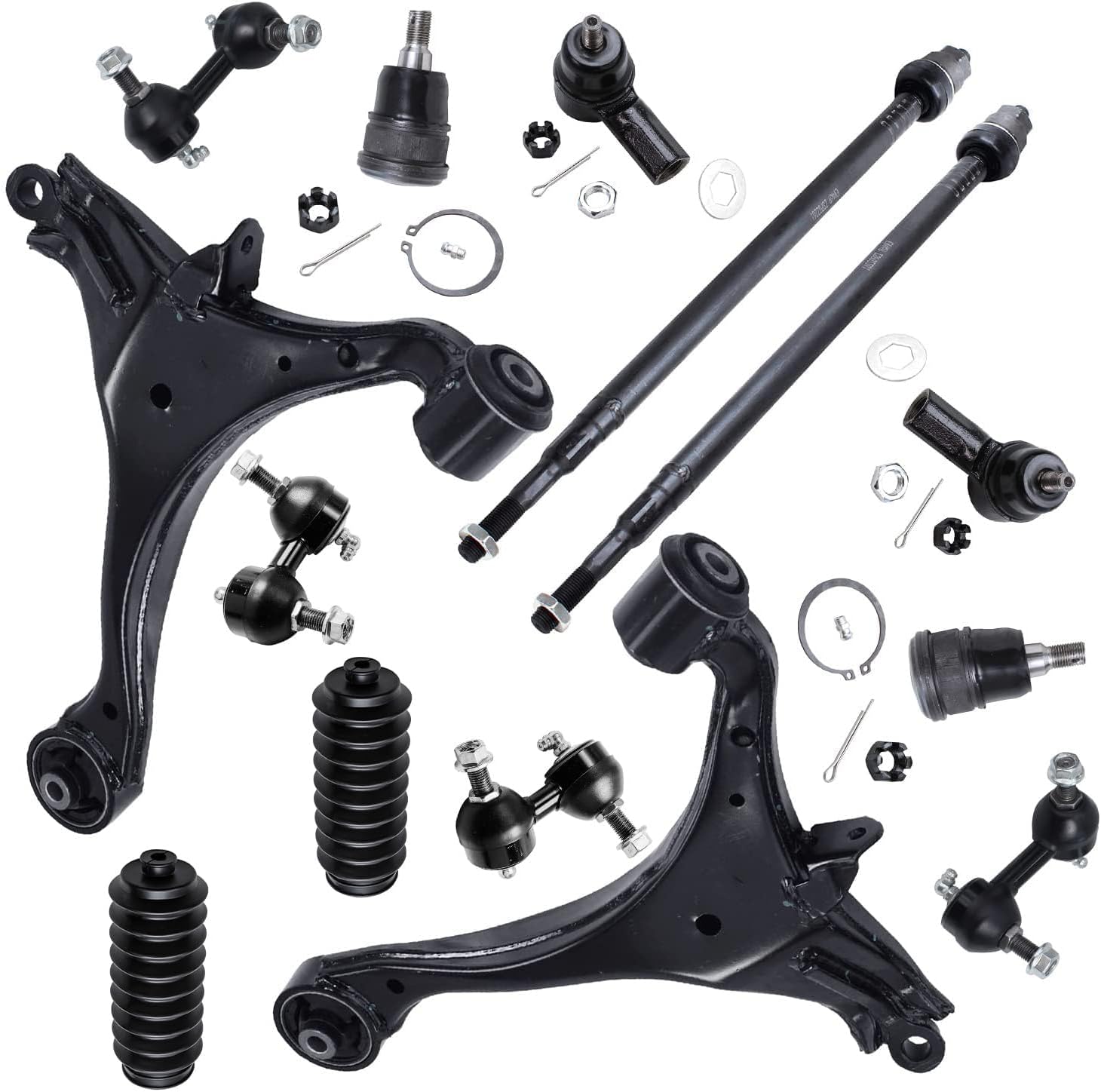
6. Detroit Axle 14pc Front Suspension Kit for 2001-2005 Honda Civic
| Fit Type | Vehicle Specific Fit |
|---|---|
| Auto Part Position | Front Lower |
| Included Components | Lower Control Arms, Sway Bars, Tie Rods, Ball Joints |
| Manufacturer Warranty Description | 10-Year Warranty |
This Detroit Axle 14-piece front suspension kit bundles the common wear items you would replace when refreshing the front end on a 2001–2005 Honda Civic non-Si (coupe or sedan). It supplies two lower control arms, two lower ball joints, inner and outer tie rods, front and rear sway bar links, and rack boots so you can address noise, looseness, and steering wander in a single job. Parts are manufactured to aftermarket production standards and the listing notes impact and fatigue testing plus a long 10-year warranty, which provides extra confidence for buyers who want social proof of reliability. In practice the kit speeds installation by providing matched components and reduces parts hunting. Expect a noticeable improvement in steering responsiveness and reduced clunking when worn components are swapped. Limitations are that this is a complete front-end kit rather than individual OEM replacement ball joints, so if you only need a single ball joint it is more than necessary, and fitment is limited to the specified Civic non-Si models so confirm your year and trim before ordering.
Best for: Buyers who want a proven, all-in-one front suspension refresh for a 2001–2005 Honda Civic non-Si and value long-term confidence from tested parts and a lengthy warranty.
Less Ideal for: Drivers who only need an isolated ball joint or tie rod replacement and prefer buying single factory-quality parts to minimize cost.
- Complete 14-piece kit replaces most front suspension wear items in one purchase
- Includes lower ball joints and matched control arms to restore steering geometry
- Manufacturer states impact and fatigue testing and offers a 10-year warranty
- Bundled parts simplify installation and reduce time spent sourcing individual components
- Kit is vehicle-specific and only fits 2001–2005 Honda Civic non-Si models, so not usable on other trims
- Buying the full kit is excessive if you only need a single ball joint or one minor component
Verdict: If you want a single, tested kit to replace all common front suspension wear parts on a 2001–2005 Honda Civic non-Si and gain added warranty-backed confidence, this Detroit Axle 14-piece kit is a convenient choice.
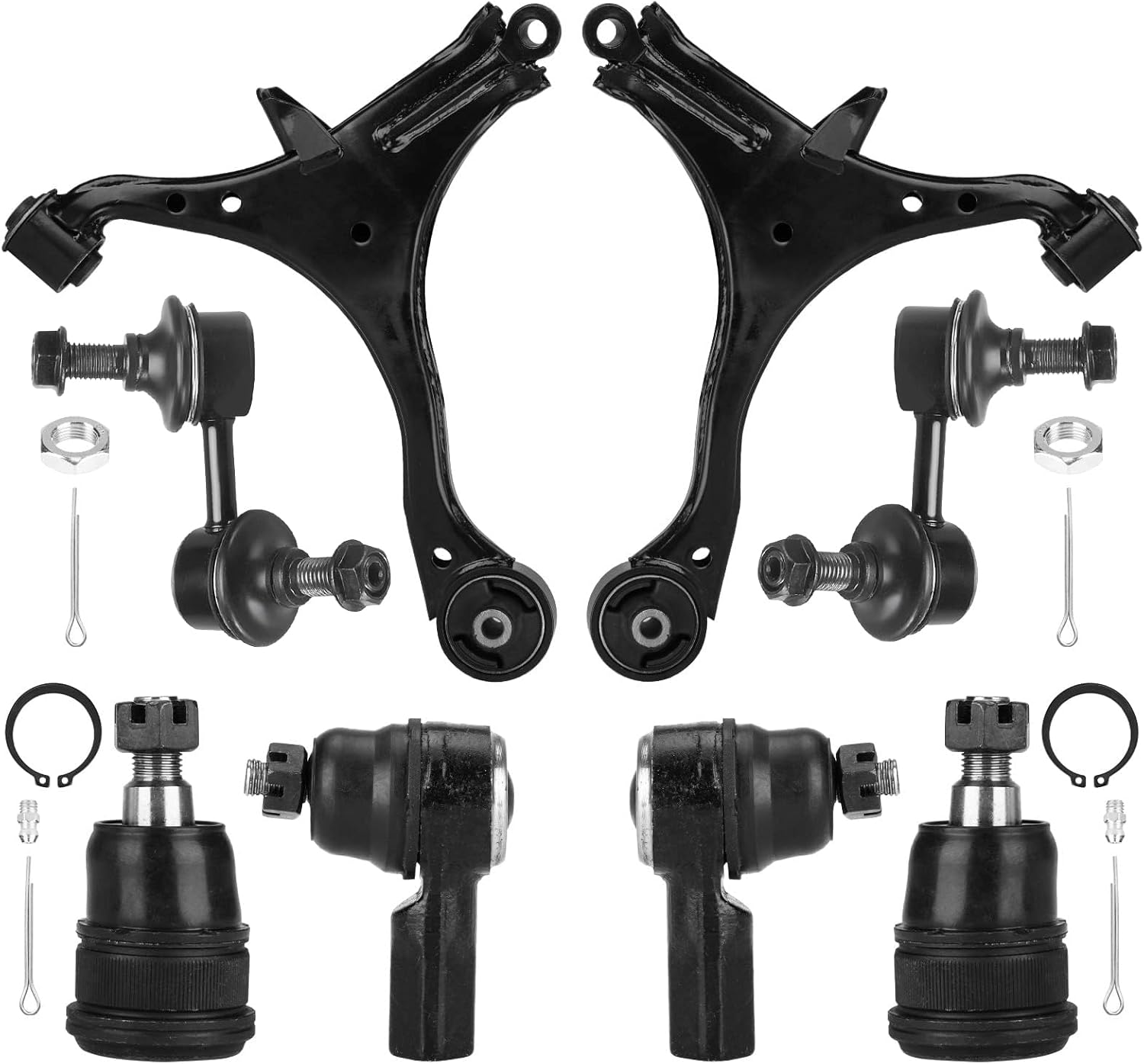
7. Youxmoto Front Lower Control Arm Suspension Kit with Ball Joints and Tie Rods for Honda Civic 2001–2005 (Not Si)
| Fit Type | Vehicle Specific Fit |
|---|---|
| Auto Part Position | Front |
| Material Type | Alloy Steel |
This Youxmoto front lower control arm suspension kit supplies the parts needed to restore front suspension geometry on 2001–2005 Honda Civic coupe and sedan models (not Si). The kit includes both left and right lower control arms, two lower ball joints, two outer tie rod ends, and both front stabilizer bar end links so you can address wear points in a single job. The control arms are stamped from high-strength alloy steel and use rubber bushings to reduce vibration and noise, while the supplied ball joints are described as premium units intended for smoother articulation. For a risk-averse buyer the main benefit is convenience: replacing multiple wear items together reduces alignment drift and eliminates repeat labor. Limitations are that this is a direct aftermarket replacement rather than a factory-branded part and fitment is limited to non-Si Civic coupe and sedan configurations from 2001–2005, so confirm your chassis before ordering. Installation requires basic suspension tools and alignment after replacement to ensure correct wheel tracking.
Best for: Buyers who want a straightforward, all-in-one replacement to restore front suspension function on a 2001–2005 Civic coupe or sedan and prefer minimizing return trips and extra labor.
Less Ideal for: Drivers looking specifically for factory-branded parts, Si models, or vehicles outside the listed year and body configurations should look elsewhere.
- Complete kit replaces multiple front wear items in one purchase, reducing repeat labor.
- Includes premium ball joints and rubber bushings for smoother articulation and reduced noise.
- High-strength alloy steel control arms designed for durability under repeated loads.
- Vehicle-specific fitment for 2001–2005 Honda Civic coupe and sedan simplifies part selection.
- Aftermarket unit rather than factory-brand part which may differ slightly from factory fit or finish.
Verdict: A convenient all-in-one front lower suspension kit that restores worn ball joints, tie rods, and control arms for 2001–2005 Honda Civic coupe and sedan models, saving time and repeat labor.
Choosing the Right 2001-2005 Honda Civic Ball Joint: Key Factors to Consider
Correct Fitment to ES, EM, and EP Chassis
Confirming fitment to the 2001-2005 Civic chassis codes is essential because variations in knuckle, control arm, and hub interfaces affect stud diameter, taper angle, and mounting method. A ball joint that does not match the chassis specification may require press-fit modification or adapter components, which add labor and potential failure points.
Fitment affects whether the joint installs as an upper or lower unit, or whether it replaces a pressed-in factory piece. For the Civic ES, EM, and EP range, check mounting orientation, stud length, and whether the part is intended for left or right sides to avoid clearance issues with brake lines and ABS sensor wiring.
Material Quality and Corrosion Resistance
Ball joints take concentrated loads and rotate constantly; the quality of the stud steel, bearing surfaces, and housing material dictates resistance to wear and failure. Hardened, properly heat-treated studs reduce premature rounding or deformation under load.
Corrosion-resistant finishes and robust dust boots are critical on Civic models exposed to road salt or coastal environments. A compromised boot lets moisture and grit into the joint, accelerating wear. Prioritize units with durable boots and plated housings to extend service life and reduce the chance of seized components during removal.
Sealing and Greaseability
Effective seals and grease retention determine how long a ball joint will operate without internal wear. Some assemblies come pre-greased and sealed for life, which simplifies installation but can limit future serviceability.
Others provide a grease fitting so you can periodically lubricate the joint during regular maintenance. For owners planning long-term ownership of a 2001-2005 Civic, a greasable joint paired with regular chassis lubrication can lengthen life and delay replacement. Consider whether you prefer a maintenance-free sealed unit or a serviceable option that accepts a ball joint press tool for re-greasing.
Installation Method and Required Tools
Installation can range from straightforward bolt-on replacements to pressed-in jobs that need a hydraulic or hand ball joint press. Knowing which method applies to your Civic's year and suspension configuration reduces surprise labor and shop costs.
If you plan to do the job yourself, look for options that come as complete assemblies or include replacement control-arm components to minimize press work. When pressing is required, confirm access to the correct adapters and a press tool sized for the Civic's control arm and knuckle. Consider whether you have the space and mechanical ability to safely support the vehicle and torque suspension fasteners to spec.
Durability Under Driving Conditions
Consider how you use the Civic — highway commuting, city driving, or rough roads each stress ball joints differently. Heavy commuting and pothole exposure increase impact loads and accelerate wear, so choose joints with proven fatigue resistance.
Durability also ties to internal bearing design and clearances. Units with tighter machining tolerances and anti-corrosion finishes usually last longer in stop-and-go traffic and on rough surfaces. Matching the expected lifespan of the joint to your maintenance plans helps avoid mid-term replacements.
Safety and Steering Feel
A worn or improperly installed ball joint directly affects steering precision and vehicle control. Play in the joint translates into vague steering response, wander, and potentially uneven braking feedback at the front end.
Prioritize options that restore factory-spec geometry and stiffness. Consider how the replacement will interact with wheel alignment and tire wear. Selecting a joint that maintains correct articulation without excessive compliance will improve steering feel and contribute to safer handling on the road.
Identifying Ball Joint Symptoms on a 2001-2005 Civic
Recognizing early signs of ball joint deterioration helps you plan repairs before major safety or wear issues develop. Common symptoms on Civic ES, EM, and EP models include uneven tire wear concentrated on the inner or outer shoulder, a loose or wandering steering feel at highway speeds, and clunking noises when driving over bumps or during hard turns. Wheel vibration that changes with steering input can also point to a failing joint.
Listen and feel for play during low-speed maneuvers and perform a hands-on inspection by lifting the front end and checking for vertical or lateral movement at the wheel hub while manipulating the control arm.
- Inner or outer tire scalloping
- Loose steering or wandering at speed
- Clunking over bumps or during turns
- Wheel vibration tied to steering input
Upper Vs Lower Ball Joints: What Civic Owners Should Know
The Civic's front suspension may use different joint types in the upper and lower locations depending on trim and subframe configuration. Upper joints are often smaller and see different load patterns than lower joints, which handle more vertical load and impact forces. Understanding which joint you need reduces the chance of buying the wrong component.
If both upper and lower joints show wear, replacing them as a matched set can restore correct steering geometry and balance load distribution, reducing the chance of premature wear on the newly installed unit.
- Upper joints handle steering articulation and lighter loads
- Lower joints carry more vertical forces and impacts
- Consider replacing both sides on the same axle if wear is present
Tools and Workshop Tips for Replacing Civic Ball Joints
A basic Civic ball joint job typically requires a jack, quality jack stands, a breaker bar, torque wrench, and either a ball joint press tool or a ball joint separator depending on the joint style. For pressed-in lower joints you will likely need a press with the correct adapters sized for the Civic control arm. Use caution when using hand separators to avoid damaging the knuckle or boot.
When reinstalling, always torque fasteners to factory specifications and follow proper safety procedures. If the replacement part has a grease fitting, plan to grease the joint after a short break-in period and recheck torque on critical fasteners after a few hundred miles.
- Jack and stands rated for vehicle weight
- Ball joint press tool with correct adapters
- Torque wrench and manufacturer torque specs
- Grease gun if the joint is serviceable
How Ball Joint Replacement Affects Wheel Alignment
Replacing ball joints can change steering geometry enough to require a wheel alignment. Even when the new joint is an exact fit, slight differences in assembly height or control-arm positioning can alter toe and camber settings on the Civic's front end. Skipping alignment after suspension work risks uneven tire wear and reduced steering precision.
Schedule an alignment after installation and initial break-in miles. If multiple front suspension components are being replaced, align the vehicle once all parts are installed to avoid repeating the process.
- Alignment usually required after front suspension work
- New joints can shift toe and camber settings
- Align after break-in miles for most accurate results
When to Call a Professional Vs DIY on a Civic
DIY replacement is feasible for owners with mechanical experience and access to a proper press and safety equipment. However, pressed-in lower joints and tightly seized components may require hydraulic presses and knuckle support to remove without damage. If you lack the correct adapters or the part requires subframe removal, a professional shop can complete the job with the right tooling and save time.
Prioritize safety and accurate torqueing. If you are uncomfortable with pressing operations, or if the control arm shows signs of corrosion or secondary damage, seek professional help to avoid compromising suspension integrity.
- DIY suitable with correct tools and experience
- Professional recommended for seized, rusted, or complex removals
- Alignment and torque specs best handled or verified by pros
Still looking for the perfect fit?
Select your Honda Civic configuration to see the most relevant Ball Joints recommendations
How We Chose the Best 2001-2005 Honda Civic Ball Joint
We prioritized candidates that deliver correct fitment for the 2001-2005 Civic chassis codes (ES, EM, and EP) and reliable long-term performance under typical driving conditions. Our evaluation emphasized physical compatibility with the Civic front suspension geometry and the common subframe and control-arm interfaces used across the 2001-2005 model years.Key selection filters included material and finish quality, such as hardened stud surfaces and corrosion-resistant coatings, which affect longevity in road salt and wet climates. We also evaluated design features that simplify installation, for example pre-pressed assemblies or tapered studs sized for the factory knuckle. Serviceability was a factor: units that allow grease access or come in match-fit kits scored higher because they reduce repeat labor.We excluded options that required substantial aftermarket modification, nonstandard knuckle machining, or uncommon specialty tools beyond a common ball joint press tool. We did not include parts lacking clear fitment data for ES, EM, and EP Civics or those with consistently poor durability reports. Final choices balance correct fit, durability, and realistic installability for the typical DIY or independent-shop installation.
Our full evaluation process is outlined in our review methodology.
FAQ
How do I know if my Civic needs a ball joint replacement?
Common signs include uneven tire wear, clunking when going over bumps, loose steering, or wheel vibration that changes with steering input. A hands-on check with the front end lifted can reveal play in the joint when you move the wheel or pry on the control arm.
Can I replace just one ball joint or should I replace both sides?
You can replace a single failed joint, but if the opposite side has similar mileage it often makes sense to replace both for balanced steering feel and even wear. Replacing both at once also reduces the need for repeated labor and alignment work.
Do 2001-2005 Civic ball joints require special tools?
Some joints are bolt-on, but many lower joints in this model range are pressed in and require a ball joint press tool with correct adapters. A trusted press makes removal and installation safer and prevents damage to the knuckle.
Will replacing ball joints affect my wheel alignment?
Yes. Any change to the front suspension geometry can alter toe and camber, so an alignment after installation and break-in miles is recommended to prevent uneven tire wear and restore handling.
How long do replacement ball joints typically last on these Civics?
Lifespan depends on material quality, driving conditions, and maintenance. In normal driving they can last many tens of thousands of miles, but exposed climates with salt or heavy pothole use can reduce life. Greasable joints that receive periodic lubrication tend to last longer.
Can a worn ball joint cause a wheel to fall off?
Severe ball joint failure can lead to loss of steering control and wheel separation in extreme cases. Regular inspections and addressing symptoms like excessive play or torn boots reduce the risk of catastrophic failure.
Final Verdict
When replacing ball joints on a 2001-2005 Honda Civic, focus first on correct ES, EM, and EP fitment and the installation method. Balance durability features like corrosion resistance and sealing against the convenience of greasable, serviceable designs if you plan to maintain the car long term. Prioritize parts that restore factory geometry and minimize play to regain steering precision.Decide based on how you drive and whether you have access to pressing tools. For most owners, matching fitment and ease of installation are the best determinants of a successful, long-lasting repair. After installation, follow up with a proper wheel alignment and a short break-in inspection to ensure safe, predictable handling.
Explore More:
- Check out all Honda Civic parts & accessories
- Explore Ball Joints Maintenance & Repair Guides
- Explore Suspension & Steering
- Browse all Auto Parts
