

Note: This article contains affiliate links. If you click on these links and make a purchase, I may earn a small commission at no extra cost to you. This helps support my research and content. Read my full affiliate disclosure here.
If you drive a Honda Civic EX-L and want more responsive acceleration or are replacing a worn unit, choosing the right turbocharger matters for daily drivability and long-term reliability. The right unit restores boost delivery, reduces lag, and helps prevent common failure symptoms that can leave you stranded.This guide covers six shortlisted turbochargers selected for compatibility with the Honda Civic EX-L. We evaluated fitment, durability, boost characteristics, and serviceability to help you pick a unit that suits your driving goals. Read on for the factors that should guide your decision and practical advice for installation and maintenance.
Looking for other parts? See all Honda Civic parts & accessories.
Top Picks at a Glance
| Best Overall The best all-around choice for most situations | Plcenter Turbocharger Assembly Fits Honda 1.5L 2016–2021 |  |
| Best Quality Built to a higher standard if you want something more solid | Rareelectrical Aftermarket Turbocharger TD025 for 1.5L Honda Civic |  |
| Best Value The sweet spot between price and what you get | YEHERIT TD025L4B Complete Turbocharger Kit for Honda Civic 2016–2021 1.5L |  |
| Best Budget The cheapest option that still gets the job done reliably | GELUOXI TD025 Replacement Turbocharger with Gaskets for 1.5L Honda |  |
| Highest Rated A top-rated pick with lots of positive feedback | AUTISTOP Complete Turbocharger Kit with Actuator and Gaskets for 2016–2021 Honda 1.5L |  |
| Most Popular A crowd favorite that many people choose with confidence | A-Premium TD025L4B Turbocharger Kit with Actuator and Gasket for Honda Civic 1.5L (2016–2021) |  |
1. Plcenter Turbocharger Assembly Fits Honda 1.5L 2016–2021

| Compatible engines | Honda 1.5L (2016–2021) |
|---|---|
| Includes | Turbocharger assembly and exhaust manifold gasket |
| Manufacturer part number | 189005AAA01 |
| Exterior | Machined |
This Plcenter turbocharger is a complete bolt-on replacement for Honda 1.5L Civic and CR-V engines from 2016 through 2021. It includes the full turbo assembly and an exhaust manifold gasket so you can swap the failed unit without sourcing separate parts. In use it aims to restore lost boost, eliminate unusual whistling or whining and address symptoms such as reduced power, high oil consumption, or related check-engine lights. The machined exterior and included hardware make the unit suitable for a professional install and for experienced DIYers who are comfortable with turbo plumbing and torque specs. The package targets straightforward fitment to the specified Honda models, which simplifies parts matching. Limitations are that this is an aftermarket generic unit rather than a factory-branded OE replacement and buyers should expect to verify fitment, have access to proper tools, and follow break-in and oiling procedures to avoid premature wear.
Best for: Buyers who want a practical, all-round replacement to restore boost and drivability on a 1.5L Honda without hunting multiple parts; ideal for owners who value a straightforward swap and reasonable cost over brand-new factory parts.
Less Ideal for: If you prioritize factory-branded components, track-focused performance upgrades, or require guaranteed identical-spec matching for tuned engines, consider OEM or performance-specific turbos instead.
- Complete turbo assembly included so you do not need to buy additional core components
- Includes exhaust manifold gasket to simplify a direct swap
- Machined exterior and factory-style mounting points support proper fitment and sealing
- Designed specifically for Honda 1.5L 2016–2021 applications to reduce fitment guesswork
- Aftermarket generic part rather than a factory-branded turbo, so manufacturing tolerances may vary
Verdict: A ready-to-install aftermarket turbo assembly that restores boost and drivability for 1.5L Honda Civics and CR-Vs from 2016–2021.
2. Rareelectrical Aftermarket Turbocharger TD025 for 1.5L Honda Civic

| Model | TD025 |
|---|---|
| Bearing type | Journal Bearing |
| Compressor exducer | 40.0MM |
| Compressor inducer | 29.0MM |
| Fits engines | 1.5L L4 (L15B7) |
This Rareelectrical TD025 turbocharger is a direct-style aftermarket replacement for the 1.5L L4 Honda turbocharged engines and includes the CHRA, actuator, and gaskets needed for installation. It uses a journal bearing CHRA with a 40.0mm exducer and 29.0mm inducer compressor wheel and is built to match common Mitsubishi-based turbo geometry for this application. In practice it replaces the factory unit and is intended for bolt-in swap where the original part numbers match. The included actuator and gaskets simplify installation and reduce the need to source small parts separately. As a journal-bearing aftermarket unit it is suitable for street use and spirited driving but may require careful oiling and warm-up/cool-down routines compared with higher-end ball-bearing performance turbos. Buyers seeking an affordable factory-replacement feel will appreciate the direct-fit approach, while those pursuing maximum spool or durability under sustained high boost should consider higher-spec performance turbos instead.
Best for: Buyers who want a budget-conscious, direct-replacement turbo to restore or modestly improve performance on 1.5L Honda turbo engines while keeping installation straightforward.
Less Ideal for: Enthusiasts planning high-boost builds, frequent track use, or aggressive spool targets should choose a dedicated performance or ball-bearing turbo instead.
- Direct-fit design that matches common OEM interchange part numbers for easier installation
- Includes CHRA, actuator, and gaskets so fewer extra parts are needed
- Compressor wheel dimensions align with factory turbo sizing for predictable spool and boost behavior
- Journal bearing design is less durable under prolonged high-boost or track use compared with ball-bearing turbos
Verdict: A practical, direct-fit TD025 replacement that gets a 1.5L Honda back to stock performance with minimal fuss.
3. YEHERIT TD025L4B Complete Turbocharger Kit for Honda Civic 2016–2021 1.5L

| Fitment | Honda Civic 2016-2021 1.5L L4 |
|---|---|
| Part numbers | TD025L4B, 49373-07011/07012/07013/07100 |
| Package includes | Turbo assembly, flange gaskets, bolts, other gaskets |
| Manufacturer | YEHERIT |
This kit supplies a full TD025L4B turbocharger assembly plus flange gaskets, bolts, and other installation gaskets intended as a direct replacement for 2016–2021 Honda Civic 1.5L turbo applications. It is used to restore lost boost or replace a failed turbo and is advertised as built to factory specifications for bolt-up fitment. Practical benefits include a complete hardware set so you do not need to source extra gaskets, a cast-iron turbine housing rated for high temperature, and a claimed increase in power and efficiency compared with a worn turbo. Reported issues in listings and reviews indicate occasional mismatch of internal cartridge blade counts versus photos, so verify turbine blade and part-number details with your vehicle before ordering. Installation is straightforward for someone with mechanical experience; expect to follow normal turbo replacement steps including oiling the unit and checking for leaks. If you need a ready-to-install replacement that aims to match factory fitment for Civic 1.5L models, this kit is a practical option, but confirm internal component details to ensure compatibility with your exact engine variant.
Best for: Buyers who prioritize a practical, ready-to-install turbo replacement to restore boost and drivability on a 1.5L Civic and want a bundled kit to avoid sourcing parts separately.
Less Ideal for: Do not choose this if you need a guaranteed exact internal cartridge spec without verifying with the seller first or if you prefer an established brand with extensive track record and documentation.
- Complete kit includes turbo assembly plus gaskets and mounting bolts for one-stop replacement.
- Designed to match factory fitment for direct bolt-up on compatible 1.5L Civic turbo applications.
- Cast-iron construction intended for high-temperature durability.
- Saves time by bundling required installation hardware rather than sourcing parts separately.
- Some buyers report discrepancies between listing photos and the actual cartridge blade count, indicating possible fitment or specification inconsistencies.
Verdict: A practical, complete turbocharger kit for 2016–2021 Honda Civic 1.5L drivers who want a direct-fit replacement with all installation hardware included.
4. GELUOXI TD025 Replacement Turbocharger with Gaskets for 1.5L Honda

| Manufacturer | GELUOXI |
|---|---|
| Manufacturer Part Number | GELUOXI 49373-07013 18900-5AA-A01 |
| OEM Part Number | 189005AAA01, 4937307011, 4937307012, 4937307013, 4937307100 |
| Replacement Fitment | Honda Civic 2016-2020; CR-V 2017-2020 |
| Warranty | 12 Months |
This GELUOXI TD025 turbocharger is a direct-replacement style unit intended for the 1.5L turbo Honda engines used in certain Civic and CR-V model years. It installs where the factory turbo sits and comes with gaskets, an 11-blade billet compressor wheel, and a shaft wheel sized to the listed specification. For budget-minded buyers it delivers a ready-to-fit replacement that restores boost and drivability after a failed factory turbo without the premium of a brand-name assembly. Practical benefits include included gaskets and a design that mirrors factory geometry so it can be fitted by a competent technician. Important limitations are that it is an aftermarket unit with a one-year warranty and professional installation is recommended; buyers should confirm exact part numbers and vehicle compatibility before ordering. Expect adequate performance for stock or lightly modified engines but not the consistency or longevity of higher-end performance turbos.
Best for: A buyer replacing a failed turbo who prioritizes a lower-cost, ready-to-install substitute that restores factory boost and daily drivability.
Less Ideal for: Drivers seeking a long-term high-performance upgrade or race use should consider premium or purpose-built performance turbos instead.
- Includes gaskets for a more complete install package
- Billet 11-blade compressor wheel for efficient airflow
- Designed to match OEM turbo geometry for straightforward replacement
- Compatible with listed Honda 1.5L turbo part numbers to simplify fitment verification
- Aftermarket unit with a 12-month warranty rather than long-term factory backing
Verdict: A cost-focused, ready-to-fit replacement turbo that restores factory boost for 1.5L Honda Civic and CR-V engines without the premium of name-brand units.
5. AUTISTOP Complete Turbocharger Kit with Actuator and Gaskets for 2016–2021 Honda 1.5L

| Fitment | 2016–2021 Honda Civic and CR-V 1.5T L15B7 |
|---|---|
| Includes | Turbocharger, actuator, gaskets |
| Manufacturer | AUTISTOP |
This AUTISTOP kit supplies a full turbocharger assembly plus actuator and the necessary gaskets to replace a failed unit on 2016–2021 Honda 1.5L turbo models. It is delivered as a ready-to-install package so you do not need to hunt down separate parts, which speeds repair and reduces installation errors. The seller describes the unit as machined alloy construction designed for heat and pressure resistance, which should help longevity under typical driving loads. In practice this kit is used to restore lost boost, improve throttle response, and bring back factory-like performance after a worn turbo. Installation is straightforward for a competent technician and includes matching part numbers for direct fitment. Limitations to be aware of are that long-term durability depends on correct installation, oil and coolant lines, and preexisting engine condition; this is an aftermarket replacement rather than a factory-branded turbo. For buyers prioritizing a reliable swap-in replacement that covers all the small parts, this kit is a practical, cost-effective option for Civic EX-L owners with the L15B7 engine.
Best for: A Civic EX-L buyer who wants a dependable, ready-to-install turbo replacement that restores factory performance without sourcing separate components.
Less Ideal for: Drivers seeking an OEM-branded turbo or those planning high-performance modifications beyond stock specifications should consider specialist or upgraded units instead.
- Complete kit includes turbo core, actuator, and gaskets to simplify repair and avoid parts mismatch.
- Machined alloy construction intended for heat and pressure resistance for improved durability.
- Listed to replace multiple Honda part numbers for direct fitment to the 1.5T L15B7 engine.
- Arrives preassembled so a trained technician can complete installation more quickly.
- Aftermarket unit rather than factory-branded part so long-term reliability can vary based on installation and maintenance.
Verdict: An all-in-one, direct-replacement turbo kit that restores factory boost and simplifies repair for 2016–2021 Honda 1.5T Civic EX-L owners focused on reliability.
6. A-Premium TD025L4B Turbocharger Kit with Actuator and Gasket for Honda Civic 1.5L (2016–2021)
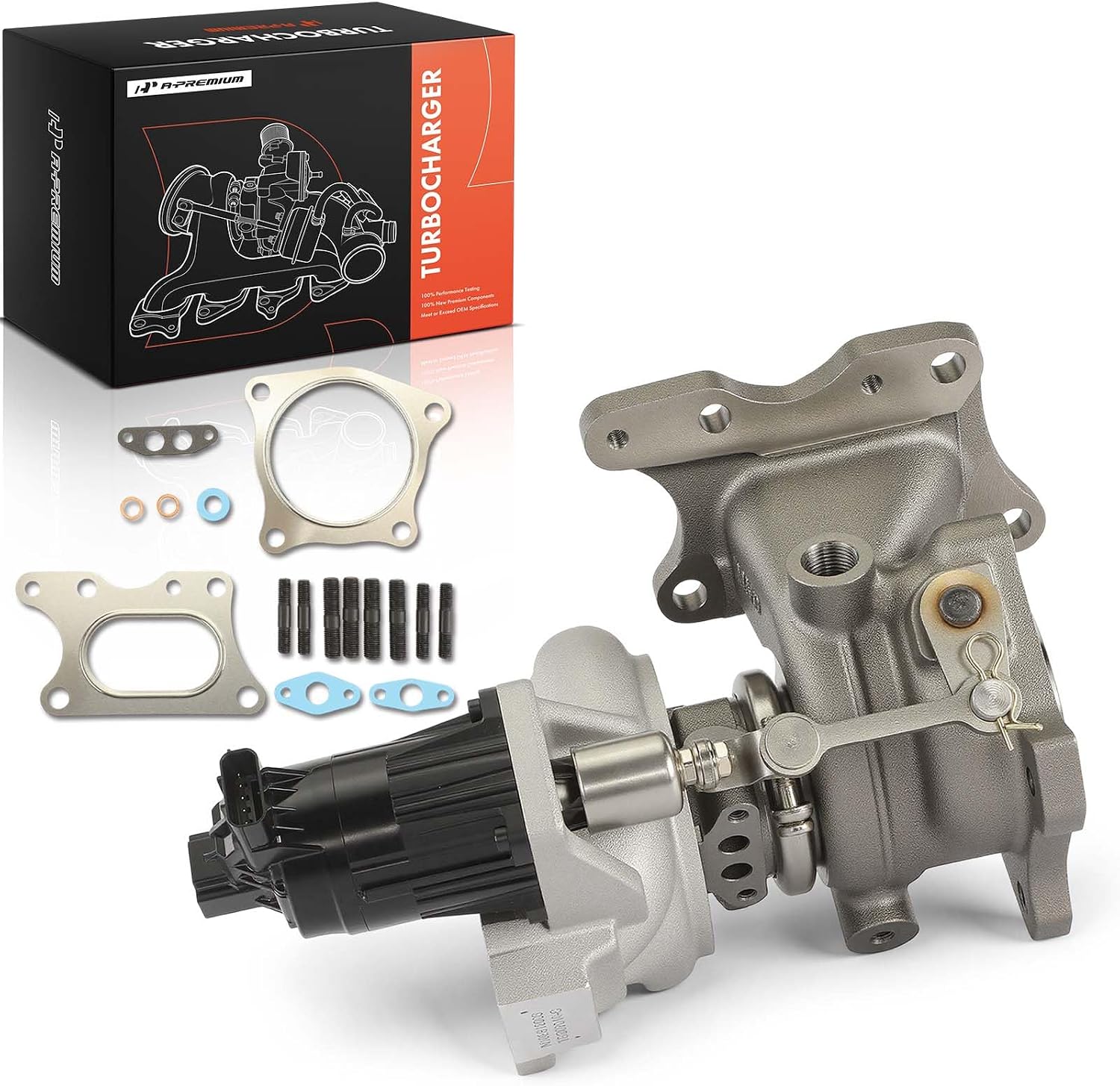
| Compatible Engines | Honda Civic L4 1.5L (2016–2021) |
|---|---|
| Turbo Model | TD025L4B |
| Includes | Wastegate actuator and gaskets |
| Material | Alloy |
| Manufacturer Part Number | APTBC150 |
This turbocharger kit replaces the factory TD025L4B unit and comes with the wastegate actuator and required gaskets to simplify installation. It is intended as a direct-fit replacement for non-Si Civic models with the 1.5L turbo engine, so typical use is swapping a worn or failed turbo without needing to source separate parts. The alloy turbo housing and included actuator mean you get a complete assembly rather than a core-only unit, which reduces install time and parts sourcing. A-Premium also backs the unit with a one-year unlimited-mileage guarantee. Practical benefits include a straightforward replacement process for DIY mechanics or shops familiar with this Civic turbo and the convenience of receiving actuator and gaskets together. Important limitations are that it only fits vehicles equipped with the TD025L4B turbo and excludes Si models, and buyer feedback is mixed so confirm fitment and inspect components on arrival before installation.
Best for: Buyers who prioritize getting a complete replacement turbo in one package and want a straightforward swap for a 2016–2021 1.5L Civic without spending time sourcing separate parts, while valuing a seller-backed guarantee and fitment confirmation before purchase.
Less Ideal for: Drivers seeking performance upgrades, modified engines, or Si/other Civic variants should look for performance-oriented or model-specific turbos instead.
- Complete assembly includes turbo, wastegate actuator, and gaskets for a single-supplier replacement
- Designed to match TD025L4B fitment for 2016–2021 1.5L Civic engines to reduce compatibility issues
- Alloy construction typical for aftermarket turbos and intended for standard engine operating conditions
- One-year unlimited-mileage guarantee provides post-purchase protection from early failures
- Does not fit Si submodel or Civics without the TD025L4B turbo configuration
- Mixed customer feedback suggests variable quality control between units
Verdict: If you need a ready-to-install replacement turbo for a 2016–2021 1.5L Civic with the TD025L4B, this all-in-one kit simplifies the swap and includes a one-year guarantee.
Choosing the Right Honda Civic EX-L Turbocharger: Key Factors to Consider
Fitment and Mounting Compatibility
Correct fitment is the first priority when replacing a turbo on the Civic EX-L because flange shapes, oil feed and drain locations, and actuator linkages must align with the vehicle's existing plumbing and mounts. Mismatched flanges or drain positions can require custom fabrication of adapters, which adds cost and complexity and can lead to leaks or poor oil drainage.
Look for units that document compatibility with the EX-L configuration and include necessary gaskets, studs, or actuators. Pay attention to the orientation of the compressor and turbine housings so intake piping and intercooler connections do not interfere with surrounding components. Proper fitment reduces installation time and minimizes the risk of mechanical interference that can damage the turbo or surrounding parts.
Boost Characteristics and Spool Behavior
Different turbo designs change how power comes on. For everyday driving in a Civic EX-L, you usually want a balance between quick spool for low-end responsiveness and a steady power band for highway passing. A turbo with a small, efficient compressor and a responsive turbine wheel will reduce perceived lag and improve throttle response in city driving.
If you expect to increase peak boost, ensure the turbo's compressor map supports your target power without excessive surge or surge-margin violations. Consider whether the turbo maintains usable boost across the rpm range you use most. Matching spool behavior to typical driving scenarios improves drivability and reduces stress on the engine and drivetrain.
Durability and Bearing Type
The turbo's internal bearing system has a big impact on longevity and how it handles oiling conditions in the Civic EX-L. Journal bearings are common and robust for stock power levels, but ball-bearing designs often offer quicker spool and higher efficiency under transient loads. However, ball bearings can be more sensitive to oil contamination and require clean oil and correct feed pressure.
Assess construction quality, such as the materials used for compressor wheels and turbine housings, and whether the unit is balanced to industry standards. Units that use higher-grade alloys and balanced assemblies typically resist fatigue and vibration better, translating to fewer failures and longer intervals between rebuilds or replacements.
Serviceability and Rebuild Options
Because turbochargers are wear items, ease of service and availability of rebuild kits are practical concerns. A turbo that allows cartridge-level replacement or has readily available rebuild kits saves time and expense compared with units that must be fully replaced. Check whether the turbo design provides access to replaceable parts and whether rebuild components such as seals, bearings, and compressor wheels are widely stocked.
Consider whether local shops are familiar with the unit and whether common replacement parts are standardized. A turbo with documented rebuild procedures and accessible parts reduces downtime and keeps long-term ownership costs predictable for Civic EX-L owners.
Thermal Management and Heat Shielding
Heat from the turbine housing and exhaust can affect nearby components and the turbo itself. Effective thermal management reduces under-hood temperatures, protects intake charge quality, and helps maintain oil viscosity for proper lubrication. Look for housings and manifolds that offer good heat dispersion and consider the presence of heat shields or coated housings to limit radiant heat transfer.
Proper heat management also impacts turbo life by preventing excessive thermal cycling that can warp housings or degrade seals. For the Civic EX-L, ensuring the turbo layout does not channel heat onto electrical connectors or plastic components reduces the risk of collateral damage during heavy use.
Warranty and Manufacturer Support
Warranty coverage and the availability of technical support are practical decision factors. A clear warranty that covers core components and specifies acceptable operating conditions provides confidence and a path to remedy defective parts. Support resources such as technical documentation, fitment guides, and responsive customer service reduce uncertainty during installation and early ownership.
Review warranty terms for exclusions related to modifications, improper installation, or use with aftermarket engine management. Units backed by documented support and reasonable warranty terms reduce the risk for owners who are not performing extensive engine modifications and want predictable coverage for early failures.
Signs Your Civic EX-L Turbo Needs Replacement
Certain symptoms point to turbo issues specific to the Civic EX-L setup. Watch for persistent loss of boost pressure, reduced acceleration, and unusual exhaust smoke under load. These are common indicators that the turbocharger may be failing or that oil leakage or seal wear has occurred.
Other signs include abnormal whining or grinding noises from the turbo area, oil in the intercooler piping, and check engine lights related to boost pressure or mass airflow readings. Addressing these early prevents secondary damage to the engine and intake system.
- Reduced boost and slower acceleration
- Blue or gray exhaust smoke during acceleration
- Whining or rattling noises near the turbo
- Oil traces in intake or intercooler tubing
- Erratic boost pressure readings or related diagnostic codes
Preparing Your Civic EX-L for a Turbo Swap
Before removing the old turbo, plan the job by checking oil feed and return accessibility, available clearance, and the condition of connecting hoses and gaskets. Draining oil and letting the engine cool reduces contamination and makes the work safer. Gather replacement gaskets, new oil supply fittings, and fresh engine oil for the post-install service.
Inspect the exhaust manifold, intercooler piping, and vacuum lines for wear. Replace brittle hoses and damaged clamps to ensure reliable sealing. Label electrical connectors and vacuum lines to avoid misrouting during reassembly.
- Check oil feed and return lines for condition and clearances
- Replace any cracked hoses, clamps, or gaskets
- Have fresh engine oil and a new oil filter ready
- Verify actuator linkage and boost control plumbing accessibility
Installation Considerations and Common Pitfalls
Torque specifications and proper torque sequence matter. Over- or under-tightening exhaust and oil fittings can cause leaks or stress fractures. Use a torque wrench and follow factory torque values where applicable to avoid warping flanges or breaking studs.
Avoid dry starts after installation. Prime the turbo with oil by cranking the engine with fuel disabled or by pre-filling the oil inlet according to recommended procedures. This prevents initial damage to bearings from oil starvation. Double-check all clamps and connections after a short test drive to detect leaks early.
- Follow factory torque values for exhaust and oil lines
- Prime oil supply before first start to prevent bearing damage
- Retighten clamps after the first heat cycle
- Use correct actuators and linkage geometry to maintain boost control
When to Consider a Rebuild Versus Replacement
A rebuild can be cost-effective if the turbine shaft and housings are in good condition and only internals like seals or bearings have worn. Rebuild kits for many turbo designs provide seals, bearings, and other wear parts that restore function without replacing the whole unit. However, severe damage to the compressor or turbine wheels, cracked housings, or imbalance usually warrants full replacement.
Consider the availability of rebuild kits and the condition of the oiling system. Rebuilding makes sense when parts are accessible and the labor and diagnostic effort do not exceed replacement costs. Ensure the rebuild shop balances the assembly to appropriate tolerances to avoid recurrence of vibration-related failures.
- Rebuild if internals are worn but housings and wheels are intact
- Replace if wheels are damaged or housings are cracked
- Confirm availability of rebuild kits and technical support
- Ensure proper balancing after rebuild to prevent vibration
Upgrades and When They Make Sense for an EX-L
Upgrading a turbo makes sense when you plan supporting modifications such as stronger fueling, upgraded intercooling, and proper engine management. For modest power goals aimed at improving throttle response without pushing engine durability limits, a slightly larger or more efficient compressor can be beneficial. Keep upgrades conservative to avoid overstressing stock internals.
Factor in the additional supporting hardware needed and whether the upgrade will require tuning. An upgrade that dramatically changes boost characteristics can also change engine temperatures and oil demands, so plan for enhanced cooling and maintenance accordingly.
- Choose modest upgrades for better throttle response without major engine changes
- Plan fueling and cooling upgrades when increasing peak boost
- Expect ECU adjustments or tuning for non-stock boost targets
- Evaluate long-term maintenance needs when increasing power
Still looking for the perfect fit?
Select your Honda Civic configuration to see the most relevant Turbochargers recommendations
How We Chose the Best Honda Civic EX-L Turbocharger
We focused on criteria that matter for Civic EX-L owners and for the real-world demands of this platform. Primary evaluation dimensions included fitment accuracy to the EX-L configuration, verified flange and actuator compatibility, and required hardware to minimize installation headaches. We assessed durability indicators such as bearing type, compressor wheel material, and housing construction to estimate service life under typical driving.Performance characteristics were judged by boost response, spool characteristics, and whether the unit matched stock or intended power targets without requiring extensive ECU changes. Serviceability and parts availability were weighted heavily; units that allow straightforward replacement of wear parts, such as cartridges or rebuild kits, scored better. We also considered warranty coverage and documented support from manufacturers or distributors.Excluded from consideration were units with unclear fitment data, missing mounting hardware, or those that required invasive modifications to the exhaust or intake that exceed typical owner skills. Our shortlist favors turbochargers that balance reliable operation, realistic power gains, and practical installation for the Honda Civic EX-L.
Our full evaluation process is outlined in our review methodology.
FAQ
How long does a turbocharger typically last on a Honda Civic EX-L?
Turbo life varies widely depending on driving habits and maintenance. With regular oil changes, clean oil supply, and no prolonged high-boost operation, many units last tens of thousands of miles, but symptoms like loss of boost or unusual noises usually indicate service is needed.
What are common turbocharger symptoms to watch for in the Civic EX-L?
Owners often see reduced acceleration, blue smoke under load, oil in intercooler piping, unusual whining, or diagnostic codes related to boost pressure. These symptoms often precede complete failure and should prompt inspection.
Can I install a replacement turbocharger myself on the Civic EX-L?
Experienced DIYers can perform the swap with the right tools and access to torque specs and service information. Key steps include ensuring proper oil feed and return connections, priming the turbo with oil before first start, and following correct torque sequences. If you are unsure, professional installation reduces the risk of mistakes.
Is it better to rebuild a turbo or replace it with a new unit?
It depends on the extent of damage and parts availability. Rebuilds are sensible when internals are worn but housings and wheels are sound and rebuild kits are available. Full replacement is preferable if wheels are damaged, housings cracked, or balancing is questionable.
How does turbocharger install cost typically vary for the Civic EX-L?
Install cost depends on labor rates, complexity of access, and whether supporting parts are replaced. Costs rise if manifolds, intercooler piping, or oil lines require replacement. Getting multiple estimates and confirming what is included helps set expectations.
What maintenance helps extend turbocharger life on the Civic EX-L?
Regular oil and filter changes with the correct specification oil, avoiding sustained high-boost operation without adequate warm-up and cooldown, and promptly addressing oil leaks or intake restrictions all help extend turbo life.
Final Verdict
For the Honda Civic EX-L, prioritize a turbo that offers precise fitment, predictable boost behavior, and proven serviceability. Balance spool characteristics with durability based on how you drive; daily commuters typically benefit from quicker spool and reliable oiling, while more ambitious power goals require careful planning of supporting systems.Weigh warranty coverage and rebuild options against your plans for upgrades. Choosing a unit that minimizes installation complexity and provides accessible replacement parts will keep ownership predictable and reduce the chance of repeat issues.
Explore More:
- Check out all Honda Civic parts & accessories
- Explore Turbochargers Maintenance & Repair Guides
- Explore Engine
- Browse all Auto Parts
