
Note: This article contains affiliate links. If you click on these links and make a purchase, I may earn a small commission at no extra cost to you. This helps support my research and content. Read my full affiliate disclosure here.
If you own a Honda Civic Touring, choosing the right air filter matters for daily reliability, fuel efficiency, and long-term engine health. A poorly fitting or low-quality filter can reduce airflow, let contaminants reach sensitive components, or trigger increased maintenance needs. This guide walks you through the top air filter options specifically suited to the Civic Touring, narrowed to products that fit the vehicle and meet common owner priorities.We shortlisted seven filters that balance filtration performance, airflow, and build quality, and evaluated them against practical criteria like fitment accuracy and service life. Read on to understand how each criterion affects real-world driving and which traits are most important for your Civic Touring before you inspect product details or perform a replacement.
Looking for other parts? See all Honda Civic parts & accessories.
Top Picks at a Glance
| Best Quality Built to a higher standard if you want something more solid | K&N High-Flow Lifetime Engine Air Filter (33-5045) |  |
| Best Value The sweet spot between price and what you get | PHILTOP CA12051 Engine Air Filter for Honda Civic 2.0L |  |
| Best Budget The cheapest option that still gets the job done reliably | BDFHYK CA12050 Engine Air Filter (Replacement for Honda Civic/CR-V) |  |
| Highest Rated A top-rated pick with lots of positive feedback | ryvclim Engine and Cabin Air Filter Combo (CF11182 & CA12050) |  |
| Most Popular A crowd favorite that many people choose with confidence | EPAuto CP182 Cabin Air Filter (CF11182) for Select Honda and Acura Models |  |
| Best Seller A high-volume bestseller chosen again and again | SPEARHEAD Max Thrust Engine Air Filter (MT-050) |  |
1. K&N High-Flow Lifetime Engine Air Filter (33-5045)

| Manufacturer Part Number | 33-5045 |
|---|---|
| OEM Equivalent Part Number | 172205BAA00 |
| Product Grade | Replacement Part |
| Fit Type | Vehicle Specific Fit |
| Manufacturer | K&N Engineering |
This K&N high-flow engine air filter replaces the factory panel filter with a multilayer cotton gauze element designed to boost airflow and help recover a small amount of horsepower and throttle response. It installs directly into the factory air box and is pre-oiled, so fitment and installation take only a few minutes for typical Civic maintenance. The washable, reusable construction is the standout feature: you clean and re-oil the filter instead of buying disposables, with K&N recommending service roughly every 75,000 miles under normal highway use. In practice that means lower long-term running cost and less waste. The thicker, multilayer media is engineered to trap contaminants while still allowing greater flow, but peak filtration at very fine particle sizes may be different than high-efficiency disposable filters. Buyers should expect modest performance gains rather than dramatic power increases, and periodic cleaning and re-oiling are required to maintain the claimed airflow benefits.
Best for: Drivers who prioritize small, real-world performance and throttle response improvements and want a low-maintenance, reusable filter for long-term ownership.
Less Ideal for: Buyers prioritizing the absolute highest particulate filtration efficiency or those who prefer fully maintenance-free disposable filters.
- Washable and reusable design reduces ongoing replacement cost and landfill waste
- Pre-oiled, vehicle-specific fit for simple drop-in installation
- Multilayer cotton gauze media engineered for increased airflow and improved throttle response
- Long recommended service interval under normal driving, minimizing maintenance frequency
- Requires periodic cleaning and re-oiling to maintain performance
- Performance gains are modest and depend on the vehicle and intake system
Verdict: A durable, washable replacement that delivers modest airflow and throttle gains while cutting long-term filter costs for performance-minded Civic drivers.
2. PHILTOP CA12051 Engine Air Filter for Honda Civic 2.0L
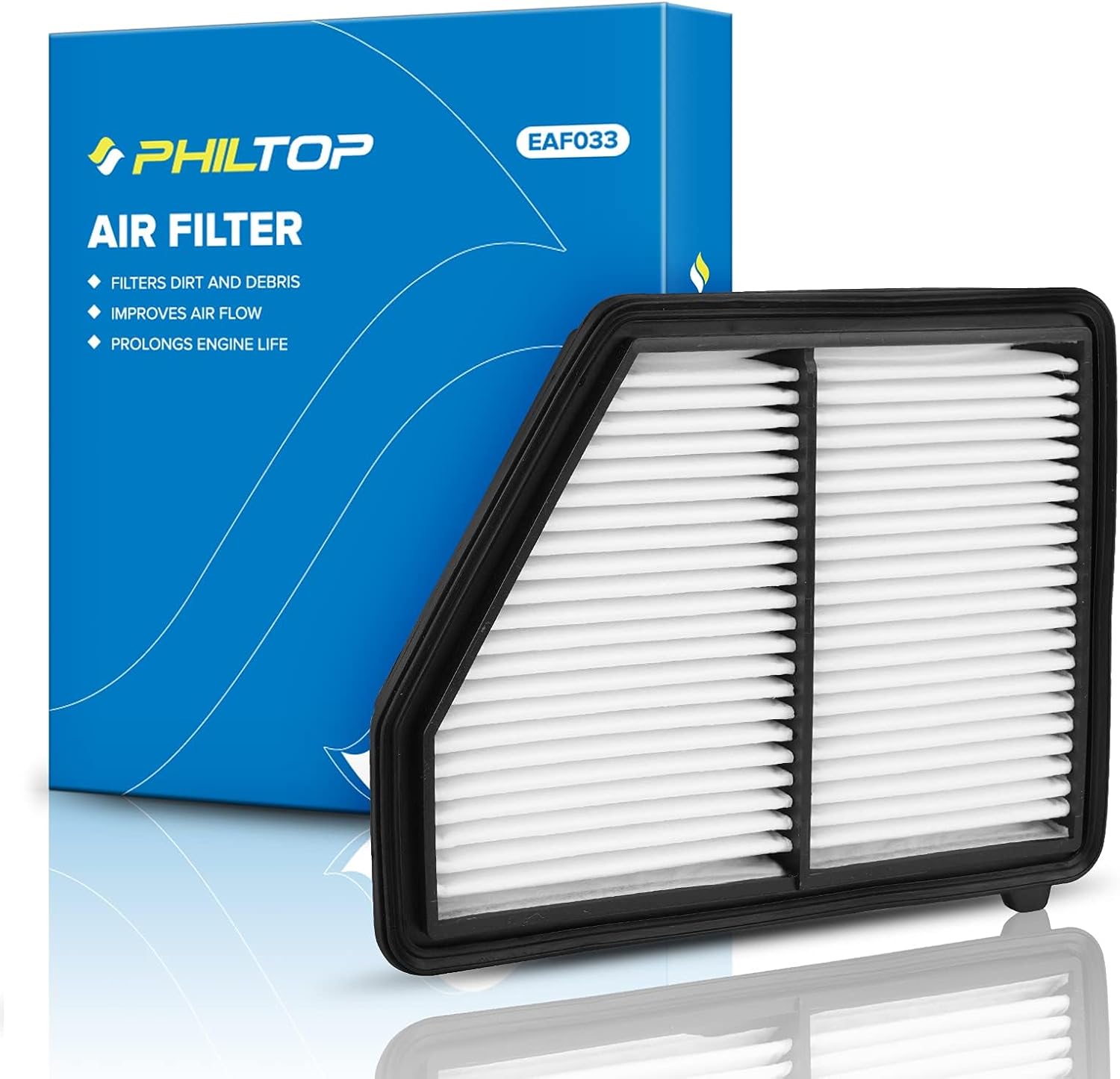
| Fitment | Honda Civic 2016-2026 2.0L; HR-V 2023-2025 |
|---|---|
| Filter Media | 3-stage progressive density with nanofiber hybrid |
| Included Components | 1x CA12051 Engine Air Filter, 1x Product Manual |
| Manufacturer Warranty | 1 YEAR |
The PHILTOP CA12051 is a direct-fit replacement engine air filter made to install like a factory piece and protect the intake on Honda Civic 2.0L models. It uses a three-stage progressive density media with an outer layer for large debris, a middle layer for fine dust, and an inner nanofiber layer for ultra-fine particles. That construction aims to keep intake air clean while preserving airflow for normal engine performance and fuel efficiency. Installation follows the original design and typically takes under five minutes with no special tools. For routine drivers this filter offers straightforward protection and helps maintain consistent combustion and emissions. Limitations are typical of disposable filters: it must be replaced at regular intervals (manufacturer suggests about 12 months or 12,000 miles) and performance will vary more in extremely dusty or muddy conditions compared with heavy-duty performance filters designed for extended service life.
Best for: Buyers who prioritize straightforward, OEM-style maintenance and steady fuel economy for daily driving will appreciate this easy-to-install, vehicle-specific replacement filter.
Less Ideal for: Drivers who need extended service intervals for heavy off-road or extremely dusty use should consider heavy-duty or performance filtration options instead.
- Vehicle-specific fit for Honda Civic 2.0L and HR-V 2.0L so no modification is required
- Three-stage progressive density media with nanofiber layer for improved particle capture
- Direct-fit OEM-style design allows quick self-installation in about five minutes
- Disposable design requires scheduled replacement roughly every 12 months or 12,000 miles
Verdict: A simple, vehicle-matched replacement that restores factory-style filtration and quick DIY installation for Honda Civic 2.0L owners focused on practical maintenance.
3. BDFHYK CA12050 Engine Air Filter (Replacement for Honda Civic/CR-V)

| Model Number | CA12050 |
|---|---|
| OEM Equivalent Part Number | CA12050, AF5263, PA99116, A39183, 172205AAA00 |
| Included Components | Engine Air Filter |
| Product Grade | Replacement Part |
| Fit Type | Vehicle Specific Fit |
The BDFHYK CA12050 is a direct-fit replacement engine air filter made to match factory-style fit for select Honda Civic and CR-V 1.5L and 2.0L engines. It installs in the stock airbox and uses microporous filter media to catch dust and debris, helping maintain engine breathing and protect internal components. Use it as a routine maintenance item during scheduled service intervals or when the OEM filter shows heavy contamination. Notable features include listed OEM-equivalent part numbers for easy cross-reference and vehicle-specific fitment that reduces installation guesswork. For budget-focused buyers this filter delivers straightforward filtration performance at a low price and is lightweight for easy handling. Limitations are typical for economy aftermarket filters: it does not advertise high-performance or extended-life media and comes with only a short manufacturer warranty, so longevity and advanced dust-holding capacity may be lower than premium-brand options.
Best for: Buyers replacing a worn factory air filter who prioritize low cost and correct fitment over premium filtration life; ideal for routine maintenance schedules on Hondas where budget matters.
Less Ideal for: Drivers seeking high-performance airflow gains, extended-service filters, or maximum dust-holding capacity should consider higher-end branded options.
- Vehicle-specific fit for Honda Civic and CR-V models listed, simplifying installation
- Microporous filter media captures common road dust and debris to protect the engine
- Matches multiple OEM equivalent part numbers for easy cross-referencing
- Very affordable option for routine maintenance
- Short manufacturer warranty and no claims of extended service life compared with premium filters
Verdict: A cost-effective, factory-fit replacement air filter for Honda Civic and CR-V owners who need a correct-fit, no-frills option for regular maintenance.
4. ryvclim Engine and Cabin Air Filter Combo (CF11182 & CA12050)

| Compatible Models | Civic 1.5L 2016-2021; CR-V 1.5L 2017-2022 (non-hybrid) |
|---|---|
| Cabin Filter Type | HEPA with activated carbon |
| Included Components | Engine air filter and cabin air filter |
| Fit Type | Vehicle Specific Fit |
This combo pack supplies both an engine air filter and a HEPA cabin air filter tailored to the specified Honda 1.5L Civic and CR-V applications, so you can replace both filters in one service. The engine filter is built with dense pleats to maintain airflow while trapping dirt before it reaches the intake, and the included cabin HEPA media plus activated carbon helps cut dust and fine particles for cleaner in-cabin air. Installation is straightforward and user-friendly; the kit even includes a small removal tool to help loosen old filters in tight spaces. Buyers report a precise, factory-style fit and no off-gassing from the cabin filter out of the box. The product is a straightforward replacement option that aims to match factory fit and function, though long-term durability compared with OEM will only be clear after multiple service intervals. If you prefer parts with a proven multi-year track record from a major brand, confirm expected service life before committing to bulk purchases.
Best for: Buyers who prioritize dependable, factory-style replacements and want a single kit to refresh both engine and cabin filtration on eligible Honda 1.5L Civic or CR-V models.
Less Ideal for: Drivers who need multi-vehicle compatibility or who prefer parts backed by an extensive OEM service history should consider other branded options.
- Includes both engine and HEPA cabin filter for one-stop replacement
- Vehicle-specific fit designed for listed Honda 1.5L Civic and CR-V applications
- Cabin filter uses HEPA media and activated carbon to reduce fine particles and odors
- Comes with a removal tool to simplify installation in tight spaces
- Long-term durability compared to factory parts is not yet established in available data
Verdict: A convenient, vehicle-matched engine and HEPA cabin filter combo that delivers factory-style fit and improved cabin particle filtration for Honda 1.5L Civic and CR-V models.
5. EPAuto CP182 Cabin Air Filter (CF11182) for Select Honda and Acura Models
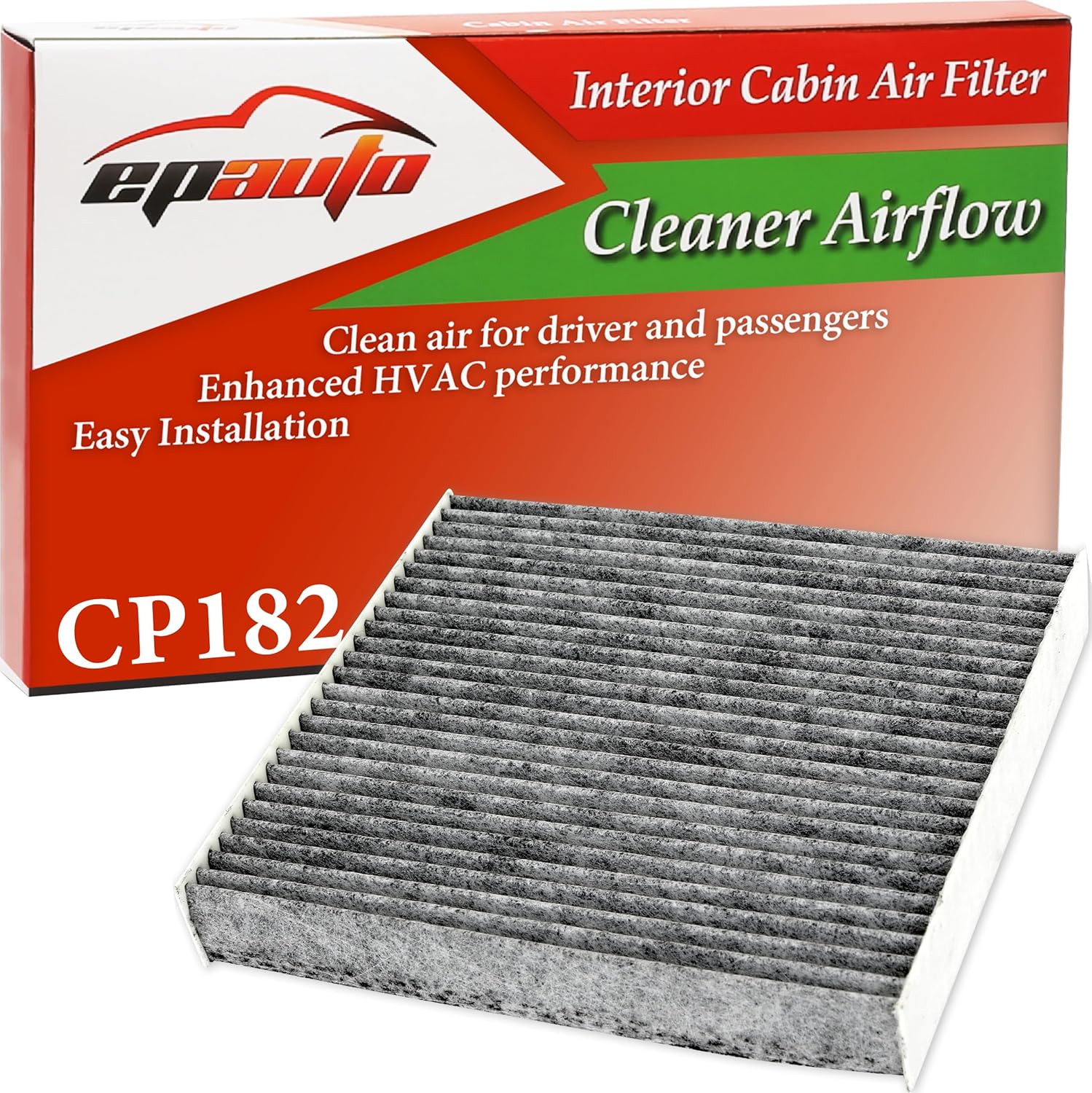
| Compatible models | Select Honda and Acura models (see list) |
|---|---|
| Filtration type | Pleated media with activated carbon |
| Replacement interval | Every 12 months or 12,000 miles |
| Made for part numbers | Replacement for Honda part 80292-TBA-A11 and FRAM CF11182 |
The EPAuto CP182 is a direct-replacement cabin air filter sized to fit a wide range of Honda and Acura model years and built with activated carbon to help cut dust, smog and cabin odors. Installation is a simple glove-box drop and slide-out procedure, so most owners can swap it in under 10 minutes without tools. In use the pleated media captures common particulates while the carbon layer reduces smells from outside air, which makes it a practical choice for daily driving and for drivers who park on busy streets. The filter is recommended for yearly or 12,000-mile replacement to keep HVAC flow and filtration effective. Fitment reports are mostly positive, though a few users note tight fits on certain recent models that may need minor trimming or extra attention when seating the filter. If you want a low-cost alternative to factory replacement that performs like OEM for routine cabin air maintenance, this unit delivers dependable filtration at an affordable price.
Best for: Buyers who prioritize proven performance and community validation and want an inexpensive, easy-to-install cabin filter that reduces odors and particulates for everyday driving.
Less Ideal for: Drivers needing a manufacturer-brand exact-fit guaranteed for every specific model year or those seeking specialized high-efficiency medical-grade filtration should consider other options.
- Activated carbon layer reduces odors as well as dust and pollen
- Wide compatibility across Honda and Acura models from listed years
- Easy glove-box access makes self-installation quick and tool-free
- Affordable, widely used replacement with extensive buyer feedback
- A few reports of slightly oversized or tight fits on some newer model years that may require trimming or careful seating
Verdict: A budget-friendly, carbon-enhanced cabin filter with broad Honda/Acura fitment and plenty of positive real-world reviews, making it a safe choice for routine Civic Touring maintenance.
6. SPEARHEAD Max Thrust Engine Air Filter (MT-050)
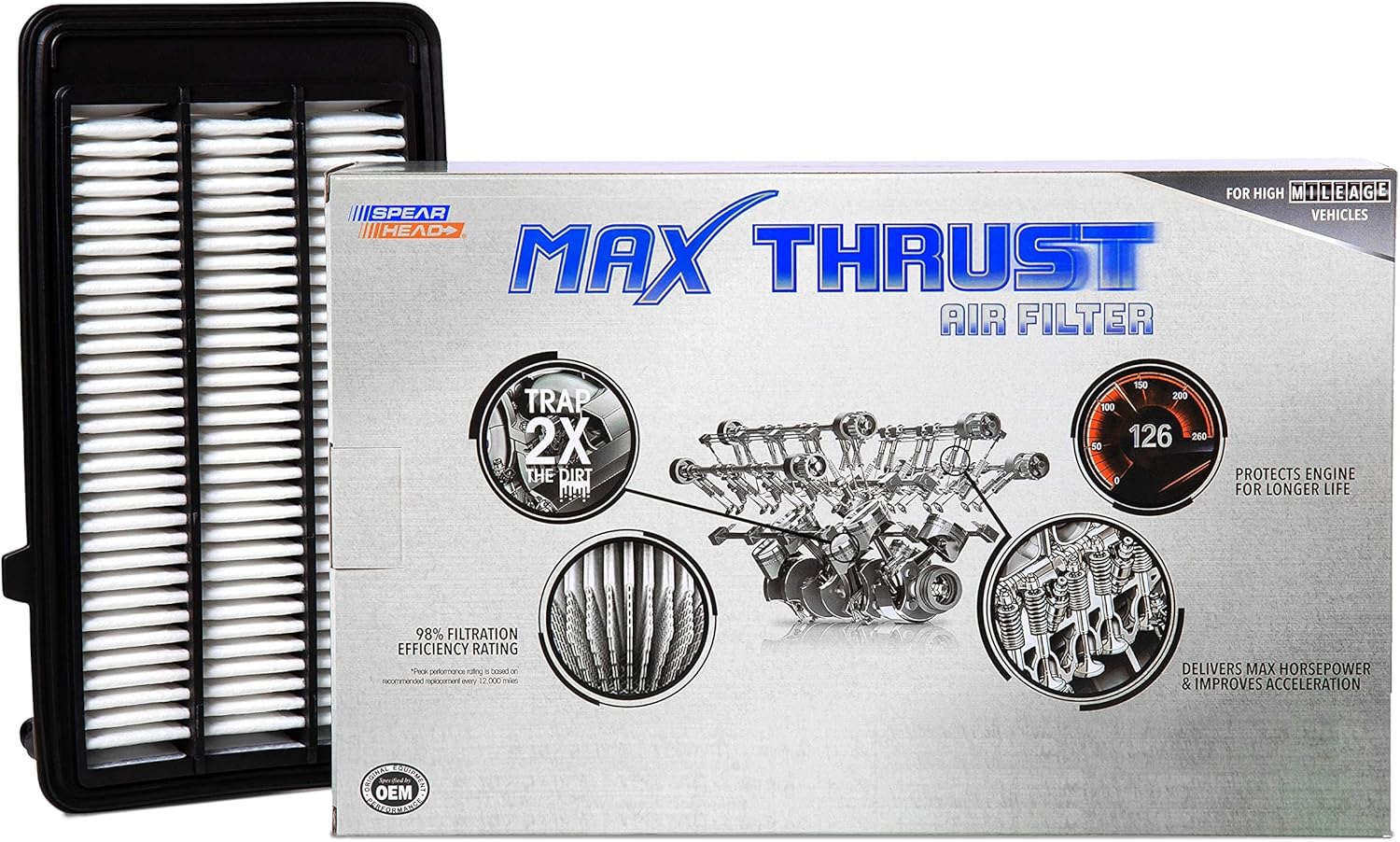
| Fitment | Civic 1.5L Turbo (2016–2021); CR-V 1.5L Turbo (2017–2022) |
|---|---|
| Model number | MT-050 |
| OEM equivalent | CA12050 |
| Service interval | Up to 15,000 miles or 1 year |
| Brand | SPEARHEAD |
The SPEARHEAD Max Thrust (MT-050) is a factory-fit style engine air filter made to replace the stock element on Honda Civic 1.5L Turbo (2016–2021) and CR-V 1.5L Turbo (2017–2022) engines. It uses a Hex-D pleat design and multiple layers of progressively finer media to trap more dirt while allowing airflow, which the brand says supports improved throttle response and fuel economy for up to 15,000 miles or one year. Installation is straightforward for a DIYer since it drops into the airbox like a factory replacement. Practical benefits include stronger dirt-holding capacity versus basic paper filters and a robust rubber sealing edge that helps prevent unfiltered air bypass. Limitations to note are fitment: it is specific to the listed 1.5L turbo engines and will not fit other displacements or hybrid variants, and some users report slightly different airflow feel compared with certain factory filters. For routine maintenance this offers a low-cost, easy swap that aims to protect the intake and preserve engine performance.
Best for: Buyers who prioritize a risk-averse, factory-style replacement that is easy to install and will reliably protect the engine on standard daily-driven Civic Touring vehicles with the 1.5L turbo engine.
Less Ideal for: Drivers who want a high-flow performance upgrade or compatibility across multiple engine sizes should look at specialized performance filters or other part numbers.
- Direct OEM-style fit for specified Civic and CR-V 1.5L turbo engines for simple installation
- Hex-D pleat and multi-layer media increase dirt-holding capacity without severely restricting airflow
- Designed for service intervals up to 15,000 miles or one year
- Thick rubber sealing edge improves sealing and reduces bypass risk
- Only compatible with the listed 1.5L turbo engine configurations and not other displacements or hybrid models
Verdict: A low-cost, factory-fit replacement that makes a conservative, reliable upgrade for Civic Touring 1.5L turbo owners who want improved dirt capture and easy DIY installation.
Choosing the Right Honda Civic Touring Air Filter: Key Factors to Consider
Filtration Efficiency
How well the filter captures dirt, dust, pollen, and fine particulates directly affects engine longevity and sensor health. Higher-efficiency media trap smaller particles, reducing abrasive wear on cylinders and valves and minimizing the chance of contaminants reaching the mass air flow sensor or throttle body.
For a Civic Touring, pick filters that specify particle retention ratings or reference standardized efficiency metrics. Keep in mind that extremely dense media can restrict airflow; balance particle capture with the engine's need for clean air. Regular inspection intervals should be shorter if you drive in dusty or construction-prone environments.
Airflow and Restriction
Airflow performance influences throttle response, idle quality, and fuel economy. A filter that is too restrictive will reduce peak airflow and can make the engine work harder, especially during acceleration or when towing heavier loads. Conversely, overly permissive media that sacrifices filtration for airflow can expose the engine to damaging particulates.
Choose a filter that lists airflow characteristics or pressure drop data, or one designed to match factory airflow levels for the Civic Touring. Consider your driving style: frequent highway driving benefits from lower restriction, while city drivers might prioritize higher filtration for polluted environments.
Fitment and Sealing
A proper seal with the airbox and exact dimensional fit are essential to prevent unfiltered air bypass. Even a high-efficiency element is ineffective if dirt sneaks around imperfect edges or a warped frame. For the Civic Touring, confirm the element's dimensions and gasket design match the factory housing to avoid installation issues and vacuum leaks.
Look for rigid frames, uniform foam or rubber gaskets, and clear fitment documentation. Filters that include alignment tabs or reinforced corners reduce the chance of folding or mis-seating during installation, which is particularly important when replacing the filter without professional tools.
Material Durability and Moisture Resistance
The filter media and frame must withstand temperature shifts, vibration, and exposure to moisture from humid climates or water splashes. Media treated to resist collapsing when damp and frames made from corrosion-resistant materials last longer and maintain sealing integrity in adverse conditions.
For Civic Touring owners who drive year-round, prioritize elements with water-resistant coatings or synthetic media and frames that resist warping. Durable construction reduces the risk of media degradation between scheduled replacements and helps ensure consistent filtration performance over time.
Service Life and Maintenance
Service interval affects both cost of ownership and performance. Some filters are designed for longer replacement cycles using higher-capacity media, while others are intended for more frequent swaps. Longer-life filters can reduce maintenance frequency, but only if they maintain filtration efficiency over their stated lifespan.
Consider your driving habits and environment when selecting a replacement interval for the Civic Touring. If you frequently encounter heavy dust, plan for earlier replacement even with long-life filters. Also evaluate how easy the filter is to inspect and replace during routine servicing.
Installation Ease and Compatibility
The time and tools required to swap the air filter matter for owners who perform maintenance themselves. Filters designed to drop into the existing housing without modification and with clear orientation markings make DIY replacement straightforward. Poorly designed elements may require extra force or trimming, risking damage to the filter or airbox.
Check that the replacement element aligns with factory clips and fasteners used on the Civic Touring. Filters with clear instructions and a simple fit reduce the chance of incorrect installation that could compromise the seal or airflow.
Engine Air Filter Vs Cabin Filter: Know the Difference
The engine intake filter and the cabin filter serve separate roles. The engine filter protects mechanical components and sensors by keeping particulate out of the intake stream, while the cabin filter safeguards occupants from pollen, dust, and pollutants entering the ventilation system. When planning maintenance for a Civic Touring, addressing both on schedule keeps the engine running clean and the interior air fresh.
If your priority is engine performance, focus on engine filter metrics like filtration efficiency and airflow. If interior air quality is also a concern, inspect and replace the cabin filter on its own schedule. Treat them as complementary maintenance items rather than interchangeable parts.
- Engine filter protects mechanical components and sensors.
- Cabin filter improves passenger air quality and HVAC performance.
- Replace both filters according to environmental exposure and use.
When to Replace Your Civic Touring Air Filter
Replacement intervals depend on driving conditions and the filter type. Typical recommendations range from routine service intervals to extended-life schedules, but dusty roads, heavy city traffic, or frequent short trips can all shorten effective life. Inspect the filter visually during oil changes or scheduled services to spot heavy contamination or media collapse.
Keep an eye on symptoms that suggest replacement is due: reduced acceleration, lower fuel economy, uneven idling, or visible dirt on the media. Even if a filter has a long rated lifespan, severe operating conditions justify earlier swap-out to maintain engine protection and efficiency.
- Inspect during regular maintenance for dirt buildup and distortion.
- Shorten intervals after prolonged dusty or construction-zone driving.
- Watch for drivability or economy changes as warning signs.
Installation Tips for Civic Touring Owners
A clean, well-executed installation ensures the new filter performs as intended. Park on level ground, allow the engine to cool, and work in a clean area to avoid introducing debris into the intake. Use the same clips and fasteners provided by the factory; do not force an incompatible element into the housing.
Orient the filter exactly as the housing requires, compress the gasket uniformly, and check that no part of the media is folded or pinched. After installation, start the engine and listen for unusual intake noises that can indicate an imperfect seal. Re-check fasteners after a short test drive.
- Work in a clean area to avoid contaminating the intake.
- Confirm gasket seating and avoid folding the media.
- Run the engine briefly and recheck for intake leaks.
How Filter Choice Affects Fuel Economy and Performance
Airflow restriction directly affects engine load and fuel consumption. Filters that maintain factory airflow help the Civic Touring achieve its designed responsiveness and fuel economy. If a replacement element is too restrictive, you may notice decreased acceleration or higher fuel use, especially during spirited driving or when accelerating onto highways.
Conversely, choosing a filter that prioritizes airflow at the expense of filtration can leave the engine exposed to more contaminants, which in the long term can reduce efficiency and increase maintenance costs. Aim for a filter that balances adequate airflow with reliable particle capture for the best combined outcome.
- Match or closely mimic factory airflow to protect fuel economy.
- Avoid extreme tradeoffs that favor airflow or filtration exclusively.
- Consider documented airflow specs when available.
Sizing and Fitment Notes Specific to the Civic Touring
Dimension accuracy matters because the Civic Touring's airbox accepts a specific filter profile. When selecting a replacement, verify the stated dimensions or part number compatibility to ensure the element seats correctly. Even small deviations can lead to poor sealing or require modification, which is not recommended.
If a listing provides an air filter size guide, cross-check those numbers against the Civic Touring's factory service data. Prioritize elements with explicit Civic Touring fitment claims and clear installation instructions to avoid returns or fitment issues.
- Confirm stated dimensions against factory specifications.
- Avoid any element that implies trimming or modification for fit.
- Prefer replacements that list Civic Touring compatibility explicitly.
Still looking for the perfect fit?
Select your Honda Civic configuration to see the most relevant Air Filters recommendations
How We Chose the Best Honda Civic Touring Air Filter
We selected filters by applying vehicle-focused fitment, performance, and durability filters to ensure each option suits the Honda Civic Touring. Primary evaluation criteria included filtration efficiency measured by micron capture or MERV-equivalent ratings, because removing small particulates protects intake components and sensors. We also weighed airflow characteristics, since overly restrictive media can reduce throttle response and fuel economy on this vehicle. Fitment accuracy and sealing design were tested conceptually through specification review to avoid gaps, warping, or misalignment in the Civic Touring's intake housing.Build quality and materials were judged for resistance to moisture and oil exposure typical of varied driving conditions. Service life and recommended replacement intervals were compared to estimate long-term value and maintenance frequency. Noise and restriction under load were considered for drivers who expect crisp throttle response. We excluded any items that lacked clear fitment data for the Civic Touring or that used ambiguous media specifications. The list focuses on filters with verifiable dimensions, stated filtration performance, and durable construction suited to this vehicle's intake layout.
Our full evaluation process is outlined in our review methodology.
FAQ
How often should I change the engine air filter in a Honda Civic Touring?
It depends on driving conditions, but many drivers inspect the filter every 12,000 to 15,000 miles. In dusty or harsh environments, check and replace it more frequently to maintain filtration and airflow.
Can I install a different size air filter in the Civic Touring to improve airflow?
No. Using a different size risks improper sealing and unfiltered air entering the intake. Always use a replacement that matches the Civic Touring's specified dimensions and fitment.
Does a higher-efficiency filter reduce fuel economy?
Not inherently. Extremely restrictive media can negatively affect airflow and fuel efficiency, but many high-efficiency filters are engineered to balance capture and flow. Choose a filter that lists airflow characteristics to avoid unwanted restriction.
Should I replace the cabin filter at the same time as the engine air filter?
They serve different systems, so replacement intervals can differ. Inspect both during routine service; if the cabin filter is dirty or has reduced airflow, replace it even if the engine filter still appears serviceable.
Are reusable wash-and-reuse filters a good option for the Civic Touring?
Reusable filters can offer long service life, but they require correct cleaning and re-oiling when applicable. Improper service can damage sensors or alter filtration performance, so follow manufacturer instructions carefully if you choose that route.
Will a poorly fitted air filter cause engine damage?
Yes. Gaps or misalignment allow unfiltered air and particulates into the intake, increasing wear on internal components and sensors. Ensure correct fitment and sealing to protect the engine.
Final Verdict
For a Honda Civic Touring, prioritize filters that balance measured filtration efficiency with minimal airflow restriction and exact fitment. Durable materials and clear dimensional compatibility reduce the risk of installation problems and premature degradation. Consider your typical driving environment when weighing longer service intervals against the need for stronger particulate capture.Focus on elements with verified fitment to the Civic Touring, good sealing designs, and documented airflow or efficiency data. That approach helps you maintain engine protection, consistent performance, and predictable maintenance needs.
Explore More:
- Check out all Honda Civic parts & accessories
- Explore Air Filters Maintenance & Repair Guides
- Explore Engine
- Browse all Auto Parts
