

Note: This article contains affiliate links. If you click on these links and make a purchase, I may earn a small commission at no extra cost to you. This helps support my research and content. Read my full affiliate disclosure here.
If you own a 2012-2016 Honda CR-V, choosing the right engine oil matters more than you might think. The right oil helps control wear, supports fuel economy, and keeps seals and gaskets healthy under varied driving conditions. This guide lists the top shortlisted options for the 2012-2016 CR-V and explains the benefits and tradeoffs to help you pick the best fit for your driving habits and maintenance schedule. The selections below were evaluated for viscosity suitability, protection against wear and deposits, compatibility with Hondas of this era, and long-term performance in both city and highway driving. Read on to understand which oil type and change cadence is likely best for your CR-V and why these criteria matter before you buy or schedule a service.
Looking for other parts? See all Honda CR-V parts & accessories.
Top Picks at a Glance
| Best Overall Engine Oil A well-rounded oil balancing protection, fuel economy, and broad compatibility | Mobil 1 High Mileage Full Synthetic Motor Oil 0W-20, 5 Quart |  |
| Best Budget Engine Oil A low-cost oil that still meets basic engine protection standards | Castrol GTX Full Synthetic 0W-20 Motor Oil, 5-Quart Jug |  |
| Best Premium Engine Oil A higher-end formulation focused on maximum protection and longevity | Castrol EDGE 0W-20 Full Synthetic Motor Oil, 5 Quart Jug |  |
| Best 0W-20 Engine Oil A specific viscosity grade optimized for modern-tight tolerance engines | Valvoline Advanced Protection Full Synthetic 0W-20 Motor Oil, 5 qt |  |
| Best High-Mileage Engine Oil Formulated with conditioners to reduce leaks and protect older engines | Castrol EDGE High Mileage 0W-20 Full Synthetic Motor Oil, 5 Quart |  |
| Best Long-Drain Engine Oil Formulated for extended oil-change intervals and heavier-duty protection | Mobil 1 Extended Performance Full Synthetic Motor Oil 0W-20, 5 Quart |  |
1. Mobil 1 High Mileage Full Synthetic Motor Oil 0W-20, 5 Quart
Best Overall Engine Oil

| Viscosity | 0W-20 |
|---|---|
| Size | 5 Quart |
| Vehicle Service Type | Car |
| Model | Extended Performance |
| SAE J300 Viscosity Grade | 0W-20 |
Mobil 1 High Mileage 0W-20 is a full-synthetic motor oil designed to protect engines with elevated mileage while delivering the drivability and thermal stability modern cars expect. For a 2012–2016 Honda CR-V this oil works as a routine service choice: it lubricates and limits wear, helps control deposits and sludge, and supports cooler internal temperatures during highway and city driving. Mobil cites its Triple Action Formula and claims extended protection up to 10,000 miles between changes under recommended conditions, which translates to fewer service visits for owners who follow the manufacturer guidance. The 0W-20 viscosity provides good cold-start flow and can help marginally improve fuel economy in models that call for that grade. Practical downsides are that extended drain claims depend on driving habits and conditions, so many owners may still choose shorter intervals, and the high-mileage formulation is tailored for engines with significant mileage rather than brand-new motors. Overall it is a reliable, widely available full-synthetic option that balances protection and convenience for routine maintenance on CR-Vs from the specified years.
Best for: Drivers of 2012–2016 Honda CR-Vs who want a dependable, full-synthetic 0W-20 oil that prioritizes engine cleanliness and longer service intervals for higher-mileage vehicles.
Less Ideal for: Owners who prefer strictly manufacturer-recommended short oil-change intervals or who have a low-mileage, near-new engine looking for a non high-mileage specific formula.
- Full-synthetic formula for strong wear protection and thermal stability
- High-mileage additives to help reduce sludge and condition seals in older engines
- 0W-20 viscosity offers good cold-start flow and can support fuel economy
- Designed to support extended drain intervals under recommended conditions
- Extended 10,000-mile drain interval may not be appropriate for all driving conditions or owner preferences
Verdict: The best all-around engine oil for most buyers, offering an ideal balance of wear protection, viscosity stability, fuel-economy benefits, and reliability for routine automotive maintenance.
2. Castrol GTX Full Synthetic 0W-20 Motor Oil, 5-Quart Jug
Best Budget Engine Oil

| SAE J300 Viscosity Grade | 0W-20 |
|---|---|
| Compatible with Vehicle Type | Car, Truck |
| Liquid Volume | 5 Quarts |
| Item Type Name | Full Synthetic Motor Oil |
| Meets/Exceeds | API SP / ILSAC GF-6 / dexos1 Gen 3 |
Castrol GTX Full Synthetic 0W-20 is a ready-to-use 5-quart jug of full synthetic engine oil designed for modern gasoline engines. For routine oil changes it delivers low-temperature flow for easier cold starts and stable viscosity at operating temperatures, which helps protect pistons and bearings from wear and reduces sludge buildup over time. Key features include a 0W-20 SAE grade, universal fit for cars and trucks, and formulations that meet API SP and ILSAC GF-6 specifications plus several OEM approvals noted by the manufacturer. In practice it pours cleanly from the jug and supplies enough oil for a complete oil change on most four-cylinder engines. The product emphasizes longer oil life and resistance to viscosity breakdown, which supports extended intervals compared with conventional oils. Limitations are minimal for everyday use but include that 0W-20 is intended for engines that specify that viscosity, so it is not a one-size-fits-all replacement for engines requiring different grades.
Best for: Buyers who want dependable, factory-quality protection on a budget and plan to use an oil grade of 0W-20 for regular commuting and maintenance-focused ownership.
Less Ideal for: Drivers whose vehicles require a different viscosity grade or who need specialty formulations for high-mileage, diesel, or performance engines should choose a product matched to those needs.
- Full synthetic formulation for improved high-temperature stability and wear protection
- Meets API SP and ILSAC GF-6 performance targets and multiple OEM specifications
- 5-quart jug provides enough oil for a full DIY oil change without needing multiple containers
- Viscosity limited to 0W-20 so users must confirm their vehicle specifies that grade
Verdict: The best budget engine oil for buyers who want dependable lubrication and protection at a lower price, prioritizing value while meeting industry performance specifications for everyday driving.
3. Castrol EDGE 0W-20 Full Synthetic Motor Oil, 5 Quart Jug
Best Premium Engine Oil

| Viscosity Level | Low to Medium |
|---|---|
| Compatible with Vehicle Type | Car, Hybrids, Truck |
| Container Type | Jug |
| Liquid Volume | 5 Quarts |
| Brand Name | Castrol |
Castrol EDGE 0W-20 is a full synthetic engine oil aimed at drivers who need strong protection and stable viscosity over longer service intervals. In typical DIY use you pour this 5-quart jug when doing routine oil changes on compatible cars and light trucks; it is formulated to resist high-temperature breakdown, reduce sludge, and limit metal-to-metal wear. Notable features include Castrol's additive technology designed for endurance, high temperature performance, and fuel economy benefits, plus industry licenses that cover modern engine requirements. Practical benefits for a 2012–2016 Honda CR-V include thinner cold-start flow from the 0W rating, good thermal stability during highway driving, and reduced deposit formation over time. Limitations are that 0W-20 is a low-viscosity grade best suited to engines specifying that viscosity; it is not a universal fix for severe contamination or engines requiring a different spec. Also some sellers package in economy multipacks or nonstandard containers that have led to occasional delivery damage reports, so inspect seals on arrival.
Best for: DIY mechanics who prioritize strong additive chemistry and thermal stability to minimize wear and keep a 2012–2016 Honda CR-V running clean between oil changes.
Less Ideal for: Drivers whose CR-V requires a different viscosity or owners seeking specialty formulations for extreme towing or very high-mileage rebuilds should consider other oils.
- Full synthetic formulation for improved high-temperature stability and sludge control
- 0W-20 viscosity supports better cold-start flow and helps fuel economy
- Industry licenses and engine test coverage for modern passenger car engines
- Large 5-quart jug supplies a full drain for most mid-size SUV oil capacities
- Low-viscosity grade only appropriate where 0W-20 is specified
- Occasional reports of damaged or flimsy external packaging on multipack/eco box shipments
Verdict: The best premium engine oil for DIY mechanics who want top-tier additives and stability to minimize wear, maintain performance, and extend engine life under heavier use or longer intervals.
4. Valvoline Advanced Protection Full Synthetic 0W-20 Motor Oil, 5 qt
Best 0W-20 Engine Oil

| Viscosity | 0W-20 |
|---|---|
| Size | 5 QT |
| Flash Point | 200 Degrees Celsius |
| SAE J300 Grade | 0W-20 |
Valvoline Advanced Protection 0W-20 is a full synthetic engine oil designed to protect modern, low-viscosity engines by improving cold-start flow and resisting wear, deposits, and thermal breakdown. It is typically used in regular oil changes where the vehicle manufacturer specifies 0W-20; the thin base oil flows quickly at startup to reduce metal-to-metal contact and its additive package targets wear reduction, deposit control, and heat resistance. Notable features include claimed 40% stronger wear protection, 15% better deposit defense, and up to 2.5 times better heat protection versus industry references, plus approvals for current API and ILSAC categories and manufacturer specifications. In practice this means smoother cold starts, quieter idle, and more consistent drivability, with potential fuel economy benefits from lower viscous drag. The formula is intended to show restorative cleaning over multiple changes rather than instant fixes. Trade-offs are limited to cost versus basic synthetics and the fact that any perceived “restoring” effects typically take several oil-change cycles to appear.
Best for: Drivers who need a true 0W-20 for cars from the 2012–2016 Honda CR-V model years and prioritize strong cold-start protection and long-term engine cleanliness.
Less Ideal for: Drivers who change oil very infrequently or who prefer the lowest-cost conventional or entry-level synthetic options may not value the incremental protections this oil provides.
- Meets modern API and ILSAC specs and several manufacturer requirements for gasoline engines
- Designed for excellent low-temperature flow to protect during cold starts
- Additive package aimed at stronger wear protection and deposit control
- Claims improved heat resistance to fight sludge and thermal breakdown
- Restorative cleaning effects are gradual and require multiple oil changes to become noticeable
Verdict: The best 0W-20 engine oil for owners needing that viscosity grade, delivering cold-start flow and thin-film protection suited to modern engines that require low-viscosity lubricants.
5. Castrol EDGE High Mileage 0W-20 Full Synthetic Motor Oil, 5 Quart
Best High-Mileage Engine Oil
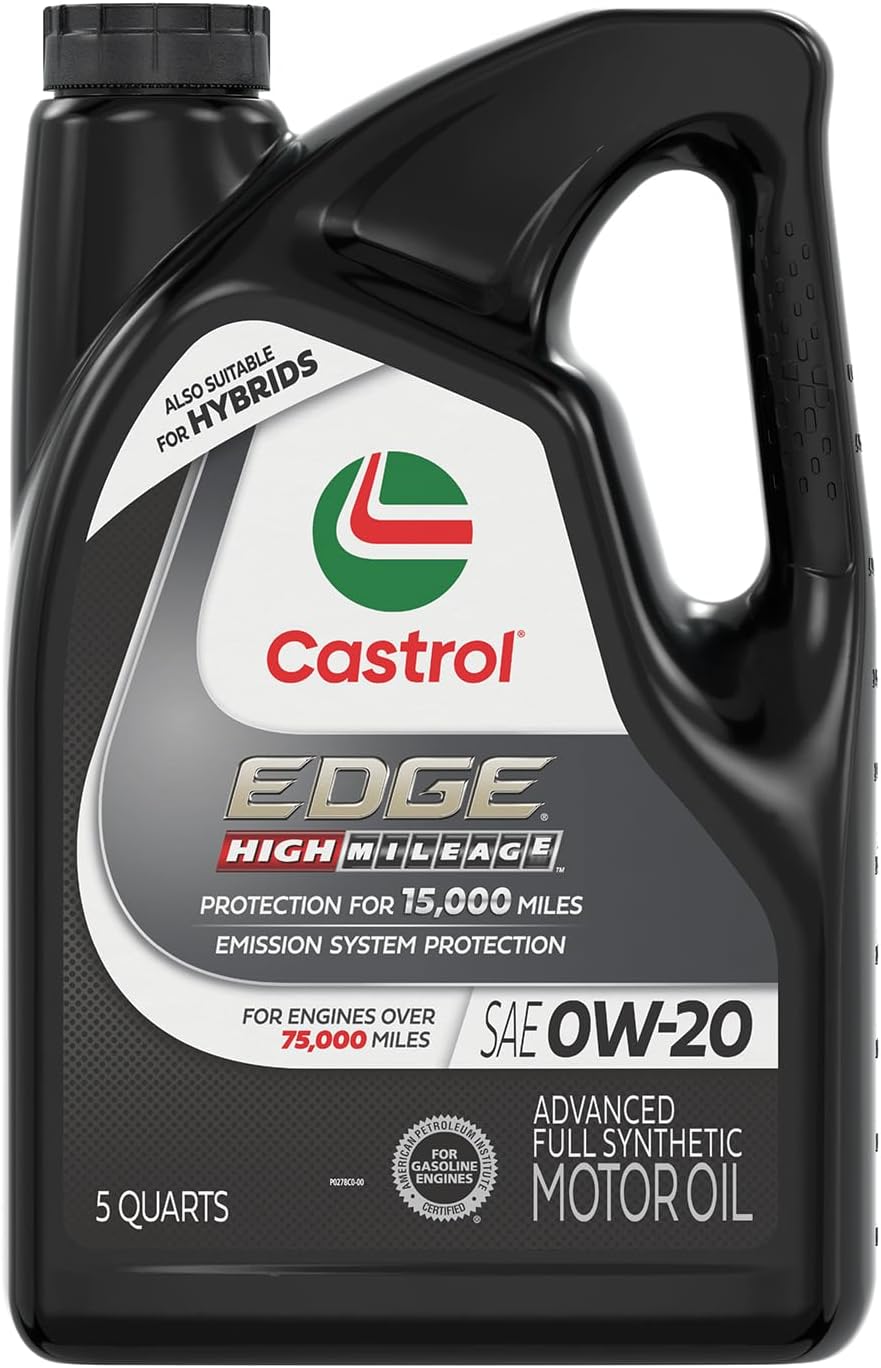
| Compatible with Vehicle Type | For vehicles with over 75,000 miles |
|---|---|
| SAE J300 Viscosity Grade | 0W-20 |
| Liquid Volume | 5 Quarts |
| Viscosity Level | Low to Medium |
Castrol EDGE High Mileage 0W-20 is a full synthetic motor oil tailored for high-mileage engines and intended to be used as a direct replacement during routine service. It supplies a low-viscosity 0W-20 base for modern engines plus a high-mileage additive package that includes seal conditioners and phosphorus replacement technology to help limit leaks, reduce oil burnoff, and protect the catalytic converter. That mix helps control sludge and friction wear and can smooth noise and reduce oil consumption in older engines. The product claims extended drain potential up to 15,000 miles under specified conditions, but most owners will follow manufacturer or shop-recommended intervals. Practical benefits include easier cold starts thanks to the 0W rating and targeted protection for worn seals and emission systems in aging CR-V engines. Buyers should note the extended drain claim depends on driving and maintenance habits, so sticking to conservative intervals and using a quality filter is still important.
Best for: Drivers of older, well-used vehicles who want an oil that helps condition seals, reduce oil consumption, and protect aging engine and emission components while maintaining modern 0W-20 performance.
Less Ideal for: Drivers who prefer strictly manufacturer-specified oil change intervals, those seeking a different viscosity, or owners of vehicles that require specialised formulations should consider alternatives.
- Formulated specifically for high-mileage engines with seal conditioners to reduce leaks
- Low-viscosity 0W-20 improves cold-start flow and fuel efficiency in modern engines
- Additives designed to control sludge, friction wear, and protect the emission system
- Meets multiple industry specifications including API SP and ILSAC GF-6
- Extended 15,000-mile drain interval is conditional and may not apply in typical driving or for older engines
Verdict: The best high-mileage engine oil for vehicles with many miles that benefits from seal conditioners and targeted additives to reduce oil consumption and protect aging engine components.
6. Mobil 1 Extended Performance Full Synthetic Motor Oil 0W-20, 5 Quart
Best Long-Drain Engine Oil

| SAE J300 Viscosity Grade | 0W-20 |
|---|---|
| Liquid Volume | 5 Quarts |
| Compatible with Vehicle Type | Car |
| Viscosity Level | Low to Medium |
Mobil 1 Extended Performance 0W-20 is a full-synthetic motor oil designed to protect modern engines for extended service intervals up to 20,000 miles or one year per the manufacturer. It is typically used in passenger cars like the 2012–2016 Honda CR-V that call for 0W-20 viscosity, and it focuses on oxidation control, low-temperature flow, and deposit prevention so the engine stays clean between longer oil change cycles. Notable features include Mobil 1’s Triple Action+ formula, claimed heat protection up to 500 degrees Fahrenheit, and low-temperature performance to -40 F for reliable cold starts. In practice that means smoother starts, reduced sludge buildup, and durable additive performance that supports longer drain recommendations when the vehicle owner follows the oil change interval guidance. Limitations to consider are that extended drains depend on driving conditions and following the vehicle manufacturer’s service requirements; using extended-interval oil does not override Honda’s maintenance schedule or monitoring needs. For DIYers, standard precautions like using a fresh filter, checking levels, and tracking service intervals remain important.
Best for: DIYers who want to stretch service intervals safely on a 2012–2016 Honda CR-V and prioritize oils with strong oxidation resistance and long-lasting additive packages.
Less Ideal for: Drivers who consistently run severe-service cycles such as heavy towing, frequent short trips, or high-mileage stop-and-go city driving should follow Honda’s recommended change intervals or consult a service professional instead of relying solely on extended drains.
- Formulated for extended drains with up to 20,000 miles protection when manufacturer conditions are met
- Strong oxidation control and high-temperature protection to help prevent oil breakdown
- Good low-temperature flow for quick cold starts and fast engine protection
- Meets ILSAC GF-6 standards for modern gasoline engines
- Widely used and recommended by mechanics and builders, simplifying parts selection
- Extended drain claim depends on driving style, load, and adherence to service checks rather than being universal
Verdict: The best long-drain engine oil for DIYers seeking oils engineered for extended service intervals, offering robust oxidation resistance and additive durability to safely lengthen time between changes.
Choosing the Right 2012-2016 Honda CR-V Engine Oil: Key Factors to Consider
Viscosity and Cold-Start Protection
Viscosity determines how the oil flows at cold start and how well it maintains a protective film at operating temperature. For the 2012-2016 CR-V, using a viscosity that matches manufacturer guidance improves engine start-up lubrication and reduces wear during the critical first seconds of operation.
If you drive frequently in colder climates, a lower winter rating such as 0W-20 will help the oil circulate faster on startup. Conversely, in consistently hot environments or heavy-load driving, a thicker operating viscosity like 5W-30 can better preserve oil film thickness during high-temperature use. Choosing the correct viscosity balances wear protection, fuel economy, and engine noise for this vehicle.
Synthetic Versus Conventional Base Oils
Synthetic formulations typically offer superior thermal stability, oxidation resistance, and flow properties compared with conventional oils. For CR-V owners who want longer service intervals, better high-temperature protection, and improved cold-flow characteristics, synthetic motor oil is often the practical choice.
Conventional oils can be adequate for low-mileage, gentle-use vehicles with regular change intervals, but they degrade faster under stress. Consider driving patterns, planned oil-change frequency, and whether you prioritize maximum protection or lower short-term cost when deciding between synthetic and conventional options.
Additive Chemistry and Deposit Control
The additive package controls detergency, dispersancy, and anti-wear performance. Good detergents and dispersants keep pistons, rings, and oil passages cleaner by preventing sludge and varnish buildup, which is especially important in engines with varied duty cycles like the CR-V.
Anti-wear additives and friction modifiers influence longevity and fuel economy. Oils with balanced additive chemistry reduce deposits while protecting metal surfaces from scoring and accelerated wear. For owners aiming to preserve engine life, prioritize oils with documented deposit-control performance and appropriate additive concentrations.
Compatibility With Engine Seals and Materials
Engine oils interact with elastomers and gasket materials. Some formulations can cause seal hardening or swelling, leading to leaks over time. The right oil for a 2012-2016 CR-V should be compatible with Honda-specified materials to avoid unintended seal degradation.
Manufacturers and data sheets often indicate compatibility or recommended applications. When in doubt, choose oils that explicitly meet passenger car and gasoline-engine specifications and avoid experimental or niche chemistries that lack compatibility data.
High-Mileage Considerations
If your CR-V has accumulated higher mileage, look for oils formulated to address older engines. High-mileage engine oils include additives that condition seals, reduce oil consumption, and help minimize leaks by maintaining better elastomer pliability.
They also often contain targeted detergents to manage accumulated deposits. While not a universal fix for mechanical wear, high-mileage formulations can reduce peripheral issues and help maintain compression and oil control when used alongside appropriate mechanical maintenance.
Manufacturer Specifications and Warranty Concerns
Following Honda recommendations and meeting the specified API and ILSAC grades helps ensure compatibility and can protect warranty coverage where applicable. Using oils that meet recognized certifications provides assurance about basic protective properties, viscosity stability, and performance claims.
Review the vehicle manual for any special guidance on viscosity and approved oil grades. Prioritizing oils with clear spec listings reduces the risk of using an ill-suited formulation that could affect engine behavior or long-term durability.
Choosing Between 0W-20 and 5W-30 for the CR-V
The main distinction between 0W-20 and 5W-30 is cold-start flow and high-temperature film thickness. For drivers in colder regions who value immediate oil circulation and slightly better fuel economy, a 0W-20 formulation aligns with quicker cold start protection. For hotter climates or heavy-load driving, 5W-30 preserves a thicker lubricating film at sustained high temperatures.
Also consider your typical driving pattern. Short urban trips with frequent stops stress cold-start protection, favoring lower winter ratings. Regular long highway runs or towing-like loads push the oil's operating viscosity, which may make a higher hot-rating more suitable for maintaining oil pressure and film integrity.
- 0W-20: better cold-flow, marginal fuel economy gains
- 5W-30: stronger hot-temperature film strength, better under sustained loads
- Match viscosity to climate and driving patterns rather than personal preference
When to Use High-Mileage Formulations
High-mileage oils focus on addressing age-related issues such as seal shrinkage, increased oil consumption, and deposit accumulation. If your CR-V has over 75,000 miles and you notice small oil leaks, higher consumption, or a slight decline in compression, a high-mileage oil can help mitigate these symptoms.
These formulations are not a cure for internal mechanical problems but can improve peripheral issues and extend the practical life of seals and gaskets between more significant repairs.
- Look for seal conditioners and tailored detergents in product literature
- Consider pairing high-mileage oil with a compression and leak-down check
Oil Change Intervals and Service Conditions
Recommended oil-change intervals depend on oil type and driving conditions. For synthetic oils, manufacturers often suggest longer intervals compared with conventional oils, but actual interval choice should account for frequent short trips, severe dust exposure, and heavy idling which can accelerate oil degradation.
If you drive mostly short trips or in dusty urban environments, adhere to shorter intervals even with synthetic oils. For steady highway driving and documented synthetic use, extended intervals can be reasonable when paired with periodic oil analysis or consistent maintenance records.
- Short-trip urban use: shorter intervals
- Highway-dominant driving: longer intervals possible with quality synthetic
- Monitor oil level and appearance between services
Understanding Labels and Specifications
Product datasheets and API/ILSAC certifications provide objective information on performance. Look for clearly stated viscosity grades, API service categories, and ILSAC GF ratings where applicable. These indicators confirm the oil meets minimum performance thresholds for gasoline engines.
Technical datasheets also list viscosity indices, flash point, and base-oil type which help you evaluate thermal stability and suitability for your driving habits. When in doubt, prioritize oils with accessible technical information over products that only feature marketing claims.
- Check API and ILSAC ratings for gasoline-engine compatibility
- Review technical datasheets for viscosity index and oxidation data
- Avoid products with sparse technical documentation
Practical Tips for DIY Oil Changes
If you perform your own oil changes, use the recommended oil capacity and proper filter for the 2012-2016 CR-V engine. Cleanliness during the change and correct torque on the drain plug and filter help prevent leaks and ensure proper sealing. Always dispose of used oil responsibly.
Record the date and mileage at each change to track trends in oil consumption or contamination. Checking the oil level periodically between services helps catch leaks or abnormal consumption early.
- Use correct torque on drain plug and filter
- Record date and mileage for each change
- Check oil level monthly
Still looking for the perfect fit?
Select your Honda CR-V configuration to see the most relevant Engine Oils recommendations
How We Chose the Best 2012-2016 Honda CR-V Engine Oil
We shortlisted engine oils using criteria that matter to owners of 2012-2016 Honda CR-Vs and then applied systematic filters to create a practical, vehicle-focused list. Primary evaluation factors included viscosity range and OEM recommendations to ensure proper cold-start protection and operating viscosity. We also assessed ash and detergent levels as indicators of deposit control and combustion cleanliness, which affect longevity for these engines. Thermal stability and shear resistance were considered to gauge how well an oil maintains film strength and viscosity under highway cruising and towing-like loads. For owners concerned about extended service intervals, we reviewed oxidation resistance and staying power under stress. Compatibility with seals and compatibility with the CR-V's engine materials was another filter, since some formulations can cause leaks or accelerated wear. Excluded from consideration were oils formulated exclusively for diesel engines, products lacking adequate technical datasheets, and blends with unclear viscosity grading. We prioritized oils with clear spec compliance and performance data relevant to mid-2010s Honda engines. Final picks balance real-world protection, drivability, and sensible maintenance intervals for this specific vehicle range.
Our full evaluation process is outlined in our review methodology.
FAQ
What viscosity oil is recommended for a 2012-2016 Honda CR-V?
Recommendations depend on climate and engine variant, but commonly used viscosities include 0W-20 for cold-start performance and fuel economy, and 5W-30 where higher operating viscosity is preferred. Check the vehicle manual for the official guidance.
Can I switch from conventional to synthetic oil in my CR-V?
Yes, switching to synthetic motor oil is usually safe and often beneficial for thermal stability and longer change intervals. Make sure the synthetic meets the required API and ILSAC specifications for gasoline engines and monitor for any changes in oil consumption after the switch.
How often should I change engine oil in a 2012-2016 CR-V?
Change intervals depend on oil type and driving conditions. For normal highway driving with synthetic oil, longer intervals are possible, while city driving with frequent short trips calls for more frequent changes. Follow the manual and adjust for severe service conditions.
Is high-mileage oil necessary for a CR-V with 100,000 miles?
High-mileage oil can help address common age-related issues like seal condition and oil consumption, but it is not a substitute for mechanical repairs. It is a reasonable stopgap to reduce leaks and support longevity while you assess any needed maintenance.
Will a different oil affect fuel economy in my CR-V?
Oil viscosity and friction modifiers can influence fuel economy marginally. Lower viscosity oils such as 0W-20 can provide small efficiency gains, but real-world differences are often modest compared with driving habits and maintenance.
Final Verdict
For 2012-2016 Honda CR-V owners, prioritize oils that match the recommended viscosity for your climate and driving load. Synthetic formulations offer clear advantages in thermal stability and deposit control, while high-mileage options can help older engines manage seals and consumption issues. Balance your choice with realistic oil-change intervals and the vehicle's service history. Ultimately, pick an oil that meets the correct API and ILSAC specifications, matches the appropriate viscosity, and fits your driving pattern. That approach provides the best mix of protection, efficiency, and long-term value for the CR-V.
Explore More:
- Check out all Honda CR-V parts & accessories
- Explore Fluids & Chemicals
- Browse all Accessories
