

Note: This article contains affiliate links. If you click on these links and make a purchase, I may earn a small commission at no extra cost to you. This helps support my research and content. Read my full affiliate disclosure here.
If you own a 2017-2022 Honda CR-V, choosing the right engine oil affects fuel efficiency, wear protection, and cold-start behavior more than most routine maintenance tasks. The CR-V used in this model span typically benefits from oils that meet Honda specifications and provide stable viscosity across temperature ranges. This guide covers seven shortlisted engine oils that are appropriate for the 2017-2022 CR-V lineup and explains the key differences you should weigh. We evaluated oils for viscosity match, additive package, and protection under urban and highway use. Read on to understand how to pick the best option for your driving patterns and maintenance schedule before the product list below.
Looking for other parts? See all Honda CR-V parts & accessories.
Top Picks at a Glance
| Best Overall Engine Oil Well-rounded full‑synthetic pick balancing protection, price, and specs | Valvoline Advanced Protection Full Synthetic 0W-20 Motor Oil, 5 qt |  |
| Best Budget Engine Oil Low‑cost option that still meets core API and ILSAC specs | Castrol EDGE High Mileage 0W-20 Full Synthetic Motor Oil, 5 Quart |  |
| Best 0W-20 Engine Oil Specifically a low‑viscosity 0W‑20 formulation for modern engines | Castrol EDGE 0W-20 Full Synthetic Motor Oil, 5 Quart Jug |  |
| Best Long‑Change / Extended Protection Engine Oil Formulated for longer drain intervals and extra thermal protection | Valvoline Extended Protection Full Synthetic Motor Oil SAE 0W-20, 5 qt |  |
| Best Oil Change Kit Includes oil plus filter and drain washer for one DIY service | Factory Racing Parts 0W-20 Full Synthetic Deluxe Oil Change Kit (3.5 Qt) |  |
| Best High‑Mileage Engine Oil Additives and conditioners tuned for engines with more miles | Castrol GTX Full Synthetic 0W-20 Motor Oil, 5 Quart Jug |  |
| Best OEM Honda Engine Oil Genuine or factory‑approved oil meeting Honda approvals and testing | Honda Genuine Full Synthetic SAE 0W-20 Motor Oil (5 qt, pack of 5) |  |
1. Valvoline Advanced Protection Full Synthetic 0W-20 Motor Oil, 5 qt
Best Overall Engine Oil

| Viscosity | 0W-20 |
|---|---|
| Size | 5 QT |
| Meets specifications | ILSAC GF-7A, API SP, API SN with SN PLUS |
| Manufacturer | Valvoline |
Valvoline Advanced Protection Full Synthetic 0W-20 is a factory-quality motor oil designed for routine engine protection and long-term maintenance. It is used like any full synthetic oil: drain the old oil, replace the filter, and fill to the manufacturer recommended level. The formula emphasizes wear reduction, deposit control, and thermal stability, with claims of stronger wear protection and better heat resistance than typical industry standards. That translates to smoother cold starts, reduced engine noise, and cleaner internals over multiple changes, plus modest fuel economy benefits from improved low-temperature flow. It meets modern specifications including ILSAC GF-7A, API SP, and several manufacturer approvals, so it fits recommended 0W-20 service requirements. Expect reliable, all-season performance for daily driving and highway use, especially in newer small SUVs. The main compromise is that the restorative cleaning effects are gradual and materialize over several oil-change cycles, so it is not an instant fix for heavily contaminated engines.
Best for: Drivers looking for a dependable, widely specified 0W-20 full synthetic for routine maintenance who prioritize long-term engine protection and consistent everyday performance.
Less Ideal for: People seeking an immediate fix for engines with severe sludge or mechanical problems should consider professional service or specialty flush products instead.
- Full synthetic base oils for improved low-temperature flow and smoother cold starts
- Manufacturer and industry specifications (ILSAC GF-7A, API SP) for broad gasoline-engine compatibility
- Claims enhanced wear, deposit, and heat protection compared with standard industry grades
- Designed to help improve fuel economy through reduced friction and better flow
- Restorative or deposit-cleaning benefits typically require multiple oil-change cycles to become noticeable
Verdict: The top choice for readers who want a reliable, well‑tested engine oil that balances wear protection, thermal stability, and cost for routine maintenance.
2. Castrol EDGE High Mileage 0W-20 Full Synthetic Motor Oil, 5 Quart
Best Budget Engine Oil
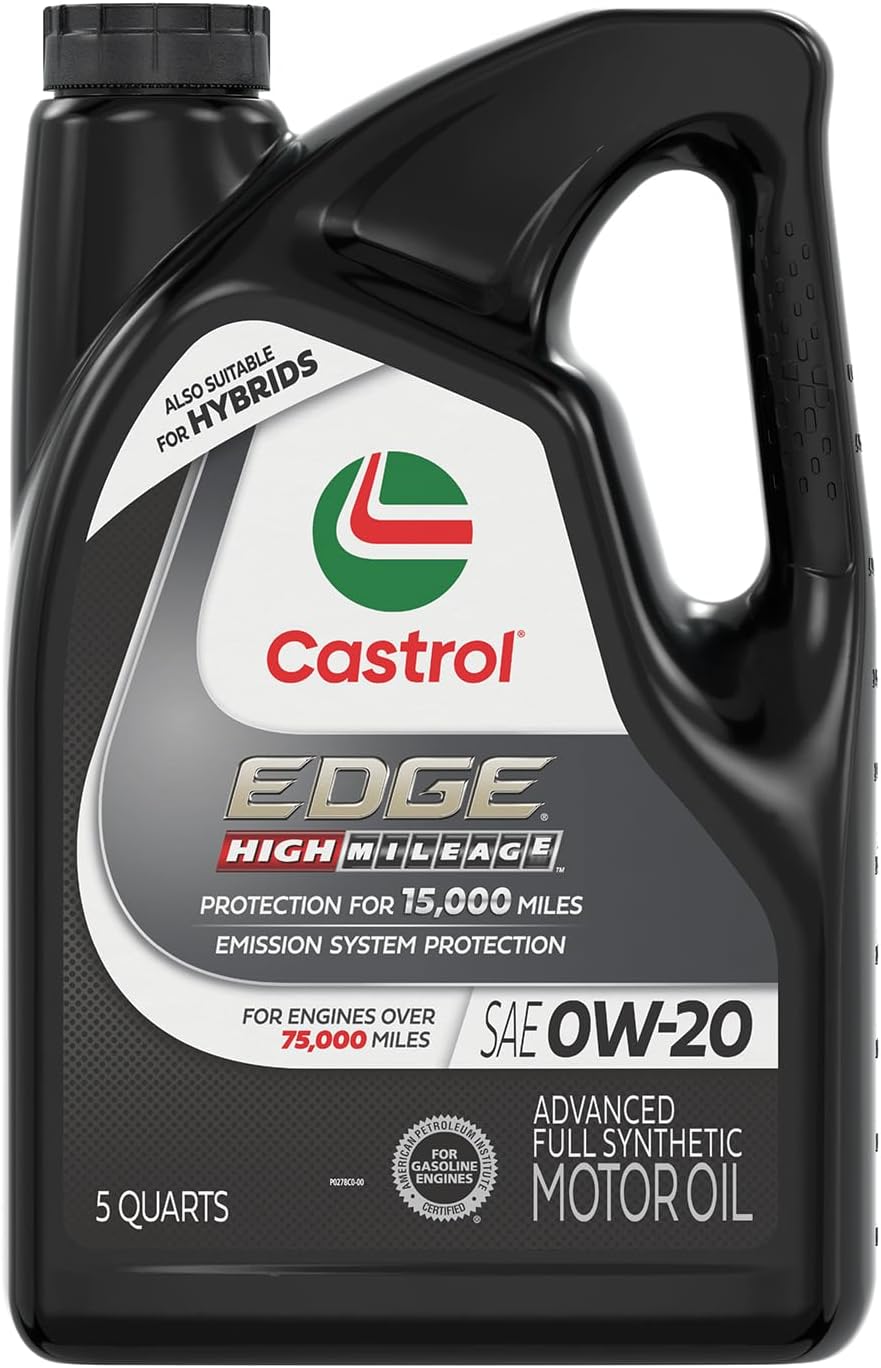
| SAE Viscosity Grade | 0W-20 |
|---|---|
| Compatible with Vehicle Type | For vehicles with over 75,000 miles |
| Liquid Volume | 5 Quarts |
| Meets Specifications | API SP | ILSAC GF-6 |
Castrol EDGE High Mileage 0W-20 is a full synthetic motor oil formulated for vehicles with more than 75,000 miles and intended for routine DIY oil changes. It meets modern API and ILSAC specifications and includes a phosphorus reduction technology aimed at protecting catalytic converters and the emission system. In practical use the 0W-20 viscosity gives good cold-start flow and fuel-efficient operation while the high-mileage additive package helps reduce leaks, oil burnoff, sludge and timing-chain wear. The product claims up to 15,000 miles between oil changes under ideal conditions, though many owners follow shorter intervals depending on driving style. As a budget-conscious choice for maintenance, it balances factory-quality protection with a focus on older engines, but users who prefer maximum extended drain intervals or have manufacturer-mandated oil change schedules should follow their vehicle requirements.
Best for: DIY owners who prioritize meeting factory-grade specs while keeping fluid costs down and who perform routine oil changes on higher-mileage 2017–2022 Honda CR-Vs.
Less Ideal for: Drivers who want maximum extended drain intervals or who must strictly follow dealer-recommended service schedules should consider oils and intervals specified by their service provider.
- Formulated for high-mileage engines to help reduce leaks and oil burnoff
- Full synthetic 0W-20 viscosity for good cold-start protection and fuel efficiency
- Phosphorus replacement technology to help protect catalytic converters and emissions systems
- Meets current API SP and ILSAC GF-6 specifications for modern engine compatibility
- 15,000-mile drain claim may not suit all driving conditions so shorter intervals may be prudent
Verdict: For DIYers looking to save on fluid costs without sacrificing required specifications, this pick offers acceptable protection at a lower price.
3. Castrol EDGE 0W-20 Full Synthetic Motor Oil, 5 Quart Jug
Best 0W-20 Engine Oil

| Container Type | Jug |
|---|---|
| Compatible with Vehicle Type | Car, Hybrids, Truck |
| Viscosity Level | Low to Medium |
| Liquid Volume | 5 Quarts |
Castrol EDGE 0W-20 is a factory-quality full synthetic motor oil designed to deliver the thin cold-start flow 0W-20 requires while still protecting under high temperature and load. It is typically used as a service fill for vehicles that specify 0W-20 to meet factory viscosity and fuel-economy targets. Notable features include Castrol's additive technology aimed at reducing sludge and wear, claimed extended oil life, and approvals that exceed API SQ/SP and ILSAC GF-7 standards. In real-world use it helps with smoother cold starts, consistent viscosity at operating temperatures, and reduced deposit formation that supports long-term engine cleanliness. The product is offered in a 5 quart jug for complete service fills and is marketed for cars, hybrids, and light trucks. Limitations to consider are that extended mileage claims depend on driving conditions and manufacturer service intervals, so follow your CR-V's recommended change schedule; some buyers also report occasional packaging issues with secondary bulk formats. Overall this is a practical choice when you need a true 0W-20 oil that aligns with modern small turbocharged and naturally aspirated engines' requirements.
Best for: Buyers who need a genuine 0W-20 oil to meet factory viscosity recommendations and prioritize cold-start protection and engine cleanliness for daily-driven modern compact SUVs.
Less Ideal for: Drivers who prefer longer DIY oil-change intervals beyond manufacturer recommendations or want non-synthetic or alternative viscosity grades should consider other products.
- True 0W-20 viscosity for correct cold-start flow and factory-specified protection
- Formulated to resist high-temperature breakdown and reduce sludge
- Meets and exceeds multiple industry specs including API SQ/SP and ILSAC GF-7
- Extended oil-change interval claims depend on usage and should not replace following manufacturer schedules
Verdict: Choose this slot when you need a true 0W‑20 formulation to ensure correct cold‑start flow and factory‑recommended viscosity for modern turbocharged small engines.
4. Valvoline Extended Protection Full Synthetic Motor Oil SAE 0W-20, 5 qt
Best Long‑Change / Extended Protection Engine Oil
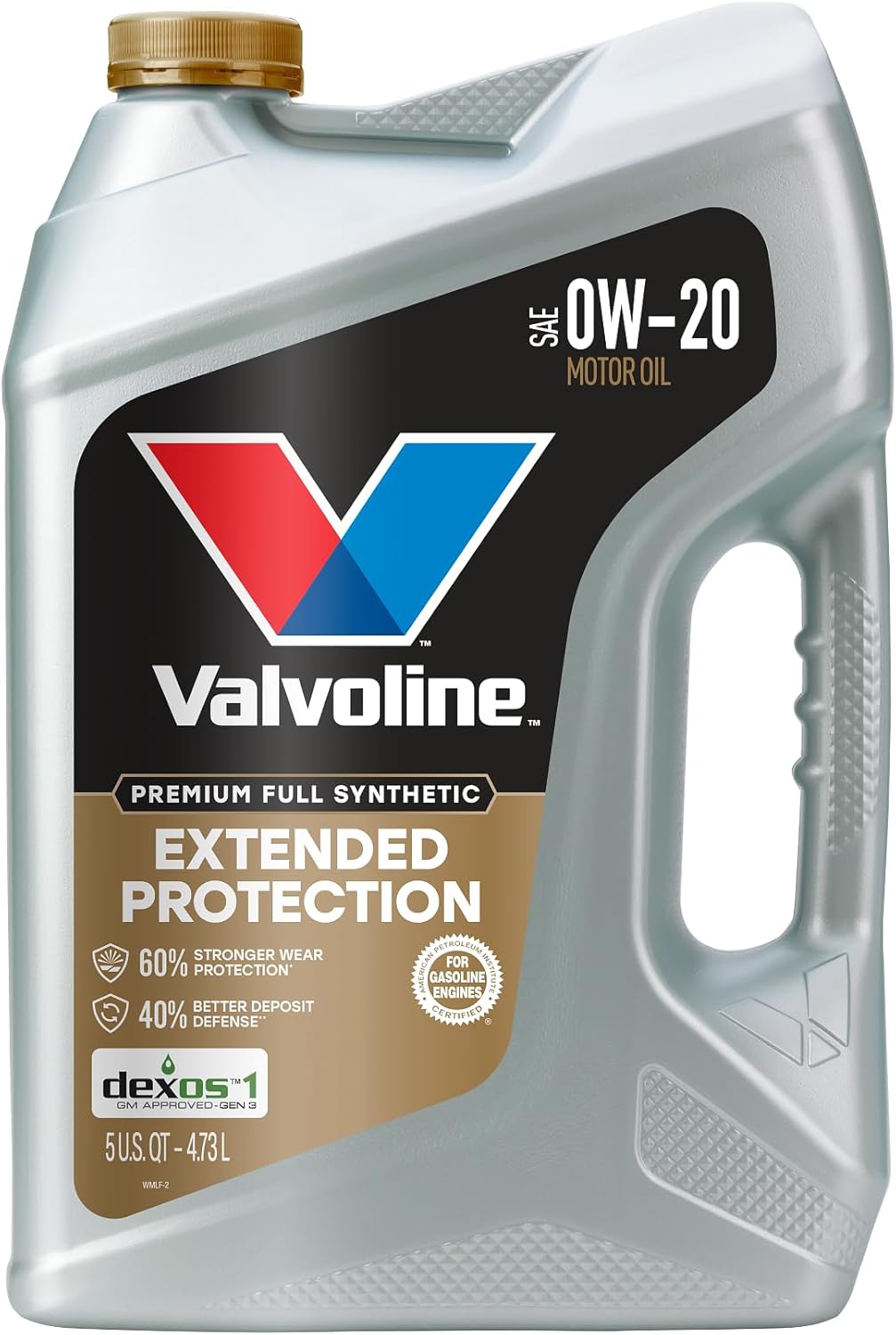
| SAE J300 Viscosity Grade | 0W-20 |
|---|---|
| Container Type | Bottle |
| Compatible with Vehicle Type | Car, Truck |
| Liquid Volume | 5 Quarts |
| Specifications | ILSAC GF-7A, API SP |
Valvoline Extended Protection 0W-20 is a premium full synthetic engine oil designed for longer service intervals and tougher operating conditions. It is typically used in routine oil changes where owners want stronger protection between services and improved resistance to heat and deposits. The formula highlights Dual Defense Additive Technology that Valvoline says boosts wear protection, improves deposit control, and increases heat tolerance; those features translate to better engine cleanliness and reduced internal wear under steady commuting or occasional severe use. The oil meets current industry specifications including ILSAC GF-7A and API SP and lists manufacturer approvals that cover many modern gasoline engines, making it suitable for fuel-efficient, small-displacement engines. Trade-offs are that 0W-20 is specific to engines that require that viscosity grade, so buyers should confirm Honda CR-V owner requirements before switching, and some users report mixed mileage effects depending on driving style. For drivers seeking an extended-protection, factory-quality replacement oil, this Valvoline blend aims to keep engines cleaner and running cooler between changes.
Best for: Drivers who favor longer oil change intervals and want an oil focused on minimizing wear, deposits, and thermal breakdown in modern small-displacement gasoline engines such as the 2017–2022 Honda CR-V when the manufacturer recommends 0W-20.
Less Ideal for: Drivers whose CR-V or other vehicles require a different viscosity grade or those who prefer conventional or high-mileage formulations tailored to very high-mileage engines.
- Formulated for extended service with additives targeting wear, deposits, and heat protection.
- Full synthetic 0W-20 suitable for modern fuel-efficient gasoline engines.
- Meets ILSAC GF-7A and API SP specifications and lists manufacturer approvals for broad compatibility.
- Available in a 5 quart bottle that covers most oil change needs.
- Viscosity limited to 0W-20 so not suitable for engines requiring a different grade.
- Some user reports note variable fuel economy outcomes depending on driving conditions.
Verdict: This pick is for drivers who prefer oils engineered for extended service intervals and added defense against viscosity breakdown and deposits.
5. Factory Racing Parts 0W-20 Full Synthetic Deluxe Oil Change Kit (3.5 Qt)
Best Oil Change Kit

| SAE Viscosity | 0W-20 |
|---|---|
| Certifications | API SP, ILSAC GF-6A |
| Liquid Volume | 112 Fluid Ounces |
| Included Components | Oil, oil filter, air filter, cabin filter, crush washer, gloves, funnel |
This deluxe oil change kit supplies everything needed to perform a single 0W-20 service on specified Honda turbo engines. It contains 3.5 quarts of Factory Racing Parts SAE 0W-20 full synthetic oil rated API SP and ILSAC GF-6A, an engine oil filter, air filter, cabin air filter, crush washer, gloves, funnel, and a reminder sticker. For DIYers the convenience is clear: the correct oil volume and matching filter parts reduce shopping and fitment guesswork, and the included funnel and gloves simplify the job. The oil is formulated to resist LSPI and support start-stop engines while promoting fuel economy. Limitations to note are the 3.5 quart oil volume, which is intended for a single change on compatible 1.5L turbo Honda engines and may not cover models requiring larger fill volumes, and the kit does not include a drain plug tool or torque specifications, so basic tools and attention to service procedures are still required.
Best for: Buyers who want one ready-to-use package that includes the correct oil volume and matching filters to perform a single, straightforward oil change on compatible 1.5L turbo Honda engines.
Less Ideal for: Shoppers needing bulk oil for multiple services, professional shops, or vehicles with larger oil capacities should look for larger-volume options or separate parts.
- Complete single‑service kit with oil, oil filter, air filter, cabin filter, crush washer and basic accessories
- Full synthetic SAE 0W-20 oil certified API SP and ILSAC GF-6A for modern turbocharged engines
- Formulated to reduce LSPI risk and support start‑stop operation for better engine protection
- Assembled in the USA and includes a reminder sticker to track service
- Oil volume is 3.5 quarts which may be insufficient for some engine drain capacities requiring more oil
- Kit lacks specific tools such as a drain plug wrench or torque guide for filter/plug installation
Verdict: Buy this complete kit if you want one package with the correct oil volume, oil filter, and crush washer to do a single, hassle‑free oil change.
6. Castrol GTX Full Synthetic 0W-20 Motor Oil, 5 Quart Jug
Best High‑Mileage Engine Oil

| SAE J300 Viscosity Grade | 0W-20 |
|---|---|
| Compatible with Vehicle Type | Car, Truck |
| Container Type | Can |
| Liquid Volume | 5 Quarts |
Castrol GTX Full Synthetic 0W-20 is a full synthetic engine oil formulated to reduce wear, resist viscosity breakdown, and help control sludge buildup. You would use it as the engine lubricant during routine oil changes for cars and light trucks that call for 0W-20. Notable features include additives aimed at wear protection, sludge prevention, and high temperature stability that the brand says support longer oil life and extended protection up to typical oil-change intervals. For a high-mileage engine the formulation’s emphasis on wear reduction and cleanliness can help minimize further internal deterioration and keep passages clearer, which supports steady performance and fuel economy. The 5 quart jug is convenient for a single full service and pours cleanly. Limitations are that you must confirm this SAE grade and specification list matches your vehicle maker requirements, and while the product description highlights long protection, actual oil-change interval decisions should follow the CR-V manufacturer recommendations or mechanic advice for older engines.
Best for: Drivers maintaining older compact SUVs who prioritize protecting an aging engine from wear and sludge while keeping oil-change maintenance straightforward.
Less Ideal for: Those who must follow a manufacturer-prescribed oil spec that differs from 0W-20 or owners seeking factory-branded oils recommended explicitly by their dealer.
- Full synthetic base for better high-temperature and shear stability than conventional oils
- Additive package targeted at reducing engine wear and preventing sludge
- 5-quart container covers most small-vehicle oil changes without needing multiple bottles
- Not a vehicle-specific formulation; verify compatibility with Honda CR-V 2017–2022 specifications before use
Verdict: Select this option when caring for an older engine—its seal conditioners and anti‑wear additives help reduce leaks and extend life in high‑mileage vehicles.
7. Honda Genuine Full Synthetic SAE 0W-20 Motor Oil (5 qt, pack of 5)
Best OEM Honda Engine Oil

| SAE J300 Viscosity Grade | 0W-20 |
|---|---|
| Container Type | Bottle |
| Compatible with Vehicle Type | Car |
| Liquid Volume | 5 Quarts |
This Honda Genuine 0W-20 full synthetic motor oil is formulated specifically for Honda engines and is presented here as five 1‑quart bottles. It is used as the factory‑recommended viscosity for many recent Honda models to improve cold‑start circulation, resist viscosity breakdown at high temperatures, and minimize harmful deposits that can reduce efficiency. The formulation claims lower volatility to reduce oil consumption and is tested and approved by Honda R&D, which makes it a straightforward choice for maintenance that preserves manufacturer compatibility. In practice this oil simplifies service decisions for CR‑V owners who want a factory‑matched fluid that supports fuel efficiency and longevity. The main limitation is there are no special additives or performance claims beyond factory testing, so buyers seeking extreme performance or motorsport formulations should look elsewhere; this is intended as a warranty‑friendly, everyday synthetic for street use and regular service intervals.
Best for: Buyers who prioritize using Honda‑approved fluids and want a warranty‑friendly, factory‑matched oil for routine maintenance on 2017–2022 Honda CR‑V vehicles.
Less Ideal for: Drivers who need specialty high‑performance, racing, or extended‑drain interval oils should consider performance or aftermarket formulations instead.
- Factory‑formulated and tested by Honda R&D for compatibility with Honda engines
- Full synthetic 0W‑20 provides fast cold‑start flow and stable high‑temperature protection
- Sold as five 1‑quart bottles for multiple oil changes or full refill needs
- Formulation aimed at reducing volatility and engine oil consumption
- Not designed as a high‑performance or racing oil; no performance upgrades beyond factory specification
Verdict: Pick this when you want factory‑approved fluid formulated and tested to Honda standards for guaranteed compatibility and warranty‑friendly maintenance.
Choosing the Right 2017-2022 Honda CR-V Engine Oil: Key Factors to Consider
Viscosity and Cold-Start Performance
Viscosity determines how easily oil flows at both low and high temperatures and directly affects engine protection during start-up. For 2017-2022 CR-V engines, selecting the correct multi-grade viscosity ensures the oil reaches critical engine components quickly on cold mornings while still providing a stable film at operating temperature.
A thinner cold viscosity (lower "W" number) improves pumpability and reduces wear during short trips, while the higher second number ensures protection under load. Consider your climate and startup frequency: colder climates benefit from lower "W" grades for faster circulation, while moderate climates can prioritize slightly thicker mid-range grades for added shear stability.
Additive Chemistry and Wear Protection
Additives such as detergents, dispersants, anti-wear agents, and friction modifiers determine how well the oil prevents metal-to-metal contact and controls deposits. High-quality anti-wear packages protect bearings, camshafts, and timing components common to CR-V engine designs, especially under stop-and-go or towing loads.
Detergents and dispersants keep combustion byproducts suspended so they can be removed at the next oil change, reducing sludge and varnish buildup. For owners aiming to maximize engine life, prioritize oils with robust anti-wear and detergent systems that are compatible with the CR-V's metallurgy and seal materials.
Synthetic Versus Conventional Base Stocks
Synthetic base oils usually offer better thermal stability, lower volatility, and improved cold-flow characteristics than conventional oils. For 2017-2022 CR-V owners, synthetic formulations can provide longer-lasting protection, reduced oil consumption, and more consistent viscosity retention over extended intervals.
Conventional oils may be sufficient for low-mileage, low-stress usage but will typically need more frequent changes and may not protect as well under high-heat conditions. When deciding, weigh driving style, expected oil change interval, and whether you need the added protections that synthetic chemistry provides.
Compatibility With Factory Specifications
Always verify an oil meets the vehicle manufacturer's recommended specifications and viscosity grades for the specific model year range. The 2017-2022 CR-V has engine families and tolerances that rely on certain SAE grades and performance categories. Oils that do not meet these specs risk inadequate protection or can interact poorly with seals.
Check for manufacturer approvals and industry certifications relevant to passenger car gasoline engines. Using an oil aligned with factory guidance maintains warranty compliance where applicable and reduces the chance of unexpected issues like leaks or premature wear.
High-Mileage Considerations
As mileage increases, engines undergo wear and the condition of seals and valve guides changes. High-mileage-specific oils include conditioners and seal swell agents that can reduce seepage and improve compression. For CR-Vs past moderate mileage thresholds, these formulations may reduce external leaks and restore some sealing properties.
Owners should balance the benefit of conditioners against the risk that certain additives can attract dirt or affect emissions systems. Consider a high-mileage formulation if the CR-V shows minor oil consumption, visible seepage, or reduced compression, but monitor for any changes in performance after switching.
Service Interval and Oil Longevity
Different oils are formulated for varying service intervals. Full synthetic oils typically resist oxidation and maintain protective properties longer than conventional oils, enabling extended intervals between changes when paired with proper maintenance. For 2017-2022 CR-V owners, longer-lasting oils can reduce maintenance frequency but require careful monitoring of oil condition and top-off practices.
If you routinely tow, drive in extreme heat, or take many short trips, more frequent changes are advisable even with long-life oils. Always follow OEM recommendations for interval maximums and adapt based on observed oil condition and driving demands.
Which Viscity Grades Fit the 2017-2022 CR-V Engines
Honda engines from 2017 through 2022 commonly call for multi-grade oils that balance cold-start flow with high-temperature film strength. The most frequently recommended SAE grades address both winter pumpability and summertime protection. Choosing between slightly different allowed grades depends on local climate and driving patterns.
If you live in colder regions, prioritize oils with a lower "W" rating for faster circulation during startup. In temperate climates, a mid-range multi-grade provides reliable protection without sacrificing fuel economy. Confirm the exact engine code for your CR-V to double-check the factory viscosity guidance before final selection.
- Lower "W" grades improve pumpability at cold temperatures
- Higher second numbers enhance film strength at operating temperature
- Refer to the owner manual for the official viscosity range for your engine variant
Synthetic Oils and Fuel Economy Trade-Offs
Synthetic oils can reduce internal friction and volatility, which often translates to slight fuel-economy benefits and lower oil consumption for the 2017-2022 CR-V. These gains are more noticeable in engines with tight tolerances and for drivers who do mostly highway miles.
However, the marginal improvement in fuel economy should be balanced against maintenance preferences and the vehicle's age. For newer CR-V engines, synthetic makes sense for durability and stable performance across seasons. For older engines with minor leaks, assess whether a high-mileage or conventional blend better matches seal condition.
- Synthetic oils deliver more consistent viscosity over time
- Fuel economy improvements are usually modest but measurable
- Consider engine age when deciding between full synthetic and blends
When to Consider High-Mileage Formulations
High-mileage formulas include additives designed to condition seals and reduce external oil seepage. If your CR-V has accumulated significant miles and shows minor oil leaks or increased consumption, these formulations can be beneficial. They are not a fix for major mechanical issues, but they can help maintain drivability and reduce the need for small top-offs.
Monitor the vehicle after switching to high-mileage oils for any change in smoke, oil consumption rate, or drivability. If problems persist, a mechanical inspection is warranted as oil alone cannot correct worn internal components.
- Best for engines with visible minor seepage or higher oil consumption
- Contain seal conditioners and anti-wear additives
- Not a substitute for mechanical repairs
Oil Change Intervals and Practical Maintenance Tips
Adhere to Honda's recommended oil change intervals as a starting point, then adjust based on your driving conditions. Short trip urban driving, heavy towing, or frequent idling will shorten effective oil life. Use the selected oil's guidance and inspect oil condition regularly between changes.
Keep track of oil level and color, and top off with the same viscosity if needed. When changing oil, also replace the filter and check for signs of metal particles or contamination that could indicate engine wear beyond routine maintenance.
- Follow manufacturer intervals, adjust for severe service
- Always replace the oil filter at each service
- Top off with matching viscosity and specification
Environmental and Seasonal Considerations
Temperature extremes affect both viscosity selection and oil degradation. In cold winters, prioritize oils with strong low-temperature flow. In hot climates, focus on oils with high thermal stability and low volatility to reduce consumption and preserve protective additives.
Seasonal changes may justify switching between two recommended viscosity grades if local climate swings widely. Any seasonal change should still conform to factory-approved viscosity ranges for your specific CR-V engine.
- Cold climates require better pumpability at low temperatures
- Hot climates need thermal and oxidation stability
- Seasonal viscosity swaps should remain within OEM allowances
How Oil Choice Affects Emissions Systems
Some oil additives can influence catalytic converter and oxygen sensor performance over time. Oils formulated with appropriate detergent and additive balances minimize ash and deposit formation that could impact emissions components. For emissions-sensitive systems on the CR-V, choose oils that meet passenger car engine standards and low-ash recommendations where applicable.
If your vehicle uses an advanced exhaust aftertreatment system, verify that the oil does not exceed allowable sulfated ash, phosphorus, or sulfur limits outlined in service documentation. Maintaining recommended service intervals also reduces the risk of deposit buildup that harms emissions function.
- Low-ash formulations help protect catalytic converters
- Detergent balance reduces deposit formation
- Adhere to OEM specifications to protect emissions controls
Still looking for the perfect fit?
Select your Honda CR-V configuration to see the most relevant Engine Oils recommendations
How We Chose the Best 2017-2022 Honda CR-V Engine Oil
We narrowed candidates using Honda-relevant compatibility, official viscosity recommendations for the 2017-2022 CR-V engines, and the real-world demands of typical owners. Primary evaluation criteria included viscosity and cold-start flow, wear protection and additive chemistry, thermal and deposit control, and suitability for higher-mileage engines. We also considered oil change interval performance and compatibility with factory seals to avoid leaks or premature degradation. Excluded items included oils that do not meet common OEM specifications or lack clear multi-grade labeling relevant to this vehicle. We avoided products intended solely for racing or specialty competition use because they do not align with everyday CR-V driving. The final shortlist emphasizes balanced formulations that deliver durable film strength, oxidation resistance, and appropriate viscosity across expected temperature ranges for owners in varied climates. Our process prioritized measurable technical specs and documented performance characteristics over marketing claims, and we focused on oils that support reliable operation and longevity for the 2017-2022 Honda CR-V engines.
Our full evaluation process is outlined in our review methodology.
FAQ
How often should I change the oil in a 2017-2022 Honda CR-V?
Follow Honda's baseline recommendations, then shorten intervals for frequent short trips, heavy idling, or towing. Many owners on mixed driving cycles change oil every 5,000 to 7,500 miles with modern synthetic oils, but individual conditions can require more frequent service.
Can I switch from conventional to full synthetic in my CR-V?
Yes. Switching to full synthetic is generally safe and can improve thermal stability and cold-start performance. After switching, monitor for leaks and oil level changes, especially on higher-mileage engines, and always use the correct viscosity grade.
Is a high-mileage oil necessary for a CR-V with 120,000 miles?
High-mileage oil can be helpful if the vehicle shows signs of seal shrinkage, mild seepage, or increased oil consumption. It provides conditioners and additives that may reduce minor leaks, but it will not reverse major mechanical wear.
What viscosity should I use in winter versus summer?
Use the lower "W" grade recommended by Honda for winter to improve cold-start pumpability, and the higher second number within the approved range for summer to ensure film strength. Consult your owner manual for the exact allowed grades and choose based on local climate.
Will a different oil affect my fuel economy?
Oils with lower friction and better viscosity control can yield modest fuel-economy gains, especially with synthetic formulations. Expect small improvements rather than dramatic changes; driving habits and maintenance play larger roles in fuel consumption.
Can I top off with a different brand or viscosity in an emergency?
In an emergency, topping off with an oil that matches the required viscosity and meets passenger car specifications is acceptable. Avoid mixing vastly different additive chemistries on a regular basis and return to a compatible oil at the next service.
Final Verdict
Prioritize an oil that matches Honda's recommended viscosity for your specific 2017-2022 CR-V engine, then choose between full synthetic, blend, or high-mileage formulation based on climate, driving style, and engine wear. Viscosity and additive package are the main tradeoffs: lower cold viscosity helps startup protection, while additive strength and thermal stability support longevity. Make selection decisions based on how you drive, how often you change oil, and whether the engine shows signs of age. Following these priorities will help you keep your CR-V running smoothly and reliably for many miles.
Explore More:
- Check out all Honda CR-V parts & accessories
- Explore Fluids & Chemicals
- Browse all Accessories
