

Note: This article contains affiliate links. If you click on these links and make a purchase, I may earn a small commission at no extra cost to you. This helps support my research and content. Read my full affiliate disclosure here.
If you own a 2007-2011 Honda CR-V you know the transmission plays a big role in everyday drivability and long-term reliability. Choosing the right fluid matters because the wrong chemistry can cause erratic shifting, faster wear, or overheating under load. This guide focuses on fluids suited to the 2007-2011 CR-V transaxle designs and lists the top shortlisted options that match Honda specifications or service recommendations. The top picks here are selected for consistent shift feel, thermal stability, and protection against wear. We evaluate each option on friction characteristics, viscosity at operating temperatures, and compatibility with the CR-V's seals and clutch packs. Read on for what to look for and practical guidance for fluid selection and service intervals.
Looking for other parts? See all Honda CR-V parts & accessories.
Top Picks at a Glance
| Best Overall Transmission Fluid Top-performing fluid balancing protection, shift quality, and OEM compatibility | Honda Genuine ATF DW-1 Automatic Transmission Fluid, 4 Quart Kit |  |
| Best Budget Transmission Fluid Low-cost ATF that still meets basic performance and protection needs | Valvoline MaxLife Multi-Vehicle Full Synthetic ATF, 1 qt |  |
| Best OEM Transmission Fluid Factory-formula fluid engineered to meet original equipment specifications and warranty | Honda Genuine ATF DW-1 Automatic Transmission Fluid, 2 Quart |  |
| Best High-Performance ATF Aftermarket premium ATF with enhanced anti-wear and fuel-economy additive packages | Idemitsu ATF Type H-Plus Automatic Transmission Fluid, 5 qt |  |
| Best Bulk Transmission Fluid Pack Multi-quart or multi-pack options sized for full fluid changes or frequent servicing | Honda DW-1 Automatic Transmission Fluid, 1 qt (case of 12) |  |
| Best Service Kit Transmission Fluid Fluid sold bundled with small service extras like drain-plug washers or installation hardware | Genuine OEM DW-1 Automatic Transmission Fluid 3 Quart Pack |  |
1. Honda Genuine ATF DW-1 Automatic Transmission Fluid, 4 Quart Kit
Best Overall Transmission Fluid
| Liquid Volume | 4 Quarts |
|---|---|
| SAE J300 Viscosity Grade | 10W-30 |
| Package Information | Bottle |
| Specific Uses For Product | Transmission fluid change, drain and fill |
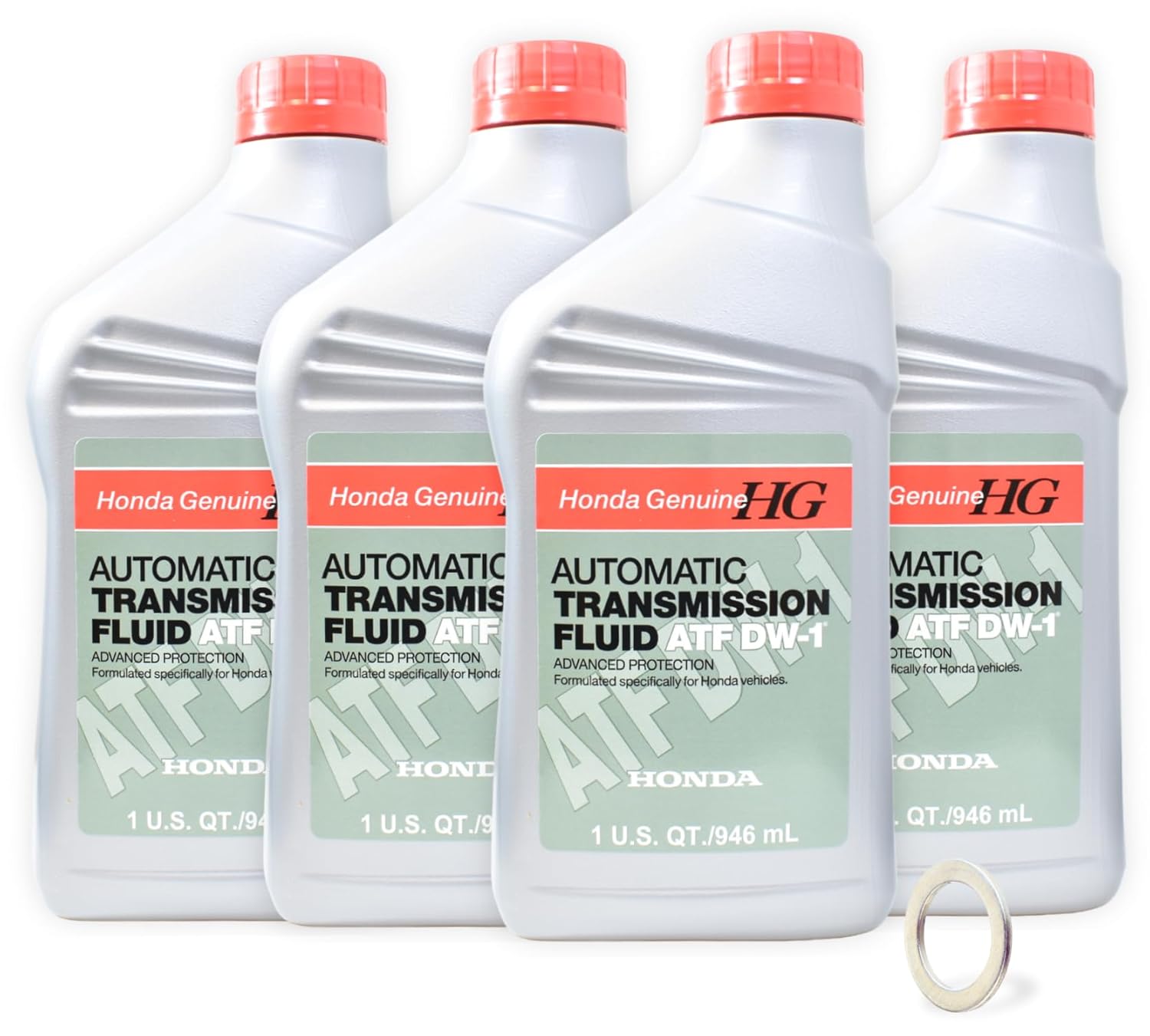
This Honda Genuine ATF DW-1 kit supplies four 1-quart bottles of the factory-recommended automatic transmission fluid plus an 18 mm drain-plug washer, intended for Honda gearboxes that call for DW-1. It is used for drain-and-fill or multi-step fluid exchanges and is formulated to maintain the friction characteristics Honda transmissions need for smooth, consistent shifts and quiet operation. The fluid is engineered to resist thermal breakdown and oxidation, helping preserve valve body function and clutch materials over time. For a DIYer servicing a 2007–2011 Honda CR-V, the kit covers a typical service volume and the included crush washer removes one common nuisance of a basic drain-and-fill. The main limitations are that this is the specific DW-1 formulation required by Honda and not a universal ATF for every makes or non-DW-1 transmissions, and you may need multiple drain-and-fill cycles or more fluid for a full flush on higher-mileage units. Still, using the factory-formulated fluid simplifies parts selection and supports original transmission performance.
Best for: DIY owners looking for a single, factory-formulated fluid to restore smooth shifting and protect Honda transmissions during routine drain-and-fill service on 2007–2011 CR-Vs.
Less Ideal for: Drivers seeking a universal fluid for multiple vehicle makes or those wanting a full machine flush service instead of a drain-and-fill.
- Factory-formulated DW-1 matched to Honda transmission friction requirements
- Kit includes four 1-quart bottles covering a standard drain-and-fill service
- Designed to resist thermal breakdown and oxidation for long-term protection
- Includes 18 mm drain plug washer to simplify the drain-and-fill service
- Not a universal ATF; only appropriate for transmissions specifying DW-1
- May require multiple drain-and-fill cycles or additional fluid for a complete flush on high-mileage units
Verdict: Ideal for DIYers who want a single fluid that delivers reliable shifting, wear protection, and broad compatibility.
2. Valvoline MaxLife Multi-Vehicle Full Synthetic ATF, 1 qt
Best Budget Transmission Fluid

| Material | Synthetic |
|---|---|
| Liquid Volume | 1 Quarts |
| Flash Point | 394 Degrees Fahrenheit |
| Specific Uses For Product | Automatic Transmission Fluid Replacement, CVT Transmissions, Preventing Leaks |
Valvoline MaxLife Multi-Vehicle ATF is a full synthetic transmission fluid formulated for broad compatibility and long-term protection. It is used as a direct replacement during a fluid change or flush to improve shifting, reduce shudder, and help prevent leaks by conditioning seals. Key features include advanced anti-wear additives, improved thermal and viscosity stability, and frictional properties aimed at smoother gear engagement. In practical use the fluid performs like a higher-end factory-quality replacement for high-mileage transmissions, helping restore shift firmness on older units and maintaining consistent operation across temperature extremes. Because it is multi-vehicle rated it simplifies maintenance for shops servicing many cars, and the 1 quart bottle is convenient for top-offs and partial fills. Limitations include that it is a general multi-vehicle formula rather than a transmission-specific OEM fluid, so verify Honda CR-V service specifications before use and follow required service intervals rather than relying solely on extended mileage claims.
Best for: Mechanics and DIYers needing an affordable, full synthetic ATF that reliably restores shift feel and protects transmissions during routine service on compatible 2007–2011 Honda CR-Vs.
Less Ideal for: Owners seeking a manufacturer-branded, transmission-specific fluid mandated by a dealer service interval or those who require fluids with a manufacturer technical bulletin endorsement should consider Honda-specified alternatives.
- Full synthetic formula offers better thermal and viscosity stability than conventional ATF
- Multi-vehicle compatibility simplifies parts stocking for shops
- Additive package includes anti-wear and seal-conditioning agents to reduce leaks and wear
- Improves shift smoothness and reduces shudder in high-mileage transmissions
- Not a vehicle-specific OEM fluid so confirm compatibility with Honda CR-V service requirements
Verdict: For mechanics on a tight budget who need an affordable ATF that preserves shifting and prevents excessive wear.
3. Honda Genuine ATF DW-1 Automatic Transmission Fluid, 2 Quart
Best OEM Transmission Fluid

| Manufacturer | HONDA |
|---|---|
| Brand | Honda |
| Model | FBA_08200-9008 |
This is Honda's factory-formulated ATF DW-1 offered in a two-quart pack for transmission service and top-ups. It is intended for transmissions that specify DW-1 and is used the same way you would any automatic transmission fluid: pour or pump into the transmission through the fill point during service or when topping off. The formula is tuned to preserve shift quality, hydraulic control and friction characteristics that Honda designed into its transmissions, so it helps maintain factory shift feel and longevity when used as specified. Using the genuine fluid reduces uncertainty versus aftermarket blends that may alter shift timing or clutch engagement. The main limitation is that it is vehicle-specific by spec, so it is not a universal ATF replacement and must be matched to transmissions requiring DW-1. Also sold in OEM-branded packaging rather than bulk commercial containers, so professional shops may need multiple bottles for full drains on larger transmissions.
Best for: Buyers who prioritize using the exact factory formula to preserve original shift quality and maintain factory compliance during transmission service on compatible Hondas.
Less Ideal for: Drivers who need a universal or high-volume ATF solution for multiple different makes or who frequently perform full transmission drain-and-refill jobs and want bulk packaging.
- Factory-formulated to Honda DW-1 specification for correct shift feel and hydraulic performance
- Sold by the vehicle manufacturer so formula and labeling match factory recommendations
- Two-quart bottle size convenient for top-offs and partial service
- Only appropriate for transmissions that require DW-1 and not a universal ATF
- Smaller bottle means multiple units may be needed for a full drain and refill
Verdict: Pick this when you want the exact factory formula to match factory fill characteristics and maintain OEM compliance.
4. Idemitsu ATF Type H-Plus Automatic Transmission Fluid, 5 qt
Best High-Performance ATF

| Recommended uses | Honda and Acura vehicles with ATF Z-1 or DW-1 specs |
|---|---|
| Unit count | 159.94 Fluid Ounces |
| Container type | Bottle |
| Upper temperature rating | 258 Degrees Fahrenheit |
| Item form | Liquid |
Idemitsu ATF Type H-Plus is a Honda-compatible transmission fluid aimed at restoring shift quality and extending service life in transmissions that specify Z-1 or DW-1. DIYers use it for drain-and-fill or staged replacement jobs to refresh worn clutch friction and reduce harsh or delayed shifts. The formula emphasizes optimized viscosity, friction modifiers for improved clutch performance, and anti-wear chemistry to protect gears and bearings under heat. Practical benefits include smoother, more consistent shifts and better resistance to oxidation and thermal breakdown compared with many generic fluids, which can translate to longer intervals between changes. Expect to follow a multi-stage fluid change for best results on older transmissions; a single drain-and-fill will not fully replace all fluid. This product is delivered in a five-quart bottle sized for a typical service and includes PTFE in its materials listing. It is focused on Honda/Acura fitment and does not replace the need for correct filter maintenance or other transmission repairs when diagnosing slipping or hard shifts.
Best for: A DIYer who prioritizes upgraded protection and crisper shift feel in a 2007–2011 Honda CR-V and is comfortable performing multi-step fluid changes and basic transmission service.
Less Ideal for: People who prefer one-time full-flush services performed at a shop with a machine or who need a fluid specified for non-Honda vehicles should consider other options.
- Formulated to meet Honda ATF Z-1 and DW-1 specifications for direct compatibility
- Optimized viscosity and friction modifiers to improve shift smoothness and clutch performance
- Good resistance to oxidation and thermal breakdown for extended fluid life
- Available in a five-quart bottle that suits common DIY drain-and-fill procedures
- A staged three-change process is recommended to replace most old fluid, so some product may be used during the procedure
Verdict: Best for DIYers who want upgraded protection and improved shift feel compared with standard ATF using performance-focused formulations.
5. Honda DW-1 Automatic Transmission Fluid, 1 qt (case of 12)
Best Bulk Transmission Fluid Pack
| Liquid Volume | 32 Fluid Ounces |
|---|---|
| Unit Count | 384.0 Fluid Ounces |
| SAE J300 Viscosity Grade | 5W-30 |
| OEM Part Number | DW-1 |
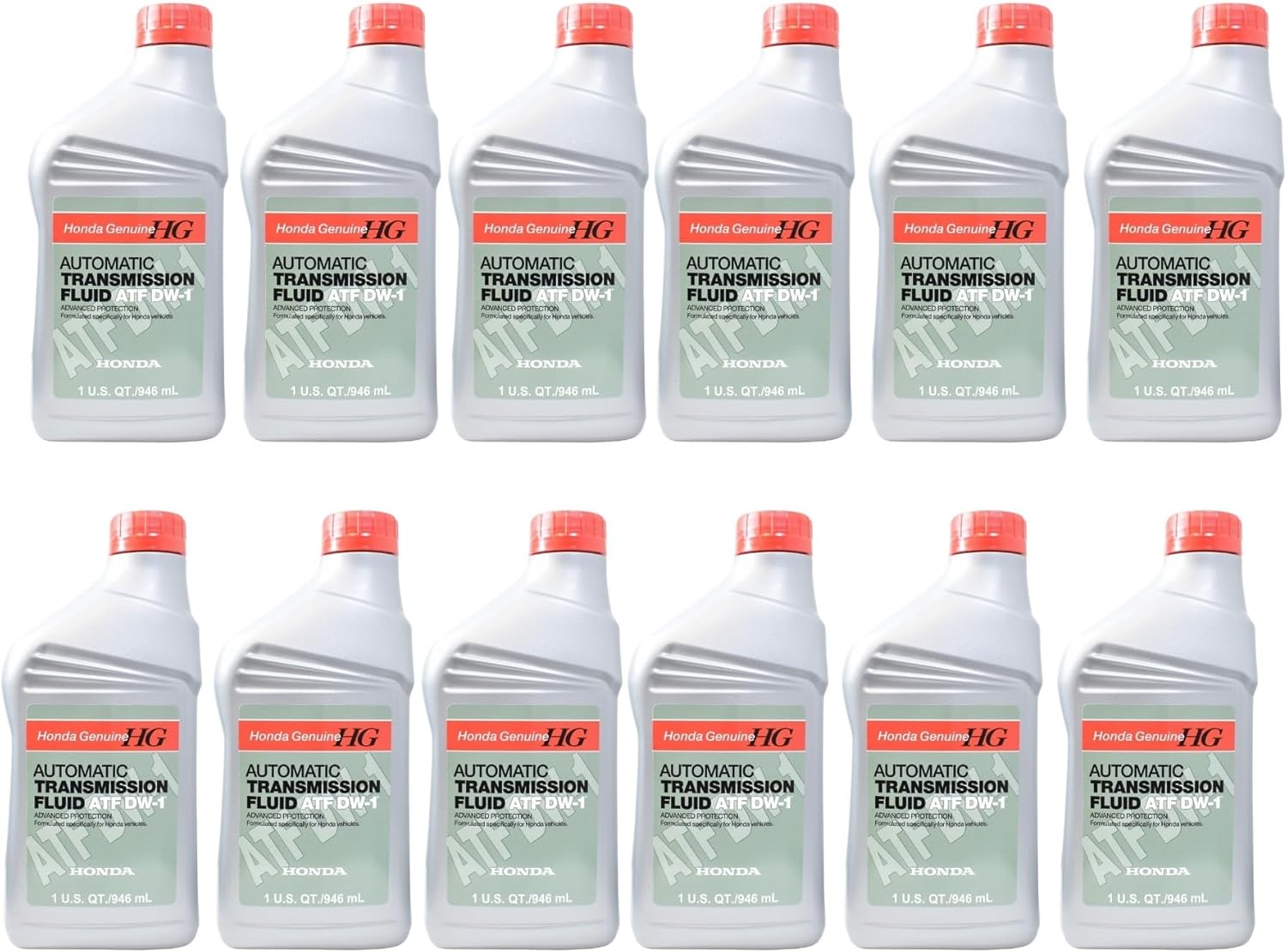
This is Honda factory-spec DW-1 automatic transmission fluid sold in a 12-quart pack intended for transmission drain-and-fill service. It is the same formula Honda recommends for many of its automatic gearboxes and is used to maintain smooth, precise shifts and protect internal components from wear. The case-of-12 format makes it practical for doing a full set of drain-and-fill cycles or servicing multiple vehicles without repeated purchases. Bottles ship double sealed and are easy to pour for DIY maintenance or shop use. The main limitation is cost per case compared with generic fluids, and a full transmission flush still requires more fluid than a simple drain-and-fill because a large portion of fluid remains in the torque converter. For owners doing scheduled maintenance or multiple drain/refill passes, the factory fluid and bulk packaging simplify upkeep and reduce the hassle of buying single quarts repeatedly.
Best for: Buyers who plan to perform a complete drain-and-fill program or service multiple Hondas and want genuine Honda fluid on hand to maintain factory shift quality.
Less Ideal for: If you only need a single quart for an occasional top-up or are strictly minimizing upfront cost, a single-bottle purchase or aftermarket option may be a better fit.
- Factory-specified DW-1 formulation matching Honda transmission requirements
- Case of 12 provides enough fluid for multiple services or several vehicles
- Double-sealed bottles for safe transit and easy pouring
- Consistent, clean fluid that supports smooth shifting and component protection
- Higher upfront cost compared with aftermarket universal fluids
Verdict: Buy bulk packs when you're doing a full drain-and-fill or want spares to save per-quart cost and avoid repeated orders.
6. Genuine OEM DW-1 Automatic Transmission Fluid 3 Quart Pack
Best Service Kit Transmission Fluid

| Brand Name | eEuroparts |
|---|---|
| Specific Uses For Product | Automatic Transmissions, Acura Vehicles, Protection Against Wear and Tear, Corrosion |
| Unit Count | 96.0 Fluid Ounces |
| SAE J300 Viscosity Grade | 20W |
This three-quart pack of DW-1 automatic transmission fluid is the factory-specified fluid used by Honda and Acura for many automatic transmissions. It is intended for drain-and-fill or top-up service and matches the transmission fluid formulation OEMs recommend for smooth shifting and corrosion protection. Typical use is during routine service on compatible Honda transmissions where maintaining factory fluid chemistry matters. The product comes in three one-quart bottles, which makes filling to the exact level easier for mid-sized transmissions that require roughly three quarts. Notable points are the genuine OEM formulation and the SAE J300 viscosity listing, which indicate it is tailored for the manufacturer specification rather than a universal aftermarket blend. Practical benefits include correct compatibility with systems that call for DW-1 and reassurance when following the vehicle service manual. Limitations are that this listing is fluid only and does not include service hardware; buyers planning a full pan job with filter replacement will need to source the filter, pan gasket, and drain hardware separately.
Best for: Buyers who want the correct, factory-style transmission fluid to perform a simple drain-and-fill on a 2007-2011 Honda CR-V and prioritize matching manufacturer fluid chemistry.
Less Ideal for: If you plan to replace the transmission filter, gasket, or perform a full pan service in one visit, choose a service kit that includes those parts rather than fluid-only bottles.
- Factory-specified DW-1 formulation matched to Honda/Acura transmissions
- Three separate one-quart bottles simplify measuring and topping to level
- SAE J300 viscosity grade listed for predictable performance across temperatures
- Does not include filters, gaskets, or drain hardware needed for a full service
Verdict: Ideal if you want transmission fluid that comes with the minor parts needed to complete a drain-and-fill in one purchase.
Choosing the Right 2007-2011 Honda CR-V Transmission Fluid: Key Factors to Consider
Manufacturer Specification and Approvals
Matching the fluid to Honda's recommended specification is the single most important factor. Fluids that meet the OEM specification are formulated to deliver compatible frictional properties, viscosity, and additive chemistry for the CR-V transaxle. Using a fluid outside the recommended spec can change shift timing, increase wear on clutch packs, or cause harsher engagement.
When selecting fluid, check for clear claims of compatibility with Honda automatic transmission requirements or equivalent industry approvals. Pay attention to whether the product is intended for conventional automatics, CVTs, or manual gearboxes, since the CR-V's transmission type and year determine the proper formulation.
Friction Characteristics and Shift Quality
Friction modifiers and base oil selection determine how smoothly the transmission shifts and how clutch packs engage. A fluid with stable, appropriate friction characteristics helps prevent shudder, hunting between gears, or delayed engagement during cold starts.
For the 2007-2011 CR-V, aim for fluids with documented friction stability across the operating temperature range so shifts remain predictable both when cold and after extended highway runs. If you tow occasionally or do frequent stop-and-go driving, prioritize fluids with additives that maintain consistent friction under repeated thermal cycles.
Thermal and Oxidation Stability
Transmission fluid must resist viscosity breakdown and oxidation at elevated temperatures. High thermal stability preserves film strength and protects internal components from metal-to-metal contact. Over time, oxidized fluid can form varnish and deposits that interfere with valve body operation and solenoid performance.
Look for products with demonstrated high-temperature protection and antioxidant additive packages. Better thermal performance is particularly important if the vehicle is used in hot climates, carries loads, or operates in heavy traffic where transmission temperatures run higher than normal.
Shear Stability and Viscosity Retention
Shear stability measures how well a fluid maintains its viscosity under mechanical stress. Fluids with poor shear stability thin out, reducing film thickness and increasing wear risk. For the CR-V, where clutch packs and torque converter couplings rely on specific viscosity ranges, maintaining target viscosity is critical to preserve hydraulic pressures and shift timing.
Choose a fluid that resists shear degradation and retains viscosity after extended use. Manufacturer data or third-party lab results that show minimal viscosity loss after mechanical stress are valuable when making a decision.
Seal Compatibility and Rubber Health
Transmission fluids interact continuously with internal seals, O-rings, and gaskets. Some formulations can harden or swell rubber components, causing leaks or degraded sealing performance. For a vehicle like the 2007-2011 CR-V, which may have aging rubber components, selecting a fluid with proven compatibility reduces the chance of post-service leaks.
Verify that the chosen fluid specifies seal-safe formulations or is known to be compatible with Honda-era elastomers. If the vehicle has high mileage, consider inspecting and replacing seals when performing a fluid service.
Maintenance Interval and Service Practicality
Consider how often the fluid should be changed and whether the product supports standard service intervals for the CR-V. Some formulations advertise extended drain intervals, but extended intervals should only be chosen if you regularly monitor fluid condition.
Also weigh service practicality: whether the fluid is available in the volumes needed for a partial or full drain and refill, and whether it requires any special procedures for a drain, fill, or fluid change. Match the maintenance plan to your driving conditions and the vehicle's mileage history.
Which Transmission Type Does Your 2007-2011 CR-V Have
The 2007-2011 CR-V used different transmission designs depending on the year and market. Identifying whether your vehicle has a conventional automatic, a manual gearbox, or a CVT is the first step in choosing the correct fluid. The wrong fluid chemistry can alter clutch behavior or damage components engineered for a specific fluid type.
If you are unsure which transmission is installed, check the owner's manual, the service fill cap, or the vehicle identification data supplied by the manufacturer. Using the correct fluid category is more important than brand names or marketing claims.
- Automatic transmissions require ATF with specific friction and detergent properties.
- Manual transmissions often use different gear oils optimized for synchronizers.
- CVT units need continuously variable transmission fluids formulated for belt or chain-driven designs.
Practical Steps for Performing a Transmission Fluid Change
Performing a fluid change correctly affects how much old fluid remains and whether contaminants are removed. For the CR-V, procedures vary between a simple drain-and-fill and a full fluid exchange that circulates and replaces a larger percentage of fluid. Follow the vehicle service manual recommendations for fill quantities and fill method to ensure correct fluid level and avoid foaming or air entrapment.
Always warm the transmission to operating temperature before draining when possible; warm fluid drains more completely and better carries suspended contaminants. Use a clean pan, replace the drain plug gasket if applicable, and properly torque any fasteners to avoid leaks.
- Warm the vehicle before draining to improve flow and contaminant removal.
- Replace filters or crush washers when the service interval or condition indicates.
- Top up and verify fluid level with the engine running and at the specified gear position if required by the service procedure.
Signs Your Transmission Fluid Needs Service
Watch for changes in shift quality like slipping, harsh engagements, delayed gear changes, or unusual noises. Dark, burnt-smelling fluid or visible particles are signs that the fluid has degraded and may be contributing to component wear. A fluid level that is consistently low can indicate a leak, which should be inspected and repaired before replacing the fluid.
Regular visual inspection and following a maintenance schedule based on your driving conditions will help catch issues early. Addressing fluid-related issues promptly prevents secondary damage to the transaxle and associated components.
- Dark brown to black fluid or a burnt odor indicates oxidation and contamination.
- Erratic shifting, slipping, or shuddering suggests fluid deterioration or internal wear.
- Fluid leaks, low fluid level, or contamination should be diagnosed before topping off.
How Driving Habits Affect Fluid Life
Stop-and-go city driving, frequent towing, or extended idling raise transmission operating temperatures and accelerate fluid breakdown. Highway-only driving at steady speeds tends to be less punishing on fluid life. When you regularly drive in conditions that generate higher heat, choose a fluid with superior thermal stability and a stronger antioxidant package.
If your CR-V is used for occasional towing or carries heavy loads, increase the frequency of fluid inspections and consider a fluid specified for higher thermal demands to protect clutch packs and the torque converter under repeated stress.
- Higher ambient temperatures and heavy loads shorten fluid life.
- Consistent high-speed highway driving is less taxing on transmission fluid than stop-and-go traffic.
- Adjust service intervals according to actual driving conditions rather than default schedules.
Tools and Supplies to Have on Hand
When servicing transmission fluid, have the correct fluid quantity, clean funnels, a proper drain pan, and any replacement crush washers or gaskets. A torque wrench ensures fasteners are tightened to specification, and a fluid-leveling tool or dipstick procedure guide helps confirm correct fill. Use clean, lint-free rags and dispose of used fluid responsibly.
If you plan a more complete service such as a fluid flush or filter replacement, consult the vehicle's maintenance manual for recommended parts and torque specs. Having the right tools prevents common mistakes like overtightening the drain plug or introducing contaminants during refill.
- Correct type and volume of transmission fluid.
- Clean drain pan, funnels, and replacement gaskets or crush washers.
- Torque wrench and service manual or procedure reference.
Still looking for the perfect fit?
Select your Honda CR-V configuration to see the most relevant Transmission Fluids recommendations
How We Chose the Best 2007-2011 Honda CR-V Transmission Fluid
We prioritized fluids that meet the specifications and service needs of the 2007-2011 Honda CR-V, focusing on formulations known to maintain consistent friction characteristics and thermal stability. Key evaluation criteria included compliance with Honda-approved performance specs, viscosity behavior across the operating temperature range, and additive packages that protect against clutch wear, corrosion, and oxidation. We also assessed shear stability to ensure the fluid maintains film strength under load, and seal compatibility to avoid leaks or degraded pliability in rubber components. We excluded fluids that do not meet the required OEM or equivalent performance claims, products intended only for unrelated transmission designs, or formulations that lack clear shear and thermal-data backing. Our selection favored fluids that balance shift quality with mechanical protection and that are suitable for the fluid volumes and service procedures typical of the 2007-2011 CR-V. We did not include specialty race or one-off experimental formulations that are impractical for regular street use.
Our full evaluation process is outlined in our review methodology.
FAQ
How often should I change the transmission fluid in a 2007-2011 CR-V?
Interval depends on driving conditions. For typical driving, follow manufacturer guidance in the service manual. If you do heavy city driving, towing, or frequent mountain runs, inspect and change fluid more often to prevent overheating and early degradation.
Can I use a generic ATF in my 2007-2011 Honda CR-V?
It depends on the transmission type. Generic ATF that meets Honda specifications may be acceptable for conventional automatics, but only use fluids explicitly approved for the CR-V's transmission chemistry. Avoid using automotive fluids intended for other transmission designs.
What are the risks of not changing transmission fluid on schedule?
Old or degraded fluid can cause increased wear, slipping, harsher shifts, and eventual hydraulic or mechanical failure. Oxidized fluid may form deposits that impair valve body operation and solenoid response, increasing repair complexity and cost.
Will a fluid change fix slipping or harsh shifting in my CR-V?
A fluid change can resolve issues caused by degraded or contaminated fluid. However, if slipping or harsh shifting results from worn clutch packs, damaged seals, or internal mechanical faults, a fluid change alone may not fix the issue. Diagnose the underlying cause if problems persist after service.
Should I replace seals or the filter when changing transmission fluid?
Replacing seals, gaskets, or the filter is a good idea if they are worn, leaking, or if the service interval calls for it. Doing so reduces the chance of post-service leaks and ensures you are not flushing contaminants back into a freshly serviced system.
Does towing with a CR-V require a different transmission fluid?
Towing increases transmission temperatures and stress. If you tow regularly, select a fluid with stronger thermal and oxidation resistance and monitor fluid condition more frequently. Consult the vehicle's load and towing guidance to determine appropriate service intervals.
Final Verdict
When choosing transmission fluid for a 2007-2011 Honda CR-V, prioritize fluids that match the vehicle's specified transmission chemistry and that provide stable friction characteristics and thermal protection. Consider your typical driving conditions, whether you tow, and the vehicle's mileage when deciding on service intervals and formulations. Balance longevity and shift quality by selecting a fluid with proven shear stability and seal compatibility. With the right fluid and a sensible maintenance schedule, you can preserve smooth shifting and reduce the risk of premature transmission wear in your CR-V.
Explore More:
- Check out all Honda CR-V parts & accessories
- Explore Fluids & Chemicals
- Browse all Accessories
