

Note: This article contains affiliate links. If you click on these links and make a purchase, I may earn a small commission at no extra cost to you. This helps support my research and content. Read my full affiliate disclosure here.
Choosing the right transmission fluid for a Honda CR-V with a CVT matters more than many owners assume. The CVT depends on proper fluid friction characteristics and thermal stability to maintain smooth, predictable belt or chain operation and to prevent premature wear. Using a fluid formulated for CVT systems helps reduce shudder, lowers operating temperatures, and supports consistent performance over long distances.This guide shortlists the five top transmission fluids suited to the Honda CR-V CVT configuration. Each option was vetted against service-relevant criteria like friction properties, temperature tolerance, and compatibility with Honda CVT specifications. Read on to understand the differences and which traits matter most for your driving patterns and maintenance plan.
Looking for other parts? See all Honda CR-V parts & accessories.
Top Picks at a Glance
| Best Overall Transmission Fluid A well-rounded choice that balances performance, protection, and price | Idemitsu CVT Transmission Fluid HCF-2 (5 Quart) |  |
| Best Premium Transmission Fluid Higher-end formulation with extra additives for long-term protection | Honda HCF-2 Continuously Variable Transmission Fluid, 5-Quart Pack |  |
| Best Synthetic Transmission Fluid Fully synthetic base stocks for improved stability and temperature performance | ENEOS ECO CVT Fully Synthetic Transmission Fluid, 5 qt |  |
| Best Long-Life Transmission Fluid Designed for extended drain intervals and durable performance over time | ENEOS ECO CVT Fully Synthetic Transmission Fluid, 1 qt (6-pack) |  |
| Best CVT Transmission Fluid Specifically formulated for continuously variable transmissions and belt-type units | eEuroparts Genuine HCF-2 CVT Automatic Transmission Fluid (2 x 1 Qt) |  |
1. Idemitsu CVT Transmission Fluid HCF-2 (5 Quart)
Best Overall Transmission Fluid

| Container size | 5 Quart |
|---|---|
| Manufacturer | Idemitsu |
| Meets specification | Honda HCF-2 |
| Intended application | Honda CVTs only |
This Idemitsu CVTF H2 is a Honda-compatible continuous variable transmission fluid supplied in a five-quart container for routine service and DIY changes. It is engineered with proprietary additives and high-quality base oils to reduce shudder, keep shifts smooth, and resist oxidation under normal driving conditions. The formula emphasizes friction control and wear protection, which helps preserve clutch life and torque transfer in push-belt Honda CVTs while also contributing to modest fuel efficiency gains. In practice the product is used like any factory-spec replacement fluid: drain and refill or refill through the service port following Honda service intervals and fluid capacities. Notably it is explicitly designed for HCF-2 Honda CVTs and is not intended for automatic or dual-clutch transmissions, so correct application is important. Buyers should expect factory-quality performance for routine maintenance but still follow Honda procedures for service intervals and initial fill volumes to avoid issues from overfilling or mixing with the wrong fluid type.
Best for: A Honda owner doing routine maintenance who wants a factory-quality HCF-2 fluid that balances shift smoothness, thermal stability, and wear protection for DIY servicing.
Less Ideal for: Drivers looking for a universal ATF for multiple transmission types or shops servicing non-CVT gearboxes should choose a product specified for those transmissions instead.
- Meets Honda HCF-2 specification intended for Honda CVTs
- Formulation targets anti-shudder performance for smoother, consistent shifts
- Additives resist oxidation and thermal breakdown to extend fluid life
- Packaged in a five-quart container suitable for a full DIY service or top-up
- Not suitable for automatic or dual-clutch transmissions, limited to CVT applications
Verdict: The best all-around transmission fluid that balances friction control, thermal stability, and wear protection for most routine maintenance and DIY servicing needs.
2. Honda HCF-2 Continuously Variable Transmission Fluid, 5-Quart Pack
Best Premium Transmission Fluid

| Material | Mineral-based |
|---|---|
| Liquid Volume | 5 Quarts |
| Specific Uses For Product | Second-generation CVT transmissions |
| Item Form | Oil |
This is Honda branded HCF-2 CVT transmission fluid supplied in five one-quart bottles intended specifically for second-generation CVT-equipped Honda vehicles. It is used during fluid service or top-up to maintain the friction characteristics and hydraulic properties that CVT components require. The formula emphasizes oxidation resistance, friction control for smooth belt/pulley engagement, and wide temperature performance, which helps preserve shift quality and reduce wear under heavier loads or frequent stop-and-go driving. Packaging in multiple quarts makes it convenient for DIY drain-and-fill jobs and for keeping a spare on hand. Important limitations are that this is a mineral-based factory-spec fluid designed only for the specified CVT generation and must not be mixed with other CVT fluids, so confirm your vehicle requires HCF-2 before use; it is not a universal transmission oil for other types. Buyers should also plan for proper disposal of used fluid and account for the number of quarts their service requires.
Best for: DIY-minded Honda owners who service their own second-generation CVT transmissions and prioritize a factory-quality fluid that sustains friction control and long-term protection under heavier use.
Less Ideal for: Drivers who need a universal or multi-vehicle transmission fluid or who are unsure which CVT generation their vehicle uses should seek a different product or verify fitment with a dealer.
- Factory-formulated for second-generation Honda CVTs to preserve correct friction and shift feel
- Five individual quart bottles suit DIY drain-and-fill jobs and make storage simple
- High viscosity index and oxidation protection support consistent performance across temperature ranges
- Not compatible with other CVT fluid types and must not be mixed with different formulations
Verdict: The best premium transmission fluid for DIYers who want superior oxidation resistance, enhanced friction modifiers, and longer-lasting protection under heavier use.
3. ENEOS ECO CVT Fully Synthetic Transmission Fluid, 5 qt
Best Synthetic Transmission Fluid

| Container Type | Bottle |
|---|---|
| Compatible with Vehicle Type | Car |
| Automotive Fit Type | Vehicle Specific Fit |
| Liquid Volume | 5 Quarts |
ENEOS ECO CVT is a fully synthetic fluid formulated for belt and chain type continuously variable transmissions and is aimed at matching factory-quality performance for many Asian CVT specifications. It is typically used during routine CVT service or fluid top-ups to maintain smooth, quiet operation and help protect internal components under sustained load. Notable features include compatibility listings for Honda/Acura CVTF/HCF-2 and other Asian OEM specs, a low-viscosity synthetic base for improved cold-start flow, and additive chemistry designed to resist high-temperature breakdown. In practice this means faster circulation on cold starts, steadier viscosity under heat, and quieter operation—ENEOS reports up to a 5% reduction in transmission noise in internal testing. Limitations: the product is not recommended for hybrid eCVT systems, toroidal or dry-type CVTs, and you should verify Honda CR-V model-year compatibility against the owner's manual before use. Also it is a vehicle-specific fit product so confirm the correct spec for your CR-V drivetrain.
Best for: Mechanics and DIY technicians who need a factory-quality synthetic CVT fluid that improves thermal stability and cold-flow for conventional Honda CR-V CVT applications and prioritizes consistent performance under load.
Less Ideal for: Owners of Honda CR-V hybrids with eCVT systems or vehicles using toroidal or dry CVTs should avoid this fluid and consult the manufacturer's specified fluid.
- Fully synthetic formula for improved high-temperature stability and oxidation resistance
- Listed compatibility with Honda/Acura CVTF/HCF-2 and other Asian CVT specifications
- Low-viscosity base and additives for better cold-flow and faster oil circulation at startup
- Formulated to reduce transmission noise and help maintain component life
- Not suitable for hybrid eCVT, toroidal, or dry-type CVTs and may be incompatible with some proprietary systems
Verdict: The best synthetic transmission fluid for mechanics seeking improved high-temperature stability, consistent viscosity control, and better cold-flow performance compared with conventional oils.
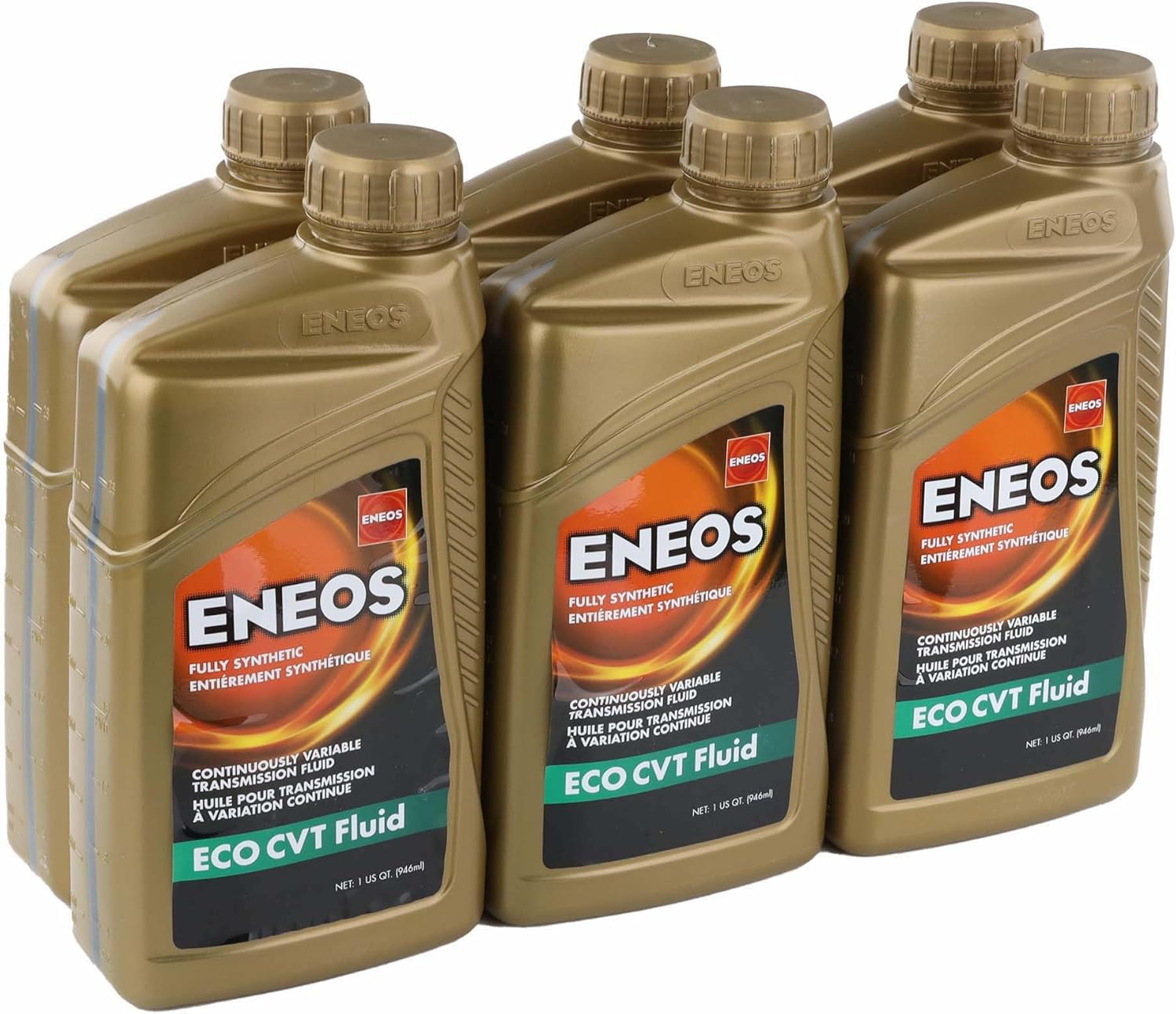
4. ENEOS ECO CVT Fully Synthetic Transmission Fluid, 1 qt (6-pack)
Best Long-Life Transmission Fluid
| Compatible with Vehicle Type | Car |
|---|---|
| Container Type | Bottle |
| Automotive Fit Type | Vehicle Specific Fit |
| Liquid Volume | 1 Quarts |
ENEOS ECO CVT is a fully synthetic continuously variable transmission fluid formulated for Asian-style belt and chain CVTs and sold here in a six-quart pack. It is used as a drain-and-fill service fluid to reduce noise, improve shift smoothness, and help clean transmission internals; ENEOS claims up to a 5% reduction in transmission noise based on internal testing. The formula lists compatibility with many manufacturer CVTF specs such as Toyota CVTF TC/FE, Honda HCF-2, Nissan NS-series, and Subaru CVTF, which makes it straightforward to match to a vehicle that calls for those specs. The product emphasizes low-temperature flow and high-temperature stability, which supports longer drain intervals by resisting breakdown under heat. Limitations include explicit exclusions for certain hybrid eCVT systems, toroidal or dry-type CVTs, and a reminder to verify exact vehicle requirements in the owner manual. For DIYers who perform periodic fluid changes, the six-pack format and synthetic composition make it easy to service CVTs and aim for extended service intervals while maintaining transmission protection.
Best for: DIY owners who want a synthetic CVT fluid that supports longer service intervals and easier home servicing while prioritizing durability and quieter operation.
Less Ideal for: People working on hybrid eCVT systems or specialized CVT designs excluded by the manufacturer should choose a fluid specified for those transmissions instead.
- Fully synthetic formulation designed for CVT use to improve low-temperature flow and high-temperature stability
- Compatible with many Asian OEM CVT specifications including Honda HCF-2 and Toyota CVTF TC/FE
- Six 1-quart bottles provided for convenient DIY drain-and-fill service without mixing containers
- Formulation claims reduced transmission noise and cleaning action to help maintain performance over time
- Not recommended for Toyota hybrid eCVT, Nissan Extroid CVT, toroidal, or dry-type CVTs
Verdict: The best long-life transmission fluid for DIYers who prefer extended service intervals and want fluid engineered to resist breakdown and maintain protection for longer miles.
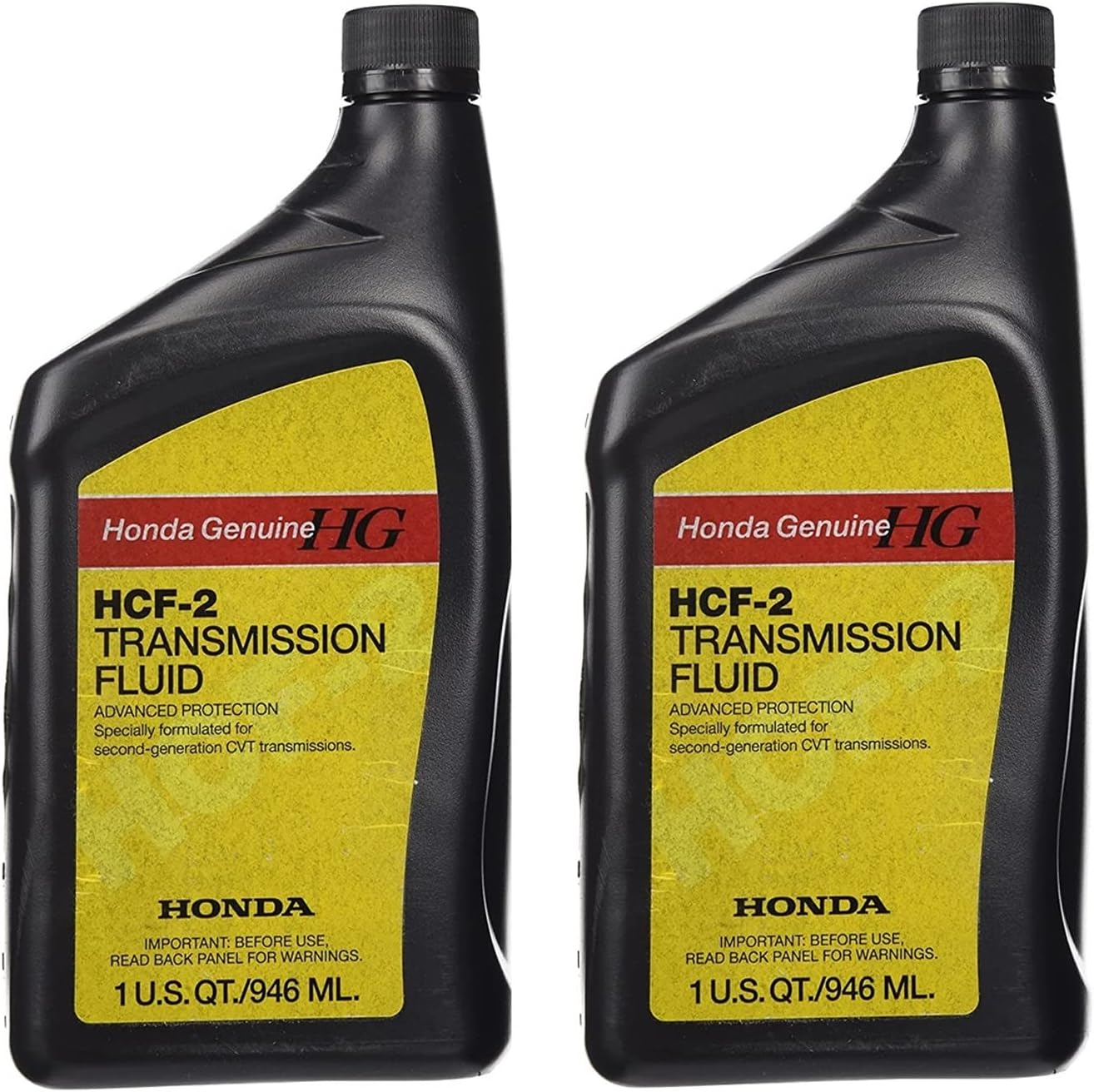
5. eEuroparts Genuine HCF-2 CVT Automatic Transmission Fluid (2 x 1 Qt)
Best CVT Transmission Fluid
| Brand | eEuroparts |
|---|---|
| Liquid Volume | 2 Quarts |
| SAE J300 Viscosity Grade | 10W-30 |
| Manufacturer Part Number | eEuroparts-4265583 |
This two-quart pack supplies genuine HCF-2 CVT transmission fluid designed to match the friction and lubrication needs of CVT gearsets. It is sold as two 1-quart bottles and intended for routine fluid top-ups or full service fills where the Honda HCF-2 specification is required. The formula focuses on belt and chain protection and stable friction characteristics so shifts remain smooth and belt slippage is minimized under load. Using fluid matched to the HCF-2 spec helps maintain shift feel and protect internal CVT components compared with generic ATF. Practical benefits include factory-spec compatibility, convenient quart bottles for easier pouring, and a familiar product for mechanics servicing Honda CVT systems. Limitations are that this item is a specific OEM-formulated fluid so it is only appropriate where HCF-2 is specified and it does not include funnels, adapters, or service tools needed for a complete fluid change.
Best for: Buyers who need a factory-matched CVT fluid to preserve shift feel and protect belt or chain-driven CVTs during routine maintenance or DIY service.
Less Ideal for: People looking for a universal or multi-vehicle transmission fluid or those needing a complete service kit including tools and adapters should look elsewhere.
- Formulated to the HCF-2 CVT specification for proper friction control in CVT systems
- Supplied as two 1-quart bottles that are easy to handle and pour during service
- Helps protect belts and chains against slippage and wear under CVT operating conditions
- Meant only for applications calling for HCF-2 fluid so it is not a universal transmission fluid
Verdict: The best CVT transmission fluid for owners and mechanics who need specially matched friction characteristics and belt/chain protection required by continuously variable transmissions.
Choosing the Right Honda CR-V CVT Transmission Fluid: Key Factors to Consider
CVT-Specific Friction Characteristics
Friction behavior is central to CVT operation because the transmission relies on variable-diameter pulleys and a belt or chain whose engagement depends on stable friction coefficients. Fluids formulated for CVTs include friction modifiers that prevent chatter and shudder during low-speed torque transfer and steady-state cruising. Choosing a fluid with the right friction profile helps preserve smooth acceleration and minimizes clutch slippage that can accelerate wear.
For the Honda CR-V CVT, pay attention to how a fluid maintains friction across a range of temperatures and loading conditions. A product that loses friction stability when hot may cause poor belt engagement or noisy operation. Conversely, a fluid that is too 'grippy' can increase stress on belt surfaces and shorten component life. Prioritizing CVT-specific friction balance improves daily drivability and long-term durability.
Thermal Stability and Oxidation Resistance
Transmission fluid experiences sustained high temperatures during highway driving and in hot climates. Thermal stability determines whether the fluid keeps its protective properties and viscosity as it heats. Oxidation resistance prevents sludge and varnish that can foul valves, pulleys, and bearings, leading to premature wear or degraded shift quality.
For the Honda CR-V CVT, select a fluid that resists breakdown under extended use and high under-hood temperatures. Better thermal performance supports consistent hydraulic response and helps preserve seals and internal components. This factor directly affects recommended drain intervals and the need for earlier service interventions.
Viscosity Behavior Across Temperature Range
Viscosity affects hydraulic control, lubrication film strength, and cold-start shift feel. Fluids that thin too much at high temperatures may fail to maintain a protective film, while fluids that are too thick at low temperatures can cause sluggish engagement and rough starts.
For the CR-V CVT, look for fluids with demonstrated viscosity control that meet the vehicle maker's temperature performance needs. Good viscosity behavior ensures predictable operation from cold mornings to hot summer drives, reducing wear during the most stressful temperature transitions and improving immediate shift quality after start-up.
Compatibility with Seals and Materials
Seals, gaskets, and clutch materials inside a CVT are formulated from specific elastomers and metals. A fluid must be chemically compatible to prevent swelling, shrinking, hardening, or corrosion. Seal incompatibility can lead to leaks, degraded hydraulic pressure, or early component failure.
Owners of a Honda CR-V CVT should prioritize fluids that explicitly list compatibility with CVT systems and common transmission elastomers. This reduces the risk of maintenance problems and helps maintain consistent hydraulic pressure for proper pulley and clutch control.
Service Interval and Durability Claims
Manufacturers and fluids may specify different recommended service intervals based on formulation durability. Longer drain intervals can reduce maintenance frequency but require fluids with proven resistance to contamination, oxidation, and shear degradation.
For the CR-V CVT, balance the convenience of extended intervals against the vehicle's operating conditions. Heavy towing, frequent mountain driving, or repeated short trips generate more heat and contamination, which can shorten fluid life. Choosing a robust fluid with conservative service recommendations helps protect the transmission over the long term.
Manufacturer Specification and Warranty Considerations
Using a fluid that meets the Honda CVT specification or approved equivalents helps ensure compatibility with factory tolerances and may influence warranty considerations. Specification compliance typically means the fluid has undergone relevant tests for friction, wear, and durability in CVT-like environments.
When selecting fluid for a Honda CR-V CVT, confirm that the product documentation references the correct Honda CVT performance class or explicitly states compatibility. This reduces risk of unintended consequences from using an inappropriate fluid and aligns your maintenance with the vehicle's engineering requirements.
When To Change CVT Fluid In A Honda CR-V
Service intervals for CVT fluid depend on driving conditions and vehicle age. For normal commuting and light use, manufacturers often recommend periodic fluid checks and changes at conservative intervals. For heavier use, shorter intervals are advisable to prevent overheating and contamination from accelerating wear.
Watch for symptoms that suggest fluid service is overdue: unusual noise during acceleration, inconsistent or jerky shifts, or a burning odor from the transmission area. Regular inspection of fluid color and smell can provide early warning before mechanical damage occurs.
- Inspect fluid condition during regular oil changes or service appointments.
- Shorten intervals if the vehicle frequently encounters high loads or hot environments.
- Always follow the maintenance schedule in the owner manual as the baseline.
How Fluid Selection Affects CVT Shudder And Belt Wear
CVT shudder and accelerated belt wear are often linked to fluid friction properties and contamination. A fluid that loses friction stability under load can allow micro-slip between pulley surfaces and the belt or chain, producing vibration and heat that accelerates wear.
Selecting a fluid with stable friction modifiers and good contamination resistance reduces the chance of shudder and prolongs belt life. Consistent hydraulic control also keeps pulley clamping forces within intended ranges, which is essential to preserve mechanical components.
- Stable friction reduces slippage and associated heat.
- Cleaner fluids reduce abrasive wear on belts and pulleys.
- Proper viscosity helps maintain hydraulic clamp pressure.
DIY Fluid Change Tips For CR-V Owners
If you plan to perform a fluid change yourself, prepare the vehicle properly and use only fluids that match Honda CVT requirements. Warm the transmission with a short drive first to let the fluid thin for more complete drainage, and collect the used fluid to inspect color and any metallic particles.
Use proper tools and follow the vehicle's service manual for fill and level procedures. Many CVTs require the vehicle to be level and at a specific running temperature when checking fluid level, so follow the prescribed steps to avoid overfilling or underfilling.
- Warm the transmission with a short drive before draining.
- Replace the drain plug gasket or pan gasket as needed.
- Check fluid level per the service manual while the engine is idling and at the correct temperature.
Environmental And Operational Factors That Impact Fluid Life
Ambient temperature, driving style, and terrain all affect how quickly CVT fluid degrades. Repeated heavy acceleration, mountain driving, or towing can raise transmission temperature and accelerate oxidation. Hot climates increase the importance of thermal stability and oxidation resistance.
Conversely, frequent short trips lead to cooler average operating temperatures but can allow condensation and contaminants to accumulate. Accounting for your typical driving conditions helps determine whether a standard service interval suffices or if a more durable fluid is warranted.
- Hot climates and heavy loads shorten fluid life.
- Short trips can increase contamination and moisture buildup.
- Adjust service intervals based on observed driving conditions rather than time alone.
Interpreting Technical Data Sheets And Labels
Technical data sheets provide viscosity grades, temperature performance, and specification references that help you match a fluid to the Honda CR-V CVT. Look for explicit mention of CVT compatibility, friction test results, and oxidation or shear stability data when available.
Be cautious with ambiguous labeling. If a data sheet lacks clear compatibility information, it may not be suitable for the CR-V CVT. Prioritize products that document the relevant performance characteristics clearly to make an informed choice.
- Check viscosity at 40C and 100C if listed.
- Look for CVT-specific testing or Honda specification references.
- Review oxidation and thermal stability statements where provided.
Still looking for the perfect fit?
Select your Honda CR-V configuration to see the most relevant Transmission Fluids recommendations
How We Chose the Best Honda CR-V CVT Transmission Fluid
To assemble this shortlist we focused on attributes that directly affect CVT performance and longevity in the Honda CR-V. Our editorial filters prioritized fluids that meet Honda CVT specifications or equivalent performance tiers, exhibit stable friction characteristics to prevent shudder, and demonstrate high thermal and oxidative stability for consistent protection under load.We evaluated viscosity behavior across operating temperatures, additive chemistry that protects belts or chains and clutch materials, and corrosion and seal compatibility to avoid leaks and hardening. Durability indicators such as extended drain intervals and laboratory oxidation resistance were also considered because many CR-V owners aim for long service life and reduced maintenance frequency.Exclusions included generic automatic transmission fluids not formulated for CVTs, items that lack documented compatibility with Honda CVT requirements, and products with minimal technical data. The result is a focused set of fluids that balance protection, shift quality, and service-life expectations for Honda CR-V CVT applications.
Our full evaluation process is outlined in our review methodology.
FAQ
Can I use regular ATF fluid in the Honda CR-V CVT?
Usually not. CVT systems require fluids formulated with specific friction characteristics and additives. Using a generic ATF not designed for CVTs can cause shudder, poor shift quality, and potential long-term damage. Always choose a fluid that references CVT compatibility.
How often should CVT fluid be changed in a Honda CR-V?
It depends on driving conditions. Under normal driving, follow the interval recommended in the owner manual as a baseline. If you do frequent towing, mountain driving, or operate in hot climates, shorten the interval and inspect the fluid more often.
What are signs that CVT fluid needs service?
Common signs include a noticeable shudder during acceleration, jerky or inconsistent response, a burning smell from the transmission area, or dark, contaminated fluid on inspection. These symptoms suggest the fluid may have degraded or that internal wear is occurring and should prompt service.
Will a higher-grade fluid improve fuel economy in my CR-V?
Improvements in fuel economy are usually modest and depend on how well the fluid maintains proper hydraulic function and reduces slip. A fluid that preserves correct engagement and minimizes parasitic losses can help, but it is not a guaranteed or dramatic change.
Can I perform a CVT fluid change myself?
Yes, many owners can handle a fluid change, but CVTs require careful filling and level checks at specific temperatures. Follow the service manual closely, warm the transmission before draining, and ensure correct level procedures to avoid overfill or underfill.
Does using a higher durability fluid extend service intervals?
Often it can, because fluids with superior oxidation and thermal resistance tend to maintain protective properties longer. However, interval extension depends on real-world conditions and manufacturer recommendations, so consider your driving patterns before lengthening drain intervals.
Final Verdict
Prioritize CVT-specific fluid properties when maintaining a Honda CR-V CVT. Focus on friction stability, thermal and oxidative resistance, and chemical compatibility with seals and clutch materials. These attributes will most directly influence shift smoothness, belt or chain life, and the need for early service.Balance desired service intervals against your driving habits and environmental stresses. When you prioritize the factors outlined here, you can choose a transmission fluid that preserves smooth operation and reduces the likelihood of premature wear.
Explore More:
- Check out all Honda CR-V parts & accessories
- Explore Fluids & Chemicals
- Browse all Accessories
