

Note: This article contains affiliate links. If you click on these links and make a purchase, I may earn a small commission at no extra cost to you. This helps support my research and content. Read my full affiliate disclosure here.
If you own a 2002–2006 Honda CR-V, choosing the right engine oil matters for longevity, drivability, and fuel economy. Older CR-V engines respond to oil choice through changes in oil pressure, cold starts, and long-term wear; picking an appropriate viscosity and formulation helps prevent sludge, reduce friction, and protect seals. This guide shortlists seven top options that suit the 2002–2006 CR-V engine and driving conditions. We assessed each choice against engine protection, viscosity behavior, and suitability for higher-mileage examples, then distilled the findings to help you pick the best match. Read on for what to consider before an oil change and how each type supports common CR-V needs.
Looking for other parts? See all Honda CR-V parts & accessories.
Top Picks at a Glance
| Best Overall Engine Oil The best all-around engine oil balancing performance, protection, and price | Castrol EDGE 5W-20 Advanced Full Synthetic Motor Oil, 5 Quart Jug |  |
| Best Budget Engine Oil A low-cost oil that still meets basic protection and specs | HAVOLINE 5W-20 Conventional Motor Oil, 1 qt |  |
| Best Premium Engine Oil Higher-end formulation with superior additives and longer protection | Valvoline Advanced Full Synthetic 5W-30 Motor Oil, 5 qt |  |
| Best 5W-20 Engine Oil A specific viscosity grade commonly recommended in many compact engines | Mobil 1 High Mileage Full Synthetic Motor Oil 5W-20, 5 Quart |  |
| Best Full-Synthetic Engine Oil Fully synthetic base oils for maximum performance and stability | Castrol GTX Full Synthetic 5W-20 Motor Oil, 5 Quart |  |
| Best High-Mileage Engine Oil Formulated with conditioners to protect older engines and seals | Valvoline MaxLife Full Synthetic High Mileage 5W-20 Motor Oil, 5 qt |  |
| Best Synthetic-Blend Engine Oil A compromise between full synthetic performance and lower cost | Castrol GTX High Mileage 5W-20 Synthetic Blend Motor Oil, 5 Quart |  |
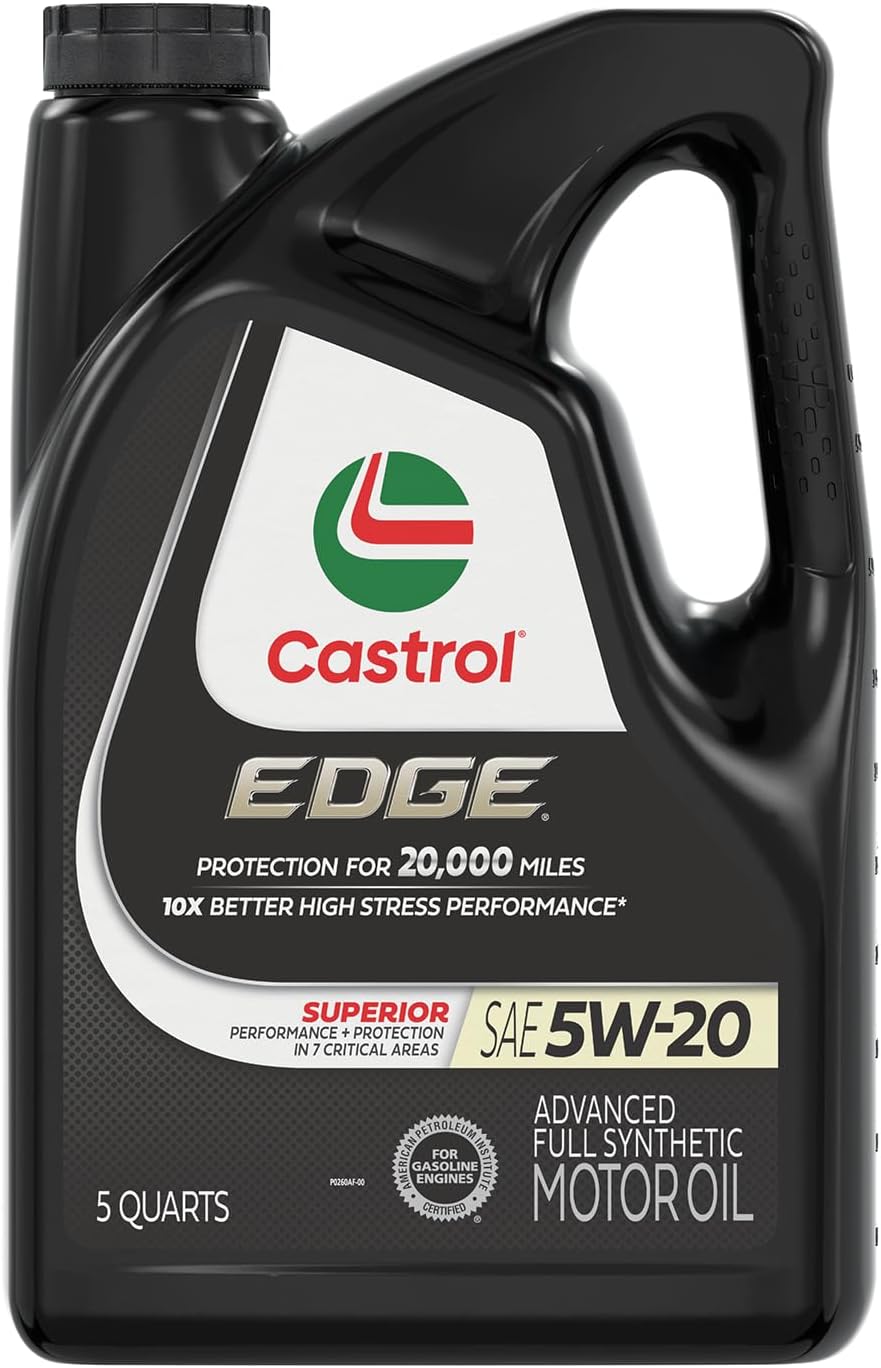
1. Castrol EDGE 5W-20 Advanced Full Synthetic Motor Oil, 5 Quart Jug
Best Overall Engine Oil
| SAE Viscosity Grade | 5W-20 |
|---|---|
| Container Type | Jug |
| Liquid Volume | 5 Quarts |
| Compatible Vehicle Type | Car, Truck |
Castrol EDGE 5W-20 is a full synthetic motor oil designed to protect modern gasoline engines during everyday driving and longer highway runs. For routine use in a 2002–2006 Honda CR-V, its 5W-20 viscosity helps ensure easy cold starts and stable film strength at operating temperature. The formulation emphasizes wear protection and resistance to thermal breakdown, which translates to less sludge and more consistent engine performance between oil changes. Castrol highlights extended endurance and claims compatibility with factory service specifications that cover many mid-2000s Honda engines, so it can be used as a direct replacement for routine maintenance when 5W-20 is the recommended grade. Practical benefits include improved high-temperature stability, reduced friction for potentially smoother acceleration, and proven brand performance. Trade-offs are that this is a premium full synthetic product, so it costs more than conventional oils, and owners of higher-mileage CR-Vs with oil consumption or seal wear concerns may prefer a different viscosity or a high-mileage formulation. Always follow the vehicle owner’s manual for grade and change interval guidance.
Best for: DIYers who want a reliable, modern full synthetic that balances protection, stability, and everyday drivability for routine maintenance on a 2002–2006 Honda CR-V.
Less Ideal for: Owners planning extended high-mileage service intervals beyond manufacturer recommendations or those with older engines needing a high-mileage or thicker-viscosity oil should consider alternatives.
- Full synthetic formulation for strong thermal stability and sludge control
- 5W-20 viscosity suited to cold starts and factory-specified grade for many 2002–2006 Honda CR-V engines
- Focus on wear protection to help reduce engine wear over time
- Well-known brand with broad service spec coverage and visible user history
- Premium synthetic cost is higher than conventional oils
- Not a dedicated high-mileage formula for engines with significant wear or leaks
Verdict: The best all-around engine oil for most DIY mechanics, offering a balanced mix of wear protection, viscosity stability, and value for routine maintenance.
2. HAVOLINE 5W-20 Conventional Motor Oil, 1 qt
Best Budget Engine Oil

| SAE J300 Viscosity Grade | 5W-20 |
|---|---|
| Compatible with Vehicle Type | Car |
| Container Type | Bottle |
| Liquid Volume | 32 Fluid Ounces |
HAVOLINE 5W-20 is a conventional motor oil intended for routine engine lubrication in vehicles specified to use 5W-20. It is typically used for scheduled oil changes by DIYers topping off or changing oil themselves and for small engines like lawn mowers. The formula emphasizes deposit control and anti-wear protection to help keep critical engine parts and the PCV system cleaner under everyday driving and stop-and-go conditions. As a conventional oil it meets standard SAE J300 5W-20 viscosity requirements and offers acceptable protection for normal driving; buyers should expect typical oil-change intervals of roughly 3,000 to 5,000 miles rather than the extended intervals associated with many synthetics. Packaging in one-quart bottles makes it convenient to carry spares or handle partial top-offs. The main compromise is longevity and cold-flow performance compared with synthetic or synthetic-blend alternatives, so it is best for budget-focused maintenance rather than extended-interval or extreme-temperature service.
Best for: Budget-conscious DIYers who need a factory-quality 5W-20 replacement for routine oil changes or occasional top-offs and prioritize immediate value over extended-change intervals.
Less Ideal for: Drivers who want the longest possible oil-change intervals, the best low-temperature startup flow, or who frequently operate in extreme heat or cold should choose a synthetic or synthetic-blend alternative.
- Meets SAE J300 5W-20 viscosity grade suitable for engines calling for 5W-20
- Formulated to reduce deposits and help keep the PCV system cleaner
- Provides basic anti-wear protection for everyday driving
- Sold in one-quart bottles convenient for topping off or keeping spare quarts
- Conventional base oil offers shorter service intervals and weaker cold-start flow than synthetic oils
Verdict: The best low-cost engine oil for budget-conscious DIYers that still meets required specifications and provides acceptable wear protection and lubrication.
3. Valvoline Advanced Full Synthetic 5W-30 Motor Oil, 5 qt
Best Premium Engine Oil

| SAE Grade | 5W-30 |
|---|---|
| Container Type | Jug |
| Liquid Volume | 5 Quarts |
| Compatible Vehicle Type | Car, Truck |
Valvoline Advanced Full Synthetic 5W-30 is a factory-quality full synthetic motor oil designed to protect engines from wear, deposits, friction, and high temperatures during everyday and severe driving. It is typically used for routine oil changes and as a top-off oil for vehicles that call for 5W-30, delivering easy low-temperature flow for cold starts and strong thermal stability for hot operating conditions. Notable features include a high-quality synthetic base, additive boosters that Valvoline says improve wear protection, deposit control, and heat resistance compared with industry baselines, and coverage of current API and ILSAC performance categories plus specific OEM specs referenced by the brand. In practice this means improved engine cleanliness, reduced metal-to-metal contact at startup, and consistent viscosity under heat—benefits that help extend engine life and support fuel economy. Limitations are that it is a single viscosity grade so you must confirm 5W-30 is recommended for your vehicle and that premium synthetic oils offer incremental long-term protection that may be unnecessary for older engines that do not require synthetic formulations.
Best for: Drivers who prioritize long-term engine protection and thermal stability and are willing to pay for a premium additive package for routine maintenance on a daily-driven vehicle.
Less Ideal for: Those running older engines that do not require synthetic oil or owners who must follow a different viscosity than 5W-30 should choose an alternative.
- Full synthetic base for better low-temperature flow and high-temperature stability
- Additive package engineered for improved wear protection and deposit control
- Meets modern API and ILSAC performance categories and several OEM specifications
- Available in a standard 5 quart jug convenient for DIY changes
- Single viscosity grade; must match vehicle manufacturer 5W-30 recommendation
Verdict: The best premium engine oil for owners willing to pay more for advanced additive packages, improved thermal stability, and better long-term engine protection.
4. Mobil 1 High Mileage Full Synthetic Motor Oil 5W-20, 5 Quart
Best 5W-20 Engine Oil

| SAE J300 Viscosity Grade | 5W-20 |
|---|---|
| Compatible with Vehicle Type | Car |
| Liquid Volume | 160 Fluid Ounces |
| Item Type Name | Full Synthetic Motor Oil |
Mobil 1 High Mileage 5W-20 is a full-synthetic motor oil aimed at engines with higher mileage that still require a 5W-20 viscosity. For a DIYer working on a 2002–2006 Honda CR-V that specifies 5W-20, this oil delivers easy cold starts thanks to its low-temperature flow and helps control deposits and sludge in older engines. The formula markets a Triple Action system that reduces friction, cools internal temperatures, and resists oxidation so the oil can support up to 10,000 miles between changes under recommended conditions. Practical benefits include improved start-up protection, potential reduction in oil consumption and fewer sludge-related issues in aging valve trains, plus compatibility with common passenger-car requirements. Limitations to note are that extended drain claims depend on driving style and conditions and you should follow the CR-V manufacturer service intervals; using a high-mileage formula will not fix mechanical wear. Also this product is focused on older engines and may be more than needed for low-mileage, warranty-covered repair work.
Best for: DIY owners of 2002–2006 Honda CR-Vs who need a 5W-20 oil that improves cold-start flow and helps manage deposits in higher-mileage engines while allowing longer intervals between routine maintenance when conditions permit.
Less Ideal for: Do not choose this if your CR-V is still under dealer warranty with a required fluid spec mandate or if you prefer short, frequent oil changes regardless of oil type.
- Designed for engines with over 75,000 miles to help reduce sludge and deposits
- Low-temperature protection for easier cold starts in 5W-20 applications
- Full-synthetic base supports longer oil life and better thermal stability
- Meets SAE 5W-20 viscosity grade and universal fit for passenger cars
- Extended 10,000-mile drain interval is conditional and may not apply for all driving conditions
Verdict: The best 5W-20 engine oil for DIYers who need the correct viscosity grade for engines that specify lighter-flow, low-temperature protection.
5. Castrol GTX Full Synthetic 5W-20 Motor Oil, 5 Quart
Best Full-Synthetic Engine Oil

| Viscosity | 5W-20 |
|---|---|
| Size | 5 Quarts |
| API Rating | API SP |
| ILSAC | GF-6 |
This Castrol GTX Full Synthetic 5W-20 is a modern full‑synthetic motor oil aimed at protecting gasoline engines that call for a 5W‑20 grade. Mechanics will appreciate its focus on high‑temperature stability and anti‑sludge chemistry, which helps keep combustion chambers and oil passages cleaner under highway and stop‑and‑go use. The formula claims enhanced wear protection and resistance to viscosity breakdown so the oil holds its protective film longer at operating temperatures, supporting extended drain intervals when compatible with service schedules. In practice it is used like any crankcase oil: drain old oil, replace filter, and refill with the specified quantity. Limitations to note are grade choice and vehicle requirements — this bottle is SAE 5W‑20, so it only fits engines where that viscosity is recommended; it does not cover applications that need thicker or specialized oils. The product lists industry specifications including API SP and ILSAC GF‑6, which align with modern passenger car gasoline engines and give confidence for everyday driving and higher‑temperature operation in the 2002–2006 Honda CR‑V when 5W‑20 is specified.
Best for: Mechanics looking for a full‑synthetic 5W‑20 that defends against high heat, reduces deposits, and supports longer oil life in everyday and highway use for compatible gasoline engines.
Less Ideal for: Not a fit for vehicles or engines that require a different viscosity or specialty oil formulations such as diesel, turbocharged high‑output engines with different spec needs, or older engines that call for thicker grades.
- Full synthetic formulation engineered for high‑temperature stability and reduced viscosity breakdown
- Designed to reduce sludge and keep engine internals cleaner
- Meets modern gasoline oil specs including API SP and ILSAC GF‑6
- Packaged in a 5 quart jug suitable for a full oil change
- Viscosity is fixed at 5W‑20 so not suitable where a different grade is required
Verdict: The best full-synthetic engine oil for mechanics seeking superior high-temperature stability, reduced deposits, and longer-lasting protection under varied driving conditions.
6. Valvoline MaxLife Full Synthetic High Mileage 5W-20 Motor Oil, 5 qt
Best High-Mileage Engine Oil

| SAE J300 Viscosity Grade | 5W-20 |
|---|---|
| Container Type | Bottle |
| Compatible with Vehicle Type | Car, Truck |
| Liquid Volume | 5 Quarts |
| Flash Point | 390 Degrees Fahrenheit |
Valvoline MaxLife Full Synthetic 5W-20 is a high-mileage motor oil designed to protect aging engines and address common wear-related problems. For a 2002–2006 Honda CR-V, this grade provides the viscosity recommended for many 4-cylinder petrol engines in that era while delivering extra anti-wear chemistry and seal conditioners intended to reduce oil leaks and consumption. You can expect improved sludge defense and heat protection compared with standard industry oils, which helps keep the intake and oil passages cleaner in older engines and can make cold starts quieter. It is used like any engine oil during routine oil changes and works with standard filters and service intervals. Limitations: the 5W-20 viscosity is specific and should only be used where the manufacturer or a trusted service manual lists that grade; engines that call for a different viscosity will not get the intended protection. Also, high-mileage additives cannot reverse severe mechanical wear or gasket failure on their own.
Best for: Owners of 2002–2006 Honda CR-Vs who want a targeted, high-mileage oil to protect an older engine and reduce leaks while keeping maintenance simple and familiar.
Less Ideal for: Drivers whose CR-V engine requires a different viscosity or who need mechanical repairs rather than chemical-based mitigation should consider other options or service first.
- Formulated specifically for high-mileage engines with over 75,000 miles
- Includes seal conditioners to help reduce leaks and oil consumption
- Full synthetic base for stronger wear and heat protection versus conventional oils
- Meets ILSAC and API modern gasoline specifications for compatibility with late-model fueling and emissions systems
- Viscosity fixed at 5W-20 so not suitable where a different grade is specified
- Additives help mitigate but cannot repair existing major seal or gasket failures
Verdict: The best high-mileage engine oil for vehicles with higher miles that benefit from seal conditioners, reduced oil consumption, and targeted wear protection.
7. Castrol GTX High Mileage 5W-20 Synthetic Blend Motor Oil, 5 Quart
Best Synthetic-Blend Engine Oil

| SAE Viscosity Grade | 5W-20 |
|---|---|
| Compatible with Vehicle Type | For use in vehicles with over 75,000 miles, passenger cars, trucks, and SUVs |
| Viscosity Level | Medium to High |
| Liquid Volume | 160 Fluid Ounces |
| Specifications | API SP, ILSAC GF-6 |
Castrol GTX High Mileage 5W-20 is a synthetic-blend motor oil designed for high-mileage engines and is suitable for use in a 2002–2006 Honda CR-V when the manufacturer recommends 5W-20 and high-mileage protection. It mixes additive chemistry aimed at reducing sludge, controlling corrosion, and limiting timing and friction wear, while including a phosphorus replacement technology intended to protect the catalytic converter. Typical use is during scheduled oil changes to help maintain compression and reduce deposit buildup on older engines. Benefits in real use include better dispersancy to keep the engine cleaner, seal conditioners that can reduce minor leaks, and lower volatility so you do not have to top off oil as often. The product meets common industry specifications such as API SP and ILSAC GF-6, so it fits modern maintenance intervals for affected vehicles. Limitations are that it is a synthetic blend rather than a full synthetic, so it will not match the extended drain intervals or maximum thermal stability of premium full-synthetic oils, and it is targeted specifically at higher-mileage engines rather than new-engine break-in scenarios.
Best for: DIY mechanics who own a 2002–2006 Honda CR-V with higher mileage and want better protection than conventional oil without paying for full-synthetic options.
Less Ideal for: Drivers seeking the longest possible drain intervals or maximum high-temperature protection should consider full-synthetic oils instead.
- Formulated for high-mileage engines to reduce sludge and deposits
- Phosphorus replacement additive to help protect the catalytic converter and emission system
- Good dispersancy and volatility control to reduce oil burn-off and top-offs
- Includes seal conditioners that can help minimize minor oil leaks
- Synthetic-blend formulation offers less ultimate thermal stability and longer-drain capability than full-synthetic oils
Verdict: The best synthetic-blend engine oil for DIY mechanics who want improved protection and performance over conventional oil without the full cost of full-synthetic formulations.
Choosing the Right 2002-2006 Honda CR-V Engine Oil: Key Factors to Consider
Viscosity and Manufacturer Recommendations
Viscosity determines flow at startup and film thickness at operating temperature, directly affecting wear and oil pressure. For 2002–2006 CR-V engines, follow Honda's recommended viscosity range for your climate and model year. A thicker oil can protect worn bearings in high-mileage engines but may reduce cold-start flow, while a thinner oil improves fuel economy and cold-start lubrication but may sacrifice film strength at high temperature.
Consider seasonal temperature swings where you drive. If you frequently start the vehicle in cold weather, prioritize a grade with proven low-temperature mobility. If the vehicle sees heavy towing or prolonged high-speed highway runs, choose a viscosity that maintains a robust lubricating film at elevated temperatures.
Oil Type and Additive Chemistry
Conventional, synthetic blend, and full synthetic oils differ in base-stock stability and additive packages. Full synthetic oils offer superior oxidation resistance and flow at low temperatures, which helps reduce wear during short trips and extends useful drain intervals in many cases. Additive packages control corrosion, suppress deposits, and maintain dispersancy to keep combustion byproducts suspended.
For the 2002–2006 CR-V, formulations that emphasize anti-wear additives and detergents help protect valve train components and minimize sludge formation. Pay attention to the presence of friction modifiers or seal conditioners if your engine has minor leaks or uses older seals.
High-Mileage Considerations
CR-Vs in this model range often reach higher mileages, and engines with worn clearances can benefit from oils formulated for high-mileage applications. These products typically include seal conditioners to reduce leaks and slightly higher viscosity indices to maintain oil pressure.
High-mileage oils also often contain additives aimed at cleaning varnish and varnish precursors without stripping protective films. If your CR-V has elevated oil consumption, a high-mileage formulation can help reduce seepage and improve compression stability, though it will not reverse mechanical wear.
Cold-Start Performance
Cold starts are the single biggest contributor to engine wear. The oil must circulate quickly enough to protect the crankshaft and camshaft during the first seconds after startup. Multi-grade oils with good low-temperature viscosity ratings and fast-pumping characteristics reduce wear during frequent short trips.
Select an oil whose published cold-pour or cold-cranking viscosity values are suitable for your climate. For temperate regions, a standard multi-grade may suffice. In areas with severe winter temperatures, prioritize oils with superior low-temperature flow.
Oxidation Stability and Drain Interval
Oxidation resistance affects how long an oil can provide adequate protection. Oils that resist breakdown under heat maintain dispersant effectiveness and detergent strength, which helps prevent sludge and varnish in older CR-V engines. Oxidation-stable oils also sustain viscosity and protect clearances over extended drain intervals.
While extended drains may be possible with high-performing oils, follow a conservative schedule if the engine has unknown service history or signs of contamination. Regular oil analysis or following Honda's service guidance is prudent to avoid letting degraded oil accelerate wear.
Compatibility With Engine Seals and Sensors
Some formulations, especially those with aggressive detergents or additives, can affect polymers used in older seal materials. For a 2002–2006 CR-V, choose oils tested for compatibility with common automotive elastomers to minimize leaks. Compatibility also matters for engines equipped with older sensors; oils with unusual additive chemistries can sometimes affect sensor readings or catalyst health indirectly.
If your CR-V shows minor seepage, prefer formulations that advertise seal conditioning or that are known to be gentle on older seals. Avoid specialist racing or aftermarket blends that do not state compatibility with passenger-car engine materials.
Recommended Viscosity Choices by Climate and Mileage
Choosing the right viscosity depends on both where you drive and the CR-V's mileage. For moderate climates and lower-mileage engines, mid-range multi-grades strike a balance between cold flow and high-temperature protection. In cold climates, a lower winter-grade ensures easier starts and faster oiling, while in consistently hot regions a slightly higher operating viscosity helps maintain a protective film under load.
- Cold climates: prioritize low-temperature pumpability to protect on startup.
- Hot climates or heavy-load use: choose grades that maintain film strength at operating temperature.
- High-mileage engines: consider one grade thicker at operating temperature to preserve oil pressure.
When to Consider High-Mileage Formulations
High-mileage formulations are most useful once the engine shows signs of wear: increased oil consumption, minor leaks, or reduced oil pressure. These oils include conditioners designed to swell older seals slightly and additives that help clean deposits without aggressive stripping of protective films. Use these oils as a transitional measure to address symptoms; they are not a cure for internal mechanical wear.
- Look for additive packages that include seal conditioners and dispersants.
- Monitor oil consumption and leaks after switching to verify improvement.
- High-mileage oils can reduce seepage but may slightly alter oil pressure readings.
Synthetic Vs Conventional: Practical Tradeoffs
Full synthetic oils offer more consistent molecular structure, delivering better cold-start protection, improved oxidation resistance, and often longer usable life. They can also improve fuel economy slightly due to lower internal friction. Conventional oils are acceptable for basic protection but will age faster and may require more frequent changes, especially in older engines. If the CR-V is used for routine commuting with frequent cold starts, a synthetic or synthetic blend is often the better practical choice, offering peace of mind and stronger film strength in demanding conditions.
- Synthetic: superior low-temperature flow and oxidation resistance.
- Conventional: acceptable for low-stress, low-mileage use with regular changes.
- Synthetic blends: compromise between protection and cost.
Practical Oil Change Tips for the 2002–2006 CR-V Owner
Regular oil changes are one of the most effective maintenance activities for preserving engine life. Use the manufacturer-recommended interval as a baseline but shorten intervals if you do many short trips, tow, or operate in dusty conditions. Always replace the oil filter with quality filtration rated for modern multi-grade oils. When switching oil types or viscosities, allow a brief initial break-in period and monitor oil level and leaks for the first few hundred miles. Keep a log of oil consumption and use consistent drain intervals to detect trends early.
- Follow baseline service intervals, then adjust for severe use.
- Replace the oil filter with each oil change.
- After changing oil type or viscosity, check levels and leaks after a short break-in.
Still looking for the perfect fit?
Select your Honda CR-V configuration to see the most relevant Engine Oils recommendations
How We Chose the Best 2002-2006 Honda CR-V Engine Oil
We evaluated candidate oils against criteria that matter specifically to the 2002–2006 Honda CR-V's K-series engines and typical usage. Key evaluation dimensions included viscosity compatibility with factory recommendations, high-temperature film strength to protect bearings and cam lobes, and cold-start flow properties to reduce wear during short trips. We also assessed oil formulations for deposit control and sludge resistance, which matter in older engines and varied duty cycles. Compatibility with common seal materials found in these CR-Vs and the oil's ability to maintain pressure in higher-mileage engines were additional filters. Multi-grade stability under heat and oxidation resistance were considered to estimate change intervals. Excluded items included oils formulated exclusively for diesel engines, products lacking appropriate viscosity grades, and specialty racing fluids that do not match normal street driving demands. The result is a focused list based on real-world durability, engine protection, and service practicality.
Our full evaluation process is outlined in our review methodology.
FAQ
What viscosity should I use for a 2002–2006 Honda CR-V in cold climates?
In cold climates, choose an oil with strong low-temperature flow characteristics to reduce startup wear. A multi-grade with good cold-pumpability helps ensure rapid oil circulation during winter starts.
Can I switch to synthetic oil in a high-mileage CR-V?
You can switch to synthetic oils in high-mileage engines, and many owners see improved flow and oxidation resistance. Monitor for leaks after switching since synthetic bases can loosen deposits; high-mileage formulations can mitigate seal issues.
How often should I change the oil in a 2002–2006 CR-V?
Use Honda's recommended interval as a starting point. Short trips, towing, or dusty conditions justify shorter intervals. If you use higher-grade synthetic oils and the engine is in good condition, you may extend intervals moderately while monitoring oil condition.
Is a thicker oil better for an older CR-V with high mileage?
A slightly thicker oil at operating temperature can help maintain oil pressure and reduce noise in worn engines, but it may worsen cold-start performance. Balance viscosity choice with climate and driving habits.
Will using a different viscosity affect fuel economy?
Yes, thinner oils typically reduce internal friction and can yield modest fuel economy gains, while thicker oils may increase drag slightly. The effect is usually small compared with driving behavior and maintenance.
Do I need special filters when using synthetic oil?
Most modern filters are compatible with synthetic oils. Choose a filter rated for fine particle removal and appropriate bypass settings to protect the CR-V's engine regardless of oil type.
Final Verdict
Prioritize viscosity compatibility and oxidation resistance when selecting engine oil for a 2002–2006 Honda CR-V. Decide between synthetic and conventional types based on your driving patterns: synthetics generally offer better cold-start protection and longer-lasting stability, while high-mileage formulations can help with seals and oil pressure in older engines. Ultimately, match the oil grade to your climate and mileage, maintain regular oil and filter changes, and watch for changes in oil consumption or leaks after switching formulations. That approach will help you maximize engine life and maintain reliable performance from your CR-V.
Explore More:
- Check out all Honda CR-V parts & accessories
- Explore Fluids & Chemicals
- Browse all Accessories
