

Note: This article contains affiliate links. If you click on these links and make a purchase, I may earn a small commission at no extra cost to you. This helps support my research and content. Read my full affiliate disclosure here.
If you drive a 1997-2006 Jeep Wrangler and want to correct wheel fitment, widen track, or gain extra clearance for larger tires, the right wheel spacers make a big difference. These model years cover the TJ, LJ, and TJU generation, so fitment, bolt pattern, and hub interface are the primary concerns for owners who modify suspension or wheels. This guide shortlists the top 7 wheel spacers that fit the 1997-2006 Jeep Wrangler and explains the practical tradeoffs of thickness, hubcentric design, and installation. We evaluated products for fit reliability and safety features so you can choose spacers that match your intended use. Read on for buying factors and practical installation guidance before you pick the correct spacer for your Wrangler.
Looking for other parts? See all Jeep Wrangler parts & accessories.
Top Picks at a Glance
| Best Overall The best all-around choice for most situations | Rough Country 1.5" Wheel Spacers (fits 5 x 4.5" bolt pattern) |  |
| Best Quality Built to a higher standard if you want something more solid | Titan Wheel Accessories 1.5" Hub-Centric Wheel Spacers, 5×4.5, 71.5mm Bore, 1/2×20 Studs — Set of 4 |  |
| Best Value The sweet spot between price and what you get | HHCSOP 1.5" 5×4.5 Wheel Spacers (5×114.3), 82.5mm Bore, 1/2×20 Studs — 2 PCS |  |
| Best Budget The cheapest option that still gets the job done reliably | GDSMOTU 1.5" 5×4.5 Wheel Spacers with 82.5mm Bore and 1/2" Studs |  |
| Highest Rated A top-rated pick with lots of positive feedback | ILONPA 2" 5×4.5 Wheel Spacers with 82.5mm Bore, Set of 4 |  |
| Most Popular A crowd favorite that many people choose with confidence | Richeer 1.5" 5×4.5 Forged 5-Lug Wheel Spacers with 1/2-20 Studs (4 pcs) |  |
| Best Seller A high-volume bestseller chosen again and again | dynofit 2" 5×4.5 Forged Wheel Spacers with 80.5mm Hub Bore and 1/2"-20 Bolts |  |
1. Rough Country 1.5" Wheel Spacers (fits 5 x 4.5" bolt pattern)

| Material | 6061-T6 Aluminum |
|---|---|
| Thickness | 1.5 inches |
| Bolt Pattern | 5 x 4.5" (5 x 114.3mm) |
| Construction | Preinstalled studs, no drilling required |
These 1.5" wheel spacers are a straightforward way to push wheels outward for added tire clearance and a wider stance. Made from 6061-T6 aluminum with a machined finish and preinstalled studs, they mount without drilling and are intended to be hub-centric where noted. Typical use is on vehicles needing extra clearance for larger tires or suspension components and to improve stance without changing wheel offset. The aluminum construction keeps weight down and offers corrosion resistance, while the preinstalled studs simplify installation. Important limitations: some buyers using thin-mounting-surface aluminum wheels report the studs are not long enough for full thread engagement, so you may need longer studs or washers for certain wheel types. Also these spacers require routine torque checks after the first 500 miles and periodic inspections of steering and suspension. For a balanced buyer wanting a durable, easy-to-install spacer for clearance and stance, these perform well as a budget-friendly, factory-quality replacement option.
Best for: Buyers looking for a practical way to gain tire clearance and a wider track on a daily-driven Jeep, prioritizing straightforward installation and durable, corrosion-resistant materials.
Less Ideal for: Drivers who need guaranteed full thread engagement with thin-profile aftermarket wheels or those who prefer a spacer with adjustable stud length should consider alternatives or plan to source longer studs.
- Made from 6061-T6 aluminum for strength and corrosion resistance
- Preinstalled studs simplify installation and reduce parts to source
- No drilling required, installs as an outer spacer for easier fitment
- Hub-centric design where applicable helps keep the wheel centered
- Stud length may be too short for some aluminum wheels, requiring longer studs or shims
Verdict: A durable, easy-to-install 1.5" aluminum spacer that provides reliable clearance and a wider stance for balanced daily-driven Jeep setups.
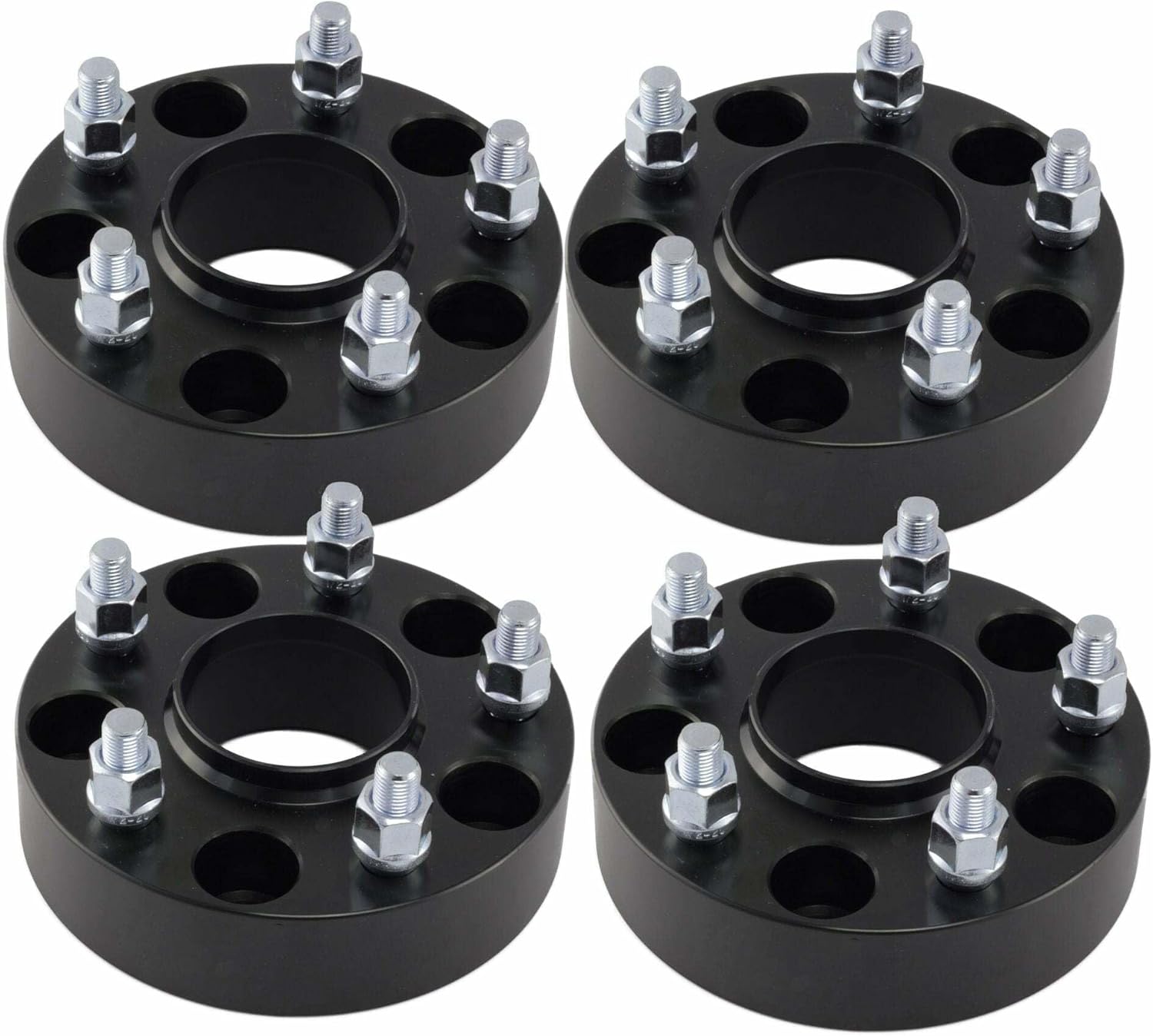
2. Titan Wheel Accessories 1.5" Hub-Centric Wheel Spacers, 5×4.5, 71.5mm Bore, 1/2×20 Studs — Set of 4
| Spacer thickness | 1.5 Inches (38mm) |
|---|---|
| Bolt pattern | 5×4.5 (5×114.3) |
| Hub bore | 71.5mm |
| Stud thread pitch | 1/2×20 |
These Titan 1.5 inch (38mm) hub-centric spacers are CNC-machined from 6061-T6 billet aluminum and anodized for corrosion resistance. They bolt to the hub using the supplied conical-seat lug nuts and provide a 71.5mm hub bore that matches Jeep hubs for accurate centering. In practice they widen track width by 1.5 inches per side to give a more aggressive stance and create clearance for larger tires, brake upgrades, or aftermarket suspension without changing wheel offset. Grade 12.9 pressed-in studs simplify wheel mounting, but installation requires care: clean hub surfaces, torque with a wrench (no impact), and verify wheel back clearance or stud length before use. The anodized finish helps resist corrosion, though a few buyers reported finish or color variation and some installation damage when air tools were used. These are a straightforward option for adding clearance and stance to 1997-2006 Jeep Wranglers when fitted and torqued properly by someone comfortable with wheel hardware.
Best for: Drivers who want a performance look and extra clearance on a 1997–2006 Jeep Wrangler and who plan to fit larger tires or aftermarket brakes while maintaining stable wheel centering.
Less Ideal for: Owners who prefer a plug-and-play OEM appearance or who are uncomfortable with professional installation and hub/fastener verification.
- CNC-machined 6061-T6 billet aluminum construction for strength and lighter weight compared with cast spacers
- Hub-centric 71.5mm bore for precise centering and reduced vibration when matched to the vehicle hub
- Pushes wheels out 1.5 inches per side to improve stance and provide clearance for larger tires or brake components
- Includes pressed-in grade 12.9 steel studs and conical-seat lug nuts for a complete mounting solution
- Some customers report finish or color not matching photos and occasional surface blemishes
- Requires careful installation and correct stud/lug setup; improper use of impact tools can damage studs or lug seats
Verdict: A billet aluminum, hub-centric 1.5" spacer built for Wrangler owners who want a wider stance and extra clearance for bigger tires or brake upgrades.
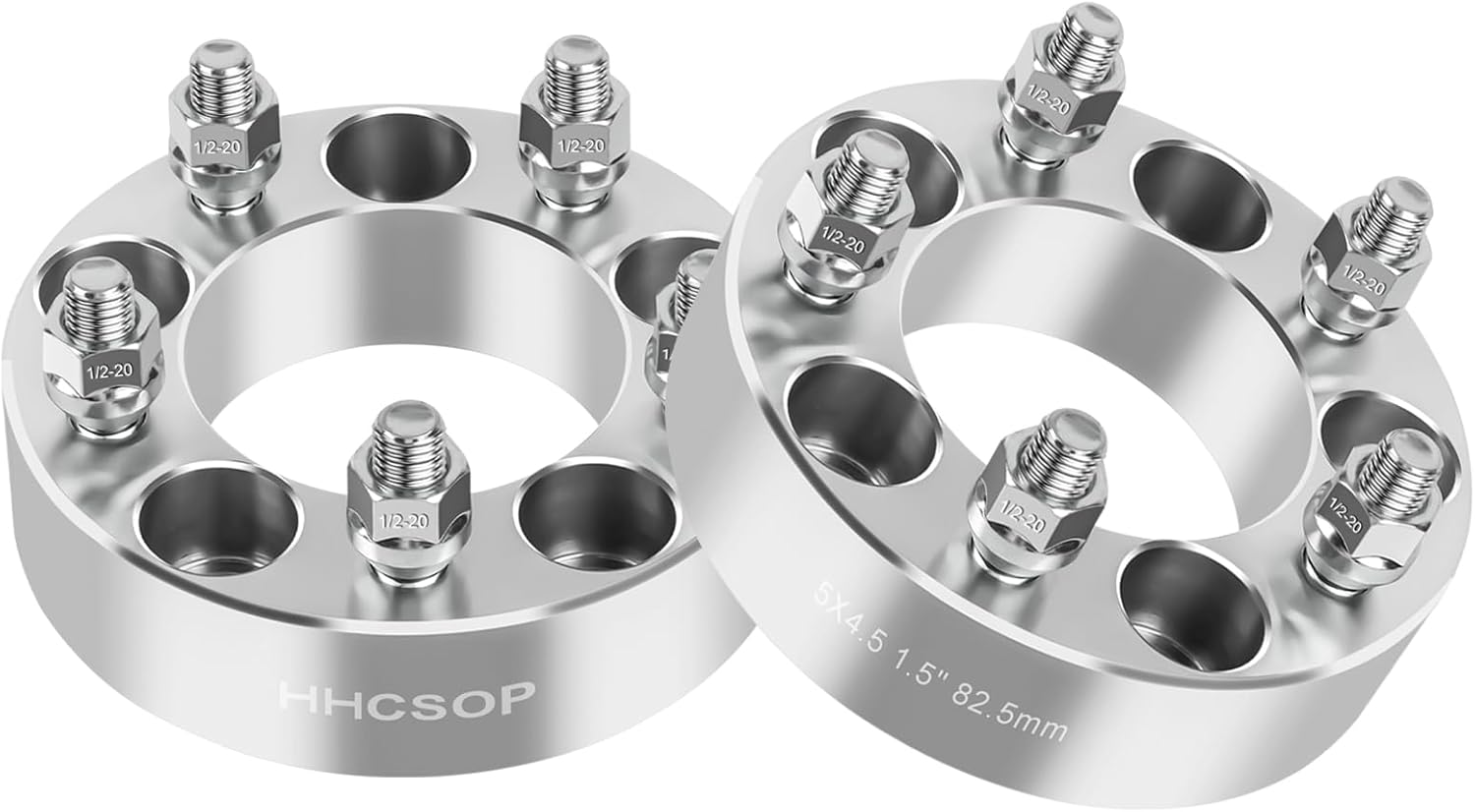
3. HHCSOP 1.5" 5×4.5 Wheel Spacers (5×114.3), 82.5mm Bore, 1/2×20 Studs — 2 PCS
| Thickness | 1.5 inch |
|---|---|
| Bolt pattern | 5×4.5 (5×114.3 mm) |
| Hub bore | 82.5 mm |
| Stud thread | 1/2 x 20 |
These HHCSOP 1.5-inch spacers are designed to push wheels outward on vehicles using a 5×4.5 (5×114.3) bolt pattern, providing extra clearance and a wider stance. Made from forged 6061-T6 aluminum and CNC machined, they arrive with an anodized surface and 10.9 grade studs, so they are lightweight yet strong for street use. Installation is straightforward: the spacer mounts to the hub and the wheel is bolted to the spacer using the included studs, and the listing warns some vehicles may need excess stud length trimmed. In practice they are useful on a Jeep Wrangler (1997–2006) for fitting wider tires, improving track width and cornering stability, or clearing aftermarket brakes or suspension components. Positive real-world notes include solid fitment and accurate machining, but buyers should follow correct torque sequence, recheck torque after initial miles, and confirm hub bore and stud length on their Wrangler before installing. These spacers are a practical option when you want a modest track increase without major suspension changes.
Best for: A practical buyer looking to fit wider tires or clear aftermarket brakes on a 1997–2006 Jeep Wrangler who values accurate fitment and a straightforward, bolt-on improvement to stance and track width.
Less Ideal for: Not aimed at people seeking heavy off-road beadlock solutions or major suspension modification; those needing larger spacers or vehicle-specific custom machining should look elsewhere.
- CNC machined from 6061-T6 aluminum for a good strength-to-weight ratio
- Anodized surface improves corrosion resistance for long-term street use
- Includes 10.9 grade studs sized 1/2×20 for secure fastening
- 1.5-inch thickness gives noticeable track width increase for clearance and stance
- Accurate 82.5mm hub bore and 5×114.3 bolt pattern for tight fitment when matched correctly
- May require trimming or addressing excess stud length on some vehicle setups
Verdict: A practical, CNC-machined 1.5-inch spacer that reliably widens the track on 1997–2006 Jeep Wranglers to fit wider tires or improve clearance without major modifications.
4. GDSMOTU 1.5" 5×4.5 Wheel Spacers with 82.5mm Bore and 1/2" Studs

| Bolt pattern | 5×4.5 |
|---|---|
| Thickness | 1.5 Inch |
| Center Bore | 82.5mm |
| Material | 6061-T6 Forged Aluminum |
| Stud grade | 10.9 |
These GDSMOTU spacers push wheels outward 1.5 inches to widen track and improve stance and stability. Made from forged 6061-T6 aluminum and CNC machined, they arrive with heat-treated 10.9-grade studs already installed, which simplifies installation and gives a stronger fastener than generic hardware. Typical use is on vehicles needing a 5×4.5 bolt pattern and an 82.5mm center bore; install by hand or torque wrench and avoid impact tools as recommended. The spacers can reduce tire rub, enhance cornering feel, and give a more aggressive look while improving lateral grip. Important limitations: these are not hub-centric and require careful checking of fitment to the Wrangler 1997-2006 hub dimensions and proper torqueing; they also add offset that can increase load on wheel bearings and suspension components. The package includes threadlocker and gloves, but professional installation or re-torque after 50-100 miles is advisable for safety.
Best for: Jeep Wrangler owners on a budget who want a simple, strong spacer to push wheels out for improved stance and stability without buying custom wheels or extensive suspension work.
Less Ideal for: Drivers planning heavy off-road use, extreme load carrying, or those who prefer hub-centric spacers or a factory-quality centered fit should consider other options or consult a shop.
- Forged 6061-T6 aluminum construction for strength and lightness
- Preinstalled heat-treated 10.9-grade studs for reliable fastening
- CNC machining for precise bolt pattern and stud alignment
- Includes threadlocker and gloves to aid installation
- Not hub-centric which may require careful hub fit verification and shims for perfect centering
Verdict: A cost-conscious way to add 1.5 inches of wheel offset with forged aluminum strength and preinstalled high-grade studs for improved stance and handling on a 1997–2006 Wrangler.
5. ILONPA 2" 5×4.5 Wheel Spacers with 82.5mm Bore, Set of 4

| Bolt pattern | 5×4.5 (5×114.3mm) |
|---|---|
| Thickness | 2" (50.8mm) |
| Center bore | 82.5mm |
| Stud thread | 1/2"-20 |
| Material | 6061-T6 aluminum |
These ILONPA wheel spacers push the wheels out two inches using a 5×4.5 bolt pattern and an 82.5mm hub bore. Machined from forged 6061-T6 aluminum and anodized, they include 10.9-grade studs and heat-treated lug nuts intended to resist corrosion and deformation. Typical use is to gain clearance for larger wheels or brakes and to widen stance for improved cornering and appearance. Installation is straightforward for a competent DIYer: remove the wheel, fit the spacer to the hub, torque the supplied hardware by hand or manual wrench and reinstall the wheel. In practice the material and anodized finish should provide good longevity, but one review documents a serious stud/hub issue on an older Ranger that suggests careful fit and torque procedure are critical. These spacers are not hub-centric and do not include mounting hubs, so some vehicles may need hub-centric rings to eliminate runout. Expect clear benefits in handling and fitment flexibility, but verify fitment, use proper torque technique with a manual wrench, and inspect wheel studs after initial miles to ensure long-term reliability.
Best for: A buyer who prioritizes durable, machined aluminum spacers to widen stance or clear larger brakes on a 1997–2006 Jeep Wrangler and who plans to install carefully with measured torque and fitment checks.
Less Ideal for: Drivers who want a plug-and-play hub-centric spacer solution or who prefer a professional shop to handle fitment without dealing with rings or extra verification.
- Forged 6061-T6 aluminum construction for strength and corrosion resistance
- CNC machined and anodized surface for precise fit and improved durability
- Supplied 10.9-grade studs and heat-treated lug nuts for higher deformation tolerance
- 2-inch thickness provides room for larger wheels or brake calipers and a wider track
- Not hub-centric and ships without hub rings which can allow runout if bore mismatch exists
- Requires manual wrench torque and careful installation; improper fit or tightening can stress factory studs
Verdict: If you want a robust, machined aluminum 2-inch spacer to safely widen a 1997–2006 Jeep Wrangler's track while allowing larger wheels or brakes, this set offers the necessary materials and hardware when installed correctly.
6. Richeer 1.5" 5×4.5 Forged 5-Lug Wheel Spacers with 1/2-20 Studs (4 pcs)

| Thickness | 1.5" |
|---|---|
| Bolt pattern | 5×4.5 (5×114.3mm) |
| Hub bore | 82.5 mm |
| Stud thread | 1/2-20 |
These Richeer spacers are a budget-friendly, vehicle-specific solution for pushing wheels outward by 1.5 inches to reduce rubbing and give a wider stance on 1997-2006 Wrangler models. Made from forged 6061-T6 billet aluminum with CNC machining and an anodized finish, they are hub bore centered to 82.5 mm and use Grade 12.9 studs advertised at high tensile strength for secure clamping. Installation is straightforward: fit the spacer to the hub, run the supplied studs and torque to spec, and remount the wheel. In real-world use they noticeably increase track width and improve cornering feel while delivering a more aggressive look. Reported positives include solid machining and longevity after thousands of miles, though some users call the supplied studs softer than factory studs and a small number noted fitment or balancing issues on nonexact applications. These are not a universal part so confirm hub bore and bolt pattern before buying, and consider replacing the studs with higher-grade hardware if you want factory-matching feel and serviceability.
Best for: Buyers who prioritize confirmed fitment and social proof from other owners and want a cost-effective spacer to stop rubbing and widen the stance on a 1997–2006 Wrangler while retaining a mostly stock installation process.
Less Ideal for: Drivers seeking a completely hub-centric, premium bolt-on kit with upgraded hardware included or those unwilling to verify hub bore and bolt pattern before installation.
- Forged 6061-T6 billet aluminum construction for strength and corrosion resistance
- CNC machined and anodized finish for precise fit and surface protection
- Includes Grade 12.9 threaded studs rated for high tensile strength
- 1.5-inch offset effectively widens track to reduce rubbing and improve handling
- Some buyers report the supplied studs feel softer than factory studs and may be worth upgrading
- Not hub-centric on every application which can cause vibration if used without proper fitment confirmation
Verdict: A well-machined, forged 1.5-inch spacer that reliably widens the track on 1997–2006 Wranglers for improved clearance and handling while offering strong user endorsement at a value price.
7. dynofit 2" 5×4.5 Forged Wheel Spacers with 80.5mm Hub Bore and 1/2"-20 Bolts

| Thickness | 2 inch (50.8mm) |
|---|---|
| Bolt pattern | 5×4.5 (5×114.3mm) |
| Hub bore | 80.5mm |
| Thread pitch | 1/2"-20 |
| Construction | Forged |
These dynofit 2-inch wheel spacers are forged aluminum spacers intended to push your wheels outward to improve stance, clear larger tires, and relieve brake or caliper clearance issues. They install between the hub and wheel using included Grade 10.9 DACROMAT-treated bolts and are CNC machined for a consistent fit; the 80.5mm center bore and 5×4.5 bolt pattern match the listed Jeep Wrangler TJ fitment. In practice they are used when you want a wider track, fit bigger tires, or correct wheel backspacing without changing wheels. Benefits include lighter forged construction compared with cast spacers, corrosion-resistant bolts, and a 24-month after-sales promise. Limitations to note are the need for correct installation and torque to avoid issues, possible requirement for hub-centric rings or attention to hub fit for rigorous off-road use, and that a 2-inch offset can alter scrub radius and steering response so alignment check after installation is advisable.
Best for: A buyer who wants a reliable, factory-quality way to widen a 1997–2006 Wrangler for larger tires or a more aggressive stance and prefers a built, service-backed product they can install carefully or have fitted by a mechanic.
Less Ideal for: Drivers seeking a zero-impact replacement or those who plan extreme off-road use without addressing hub-centric fitment and steering geometry should consider other wheel fitment solutions.
- Forged 6061-T6 aluminum construction for strength and reduced weight versus cast spacers
- CNC machining and DACROMAT-treated Grade 10.9 bolts for consistent fit and improved corrosion resistance
- 2-inch thickness provides significant clearance for larger tires and improved outward stance
- Vehicle-specific fit with 80.5mm hub bore and 5×4.5 bolt pattern for compatible Wrangler TJ applications
- Not hub-centric in all applications which may require additional hub rings for heavy off-road use
- A 2-inch offset changes steering geometry and may require alignment after installation
Verdict: A forged, vehicle-specific 2-inch spacer that gives 1997–2006 Wrangler owners a practical, service-backed way to fit larger tires and widen stance while prioritizing build quality.
Choosing the Right 1997-2006 Jeep Wrangler Wheel Spacers: Key Factors to Consider
Bolt Pattern and Stud Size
Bolt pattern compatibility is the most basic requirement. The 1997-2006 Jeep Wrangler uses a specific lug pattern and stud size that must match both the spacer and the replacement wheel. If the spacer does not match the vehicle bolt circle, it will not fit or will require unsafe modifications. Stud diameter, thread pitch, and stud length determine whether the wheel can be properly secured. Spacers that include extended studs must provide adequate thread engagement into the wheel. Verify published stud length to ensure you retain the manufacturer-recommended number of engaged threads on the wheel. Incorrect stud specs can lead to loosening or failure under load.
Hubcentric Versus Lugcentric Design
Hubcentric spacers locate the wheel on the vehicle hub using a precise center bore, which helps maintain alignment and reduces the risk of vibration. For the Wrangler years covered here, a hubcentric spacer that matches the factory hub diameter will help keep wheels centered during driving and while accelerating or braking. Lugcentric spacers rely only on the lug nuts to center the wheel. They can work but are more dependent on precise lug torque and even contact surfaces. When using lugcentric spacers, extra care with torque sequence and wheel inspection is required to avoid runout and vibration.
Spacer Thickness and Its Effects
Spacer thickness changes track width and affects suspension geometry, scrub radius, and wheel offset. Small thicknesses provide modest clearance and a mild visual change, while thicker spacers move the wheel further outboard for aggressive stance or to clear brake calipers and wider tires. Thicker spacers increase lever arm forces on wheel bearings and studs. For the Wrangler, consider the intended use: occasional off-road tire clearance can tolerate moderate thicknesses, but extreme widths used only for show can accelerate bearing wear. Always pick a spacer thickness that balances clearance needs with long-term drivetrain implications.
Material, Construction and Corrosion Protection
Most wheel spacers are made from aluminum alloys because they offer a good strength-to-weight ratio. Forged or billet aluminum spacers typically offer greater fatigue resistance than low-grade cast pieces. Look for spacers that specify an alloy grade and a machining or forging process. Corrosion protection matters for vehicles that see seasonal moisture or off-road use. Hard anodizing, e-coating, and zinc plating on studs help prevent galvanic corrosion between the spacer, hub, and wheel. Corrosion can compromise tolerances over time, affect fit, and create difficulty during removal.
Stud Engagement and Fastener Quality
Proper stud engagement is essential for wheel retention. Whether spacers come with pre-installed studs or require you to use the factory studs, confirm that the combined stud length into the hub and wheel provides the recommended thread engagement. Insufficient engagement raises the risk of lug failure. Fastener quality and grade are also important. High-tensile studs and nuts reduce the chance of rounding or failure, particularly when spacers increase loads. Check whether spacers include tightened torque specs and hardened hardware to match the vehicle's demands.
Fitment Details and Backspacing Effects
Fitment goes beyond bolt pattern. Center bore size, hub seat type, and how the spacer changes wheel backspacing affect the final ride and clearance. Measure both the hub bore and the wheel center bore before buying, and account for any adapter taper or lip that could interfere with dust caps or ABS sensors. Some spacers modify the effective backspacing enough to improve tire clearance from control arms or sway bars. Keep in mind how much additional track width is acceptable for your driving conditions and any legal or insurance constraints on vehicle modifications.
Understanding TJ, LJ, and TJU Chassis Codes and Fitment
The 1997-2006 Wrangler primarily aligns with the TJ, LJ, and TJU generation in most aftermarket fitment guides, though owner searches often include TJ, LJ, and TJU references. When planning spacers, specify the exact year and check the hub diameter and bolt pattern for your Wrangler to avoid ordering the wrong configuration.
Record the vehicle's hub bore measurement, stud pattern, and any upgrade parts already installed. These chassis details determine whether you need a hubcentric spacer and which thicknesses will clear suspension components. Treat TJ, LJ, and TJU references as fit guides only and confirm dimensions on your specific truck.
- Measure hub center bore and bolt circle diameter before ordering
- Confirm whether aftermarket wheels require centering rings or hubcentric spacers
- Note any brake or suspension changes that affect clearance needs
Common Spacer Thicknesses and Typical Uses
Spacer thickness is commonly offered in 5 mm increments or specific millimeter values. Small spacers, like 5 mm to 12 mm, are useful for minor clearance and correcting minor offset mismatches. Mid-range spacers, around 15 mm to 25 mm, are commonly used to fit wider tires without rubbing. Thicknesses above 30 mm are usually reserved for aggressive stance or special tire setups and should be used with caution.
When choosing thickness, think about how often you will be off-roading versus on pavement. Off-road use can demand more robustness and potentially smaller spacers to avoid excess leverage on bearings, while show or stance applications may prioritize appearance over longevity.
- 5–12 mm: small offset adjustments and minor clearance
- 15–25 mm: wider tires and moderate clearance
- 30+ mm: aggressive stance or specialized fitment; increases bearing load
Installation Prep and Tools You Will Need
Plan a safe working environment and gather quality tools before starting. Typical tools include a torque wrench that covers the vehicle torque spec range, breaker bar, jack and stands, anti-seize or appropriate thread locker if specified by the spacer instructions, and a paint pen or marker to log bolt orientation for torque checks.
A wheel spacer installation kit can simplify the job because it often includes extended studs and hardened nuts. Whether the spacer uses extended studs or reuses factory studs, confirm required torque values and follow a proper torque sequence. After initial installation, re-torque the fasteners after a short test drive to ensure nothing has loosened.
- Torque wrench rated for required ft-lb range
- Jack and stands, or a lift
- Spacer installation kit with extended studs if necessary
Reducing Vibration Risks
Vibration after spacer installation is commonly caused by mismatched center bores, uneven torque, or insufficient stud engagement. Using hubcentric spacers that match the factory hub diameter reduces mechanical runout. When hubcentric spacers are not available, carefully centering the wheel and following a cross-torque pattern helps mitigate vibration.
Verify wheel runout after installation if you still feel vibration. Minor runout can sometimes be corrected by re-seating the wheel and ensuring studs are uniformly tightened to the correct torque spec. If vibration persists, inspect for warped rotors, bent wheel, or damaged studs that could be aggravated by spacer use.
- Prefer hubcentric spacers for natural centering
- Use correct torque sequence and re-torque after a short drive
- Check wheel runout if vibration continues
Legal and Safety Considerations for Track-Width Changes
Changing track width can affect vehicle handling and may have legal or insurance implications in some areas. Wider track alters steering response and could change how the Wrangler behaves during emergency maneuvers. Owners should be aware of local regulations and inspect suspension and wheel bearing loads after significant spacer use.
From a safety standpoint, avoid combinations that reduce thread engagement below manufacturer guidance or place undue stress on wheel studs and bearings. Routine inspections of studs, nuts, and spacer hardware will help spot wear early and maintain safe operation.
- Check local regulations on wheel and track modifications
- Inspect hub, studs, and bearings periodically after installation
- Avoid reducing stud thread engagement below manufacturer recommendations
Choosing the Right Accessories and Installation Kits
A dedicated installation kit often includes extended studs, hardened lug nuts, and sometimes centering rings. These accessories can simplify installation and ensure the correct fastener engagement. When a spacer comes without studs, plan to source appropriate hardware that matches thread pitch and strength grade requirements for the Wrangler.
Centric rings are useful when the wheel bore is larger than the hub and you need precise centering. Likewise, consider torque specification cards or labels to keep track of required values for ongoing maintenance.
- Use installation kits that match thread pitch and stud length
- Consider centric rings when wheel bore exceeds hub diameter
- Keep torque specs handy for scheduled rechecks
Still looking for the perfect fit?
Select your Jeep Wrangler configuration to see the most relevant Wheel Spacers recommendations
How We Chose the Best 1997-2006 Jeep Wrangler Wheel Spacers
We prioritized tangible safety and fitment criteria that matter for 1997-2006 Jeep Wrangler owners. Our selection process focused on bolt pattern accuracy, hubcentric vs lugcentric interface, material strength and finish, center bore compatibility, and ease of installation. We favored spacers with clear specifications for stud size, stud engagement length, and recommended torque values because those dimensions directly affect wheel retention and vibration risk. We also considered manufacturing quality indicators such as billet or forged aluminum construction, corrosion-resistant coatings, and whether spacers include extended studs or require a separate installation kit. Load rating and thickness options were assessed to reflect common uses like clearance for larger tires versus aggressive stance adjustments. Excluded from consideration were spacers lacking published technical specs, parts with unclear hub bore dimensions, and components that rely solely on adhesives or press-fit methods without mechanical retention. The result is a group of spacers that meet practical fitment and safety expectations for TJ, LJ, and TJU era Wrangler owners while covering a range of thicknesses and hub interfaces.
Our full evaluation process is outlined in our review methodology.
FAQ
Will wheel spacers cause vibration on my 1997-2006 Wrangler?
Vibration can occur if the spacer is not hubcentric, if lug nuts are unevenly torqued, or if there is insufficient stud engagement. Using spacers that match the hub bore and following the correct torque sequence usually prevents vibration. Persistent vibration should be diagnosed for rotor runout, bent wheels, or damaged studs.
How thick of a spacer can I safely use on a TJ, LJ, and TJU era Wrangler?
Safe thickness depends on how you use the vehicle. Small to mid-range spacers for clearance or modest stance are commonly used, while very thick spacers increase leverage on bearings and studs. Evaluate thickness based on tire clearance needs and consider professional inspection for very large spacers.
Do I need a spacer installation kit or can I reuse factory studs?
It depends on the spacer design and required additional stud engagement. Many owners use installation kits that include extended studs and hardened nuts to ensure proper thread engagement. If the spacer is thin and factory studs provide sufficient engagement, reuse may be acceptable but check specified stud length and torque guidance.
How often should I re-torque wheel spacer fasteners after installation?
Re-torque the fasteners after the first 50 to 100 miles of driving to account for settling, then check at regular service intervals or after off-road use. Regular inspections help ensure fasteners remain at correct torque and reveal any loosening early.
Are hubcentric spacers worth it for a Wrangler used off-road?
Hubcentric spacers help keep wheels centered and reduce vibration, which is beneficial for off-road driving. For off-road use, choose robust hubcentric spacers with corrosion protection and adequate stud engagement to withstand the additional loads.
What torque specs should I use for spacer fasteners?
Use the vehicle manufacturer's wheel torque specs unless the spacer manufacturer provides a specific different value. If extended studs or different-grade hardware are used, follow the spacer kit instructions for torque to avoid under- or over-tightening.
Final Verdict
Prioritize correct fitment, hubcentric design, and appropriate spacer thickness when selecting wheel spacers for a 1997-2006 Jeep Wrangler. Confirm bolt pattern, hub bore, and stud engagement before purchase, and choose corrosion-resistant materials and hardened hardware for durability. Balance your desire for improved clearance or stance with the increased loads thicker spacers create. With proper selection, installation, and routine rechecks, spacers can safely deliver the clearance and look you want while minimizing vibration and premature wear.
Explore More:
- Check out all Jeep Wrangler parts & accessories
- Explore Wheel Spacers Maintenance & Repair Guides
- Explore Wheels & Tires
- Browse all Auto Parts
