

Note: This article contains affiliate links. If you click on these links and make a purchase, I may earn a small commission at no extra cost to you. This helps support my research and content. Read my full affiliate disclosure here.
If you drive a 2007-2018 Jeep Wrangler (JK and JKU generations overlap in owner searches), the cabin air filter plays a big role in in-cabin comfort, HVAC performance, and allergen control. A clogged or poor-quality filter reduces airflow, strains the blower, and fails to trap pollen, dust, and road debris. This guide shortlists seven top cabin air filters selected for reliable fitment, filtration, and installation simplicity for the Wrangler. Below you will find concise notes on what matters when picking a replacement, plus practical installation tips and maintenance timing to keep your Wrangler's ventilation working efficiently. Read on to compare the filters evaluated against key criteria.
Looking for other parts? See all Jeep Wrangler parts & accessories.
Top Picks at a Glance
| Best Overall The best all-around choice for most situations | FRAM Fresh Breeze Cabin Air Filter with Arm & Hammer (CF11777) |  |
| Best Quality Built to a higher standard if you want something more solid | K&N Lifetime Washable Cabin Air Filter (VF1010) for Jeep Wrangler 2011–2018 |  |
| Best Value The sweet spot between price and what you get | EPAuto CP777 Cabin Air Filter with Activated Carbon |  |
| Best Budget The cheapest option that still gets the job done reliably | Carory Cabin Air Filter with Activated Carbon for Jeep Wrangler (2011–2018) |  |
| Highest Rated A top-rated pick with lots of positive feedback | Readair Cabin Air Filter with Activated Carbon for Jeep Wrangler (CF11777) |  |
| Most Popular A crowd favorite that many people choose with confidence | Spearhead Breathe Easy Activated Carbon Cabin Air Filter (BE-777) — 2-Pack |  |
| Best Seller A high-volume bestseller chosen again and again | Femota MERV 13 Cabin Air Filter with Activated Carbon (CF12450) |  |
1. FRAM Fresh Breeze Cabin Air Filter with Arm & Hammer (CF11777)

| MERV Rating | 8 |
|---|---|
| Compatible Devices | Air Conditioner |
| Material Type | Paper |
| Air Filter Construction | Pleated |
The FRAM Fresh Breeze cabin air filter is a factory-style replacement meant to sit behind the glove box and clean the air entering the cabin of compatible Jeep Wranglers. It uses a pleated paper media with embedded Arm & Hammer baking soda and carbon to reduce odors while filtering particulates; the listing claims it captures 98% of specified pollutants. Installation is straightforward for most Jeeps and often takes under 15 minutes because the unit is a two-piece design that fits into the glovebox housing. In use it improves perceived air quality, reduces dust and allergens, and can help HVAC performance by restoring airflow compared with a clogged old filter. Fitment reports are generally positive for 2012–2018 Wrangler models but a few owners with certain dual-filter housings noted alignment and sealing issues, so verify your vehicle’s filter box before buying. The filter is paper-based rather than a washable or high-MERV performance element, so plan regular replacement rather than expecting long-term heavy-duty particulate capture.
Best for: Buyers who want an easy, OEM-style cabin filter that freshens air and reduces common odors while being simple to install as part of routine maintenance.
Less Ideal for: Those seeking a washable reusable filter or a high-MERV/HEPA-level solution for heavy smoke or extreme allergen exposure should consider other specialty options.
- Activated baking soda and carbon to help reduce odors in the cabin
- Pleated media provides standard particulate filtration for dust and pollen
- Two-piece design simplifies installation behind the glove box
- Quick DIY replacement that can restore HVAC airflow and cabin comfort
- Paper pleated construction is not washable and requires periodic replacement
- Some Jeep filter housings with a center support bar may cause fitment or sealing problems
Verdict: A straightforward, easy-to-install cabin filter that combines charcoal and baking soda for odor control while delivering reliable particulate filtration for Jeep Wrangler maintenance.
2. K&N Lifetime Washable Cabin Air Filter (VF1010) for Jeep Wrangler 2011–2018

| Compatible vehicles | 2011-2018 Jeep Wrangler, JK, III |
|---|---|
| Material type | Polyurethane |
| Included components | Cabin Air Filter |
| Warranty | 10 Years – 100,000 Miles |
The K&N VF1010 is a washable cabin air filter made to replace the factory cabin filter in 2011–2018 Jeep Wranglers. It installs in minutes and drops into the factory air box with no tools required. Built from durable polyurethane media, the filter is pretreated to help control odors and is washable for repeated use, which reduces long‑term waste and replacement cost. In practice it tends to maintain strong filtration while preserving decent airflow, though some owners notice slightly reduced fan force compared with a thin disposable filter. The ability to rinse and reuse the element makes it practical for drivers who encounter dust or off‑road conditions and want a low‑maintenance solution. K&N backs the product with a long warranty and the filter’s thicker construction contributes to perceived better filtration, at the expense of a small drop in airflow in some HVAC settings.
Best for: Drivers who prioritize long-term performance and want a reusable cabin filter that stands up to dusty or off-road use while reducing recurring maintenance and waste.
Less Ideal for: Drivers who need maximum HVAC blower output in every condition or who prefer the lowest initial cost and fully disposable filters.
- Washable and reusable design eliminates frequent replacement and reduces landfill waste
- Durable polyurethane media and pretreated surface help control cabin odors
- Easy drop‑in installation that fits the factory air box with no tools required
- Designed to maintain good airflow while improving filtration compared to many disposable filters
- Thicker filter media can slightly reduce blower fan force in some HVAC settings
Verdict: Choose this washable K&N cabin filter if you want a durable, reusable upgrade that improves filtration and lowers long‑term maintenance for 2011–2018 Jeep Wranglers.
3. EPAuto CP777 Cabin Air Filter with Activated Carbon

| Compatible vehicles | Jeep Wrangler 2011-2017; Wrangler JK 2018 |
|---|---|
| Material type | Activated Carbon |
| Construction | Pleated |
| Recommended replacement | 12 months or 12,000 miles |
The EPAuto CP777 is a pleated cabin air filter that uses activated carbon to help trap dust, pollen, and odors while matching factory fit for certain Jeep Wrangler years. It installs from behind the glove box in the common drop-in style, so replacement is a simple 5 to 10 minute job for most owners and restores HVAC airflow quickly. The carbon layer helps reduce odors and smog particulates compared with basic paper filters, while pleated construction increases filter surface area for better capture of contaminants. It is intended as an economical, regular-replacement option and pairs well with routine maintenance intervals of about 12 months or 12,000 miles. Limitations are typical for aftermarket cabin filters: heavy offroad use will clog it faster than light street driving, and activated carbon helps with smells but will not remove gases completely the way a dedicated molecular-adsorption system might. Fit is reported consistently accurate for the listed Wrangler years, making it a practical, low-cost service part.
Best for: Buyers who prioritize a reliable, low-cost cabin filter that restores HVAC airflow and reduces odors with minimal fuss and maintenance time.
Less Ideal for: If you routinely run long dusty offroad trips or need advanced chemical gas filtration, consider heavy-duty or specialty filtration options instead.
- Activated carbon layer reduces odors and some smog-related particulates
- Pleated construction increases filtration surface area for better dust and pollen capture
- Designed to match factory fit for listed Jeep Wrangler model years for easy installation
- Simple drop-in replacement that can be changed in minutes without special tools
- Not designed for extended heavy offroad duty so service life will be shorter in very dusty conditions
Verdict: A practical, affordable activated-carbon cabin filter that delivers factory-fit replacement, improved odor control, and straightforward, fast installation for Jeep Wrangler owners.
4. Carory Cabin Air Filter with Activated Carbon for Jeep Wrangler (2011–2018)

| Fitment | Jeep Wrangler 2011-2018 |
|---|---|
| Includes | Activated carbon layer |
| Material Type | Paper |
| Unit Count | 1 |
This Carory cabin air filter is a straightforward replacement for Jeep Wrangler models from 2011 through 2018. It installs the same way as factory filters and the activated carbon layer helps trap odors, VOCs, and airborne contaminants that a basic paper filter might miss. For routine maintenance it slides into the glovebox-area filter housing without trimming and restores fresher-smelling cabin air while maintaining normal airflow. The filter is made from pleated paper and includes reference part numbers matching common Jeep/chrysler listings, which simplifies parts matching. As a budget-focused option it offers much of the same function as higher-cost alternatives, though long-term durability and exact carbon adsorption performance may be lower than premium branded filters. A small portion of customers reported fit orientation or manufacturing errors, but the seller appears responsive with replacements. This is a practical, low-cost way to refresh cabin air between scheduled services.
Best for: Buyers looking for an affordable, no-frills cabin air filter that improves cabin odor and basic particulate filtration on a Jeep Wrangler and is easy to install themselves.
Less Ideal for: Drivers who need heavy-duty allergen or industrial-strength filtration or who prefer top-tier branded filters with documented long-term performance should consider higher-end options.
- Activated carbon layer reduces odors and traps VOCs for a fresher cabin
- Designed to match common Jeep Wrangler part numbers for easy fitment
- Easy, tool-free installation in the glovebox-area filter housing
- Low-cost option that restores airflow and cabin air quality quickly
- Made from basic pleated paper so filtration longevity and heavy-duty pollutant capture may be less than premium filters
- Occasional production/orientation errors reported requiring exchange
Verdict: A budget-friendly, easy-to-install replacement that refreshes cabin air and reduces odors on 2011–2018 Jeep Wranglers.
5. Readair Cabin Air Filter with Activated Carbon for Jeep Wrangler (CF11777)

| Fitment | Jeep Wrangler 3.6L 2012-2018; 3.8L 2011; JK 3.6L 2018 |
|---|---|
| Material Type | Cotton, activated carbon |
| Unit Count | 1 |
| Manufacturer Part Number | RARCabinCF11777 |
| Replacement Reference | CF11777, C16177, 55111302AA |
This Readair cabin air filter is a direct replacement designed to sit behind the glove box on compatible Jeep Wrangler 2011–2018 models. It uses a non-woven filter layer combined with activated carbon to capture dust, pollen, and odor-causing contaminants, which helps maintain cleaner cabin air and more consistent HVAC performance. Installation is straightforward for a DIYer since it follows the factory location and shape for the CF11777 reference. The filter is single-use and not washable, so you should plan to replace it at the recommended interval—about every 12,000 miles or more often in dusty conditions. Practical benefits include improved airflow through the HVAC system and reduced interior odors; limitations are that it is not reusable and the listing provides limited detailed filtration ratings beyond general claims. Overall, it is a practical, budget-friendly replacement for owners who want a cleaner cabin and an easy swap with factory-style fitment.
Best for: Owners prioritizing a reliable, factory-style replacement that improves cabin air quality and HVAC airflow with minimal fuss and straightforward self-installation.
Less Ideal for: Drivers seeking a washable or long-life reusable filter or those who need detailed certified filtration efficiency specifications should consider other options.
- Activated carbon layer helps reduce cabin odors
- Designed to match factory fit location behind the glove box for easy installation
- Non-woven filter media captures dust and pollen to improve cabin air quality
- Positive user feedback indicates consistent fit and performance
- Not washable or reusable, requires periodic replacement
Verdict: A straightforward, factory-compatible cabin filter with activated carbon that reliably improves cabin air quality for compatible Jeep Wranglers.
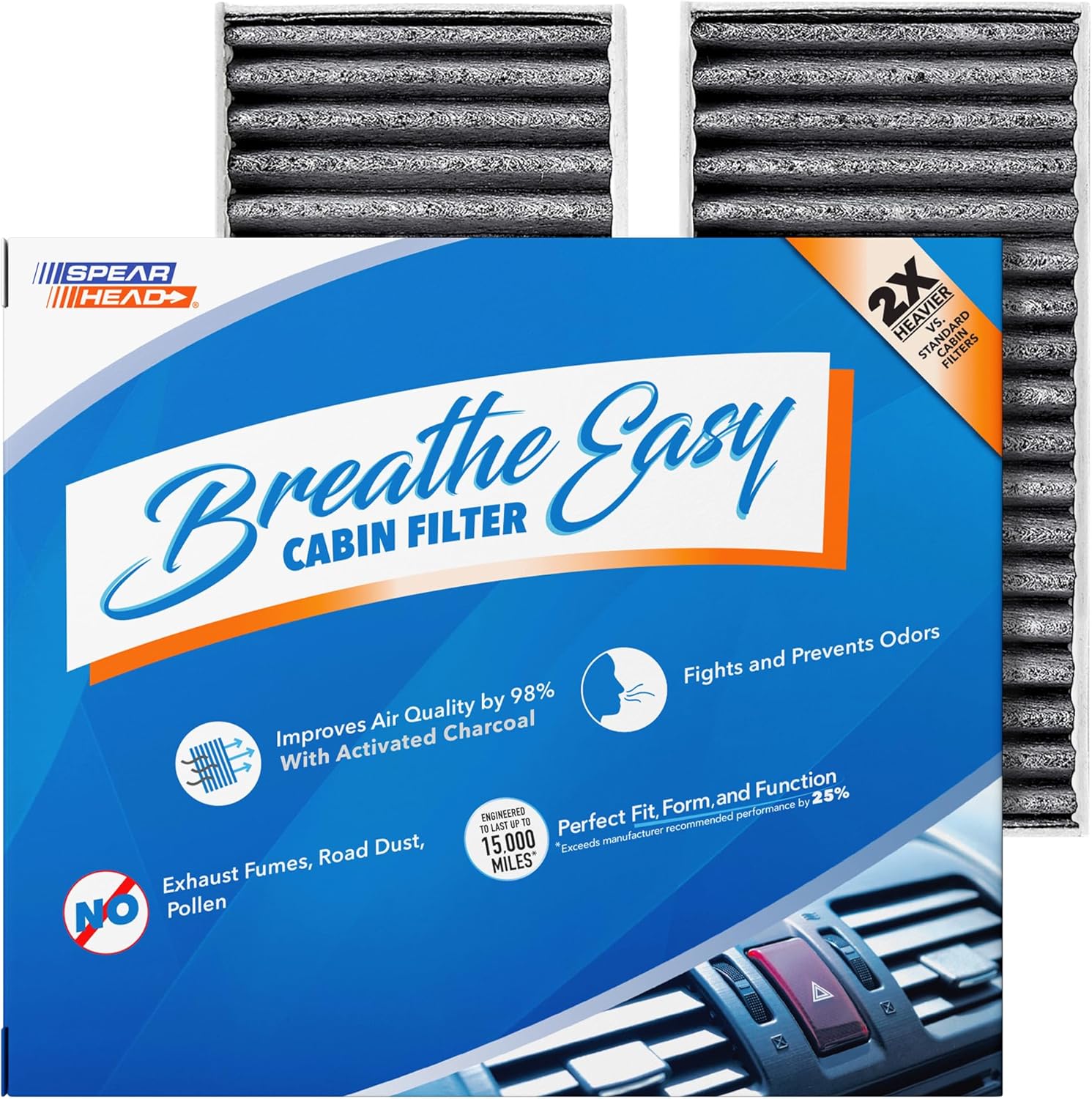
6. Spearhead Breathe Easy Activated Carbon Cabin Air Filter (BE-777) — 2-Pack
| Compatible Devices | Automobile Cabin |
|---|---|
| Product Grade | High |
| Material Type | Activated Carbon |
| Unit Count | 2 |
The Spearhead Breathe Easy BE-777 is a two-pack cabin air filter that pairs electrostatic particulate media with real coconut shell activated carbon to cut odors and trap fine dust. For Wrangler owners this installs in minutes as a DIY maintenance item and restores fresher vent air after old, musty filters are replaced. The multi-layer pleated design aims to balance airflow and filtration so heater and A/C performance feels factory-like while adsorbing exhaust and road smells. Spearhead claims longer life versus standard filters, and heavier electrostatic media suggests improved particle capture compared with thin aftermarket units. A few buyers noted occasional slight size tolerance needing trim on rare fits, so check the fitment tab before buying. If you prioritize odor control and allergen reduction for daily driving and off-road dust exposure, this filter is an easy, affordable swap that behaves like a solid factory-quality replacement.
Best for: Wrangler owners who want a straightforward, DIY cabin filter upgrade that cuts odors and improves in-cabin air quality while keeping factory-like airflow.
Less Ideal for: People who prefer maximum HEPA-level filtration for severe allergy sufferers should consider dedicated HEPA options instead.
- Activated carbon layer effectively reduces odors and exhaust fumes in the cabin
- Thicker electrostatic media captures fine particulates and allergens better than thin filters
- Designed for quick DIY installation with a rigid frame and precision pleats
- Sold as a two-pack so you get a spare for the next service interval
- A small number of users reported needing to trim the filter slightly for a perfect fit
Verdict: Choose this Spearhead activated carbon cabin filter if you want an easy, cost-effective Wrangler fitment that noticeably reduces odors and improves everyday cabin air quality.
7. Femota MERV 13 Cabin Air Filter with Activated Carbon (CF12450)

| Compatible models | Jeep Wrangler (2018-2024) and Gladiator (2020-2023) gas/hybrid only |
|---|---|
| Filter efficiency | MERV 13 |
| Layers | Four layers including activated carbon |
| Test result | More than 99% average arrestance (ASHRAE52.2:2017 10.8) |
This Femota MERV 13 cabin air filter is a direct-fit replacement meant to match factory size and airflow direction for the specified Jeep Wrangler and Gladiator gasoline and hybrid models. It uses four filtration layers including tested MERV 13 media and a layer of activated carbon beads to reduce particulates, odors, and common cabin pollutants. Installation is straightforward because the filter is made to the same dimensions as the factory unit and clearly marked for airflow. In everyday use it provides noticeably cleaner cabin air compared with a worn filter and should help HVAC performance stay consistent until the recommended replacement interval. The main limitations are strict vehicle fitment—this version is not for diesel engines—and like all higher-efficiency filters it will eventually collect debris and needs scheduled replacement to avoid reduced airflow. For cautious buyers seeking a step up from basic paper filters, this balances improved filtration with an OEM-style fit.
Best for: Buyers who prioritize cleaner cabin air and want a reliable, factory-sized replacement that reduces dust and odors without complicated installation or modification.
Less Ideal for: Drivers who need a filter specific to diesel engine variants or those who prefer aftermarket filters optimized solely for performance airflow rather than filtration.
- High-efficiency MERV 13 media captures fine particulates and pollen
- Activated carbon layer reduces odors and common fumes
- Four-layer construction claimed to provide over 99% average arrestance in testing
- Made to the same size as the factory filter for straightforward installation
- Not compatible with diesel-engine variants of the listed models
Verdict: Choose this Femota MERV 13 cabin filter if you want a factory-fit replacement that noticeably improves in-cabin air quality and reduces odors for gasoline and hybrid Jeep Wranglers and Gladiators.
Choosing the Right 2007-2018 Jeep Wrangler Cabin Air Filter: Key Factors to Consider
Filtration Efficiency and MERV Rating
The filter media's ability to trap particulates directly affects cabin air quality. Higher MERV ratings generally capture smaller particles such as pollen and fine dust, which is important if you or passengers have allergies or spend time on dusty trails. However, very high filtration can increase resistance to airflow. For the 2007-2018 Wrangler, choose a filter that balances particle capture with acceptable airflow so the blower does not struggle, especially on older HVAC systems.
Fitment and Exact Dimensions
Accurate cabin air filter size and sealing shape are essential for a leak-free installation. A filter that is slightly undersized or has a poor seal allows unfiltered air to bypass the media, negating filtration benefits. Confirming the correct dimensions for your Wrangler generation (JK or JKU as relevant to the 2007-2018 range) prevents installation issues and ensures the filter seats properly in the housing without bending or compressing the pleats.
Activated Carbon and Odor Control
If you frequently drive in urban areas, use the Wrangler for camping, or encounter diesel exhaust and road odors, activated carbon layers can reduce smells and some volatile organic compounds. Carbon-treated media can significantly improve perceived air quality. Keep in mind that carbon layers add cost and may slightly affect airflow. Decide if odor mitigation is a priority for your daily use versus maximum particulate capture alone.
Moisture Resistance and Durability
Wranglers often see wet conditions and open-top use, so moisture resistance matters. Filters with water-resistant frames or treated media resist breakdown and maintain structural integrity when exposed to humidity or occasional splashes. A durable frame also helps keep pleats evenly spaced over the service interval, which preserves performance and avoids premature collapse that would reduce filtration and airflow.
Ease of Installation and Serviceability
Most 2007-2018 Wrangler owners prefer simple, quick replacements that do not require tools or lengthy disassembly. Filters that match the original sealing surfaces and include clear orientation markings reduce installation errors and time. Also consider availability of clear instructions or online resources. A filter that you can replace yourself in minutes is more likely to be changed at recommended intervals.
Cost Versus Lifespan
Balance upfront cost against expected service life. Higher quality filters with denser media or carbon layers may cost more but can last longer or provide better protection between changes. Evaluate how often you drive in dusty or high-pollen environments. In such cases, a higher upfront cost for a longer-lasting filter can be more economical over the long term than frequent replacements.
Why Cabin Filters Matter in a Wrangler
The Wrangler's open-air lifestyle and propensity for dusty trails make cabin filtration especially important. A properly sized and installed cabin filter reduces dust, pollen, and debris entering the HVAC system and passenger compartment, which improves comfort and reduces allergens. It also prevents the blower and evaporator from accumulating debris that can reduce efficiency and lead to odors.
- Reduces pollen and dust in the cabin
- Protects HVAC components from debris buildup
- Improves in-cabin comfort during off-road or dusty drives
Generation Notes: JK and JKU Fitment Tips
Search behavior often mixes generation codes across the 2007-2018 range, so confirm the correct housing style for your Wrangler. The JK and JKU generation spans later 2000s into the 2010s and has different cabin intake housings than later JK and JKU variants. JK and JKU references earlier Wrangler designs that some owners still service; double-check the year and stamping on the housing when you order a filter.
Many filters list compatibility by year ranges and chassis codes. When replacing the cabin air filter, verify the filter's stated fitment or physical dimensions against your Wrangler's service manual or the filter housing label to avoid returns or improper sealing.
- Inspect the housing for orientation arrows and filter dimensions
- Compare pleat depth and frame shape to the stock element
- Confirm whether your model uses cabin intake behind the glovebox or under the cowl
Signs Your Wrangler Needs a New Cabin Filter
A clogged cabin filter shows up as reduced airflow from vents, persistent musty or dusty odors, or increased dust on the dash and vents. You may also notice the HVAC blower running louder or cycling more frequently as the system compensates for restricted air. If you experience allergy flare-ups after driving, increased dust in the cabin after short trips, or visible grime on the exposed pleats when you inspect the filter, it is time to replace it. Regular visual checks are the quickest way to spot a saturated element.
- Reduced HVAC airflow
- Musty or stale odors from vents
- Visible dirt, leaves, or debris on the filter
Maintenance Intervals and When to Replace
For typical street use, inspect the cabin filter every 12 months or 12,000 miles, and replace it at least every 12,000 to 24,000 miles depending on conditions. If you drive frequently off-road, in high-pollen seasons, or dusty environments, shorten the interval and inspect the element more often. Keep seasonal use in mind. After extended summer top-off-road use or winter salt exposure, check the filter for lodged debris or moisture accumulation and replace sooner if it shows significant contamination.
- Inspect annually or at 12,000-mile intervals
- Replace sooner for dusty, pollen-heavy, or wet conditions
- Consider swaps after heavy off-road or open-top seasons
Installation Overview and Quick Tips
Replacement is typically a simple, tool-free procedure if you know the intake housing location. On many 2007-2018 Wrangler variants the cabin filter is accessed behind the glovebox or under the cowl. Work methodically: remove debris from the housing first, note filter orientation arrows, and gently seat the new filter to form a full seal around the perimeter.
When reinstalling panels, check for cracked clips or damaged seals so the housing closes securely. If your Wrangler has a drain channel near the intake area, clear it of leaves and debris to reduce the chance of moisture collecting around the new filter.
- Clear debris in the housing before inserting the new filter
- Follow orientation arrows and seat the filter evenly
- Check housing seals and drain channels during reassembly
Still looking for the perfect fit?
Select your Jeep Wrangler configuration to see the most relevant Cabin Air Filters recommendations
How We Chose the Best 2007-2018 Jeep Wrangler Cabin Air Filter
We focused on criteria that matter to Jeep Wrangler owners when replacing the cabin air filter across the 2007-2018 model years. First, fitment and compatibility were primary filters: we verified dimensions, pleat count, and sealing design to ensure straightforward fit into the Wrangler housing without trimming or modification. Second, filtration performance was assessed based on stated MERV ratings or particulate capture claims and the presence of activated carbon for odor and VOC control. Third, airflow impact and HVAC load were considered by checking filter construction and reported pressure drop characteristics so the blower does not work harder than necessary. Fourth, ease of installation and access were important given that many Wrangler owners prefer quick DIY service; we favored filters that align with the stock housing and include installation instructions. Fifth, build quality and moisture resistance were weighted because the Wrangler's open-air use can expose the cabin intake to damp conditions. We excluded products with unclear sizing data, nonstandard housings that require permanent modification, or unsupported fit claims for the 2007-2018 Wrangler. The final list balances filtration, fit, and serviceability to reflect what most owners need.
Our full evaluation process is outlined in our review methodology.
FAQ
How often should I replace the cabin air filter in my 2007-2018 Jeep Wrangler?
Usually inspect the filter every 12 months or 12,000 miles and replace it every 12,000 to 24,000 miles depending on driving conditions. Shorten the interval for dusty, off-road, or high-pollen use.
Can I drive with a clogged cabin air filter?
You can, but a clogged filter reduces airflow and can strain the blower motor. It also allows more dust and allergens into the cabin and can cause stale or musty odors over time.
Where is the cabin air filter located on the 2007-2018 Wrangler?
Location varies by year and submodel, but common access points include behind the glovebox or under the cowl near the windshield. Verify the exact location for your Wrangler generation before starting the replacement.
Will a higher-MERV cabin filter hurt HVAC performance?
Higher-MERV filters capture smaller particles but can increase airflow resistance. Choose a filter that balances particulate capture with acceptable airflow for the Wrangler's blower, especially on older systems.
Are carbon-layer filters worth it for odor control?
Carbon layers can effectively reduce odors and some VOCs, which is useful after exposure to campfires, diesel, or heavy traffic. They may cost more and slightly affect airflow, so weigh odor control against airflow needs.
Can I clean and reuse a disposable cabin air filter?
Most disposable pleated filters are not designed for washing or reuse. Attempting to clean them can damage the media and reduce filtration performance. Replace with a new filter sized for your Wrangler instead.
Final Verdict
Prioritize a correctly sized, well-sealed cabin air filter that balances particulate capture with acceptable airflow for the 2007-2018 Jeep Wrangler. For most owners, a pleated filter with moderate MERV performance and a water-resistant frame strikes the best balance between allergen control and HVAC efficiency. If odors are a concern, consider a carbon-treated option, but account for any modest impact on airflow. Ultimately, regular inspection and timely replacement based on your driving environment will deliver the most consistent in-cabin comfort and protect the HVAC components over time.
Explore More:
- Check out all Jeep Wrangler parts & accessories
- Explore Cabin Air Filters Maintenance & Repair Guides
- Explore HVAC
- Browse all Auto Parts
