

Note: This article contains affiliate links. If you click on these links and make a purchase, I may earn a small commission at no extra cost to you. This helps support my research and content. Read my full affiliate disclosure here.
If you own a 2007-2018 Jeep Wrangler you know the long-term effects of crankcase vapors on intake ports and turbo or naturally aspirated performance. A properly sized and installed oil catch can traps oil and blow-by before it cycles back through the PCV system, lowering carbon buildup and helping the engine breathe cleaner over time. This guide covers the top shortlisted oil catch cans compatible with the Wrangler JK and JKU years, explains why fitment and sealing matter for this chassis range, and outlines practical installation and maintenance expectations. Below you will find the best options we shortlisted for this vehicle scope and the core criteria we used to evaluate them, followed by installation notes and maintenance tips to help you decide which setup fits your use and budget.
Looking for other parts? See all Jeep Wrangler parts & accessories.
Top Picks at a Glance
| Best Overall The best all-around choice for most situations | Moroso 85518 Air/Oil Separator Catch Can for Jeep JK (2012–2018) |  |
| Best Quality Built to a higher standard if you want something more solid | Mishimoto Baffled Oil Catch Can for 2007–2011 Jeep Wrangler JK |  |
| Best Budget The cheapest option that still gets the job done reliably | PQY Universal 2-Port Baffled Aluminum Oil Catch Can Kit |  |
| Highest Rated A top-rated pick with lots of positive feedback | Mishimoto Baffled Oil Catch Can for 2012–2018 Jeep Wrangler 3.6L |  |
| Most Popular A crowd favorite that many people choose with confidence | EVIL ENERGY Baffled 300ml Oil Catch Can Kit with NBR Hose |  |
| Best Seller A high-volume bestseller chosen again and again | EVIL ENERGY 300ml Baffled Oil Catch Can Kit with Breather Filter |  |
1. Moroso 85518 Air/Oil Separator Catch Can for Jeep JK (2012–2018)

| Manufacturer | Moroso |
|---|---|
| Model | Catch Can |
| Exterior | Aluminum |
| Item model number | 85518 |
The Moroso 85518 catch can is a straightforward air/oil separator that plumbs inline with the Jeep JK PCV system to trap oil vapor and moisture before they can reenter the intake. It is typically mounted in the engine bay and connects to the factory breather/PCV plumbing to collect condensate and reduce intake deposits and detonation risk. The large aluminum body gives it more capacity than compact cans, so it needs less frequent draining during normal street use. Construction appears robust and race-oriented, which suits owners wanting a durable, performance-focused upgrade. Limitations are that it is a single-purpose, non-electronic unit with manual drain and it requires basic plumbing and mounting work for proper installation; users should plan for routing hoses and periodic maintenance. For balanced buyers seeking a reliable mechanical solution to reduce oiling issues on the JK 3.6, this catch can is a practical, long-lived option.
Best for: Buyers who want a durable, mechanically simple solution to reduce intake oil deposition and detonation risk on a 2012–2018 Jeep JK and who value build quality and low-maintenance intervals.
Less Ideal for: People seeking a plug-and-play or self-emptying system or those who do not want to perform any engine-bay plumbing or routine maintenance.
- Large-capacity aluminum body reduces frequency of draining compared with smaller cans
- Direct inline connection to PCV system captures oil mist and moisture before it reaches the intake
- Durable billet-style construction built for performance and long-term use
- Requires manual draining and periodic maintenance; no automatic evacuation
- Installation needs basic hose routing and mounting hardware not included
Verdict: A rugged, large-capacity mechanical catch can that reliably reduces oil vapor reentry for Jeep JK 3.6 owners who want a durable performance-oriented upgrade.
2. Mishimoto Baffled Oil Catch Can for 2007–2011 Jeep Wrangler JK

| Compatible vehicle | 2007–2011 Jeep Wrangler 3.8L V6 |
|---|---|
| Filter | 50-micron bronze |
| Can material | Billet 6061 aluminum |
| Mounting bracket | 2.5mm steel, powder-coated |
| Seal | Viton O-rings |
This Mishimoto baffled oil catch can mounts inline with the PCV system on 2007–2011 Jeep Wrangler JK 3.8L V6 engines to separate oil from crankcase vapors before they reach the intake. It uses a 50-micron bronze filter and an internal aluminum baffle to slow incoming air and trap oil, while a 2 oz. billet aluminum can with Viton O-rings provides corrosion resistance and a secure seal. The kit includes a powder-coated steel bracket engineered for off-road movement, rubber hoses, and hardware for a tidy, chassis-mounted install that typically takes about an hour. In practice it helps reduce carbon deposits on intake valves and keeps intake tracts cleaner, which is especially useful for performance-tuned or high-mileage engines. The small reservoir means frequent draining compared with larger cans, and the kit is single-can so it will offer modest capacity versus multi-can setups, but it is a factory-quality, vehicle-specific solution backed by a lifetime warranty.
Best for: Drivers who want a durable, vehicle-specific catch can to protect intake valves and sustain performance on a 2007–2011 Wrangler while retaining a clean, factory-style installation.
Less Ideal for: Owners seeking maximum oil capacity or a multi-can setup for heavy-duty forced-induction or extreme-duty use should consider larger or multi-can systems instead.
- Direct-fit kit engineered for 2007–2011 Wrangler 3.8L V6 for straightforward installation
- 50-micron bronze filter plus internal baffle improves air/oil separation and reduces recirculation
- Billet 6061 aluminum can with Viton O-rings resists corrosion and seals reliably
- Two-piece 2.5mm steel bracket and chassis mounting designed to withstand off-road movement
- Includes hoses and hardware for a clean, factory-style installation
- Small 2 oz. can requires more frequent draining compared with larger-capacity catch cans
Verdict: A rugged, direct-fit catch can built for 2007–2011 Wrangler JKs that reduces intake oil contamination while offering a tidy, off-road capable installation.
3. PQY Universal 2-Port Baffled Aluminum Oil Catch Can Kit

| Compatible Vehicle Type | Car |
|---|---|
| Fuel Type | Diesel, Gasoline |
| Fit Type | Universal |
| Capacity | 100 Milliliters |
| Material Type | Aluminum |
The PQY Universal 2-Port oil catch can is a small, budget-oriented baffled reservoir that captures oil and blow-by before it reaches the intake. It mounts with an adjustable bracket and uses M16 x 1.5 threaded CNC aluminum fittings; the kit does not include hoses so you will need to source the proper hose and clamps. Inside it uses a bronze 50-micron filter and internal baffling to separate oil droplets, and it drains via a bottom plug for periodic maintenance. In practice the can saves space in tight engine bays and provides a low-cost way to reduce intake contamination on forced-induction and GDI engines. Expect to spend a little time fabricating or adapting a bracket for a clean install and to add thread tape or a drain valve to prevent bottom-plug leaks. The bronze filter can clog over time on high-flow systems, so inspect and clean it regularly to avoid increased crankcase pressure. For the price this catch can offers solid filtration and simple serviceability but requires moderate DIY work to fit and maintain correctly.
Best for: Drivers looking for an inexpensive, space-efficient catch can to reduce intake oil contamination and who are comfortable fabricating or adapting a mount and sourcing hoses.
Less Ideal for: Buyers who want a plug-and-play model with vehicle-specific fitment, factory-style mounting hardware, or maintenance-free operation should consider a purpose-built application kit instead.
- Compact 6061 aluminum body saves engine-bay space
- Baffled design with 50-micron bronze filter for effective oil separation
- Includes CNC-machined aluminum fittings with O-rings for a tight hose connection
- Adjustable bracket lets you position the can where space is limited
- Hoses and clamps are not included so additional parts are required for installation
- Bottom drain plug may need thread tape or an upgraded valve to stop leaks
- Bronze filter can clog on high blow-by engines and needs regular cleaning
Verdict: A compact, low-cost baffled catch can that delivers real oil separation for tight engine bays if you are willing to install hoses and do minor DIY fitment.
4. Mishimoto Baffled Oil Catch Can for 2012–2018 Jeep Wrangler 3.6L

| Fitment | 2012–2018 Jeep Wrangler 3.6L |
|---|---|
| Can capacity | 2 oz. |
| Filter | 50-micron bronze |
| Bracket | 2.5 mm steel, powder-coated |
| Mounting | Chassis-mounted, direct fit |
This Mishimoto baffled oil catch can is a vehicle-specific kit intended to trap oil and condensation before they reach the intake tract on 2012–2018 Jeep Wrangler 3.6L engines. The 2 oz. can uses internal air diverters, a 50-micron bronze filter, and an aluminum baffle to improve oil separation and keep collected material from being reintroduced to the PCV system. It mounts to a chassis location with a one-piece 2.5 mm steel bracket powder-coated for durability and includes hoses and basic clamps for a roughly one-hour install. In practice it lowers intake contamination and helps prevent carbon buildup and octane disruption that can lead to knock. The compact can means infrequent emptying, but capacity is limited compared with larger aftermarket units. Fitment and engineered mounting prioritize a secure, off-road-ready installation, though some users swap the supplied hose clamps for heavier-duty clamps for a longer-lasting seal under extreme use.
Best for: Drivers who prioritize long-term engine reliability and want a factory-style, vehicle-specific solution to reduce oil and moisture entering the intake on a 3.6L Wrangler.
Less Ideal for: Customers seeking maximum collection capacity or a catch can for multiple vehicle types should consider larger or universal systems instead.
- Direct-fit kit engineered for 2012–2018 3.6L Wrangler for plug-and-play installation
- Baffled can with bronze filter improves oil/air separation and reduces intake contamination
- Sturdy one-piece 2.5 mm steel bracket and powder-coated finish for off-road durability
- Includes hoses and mounting hardware for a complete install
- Small 2 oz. can requires more frequent checks and draining compared with larger-capacity units
Verdict: A compact, robust direct-fit catch can built to reduce intake contamination and protect engine reliability on 2012–2018 3.6L Jeep Wranglers.
5. EVIL ENERGY Baffled 300ml Oil Catch Can Kit with NBR Hose
| Capacity | 300 Milliliters |
|---|---|
| Fuel Type | Diesel |
| Fit Type | Universal |
| Hose length | 2.6ft (0.8m) |
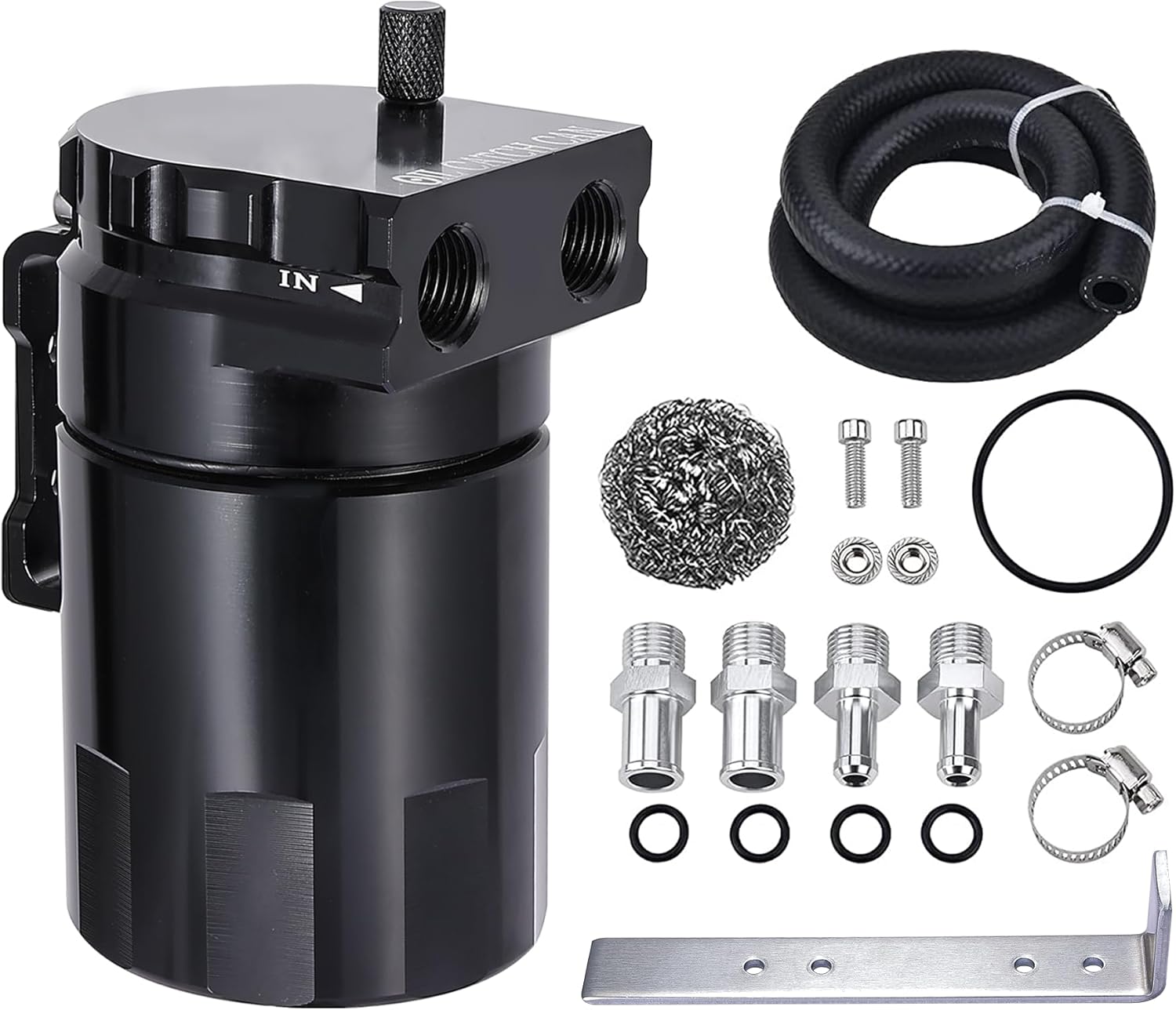
This EVIL ENERGY catch can is a compact, universal 300ml baffled separator designed to trap oil and moisture before they recirculate through the intake. Installation uses the included NBR fuel hose, clamps, and a bracket so you can mount it inline with PCV hoses or as a breather on pre-PCV setups. The removable baffle plus supplied stainless wool improves oil coalescing and makes maintenance straightforward since the can unscrews for draining and the internals can be inspected or replaced. Build quality is solid for the price: machined aluminum body, threaded ports with O-rings, and usable fittings. Practical benefits are cleaner throttle body and intake runners, reduced intake gunk on higher-mileage or boosted engines, and an easy-to-hide footprint in tight engine bays. Limitations include a modest 300ml capacity that may require more frequent emptying on high-blow-by engines and a universal bracket and hose lengths that sometimes need modification or extra hose for a tidy install. In freezing climates plan for more frequent checks to avoid moisture freeze in the lines.
Best for: Buyers who prioritize protecting intake plumbing and reducing carbon buildup on higher-mileage or modified Wranglers and who value social proof and a proven, budget-friendly solution.
Less Ideal for: Drivers who want a vehicle-specific plug-and-play kit with longer hose runs and larger capacity for heavy-duty or continuous track use should look at dedicated, vehicle-matched systems.
- Baffled design with removable baffle and stainless wool improves oil separation.
- Machined aluminum body and threaded fittings deliver sturdy, durable construction.
- Includes NBR hose and basic hardware for a mostly straightforward universal install.
- Compact 300ml size fits easily in crowded engine bays and is simple to drain and inspect.
- 300ml capacity can fill quickly on high-blow-by or heavily modified engines.
- Universal bracket and supplied hose length may require additional parts or modification for a clean fit.
Verdict: A well-built, budget-friendly baffled catch can that effectively traps oil and moisture for owners focused on preserving intake cleanliness on Jeep Wranglers.
6. EVIL ENERGY 300ml Baffled Oil Catch Can Kit with Breather Filter

| Capacity | 300 Milliliters |
|---|---|
| Fit Type | Universal |
| Fuel Type | Gasoline |
| Hose ID | 3/8 inch |
This EVIL ENERGY kit is a compact, baffled oil catch can designed to intercept crankcase vapors before they reach the intake. It is supplied as a universal fit kit with a 300 ml aluminum can, breather filter option, stainless steel wool baffle material, a dipstick for level checks, and fuel-grade hoses. For a Wrangler application you would mount the can in an accessible spot and plumb it between the valve cover and intake or use the breather filter as a vent on pre-PCV setups. Benefits include tidy aluminum construction, included fittings that simplify installation, and the ability to remove collected oil and moisture without tearing down engine parts. Limitations for Jeep Wrangler owners are the universal hose ID (3/8 inch) and relatively short hose length provided by default, which some installers report needing to replace with longer or larger-diameter hose and better clamps. A few buyers also reported occasional missing or incorrect small parts out of the box, so check contents before you begin installation.
Best for: Jeep owners who prioritize reducing intake valve and intake tract gunk with a practical, bolt-on solution and prefer a compact, serviceable catch can that is easy to install and check regularly.
Less Ideal for: Drivers who need a vehicle-specific, plug-and-play kit with exact factory-style fittings and hose lengths out of the box should look for Wrangler-dedicated units or kits that list direct Jeep fitment to avoid extra parts or modification.
- Baffled internal design and stainless steel wool to improve oil separation and reduce carryover
- Includes breather filter option so it can be used as a vented or sealed in-line catch can
- Aluminum body is machined and corrosion resistant for under-hood use
- Dipstick and drain access make checking and emptying the 300 ml reservoir straightforward
- Most necessary hoses and fittings are included for a simple install on many engines
- Kit hose is 3/8 inch and sometimes too short for Wrangler routing, requiring you to source longer or larger hose and better clamps
- Some customers report occasional missing small parts or lower-quality clamps in the package
Verdict: A compact, serviceable 300 ml baffled catch can that offers good separation and easy maintenance for Wrangler owners willing to adapt hose length or clamps for a clean install.
Choosing the Right 2007-2018 Jeep Wrangler Oil Catch Can: Key Factors to Consider
Fitment and Mounting Location
Correct fitment is the first practical consideration for a Wrangler owner. The JK and JKU engine bays have limited space and specific brackets, so a catch can that fits without rerouting major hoses or blocking access to service points will save time and reduce installation complexity. Look for systems that include application-specific mounting plates or flexible bracket options so the can mounts securely to existing bolt points. Poorly placed cans can stress hoses, increase crankcase routing length, or contact hot components, which raises failure risk and can degrade sealing over time.
Sealing and Hose Connections
A catch can must preserve the engine's vacuum and PCV system function. That makes hose connection quality and sealing critical for Wranglers, especially because vacuum leaks can cause idle issues and drivability symptoms on these engines. Inspect fitting types, clamp quality, and whether the kit uses push-fit, threaded, or barbed fittings with proper clamps. Use of quality O-rings, NPT fittings with thread sealant where appropriate, and secure clamps minimizes the chance of leaks under typical off-road vibration and temperature swings.
Separation Efficiency and Baffle Design
Separation efficiency determines how much oil and contaminants are trapped before vapors return to the intake. For Jeep Wranglers that see towing, off-roading, or higher load use, effective baffling and internal media reduce oil carryover that leads to intake and valve port deposits. Consider cans with multi-stage baffles, filter media, or labyrinth paths that force vapor to condense and drain. A well-designed internal layout reduces foaming and keeps the can working longer between drains, which matters when you want low-maintenance operation on long trips.
Capacity and Service Interval
Capacity affects how often you need to drain the catch can. On Wranglers used for commuting and trail work, a larger capacity can extend service intervals and reduce the chance of overflow during heavy use. Balance capacity with available under-hood space; very large cans may not fit easily. Consider clear or gauge-equipped reservoirs so you can visually check fill level without disassembly. Also factor in whether the can has a quick-drain plug or threaded port for easy maintenance, which is helpful in a tight engine bay.
Materials and Durability
Under-hood exposure to heat, moisture, and road chemicals requires durable materials. Aluminum or stainless-steel bodies resist corrosion better than thin stamped metals and provide longer service life in the Wrangler environment. Check finish quality, welds, and hardware corrosion resistance. Durable materials reduce the risk of leaks or failures after off-road exposure and make the assembly more robust when encountering vibrations and impacts.
Serviceability and Accessibility
Routine draining and inspection should be straightforward on a Wrangler. Placement that requires removal of major components or complex tools will discourage proper maintenance and shorten the catch can's usefulness. Look for cans with accessible drain plugs, clear sight tubes, or removable bowls that allow quick cleaning. Consider whether the system allows the can to be easily unclipped or removed for servicing without disturbing the rest of the plumbing.
How a Catch Can Helps the Wrangler JK and JKU Engines
The primary function of a catch can is to intercept oil-laden blow-by vapor before it reaches the intake tract. On the 2007-2018 Wrangler engines, persistent oil carryover can accelerate carbon buildup on intake ports and throttle bodies, changing idle quality and combustion efficiency over time.
By condensing and collecting the oil in a separate reservoir, a properly designed catch can reduces the amount of sticky residue that collects on valve stems and intake surfaces. Owners who tow, drive in dusty conditions, or perform extended highway trips often notice the greatest long-term benefit from reduced deposit formation.
- Reduces oil contamination in intake tract
- Helps maintain throttle and intake cleanliness
- Can improve compositional consistency of intake air
Installation Tips for the 2007-2018 Wrangler
Plan your routing before disconnecting any PCV hoses. Identify convenient bolt points near the valve cover and intake that allow a secure, vibration-resistant bracket. On JK and JKU chassis, factory service access should remain clear so choose a location that does not block the battery, fuse box, or oil filler.
Use quality clamps and route hoses away from high heat sources. When possible, keep hose runs short and free of tight bends to preserve vacuum characteristics. After installation, perform a vacuum test or listen for abnormal idle changes to confirm there are no leaks.
- Test-fit mounting hardware before finalizing hose lengths
- Use new clamps and good routing practices to avoid chafing
- Re-check idle and vacuum after installation and during first few drives
Choosing Between Kit Types and Universal Units
Some systems are sold as dedicated catch can kits with model-specific brackets and hose lengths, while others are universal and rely on adjustable mounts. Dedicated kits reduce installation time and risk of interference but can be less flexible if you have aftermarket components that change the engine bay layout.
Universal units offer flexibility and may suit Wranglers with lifted suspensions or relocated batteries, but they require more planning during installation to ensure correct hose routing and secure mounting. Decide based on how stock your engine bay remains and whether you prefer a plug-and-play solution or a custom-fitted approach.
- Dedicated kits: faster fitment, less modification
- Universal units: flexible but require planning
- Consider future modifications when choosing kit type
Maintenance Schedule and Practical Checks
Establish a drainage schedule based on your driving habits. Light commuters may only need to check the can every few thousand miles, while off-road or towing use might require more frequent inspection. Use sight tubes or removable bowls to simplify this process.
During routine service, inspect hoses and clamps for signs of cracking or looseness and verify that mounting hardware has not shifted. Empty the collected oil into a sealed container and inspect it for unusual contaminants that could indicate engine issues.
- Check the can at every oil change or after heavy use
- Inspect hoses and clamps visually for wear
- Keep a simple drain tool or funnel in your service kit for quick emptying
Common Mistakes to Avoid on Wrangler Installations
Avoid using the smallest available can solely to save space. Undersized reservoirs require frequent draining and increase the chance of overflow during heavy use. Do not route hoses too close to exhaust components or sharp edges that can abrade them over time.
Do not tighten fittings so much that threads are damaged, and avoid makeshift clamps that can cut hoses. Finally, do not skip verification steps after installation; a missed leak or incorrect hose orientation can lead to drivability issues on the JK and JKU platforms.
- Do not undersize capacity to fit a tight spot
- Avoid routing hoses near extreme heat
- Use proper clamps and avoid overtightening fittings
Still looking for the perfect fit?
Select your Jeep Wrangler configuration to see the most relevant Oil Catch Cans recommendations
How We Chose the Best 2007-2018 Jeep Wrangler Oil Catch Can
We selected systems that match the mechanical and packaging realities of the 2007-2018 Jeep Wrangler JK and JKU chassis, focusing on criteria that directly affect long-term performance and reliability. Our evaluation prioritized precise fitment for the engine bay and PCV plumbing, build quality of the can and fittings, and sealing effectiveness to prevent vacuum leaks. We considered capacity and baffling design to ensure adequate oil separation without frequent emptying, and mounting hardware that avoids interference with common Wrangler components. Additional filters included material corrosion resistance for under-hood conditions, availability of dedicated catch can kits or universal plumbing that still provide secure connections, and serviceability for routine draining and inspection. We excluded products that lacked clear fitment information for the JK and JKU years, used questionable gasket or clamp designs, or required extensive modification to the intake or valve cover. The result is a shortlist of options that balance practical installation, durable construction, and measurable advantages for owners concerned about intake contamination and long-term engine health.
Our full evaluation process is outlined in our review methodology.
FAQ
How often should I drain the catch can on a 2007-2018 Wrangler?
It depends on use. Light street driving often allows checks every few thousand miles, while heavy towing or off-road use can require checks more frequently. Use a sight tube or inspect the can monthly during heavy use.
Will installing a catch can affect engine vacuum or idle?
If installed and sealed correctly, a catch can should not negatively affect vacuum or idle. Improper fittings or leaks can cause idle changes, so confirm clamps and connections are tight and test the engine after installation.
Can I install a catch can myself on the JK and JKU Wrangler?
Many owners can install a catch can with basic hand tools and mechanical knowledge. Follow planned routing, secure mounting points, and use quality clamps. If you are unsure about vacuum integrity or routing, consult a mechanic.
Does a catch can help turbocharged Wrangler engines more than naturally aspirated ones?
A catch can is beneficial for both, but turbocharged engines can be more sensitive to oil-laden intake air because it affects intercooler and compressor cleanliness. The degree of benefit usually depends on driving conditions and engine load.
What are signs the catch can or plumbing needs attention?
Look for oil leaks, a sudden change in idle, or visible cracks and abrasion on hoses. If the can fills unusually fast or contains frothy fluid, inspect the internal baffles and mounting orientation for potential issues.
Final Verdict
For 2007-2018 Jeep Wrangler owners, prioritize fitment, sealing, and separation efficiency when choosing a catch can. A properly sized unit with secure mounting and quality fittings minimizes intake contamination while preserving vacuum integrity. Consider capacity and ease of service to match your driving habits, and plan hose routing to avoid heat and abrasion. Ultimately, choose the option that balances straightforward installation with durable construction and reliable sealing so you maintain engine cleanliness with minimal maintenance interruptions.
Explore More:
- Check out all Jeep Wrangler parts & accessories
- Explore Oil Catch Cans Maintenance & Repair Guides
- Explore Engine
- Browse all Auto Parts
