

Note: This article contains affiliate links. If you click on these links and make a purchase, I may earn a small commission at no extra cost to you. This helps support my research and content. Read my full affiliate disclosure here.
Picking the right oil for a Jeep Wrangler 4.0L matters more than many owners realize. The wrong viscosity or formulation can affect cold starts, long-term wear, and performance while towing or off-roading. This guide focuses on oils suited to the 4.0L configuration and explains which properties matter most for driving in mixed conditions. We shortlisted six engine oils that meet the performance profiles commonly recommended for the Wrangler 4.0L and evaluated them across wear protection, viscosity behavior, and compatibility with regular maintenance intervals. Read on to understand the tradeoffs so you can match oil choice to your driving habits and maintenance routine.
Looking for other parts? See all Jeep Wrangler parts & accessories.
Top Picks at a Glance
| Best Overall Engine Oil Top pick balancing protection, viscosity choice, and long-term engine care | Valvoline Extended Protection Full Synthetic Motor Oil 5W-30, 5 qt |  |
| Best Budget Engine Oil Affordable motor oil that covers basic protection without breaking the bank | Valvoline Daily Protection 10W-40 Conventional Motor Oil, 5 qt |  |
| Best Full‑Synthetic Engine Oil 100% synthetic formula for stronger wear, heat and cold‑start protection | Castrol GTX Full Synthetic 5W-30 Motor Oil, 5 Quart Jug |  |
| Best High‑Mileage Engine Oil Formulated additives and seals support engines with higher mileage and wear | Valvoline High Mileage 150K with MaxLife Plus Technology 5W-30 Motor Oil, 5 qt |  |
| Best 10W‑30 Engine Oil A common mid‑viscosity choice for older or naturally aspirated engines | Factory Racing Parts 10W-30 Basic Oil Change Kit (6 Quarts) with Oil Filter |  |
| Best Bulk Case Engine Oil Multi‑quart or multi‑jug packs for frequent changes or fleet use | Mopar MaxPro 5W-20 Motor Oil, Case of 6 Quarts |  |
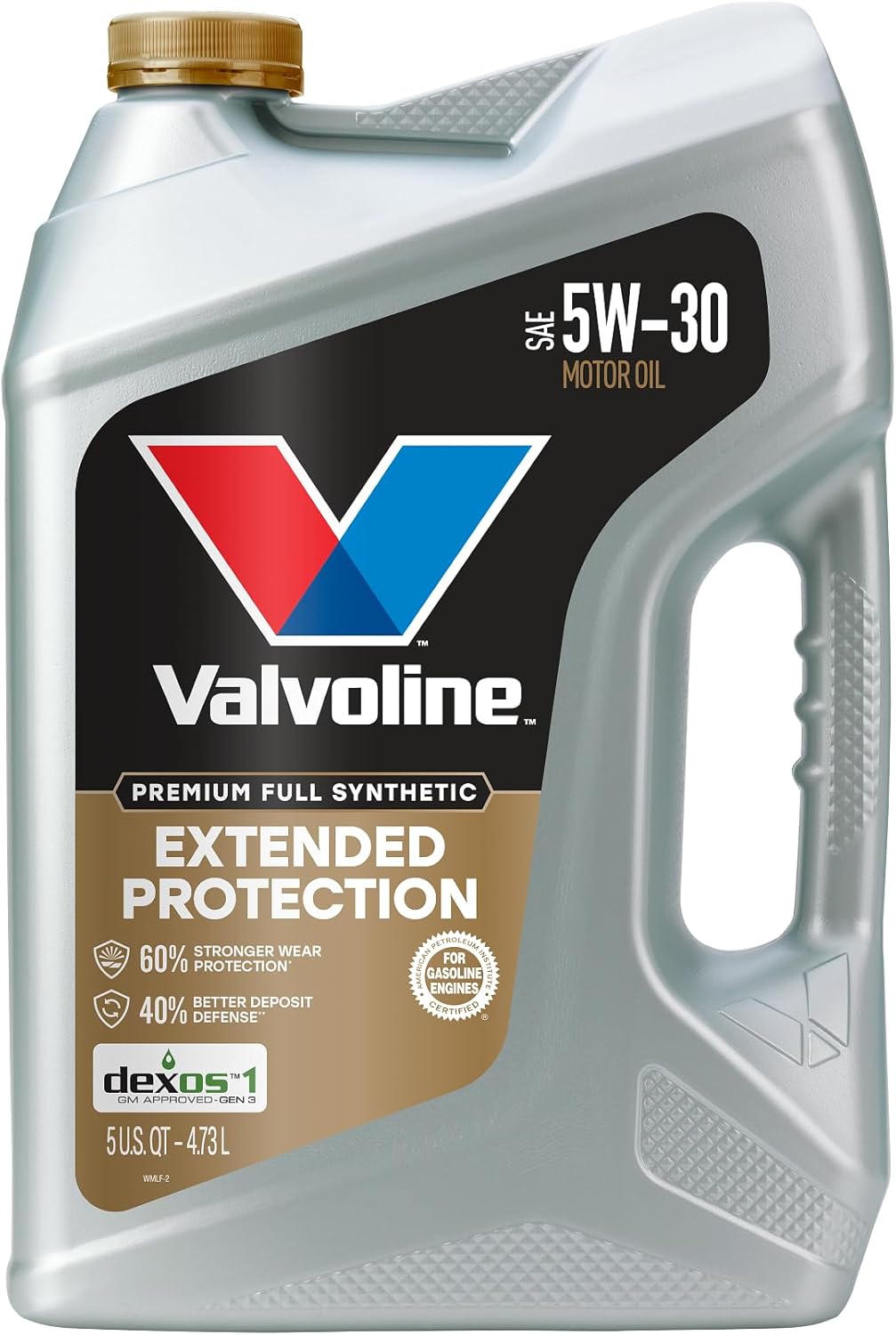
1. Valvoline Extended Protection Full Synthetic Motor Oil 5W-30, 5 qt
Best Overall Engine Oil
| SAE J300 Viscosity Grade | 5W-30 |
|---|---|
| Container Type | Bottle |
| Compatible with Vehicle Type | Car, Truck |
| Liquid Volume | 5 Quarts |
| Flash Point | 446 Degrees Fahrenheit |
Valvoline Extended Protection 5W-30 is a full synthetic motor oil designed to protect gasoline engines under everyday and demanding conditions. It is typically used at routine oil changes to reduce wear, keep pistons and rings cleaner, and resist breakdown from heat. Key features in this formula include strengthened wear inhibitors, a fortified detergent system for deposit control, and heat-resistant additives that Valvoline rates far above industry baselines. In practice that translates to smoother idling, quieter startup behavior, and more stable oil performance over long drain intervals compared with conventional oils. The universal fitment and familiar 5 quart jug make it easy for DIY maintenance. Limitations are that 5W-30 is one viscosity choice and buyers must confirm the 5W-30 grade matches Jeep Wrangler 4.0L manufacturer recommendations and service intervals; it is not a substitute for following the vehicle maintenance schedule or required manufacturer specifications.
Best for: Buyers who want one high-quality, well-rounded oil that prioritizes long-term engine protection and cleaner internals during normal and heavier driving for the Jeep Wrangler 4.0L.
Less Ideal for: Drivers who must follow a specific alternate viscosity for warranty or special operating conditions, or those who require an oil formulated exclusively for very high-mileage engines with unique additives.
- Full synthetic formula provides strong wear protection compared with industry standards
- Detergent system improves deposit control for cleaner engine internals
- High heat resistance helps maintain viscosity and protect under severe conditions
- Convenient 5 quart bottle suitable for single oil change
- Meets mainstream industry and manufacturer specifications for gasoline engines
- Only available here in 5W-30 grade so check compatibility if a different viscosity is required
Verdict: Pick this when you want the single best oil that balances wear protection, deposit control, and correct viscosity for typical driving and maintenance intervals.
2. Valvoline Daily Protection 10W-40 Conventional Motor Oil, 5 qt
Best Budget Engine Oil

| SAE J300 Viscosity Grade | 10W-40 |
|---|---|
| Liquid Volume | 5 Quarts |
| Compatible with Vehicle Type | Car, Truck |
| Flash Point | 394 Degrees Fahrenheit |
Valvoline Daily Protection 10W-40 is a conventional motor oil intended for routine oil changes in older or high-mileage gasoline engines that do not require full synthetic fluids. It meets API SP/SN and earlier gasoline categories and is designed to control deposits and sludge while flowing at low temperatures to reduce cold-start wear. In practice this makes it a straightforward choice for periodic maintenance on a 4.0L Jeep Wrangler used in everyday driving or light off-road duty where factory-recommended 10W-40 or similar viscosity is acceptable. Notable features include detergents to help keep the engine clean and a low-friction formula aimed at modest fuel-efficiency gains. The limitation is that it is a conventional oil, so it will require more frequent changes than synthetic alternatives and offers less thermal and shear stability under sustained heavy loads or extended drain intervals. For owners prioritizing low cost and reliable short-interval protection, it delivers sensible performance; for extended service intervals or severe-duty use consider a synthetic option instead.
Best for: Owners seeking a low-cost, reliable motor oil for routine maintenance on a 4.0L Jeep Wrangler who plan regular service intervals and want straightforward protection for everyday and light off-road use.
Less Ideal for: Drivers who run extended drain intervals, heavy towing, frequent high-load off-roading, or who want maximum high-temperature protection should choose a full synthetic oil instead.
- Meets current API SP and earlier gasoline specifications for basic protection
- Detergent additives help resist sludge and keep engine internals cleaner
- Flows well at low temperatures to reduce cold-start wear
- Low-friction formulation can offer modest fuel efficiency improvements
- Conventional formula requires more frequent oil changes than full synthetic oils
Verdict: Choose this slot if you need a low-cost oil that meets basic API specs and keeps the engine protected between regular service intervals.
3. Castrol GTX Full Synthetic 5W-30 Motor Oil, 5 Quart Jug
Best Full‑Synthetic Engine Oil

| Size | 5 Quarts |
|---|---|
| Viscosity grade | 5W-30 |
| Oil type | Full Synthetic |
| Meets specifications | API SP, ILSAC GF-7 |
Castrol GTX Full Synthetic 5W-30 is a modern full synthetic motor oil designed to protect gasoline engines under demanding conditions. It is used like any engine oil replacement: drain the old oil, add the specified quantity, and torque the drain and fill components to spec. The formula emphasizes thermal stability and sludge control, claiming stronger resistance to viscosity breakdown and improved sludge protection versus industry baselines, which helps maintain oil film under high temperatures and reduces deposit buildup. That translates to longer effective oil life between changes and steady lubrication for hot-running engines. The product lists factory-oriented specifications including API SP and ILSAC GF-7 and notes compatibility with GM and Ford requirements, which suggests broad gasoline-engine coverage. On the downside, a 5W-30 grade may not be the factory-recommended viscosity for every 4.0L Jeep application in extreme cold or for engines with specific manufacturer viscosity calls, so verify your Wrangler 4.0L service manual before switching. Packaging in a 5-quart jug is convenient for a typical oil change on many Jeep engines.
Best for: Buyers who want a full synthetic oil that prioritizes high-temperature stability, strong wear protection, and cleaner-running performance for routine oil changes on a Jeep Wrangler 4.0L.
Less Ideal for: Drivers who must follow a specific manufacturer-prescribed viscosity different from 5W-30 for warranty or extreme-temperature operation should consult their service manual or dealer before using this oil.
- Full synthetic formulation aimed at high thermal stability and reduced viscosity breakdown.
- Claims improved sludge control and cleaning to help keep engines cleaner over time.
- Meets current industry specs (API SP, ILSAC GF-7) and several manufacturer requirements for gasoline engines.
- 5-quart jug size matches a typical single oil change for many passenger and light truck engines.
- Viscosity grade 5W-30 may not match every Jeep Wrangler 4.0L factory recommendation under extreme temperature conditions.
Verdict: Use this when you prioritize maximum thermal stability, superior wear resistance, and better low-temperature flow compared with conventional oils.
4. Valvoline High Mileage 150K with MaxLife Plus Technology 5W-30 Motor Oil, 5 qt
Best High‑Mileage Engine Oil

| SAE J300 Viscosity Grade | 5W-30 |
|---|---|
| Compatible with Vehicle Type | Car, Truck |
| Liquid Volume | 5 Quarts |
| Viscosity Level | Low to Medium |
Valvoline High Mileage 150K 5W-30 is a synthetic-blend motor oil aimed at older engines, with additives designed to reduce wear, control deposits, and rejuvenate seals. For a high-mileage Jeep Wrangler 4.0L this oil functions as a direct replacement during routine oil changes and is intended to address common aging issues like increased oil consumption, leaks, and sludge. Its MaxLife Plus formulation includes a molybdenum-based antiwear package that forms a protective film on metal surfaces to lower friction and heat, plus a boosted detergent system to help clean deposits. Seal conditioners are another practical feature that can slow small leaks and lower top-off frequency. The trade-offs are that it is a synthetic blend rather than a full synthetic and buyers should follow the Wrangler 4.0L manufacturer viscosity recommendation and service interval when using any high-mileage oil. This product meets modern API and ILSAC specs so it fits normal operating conditions and offers targeted benefits for sticking, leaking, or burning-prone high-mileage 4.0L engines.
Best for: Jeep Wrangler 4.0L owners with high-mileage engines who prioritize reducing oil leaks, cutting oil consumption, and keeping an aging motor clean and reliable during regular maintenance.
Less Ideal for: Drivers chasing maximum mileage intervals or the absolute highest thermal stability should consider a premium full synthetic oil instead.
- Formulated for engines over 150,000 miles with seal conditioners to reduce small leaks
- Moly-based antiwear additive forms a durable protective film to reduce friction and wear
- Boosted detergent and antioxidant package helps control sludge and deposits
- Meets modern API SP and ILSAC GF-6A standards for compatibility with current engines
- Synthetic blend rather than full synthetic, so protection and longevity may be slightly behind premium full synthetics
Verdict: Select this when your engine has elevated miles and you want an oil with conditioners to help reduce leaks, minimize wear, and refresh older seals.
5. Factory Racing Parts 10W-30 Basic Oil Change Kit (6 Quarts) with Oil Filter
Best 10W‑30 Engine Oil

| Viscosity | SAE 10W-30 |
|---|---|
| Volume | 6 Quarts |
| API Rating | API SP |
| Production | ISO9001 facility |
| Included components | 6 Quarts of Oil, 1 Oil Filter |
This basic kit supplies everything needed for a routine oil service on older 4.0L Jeep engines: six quarts of SAE 10W-30 engine oil and one replacement oil filter. The oil is promoted as a fully synthetic formula meeting API SP and produced in an ISO9001 facility, which suggests modern additive protection and compatibility with longer change intervals up to 7,500 miles as described by the manufacturer. For warm climates or higher-mileage 4.0L motors that benefit from a slightly thicker running oil, the 10W-30 viscosity keeps oil pressure healthier at operating temperature while still flowing at start-up. The included filter is convenient for a one-stop service, though a few buyers reported fitment variance so double-check filter cross-reference before installation. This kit is practical for DIY maintenance and budget-minded owners who want a ready package for a single service, but it lacks extra change accessories and does not list a specific filter part number on the main label which can require confirmation against your engine's spec.
Best for: Buyers who want a simple, single-package oil change solution for a 4.0L Jeep and prefer the thicker 10W-30 viscosity for warm climates or older engines.
Less Ideal for: Those performing multi-vehicle servicing, needing specific OEM filter cross-references, or wanting a kit with drain plug, funnel, and gloves included.
- Includes six quarts of SAE 10W-30 oil matched to many 4.0L Jeep requirements
- Fully synthetic formula with API SP spec and ISO9001 production claim
- One oil filter included for a single, complete oil change
- Promoted ability to extend change intervals up to 7,500 miles
- Filter part details are not clearly specified which can lead to fitment uncertainty
Verdict: Opt for this viscosity slot if you prefer a tried-and-true 10W‑30 grade that matches thicker oil recommendations for warm climates or older engines.
6. Mopar MaxPro 5W-20 Motor Oil, Case of 6 Quarts
Best Bulk Case Engine Oil

| Container Type | Bottle |
|---|---|
| Compatible with Vehicle Type | Passenger cars, light trucks, and SUVs |
| Liquid Volume | 6 Quarts |
| Automotive Fit Type | Vehicle Specific Fit |
Mopar MaxPro 5W-20 arrives in a six-quart case that makes routine oil changes faster and cheaper when you service more than one Jeep or perform frequent maintenance. This is a conventional/synthetic blend designed to meet manufacturer recommendations for vehicles calling for 5W-20; sold under the Mopar label it matches factory-spec service guidance for many Chrysler-group engines. The multi-quart pack reduces trips to buy single bottles and keeps spare oil on hand for scheduled changes or roadside top-ups. For owners of older Jeep Wranglers with engines requiring 5W-20, the oil delivers consistent viscosity for normal driving and helps maintain oil pressure and temperature stability noted by users. Limitations: the listing does not specify performance certifications or synthetic-only formulations, so it may not suit owners who require fully synthetic oils or who need explicit OEM certification for modern engines. Also the case format adds storage needs in a garage.
Best for: Ideal for Jeep owners who perform regular DIY oil changes or service multiple Wranglers and prioritize convenience and lower per-quart cost over sourcing single bottles.
Less Ideal for: Not the best choice for owners who require a fully synthetic oil or need explicit performance spec documentation for warranty-sensitive or high-performance builds.
- Sold in a six-quart case for fewer purchases and lower per-quart cost
- Branded Mopar product that aligns with factory maintenance recommendations for Chrysler-family vehicles
- Consistent 5W-20 viscosity suited to routine driving and typical temperature ranges
- Keeps multiple quarts on hand for frequent oil changes or servicing several vehicles
- Product details do not list full performance certifications or whether it is fully synthetic
Verdict: Choose a bulk case if you change oil often or service multiple vehicles and want the savings and convenience of multi‑quart or multi‑jugs packaging.
Choosing the Right Jeep Wrangler 4.0L Engine Oil: Key Factors to Consider
Viscosity and Cold-Start Behavior
Viscosity determines flow at startup and protection at operating temperature. For the Jeep Wrangler 4.0L, you need an oil that flows easily enough for quick lubrication on cold mornings yet maintains a stable film at operating temperature. Choosing a multi-grade viscosity that matches your local climate reduces wear during the critical first seconds after start.
Cold-start performance also affects fuel economy and starter strain. Thinner oils at low temperatures improve cranking and reduce initial wear, but if the oil is too thin at high temperatures it can compromise hydrodynamic lubrication during heavy loads. Consider ambient temperature ranges you commonly drive in when selecting the oil weight.
Additive Package and Wear Protection
Additives such as anti-wear agents, detergents, and dispersants influence how well the oil protects valve train components, bearings, and piston rings. The 4.0L inline-six has mechanical valve components and can benefit from stronger anti-wear chemistry to limit cam and lifter wear over time.
A balanced detergent and dispersant package keeps contaminants suspended until the next oil change, reducing sludge and varnish risk. Pay attention to oils with proven anti-wear technologies and industry-standard performance ratings that match the engine's service profile.
High-Mileage Considerations
Wranglers with higher miles often show increased oil consumption and minor seal hardening. High-mileage formulations include conditioners and seal-swelling additives that can reduce leaks and lower oil consumption slightly, while also addressing sludge and oxidation issues common in older engines.
If your 4.0L has significant miles, choosing an oil marketed for high mileage or one with additives that help preserve seals can extend engine life and improve drivability between services. Track any changes in consumption or leaks after switching to assess effectiveness.
Synthetic Vs Conventional Formulations
Synthetic oils offer better thermal stability and flow characteristics than conventional oils, which can be important if you tow, drive at sustained highway speeds, or operate in extreme temperatures. Synthetics resist viscosity breakdown and shear, maintaining protection longer between changes.
Conventional and blended oils can still be suitable for low-stress urban use and may be easier on budgets. For the 4.0L engine, many owners prefer synthetic or synthetic-blend oils for their consistency and long-term protection, especially if following extended drain intervals.
Viscosity Grade Matching and Fuel Economy
Choosing the correct SAE grade affects both protection and fuel economy. Lower viscosity grades can yield modest fuel economy benefits but might sacrifice film strength under load. For the Jeep Wrangler 4.0L, weigh the small fuel savings of a thinner oil against the need for reliable film strength when towing or climbing hills.
Consult typical manufacturer viscosity guidance as a baseline, then adjust for climate and usage. Using the wrong grade can increase wear or oil consumption, so aim to match grade to the engine's condition and your driving demands.
Oxidation Resistance and Service Interval Suitability
Oxidation resistance determines how long an oil resists breakdown when exposed to heat and contaminants. Oils with strong antioxidant chemistry remain stable over longer intervals, reducing sludge formation and acidity that can harm internal components.
If you prefer longer intervals between changes, prioritize oils with proven oxidation stability. Also consider how you drive: frequent short trips, off-road use, or towing create harsher conditions that accelerate oil aging and may require shorter intervals regardless of advertised oil life.
Recommended Viscosities for Different Climates
Ambient temperature should guide your choice of viscosity for the Wrangler 4.0L. In colder climates, a lower cold-grade viscosity improves start-up lubrication and reduces wear during the first moments after ignition. In warmer regions, a higher high-temperature viscosity ensures the oil maintains a protective film under load.
Common multi-grade options provide a balance between cold flow and high-temperature protection. Tailoring the grade to seasonal extremes helps maintain reliable lubrication across the year without compromising engine life.
- Colder regions: prioritize lower cold-grade numbers for easier starts.
- Hotter regions: choose oils with stronger high-temperature viscosity retention.
- Moderate climates: select a balanced multi-grade that covers both extremes.
Service Intervals and How Oil Choice Affects Them
Oil formulation influences recommended service intervals. Synthetics and oils with strong additive packages can often go longer between changes without losing protection, while conventional oils typically require more frequent replacement to avoid deposit buildup. Your actual mileage and driving habits should always override canned interval guidance.
For the Jeep Wrangler 4.0L, factors such as frequent short trips, towing, and off-road use accelerate oil degradation. If you do heavy off-road work or tow regularly, plan on shorter intervals even when using high-stability oils.
- Light driving: extended intervals may be acceptable with stable synthetic oils.
- Towing/off-road: shorten intervals due to higher thermal and contamination stress.
- High-mileage engines: monitor oil condition and consumption more closely.
Oil Consumption, Seals, and Leak Management
Oil consumption can increase as the Wrangler 4.0L ages. Seal condition and piston ring wear are common contributors. Certain formulations include conditioners that can slightly improve seal pliability and reduce seepage, but these are not cures for worn mechanical parts.
Track consumption after any change in oil type and pay attention to new or worsening leaks. If consumption persists or increases, a mechanical inspection is warranted rather than repeated oil changes to mask the issue.
- Monitor consumption by tracking oil level between changes.
- High-mileage formulas may reduce minor seepage but do not replace repairs.
- If consumption spikes, inspect PCV system and valve-cover seals.
Cold-Weather Starting and Winter Preparation
Cold starts are particularly demanding on any engine. For owners who use their Wrangler in winter conditions, selecting an oil with superior low-temperature flow reduces wear during the first seconds after starting. Thinner low-temperature grades aid cranking and can reduce starter load.
Consider pairing your oil choice with a proper battery and winter routine to minimize start-related wear. Also remember that warming the engine gently before heavy loads helps extend component life.
- Use lower cold-grade oils in consistently subfreezing climates.
- Check recommended cold-start practices alongside oil selection.
- Allow a brief warm-up period under heavy load to protect the valvetrain.
Towing, Load, and Highway Use
Towing and sustained highway speeds increase thermal and shear stress on engine oil. For owners who regularly tow or carry heavy loads, prioritize oils with strong shear stability and high-temperature viscosity retention so the protective film remains intact under high stress.
Excessive heat can accelerate oxidation and additive depletion, so choose formulations designed to resist breakdown and maintain protection during sustained high-load operation.
- Choose oils with proven high-temperature stability for frequent towing.
- Monitor oil condition more closely after heavy towing trips.
- Consider slightly higher viscosity high-temperature grades if recommended.
Switching Oils: Transition Tips
If you change oil types or grades, do so during a scheduled service so filters and drain plugs are addressed. A complete drain and fresh filter installation ensures new oil chemistry is not contaminated by old deposits. For high-mileage engines, switching gradually is less important than ensuring cleanliness and a proper fill level.
After switching, monitor for leaks, consumption changes, and oil pressure behavior. Small changes are normal, but significant shifts in consumption or pressure warrant a mechanical check.
- Always replace the oil filter when switching oil types.
- Check for leaks and consumption for the first 500 miles after a change.
- Record observations to determine if further mechanical service is needed.
Still looking for the perfect fit?
Select your Jeep Wrangler configuration to see the most relevant Engine Oils recommendations
How We Chose the Best Jeep Wrangler 4.0L Engine Oil
We evaluated candidate oils using criteria tailored to the Jeep Wrangler 4.0L engine's needs. Primary considerations included viscosity range and cold-start performance, since the 4.0L can be sensitive to thickness at different temperatures. Second, we looked at wear protection and additive chemistry that reduce cam and lifter wear over long service intervals. Third, we considered high-mileage compatibility for Wranglers with elevated miles, prioritizing formulations that help control oil consumption and seal condition. Fourth, we assessed thermal and shear stability to ensure oils retain viscosity under towing or sustained highway speeds. Fifth, compatibility with common oil change intervals and filter types for this engine was reviewed so owners can pair oil choice with typical service routines. We excluded formulations intended solely for emissions or retrofit engines and any oils that do not meet common API and SAE standards for gasoline engines. The final list reflects oils that balance protection, drivability, and realistic service needs for owners of the Jeep Wrangler 4.0L.
Our full evaluation process is outlined in our review methodology.
FAQ
What viscosity should I use in a Jeep Wrangler 4.0L?
Viscosity depends on climate and usage. Use a grade that balances cold-start flow with high-temperature film strength; consult typical manufacturer guidance and adjust for extreme temperatures or towing.
Is synthetic oil necessary for the 4.0L engine?
Synthetic oil is not strictly required, but it offers better thermal stability and shear resistance. For towing, long highway drives, or extended intervals, synthetic or synthetic-blend oils provide more consistent protection.
Can high-mileage oil help an older Wrangler 4.0L?
High-mileage formulations include conditioners that may reduce minor leaks and help with oil consumption. They can be beneficial for older engines, though they will not fix mechanical wear or failed seals.
How often should I change oil in the Wrangler 4.0L?
Interval depends on oil type and driving conditions. Conventional oils typically require more frequent changes, while stable synthetics can extend intervals. Heavy towing, off-road use, and frequent short trips mean you should change oil more often regardless of formulation.
Will switching to a different viscosity affect engine performance?
Switching grades can change cold-start behavior and oil pressure. Minor adjustments are normal, but selecting a grade inappropriate for your climate or load profile can increase wear or consumption.
What should I watch for after changing engine oil?
After a change, monitor oil level, check for new leaks, and note any shifts in consumption or oil pressure. If you see rapid consumption or pressure drops, inspect the PCV system and seals and consider a professional inspection.
Final Verdict
Choose an oil that matches your driving conditions and the current state of your Jeep Wrangler 4.0L. Prioritize the right viscosity for your climate, strong anti-wear chemistry if you tow or drive aggressively, and high-mileage formulations only if the engine shows oil consumption or minor leaks. Balance the benefits of synthetic stability against service interval needs and check oil condition regularly. Your final choice should reflect a tradeoff between cold-start protection, high-temperature film strength, and longevity. Following those priorities will give you the best real-world protection for the 4.0L engine and make maintenance decisions easier and more predictable.
Explore More:
- Check out all Jeep Wrangler parts & accessories
- Explore Fluids & Chemicals
- Browse all Accessories
