

Note: This article contains affiliate links. If you click on these links and make a purchase, I may earn a small commission at no extra cost to you. This helps support my research and content. Read my full affiliate disclosure here.
If you own a Jeep Wrangler with the 3.8L engine, the oil you use directly affects reliability, performance, and long-term engine health. The right engine oil keeps internal parts lubricated under towing, off-road, and stop-and-go driving conditions that Wrangler owners commonly face. This guide presents the top shortlisted engine oils selected for the 3.8L configuration, with attention to viscosity, wear protection, and compatibility with engine seals and emissions systems.Below you will find concise evaluations of the leading options and the criteria we used to compare them, so you can pick the oil that best matches your driving style and maintenance plan.
Looking for other parts? See all Jeep Wrangler parts & accessories.
Top Picks at a Glance
| Best Overall Engine Oil Top all-around choice with balanced protection and modern specs | Valvoline Extended Protection Full Synthetic Motor Oil 5W-30, 5 qt |  |
| Best Budget Engine Oil Low-cost motor oil that still meets basic protection standards | Valvoline Daily Protection 5W-20 Synthetic Blend Motor Oil, 5 qt |  |
| Best Full-Synthetic 5W-30 Premium full-synthetic formulation in 5W-30 viscosity for protection | Castrol EDGE 5W-30 Full Synthetic Motor Oil (5 Quart Eco Pack) |  |
| Best Low-Viscosity 5W-20 Thinner SAE 5W-20 oil for improved fuel economy and modern engines | Mopar MaxPro 5W-20 SAE Motor Oil — 6-Quart Case |  |
| Best High-Mileage Engine Oil Formulation tailored to older engines with seals and deposit control | Valvoline High Mileage 150K with MaxLife Plus Technology 5W-30 Motor Oil (5 qt) |  |
| Best Conventional / Blend Oil (10W-40) Conventional or blended oil in higher-viscosity 10W-40 for durability | Valvoline Daily Protection 10W-40 Conventional Motor Oil, 5 qt |  |
| Best Oil Change Kit (Complete) All-in-one oil change pack with oil, filter, and change accessories | Factory Racing Parts 5W-20 Full Synthetic Oil Change Kit (6 qt) |  |
1. Valvoline Extended Protection Full Synthetic Motor Oil 5W-30, 5 qt
Best Overall Engine Oil
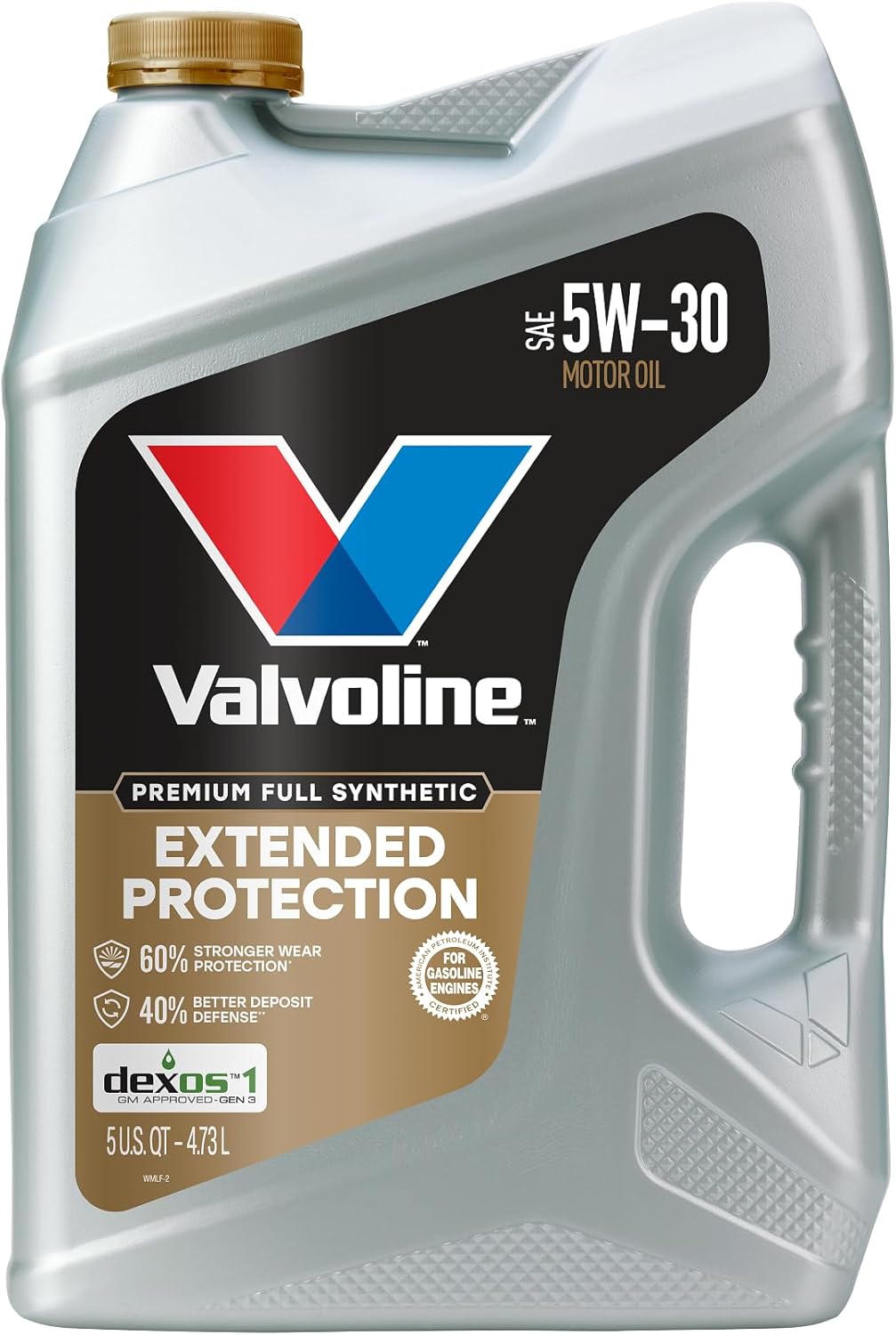
| SAE J300 Viscosity Grade | 5W-30 |
|---|---|
| Liquid Volume | 5 Quarts |
| Compatible with Vehicle Type | Car, Truck |
| Automotive Fit Type | Universal Fit |
| Meets/Exceeds | ILSAC GF-7A, API SP |
Valvoline Extended Protection 5W-30 is a premium full synthetic motor oil designed to protect engines during everyday and severe driving. It is used like any conventional oil at oil changes and targets drivers who want longer service intervals and stronger protection for higher-stress engines. The formula emphasizes wear control and deposit defense, with the product listing claiming significantly improved wear protection, deposit prevention, and heat resistance versus industry baselines. That translates to cleaner internals, reduced friction, and better durability under higher temperatures or turbocharged conditions. It meets current industry specifications including ILSAC GF-7A and API SP and lists manufacturer approvals relevant to many gasoline vehicles. Practical benefits include easy pouring from a five quart bottle and confidence for longer drain intervals on routine street use. Limitations are that viscosity choice must match the Wrangler 3.8L factory recommendation and that claimed percentage improvements are manufacturer data rather than independent test results provided here.
Best for: A Jeep Wrangler 3.8L owner who wants a single, proven full synthetic oil that balances wear protection, deposit control, and modern spec compliance for everyday driving and longer service intervals.
Less Ideal for: Drivers who must follow a specific dealer-recommended oil with a different viscosity or specialty fluids for severe custom modifications should consult their service manual before switching.
- Full synthetic formula for stronger protection against wear and heat
- Claims enhanced deposit control to keep engine internals cleaner
- Meets modern specifications ILSAC GF-7A and API SP for gasoline engines
- Convenient 5 quart container suitable for an oil change without multiple bottles
- Performance claims are manufacturer-stated and not independently verified in the listing
Verdict: Choose this slot if you want a single, proven motor oil that balances wear protection, deposit control, and current industry specifications for everyday driving and longer service intervals.
2. Valvoline Daily Protection 5W-20 Synthetic Blend Motor Oil, 5 qt
Best Budget Engine Oil

| Viscosity Level | Low to Medium |
|---|---|
| Compatible with Vehicle Type | Car, Truck |
| Flash Point | 390 Degrees Fahrenheit |
| Liquid Volume | 5 Quarts |
Valvoline Daily Protection 5W-20 is a synthetic blend designed for everyday engine protection in normal driving conditions. It flows easily at cold starts to reduce startup wear and includes detergents and additives to help resist sludge and oil breakdown. Typical use is straightforward: change the oil and filter per your Jeep Wrangler 3.8L service schedule using the 5W-20 grade where recommended. The low-friction formulation aims to support fuel efficiency and consistent lubrication across common temperatures. As a budget-focused option, it delivers factory-quality protective chemistry without the cost of full synthetics, making it suitable for routine commuting and light towing. Limitations are that it is not a full synthetic, so it may offer less high-temperature stability and extended drain interval capability than premium full-synthetic oils, and it is only appropriate when the manufacturer allows a 5W-20 synthetic blend for the specified engine and operating conditions.
Best for: Drivers who prioritize a low-cost, factory-quality oil that still meets common performance needs for routine driving and scheduled maintenance of a Jeep Wrangler 3.8L.
Less Ideal for: Drivers who do frequent heavy towing, extended oil change intervals, or who want maximum high-temperature protection should choose a full synthetic oil instead.
- Synthetic blend balances protection with lower cost compared with full synthetics
- Formulated for improved cold-start flow to reduce wear at startup
- Includes detergents to help resist sludge and oil breakdown
- Supports fuel economy with low-friction additives
- Not a full synthetic so it has lower high-temperature and extended-drain performance compared with premium full-synthetic oils
Verdict: Pick this when you need the cheapest acceptable oil that still protects the engine under normal driving and passes common API/ILSAC performance requirements.
3. Castrol EDGE 5W-30 Full Synthetic Motor Oil (5 Quart Eco Pack)
Best Full-Synthetic 5W-30

| Viscosity grade | 5W-30 |
|---|---|
| Volume | 5 Quarts |
| API spec | API SP/SN PLUS/SN |
| ILSAC | GF-6 |
| Manufacturer tech | Fluid TITANIUM Technology |
This Castrol EDGE 5W-30 is a full synthetic engine oil designed to keep modern engines running clean and protected under heavy heat and load. It is typically used during routine oil changes and is intended for drivers who want strong wear resistance and consistent viscosity at high temperatures. Notable features include Castrol's Fluid TITANIUM additive technology, claimed improvements in high-temperature performance and reduced sludge formation, and industry specifications covering API SP and GM Dexos1 Gen2 among others. In practice that means better protection against wear and deposits during extended service intervals and under sustained highway or towing loads. The eco pack reduces plastic waste compared with a hard jug, though some users find the bag format harder to pour without a funnel. This oil meets modern specs a Jeep Wrangler 3.8L owner would look for in a 5W-30, offering robust thermal and pressure resistance, but keep manufacturer service intervals and the vehicle manual in mind when choosing oil and oil change frequency.
Best for: Drivers who prioritize maximum thermal stability and long-term wear protection for a high-mileage or heavily used Jeep Wrangler 3.8L and want a modern additive package to keep the engine clean.
Less Ideal for: Buyers who prefer traditional hard-quart bottles for single-person pouring or who strictly follow shorter OEM oil change intervals and do not need extended-performance oils.
- Full synthetic formulation with Fluid TITANIUM additive for high temperature and pressure resistance
- Meets modern industry specs including API SP and GM Dexos1 Gen2 for broad modern-engine compatibility
- Designed to reduce sludge and deposits to help maintain engine cleanliness
- Eco Pack uses about 70% less plastic and a recyclable outer shell
- Bag-style eco pack can be awkward to pour without a funnel or two-person handling
Verdict: Use this category for fully synthetic 5W-30 oils aimed at drivers who prioritize maximum thermal stability, wear resistance, and modern additive chemistry.
4. Mopar MaxPro 5W-20 SAE Motor Oil — 6-Quart Case
Best Low-Viscosity 5W-20

| Container Type | Bottle |
|---|---|
| Compatible with Vehicle Type | Passenger cars, light trucks, and SUVs |
| Automotive Fit Type | Vehicle Specific Fit |
| Liquid Volume | 6 Quarts |
Mopar MaxPro 5W-20 is a full SAE 5W-20 motor oil packaged as a six-quart case and positioned as the factory-recommended low-viscosity choice for Chrysler-family vehicles. It is used like any conventional or synthetic motor oil for routine oil changes and is suitable where manufacturers specify 5W-20 to help reduce friction and improve cold-start flow. The listing notes vehicle-specific fit for passenger cars, light trucks, and SUVs and the 6-quart packaging is convenient for DIYers doing an oil change without multiple trips to the store. Practical benefits include consistent viscosity for better fuel economy in engines designed for 5W-20 and the confidence of Mopar branding for compatibility with Chrysler, Dodge, Jeep, and Ram service intervals. Limitations are that the product listing does not specify formulation details such as synthetic versus conventional or API/ILSAC certifications, so buyers should confirm those specs against their 3.8L Jeep Wrangler owner manual before use.
Best for: Buyers who prioritize using a factory-branded low-viscosity oil to maintain fuel economy and compatibility with engines calling for 5W-20, and who perform their own oil changes.
Less Ideal for: Drivers who need explicit confirmation of synthetic formulation or modern certification claims should look for oils that list API or ILSAC ratings and full spec sheets.
- Factory-brand formulation targeted to Chrysler-family vehicles which aids compatibility and parts-store matching
- Low 5W-20 viscosity supports improved cold-start flow and potential fuel economy gains in engines designed for that grade
- Six-quart case provides enough oil for multiple DIY oil changes without repeated purchases
- Listing omits explicit formulation and certification details such as synthetic blend status or API/ILSAC ratings
Verdict: Select this slot if you prefer a lower-viscosity oil to help with fuel economy and compatibility with engines that call for 5W-20 or similar low-viscosity grades.
5. Valvoline High Mileage 150K with MaxLife Plus Technology 5W-30 Motor Oil (5 qt)
Best High-Mileage Engine Oil

| SAE Grade | 5W-30 |
|---|---|
| Compatible Vehicle Type | Car, Truck |
| Container Type | Bottle |
| Liquid Volume | 5 Quarts |
| Viscosity Level | Low to Medium |
Valvoline High Mileage 150K 5W-30 is a synthetic blend targeted at older engines and aimed at reducing leaks, cleaning deposits, and slowing oil consumption. It is used like any engine oil at regular change intervals and is notable for its MaxLife Plus formulation that combines molybdenum-based antiwear additives, boosted detergents, antioxidants, and seal conditioners. In practice that means it can form a protective film on critical surfaces to reduce friction and heat, help clear sludge and deposits over a few oil changes, and often reduce minor seepage from aging seals. The product meets modern industry specs including ILSAC GF-6A and API SP, so it stays compatible with modern engine requirements while offering high-mileage benefits. Trade-offs are that it is a synthetic blend rather than a full synthetic and benefits such as seal rejuvenation and deposit removal can take multiple oil changes to appear; it is not a guaranteed fix for major leaks or mechanical wear in very old engines.
Best for: Jeep Wrangler owners with the 3.8L who prioritize extending the life of a high-mileage engine and want an oil that actively conditions seals, reduces minor leaks, and helps clean internal deposits over several oil changes.
Less Ideal for: Drivers who need a full synthetic oil for maximum high-temperature protection or those with severe mechanical oil leaks that require gasket or component repair rather than oil-based remedies.
- Formulated specifically for engines over 150,000 miles with seal conditioners to reduce minor leaks
- Moly-based antiwear additives form a protective film to lower friction and heat
- Boosted detergents and antioxidants help remove deposits and prevent sludge
- Meets ILSAC GF-6A and API SP specifications for modern engine compatibility
- Synthetic blend rather than full synthetic, so ultimate thermal stability and longevity are lower than some full synthetic oils
Verdict: Choose this for oils formulated with seal conditioners and additives designed to reduce leaks, clean sludge, and protect higher-mileage engines.
6. Valvoline Daily Protection 10W-40 Conventional Motor Oil, 5 qt
Best Conventional / Blend Oil (10W-40)

| SAE J300 Viscosity Grade | 10W-40 |
|---|---|
| Liquid Volume | 5 Quarts |
| Compatible with Vehicle Type | Car, Truck |
| Flash Point | 394 Degrees Fahrenheit |
Valvoline Daily Protection 10W-40 is a conventional motor oil aimed at drivers who prefer a thicker high-temp viscosity for older or higher-mileage engines. It is used like any standard engine oil at oil changes and provides detergent additives to help prevent sludge and deposits while the low-friction formula supports fuel efficiency. The product flows well at low temperatures to reduce wear on cold starts and claims to exceed industry standards for wear protection and deposit control. As a conventional formula, it offers reliable day-to-day protection without the premium additives of full synthetics, which makes it a budget-friendly option for routine maintenance. For a Jeep Wrangler 3.8L this viscosity can suit engines built before more modern narrow-viscosity requirements, but it is not a synthetic or synthetic blend, so it may require more frequent changes and provide less thermal stability under sustained high-load or extreme off-road conditions compared with full synthetic alternatives.
Best for: Owners of older Jeep Wrangler 3.8L engines or those preferring a thicker 10W-40 viscosity for everyday driving who prioritize straightforward, cost-conscious engine protection.
Less Ideal for: Drivers who frequently tow, run sustained high-load off-road trips, or want maximum interval lengths and high-temperature stability should consider a full synthetic 10W-40 or a manufacturer-recommended modern viscosity instead.
- 10W-40 viscosity suits older or higher-mileage engines that benefit from thicker high-temperature protection
- Detergent additives help control deposits and sludge for cleaner internal components
- Flows at low temperatures to reduce cold-start wear
- Meets or exceeds current API gasoline performance categories for broad compatibility
- Conventional formulation offers less thermal and shear stability than full synthetic oils
Verdict: Use this category when you want a conventional or synthetic-blend oil with a thicker high-temperature viscosity for older engines or heavier-duty use.
7. Factory Racing Parts 5W-20 Full Synthetic Oil Change Kit (6 qt)
Best Oil Change Kit (Complete)

| Viscosity | SAE 5W-20 |
|---|---|
| Volume | 6 Quarts |
| API Rating | API SP |
| ILSAC | GF-6A |
| Included Components | Oil, filter, drain plug, gloves, funnel, sticker |
This oil change kit bundles everything you need to perform a DIY oil service on compatible Jeep Wrangler 3.8L engines: six quarts of SAE 5W-20 full synthetic engine oil, a premium WIX-style oil filter sized to replace the factory filter numbers listed, a drain plug, gloves, a funnel, and an oil change reminder sticker. The oil is API SP and ILSAC GF-6A rated and is formulated for fuel economy and protection against low-speed pre-ignition, which helps safeguard bearings and critical components in modern V6 engines. Including a correctly matched filter and the drain plug reduces hunting for parts and speeds the job for a home mechanic. Limitations to note are that the kit is vehicle-specific and only provides 5W-20 viscosity, so it is only suitable where that grade is recommended; one review mentioned a mismatched drain plug fit, so double-check fitment before beginning the service. For routine maintenance on a Wrangler 3.8L that specifies 5W-20, this kit simplifies the process and supplies OEM-quality filter replacement in a single purchase.
Best for: Home mechanics who want a single, ready-to-use kit to do a complete oil change on a Jeep Wrangler 3.8L and prioritize convenience and correct-fit replacement parts.
Less Ideal for: Shops or owners who need a different viscosity or require bulk oil purchases for multiple vehicles should choose other options tailored to their service needs.
- Complete kit includes 6 quarts of API SP 5W-20 synthetic oil plus filter and basic hardware for a full service
- Oil meets ILSAC GF-6A and API SP ratings for modern engine protection and fuel economy
- Includes a premium WIX-style filter to replace the factory filter numbers listed
- Brings tools and consumables (funnel, gloves, drain plug, reminder sticker) to simplify a DIY change
- Kit supplies only one viscosity grade so it is not suitable where a different oil weight is required
- One customer reported the included drain plug did not fit properly, so verify fitment before starting
Verdict: Pick this slot if you want a complete oil-change kit that includes quarts, an oil filter and basic hardware to simplify a DIY oil service.
Choosing the Right Jeep Wrangler 3.8L Engine Oil: Key Factors to Consider
Viscosity Grade and Temperature Range
Viscosity grade determines how the oil flows at cold start and how it maintains a film at operating temperature. For the 3.8L engine you should match a viscosity that offers reliable cold-start protection in your climate while still maintaining sufficient film thickness under load and high coolant temperatures.
Too thin a grade can lead to increased wear at high temperatures, while too thick a grade increases drag and reduces fuel economy. Look for viscosity recommendations that align with local ambient temperatures and with the engine's specified service guidance. Multigrade oils deliver a balance, but you should prioritize a grade that minimizes shear-related viscosity loss over time.
Shear Stability and Viscosity Retention
Shear stability measures how well the oil maintains its viscosity under mechanical stress inside the engine. The 3.8L's oil experiences continuous shear from high-load operation, off-road vibrations, and elevated temperatures, which can thin poorly stabilized oils.
Oils with robust additive packages and base stocks resist permanent viscosity loss, preserving the protective film between components during extended drain intervals. For owners who tow, drive off-road, or run higher-mileage engines, stable viscosity reduces metal-to-metal contact and prolongs component life.
Anti-Wear and Friction-Reducing Additives
Anti-wear agents such as zinc dialkyldithiophosphate and friction modifiers protect bearings, cam lobes, and lifters from metal wear. The 3.8L engine benefits from an oil that balances anti-wear chemistry with detergency so deposits do not compromise protection.
Choosing a formulation with proven anti-wear performance helps reduce long-term valve train and bearing degradation. However, some additives can affect emissions system sensors, so it is important the oil meets modern performance specs while still delivering the necessary wear protection.
Detergent and Dispersant Performance
Detergents and dispersants control sludge and varnish by suspending combustion byproducts and contaminants so they can be removed at oil change. The 3.8L can accumulate deposits if an oil lacks adequate detergency, particularly under short-trip or dusty conditions often encountered by Wrangler owners.
Strong dispersancy keeps the engine internals cleaner between services, which supports consistent oil pressure and heat transfer. For extended drains, higher-performing detergents are especially important to prevent buildup that leads to restricted passages or sticking components.
Seal Compatibility and Oxidation Control
Oil formulations must be compatible with the engine's seals and gaskets to avoid leaks. Some additives can cause seal hardening or swelling, either increasing leaks or accelerating seal deterioration. The 3.8L has several elastomer components that benefit from oils formulated to preserve seal integrity.
Oxidation control is equally important. Oxidized oil forms acids and sludge that can accelerate corrosion and wear. Look for oils with robust antioxidant chemistry to keep the oil stable over the intended drain interval, particularly if you operate the vehicle in hot climates or under heavy loads.
Service Interval and Maintenance Habits
Your chosen oil should align with your maintenance routine and the mileage you plan between changes. Short-interval drivers who perform frequent oil changes may prioritize straightforward, cost-effective oils that deliver reliable protection over a single interval.
Owners seeking longer drain intervals need formulations with proven stability, detergency, and additive retention. Consider how driving conditions like towing, off-roading, and idling affect contamination rates and select an oil that matches the expected service interval for the 3.8L.
Recommended Viscosities for Different Climates
Selecting the correct viscosity grade for your local climate is essential. In colder regions, lower first numbers ensure easier cold starts and faster oil circulation; in hot climates, higher second numbers preserve film strength during sustained high-temperature operation.
For mixed climates, a balanced multigrade offers flexible protection across seasons. Consider the extremes you face and match the oil grade to the lowest expected ambient temperature for reliable cold starts and to the highest sustained engine operating temperatures for wear protection.
- Colder climates: prioritize lower cold-viscosity grades for startup protection.
- Hotter climates: choose higher high-temperature viscosity to maintain film strength.
- Mixed climates: use multigrade oils that balance cold and hot performance.
Synthetic Vs Conventional Oils: Practical Considerations
Synthetic oils typically offer better low-temperature flow, higher shear stability, and stronger oxidation resistance compared with conventional oils. For the Jeep Wrangler 3.8L, those properties translate to improved protection during towing, off-road use, and extended drain intervals.
Conventional oils remain a viable choice if you perform regular changes and do not use the vehicle for heavy-duty tasks. The decision often comes down to your driving patterns and whether you prefer longer service intervals and greater thermal stability.
- Synthetics: better stability, longer drains, superior cold starts.
- Conventional: acceptable for routine, low-stress driving with frequent changes.
High-Mileage Engines and Additive Needs
If your 3.8L has higher mileage, look for oils formulated to address seal condition, reduce oil consumption, and provide detergency to manage accumulated deposits. High-mileage formulations often include conditioners that help maintain seal pliability and control leaks.
Choosing a high-mileage targeted oil can alleviate common wear symptoms and help maintain compression and oil pressure. Evaluate how much engine life you want to extract and select formulations that prioritize conditioning and deposit control.
- Seal conditioners help reduce seepage in older engines.
- Extra detergents help clean accumulated varnish and sludge.
Oil Change Intervals and Service Best Practices
Set oil change intervals based on the chosen oil type and your driving conditions. Severe use, such as frequent towing, off-road work, or many short trips, shortens effective oil life and warrants more frequent changes. Follow a planned schedule that accounts for both manufacturer recommendations and real-world use.
Always replace the oil filter at each change and use the correct capacity and drain procedure for the 3.8L. Properly torqued drain plugs and a clean filter help maintain oil cleanliness and pressure.
- Severe duty drivers: shorten intervals to mitigate contamination.
- Extended-interval drivers: use stable formulations and monitor oil condition.
How Oil Choice Affects Engine Performance and Emissions
Oil viscosity and friction modifiers influence throttle response, fuel economy, and drivability. An oil that is too viscous can slightly reduce fuel economy, while overly thin oils may allow increased wear that degrades performance over time.
Modern oils must also be compatible with emissions systems and sensors. Using a formulation that meets current industry specifications helps ensure the 3.8L maintains clean combustion and reliable sensor readings without increasing deposit formation around critical components.
- Lower friction oils can marginally improve fuel economy.
- Correct spec oils support emissions control and sensor function.
Storage, Handling, and Transitioning Between Oil Types
When switching oil types or viscosity grades, follow proper drain and fill practices. Flushing is rarely necessary unless there is significant contamination or sludge. Ensure used oil is fully drained and the new oil matches the engine's requirements and your climate needs.
Store oil in a clean, dry place and keep containers sealed to avoid contamination. Use fresh oil from sealed containers to avoid moisture pickup and additive degradation.
- Avoid mixing vastly different formulations unless recommended.
- Always dispose of used oil according to local regulations.
Still looking for the perfect fit?
Select your Jeep Wrangler configuration to see the most relevant Engine Oils recommendations
How We Chose the Best Jeep Wrangler 3.8L Engine Oil
We prioritized properties and tests that matter specifically to the Jeep Wrangler 3.8L. Our evaluation focused on viscosity behavior across operating temperatures, high-temperature shear stability, and anti-wear additives that protect the 3.8L's valvetrain and bearings. We also considered compatibility with the engine's seals and elastomers, detergent and dispersant performance for sludge control, and whether a formulation supports longer drain intervals without risking deposit buildup.We filtered out oils that do not meet common API and ILSAC (as applicable) performance baselines or that lack clear viscosity grades suitable for the 3.8L's operating range. We excluded niche specialty blends intended only for racing or obsolete specifications that would not serve everyday driving and typical service intervals. Our final shortlist emphasizes oils with documented shear stability, corrosion inhibitors, and detergency suited to both highway use and the tougher duty cycles Wrangler owners may impose.
Our full evaluation process is outlined in our review methodology.
FAQ
What viscosity should I use in a Jeep Wrangler 3.8L during winter?
It often depends on the lowest ambient temperatures you face. Choose a multigrade with a lower cold-start rating to ensure easier startup and faster oil flow in cold weather while maintaining sufficient high-temperature protection.
Can I switch from conventional to synthetic oil in my 3.8L?
Usually you can switch without issue. Modern synthetics are compatible with conventional residuals; follow normal drain procedures and replace the oil filter. Monitor for leaks or unusual consumption after the change, especially on higher-mileage engines.
How do I decide between 5W-30 and alternatives for the 3.8L?
Consider your climate and operating loads. 5W-30 offers a common balance between cold start flow and high-temperature protection, but alternative grades may be preferable in extreme hot or cold conditions. Match the grade to your typical driving and ambient temperatures.
Is a high-mileage formulation necessary for an older 3.8L?
High-mileage formulations can help by including conditioners and extra detergents that address seal condition and deposits. It often depends on the engine's current condition and whether you are experiencing seepage, higher oil consumption, or deposit-related issues.
How often should I change the oil if I do heavy off-roading with my Wrangler?
Heavy off-roading increases contamination and thermal stress, so shorten your oil change interval compared with normal driving. Inspect the oil more frequently and follow a more conservative schedule to reduce the risk of accelerated wear.
Will using a different viscosity impact fuel economy in the 3.8L?
Yes. A lower-viscosity oil can slightly improve fuel economy by reducing internal friction, while thicker oil can marginally decrease fuel efficiency. Balance economy gains against the need for adequate film strength under load.
Final Verdict
Prioritize viscosity that matches your climate and usage, and choose a formulation with proven shear stability, detergency, and seal compatibility for the Jeep Wrangler 3.8L. Your driving habits, whether predominantly highway, towing, or off-road, should determine whether you favor synthetic stability or routine conventional changes.Focus on the factors discussed—viscosity, anti-wear chemistry, and maintenance cadence—to select an oil that extends engine life and preserves performance. With those tradeoffs in mind, pick the option that best aligns with your service interval preferences and operating environment.
Explore More:
- Check out all Jeep Wrangler parts & accessories
- Explore Fluids & Chemicals
- Browse all Accessories
