

Note: This article contains affiliate links. If you click on these links and make a purchase, I may earn a small commission at no extra cost to you. This helps support my research and content. Read my full affiliate disclosure here.
If you drive a GMC Sierra 1500, choosing the right oil catch can can help keep intake plumbing cleaner and reduce oil that reaches the intake tract. Properly installed, a catch can reduces residue on the throttle body and intake valves, which is especially useful for modern engines with high PCV flow.This guide reviews seven top oil catch cans selected for the Sierra 1500. We shortlisted options that balance filtration performance, ease of installation, and capacity so you can pick a solution that fits your mechanical comfort level and driving habits. Below you will find the criteria used to evaluate each option and practical guidance for choosing and maintaining a catch can for your truck.
Looking for other parts? See all GMC Sierra 1500 parts & accessories.
Top Picks at a Glance
| Best Overall The best all-around choice for most situations | J&L Oil Separator Co. 3.0 Oil Separator (Driver Side) |  |
| Best Quality Built to a higher standard if you want something more solid | J&L (JLT) 3.0 Oil Separator — Driver Side, Vehicle-Specific Fit |  |
| Best Value The sweet spot between price and what you get | EVIL ENERGY Air Oil Separator (3 oz) for 5.3L & 6.2L GM V8 Trucks |  |
| Best Budget The cheapest option that still gets the job done reliably | HY-SPEED Air Oil Separator (Oil Catch Can) for 5.3L/6.2L Silverado/Sierra/Tahoe/Suburban/Yukon/Escalade |  |
| Highest Rated A top-rated pick with lots of positive feedback | Mishimoto Baffled Oil Catch Can Kit for Chevrolet/GMC 1500 5.3L/6.2L (2019+) |  |
| Most Popular A crowd favorite that many people choose with confidence | EVIL ENERGY 300ml Baffled Oil Catch Can Kit with NBR Hose |  |
| Best Seller A high-volume bestseller chosen again and again | K&N Air Oil Separator Catch Can, Model 81-0805 |  |
1. J&L Oil Separator Co. 3.0 Oil Separator (Driver Side)

| Compatibility | 2019-2026 Silverado/Sierra 1500 5.3L & 6.2L; 2021-2026 Tahoe/Suburban/Yukon |
|---|---|
| Material Type | Aluminum |
| Capacity | 3 oz |
| Mounting Type | Standard vehicle mount |
| PCV Fittings | OEM-style quick connect |
The J&L 3.0 oil separator is a vehicle-specific catch can built from solid billet aluminum and intended for 2019–2026 Silverado/Sierra 1500 5.3L and 6.2L engines and the matching Tahoe, Suburban, and Yukon models. It installs using factory-style quick-connect PCV fittings and mounts with a supplied bracket, so most installations take only basic hand tools and a short follow of the company video. Inside, a stainless-style screen separates oil vapor into droplets that collect in the removable 3 oz cup; the knurled base and O-ring make draining simple and leak resistant. Reviewers report visible oil capture after a few hundred miles and smoother light-throttle response on some trucks. It is not CARB-compliant, so it cannot be sold for vehicles requiring California emission certification, and the small reservoir means you will check and empty it regularly, especially in colder climates. The unit is made in the USA and prioritizes durability over low cost with a metal construction that resists heat and cracking better than plastic alternatives.
Best for: Buyers who want a durable, factory-looking solution to reduce intake oil contamination and are willing to perform occasional maintenance to protect engine internals.
Less Ideal for: If you need a CARB-compliant solution for California or want a set-and-forget system with a very large reservoir, look for alternatives tailored to those requirements.
- Billet aluminum construction resists heat and cracking compared with plastic cans
- Factory-style quick connect PCV fittings for a clean, OEM-like installation
- Removable 3 oz collection cup with knurled base and O-ring for easy draining and leak prevention
- Internal stainless-style screening effectively separates oil vapors into collectable droplets
- Not CARB-exempt so it is not legal for sale in California and states that follow CA emissions rules
Verdict: Choose this J&L 3.0 if you want a robust, factory-style catch can that reliably captures oil vapors and cleans the intake on 5.3L and 6.2L GM trucks and SUVs.
2. J&L (JLT) 3.0 Oil Separator — Driver Side, Vehicle-Specific Fit

| Material Type | Aluminum |
|---|---|
| Compatible with Vehicle Type | Truck, Sports Utility Vehicle |
| Automotive Fit Type | Vehicle Specific Fit |
This J&L 3.0 oil separator is a vehicle-specific catch can assembly engineered to mount on the driver side of compatible Chevy and GMC 5.3L and 6.2L engines. It installs using a bracket and factory-style connections so installation takes about 10 to 20 minutes if you follow the maker video. In use the aluminum can and internal separation capture visible oil and condensate before it returns to the intake, which helps keep intake components, throttle body, and MAF cleaner on direct-injection engines. The threaded can makes draining straightforward and the mounting keeps the can accessible for routine checks. Buyers should note the unit is sized for the listed models and may require more frequent emptying than larger reservoirs; some users buy the extension for less frequent service. Overall the J&L offers a tidy, factory-friendly solution for performance-minded owners who want to reduce oil ingestion and maintain combustion efficiency without cutting hoses or fabricating mounts.
Best for: Drivers focused on maintaining engine performance and intake cleanliness on late-model Chevy/GMC 5.3L and 6.2L trucks who want a plug-and-play, factory-friendly solution.
Less Ideal for: Anyone who prefers an oversized reservoir for long intervals between service or who needs a universal, multi-vehicle catch can solution.
- Vehicle-specific fit and factory-style connectors simplify installation.
- Aluminum construction and quality threading for durable, easy-to-drain operation.
- Designed to noticeably reduce oil and vapor returning to the intake on direct-injection 5.3L/6.2L engines.
- Accessible bracket placement makes visual checks and routine draining quick.
- Smaller reservoir means more frequent checks and emptying compared with larger-capacity catch cans.
Verdict: A compact, factory-friendly catch can built to quickly reduce oil ingestion on Chevy/GMC 5.3L and 6.2L trucks for performance-focused owners.
3. EVIL ENERGY Air Oil Separator (3 oz) for 5.3L & 6.2L GM V8 Trucks

| Fitment | 2014-2018 Silverado 1500, 2014-2018 GMC Sierra 1500, 2015-2020 Tahoe/Suburban/Yukon, 2015-2019 Escalade (5.3L & 6.2L) |
|---|---|
| Filter material | Aluminum mesh |
| Includes | Hoses, custom brackets, fittings, clamps, instructions |
| Reservoir capacity | 3 OZ |
This EVIL ENERGY air oil separator is a simple, vehicle-matched catch can made for 5.3L and 6.2L GM V8 engines. It mounts using the included custom bracket and hoses for a mostly bolt-on install and fits the PCV side where blow-by vapor returns to the intake. Inside a fine mesh aluminum filter captures oil vapor so the intake and combustion chambers stay cleaner and engine deposits are reduced. In practice this means less oil buildup on intake components and potentially cleaner spark plugs and sensors over time. The can is compact and easy to monitor but will need periodic cleaning every few hundred to a thousand miles depending on use. Some reviewers note the supplied hoses and small plastic fittings can degrade with heat over long term use, so replacing those with higher-grade lines is a sensible preventative step. The package includes instructions and hardware, but expect to spend a bit of time routing lines correctly on the 5.3L/6.2L layout.
Best for: A practical owner who wants a straightforward, factory-like catch can to reduce intake contamination and prolong engine cleanliness without complex fabrication. Best for owners prioritizing easy installation and routine maintenance to optimize long-term engine health.
Less Ideal for: Not a good choice for someone wanting a large-capacity or maintenance-free system; drivers who avoid periodic checks or need extreme-duty high-flow setups should consider heavier-duty alternatives.
- Vehicle-specific fitment and custom bracket for direct replacement on listed 5.3L and 6.2L GM engines
- Fine mesh aluminum filter that captures oil vapor before it reaches the intake
- Includes hoses, fittings, clamps and installation instructions for a mostly bolt-on install
- Compact, easy-to-check reservoir that makes monitoring and maintenance straightforward
- Reservoir is small so it requires frequent checks and draining under heavy use
- Some supplied hoses and plastic fittings may age from heat and benefit from aftermarket upgrades
Verdict: A compact, truck-specific catch can that delivers easy bolt-on installation and reliable oil-vapor separation for 5.3L and 6.2L GM V8 engines.
4. HY-SPEED Air Oil Separator (Oil Catch Can) for 5.3L/6.2L Silverado/Sierra/Tahoe/Suburban/Yukon/Escalade

| Brand | HY-SPEED |
|---|---|
| Model | Air Oil Separator |
| Compatible engines | 5.3L and 6.2L V8 (listed fitment) |
| Item model number | 819-202 |
| Item Weight | 1.76 pounds |
This HY-SPEED air oil separator is a small, budget-friendly catch can that installs on the PCV side to separate oil and moisture from crankcase ventilation air. It is intended for 5.3L and 6.2L GM V8 engines and comes with hose and barbed fittings to hook into existing PCV lines. In everyday use it catches milky oil and sludge that would otherwise re-enter the intake, reducing intake contamination and helping keep the engine cleaner over time. The unit is compact so it fits into tight engine bays without major trimming, and most buyers report straightforward installation with basic hand tools. Maintenance is simple but required: check and drain roughly every 500–1000 miles per the listing, and expect the small capacity to need more frequent emptying on high-blow-by engines. Some users noted fragile aluminum fittings and occasional fitment differences with GM quick-connects, so take care not to overtighten fittings and verify connector compatibility before installation.
Best for: Drivers who want an inexpensive, easy-to-install way to reduce intake contamination on 5.3L/6.2L GM trucks and SUVs without spending on premium performance catch cans. Ideal for owners prioritizing straightforward, cost-conscious maintenance upgrades.
Less Ideal for: Not the best choice for heavy-duty or modified engines that produce large amounts of blow-by and need a larger-capacity or multi-stage separator; those users should look at higher-capacity or performance-oriented units.
- Designed specifically for 5.3L and 6.2L GM V8 fitments so placement and hose lengths are targeted
- Compact footprint fits crowded engine bays
- Easy DIY installation with basic tools
- Effectively captures oil and moisture that would otherwise enter the intake
- Small 3 oz capacity requires more frequent drains on higher blow-by engines
- Some aluminum fittings reported as fragile and can break if overtightened
Verdict: A compact, wallet-friendly catch can that fits GM 5.3L/6.2L trucks and SUVs and provides effective intake protection for drivers on a budget.
5. Mishimoto Baffled Oil Catch Can Kit for Chevrolet/GMC 1500 5.3L/6.2L (2019+)

| Fitment | 2019+ Chevrolet/GMC 1500 5.3L/6.2L |
|---|---|
| Included Components | Baffled Oil Catch Can Kit |
| Finish | Machined black |
| Model Number | MMBCC-T1-19 |
This Mishimoto baffled catch can is a direct-fit kit for 2019+ Chevrolet/GMC 1500 trucks with the 5.3L or 6.2L V8 and is intended to stop oil and carbon-laden blow-by from reaching the intake. It installs in under an hour using the supplied bracketry and hoses and traps oil, fuel, and water vapor inside a machined can with internal baffles and air turbulators. A sintered bronze filter further reduces carbon carryover so mostly clean air returns to the intake. In practice the can reduces intake valve fouling and prevents crankcase contamination that can accelerate engine wear or cause knock. The can is serviceable; collected fluid is drained at oil changes. The kit is vehicle-specific, includes the necessary hardware, and comes with a lifetime warranty from the maker. Expect simple installation and durable construction, but plan for periodic draining and occasional resealing care to avoid overtightening the can during service.
Best for: Buyers who prioritize long-term engine reliability and want a factory-quality, vehicle-specific solution to reduce intake valve fouling and protect the engine from blow-by contamination.
Less Ideal for: Drivers who do not perform regular maintenance or who prefer a completely maintenance-free setup should consider alternatives that do not require periodic draining and service.
- Direct-fit design tailored for 2019+ Chevrolet/GMC 1500 5.3L and 6.2L engines for straightforward installation
- Internal baffles and turbulators separate oil, fuel, and water vapor for effective collection
- Sintered bronze filter reduces carbon return to the intake
- Includes mounting bracket and all necessary hardware for a bolt-on installation
- Backed by Mishimoto lifetime warranty for long-term peace of mind
- Requires routine draining and inspection as part of maintenance
Verdict: A durable, vehicle-specific catch can built to protect intake valves and prolong engine life for 2019+ Chevrolet/GMC 1500 trucks focused on reliability.
6. EVIL ENERGY 300ml Baffled Oil Catch Can Kit with NBR Hose
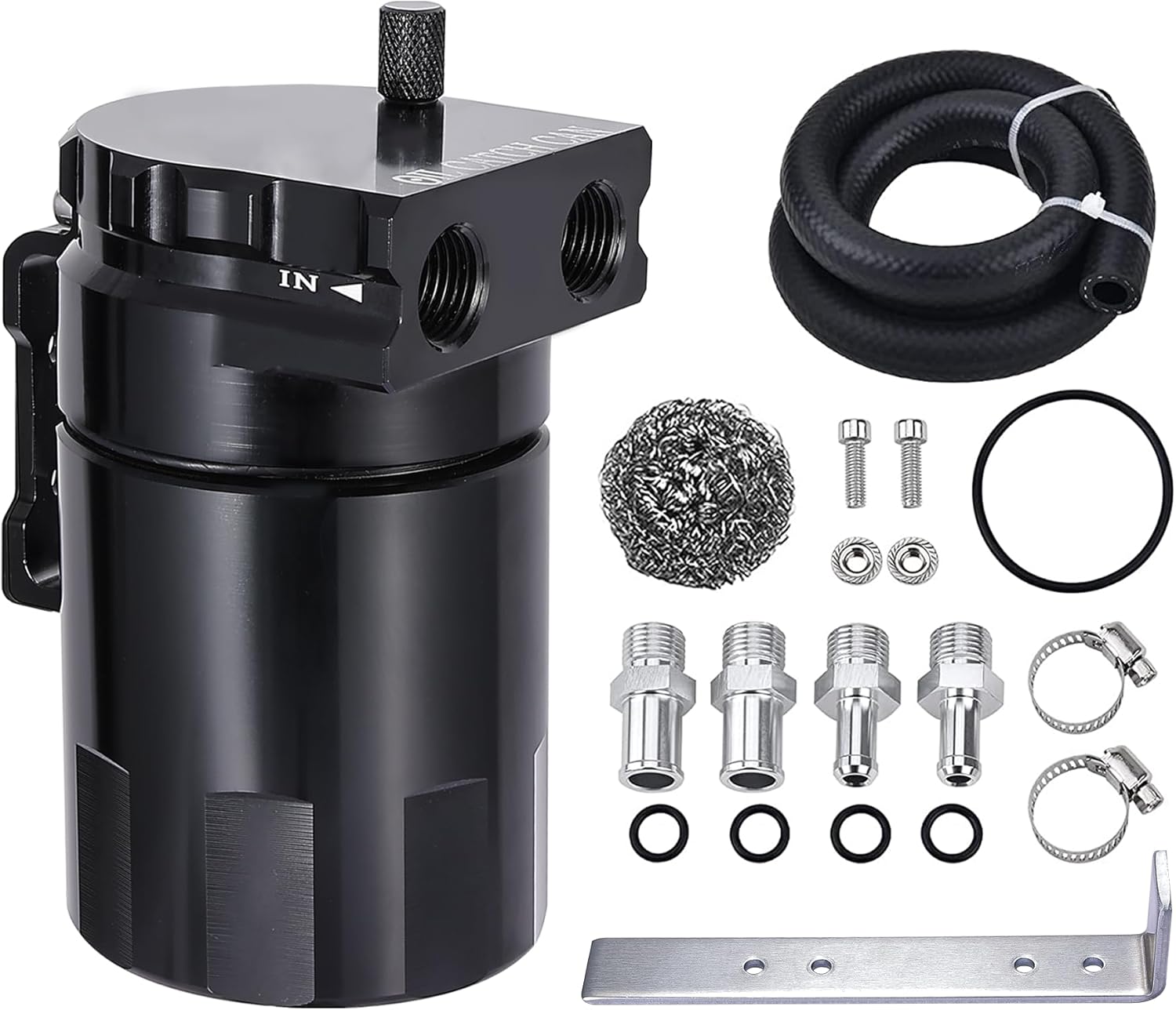
| Capacity | 300 Milliliters |
|---|---|
| Fuel Type | Diesel |
| Fit Type | Universal |
| Hose length | 2.6ft (0.8m) |
This EVIL ENERGY catch can is a compact, universal baffled separator designed to intercept crankcase vapors before they re-enter the intake. Installation uses the included NBR hose, clamps, and a removable baffle with stainless wool to improve coalescing of oil droplets; that makes it suitable for inline PCV routing or as a vented breather on pre-PCV setups. For a GMC Sierra 1500 the 300ml body is small enough to tuck into many engine bays while still offering meaningful collection capacity so you will not need to empty it excessively under normal driving. Users report solid aluminum construction and secure fittings, but the universal bracket and hose length may require trimming or buying extra hose and clamps to get a clean, unstressed routing on some Sierra engine layouts. In cold climates the manufacturer warns about moisture freeze risk and recommends more frequent cleaning. If you want a straightforward, value-focused catch can that actually separates oil and keeps intake components cleaner, this kit performs well; expect to adapt mounting or hose length for the Sierra 1500 platform to get the neatest install.
Best for: Buyers who want a proven, affordable catch can to reduce intake oil and carbon buildup on a GMC Sierra 1500 and who prefer a practical solution backed by many user reports.
Less Ideal for: Drivers seeking a vehicle-specific bolt-on kit with preformed hoses and custom brackets should look for a Sierra-dedicated option to avoid fabrication or extra parts purchases.
- Baffled internal design with removable baffle and supplied steel wool boosts oil separation efficiency.
- Solid aluminum can and well-machined cap provide durable, serviceable construction.
- Includes NBR hose known for heat and wear resistance for reliable connections.
- Compact 300ml size fits most engine bays without major space compromises.
- Works as either a vented breather or inline seal can depending on PCV configuration.
- Bracket and supplied hose length are universal and may need modification or extra hose for a clean Sierra 1500 fit.
Verdict: A compact, well-made universal baffled catch can that offers strong oil separation for a GMC Sierra 1500 when you are willing to adapt the bracket or add hose for a tidy install.
7. K&N Air Oil Separator Catch Can, Model 81-0805

| Brand Name | K&N |
|---|---|
| Model Number | 81-0805 |
| Included Components | Catch Can, Mounting Bracket |
| Product Grade | Performance Part |
| Fit Type | Vehicle Specific Fit |
The K&N Air Oil Separator (81-0805) is a vehicle-specific catch can engineered to trap oil and blowby before it reaches the intake, helping maintain combustion cleanliness and reduce intake deposits. It mounts in the engine bay using a supplied bracket and factory-style hose connectors so installation typically takes around 30 minutes with basic tools. The unit features a 6-ounce reservoir that is easy to check and empty without tools and a durable construction that reviewers describe as high quality. For day-to-day driving it reduces oil contamination of the intake tract and can make oil change drain samples noticeably cleaner, which supports long-term engine health. Limitations include vehicle-specific fitment so you must confirm compatibility, and the reservoir will require periodic emptying depending on driving conditions; over-tightening the can during service can make removal harder and may mar the finish. Not legal for sale or use in California on pollution-controlled vehicles.
Best for: Buyers who prioritize protecting engine longevity and want a factory-style, straightforward install that reduces oil contamination of the intake on the covered Chevy/GMC platforms.
Less Ideal for: Drivers who cannot accept non-compliant California emissions parts or those who prefer a universal or hidden catch can location for custom engine bays.
- Vehicle-specific design for a direct fit on compatible Silverado/Sierra/Tahoe/Yukon platforms
- High-capacity 6-ounce reservoir captures significant oil and blowby
- Factory-style hose connections simplify installation and removal
- Durable construction and included mounting bracket for secure fitment
- Not legal for sale or use in California on pollution-controlled vehicles
- Reservoir needs periodic draining and can be difficult to remove if over-tightened
Verdict: Choose this K&N unit if you want a vehicle-specific, easy-to-install catch can that effectively keeps oil and blowby out of the intake to protect long-term engine health.
Choosing the Right GMC Sierra 1500 Oil Catch Can: Key Factors to Consider
Filtration and Separation Efficiency
An effective oil catch can must separate oil droplets and condensate from crankcase vapors before they reach the intake. Better separation reduces oily residue on the throttle body, intake manifold, and valves, maintaining peak airflow and preventing long-term carbon build-up. Look for multi-stage baffling or filter media that traps sub-micron droplets rather than relying solely on a single baffled chamber.
The separation method affects how often you will need to service the can. High-efficiency systems typically collect more condensate early, but because they trap finer particles they prevent downstream fouling better. For the Sierra 1500 you want a design that balances high separation efficiency with a manageable drain interval so regular maintenance is not onerous.
Capacity and Drain System
Reservoir capacity determines how frequently you will empty the catch can. A larger can means less frequent maintenance, which is useful if you use the truck for long trips or cannot easily check the engine bay often. However, a larger can also needs stable mounting and can be heavier when full, so consider bracket strength and location.
Drain method is equally important. Threaded plug drains, quick-release valves, or solenoid drains each have tradeoffs. Threaded drains are simple and reliable, quick-release valves are fast but can leak if not secured, and automatic drains are convenient but add complexity. For most Sierra 1500 owners a simple, serviceable drain with clear access is preferable to a complex automatic system.
Fitment and Mounting Location
The Sierra 1500 engine bay has limited space and specific brackets and hose routing. Choose a catch can that can be mounted securely without interfering with other components like wiring harnesses, coolant lines, or intake plumbing. Some catch cans include vehicle-specific mounting brackets or universal brackets that can be adapted for a clean installation.
Consider mounting location in relation to hose length and bends. Shorter, straighter hoses reduce flow restrictions and minimize the chance of siphoning or pooling. Ensure fittings and hose diameters match the truck's PCV and crankcase ports to avoid leaks or reduced ventilation performance.
Material, Durability, and Corrosion Resistance
Materials determine how a catch can fares in the hot, humid, and sometimes salty conditions a Sierra 1500 may encounter. Aluminum and stainless steel offer good corrosion resistance and heat tolerance. Powder-coated or anodized finishes add an extra layer of protection and help the can last longer without degrading.
Pay attention to the quality of fittings and seals as well. Brass or stainless fittings and high-quality O-rings reduce the chance of leaks over time. Durability considerations also cover the can's ability to withstand vibration and road shock without cracking or loosening mounts.
Serviceability and Inspection Features
Regular inspection and periodic draining are part of catch can ownership. Designs that include sight tubes, clear windows, or easily removable reservoirs make it straightforward to check fluid level and contamination. Quick-disconnect fittings and accessible drain points reduce service time and lower the barrier to regular maintenance.
If a catch can requires disassembly to inspect or drain, owners may defer service, which undermines the device's purpose. For Sierra 1500 drivers who prefer low-maintenance solutions, prioritize cans that clearly indicate when servicing is due and allow fast, clean draining.
Installation Complexity and Included Hardware
Installation difficulty varies from simple clamp-and-connect kits to setups needing trimming or custom brackets. Assess the kit's included hardware, hose lengths, and instructions. Kits designed with the Sierra 1500 in mind or those that include universal but adaptable brackets speed installation and reduce the need for specialty tools.
Also consider whether the kit includes fittings that match stock hose diameters and whether additional clamps or adapters are required. A straightforward install reduces the chance of leaks and ensures the catch can functions as intended without professional help.
Why a Catch Can Helps the Sierra 1500 Engine
Many Sierra 1500 engines route crankcase vapors back into the intake to control emissions and maintain vacuum balance. Over time, these vapors carry oil mist and combustion by-products that condense on intake surfaces. A properly sized catch can traps that oil before it reaches the intake, which reduces throttle body gumming and intake valve deposits.
Reducing oil deposition helps preserve airflow characteristics and throttle response. For owners who tow, haul, or do short-trip driving that increases blow-by, a catch can can be especially beneficial because it limits the amount of oil that collects during frequent cold cycles.
- Decreases oil residue on throttle body and intake manifold
- Helps preserve intake airflow and combustion efficiency
- Particularly helpful for trucks used in towing or heavy-duty cycles
Common Installation Points on the Sierra 1500
Typical installation routes the catch can between the PCV port and intake manifold or between the crankcase vent and intake. The goal is to intercept vapors before they travel into the intake tract. Choosing a mounting point that keeps hoses short and avoids sharp bends reduces the chance of restriction or siphoning.
Locate the can where it is protected from road debris but still accessible for regular draining and inspection. Many owners prefer mounting on the inner fender or the strut tower area where brackets can be anchored securely and the can sits upright for proper drainage.
- Mount near the engine but away from direct heat sources
- Keep hoses short and routed to avoid tight bends
- Ensure the can is upright to allow proper fluid collection
How Catch Can Design Affects Performance
Different internal designs produce different separation outcomes. Baffled chambers slow vapor flow and cause droplets to fall out of suspension. Media-style filters capture fine droplets but may restrict flow if not sized correctly. For the Sierra 1500, a design that balances low flow restriction with effective trapping is ideal because the stock PCV system relies on controlled ventilation.
Flow restriction can cause crankcase pressure changes that affect seals and gasket longevity, so avoid overly restrictive designs. Look for cans rated for the expected flow volumes of a full-size truck engine and with fittings large enough to prevent backpressure.
- Baffles reduce droplet velocity and encourage drainage
- Filter media traps finer oil aerosols but may need periodic replacement
- Oversized or undersized fittings can create unintended backpressure
Maintenance Schedule and Best Practices
Establish a simple inspection routine to check the catch can every few oil changes or after extended heavy-duty use. Record observations of how quickly the can fills during normal driving. If the can fills rapidly, that is a sign to inspect engine health or consider a larger capacity unit.
When draining, use a clean container and inspect the collected fluid for the presence of fuel or heavy soot, which can indicate oil dilution or broader engine issues. Replace any worn hoses or clamps and ensure fittings remain tight. Regular maintenance keeps the system functioning and prevents leaks or performance issues.
- Inspect fluid level every few oil changes
- Drain into a container and check for fuel contamination
- Replace hoses and clamps if brittle or leaking
Legal and Emissions Considerations
Catch cans alter the routing of crankcase vapors and may affect emissions system compliance in some jurisdictions. Consult local regulations before installing a catch can to ensure the modification is permitted. In many cases, a catch can is an add-on that does not change tailpipe emissions, but local rules vary.
Some owners mitigate concerns by keeping the system serviceable and by retaining the ability to reconnect stock plumbing if required for inspections. Documentation of reversible installation can help if the vehicle must meet an emissions test or dealership inspection.
- Check local regulations before installation
- Prefer reversible installations to maintain compliance options
- Keep documentation of installation for inspection purposes
How We Chose the Best GMC Sierra 1500 Oil Catch Can
To create this list we applied vehicle-specific filters and practical performance criteria that matter for GMC Sierra 1500 owners. First, we required compatibility with the Sierra 1500 intake and PCV routing to ensure straightforward fitment without major plumbing modifications. We prioritized cans that offer effective liquid/oil separation, using baffles, filter media, or baffled chambers that reduce carryover into the intake. Capacity and drain method were key; larger reservoirs and easy-access drains reduce service frequency and simplify maintenance. We also evaluated installation complexity, including whether the kit provides fittings, hoses, and mounting brackets suited to the Sierra 1500 engine bay. Durability and corrosion resistance were considered, favoring materials and finishes that withstand engine-bay heat and condensate. Finally, serviceability and clear maintenance cues, such as sight tubes or removable elements, influenced selections. Excluded were generic catch cans with ambiguous compatibility or those lacking basic mounting hardware and clear installation instructions.
Our full evaluation process is outlined in our review methodology.
FAQ
How often should I drain a catch can on a GMC Sierra 1500?
Drain intervals vary with driving habits, but many Sierra 1500 owners check the can every few oil changes or every 3,000 to 5,000 miles. If you tow or do short-trip driving often, inspect the can more frequently because it can collect condensate faster.
Will installing a catch can cause check engine lights?
A correctly plumbed catch can should not trigger engine warnings. Issues arise if incorrect hose routing or excessive flow restriction changes system vacuum. Use appropriate fittings and keep hose lengths and diameters similar to stock to avoid vacuum-related faults.
Can a catch can fix excessive oil consumption?
A catch can helps capture oil in blow-by vapors but does not repair worn piston rings or cylinder issues that cause oil consumption. If oil consumption is significant, diagnose engine wear. A catch can can reduce intake deposits while you address underlying mechanical causes.
Is a sight tube necessary on a catch can?
Sight tubes or clear windows make it easier to monitor fluid level and reduce the chance of missed service. They are not strictly necessary, but they improve serviceability and encourage timely draining, which helps keep the intake system cleaner.
Will a catch can affect turbo operation on turbocharged Sierra 1500 variants?
For turbocharged engines, a catch can can protect the intake and turbo compressor from oil-laden vapors. Ensure the chosen can is rated for turbo applications and does not introduce backpressure. Proper hose routing and low-restriction fittings preserve turbo performance.
Final Verdict
Choosing the right oil catch can for your GMC Sierra 1500 is about balancing separation efficiency, serviceability, and installation practicality. Prioritize a design that captures fine oil mist without creating vacuum restrictions, offers a drain system you will use, and mounts cleanly in the engine bay.Focus on materials and easy inspection features to keep maintenance straightforward. With the right tradeoffs, a catch can can meaningfully reduce intake deposits and help preserve engine performance over time.
Explore More:
- Check out all GMC Sierra 1500 parts & accessories
- Explore Oil Catch Cans Maintenance & Repair Guides
- Explore Engine
- Browse all Auto Parts
