

Note: This article contains affiliate links. If you click on these links and make a purchase, I may earn a small commission at no extra cost to you. This helps support my research and content. Read my full affiliate disclosure here.
Adding 2 inch wheel spacers to your Ford F-150 changes wheel offset, improves appearance, and can provide the clearance needed for larger tires or different aftermarket wheels. The right spacers deliver a wider stance and predictable handling without introducing vibration or undue stress on wheel bearings. This guide walks through the top shortlisted 2 inch wheel spacers for the Ford F-150, explaining the fitment considerations, mounting style differences, and installation basics that matter for safe long-term use. The selections focus on correct bolt pattern, hub-centric fit, and robust construction to suit typical F-150 driving and load conditions. Read on for the factors we weighed and the practical guidance to install and maintain spacers on your truck.
Looking for other parts? See all Ford F-150 parts & accessories.
Top Picks at a Glance
| Best Overall The best all-around choice for most situations | dynofit 2" 6×135 Hub-Centric Wheel Spacers (4 pcs) for 2015–2025 Ford F-150 / Expedition / Navigator |  |
| Best Quality Built to a higher standard if you want something more solid | Titan 2" (50mm) 6×135 Billet Aluminum Wheel Spacers, Set of 4 |  |
| Best Budget The cheapest option that still gets the job done reliably | ECCPP 2" 6×135 Hubcentric Wheel Spacers (pair) |  |
| Highest Rated A top-rated pick with lots of positive feedback | MZS 2" 6×135 Wheel Spacers, 87.1mm Hub-Centric, M14x1.5 Studs (Pack of 4) |  |
| Most Popular A crowd favorite that many people choose with confidence | Orion Motor Tech 2" 6×135 Wheel Spacers with 14×2.0 Studs (4-pack) |  |
| Best Seller A high-volume bestseller chosen again and again | KSP PERFORMANCE 2" Hub-Centric Wheel Spacers for F-150 / Expedition / Navigator, 6×135, 87.1mm Center Bore |  |
dynofit 2" 6×135 Hub-Centric Wheel Spacers (4 pcs) for 2015–2025 Ford F-150 / Expedition / Navigator

| Compatibility | 2015-2025 F-150, Expedition, Lobo, Navigator (not 2021+ Raptor) |
|---|---|
| Bolt pattern | 6x135mm (6×5.31") |
| Center bore | 87.1mm |
| Thickness | 2" (50mm) |
| Stud thread pitch | M14x1.5 |
These dynofit spacers push your wheels 2 inches outward to clear larger tires, improve stance, and correct minor rubbing or caliper clearance issues on compatible Ford F-150, Expedition and Navigator models. They are forged from 6061-T6 aluminum and CNC machined to a hub-centric profile with an 87.1mm center bore and M14x1.5 studs, which helps reduce vibration and provides a solid fit to the hub. The kit includes grade 10.9 bolts and a corrosion-resistant treatment on the studs for durability. Installation is straightforward for a competent DIYer or a shop, but proper torque sequence and periodic rechecks are important because aluminum spacers have different torque behavior than steel hubs. The product documentation and user reports give clear torque guidance and caution against lubricants that change clamping loads. The spacers are a practical, cost-effective way to fit wider tires and improve cornering stability, though they require careful installation and routine torque checks to avoid issues seen with improper mounting on any spacer system.
Best for: Buyers who want a reliable, factory-style spacer to fit larger tires or correct rubbing while keeping a balanced mix of performance, appearance, and durability; suitable for DIY installation with proper torque practice or for fitment by a shop.
Less Ideal for: Drivers seeking an invisible bolt-on with zero maintenance or those unwilling to follow specific torque procedures and post-install inspections should consider alternative wheel-fitment solutions.
- Forged 6061-T6 aluminum construction with CNC machining for consistent hub-centric fit
- 87.1mm center bore and hub-centric design reduce vibration at speed
- Includes M14x1.5 studs and grade 10.9 bolts for strong clamping where ductility is preferred
- 2-inch thickness gives clear room for larger tires and solves caliper clearance or rubbing issues
- Anodized finish and treated bolts improve corrosion resistance over time
- Requires careful torqueing and periodic retorque checks due to aluminum spacer embedment behavior
Verdict: A forged, hub-centric 2-inch spacer that reliably widens stance and enables larger tires on 2015–2025 Ford F-150 family vehicles when installed and torqued correctly.
Titan 2" (50mm) 6×135 Billet Aluminum Wheel Spacers, Set of 4

| Vehicle Bolt Pattern | 6×135 |
|---|---|
| Wheel Bolt Pattern | 6×135 |
| Hub Bore | 87.1mm |
| Stud Thread Pitch | 14×2 |
| Spacer Thickness | 50mm |
These Titan 2 inch (50mm) wheel spacers are designed to push your truck's wheels outward for a wider stance and extra clearance for bigger tires or aftermarket suspension and brake components. CNC machined from 6061-T6 billet aluminum and anodized black, the spacers use pressed-in grade 12.9 steel studs and include conical seat lug nuts to bolt the spacer to the hub. Installation is straightforward for a trained technician and the parts are sturdy enough for street and off-road use, improving wheel fitment without changing wheel offsets. Important limitations: they are lug-centric rather than hub-centric and require careful fit verification because stud and lug thread pitch must match your vehicle and wheels; some buyers needed different lug nuts or stud changes. Also professional installation and correct torqueing are recommended to avoid seating or clearance issues. For performance-minded truck owners they deliver the visual and functional benefits of a wider track, but expect to confirm thread fitment and follow installation instructions closely.
Best for: Drivers who want a wider stance and added clearance on a Ford truck and who prioritize handling and fitment upgrades for performance or larger tires, and who are comfortable arranging professional installation and confirming thread compatibility.
Less Ideal for: People seeking a simple, guaranteed drop-in spacer with no hardware changes or buyers unwilling to verify thread pitches, modify studs, or use a professional installer should look elsewhere.
- CNC machined from 6061-T6 billet aluminum for strength and corrosion resistance
- Includes pressed-in grade 12.9 steel studs and conical seat lug nuts for a bolt-on installation
- Adds a full 2 inch (50mm) per side track width for improved stance and extra clearance
- Durable black anodized finish that blends behind wheels and resists the elements
- Lug-centric design and thread pitch differences mean additional lug nuts or stud changes may be required
- Not a universal fit; must verify bolt pattern, hub bore, and thread pitch before installation
Verdict: If you want a sturdy 2 inch track-width increase on a compatible Ford truck to improve stance and clearance, these CNC billet spacers deliver a durable, performance-oriented solution when installed correctly.
ECCPP 2" 6×135 Hubcentric Wheel Spacers (pair)
| Bolt pattern | 6x135mm |
|---|---|
| Thickness | 2 inch (50mm) |
| Center bore | 87mm |
| Stud thread | 14×2.0mm |
| Material | Forged 6061-T6 aluminum |
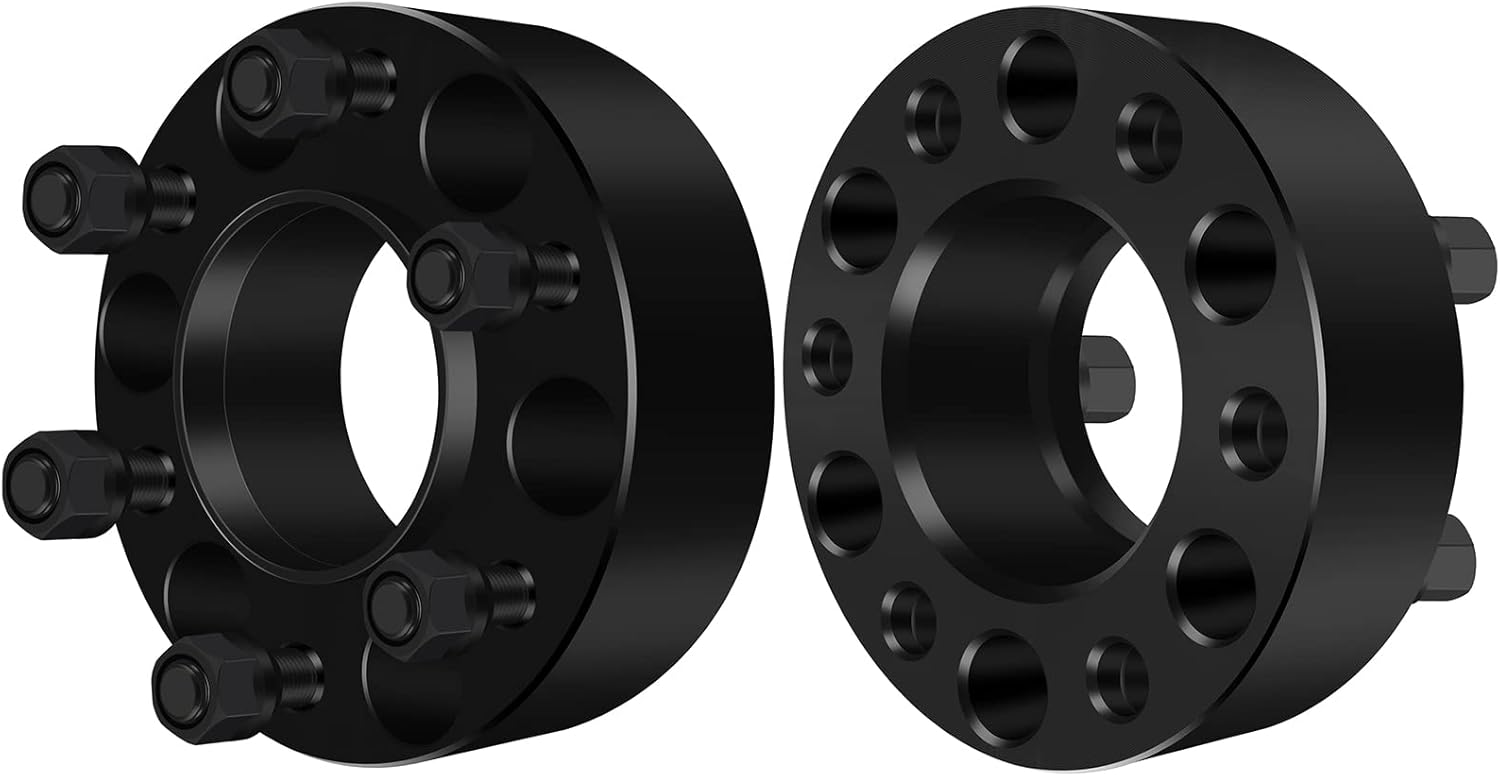
These ECCPP 2-inch hubcentric wheel spacers move the wheel outward by 50mm to provide extra track width and clearance for larger tires or improved stance on 6×135 Ford pickups and SUVs. They are machined from forged 6061-T6 billet aluminum with CNC precision and an anodized finish for corrosion resistance. The hubcentric design centers the wheel on the hub to reduce vibration when properly torqued, and the included 10.9-grade studs deliver high tensile strength for durable clamping. Installation requires checking stud thread (14×2.0), center bore clearance, and available fender gap; some users may need to trim studs or apply thread locker per instructions. These spacers are a straightforward, budget-friendly way to gain clearance or an aggressive look without permanent suspension changes, but they do depend on correct fitment and careful installation to avoid interference or stud length issues. For a cost-conscious upgrade on compatible F-150s and related 6×135 vehicles, they balance price with solid materials and practical performance.
Best for: Buyers wanting an affordable, factory-quality wheel spacer to add clearance or a wider stance on 6×135 Ford trucks while prioritizing material strength and straightforward installation.
Less Ideal for: Drivers seeking a zero-modification solution or those uncomfortable with verifying stud length, center bore, and torquing procedures should consider professional installation or different fitment options.
- Forged 6061-T6 aluminum construction for strength and lighter weight than steel alternatives
- CNC machined and hubcentric design reduces vibration when properly installed
- Anodized surface improves corrosion resistance for longer life
- High-strength 10.9 studs provide robust clamp force and structural support
- Requires verification of stud thread length and possible stud trimming on some vehicles
Verdict: A budget-friendly, CNC-machined 2-inch hubcentric spacer that gives compatible Ford 6×135 trucks added clearance and a wider stance with strong forged aluminum construction.
MZS 2" 6×135 Wheel Spacers, 87.1mm Hub-Centric, M14x1.5 Studs (Pack of 4)

| Bolt pattern | 6x135mm |
|---|---|
| Hub bore | 87.1mm (hub-centric with lip) |
| Thickness | 2" (50.8mm) |
| Thread pitch | M14x1.5 |
| Quantity | 4 pieces per set |
These MZS 2" wheel spacers push wheels outward to increase track width and clearance, letting you run wider rims or avoid caliper and fender interference on compatible trucks. Machined from T6061-style aluminum in a one-piece design and fitted with heat-treated 12.9-grade bolts, the spacers aim to deliver a durable, centered fit that minimizes vibration when installed correctly. They are hub-centric with an 87.1mm lip and use M14x1.5 stud threads, so they work as a straightforward way to correct offset or create a wider stance on supported models. Installation requires correct stud length and manual torqueing to spec and an alignment and re-torque after 25 to 50 miles; extended wheel bolts are not included. Key limitations are strict fitment requirements — they will not work with locking hubs or vehicles using a different stud pitch — and they can change fender clearance and alignment geometry, so professional installation is recommended for drivers prioritizing long-term reliability.
Best for: Buyers who prioritize a dependable, factory-like spacer solution to add 2 inches of clearance or correct wheel offset on supported trucks and who prefer a conservatively engineered, hub-centric part installed to spec.
Less Ideal for: Drivers who frequently swap wheels between vehicles with different center bores or locking hubs or those wanting a universal spacer for multiple bolt patterns.
- CNC-machined one-piece aluminum construction for consistent concentricity and strength.
- Hub-centric 87.1mm lip reduces the need for separate hub rings and helps prevent vibration.
- Uses heat-treated 12.9-grade bolts for higher shear strength and reduced breakage risk.
- Provides 2" of spacing to clear larger calipers or run wider wheels and improve stance and handling.
- Not compatible with vehicles that have locking hubs and only fits M14x1.5 stud pitch and 6×135 bolt pattern.
- Does not include extended wheel bolts; correct stud length must be confirmed separately.
Verdict: A hub-centric, CNC-machined 2" spacer built with hardened bolts that gives a reliable, centered 2-inch increase in wheel offset for compatible F-150 trucks.
Orion Motor Tech 2" 6×135 Wheel Spacers with 14×2.0 Studs (4-pack)

| Bolt Pattern | 6x135mm (vehicle) to 6x135mm (wheel) |
|---|---|
| Thread Pitch | 14×2.0 |
| Thread Length | 34mm |
| Hub Bore | 87.1 mm |
| Thickness | 2" |
These Orion Motor Tech spacers push wheels outward by 2 inches to improve stance, clearance, and handling on compatible 6×135 vehicles. Machined from 6061-T6 aircraft-grade aluminum and anodized for corrosion resistance, the kit comes with heat-treated, preinstalled 14×2.0 studs so you do not have to modify existing studs. The hub-centric design and precision machining make installation straightforward for a competent DIYer and reviewers report easy fit and stable highway use when torqued correctly and rechecked after a short run. The spacer’s rear slots aid removal and provide grab points if maintenance is needed. Keep in mind these are vehicle-specific 6×135 spacers and will change wheel offset, which can affect turning clearance and hub cap fitment; correct torque sequence and a retorque after a few miles are necessary for safety. Overall they are a lightweight, durable option to gain tire clearance or accommodate wider wheels while maintaining a near-factory fit when used on the listed Ford trucks and SUVs.
Best for: Buyers who prioritize proven, well-machined spacers with user feedback and want a durable, lightweight 2-inch solution to gain clearance or a wider stance for compatible Ford trucks and SUVs.
Less Ideal for: Drivers seeking a universal spacer solution or those unwilling to follow post-install checks like retorquing after initial miles should consider other options.
- Made from 6061-T6 billet aluminum for a high strength-to-weight ratio
- Preinstalled heat-treated 14×2.0 studs simplify installation and avoid stud cutting
- Hub-centric machining promotes accurate centering and reduces vibration risk
- Anodized finish gives added corrosion resistance for long-term durability
- Changes wheel offset and may prevent hub cap reinstall or alter turning clearance
Verdict: A precisely machined, aircraft-grade 2-inch spacer with preinstalled hardened studs that gives a reliable, factory-quality fit for 6×135 Ford trucks and SUVs.
KSP PERFORMANCE 2" Hub-Centric Wheel Spacers for F-150 / Expedition / Navigator, 6×135, 87.1mm Center Bore

| Bolt Pattern | 6x135mm |
|---|---|
| Center Bore | 87.1mm |
| Thickness | 2" (50.8mm) |
| Stud Thread Pitch | M14x1.5 |
These KSP Performance 2" wheel spacers are a hub-centric solution made from 6061-T6 aluminum that shifts factory wheels outward to improve tire clearance and give a more aggressive stance on 6×135 6-lug F-150, Expedition, and Navigator models. Installation uses the supplied hardened M14x1.5 studs and thread locker and is straightforward for anyone comfortable with basic wheel removal and torque procedures. The spacers are heat treated and anodized to resist corrosion and reviewers report a tight hub fit with no vibration when torqued to spec. Practical benefits include room for larger tires, resolving brake caliper clearance issues, and a wider track that can enhance cornering stability. Limitations to note are that these are casting-based spacers rather than forged, and the product description warns they do not fit heavy duty F-150 HD or dually setups; proper fit check and correct torqueing are essential. Buyers should plan to recheck torque after initial miles and ensure their wheels sit flush to the spacer for a secure fit.
Best for: Drivers who want a straightforward, factory-focused way to widen the track and fit larger tires on a standard F-150/Expedition/Navigator while prioritizing secure hub-centric fitment and predictable installation.
Less Ideal for: Buyers seeking the absolute strongest forged spacer for heavy off-road abuse or those with F-150 HD or dually setups should look at other options tailored to those uses.
- Hub-centric design and 87.1mm center bore helps center the wheel and reduce vibration
- Made from 6061-T6 aluminum with black anodized finish for corrosion resistance
- Includes heat-treated M14x1.5 studs and thread locker for secure fastening
- Creates 2 inches of wheel offset to allow larger tires and improve clearance
- Casting construction rather than fully forged may be less robust under extreme stress
- Not compatible with F-150 HD models or dually configurations
Verdict: A hub-centric, aluminum 2-inch spacer that reliably widens the track and clears larger tires on standard F-150/Expedition/Navigator trucks with an emphasis on secure fitment and easy installation.
Choosing the Right Ford F-150 2 Inch Wheel Spacers: Key Factors to Consider
Bolt Pattern and Center Bore Fit
Accurate bolt pattern matching is essential because the spacer must align precisely with the Ford F-150 lug layout to avoid uneven stress on studs and hubs. A mismatched bolt pattern or an oversized pilot hole shifts load-bearing to the studs instead of the hub, increasing the risk of bearing wear and lug failures.
The center bore dimension determines whether the spacer is hub-centric or lug-centric. Hub-centric spacers sit on the hub shoulder and transfer wheel loads through the hub, reducing runout and vibration. When the bore is too large, the assembly becomes lug-centric and relies on the studs alone for centering, which can allow slight misalignment under load and increase the chance of vibration.
Material and Manufacturing Quality
The material and how the spacer is made affect strength, durability, and corrosion resistance. Forged or CNC-machined billet aluminum parts maintain consistent thickness and precise bores, which helps preserve wheel balance and concentricity. Cast or low-quality stamped spacers are more prone to stress risers and deformation under load.
Also consider the corrosion protection. Anodized finishes, high-quality coatings, or stainless hardware reduce the chance of seized studs or mating surfaces degrading, especially if the truck sees winter salt or frequent moisture exposure.
Studs, Stud Length, and Thread Engagement
Spacer installation can use extended studs or pass-through designs. Regardless of style, you must ensure adequate thread engagement on wheel studs to maintain clamping force. Improper stud length can leave too few threads engaged in the wheel, risking loosening or failure under load.
Count the threads available after fitting the spacer and wheel together. The recommended minimum engagement varies by stud specification but typically requires at least the full diameter worth of threads engaged. Also verify that studs and nuts are compatible with the F-150's lug nut type and torque specifications.
Hub-Centric Versus Lug-Centric Design
Hub-centric spacers are machined to fit snugly on the wheel hub, centering the spacer and wheel assembly on the hub shoulder. This reduces runout and the chance of vibration at highway speeds. Lug-centric spacers rely on the lug nuts to center the wheel and can be acceptable if tolerances are tight, but they carry a higher risk of slight misalignment.
For a heavy vehicle like the F-150, where towing and loads are common, a hub-centric spacer generally gives better long-term reliability and ride quality, so confirm the spacer's pilot diameter and how it mates to the hub.
Thickness Accuracy and True Offset
Labeling a spacer as 2 inch is only useful if the measured thickness and effective offset are accurate. Small manufacturing variances can change track width and wheel clearance. An accurate spacer keeps brake calipers, suspension components, and fenders clear while producing the intended stance.
Also consider whether the spacer thickness is combined with wheel backspacing to create the desired total offset. Documented, measured dimensions and tolerances help avoid surprises during installation.
Vibration Risk and Runout Control
Even high-quality spacers can introduce vibration if concentricity is off. Look for parts with tight bore tolerances and quality control measures that minimize runout. Excessive runout affects steering feedback, tire wear, and bearing life.
When installing, measure for runout and re-torque in stages to seated values. If vibration occurs after fitting, checking hub and wheel mating surfaces for corrosion or debris is an important diagnostic step before assuming spacer defect.
Fitment Checklist Before You Buy
Confirm the exact Ford F-150 wheel bolt pattern and the hub pilot diameter for your truck's year and configuration. Verify the spacer lists a matching pilot diameter or specifies being hub-centric for the F-150.
Measure wheel backspacing and ensure the combined offset with a 2 inch spacer provides the clearance you need for calipers, sway bar links, and fender rub. Also check stud thread length to maintain proper lug engagement.
- Verify bolt pattern and pilot bore dimensions
- Confirm effective offset with your wheel backspacing
- Check extended stud length or pass-through design compatibility
Installation Basics for 2 Inch Spacers
Installation typically involves raising the truck, removing the wheel, cleaning the hub mating surface, fitting the spacer, and torquing mounting bolts in the specified pattern. Use a torque wrench and follow staged torquing to the manufacturer's recommended values for the spacer-to-hub fasteners.
If the spacer uses extended studs, ensure the wheel is torqued to the correct spec and recheck torque after a short break-in drive. Use anti-seize or the thread treatment recommended by the spacer maker to minimize galling where appropriate.
- Clean hub and wheel mating surfaces thoroughly
- Torque in a crisscross pattern to the specified torque
- Recheck lug torque after 50 to 100 miles
Preventing and Diagnosing Vibration
Vibration can stem from poor pilot fit, uneven mounting surfaces, or insufficient torque. After installation, perform a test drive at a range of speeds and note any vibration. If present, recheck torques and inspect for debris or rust on the hub, spacer, and wheel mating surfaces.
Measuring runout with a dial indicator can identify concentricity issues. Small machining errors or trapped corrosion layers can be corrected by cleaning surfaces or replacing the spacer if tolerances are out of spec.
- Test drive and listen for vibration at different speeds
- Inspect and clean all mating surfaces
- Use a dial indicator to measure runout if vibration persists
Maintenance and Long-Term Care
Periodically check spacer and lug nut torque, especially after driving in corrosive environments or after towing. Corrosion can lead to seized studs or fasteners, so inspect for pitting or coating breakdown and address issues promptly.
If you remove spacers seasonally, store them clean and dry. When reinstalling, inspect threads and pilot bores again to ensure surfaces remain free of debris.
- Re-torque lug nuts after the first 50–100 miles
- Inspect for corrosion and replace if surfaces are compromised
- Keep spare hardware and an installation kit on hand
Legal and Safety Considerations
Check local regulations regarding wheel spacers and wheel modifications. Some jurisdictions have specific rules about the use of wheel adapters and how they are mounted. Ensuring compliance reduces liability and avoids unexpected issues during inspections.
From a safety standpoint, only use spacers that clearly document load ratings and mounting specifications for the Ford F-150. Avoid adapters that require excessive modification to the wheel or vehicle hub.
- Confirm local regulations and inspection requirements
- Use parts with documented load ratings and specifications
Still looking for the perfect fit?
Select your Ford F-150 configuration to see the most relevant Wheel Spacers recommendations
How We Chose the Best Ford F-150 2 Inch Wheel Spacers
We prioritized fit and mechanical compatibility first, requiring exact matching to the Ford F-150 bolt pattern and wheel hub engagement to minimize runout and avoid vibration. Materials and manufacturing quality were next: we favored forged or high-grade billet aluminum and corrosion-resistant finishes because they better withstand road salt and towing loads. Mounting style and safety features were critical evaluation points. We looked for hub-centric designs or well-machined pilot diameters, proper stud length or dedicated studs where applicable, and clear torque specifications for the vehicle's lug pattern. Durability testing data and user feedback on long-term performance informed assessment of fatigue resistance and corrosion behavior. Ease of installation and whether an installation kit or correct-length studs were required was also considered. Finally, we screened for clear documentation and measured dimensions to ensure the spacers provide a true 2 inch offset without ambiguity. Exclusions: spacers with ambiguous fitment data, low-quality stamped materials, or missing pilot diameters were excluded. We did not include one-off homemade adapters or multi-vehicle generic spacers without Ford F-150-specific fitment information.
Our full evaluation process is outlined in our review methodology.
FAQ
Will 2 inch spacers fit my Ford F-150 without wheel modifications?
Often yes, provided the wheels have compatible backspacing and the spacer matches the F-150 bolt pattern and hub bore. You should measure tire clearance around brake components and fenders before committing.
Are hub-centric spacers necessary for the F-150?
Hub-centric spacers are strongly recommended because they center the wheel on the hub, reducing runout and vibration. For a heavy truck that may tow or carry loads, hub-centric designs improve long-term reliability.
How tight should lug nuts be after installing spacers?
Use the vehicle or spacer manufacturer's torque specification and tighten in a crisscross pattern. It is also good practice to re-torque after the first 50 to 100 miles to ensure clamping force is stable.
Do spacers increase wear on wheel bearings or suspension?
Adding width changes the leverage on bearings and suspension components, which can slightly increase stresses. Choosing high-quality spacers with proper fitment and not exceeding reasonable offset changes helps minimize accelerated wear.
Can I install spacers myself with basic tools?
Yes, a competent DIYer with a torque wrench, jack, and standard tools can install spacers, but attention to cleanliness, correct torque, and thread engagement is crucial. If unsure about runout or torque, seek a professional inspection.
What should I do if I notice vibration after adding spacers?
Stop and inspect mating surfaces, torque values, and pilot engagement. Clean any corrosion or debris, re-torque fasteners, and measure runout. If vibration persists, remove the spacer and consult a specialist.
Final Verdict
For the Ford F-150, prioritize properly matched 2 inch spacers that deliver hub-centric engagement, accurate thickness, and sufficient stud thread engagement. Those elements minimize vibration risk and preserve load distribution across the wheel hub and studs. Balance your desired stance or clearance against the increased leverage on bearings and suspension. When in doubt, choose spacers with clear fitment data, documented tolerances, and corrosion-resistant finishes so you can enjoy the added width confidently and safely.
Explore More:
- Check out all Ford F-150 parts & accessories
- Explore Wheel Spacers Maintenance & Repair Guides
- Explore Wheels & Tires
- Browse all Auto Parts
