

Note: This article contains affiliate links. If you click on these links and make a purchase, I may earn a small commission at no extra cost to you. This helps support my research and content. Read my full affiliate disclosure here.
If you want extra clearance for larger tires or a wider stance for a more aggressive look on your 2004-2008 Ford F-150, the right wheel spacers make a big functional difference. These parts change wheel offset and track width, affecting handling, fender clearance, and brake caliper clearance, so choosing correctly matters for both safety and fit.This guide covers seven shortlisted wheel spacers selected specifically for the 2004-2008 F-150. We evaluate each option against structural strength, bolt pattern and hub fit, and installation considerations so you can pick a spacer that balances stance, clearance, and drivability. Read on for the criteria we used and practical installation and maintenance advice.
Looking for other parts? See all Ford F-150 parts & accessories.
Top Picks at a Glance
| Best Overall The best all-around choice for most situations | Nilight 6×135 1.5" Wheel Spacers for Ford F-150 (87.1mm hub bore) |  |
| Best Quality Built to a higher standard if you want something more solid | dynofit 2" 6×135 Hub-Centric Wheel Spacers (4pcs) for 2004–2014 Ford F‑150 |  |
| Best Value The sweet spot between price and what you get | IRONTEK 2in 6x135mm Wheel Spacers (50mm) — 87.1mm Hub Bore, M14x2 Studs — 2-Pack |  |
| Best Budget The cheapest option that still gets the job done reliably | ECCPP 1.5" 6×135 Hub-Centric Wheel Spacers (pair) |  |
| Highest Rated A top-rated pick with lots of positive feedback | Orion Motor Tech 6×135 Wheel Spacers with 14×2.0 Studs (4-piece) |  |
| Most Popular A crowd favorite that many people choose with confidence | KSP Performance 6×135 2" Hub-Centric Wheel Spacers for Ford F-150 (4 pcs) |  |
| Best Seller A high-volume bestseller chosen again and again | EVIL ENERGY 12 mm (1/2") 6×135/6×139.7 6-Lug Wheel Spacers for 2004–2008 Ford F-150 |  |
Nilight 6×135 1.5" Wheel Spacers for Ford F-150 (87.1mm hub bore)

| Bolt pattern | 6x135mm |
|---|---|
| Hub bore | 87.1mm |
| Spacer thickness | 1.5 inch (38mm) |
| Thread size | M14x2 |
| Quantity | 4 Pcs |
These Nilight wheel spacers push the wheels 1.5 inches outward to widen track width and improve stance and stability on 2004–2014 Ford F-150s and compatible SUVs. Made from CNC-machined 6061 aluminum with an anodized finish, the spacers are hub-centric to help maintain concentricity and come as a four-piece set with M14x2 thread studs. Installation is straightforward for someone with basic tools and is often done wheel-by-wheel in under 10 minutes once hubs are clean; users should prep the hub, use thread locker, and torque to spec to avoid vibration. In real-world use these spacers reduce rubbing on wider tires, sharpen cornering feel, and give a more planted look without significant added unsprung mass. They are not a suspension lift and will not change ride height or suspension geometry, and thicker spacers can require stud trimming or extended lug nuts on some wheel setups. Overall they deliver a practical handling and appearance upgrade when used with proper fitment and installation care.
Best for: Buyers who want a balanced improvement in handling and appearance for a mid-2000s Ford F-150 and prioritize a straightforward, reversible modification with reliable materials and fitment guidance.
Less Ideal for: Drivers seeking a suspension lift, increased load capacity, or those who are unwilling to take time to prep hubs and torque hardware correctly should look at other suspension or wheel solutions.
- CNC-machined 6061 aluminum construction for strength with relatively low weight
- Anodized finish improves corrosion resistance and longevity
- Hub-centric design (87.1mm) helps keep wheels concentric and reduces vibration risk when installed correctly
- 1.5 inch thickness effectively clears wider tires and improves track width and cornering stability
- Does not alter ride height or suspension geometry so it is only for stance and track-width improvement
- May require trimming studs or different lug hardware with some wheel combinations
Verdict: A practical, factory-quality-feeling 1.5-inch spacer set that improves cornering stability and clears wider tires on compatible Ford F-150 models with minimal fuss.
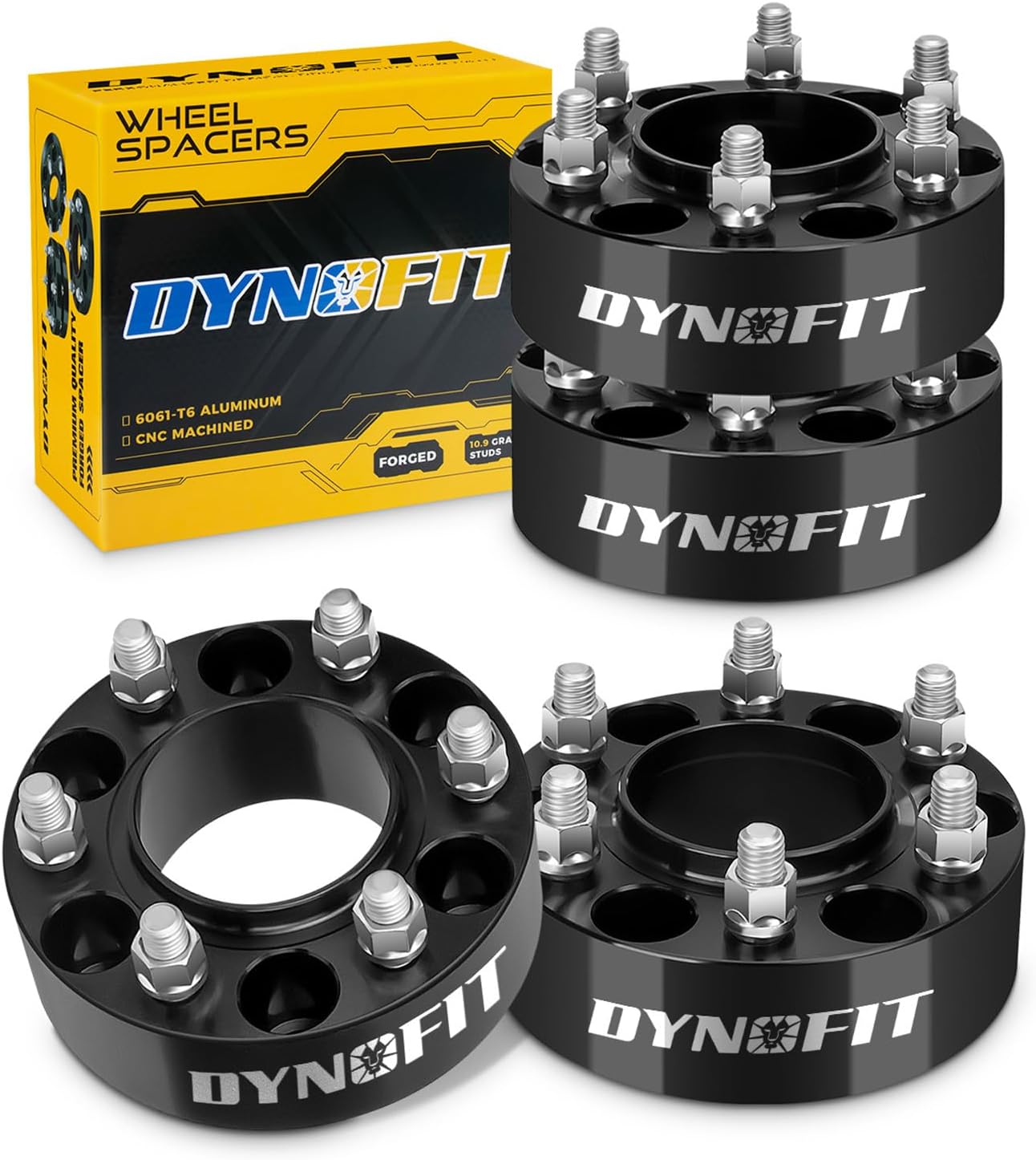
dynofit 2" 6×135 Hub-Centric Wheel Spacers (4pcs) for 2004–2014 Ford F‑150
| Fitment | 2004–2014 Ford F-150 (see description for exclusions) |
|---|---|
| Bolt Pattern | 6x135mm |
| Thickness | 2 inches (50mm) |
| Hub Bore | 87.1mm |
| Stud Thread Pitch | M14x2.0 |
These dynofit spacers push the wheels 2 inches outward to correct backspacing, improve clearance, and give a wider stance on 2004–2008 Ford F-150 trucks. They are forged from 6061-T6 aluminum, CNC machined to fit an 87.1mm hub bore and use Dacromet-coated studs rated at grade 10.9, which balances strength with ductility. Typical use is straightforward: install the spacer onto the hub, torque the spacer hardware, then mount the wheel to the spacer and re-torque after short driving intervals. The machining and hub-centric design reduce vibration and make fitment tight, and many owners report improved cornering stability and the ability to run larger tires without caliper or rubbing issues. Important limitations are the lower recommended spacer-to-hub torque compared with factory wheel torque and the need for periodic rechecks after initial road miles; improper torque or lubricants can cause failures. Also these spacers are vehicle-specific and will not fit setups with dual rear wheels.
Best for: Buyers who want to improve stance, fit wider tires, and sharpen cornering on a mid-2000s F-150 while prioritizing a strong forged spacer that fits tightly to the hub.
Less Ideal for: Drivers who prefer a bolt-and-forget modification or who run dual-rear-wheel configurations should look for alternative solutions or professional fitment options.
- Forged 6061-T6 aluminum construction for strong, lightweight performance.
- Hub-centric 87.1mm bore and CNC machining for tight, vibration-free fitment.
- Grade 10.9 Dacromet-coated studs provide high strength and corrosion resistance.
- 2-inch thickness allows larger tires and corrects brake caliper or rubbing clearance.
- Includes design and documentation that recommend specific torque practices for reliability.
- Requires careful torqueing and periodic retorques after installation to avoid clamp issues.
- Not compatible with dually rear-wheel setups and is vehicle-specific.
Verdict: For 2004–2008 F-150 owners wanting a forged, hub-centric 2-inch spacer to run larger tires and tighten handling, these dynofit spacers deliver a strong, precise fit when installed and torqued correctly.
IRONTEK 2in 6x135mm Wheel Spacers (50mm) — 87.1mm Hub Bore, M14x2 Studs — 2-Pack

| Bolt pattern | 6x135mm |
|---|---|
| Thickness | 50mm (2.0 in) |
| Center bore | 87.1mm |
| Thread pitch | M14x2 |
| Quantity | 2 pieces |
These IRONTEK 2-inch (50mm) hubcentric spacers push 6x135mm wheels outward on compatible F-150s to increase track width, clear larger tires or calipers, and give a more aggressive stance. They are made from T6 billet aluminum with a corrosion-resistant coating and come with hydraulic pre-pressed studs to reduce vibration risk. Typical use is on the front or rear of a 2004–2008 F-150 to correct fitment issues or allow wider wheel offsets; installation requires wheel removal, proper torqueing with a torque wrench and possibly longer or shorter studs depending on wheel design. Practical benefits include improved tire clearance, better wheel symmetry for aftermarket rims, and a relatively lightweight, durable spacer construction. Important limitations are fitment sensitivity and hardware considerations — these spacers do not include short shank bolts and may require extended or replacement studs and careful centering; some users reported isolated quality or breakage issues so follow-up checks and re-torque after 25–50 miles are advised.
Best for: Buyers looking to fix clearance or offset problems on a 2004–2008 F-150 and who prioritize a practical, cost-effective upgrade that restores wheel fitment and appearance with durable aluminum spacers.
Less Ideal for: Drivers who want a plug-and-play kit that includes all necessary replacement hardware or those unwilling to check and possibly change wheel studs and re-torque after installation.
- 50mm thickness provides noticeable outward wheel offset for clearance and stance
- Billet T6 aluminum construction offers a good strength-to-weight ratio and corrosion-resistant coating
- Hydraulic pre-pressed studs reduce risk of lug-related vibration compared with loose-stud spacers
- Designed hubcentric with 87.1mm bore to help center the wheel and improve balance
- Does not include shorter shank lug bolts or replacement studs so additional hardware may be required
- Fitment is specific to 6x135mm bolt pattern and 87.1mm bore wheels so wheels with different mounting designs may need modification
- Some reviewers reported isolated failures, so quality consistency may vary and regular inspection is recommended
Verdict: If you need a sturdy, hubcentric 2-inch spacer to correct offset and clearances on a 2004–2008 F-150, these IRONTEK aluminum spacers are a practical, strong choice.
ECCPP 1.5" 6×135 Hub-Centric Wheel Spacers (pair)

| Thickness | 1.5 inch (38mm) |
|---|---|
| Bolt pattern | 6x135mm |
| Thread pitch | 14×2 |
| Center bore | 87mm |
| Material | 6061-T6 forged aluminum |
These ECCPP 1.5 inch (38mm) hub-centric wheel spacers are a budget-friendly option for F-150, Expedition, Navigator and Mark LT owners needing extra wheel clearance or a wider stance. Made from forged 6061-T6 billet aluminum and CNC machined, they center the wheel on the hub to reduce vibration when installed correctly. Typical use is to correct offset after lifts or to fill the wheel well for a more balanced look; installation requires checking stud length, wheel center bore and thread pitch and may need shorter studs or open-slot wheels. The anodized finish helps resist corrosion, and the kit includes studs sized for 14×2 threads, but some buyers reported stud or lug fitment issues so double-check lug nut compatibility before installation. Proper torque (manufacturer recommends 85-90 ft-lbs) and thread locker are advised to keep the spacer seated and avoid vibration. This set delivers the visual and clearance benefits of spacers at a low cost but demands careful fitment and installation attention to be safe and reliable.
Best for: Buyers looking for an inexpensive way to widen track or correct wheel fitment on mid-2000s Ford and Lincoln trucks who are comfortable verifying fitment and doing minor hub or stud adjustments.
Less Ideal for: Anyone unwilling to check thread pitch, center bore and stud length or who expects a bolt-on, maintenance-free solution without possible stud or lug changes.
- Hub-centric design helps center the wheel to reduce vibration when properly torqued
- Forged 6061-T6 aluminum and CNC machining offer good strength and precise fit
- Anodized surface provides basic corrosion resistance for long-term exposure
- 1.5 inch thickness corrects offset for lifted or cosmetically widened trucks
- Some users reported stud/lug compatibility problems or broken studs during torqueing
- May require trimming or replacing factory studs and buying open-end lug nuts to fit
Verdict: A cost-conscious way to widen track or fix offset on 2004–2014 Ford F-150/Expedition and compatible Lincoln trucks if you confirm stud and lug compatibility before fitting.
Orion Motor Tech 6×135 Wheel Spacers with 14×2.0 Studs (4-piece)

| Bolt Pattern | 6x135mm (vehicle to wheel) |
|---|---|
| Thread Pitch | 14×2.0 |
| Thread Length | 34mm |
| Hub Bore | 87.1 mm |
| Thickness | 2" |
These Orion Motor Tech spacers push wheels 2 inches outward using a 6×135 bolt pattern and 14×2.0 studs, making them a straightforward way to increase tire clearance and give your F-150 a more stable, planted stance. Installation is simple for anyone comfortable swapping wheels: the spacers are hub-centric, come with preinstalled heat-treated studs, and feature rear removal slots that make removal easier. Machined from 6061-T6 aircraft-grade aluminum and anodized for corrosion resistance, they are noticeably lighter than steel alternatives while still feeling solid under the lug nuts. Practical benefits include resolving brake caliper clearance issues, fitting wider tires, and smoothing handling when combined with suspension changes. Expect to retorque after the first few miles and avoid using an impact on the outer studs to prevent over-torquing. These spacers do push the lug nuts out slightly farther which can affect hub caps and may require attention to torque and periodic checks; they are not a substitute for modifications that change steering geometry or turning radius.
Best for: Buyers who prioritize dependable, well-machined parts that address clearance or handling on a 2004–2008 Ford F-150 and who plan to follow proper installation and torque procedures.
Less Ideal for: Drivers seeking changes that alter steering geometry or turning radius significantly or those unwilling to perform or verify follow-up torque checks after installation.
- Solid 6061-T6 billet aluminum construction offers a strong yet lightweight spacer
- Preinstalled heat-treated 14×2.0 studs simplify installation
- Hub-centric design helps maintain wheel alignment and reduces vibration risk
- Anodized finish improves corrosion resistance for longer service life
- Thickness pushes lug nuts outward which can interfere with some hub caps and wheel covers
- Requires retorquing after initial miles and periodic torque checks to maintain safety
Verdict: A reliable, machined 2" aluminum spacer set that delivers secure, hub-centric fitment and durable corrosion resistance for F-150 owners who put long-term dependability first.
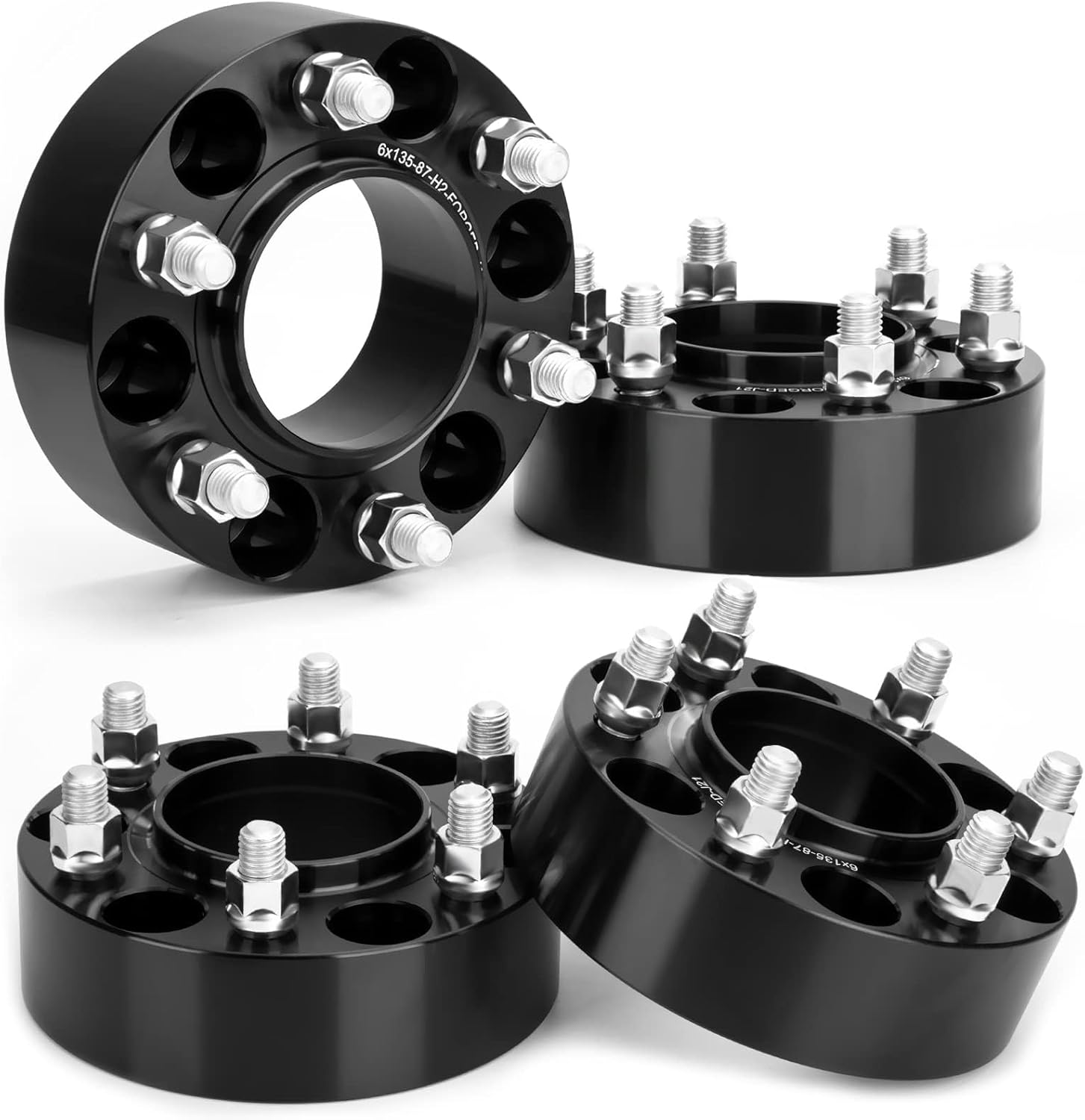
KSP Performance 6×135 2" Hub-Centric Wheel Spacers for Ford F-150 (4 pcs)
| Bolt pattern | 6x135mm |
|---|---|
| Hub bore | 87.1mm |
| Thickness | 2 inches (50.8mm) |
| Material | Forged 6061-T6 aluminum |
| Thread pitch | M14x2 |
These KSP Performance spacers are a straightforward way to push factory wheels outward for a wider stance or to clear larger tires on 2004–2008 Ford F-150s. Made from forged 6061-T6 aluminum with a black anodized finish, the 2" spacers bolt to the hub and accept the wheel using supplied M14x2 studs and hardened 10.9 bolts with thread locker. For everyday use they fix caliper clearance issues, allow slightly larger tires, and give a more aggressive look without swapping wheels. Users report a precise hub-centric fit and quiet operation when torqued to spec. Important limitations: spacers change wheel track and increase leverage on suspension components so keep the 2" offset in mind and follow torque and recheck procedures; they will not fit heavy duty or dually models and compatibility must be confirmed for your specific rim. Installation is simple for a competent DIYer but torque checks after initial miles are recommended to avoid loosening.
Best for: Buyers who want a reliable, factory-style spacer to widen stance or solve minor tire clearance problems on a 2004–2008 F-150 and who prioritize proven fit and solid build quality.
Less Ideal for: Drivers seeking extreme negative offset looks, owners of heavy duty or dually trucks, or anyone unwilling to perform proper torque checks and periodic reinspection after installation.
- Billet 6061-T6 aluminum construction for strength with reduced weight
- Hub-centric design and 87.1mm bore for tight, centered fitment
- Includes hardened M14x2 studs and thread locker for secure fastening
- Black anodized finish adds corrosion resistance and a clean appearance
- Not compatible with F-150 HD or dually setups and requires checking wheel/rim fitment before install
- Adds leverage to suspension which can increase wear if larger spacers or aggressive offsets are used
Verdict: A precise hub-centric billet aluminum spacer that gives 2004–2008 F-150s a wider stance and reliable fitment when installed and torqued correctly.
EVIL ENERGY 12 mm (1/2") 6×135/6×139.7 6-Lug Wheel Spacers for 2004–2008 Ford F-150

| Bolt pattern | 6×135 / 6×139.7 mm |
|---|---|
| Thickness | 12 mm (1/2") |
| Hub bore | 108 mm |
| Material | 6061-T6 aluminum |
These EVIL ENERGY spacers are 12 mm (1/2") billet aluminum discs machined from 6061-T6 and anodized for corrosion resistance. They fit 6-lug 6×135/6×139.7 bolt patterns and sit between the hub and wheel to correct backspacing or provide a slightly wider track. Installation is straightforward for a competent DIYer or shop: hand-thread the studs and torque to spec while avoiding power-tool over‑tightening as recommended. The product is not hub-centric and uses a 108 mm bore, so careful fitment and wheel centering are needed to avoid vibration; some customers report balance or vibration issues on certain applications. The spacers do not include studs or nuts, so you must use or replace hardware appropriate to your hub and wheel. In practice these deliver a modest stance improvement and extra clearance for wider tires or calipers, but they require correct wheel centering and proper torqueing to maintain handling and safety. For a risk-averse buyer, professional installation and attention to fitment choices are advisable.
Best for: Buyers who want a conservative, modest track widening or backspacing correction for a 2004–2008 F-150 and prioritize a factory-like, reversible modification with professional fitment.
Less Ideal for: People seeking large lift or extreme stance changes, or those unwilling to verify centering and have a shop handle installation should consider different solutions.
- Made from 6061-T6 aircraft-grade aluminum for strength and light weight.
- CNC machined and anodized finish improves dimensional accuracy and corrosion resistance.
- Simple installation location between hub and wheel allows use to correct backspacing or clear larger calipers.
- 12 mm thickness gives a noticeable but modest track widening suitable for subtle stance changes.
- Not hub-centric (108 mm bore) which increases need for centering rings or careful wheel balancing to avoid vibration.
- Does not include studs or nuts so additional hardware may be required.
- Some users reported vibration or fitment problems on certain vehicles, indicating variable quality control.
Verdict: A modest, well-machined 12 mm aluminum spacer that suits F-150 owners wanting a conservative stance and clearance fix when fitted and installed correctly.
Choosing the Right 2004-2008 Ford F-150 Wheel Spacers: Key Factors to Consider
Bolt Pattern and Hub Fit
Bolt pattern and hub fit determine whether a spacer sits flush and transmits loads correctly. For the 2004-2008 Ford F-150, confirming the wheel stud layout and ensuring the spacer matches the truck's hub diameter prevents uneven stress and reduces the chance of loosening.
A spacer that is hub-centric centers on the hub and transfers loads through the hub face, which is usually preferable for maintaining wheel balance and minimizing vibration. Lug-centric spacers rely solely on the studs and can be acceptable for modest thicknesses, but they increase reliance on proper torque and maintenance. Always verify manufacturer specifications for stud size, stud protrusion, and hub bore to ensure a secure fit.
Material and Construction Strength
Material grade and machining quality determine the spacer's structural capacity. Billet aluminum spacers are common because they balance weight and strength, but look for high-grade alloys and full CNC machining to avoid thin sections that can crack under load.
Steel adapters offer greater strength for heavy-duty use or large thicknesses but come with increased weight and corrosion risk. Pay attention to load ratings and whether the design includes reinforcement around fastener holes. Consistent thickness and chamfered edges help distribute stress and reduce the likelihood of stress risers.
Thickness and Intended Use
Spacer thickness directly affects track width, scrub radius, and suspension geometry. Small increments can give the desired stance without excessively altering handling, while larger spacers may require extended studs or different wheel backspacing.
Think about intended use: minor changes for stance and clearance typically use 5–15 mm spacers, while larger offsets for extreme fitment may need 20 mm or more and could necessitate upgraded hardware. Consider how thickness interacts with wheel offset and brake and suspension clearance to avoid rubbing or excessive leverage on studs.
Mounting Method and Hardware
How a spacer mounts to the hub and wheel affects safety and maintenance. Common methods include slip-on hub-centric spacers, spacers that use existing wheel studs with additional studs, or spacers that sandwich between hub and wheel using supplied lug nuts or bolts.
Quality hardware matters. Longer studs or provided installation kits are often required for thicker spacers to maintain sufficient thread engagement. Inspect whether the spacer includes corrosion-resistant fasteners and whether loctite or torque-checking practices are recommended. A robust mounting method reduces movement risk and makes routine checks straightforward.
Corrosion Resistance and Finish
Trucks see varied weather and road conditions, so surface protection is important for longevity. Anodized aluminum finishes slow oxidation and provide a durable outer layer, while zinc or cadmium plating on steel can reduce rust.
Poor finishes can lead to galvanic corrosion where dissimilar metals meet, which undermines fit and makes removal difficult. Check for clear specifications about coatings and consider spacers with protective treatments if you drive in coastal or winter-salt environments.
Maintenance and Torque Requirements
Proper torque and periodic rechecks are critical with wheel spacers. Incorrect torque or loss of preload can lead to vibration, stud fatigue, or fastener failure. Know the recommended torque specs for both hub-to-spacer and spacer-to-wheel fasteners for the F-150 and follow them closely.
Maintenance also includes inspecting for cracks, checking for corrosion around bores and fasteners, and confirming wheel balance after installation. Spacers that simplify maintenance with accessible fasteners or that include torque guidance reduce the chance of user error.
Understanding Bolt Patterns and the 2004-2008 F-150
The 2004-2008 Ford F-150 has specific wheel stud layouts and hub diameters that affect spacer selection. Confirming the truck's bolt pattern and hub bore before buying prevents mismatches that can lead to improper seating or excessive stress on studs.
- Measure stud pattern and count to ensure compatibility
- Verify hub bore diameter for hub-centric fitment
- Confirm stud length available for your chosen spacer thickness
Hub-Centric Vs Lug-Centric Spacers: Which Is Better?
Hub-centric spacers that align with the hub bore help center the wheel precisely, which reduces the risk of vibration and uneven load transfer. For the F-150, where heavier wheels and tires are common, a hub-centric design often provides better long-term stability. Lug-centric spacers can work for smaller thicknesses but increase dependency on correct torque and ongoing checks.
- Hub-centric: better centering and reduced vibration risk
- Lug-centric: simpler but more reliant on fastener preload
Spacer Thickness Guide and How It Affects Handling
Changing track width alters scrub radius and steering characteristics. Small spacers can enhance stance with minimal handling change. Thicker spacers move the wheel out further and increase leverage on bearings and studs, possibly changing steering feel and load distribution. Consider incremental steps and ensure studs have sufficient thread engagement when choosing thickness.
- 5–15 mm: minor stance and clearance gains
- 15–25 mm: noticeable track widening, possible need for stud extensions
- Over 25 mm: typically requires upgraded hardware and careful evaluation
Installation Basics and Typical Torque Specs
Successful installation relies on following the correct torque sequence and values for both hub-to-spacer and spacer-to-wheel fasteners. For this generation of F-150, maintain manufacturer-recommended torque for wheel studs where applicable and follow the spacer maker's torque guidance for added hardware. Use a calibrated torque wrench, clean mating surfaces, and check that studs protrude enough to engage additional nuts or studs fully.
- Clean hub and wheel surfaces before installation
- Hand-tighten in a star pattern, then torque to spec with a torque wrench
- Recheck torque after initial driving period and at regular intervals
Common Causes of Vibration and How to Avoid Them
Vibration after installing spacers most often stems from poor centering, uneven torque, or inadequate wheel balancing. Ensuring a hub-centric spacer, correct torque, and a professional balance after installation reduces vibration risk. Also inspect for bent studs or warped surfaces which can introduce imbalance.
- Verify hub bore match for proper centering
- Torque fasteners evenly in the specified pattern
- Balance wheels after spacer installation
When to Upgrade Studs or Use an Installation Kit
Thicker spacers can reduce the amount of thread engagement when using factory studs. If threads are insufficient, upgrade to longer studs or use a spacer kit that supplies extended hardware. Installation kits often include properly sized studs, washers, and torque recommendations that improve safety and simplify installation. Always ensure upgraded studs are compatible with the wheel and do not create interference with braking components.
- Measure available thread length before installing thicker spacers
- Use manufacturer-recommended studs or kit hardware
- Confirm clearance with brake calipers and suspension components
Still looking for the perfect fit?
Select your Ford F-150 configuration to see the most relevant Wheel Spacers recommendations
How We Chose the Best 2004-2008 Ford F-150 Wheel Spacers
We focused on wheel spacers that meet the real-world needs of 2004-2008 Ford F-150 owners. Our selection prioritized structural integrity and proper vehicle fit to reduce risk and maintain safe road behavior. Key evaluation criteria included material and construction quality, bolt pattern and hub-centric accuracy, available thicknesses for intended fitment changes, and mounting methods that affect long-term reliability.We also considered installation practicality: whether a spacer is hub-centric or lug-centric, the torque specs it requires, and whether an installation kit is recommended. Corrosion resistance and finish were weighed because exposure to road salt and weather affects longevity on trucks. Exclusions included products without clear specifications for 2004-2008 F-150 bolt patterns, spacers lacking load-rating data, or designs that rely on questionable mounting hardware. The resulting list emphasizes balanced choices that address clearance, stance, and on-road stability for this vehicle generation.
Our full evaluation process is outlined in our review methodology.
FAQ
Will wheel spacers cause vibration on my 2004-2008 F-150?
They can if the spacer is not hub-centric, if fasteners are unevenly torqued, or if wheel balance is not addressed. Choosing spacers that match the hub bore, following torque specs, and rebalancing wheels typically prevents vibration.
Do I need longer studs for thicker spacers?
Often yes. Thicker spacers reduce available thread engagement, so measure the remaining thread length. If engagement is below recommended values, install longer studs or a spacer kit that includes extended hardware.
How do I know what spacer thickness I need?
Decide the clearance or stance change you want and check how that interacts with wheel backspacing and brake clearance. Smaller adjustments use 5–15 mm spacers, while larger changes require more careful measurement and may need hardware upgrades.
Are hub-centric spacers necessary for heavy-duty use?
Hub-centric spacers are generally preferred because they center the wheel on the hub and reduce vibration risk. For heavier loads and larger tires common on F-150 trucks, hub-centric designs provide more reliable centering than lug-centric options.
How often should I recheck spacer and wheel torque?
Recheck torque after the first 50–100 miles and again periodically, such as after exposure to rough roads or seasonal changes. Regular inspections for corrosion, cracks, and proper torque help maintain safety.
Can spacers affect steering or handling on my F-150?
Yes. Increasing track width alters scrub radius and steering feel. Small spacers usually have minimal impact, but larger offsets can change handling and increase loads on bearings and steering components.
Final Verdict
For the 2004-2008 Ford F-150, prioritize spacers that match the truck's bolt pattern and offer hub-centric fitment where possible. Balance the desire for a wider stance or extra clearance against changes to steering geometry and stud engagement. Use quality hardware, follow torque specifications, and plan for regular inspections to minimize vibration and wear.If you focus on correct bolt pattern, appropriate thickness for your use, and a secure mounting method, you can achieve the clearance or stance you want while maintaining safe operation and predictable handling.
Explore More:
- Check out all Ford F-150 parts & accessories
- Explore Wheel Spacers Maintenance & Repair Guides
- Explore Wheels & Tires
- Browse all Auto Parts
