

Note: This article contains affiliate links. If you click on these links and make a purchase, I may earn a small commission at no extra cost to you. This helps support my research and content. Read my full affiliate disclosure here.
If you own a 2004-2008 Ford F-150, choosing the right tires matters for safety, load carrying, and ride comfort. The older F-150 chassis often sees a mix of daily driving, towing, and occasional offroad use, so matching a tire to those real-world demands will keep handling predictable and extend component life. This guide shortlists the top tires suitable for the 2004-2008 Ford F-150 across common tire sizes and load ratings used on those model years. We evaluated options for wet and dry grip, tread life, and load-carrying capability to help you pick the right fit for commuting, hauling, or light work. Read on to see the top picks and the factors that should drive your decision.
Looking for other parts? See all Ford F-150 parts & accessories.
Top Picks at a Glance
| Best Overall The best all-around choice for most situations | TRAVELSTAR Ecopath AT LT225/75R16 All-Terrain Light Truck Tire (10 Ply) |  |
| Best Value The sweet spot between price and what you get | Firestone Transforce HT3 All-Season LT245/75R16 Light Truck Tire |  |
| Best Budget The cheapest option that still gets the job done reliably | Zeetex ZT3000 Performance Tire 235/75R15 109T |  |
| Highest Rated A top-rated pick with lots of positive feedback | Hankook Kinergy ST (H735) All-Season Touring Tire 235/75R15 |  |
| Best Seller A high-volume bestseller chosen again and again | Fullway HP108 All-Season Performance Tire 255/50R20 109V XL |  |
TRAVELSTAR Ecopath AT LT225/75R16 All-Terrain Light Truck Tire (10 Ply)

| Size | LT225/75R16 |
|---|---|
| Load Capacity | 2680 Pounds |
| Load Index | 115/112 |
| Load Range | E (10 PLY) |
| Maximum Pressure | 80 PSI |
The TRAVELSTAR Ecopath AT is a 10-ply all-terrain light truck tire built for trucks and SUVs that need a balance of on-road comfort and off-road traction. It is sized LT225/75R16 with a Load Range E rating and a 115/112 load index, so it handles heavier loads and towing without feeling soft. The tread is relatively deep and symmetrical, which helps with stability, even wear, and predictable handling on pavement while still biting into dirt and snow. Users report a quiet, planted ride at highway speeds and good snow performance for an AT tire. Included limited tread and a multi-year road hazard warranty add peace of mind. Expect a firmer ride compared with highway tires and modest additional road noise compared with touring rubber; long-term tread life is promising but not yet proven beyond early user reports. These are a practical choice when you need ruggedness and load capacity without committing to an aggressive mud tire.
Best for: Buyers who want a balanced all-terrain tire for a light truck that can carry loads, tow, and still deliver comfortable highway manners while handling occasional off-road or snowy conditions.
Less Ideal for: Drivers who prioritize the quietest possible highway ride or need aggressive mud or rock traction for serious off-road use should consider specialized highway or mud-terrain tires instead.
- High load capacity suitable for hauling and towing thanks to Load Range E and 115/112 indices.
- Deep symmetrical tread offers a good balance of on-road stability and off-road traction, including light snow.
- 10-ply construction increases durability and resistance to cuts and punctures for work use.
- Quiet, well-balanced ride reported by multiple users at highway speeds.
- Includes limited tread wear warranty and a road hazard warranty for added protection.
- Ride is firmer than touring or highway tires, which may reduce comfort on long highway drives.
- Not as aggressive as dedicated mud-terrain tires for deep mud or rock crawling.
Verdict: A practical all-terrain light truck tire that balances load-carrying strength and on-road comfort for owners who need capable, versatile rubber on a 2004–2008 F-150.
Firestone Transforce HT3 All-Season LT245/75R16 Light Truck Tire

| Rim Size | 16 Inches |
|---|---|
| Load Index | 120 |
| Speed Rating | R |
| Load Range | E |
| Tread Depth | 14 32nds |
The Firestone Transforce HT3 is a heavy-duty all-season tire built for light trucks and regular towing or hauling duties. It uses a wear-resistant tread compound and a symmetrical tread pattern to resist irregular wear and deliver longer tread life when the truck is frequently loaded. The pattern and channels help evacuate water for confident wet traction, while the sturdy sidewall adds protection against curb and worksite damage. With a 10-ply construction and E load range with a 120 load index, this tire is aimed at drivers who need extra carrying capacity and tougher construction than passenger tires. Expect a quieter, highway-oriented ride compared with aggressive all-terrain tires, though it will not provide the off-road traction of mud-terrain designs. Some users report faster-than-expected wear in certain conditions, so attention to alignment and rotation will help realize the advertised life. Overall it fits drivers who want a durable, work-capable factory-quality replacement for 16-inch light truck wheels.
Best for: Buyers who want a durable, factory-quality replacement tire that prioritizes load capacity, wet-road confidence, and longer tread life for regular towing or work use on a daily-driven pickup.
Less Ideal for: Drivers who need maximum off-road traction, rock crawling capability, or a dedicated mud-terrain tire for extreme off-road use should look elsewhere.
- Wear-resistant tread compound designed to resist irregular wear under load
- All-season tread pattern that evacuates water for improved wet traction
- Reinforced sidewall and 10-ply construction for added durability and load support
- E load range with 120 load index suitable for heavier light truck use
- Not intended for aggressive off-road or mud-terrain use where deeper lugs are needed
- Some buyers report faster-than-expected wear in certain driving conditions
Verdict: Choose the Transforce HT3 when you need a rugged, factory-quality all-season tire that prioritizes load capacity and durable, long-wearing performance for daily work and towing.
Zeetex ZT3000 Performance Tire 235/75R15 109T

| Rim Size | 15 Inches |
|---|---|
| Load Index | 109.0 |
| Speed Rating | T |
| Tread Type | Asymmetrical |
| Seasons | Year Round |
The Zeetex ZT3000 is an all-season radial tire sized 235/75R15 intended for drivers who need a durable, budget-friendly replacement. Its asymmetrical tread and year-round tread compound aim to balance wet traction and even wear for everyday driving on pavement. The 109 load index and 2900 pound load capacity make it suitable for heavier passenger trucks and light trailers, and the T speed rating is adequate for normal highway speeds. Buyers report the tire mounts and balances easily and delivers a comfortable, quiet ride for day-to-day commuting and long trips. Expect solid mileage from the 12/32 tread depth under normal use, though the single-ply construction suggests it is not optimized for extreme loads or heavy off-road use. If you prioritize cost and dependable road manners over aggressive handling or high-speed performance, this tire offers strong value with simple, practical performance.
Best for: Buyers looking to replace worn tires on older trucks on a tight budget who want reliable all-season performance and a comfortable highway ride without premium performance features.
Less Ideal for: Drivers who need aggressive off-road capability, high-speed handling, or heavy-duty commercial hauling should consider reinforced or higher-speed-rated tires instead.
- Year-round asymmetrical tread provides balanced wet and dry traction for daily driving
- High 109 load index supports heavier passenger trucks and light trailers
- Simple radial construction and common 15-inch fitment make installation straightforward
- Reported comfortable, quiet ride and good real-world mileage for the price
- T speed rating limits high-speed performance compared with higher-rated performance tires
- Single-ply construction is less robust than heavier ply tires for sustained heavy loads or off-road use
Verdict: A cost-conscious, all-season replacement tire that gives dependable load capacity and comfortable highway performance for older F-150 owners prioritizing value over high-speed or heavy-duty capability.
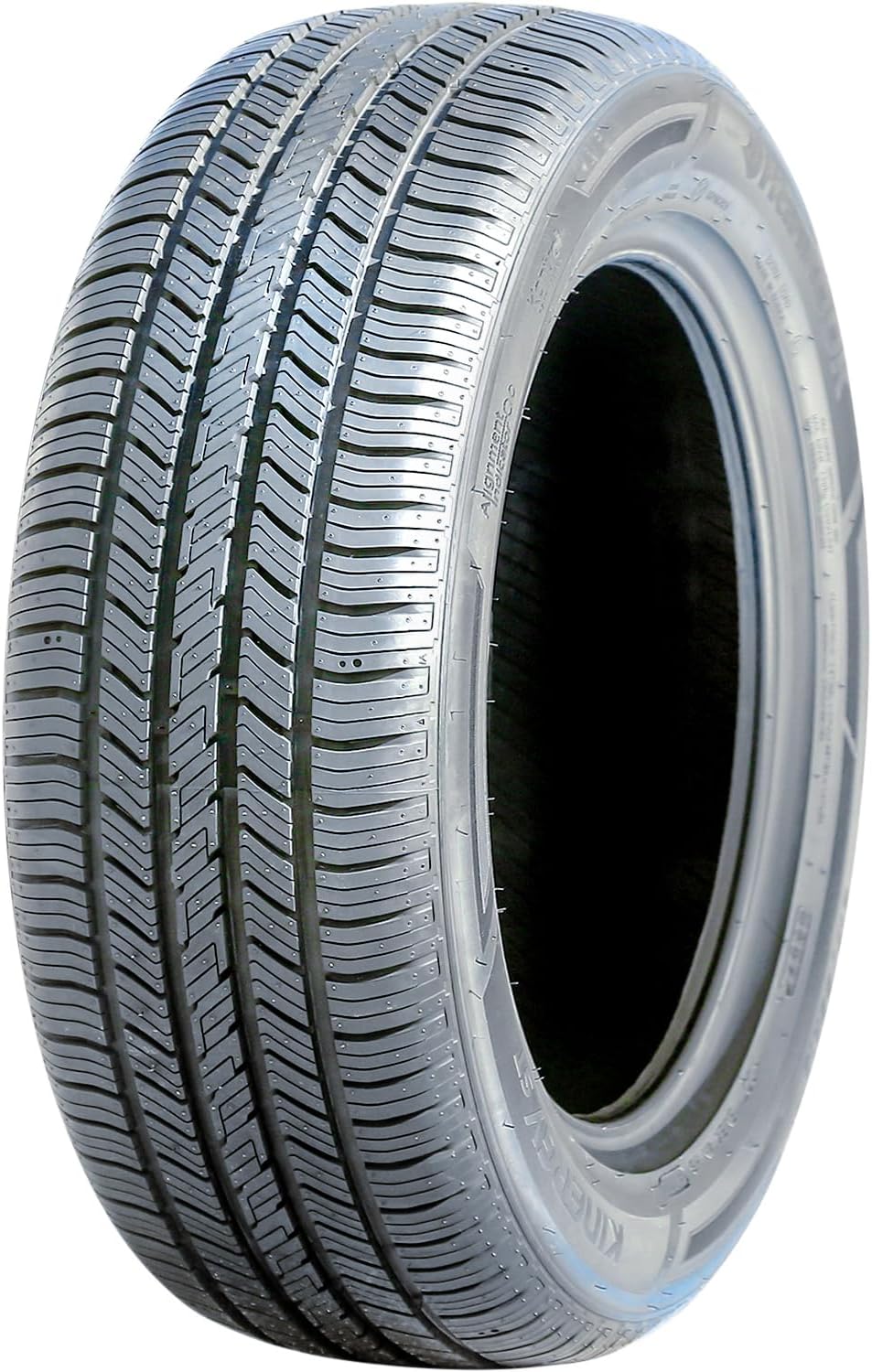
Hankook Kinergy ST (H735) All-Season Touring Tire 235/75R15
| Size | 235/75R15 |
|---|---|
| Load Capacity | 1201 Pounds |
| Tread Depth | 11 32nds |
| Maximum Pressure | 51 PSI |
| UTQG | 680AA |
The Hankook Kinergy ST H735 is a standard touring all-season tire built for steady, reliable use on light trucks and full-size pickups like the 2004-2008 Ford F-150 with 15-inch wheels. It combines a rigid center rib and optimized tread block stiffness for predictable dry handling and braking while four wide circumferential grooves evacuate water to help wet traction. The Dual-Filler system lowers rolling resistance, which supports longer tread life and can help fuel economy during highway driving. Owners report low road noise and smooth ride quality, and the tire carries a 680/A/A UTQG plus an advertised mileage warranty up to 70,000 miles. Limitations include load range L and the 105T index, so confirm load rating for heavier duty F-150 uses or towing; users who regularly carry heavy loads or need off-road capability should consider heavier-load tires. For everyday driving, commuting, and extended highway miles this tire delivers a quiet, durable, and confidence-inspiring package.
Best for: Drivers who prioritize dependable, long-lasting highway performance and a quiet comfortable ride for daily use and long-mileage driving on a 2004–2008 F-150 with 15-inch wheels.
Less Ideal for: People who regularly carry heavy payloads, tow large trailers, or need aggressive off-road traction should choose a higher load‑rated or off-road tire instead.
- Long tread life supported by Dual-Filler design and 70,000 mile warranty program
- Balanced wet and dry handling with rigid center rib and wide circumferential grooves
- Low rolling resistance that can improve fuel economy on highway driving
- Quiet, comfortable ride suitable for daily driving and long trips
- Load Range L and 105T load index may be marginal for frequent heavy towing or high payload F-150 use
Verdict: Choose the Kinergy ST H735 if you want a quiet, long‑wearing all‑season tire that delivers reliable highway performance for an F-150 used mostly for commuting and light hauling.
Fullway HP108 All-Season Performance Tire 255/50R20 109V XL

| Size | 255/50R20 |
|---|---|
| Load Capacity | 2271 Pounds |
| Tread Type | Asymmetrical |
| Load Range | XL |
| UTQG | Treadwear 380, Traction A, Temperature A |
The Fullway HP108 is an all-season performance radial aimed at drivers who need a capable, low-cost replacement tire for heavier light trucks or SUVs. It uses an asymmetrical tread and a 4-ply XL load range to deliver stable handling, confident cornering, and reliable wet traction while maintaining a quiet, comfortable ride on highways. The UTQG ratings (380 treadwear, A/A traction and temperature) suggest decent longevity and traction for everyday driving. Practical benefits include higher load capacity for heavier loads or towing and a construction that balances comfort with performance. Expect good value out of the set and straightforward installation and balancing. Limitations to note are that this is a budget brand tire, so you may encounter minor vibration at certain speeds on some vehicles and it is not a dedicated winter or off-road tire, so extreme snow or severe off-road conditions will expose its limits compared with specialty winter or premium all-terrain options.
Best for: A conservative buyer looking for an affordable, factory-replacement style all-season tire for light-truck use who prioritizes steady wet and dry performance and load carrying ability over premium-brand refinements.
Less Ideal for: Drivers who regularly encounter deep snow, ice, or serious off-road terrain should choose a dedicated winter or all-terrain tire instead.
- XL load rating and 4-ply construction support heavier loads and light towing
- Asymmetrical tread provides balanced dry and wet handling
- Quiet, comfortable highway ride reported by multiple users
- UTQG 380/ A/ A indicates reasonable tread life and traction for everyday use
- Not engineered as a winter-specific tire so performance in heavy snow or ice is limited
- Budget-brand construction can show minor vibration on some vehicles even after balancing
Verdict: A cost-conscious, all-season tire that gives the F-150 steady wet/dry performance and extra load capacity without the premium price.
Choosing the Right 2004-2008 Ford F-150 Tires: Key Factors to Consider
Tire Size and Load Rating
Matching the correct tire size and load rating to your 2004-2008 F-150 is the foundation of safe operation. The tire sidewall code determines circumference and effective gearing, which affects speedometer readout and ride height. More importantly, the load index tells you the maximum weight a tire can carry; when towing or carrying heavy payloads on an F-150, you should not rely on under-rated tires.
Using the proper load rating helps preserve suspension components and brakes by ensuring each tire supports its share of the vehicle's mass. Replacing a tire with one that has a lower load rating can cause premature wear and create unsafe handling. Conversely, an appropriate higher-rated tire can offer extra durability, though it may change ride feel slightly. Always consult the vehicle placard and use tires that meet or exceed the specified load capacity for your truck's configuration.
Tread Pattern and Traction
Tread design controls how a tire evacuates water, bites in loose surfaces, and maintains contact patch stability. For a 2004-2008 F-150 used in mixed conditions, choose a tread pattern that balances wet traction, dry grip, and self-cleaning capability for occasional light off-road use. Directional and asymmetric patterns often offer improved hydroplaning resistance, while blockier, open-shoulder designs help clear mud and gravel.
Tread compound and siping influence how a tire performs in colder temperatures and on slick roads. If you frequently drive in rain or on wet pavement, prioritize designs with channels and grooves sized to move water efficiently. Conversely, if dry highway miles dominate, look for patterns tuned for low rolling resistance and steady contact for even wear.
Tread Life and Wear Indicators
Tread life affects how often you replace tires and the overall cost of ownership for your F-150. Look for tires with measured or industry-standard treadwear ratings, and check manufacturer claims alongside independent tests where available. Built-in wear indicators on the tire let you visually judge remaining tread depth and plan replacements before performance degrades.
Even wear across the tread is a sign of proper setup and alignment. Rapid edge wear or feathering can signal alignment issues or improper pressures, which shortens service life. A tire with a longer predicted mileage may cost more up front but often saves time and money over the vehicle's life, especially for trucks that rack up highway miles.
Load-Carrying and Towing Capability
The 2004-2008 Ford F-150 is often used for towing and payload tasks, so the tire's load-carrying capability should be a primary consideration. Matching or exceeding the factory-specified load rating ensures stability when hauling and minimizes heat buildup under load. Tires with higher load indexes typically have reinforced construction that resists sidewall deformation when carrying or towing, helping maintain handling and braking performance.
If you tow frequently, consider tires designed to handle repeated heat cycles without structural fatigue. Proper inflation under load is critical; an adequately rated tire that is underinflated can still overheat and fail. Review recommended pressures for loaded and unloaded conditions and choose a tire with construction suited to your common towing scenarios.
Seasonal Performance and Climate Fit
Where you drive your F-150 matters. All-season tires offer year-round convenience for temperate climates but may sacrifice winter grip compared with dedicated winter tires. If you encounter snow or ice regularly, winter-rated tires deliver superior traction and braking in low temperatures because of compound and tread designs that remain flexible and bite into snow.
Consider how often you will switch between seasonal sets, storage needs, and whether the truck is used for towing in winter. For mixed climates, a premium all-season light-truck tire with good wet and light snow performance may be the best compromise. Make decisions based on typical winter severity and how critical snow traction is for your driving routine.
Ride Comfort, Noise, and Rolling Resistance
Tires influence NVH, fuel economy, and perceived ride quality. For a 2004-2008 F-150 used as a daily driver, comfort and low noise can make long drives less fatiguing. Tread pattern, compound, and sidewall design all contribute to road noise and how vibrations transmit through the chassis.
Rolling resistance impacts fuel economy; tires optimized for low rolling resistance can reduce fuel consumption slightly over thousands of miles. However, these compounds sometimes trade a small amount of grip or tread life for improved economy. Balance your priorities between comfort, economy, and traction when selecting a tire.
Common Tire Sizes and What They Mean
The 2004-2008 F-150 commonly uses a range of light-truck tire sizes depending on cab, bed, and wheel configurations. Understanding the sidewall code helps you keep speedometer accuracy and maintain proper gearing and clearance. Replacing a tire with a different overall diameter can alter ride height and instrument readings.
When selecting a replacement tire, match the load index and ensure the overall diameter stays within a safe range of the original equipment. If you opt for a larger or taller tire for aesthetics or off-road clearance, check for rubbing on fenders and recalibrate the speedometer if necessary.
- Check the vehicle placard for original size and recommended inflation.
- Keep overall diameter within roughly 3 percent of stock to avoid drivetrain or ABS issues.
- Confirm wheel backspacing and clearances when changing tire profile or rim diameter.
Winter Driving Options for This F-150
If you face seasonal snow and ice, dedicated winter tires provide significantly better traction than all-season options. Winter tires use softer compounds and aggressive siping to maintain grip in freezing temperatures and to bite into snowy surfaces.
Consider a winter set sized to maintain adequate load rating for towing and payload needs. Using a proper winter tire during the cold months keeps braking and steering predictable compared with relying on an all-season tire in severe conditions.
- Look for the three-peak mountain snowflake symbol when selecting winter tires.
- If you tow in winter, match or exceed the load rating of your regular tires.
- Swap back to all-season or summer tires when temperatures consistently rise to preserve winter tread life.
Maintaining Tire Life on an Older F-150
Regular maintenance extends the usable life of any tire. For the 2004-2008 F-150, keep a schedule of periodic pressure checks, rotation, and visual inspections to spot uneven wear early. Proper inflation prevents excessive shoulder or center wear and reduces the risk of heat buildup under load.
Rotation patterns suited to the vehicle's drive layout help equalize wear across the four tires. Address alignment or suspension issues promptly to avoid accelerated or uneven wear patterns that shorten service intervals.
- Check tire pressures monthly and before heavy towing.
- Rotate tires every 5,000 to 7,500 miles depending on wear patterns.
- Inspect sidewalls and tread for cuts, bulges, or embedded debris regularly.
Understanding Load Ratings and Towing Safety
Tire load ratings correlate directly with towing capability and safety margins. When towing a trailer or carrying heavy payloads, each tire must support its portion of the vehicle weight plus cargo. Overloading any tire can lead to overheating, tread separation, or sudden failure.
Plan tire selection around your typical towing weight, and if you often approach the vehicle's towing limits, consider tires with a higher load index. Also, adjust cold inflation pressures to the manufacturer-specified level for loaded conditions to maintain structural integrity and handling.
- Consult your owner's manual for gross vehicle weight and recommended tire pressures.
- When in doubt, select a tire with a higher load index rather than a lower one.
- Recheck pressures after long drives or heavy towing.
When to Replace Tires on a 2004-2008 F-150
Knowing when to replace tires balances safety and cost. The legal minimum tread depth is only a baseline; many safety-minded owners replace tires earlier to preserve wet traction and braking. Watch for the tread wear indicators built into the grooves and measure remaining depth with a gauge.
Other replacement triggers include visible damage, repeated punctures, sidewall bulges, or age-related rubber degradation. Even if tread depth seems acceptable, tires older than six to ten years may lose structural integrity and should be inspected by a professional.
- Use a tread depth gauge and consider replacement when depth approaches 4/32 inch for wet conditions.
- Replace immediately if you find cuts, bulges, or exposed cords.
- Factor tire age into decisions even if tread appears usable.
Still looking for the perfect fit?
Select your Ford F-150 configuration to see the most relevant Tires recommendations
How We Chose the Best 2004-2008 Ford F-150 Tires
We applied a truck-focused evaluation to identify five tires that balance durability, traction, and load capability for the 2004-2008 Ford F-150. Selection began by filtering for sizes and load indexes commonly factory-fitted or commonly used as replacements on that model years. We prioritized tires with clear load ratings and speed ratings appropriate for light-duty pickup use, since improper load capacity is a primary safety concern for F-150 owners. Key evaluation criteria included wet and dry traction performance, tread compound and pattern for expected mileage, and measured or stated treadwear indicators that assist with maintenance. We also assessed predicted tread life and warranty coverage, rolling comfort and noise characteristics, and resistance to punctures or sidewall damage relevant to common driving conditions. Records of consistent manufacturing quality and availability of replacement sizes were considered. Excluded from the list were tires designed exclusively for high-performance sports cars, specialty racing tires, or heavy commercial light-truck tires outside the normal load range for the 2004-2008 F-150. We focused on passenger and light-truck tires that meet the load and handling needs of daily driving, towing, and occasional off-road use for these model years.
Our full evaluation process is outlined in our review methodology.
FAQ
How do I find the correct tire size for my 2004-2008 F-150?
Check the tire placard on the driver door jamb or the original owner manual for the factory size and load rating. If the truck has aftermarket wheels, review the sidewall markings on the current tire for size and load index and consult a tire professional before changing diameters.
Can I use all-season tires year-round on this F-150?
All-season tires work year-round in mild climates, but they underperform in heavy snow and ice compared with winter tires. If your area sees regular winter storms, switch to dedicated winter tires during the cold months for better braking and control.
How often should I rotate tires on my F-150?
Rotate tires every 5,000 to 7,500 miles or at every other oil change, depending on wear patterns. Regular rotation promotes even wear and helps extend tread life, especially on trucks that tow or carry uneven loads.
What tire pressure should I use when towing?
Use the cold inflation pressures recommended on the vehicle placard for loaded or towing conditions. Heavier loads typically require higher pressures, but never exceed the maximum pressure stamped on the tire sidewall.
How can I tell if a tire needs replacing because of wear?
Look for built-in tread wear indicators inside the grooves and use a tread depth gauge. Also check for uneven wear, sidewall damage, or bulges. Replace tires showing significant uneven wear or damage, even if tread depth seems acceptable.
Is tire balancing and alignment important for the F-150?
Yes. Proper wheel balancing reduces vibration and prevents premature uneven wear, while alignment ensures the tires contact the road correctly. Both are important after replacing tires or if you notice uneven wear or pulling.
Final Verdict
Prioritize tires that meet or exceed the factory load rating and match the real-world use of your 2004-2008 Ford F-150. Focus on tread designs and compounds that suit your climate and towing habits, and maintain proper inflation and rotation to get the most life from whichever tires you choose. Balancing traction, durability, and comfort will lead to the best overall outcome for daily driving, hauling, or seasonal needs. Use the decision factors above to narrow options and pick a tire that aligns with your typical loads and driving conditions for reliable performance.
Explore More:
- Check out all Ford F-150 parts & accessories
- Explore Tires Maintenance & Repair Guides
- Explore Wheels & Tires
- Browse all Auto Parts
