
Note: This article contains affiliate links. If you click on these links and make a purchase, I may earn a small commission at no extra cost to you. This helps support my research and content. Read my full affiliate disclosure here.
If you drive a 2009-2014 Ford F-150 you need tires that match the truck's weight, usage, and weather exposure. The right tires affect braking, ride comfort, fuel economy, and how much load you can carry or tow. This guide focuses on vetted options suited to the F-150 from those model years and explains the tradeoffs between traction, durability, and load rating. Below are the top shortlisted tires for this F-150 range, chosen for real-world reliability and performance. We evaluated wet and dry traction, treadwear life, puncture resistance, payload capacity, and ride characteristics to narrow the list. Read on to find the tire type and features that fit how you use your truck.
Looking for other parts? See all Ford F-150 parts & accessories.
Top Picks at a Glance
| Best Overall The best all-around choice for most situations | Goodyear Wrangler Territory AT 265/70R16 All-Terrain Tire |  |
| Best Quality Built to a higher standard if you want something more solid | Goodyear Wrangler DuraTrac LT275/65R20 All-Terrain Tire |  |
| Best Value The sweet spot between price and what you get | NEXEN Roadian ATX All-Terrain Tire 275/55R20 117T XL |  |
| Best Budget The cheapest option that still gets the job done reliably | Zeetex ZT3000 Performance Tire 235/75R15 109T |  |
| Highest Rated A top-rated pick with lots of positive feedback | Mastertrack BADLANDS AT LT245/75R16 All-Terrain Tires (Set of 4) |  |
| Most Popular A crowd favorite that many people choose with confidence | Forceum M/T 08 Plus Mud-Terrain Tires — Set of 4 (235/75R15) |  |
| Best Seller A high-volume bestseller chosen again and again | Hankook Kinergy ST (H735) All-Season Touring Tire — 235/75R15 105T |  |
Goodyear Wrangler Territory AT 265/70R16 All-Terrain Tire

| Size | 265/70R16 |
|---|---|
| Tread Depth | 10 32nds |
| Construction Type | Radial |
| Load Range | SL |
| Maximum Pressure | 51 PSI |
The Wrangler Territory AT is an all-terrain tire aimed at drivers who need year-round capability without sacrificing ride comfort. Its multi-angle sipes and symmetrical all-terrain tread deliver predictable traction on wet pavement and light off-road surfaces, while the original-equipment tuned radial construction keeps highway noise and ride harshness in check. Buyers will appreciate the deep 10/32nds tread for longer wear and the 580-A-B UTQG rating that signals a focus on tread life and wet traction. The tire is built with a universal light-truck fit and a maximum pressure rating that supports typical F-150 loads when mounted in the correct size. Trade-offs include a more aggressive tread pattern than a touring tire, so it will be slightly louder and less fuel-efficient than a highway-focused tire. For owners who mix daily driving with occasional dirt roads or gravel, this tire balances durability, traction, and comfort for a fuller range of use on a 2009-2014 Ford F-150.
Best for: Owners who want a single tire that handles daily highway driving and occasional gravel or dirt roads while prioritizing durability and predictable wet traction.
Less Ideal for: Drivers who only do long-distance highway miles and prioritize lowest possible road noise and maximum fuel economy should consider a highway-terrain or touring tire instead.
- All-terrain tread pattern provides versatile year-round traction on pavement and light off-road surfaces
- Multi-angle sipes improve wet-weather grip and small-surface traction
- Original-equipment tuned construction prioritizes a comfortable highway ride for truck use
- Deep 10/32nds tread depth offers potential for longer wear life
- UTQG 580-A-B indicates balanced treadwear and wet traction performance
- Aggressive all-terrain tread will be louder and slightly less fuel-efficient than highway-focused tires
Verdict: A balanced all-terrain choice that gives 2009–2014 F-150 drivers dependable year-round traction and lasting tread life without sacrificing ride comfort.
Goodyear Wrangler DuraTrac LT275/65R20 All-Terrain Tire

| Rim Size | 20 Inches |
|---|---|
| Load Index | 126 |
| Speed Rating | Q |
| Load Capacity | 3748 Pounds |
| Ply | 12-Ply |
The Goodyear Wrangler DuraTrac is an all-terrain light truck tire built to deliver strong traction off-road while remaining usable on pavement. It uses aggressive center tread blocks, zigzag microgrooves, and thousands of biting edges to grip mud, gravel, and packed snow; an optional stud configuration and the Mountain/Snowflake rating mean it can handle severe winter conditions when needed. The tire’s reinforced 12-ply construction, rim protector sidewall, and high-density nylon belt point to a focus on durability and load carrying for heavier trucks and towing. On road the DuraTrac gives predictable handling and improved braking thanks to a solid center rib, though the open tread pattern can produce more road noise and slightly higher rolling resistance than highway-focused tires. Expect confident off-road grip, long wear if rotated regularly, and a firmer ride compared with softer highway tires. For a 2009–2014 F-150 needing capable off-road performance and strength for towing, this tire balances traction and toughness at the cost of some cabin quietness and fuel economy.
Best for: Buyers who prioritize off-road traction, towing strength, and year-round capability on a 2009–2014 F-150 and are willing to accept a firmer, louder ride for tougher performance.
Less Ideal for: Drivers who mainly commute on highway and prioritize low noise, soft ride, or maximum fuel economy should consider a highway or touring light-truck tire instead.
- Aggressive tread and microgrooves provide strong mud, gravel, and snow traction.
- 12-ply construction and rim protector sidewall increase durability and resistance to damage.
- Solid center rib and wide grooves help braking performance and water evacuation.
- Mountain/Snowflake rating and optional studs for improved severe-snow capability.
- Designed load capacity and 80 PSI max for heavy loads and towing applications.
- Open aggressive tread can be noticeably noisier on highway driving than highway tires.
- Heavier construction increases rolling resistance which can reduce fuel economy.
- More firm ride quality compared with dedicated highway touring tires.
Verdict: Choose the DuraTrac when you want a durable, traction-first tire for an F-150 that will handle off-road conditions and heavy loads better than highway-oriented tires.
NEXEN Roadian ATX All-Terrain Tire 275/55R20 117T XL

| Size | 275/55R20 |
|---|---|
| Load Index | 117 |
| Speed Rating | T |
| Load Range | XL |
| Tread Depth | 12.5 32nds |
The NEXEN Roadian ATX is an all-terrain 275/55R20 tire aimed at drivers wanting capable off-road traction without giving up on-road comfort. It uses a symmetrical tread with 3D sipes and deeper tread depth to bite into snow, mud, and wet surfaces while the puncture-resistant sidewall and reinforced multi-ply construction add durability for heavy loads and rough trails. Typical use is mixed daily driving and occasional off-road work where drivers need confidence in poor weather; the tire is Three Peak Mountain Snowflake certified for severe snow performance and includes a high load index and XL load range for heavier trucks. On pavement the design balances grip and a relatively quiet ride compared with more aggressive MT tires, though true mud-terrain traction and the very longest wear claims will depend on driving style. Buyers should note this is a single tire listing and fitment must match the F-150's recommended 275/55R20 size and load rating.
Best for: A practical buyer who wants a single tire that balances off-road capability, winter traction, and everyday comfort for a Ford F-150 in need of a 275/55R20 fitment.
Less Ideal for: Drivers who plan extensive rock crawling or extreme mud use and those seeking a purpose-built mud-terrain tire for aggressive off-road performance.
- Year-round all-terrain tread with 3D sipes for improved snow, mud, and wet traction
- Reinforced multi-ply sidewall and puncture guards increase durability off-road
- High load index and XL rating supports heavier truck loads and towing
- Relatively quiet and comfortable on-road behavior for an AT tire
- Listing is for a single tire so buyers must purchase four and confirm proper load rating for their truck
Verdict: Pick these if you want a durable, snow-capable all-terrain 275/55R20 that balances off-road grip and everyday comfort for a Ford F-150.
Zeetex ZT3000 Performance Tire 235/75R15 109T

| Rim Size | 15 Inches |
|---|---|
| Load Index | 109.0 |
| Speed Rating | T |
| Load Capacity | 2900 Pounds |
| Tread Type | Asymmetrical |
The Zeetex ZT3000 is a budget-oriented all-season radial offered in 235/75R15 with an asymmetrical tread pattern and a 109 load rating. It is intended as a universal fit passenger performance tire for everyday driving and light hauling, delivering a smooth, quiet ride and straightforward mounting at most tire shops. The high load index and 2900-pound capacity make it a practical choice for trucks or heavy loads within its rated limits, while the 12/32 tread depth suggests decent longevity for the price. Expect competent wet and dry grip for general driving, though it is not a dedicated off-road or winter specialist. Buyers should note it carries a T speed rating, so higher-speed use is limited, and the single-ply construction indicates lightweight construction rather than heavy-duty commercial duty. For drivers focused on low cost per mile and acceptable all-season performance, the ZT3000 is a sensible economical option; those wanting top-tier handling, extreme weather traction, or heavier-duty construction should consider more specialized tires.
Best for: Buyers prioritizing low cost per tire who need a competent all-season replacement for everyday driving and occasional hauling on a 2009–2014 F-150.
Less Ideal for: Drivers who regularly carry very heavy loads, tow frequently at highway speeds, or need high-performance handling or specialized winter traction should choose a heavier duty or higher-performance tire instead.
- Attractive price point for budget-focused buyers
- 109 load index and 2900 lb capacity suitable for light truck loads
- Asymmetrical tread and 12/32 depth provide balanced wet and dry performance and reasonable wear life
- Universal fit and common 15-inch rim size make installation simple at most shops
- T speed rating limits high-speed performance compared with higher-rated tires
- Single-ply construction is lighter duty than reinforced commercial tires
Verdict: A cost-conscious all-season tire that gives F-150 owners solid load capacity and decent everyday performance without the premium cost of specialized tires.
Mastertrack BADLANDS AT LT245/75R16 All-Terrain Tires (Set of 4)

| Size | LT245/75R16(10PR) |
|---|---|
| Load Capacity | 3042 Pounds |
| Tread Depth | 15.3 32nds |
| Maximum Pressure | 80 PSI |
| Construction Type | Radial |
The Mastertrack BADLANDS AT in LT245/75R16 is an all-terrain tire intended for light trucks and SUVs that need reliable year-round traction and tougher off-road resistance. You would use these as a direct replacement when you want a more aggressive tread than highway tires but still need manageable road manners for daily driving. Notable features include a wear-resistant compound with a 50,000-mile limited warranty, deep circumferential grooves that help channel water, and an aggressive self-cleaning shoulder pattern that ejects mud and rocks. The reinforced casing adds puncture and impact resistance for trail use or rough rural roads, and Mastertrack includes a three-year road hazard warranty for certain failures. On pavement the tires deliver confident wet braking and a smoother ride than their looks suggest, while on loose or muddy surfaces they maintain grip and shed debris. Expect a bit more road noise and slightly firmer ride compared with touring tires, and long-term durability beyond the warranty will depend on alignment and driving conditions.
Best for: Buyers who prioritize dependable traction and longevity on a mix of pavement and rough roads and want a tire that can handle occasional trail use without frequent replacement.
Less Ideal for: Drivers who prioritize the quietest possible highway ride or who do mostly long-distance highway mileage and want the softest, most fuel-efficient touring tire.
- Aggressive self-cleaning tread improves traction in mud, snow, and gravel
- Wear-resistant compound backed by a 50,000-mile limited treadwear warranty
- Deep circumferential grooves reduce hydroplaning and improve wet braking
- Reinforced casing provides added resistance to cuts and impacts during off-road use
- More road noise and firmer ride than highway-oriented tires
Verdict: Choose these tires if you want a rugged, long-wearing all-terrain tire that trades a bit of road quiet for stronger wet and off-road performance suitable for a 2009–2014 F-150.
Forceum M/T 08 Plus Mud-Terrain Tires — Set of 4 (235/75R15)

| Size | 235/75R15 |
|---|---|
| Load Capacity | 1819 Pounds |
| Load Range | C |
| Construction Type | Radial |
| UTQG | 400 AA A |
The Forceum M/T 08 Plus is a mud-terrain tire pack aimed at light trucks and SUVs that need strong off-road traction without giving up basic on-road manners. Its aggressive tread and self-cleaning pattern eject mud and snow to preserve grip, while a center rib improves steering response and straight-line stability. Buyers typically use these on mixed-duty trucks that spend time on dirt, mud, or occasional snow but still drive on pavement to reach trails. Construction is radial with a 6-ply, Load Range C rating, so the tires handle heavier loads common on work rigs and off-road builds. Reviewers report good initial ride quality and surprisingly reasonable noise for mud tires, though very high-speed pavement refinement and long-term wear life are less certain. These tires come as a four-pack sized 235/75R15 and carry a UTQG of 400 AA A, which indicates a balance of tread life and traction. If you prioritize aggressive off-road grip and stable steering for light trucks, the M/T 08 Plus delivers; drivers seeking a quiet highway touring tire or a documented long-term mileage record should consider alternatives.
Best for: Buyers who want a cost-conscious mud-terrain that performs well off-road and still behaves acceptably on pavement, backed by many positive owner reports and real-world use.
Less Ideal for: Drivers who prioritize quiet, long-haul highway comfort or need a tire with established long-term mileage warranties should look at dedicated highway or all-terrain touring options instead.
- Aggressive mud-terrain tread with self-cleaning pattern for strong off-road and mud traction
- Center rib that improves steering responsiveness and straight-line stability
- 6-ply, Load Range C construction for better load-handling on light trucks
- Set of four ensures matched tread and consistent handling across an axle
- Road refinement and long-term tread life are not clearly established compared with premium mainstream brands
Verdict: A practical, budget-friendly mud-terrain choice for F-150 owners who want strong off-road grip and stable steering without paying premium brand prices.
Hankook Kinergy ST (H735) All-Season Touring Tire — 235/75R15 105T
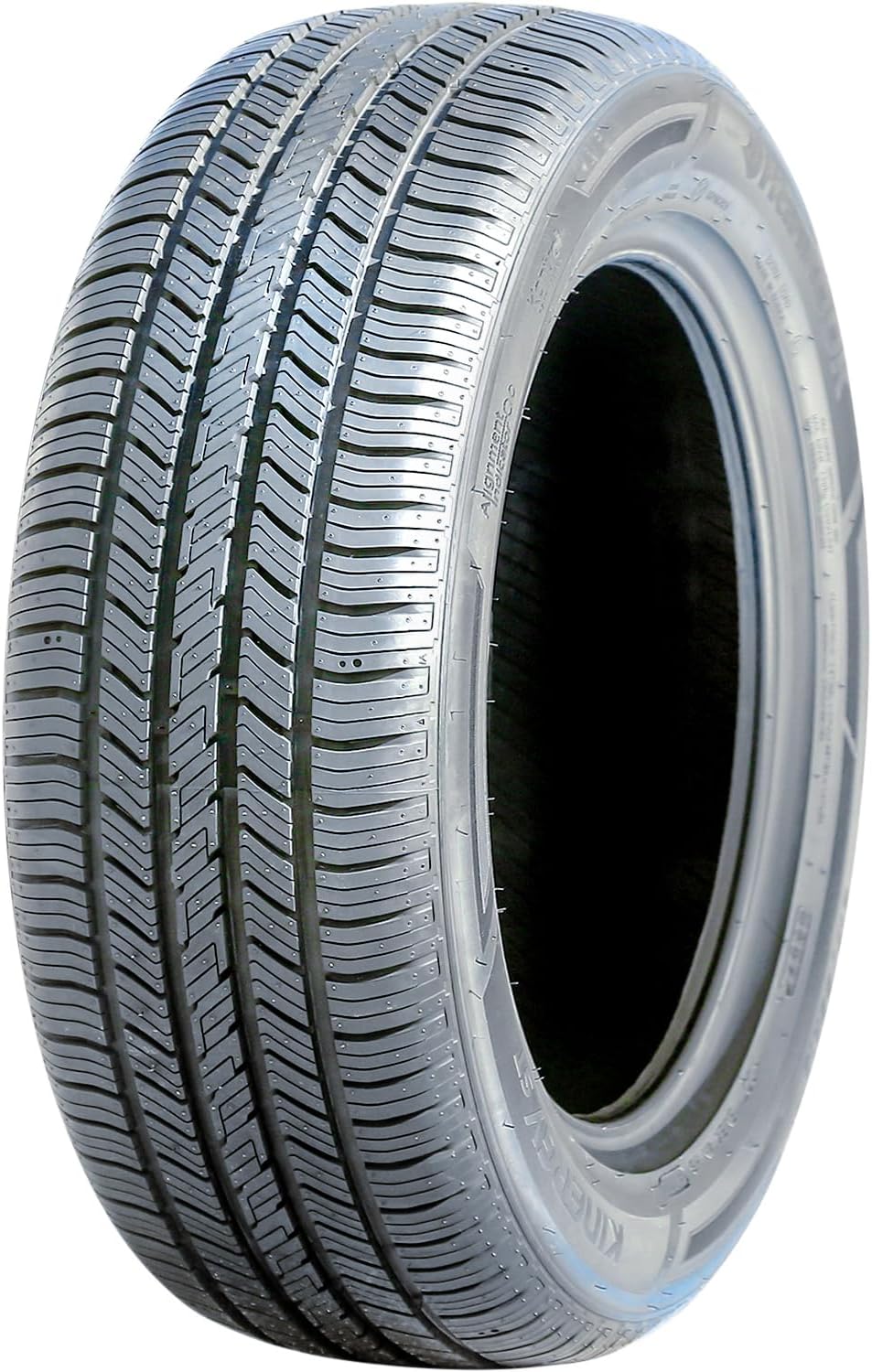
| Size | 235/75R15 |
|---|---|
| Load Capacity | 1201 Pounds |
| Tread Depth | 11 32nds |
| Maximum Pressure | 51 PSI |
| UTQG | 680AA |
The Hankook Kinergy ST H735 is a touring all‑season radial built to deliver quiet, confident daily driving and long tread life on light trucks and full‑size pickups equipped with 15‑inch wheels. Its rigid center rib and symmetric tread deliver stable steering and predictable dry braking while four wide circumferential grooves help evacuate water for improved wet traction. The tire emphasizes low rolling resistance through a dual‑filler system, which helps mileage and fuel economy, and the optimized tread block stiffness reduces irregular wear for longer service life. In practical terms this means a comfortable, low‑noise ride for commuting, highway driving, and light load hauling, plus decent performance in rain and light snow. Limitations are its all‑season focus: it is not a specialized winter tire for heavy snow or ice and load range L means buyers should confirm the load rating matches their F‑150 configuration and towing needs before fitting. Expect good value if you prioritize quiet, durable, everyday performance over extreme off‑road or severe winter capability.
Best for: Drivers who want a quiet, durable tire for everyday driving on a 2009–2014 Ford F‑150 and who prioritize predictable wet/dry performance and long mileage over specialized winter or off‑road capability.
Less Ideal for: Drivers who regularly face deep snow, sustained icy conditions, heavy towing, or serious off‑road use should choose a winter or heavier duty tire with a higher load rating instead.
- Designed for long tread life with a dual‑filler system and optimized tread block stiffness
- Symmetric tread and rigid center rib for stable steering and predictable dry handling
- Four wide circumferential grooves improve water evacuation and wet traction
- Low rolling resistance helps improve fuel economy and reduces running costs
- All‑season design is not optimized for heavy snow, ice, or deep winter conditions
Verdict: A quiet, long‑wear all‑season tire that gives risk‑averse F‑150 owners dependable everyday traction and mileage without sacrificing comfort.
Choosing the Right 2009-2014 Ford F-150 Tires: Key Factors to Consider
Load Rating and Ply Construction
Load rating determines how much weight each tire can safely carry, which is vital for an F-150 that often hauls cargo or tows. Choose tires with a load index that meets or exceeds the vehicle's recommended rating, especially if you frequently carry heavy payloads or tow trailers. Higher ply-equivalent or reinforced sidewalls improve heat resistance under load and reduce the risk of tire failure when the truck is loaded.
Ply construction also affects ride and durability. Heavier-duty constructions can reduce flex under load but may increase road noise and firm up the ride. For mixed use—daily driving plus occasional towing—select a tire that balances a suitable load rating with acceptable comfort. Verify the placard or owner manual for the correct minimum load index and match replacement tires accordingly.
Tread Compound and Seasonal Performance
Tread compound controls grip in different temperatures and road conditions. Softer compounds usually bite better in cold and wet conditions but can wear faster in warm climates. For owners in areas with snow and ice, a tire with a compound and siping designed for winter traction is important to maintain braking distances and stability.
All-season designs aim to offer a compromise across temperature ranges, while dedicated winter tires provide significantly better cold-weather grip. Consider where and when you drive most; buyers who rarely face snow may prefer longer-wearing all-season compounds, whereas drivers in snowy regions should prioritize winter-capable tread designs.
Tread Pattern and Water Evacuation
Tread design affects hydroplaning resistance and wet braking. Tires with wide circumferential grooves and well-placed lateral channels shed water more effectively, helping maintain contact during heavy rain. Aggressive tread blocks and siping patterns improve traction on loose surfaces but can increase road noise.
If you encounter frequent wet roads or standing water, select a tire with proven water evacuation features. For mixed on/off-road use, consider patterns that balance void area for mud clearance with continuous ribs for highway stability to preserve steering feel at speed.
Treadwear Rating and Expected Service Life
Treadwear metrics give a baseline for how long a tire may last under normal driving. Higher-rated compounds generally offer longer mileage before replacement, which matters for owners who log many highway miles. Keep in mind that heavy loads, aggressive driving, and unbalanced alignment can accelerate wear.
Inspect the tread wear indicator bars and understand that real-world longevity will vary. Factor replacement intervals into ownership costs and select a tire whose expected life matches your driving patterns—longer-wearing tires for high-mileage commuters, and more aggressively treaded options for work trucks that prioritize traction over mileage.
Sidewall Strength and Puncture Resistance
A robust sidewall helps protect against impacts from curbs, rough roads, and jobsite hazards. Reinforced sidewalls or protective rim guards reduce the chance of sidewall cuts that can lead to blowouts or irreparable damage. Tires intended for light off-road or construction use should prioritize reinforced sidewalls and durable rubber formulations.
Puncture resistance in the tread area is also important for trucks that travel on poorly maintained roads. Tires with optimized tread compounds and internal belt designs resist cuts and punctures better, reducing downtime and the frequency of roadside repairs.
Ride Comfort, Noise, and Handling
Tires influence steering feel, ride harshness, and cabin noise. A tire built for load capacity and durability may trade some comfort for improved strength. For an F-150 used daily on highways, look for tires that balance a compliant sidewall with tread patterns engineered to minimize harmonic noise.
Handling characteristics such as steering response and lateral grip are important if you drive at higher speeds or tow. A tire that provides predictable handling contributes to driver confidence, while excessive road noise or a stiff ride can make long trips more fatiguing.
Choosing the Right Tire Size for Your F-150
Confirm the wheel and tire dimensions stamped on the door placard or owner manual for your 2009-2014 F-150. Stock sizes vary by trim and optional packages, so matching the correct diameter, section width, and aspect ratio preserves speedometer accuracy and load rating.
If you plan to increase wheel diameter or fit larger tires, ensure the new size maintains an appropriate overall diameter and load-carrying capacity. Wider or taller tires can change handling and may require suspension or gearing adjustments.
- Check the vehicle placard for recommended tire sizes and cold inflation pressures.
- When upsizing, confirm wheel well clearance, turning radius, and speedometer calibration.
- Retain or exceed the original load index when changing sizes.
Winter and All-Season Options for Cold Climates
If you encounter regular snow or icy roads, prioritize dedicated winter-rated tires or all-season tires with a winter performance indication. Winter tires use specialized rubber compounds and tread designs that remain pliable in low temperatures and provide superior bite in snow.
All-season tires with strong wet and light snow performance can suit regions with mild winters, but they will not match the stopping distances of a true winter tire in heavy snow or black ice.
- Look for snow-optimized siping and compound for consistent low-temperature grip.
- Consider a separate winter wheel set to simplify seasonal changes and preserve tread life.
Tire Maintenance: Rotation, Balancing, and Alignment
Regular maintenance extends tire life and preserves performance. Rotate tires at recommended intervals to even out wear patterns across the axle. Proper balancing reduces vibration and uneven shoulder wear, while correct alignment prevents premature edge wear and improves handling.
After installing new tires or making suspension changes, have wheel alignment checked to ensure the truck tracks correctly. Pay attention to any vibration or pulling, which can indicate a balance or alignment issue that needs correction.
- Rotate every 5,000 to 7,500 miles or according to the owner's manual.
- Balance tires when new and whenever you detect vibration.
- Check alignment annually or after hitting potholes or curbs.
Understanding Load Range and Inflation Pressure
Load range indicates the tire's capacity and recommended inflation pressures for different loads. For hauling and towing, follow the load/inflation tables provided by tire manufacturers to maintain the tire's load-carrying capabilities and control heat buildup.
Underinflation increases flex, heat, and the risk of tire damage under load, while overinflation reduces the contact patch and can shorten tread life. Use the vehicle placard pressures as a baseline and adjust within manufacturer recommendations when the truck is carrying heavy loads.
- Check cold inflation pressure before driving for best accuracy.
- Increase pressure according to the load/inflation chart when carrying heavy cargo.
- Do not exceed the maximum inflation printed on the tire sidewall.
When to Replace Tires and Monitoring Tread Wear
Monitor tread depth and look for signs of uneven wear, bulges, or cuts. Replace tires when tread reaches the minimum legal depth or when treadwear indicators become flush with the tread. For safety and stopping distance, consider replacement earlier if performance has noticeably degraded.
Use a tire tread depth gauge or the built-in tread wear indicators. Also inspect for cracking, sidewall damage, and age-related rubber hardening; even with acceptable tread depth, tires older than six years may need replacement depending on condition.
- Replace tires when tread depth falls to 2/32 inch or sooner for wet/snow-prone drivers.
- Check for uneven wear that could indicate alignment or suspension problems.
- Factor in age-related degradation when assessing replacement even if tread depth is adequate.
Matching Tires to Typical Use Cases
Select tires that reflect how you use the F-150. If your truck is primarily a daily driver with occasional light hauling, prioritize low noise, long tread life, and comfortable ride. For regular towing or heavy cargo, prioritize load rating, reinforced construction, and heat resistance.
For frequent off-road or jobsite use, choose tires with stronger sidewalls and a tread pattern that resists chipping and cuts. Understand that specialty choices for work or off-road traction can increase road noise and reduce highway mileage.
- Daily commuting: focus on low rolling resistance and ride comfort.
- Towing/heavy load: focus on load rating and heat dissipation.
- Light off-road: prioritize sidewall strength and puncture resistance.
Still looking for the perfect fit?
Select your Ford F-150 configuration to see the most relevant Tires recommendations
How We Chose the Best 2009-2014 Ford F-150 Tires
We looked for tires that address the specific demands of the 2009-2014 Ford F-150, where vehicle weight, typical payload, and varied driving conditions are key. Primary evaluation criteria included wet and dry traction performance, because braking and emergency handling matter most for safety; load rating and construction, to ensure tires can support towing and cargo without excessive heat buildup; treadwear and durability, which affect replacement intervals and total cost of ownership; and ride comfort and noise, to preserve the pickup's daily drivability. We also weighed seasonal performance and winter capability for owners in colder climates, including tread compound and siping design. Resistance to punctures and sidewall strength were considered for trucks used off pavement or on jobsites. Fuel economy impact and rolling resistance were assessed to highlight efficiencies for high-mileage drivers. Finally, we checked compatibility with common OEM wheel sizes and recommended replacement dimensions for the specified model years. Exclusions: we excluded tires not available in sizes that fit the 2009-2014 F-150 stock wheel and common upgraded fitments, specialty passenger car sizes, and options with insufficient load capacity for typical light-truck duties. Tires with unclear manufacturer load information or lacking consumer performance data were not considered.
Our full evaluation process is outlined in our review methodology.
FAQ
How do I know the correct tire size for my 2009-2014 F-150?
Check the tire placard on the driver door jamb or consult the owner manual for factory-recommended sizes and pressures. If you changed wheels, confirm the stamped wheel size and match tires that maintain overall diameter and load index.
How often should I replace tires on my F-150?
Replacement depends on wear and usage, but many tires need replacing around 40,000 to 70,000 miles under normal driving. Inspect tread depth, sidewalls, and age; replace earlier if you see rapid wear, visible damage, or reduced wet traction.
Can I use all-season tires year-round on my F-150?
All-season tires work well in mild climates and provide balanced performance, but they do not perform as well as winter-rated tires in heavy snow and ice. If you frequently encounter severe winter conditions, dedicated winter tires are the safer choice.
What inflation pressure should I run when towing with the F-150?
Start with the pressures listed on the vehicle placard and consult tire load/inflation charts for higher loads. Increasing pressure within the manufacturer's recommended limits helps manage heat and load capacity when towing; never exceed the tire's maximum inflation listed on the sidewall.
Does rotating and balancing really extend tire life?
Yes, regular rotation evens tread wear across positions, and balancing reduces vibration that causes uneven wear. Together with proper alignment, these maintenance steps prolong tread life and sustain handling characteristics.
How can I tell if my tires have a sufficient load rating?
The tire sidewall shows a load index number and a load range or ply rating. Compare the tire's rated load per tire to the vehicle's gross axle weight rating and expected cargo. Choose tires whose combined rated load comfortably exceeds the typical loads you carry.
Final Verdict
Pick tires that match how you use your 2009-2014 Ford F-150 and prioritize load rating, wet traction, and tread life accordingly. For frequent towing or heavy cargo choose reinforced constructions and higher load indexes; for daily driving prioritize comfort and long-wearing compounds. Regular maintenance, proper inflation, and timely rotations will preserve performance and safety, helping you get the most from whichever tire type you choose.
Explore More:
- Check out all Ford F-150 parts & accessories
- Explore Tires Maintenance & Repair Guides
- Explore Wheels & Tires
- Browse all Auto Parts
