

Note: This article contains affiliate links. If you click on these links and make a purchase, I may earn a small commission at no extra cost to you. This helps support my research and content. Read my full affiliate disclosure here.
Replacing or upgrading the exhaust manifold on a Ford F-150 3.5L matters more than many owners realize. A properly matched manifold restores exhaust flow, reduces backpressure, and helps prevent common issues such as exhaust leaks that can affect performance, fuel economy, and cabin noise. For trucks used for towing or heavy-duty driving, heat management and sealing reliability are especially important.This guide presents six shortlisted exhaust manifolds chosen for fitment and durability on the Ford F-150 3.5L. We evaluated candidates across sealing, thermal control, and long-term reliability so you can quickly narrow options that suit daily driving, towing, or replacement needs. Read on for the factors that should guide your choice and practical installation and diagnostic advice.
Looking for other parts? See all Ford F-150 parts & accessories.
Top Picks at a Glance
| Best Overall The best all-around choice for most situations | ALEXAPRO Turbo Exhaust Manifold Install Kit for Ford 3.5L |  |
| Best Value The sweet spot between price and what you get | MAC Front Right Exhaust Manifold for Ford F-150 3.5L Turbo |  |
| Best Budget The cheapest option that still gets the job done reliably | A-Premium Left Side Exhaust Manifold for 3.5L V6 Ford F-150 / Lincoln Navigator |  |
| Highest Rated A top-rated pick with lots of positive feedback | BD Diesel Exhaust Manifold Set for Ford F-150 3.5L EcoBoost (2011–2016) |  |
| Most Popular A crowd favorite that many people choose with confidence | Dorman 674-694 Passenger-Side Exhaust Manifold Kit (includes gaskets and hardware) |  |
| Best Seller A high-volume bestseller chosen again and again | Dorman 674-559 Passenger Side Exhaust Manifold Kit (includes gaskets and hardware) |  |
ALEXAPRO Turbo Exhaust Manifold Install Kit for Ford 3.5L

| Brand | ALEXAPRO |
|---|---|
| Model | Turbo Exhaust Manifold Install Kit |
| Manufacturer Part Number | BL3Z-9430-B, BL3Z-9431-B |
| Exterior | Painted |
This ALEXAPRO Turbo Exhaust Manifold Install Kit replaces the factory turbo exhaust manifold on compatible Ford 3.5L engines. It is sold as a single painted manifold meant to match the original mounting points and restore exhaust routing after a worn or damaged manifold is removed. Typical use is direct replacement during engine repair or turbocharger service; the listing highlights easy installation and included part numbers for cross-reference. The painted finish helps resist surface corrosion and the manufacturer states the unit is built from quality materials for durability. Practical benefits include straightforward fitment for the specified model years and reducing downtime by providing a ready-to-install manifold without extensive modification. Limitations are the narrow vehicle fitment—this kit is for specific Ford 3.5L models only—and absence of detailed material or performance data, so buyers seeking lightweight, performance-oriented upgrades or verified emissions compliance should confirm compatibility with their vehicle and local regulations before purchase.
Best for: Buyers who want a straightforward, factory-style replacement to restore turbo exhaust function on a Ford 3.5L with minimal fuss and a focus on value and ease of installation.
Less Ideal for: Drivers seeking a high-performance or lightweight aftermarket manifold, or those who need a part verified for nonstandard engine builds or different vehicle applications.
- Direct replacement for specified Ford 3.5L turbo applications to simplify repairs
- Painted exterior offers basic corrosion resistance
- Includes manufacturer part numbers for easy cross-referencing during purchase or installation
- Fitment limited to specific model years and engine; not a universal or multi-vehicle manifold
Verdict: A practical, ready-to-install replacement manifold for Ford 3.5L owners who need a reliable factory-style repair option.
MAC Front Right Exhaust Manifold for Ford F-150 3.5L Turbo

| Brand | MAC |
|---|---|
| Vehicle fit | Ford F150 2011-2016 3.5L Turbo |
| Included parts | 1 x Front Right Exhaust Manifold |
| Reference | REF OE BL3Z-9430B |
This front right exhaust manifold is a direct replacement designed for 3.5L turbo Ford F-150 applications from the specified model years. It installs in the exhaust outlet at the cylinder head and routes exhaust gases into the downpipe, restoring proper flow and sealing where a cracked or leaking factory manifold has failed. The listing identifies the part as a replacement for the factory manifold reference BL3Z-9430B and ships as a single right-side manifold. In practice this part is useful for repairing exhaust leaks, eliminating ticking noises, and returning turbo boost behavior to expected levels when the original manifold is damaged. Expect typical bolt-on installation where gaskets and hardware may need replacement during service. Limitations include that fitment is restricted to the years and engine listed and the unit is a single-side piece so buyers replacing both sides will need a second purchase. Quality and finish may vary from factory parts so inspect flange faces and bolt holes during install.
Best for: Buyers who want a practical, direct replacement to fix a leaking or cracked right-side manifold on a 3.5L turbo F-150 without upgrading to performance manifolds.
Less Ideal for: Do not choose this if you need a full performance upgrade, universal fitment, or a matched pair replacement in one purchase.
- Made to match the factory right-side manifold shape for straightforward replacement
- Restores exhaust sealing to stop leaks and related noise
- Direct fit for Ford F-150 3.5L turbo models listed in the fitment
- Sold as a single right-side manifold so replacing both sides requires an additional purchase
- Fitment is limited to the specific model years and engine application listed
Verdict: A practical, direct-fit right-side replacement for repairing exhaust leaks on 3.5L turbo Ford F-150s.
A-Premium Left Side Exhaust Manifold for 3.5L V6 Ford F-150 / Lincoln Navigator
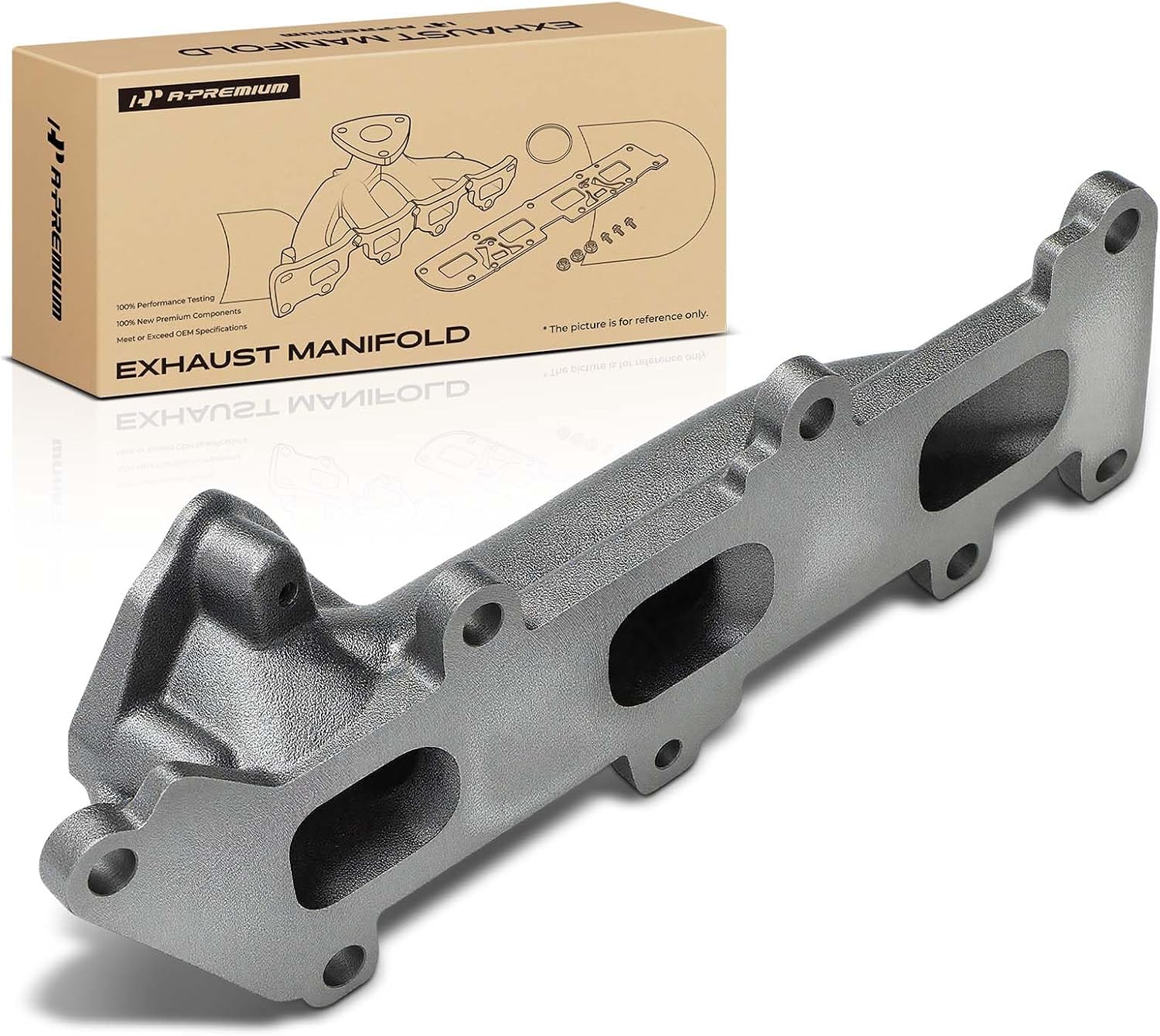
| Fitment | Ford F-150, Lincoln Navigator 2018-2020 3.5L V6 |
|---|---|
| Material | Cast Iron |
| Port Shape | Round |
| Included | 1x Exhaust Manifold |
This A-Premium left-side exhaust manifold is a cast-iron, direct-replacement unit for 3.5L V6 Ford F-150 and Lincoln Navigator models from 2018 through 2020. It installs in place of the factory manifold and is intended for owners looking to repair a cracked or leaking manifold without upgrading to performance hardware. The part is described as cast iron with a round-port design and comes boxed for protection; a heat shield is not included. In practice the cast-iron construction should offer durability and good resistance to exhaust heat and corrosion for everyday driving, while the direct-fit design keeps installation straightforward for a mechanic familiar with these trucks. Expect practical benefits like restored exhaust routing, reduced exhaust leaks, and quieter operation compared with a damaged manifold. Limitations are the lack of a heat shield and the standard replacement grade, so it does not provide performance gains or extra thermal protection beyond OEM-level function.
Best for: Buyers who need a cost-conscious, reliable replacement to fix exhaust leaks or a cracked manifold and prefer a straightforward direct-fit swap rather than performance upgrades.
Less Ideal for: Drivers seeking upgraded performance, reduced underhood heat beyond factory levels, or a complete OEM-level accessories package should look at higher-end or shielded options.
- Cast iron construction for durability and heat resistance
- Direct-replacement fit for 2018–2020 3.5L V6 F-150 and Lincoln Navigator models
- Round-port design that matches factory exhaust port shape for easier sealing
- Packaged in a stronger box to reduce shipping damage
- Does not include a heat shield which may be desirable for some installations
- Standard replacement grade so it offers no performance improvement over factory parts
Verdict: A practical, budget-friendly cast-iron direct-replacement manifold that restores proper exhaust function on 2018–2020 3.5L V6 F-150 and Navigator models without added performance bells.
BD Diesel Exhaust Manifold Set for Ford F-150 3.5L EcoBoost (2011–2016)

| Fitment | Ford F-150 3.5L EcoBoost 2011-2016 |
|---|---|
| Exterior | Machined |
| Manufacturer | BD Diesel |
| Item model number | 1043001 |
This BD Diesel manifold set replaces the stock exhaust manifolds on the 3.5L EcoBoost F-150 with a heavier-duty cast assembly intended to resist warping and stud failure. Installation requires removing the turbos and following the included instructions; the kit adds extra fasteners and heat-sink features around studs to reduce overheating and stud breakage. In real-world use buyers report the parts fit without modification and restore leak-free operation after OEM failures, though the job can be long and may reveal broken studs or leaking turbo coolant lines that need attention. The machined finish and robust castings make these manifolds a durable option for daily driving, towing, or occasional performance upgrades, and several reviewers note improved longevity versus stock. Expect a multi-hour install, potential need for thread chasing or stud extraction tools, and separate turbo gaskets or coolant fittings during reassembly.
Best for: A buyer who prioritizes a long-term fix for recurring manifold leaks and stud failure and is willing to invest time or pay shop labor for a thorough installation. Ideal for owners who want a more durable factory-replacement manifold for towing and regular driving.
Less Ideal for: People looking for a quick, low-effort fix or a drop-in performance header that increases flow significantly should consider other options or professional installation services.
- Built from robust castings with machined surfaces for better durability and fit
- Includes added fasteners and heat-sink design to reduce stud overheating and failure
- Direct replacement for 3.5L EcoBoost F-150 models with reported good fitment
- Ships with installation instructions and necessary hardware for the manifold itself
- Installation is labor intensive and often requires turbo removal and stud extraction tools
- Does not include turbo gaskets or some vehicle-specific coolant fittings which often must be purchased separately
Verdict: Choose this BD Diesel manifold set when you need a stronger, factory-style replacement that addresses the common 3.5L EcoBoost manifold leaks and stud failures.
Dorman 674-694 Passenger-Side Exhaust Manifold Kit (includes gaskets and hardware)

| Manufacturer Part Number | 674-694 |
|---|---|
| Material Type | Stainless Steel |
| Installation Type | Bolt-On |
| Compatible with Vehicle Type | Car, Truck |
This Dorman kit replaces the passenger-side exhaust manifold with a ductile iron casting designed to resist the warping and cracking that affects some factory manifolds. It ships as a complete repair pack with the manifold, two gaskets, two studs and two nuts so you can swap the part without sourcing extra hardware. Fitment is reverse-engineered to match factory mating surfaces for a bolt-on installation on supported Ford/ Lincoln V8s; the kit is typically used when a warped or cracked manifold causes exhaust leaks, ticking sounds, or failed emissions tests. Dorman highlights U.S. testing and includes materials intended to be more robust than lower-grade castings. In practice installers report the casting fits well and seals when installed carefully, though the job can be time consuming on these engines because of rusted studs and tight access. Expect to spend time removing old studs and prepping mounting surfaces and consider better studs or upgraded gaskets if you want longer-term corrosion resistance. The kit is a practical, lower-cost alternative to a factory unit for drivers who want a full replacement package rather than hunting parts separately.
Best for: Buyers who prioritize a one-package replacement that matches factory mating surfaces and want a cost-effective, tested repair for a cracked or leaking passenger-side manifold.
Less Ideal for: Those seeking a premium, long-term performance upgrade or a low-install-time swap; professional shops or DIYers who cannot manage difficult stud removal should consider a shop-installed option.
- Complete kit includes manifold plus gaskets and mounting hardware for one-order replacement.
- Ductile iron construction intended to better resist heat-related warping and cracking than lower-grade castings.
- Reverse-engineered mating surfaces for straightforward bolt-on fit to the specified vehicle applications.
- Made and tested in the United States, with components selected for a direct repair workflow.
- Installation can be difficult on affected Ford engines due to seized or broken studs and limited access, increasing labor time.
- Included studs and gaskets may not match the corrosion resistance or sealing quality of upgraded aftermarket fasteners and gaskets.
Verdict: Choose this Dorman kit when you want a complete, direct-fit passenger-side manifold replacement that aims to prevent the common warping and cracking of original castings.
Dorman 674-559 Passenger Side Exhaust Manifold Kit (includes gaskets and hardware)
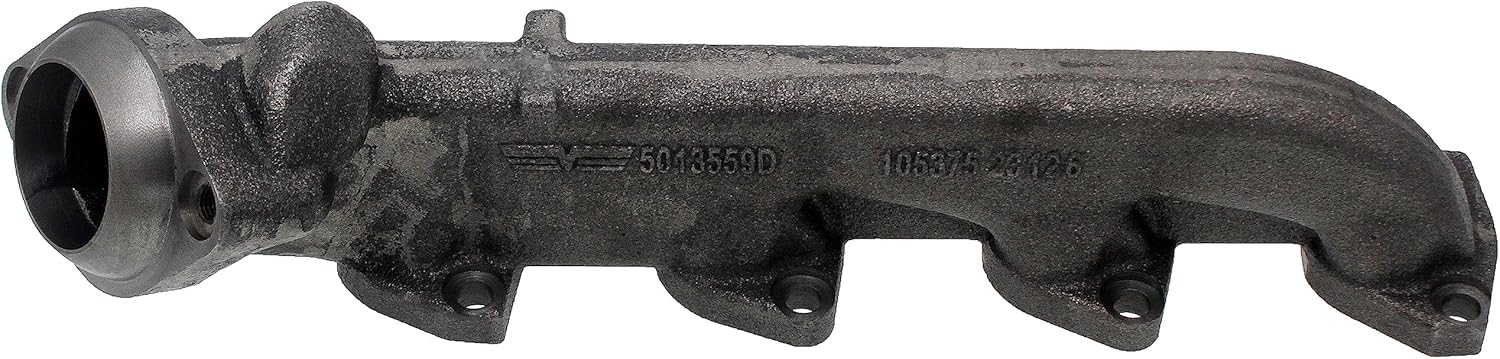
| Manufacturer | Dorman Products |
|---|---|
| Model | 674-559 |
| Position | Center |
| Bolt Pattern | 6 holes |
| OEM Part Number | 101285; 663054; XL3Z 9430-GA |
This Dorman kit replaces a passenger-side exhaust manifold with a ductile iron unit designed to resist the warping and cracking that can plague lower-grade cast iron originals. It is supplied as a complete repair kit with a manifold gasket and flange studs and nuts so you can do a single-order replacement. Typical use is direct replacement on older Ford V8 trucks and vans where the original manifold has cracked or developed exhaust leaks; reviewers report good fit and a noticeable reduction in ticking and exhaust leak noise after installation. Because Dorman reverse-engineers the factory part and tests to emissions standards, installation is usually straightforward for a competent DIYer or a professional, though stubborn rusty fasteners on older engines may still require extra tools or time. Some buyers noted minor differences in flange alignment on certain model years, and the kit may not include studs that thread into a heavily corroded head, so plan to have replacement head studs on hand if needed.
Best for: Buyers seeking a reliable, factory-style repair for a leaking or cracked passenger-side manifold on older Ford trucks and vans who prioritize a durable, ready-to-install kit and low long-term maintenance risk.
Less Ideal for: Those looking for a performance or ceramic-coated upgrade or anyone wanting a manifold for multiple vehicle makes; installers who prefer perfect bolt-up fit without any possible minor adjustments should consider a professional fitment check first.
- Ductile iron construction resists warping and cracking compared with lower-grade manifolds
- Includes manifold gasket plus flange studs and nuts for a more complete repair
- Reverse-engineered for direct-fit installation to match factory geometry
- Reduces exhaust leaks and the ticking noise those leaks cause
- Designed and tested to meet emissions standards for reliable operation
- May not include replacement studs that thread into a rusted cylinder head so additional hardware can be required
- Some users reported minor fitment alignment differences on certain model years that required light modification
Verdict: Choose this Dorman replacement kit when you want a durable, factory-style passenger-side manifold that quiets exhaust leaks and includes the basic hardware needed to complete the repair.
Choosing the Right Ford F-150 3.5L Exhaust Manifold: Key Factors to Consider
Fitment and Port Alignment
Correct fitment is the single most important factor when choosing an exhaust manifold for the Ford F-150 3.5L. The manifold must match the cylinder head port spacing and flange profile so gaskets seat evenly and exhaust passages align without forcing. Poor alignment leads to leaks, stressed fasteners, and warped flanges over time.
When assessing fitment, check whether the manifold uses factory bolt patterns and if any modifications are required for sensors or heat shields. A direct-fit component reduces installation time and minimizes the chance of interference with steering, suspension, or aftermarket engine accessories. For replacement jobs, matching the original port geometry simplifies gasket selection and helps ensure long-term sealing.
Material and Construction
Material choice affects durability, heat resistance, and susceptibility to cracking on repeated thermal cycling. Cast iron offers excellent resistance to thermal fatigue but can be heavier and may crack if subjected to repeated rapid temperature changes. High-grade stainless steel tends to resist corrosion and can handle higher thermal loads with less risk of rust-related degradation.
Look for manifolds with consistent wall thickness, reinforced flanges, and quality welds where applicable. Pay attention to coatings or corrosion treatments that extend life in climates with road salt. Welded tube-style designs should use TIG or MIG techniques with smooth joints to avoid stress risers that can spawn cracks.
Sealing and Gasket Compatibility
A reliable seal is essential to prevent exhaust manifold symptoms such as reduced power, ticking noises, and exhaust odor in the cabin. Gasket compatibility means the manifold should accept standard replacement gaskets sized for the 3.5L head ports. Flange flatness and hole spacing determine whether a simple gasket swap will suffice or if additional machining is needed.
Consider whether the manifold ships with a high-quality gasket or if you will need to buy one separately. Some manifolds incorporate multi-layer steel gaskets or raised sealing surfaces to improve longevity. Also check for provisions that ease gasket installation, like alignment dowels or stepped flanges that keep the gasket centered during assembly.
Thermal Management and Heat Shielding
Managing underhood heat is critical on the F-150 3.5L, particularly for trucks used for towing or frequent heavy loads. High exhaust temperatures can affect adjacent components, reduce turbocharger life on turbocharged variants, and increase intake air temperatures. Manifolds that incorporate heat shielding, thermal coatings, or designed exhaust routing help mitigate these issues.
Heat wraps or ceramic coatings can lower radiant heat but may require careful installation and regular inspection. Factory-like designs that keep hot exhaust gases away from vulnerable wiring and plastic components reduce accessory failures and maintain consistent engine bay temperatures over time.
Durability Against Cracks and Corrosion
Exhaust manifold crack and corrosion resistance should influence your choice because repairs on the F-150 3.5L can be labor intensive. Designs that reduce thermal stress at flange transitions and use corrosion-resistant materials extend service life. Avoid manifolds with thin walls or rough internal finishes that may concentrate heat or accelerate wear.
Consider the local environment when assessing durability; vehicles in coastal or winter-salt regions benefit more from stainless or treated surfaces. Also think about how long you plan to keep the truck and whether a heavier, more durable component makes sense versus a lower-cost replacement for short-term use.
Installation Complexity and Hardware
Installation complexity affects overall ownership cost even when you are not counting parts. Some manifolds require special studs, torque sequences, or replacement of adjacent heat shields and components. Check whether the manifold includes necessary hardware such as studs, nuts, and alignment dowels, or whether fasteners should be replaced with new high-temp pieces.
Torque specifications and anti-seize recommendations matter for long-term serviceability. If you plan to DIY, choose a manifold that matches factory bolt patterns, provides clear hardware, and does not demand altering nearby wiring or brackets. For shop installations, shorter install times reduce labor exposure and the chance of rework due to misalignment.
Common Exhaust Manifold Symptoms on the F-150 3.5L
Familiarizing yourself with typical symptoms helps diagnose manifold issues quickly. Tick or ticking noises at startup that persist or change with engine speed often indicate an exhaust leak at a flange or a cracked manifold. Increased cabin exhaust smell, poor idle smoothness, or reduced low-end torque can also point to a compromised seal.
You may notice an illuminated check engine light if upstream oxygen sensors detect abnormal exhaust composition. Pay attention to any new vibration or heat-related warnings after hard towing or long highway runs, as those stress events can accelerate existing cracks or gasket failures.
- Tapping or ticking noises that vary with RPM
- Strong exhaust smell inside cabin or near wheelwell
- Loss of low-end torque or rough idle
- Intermittent check engine light related to O2 sensors
Diagnosing an Exhaust Manifold Leak
Diagnosing a leak starts with a careful visual inspection for soot marks, rusted fasteners, or hairline cracks around the flange and runners. With the engine cold, check for loose bolts or missing hardware and inspect gasket edges for signs of exhaust escape. When safe, a controlled rev of the engine while an assistant listens near the manifold can localize a leak.
For a more precise diagnosis, use a smoke source or an exhaust leak detection spray applied around suspect joints while the engine is running. Be cautious around hot components. If you suspect a cracked flange or runner, pressure testing the cylinder head area or consulting a technician for disassembly can confirm the issue.
- Look for soot or rust streaks near flanges
- Listen for changes in ticking with engine RPM
- Use smoke or detection spray to find escaping gases
- Inspect fastener torque and gasket seating
Gasket Options and When to Replace Them
Gasket choice affects sealing longevity. Multi-layer steel gaskets provide robust sealing under thermal cycling, while graphite or composite gaskets can offer conformability for slightly warped flanges. If a manifold is removed for any reason, replacing the gasket is best practice because used gaskets rarely reseal reliably.
Replace gaskets anytime you see visible compression set, tears, or heavy corrosion. When installing a new manifold, use recommended torque patterns and replace fasteners if they show corrosion or thread stretch to avoid recurrent leaks.
- Replace gaskets whenever the manifold is removed
- Choose MLS gaskets for long-term thermal cycles
- Inspect and replace corroded studs and nuts
- Follow proper torque sequences for consistent sealing
Tips for a Smooth Installation
Prepare the work area by gathering correct replacement hardware, gaskets, and torque specs for the F-150 3.5L. Clean mating surfaces thoroughly to remove old gasket material and carbon deposits. Use anti-seize on studs where recommended and tighten fasteners in the proper sequence to minimize flange distortion.
If you are reusing heat shields or routing close to other components, test-fit before final torqueing to ensure there is no interference. Take care with oxygen sensor threads and wiring; inspect sensor harness routing to prevent heat damage and confirm sensor clearance once the manifold is mounted.
- Clean mating surfaces before installing new gasket
- Use correct torque pattern and torque values
- Apply anti-seize to studs when specified
- Check O2 sensor clearance and wiring routing
When to Consider Repair Versus Replacement
Minor flange warpage or small gasket leaks can sometimes be corrected by machining the flange or replacing the gasket and hardware. However, visible cracks in runners or severe corrosion usually warrant full replacement because repairs may be temporary and the repair process can be labor intensive on the 3.5L engine.
Consider replacement when the manifold has multiple stress points, missing material, or internal damage that could worsen with continued use. For trucks used for heavy towing, prioritizing a durable replacement reduces the chance of repeat work and associated downtime.
- Repair only small flange issues or single gasket failures
- Replace if cracks, severe corrosion, or structural damage exist
- For towing-heavy use, favor replacement for reliability
- Factor in labor effort required for disassembly and reassembly
Maintaining Your Exhaust System After Installation
After installing a new manifold, periodically inspect fasteners, gaskets, and nearby heat shields during routine service intervals. Look for signs of coolant or oil contact that can accelerate corrosion and ensure that wire harnesses and plastic components are kept clear of hot surfaces.
If you frequently tow or run heavy loads, recheck fastener torque after the first few heat cycles because thermal expansion and settling can change clamping force. Address small issues promptly to avoid more expensive repairs later.
- Recheck fastener torque after initial heat cycles
- Inspect for soot or new leaks at service intervals
- Keep sensors and wiring away from hot surfaces
- Treat corrosion-prone areas proactively
Still looking for the perfect fit?
Select your Ford F-150 configuration to see the most relevant Exhaust Manifolds recommendations
How We Chose the Best Ford F-150 3.5L Exhaust Manifold
We prioritized criteria that matter specifically for the Ford F-150 3.5L and real-world ownership scenarios. Fitment and OEM compatibility were primary filters to ensure bolt pattern, port alignment, and clearance matched the 3.5L engine without modification. Durability and material quality were assessed by looking for robust construction and corrosion resistance suitable for road salt and repeated heat cycles. Sealing performance and flange flatness were emphasized because exhaust leaks on this engine cause drivability and noise issues.Thermal management was another key criterion, including heat shielding or design features that reduce underhood temperatures relevant to towing and hauling. Ease of installation and availability of replacement gaskets or hardware informed selection to limit shop time and complexity. We also considered long-term serviceability and the presence of anti-seize provisions for studs and fasteners.Exclusions: we excluded assemblies that required extensive manifold-to-head modification, aftermarket components that did not match factory port spacing for the 3.5L, and options lacking clear durability features. The final list represents parts that balance proper fit, sealing, thermal performance, and practical installability for Ford F-150 3.5L owners.
Our full evaluation process is outlined in our review methodology.
FAQ
What are common exhaust manifold symptoms I should watch for on a Ford F-150 3.5L?
Common symptoms include a ticking noise that changes with RPM, reduced low-end torque, visible soot around flanges, and an exhaust smell in the cabin. These signs often indicate a leaking gasket or small crack and should be inspected promptly.
How do I diagnose an exhaust manifold leak on the 3.5L engine?
Start with a visual inspection for soot, rust, or loose hardware. Listen for ticking changes while revving the engine and use smoke or a leak detection spray around suspect joints. For definitive diagnosis, a technician can perform a pressure check or remove the manifold to inspect flanges and runners.
Can I replace the exhaust manifold gasket without removing the manifold?
Usually the gasket is replaced when the manifold is removed because getting an effective seal without disassembly is difficult. In some minor cases where the gasket is accessible, targeted gasket replacement can work, but full removal ensures proper surface cleaning and torque application.
How long should a typical exhaust manifold last on a Ford F-150 3.5L?
Service life depends on material quality and operating conditions. Well-made manifolds can last many years under normal use, while severe thermal cycling, towing, and corrosive environments shorten life. Regular inspection helps catch early issues before failure.
Will a cracked exhaust manifold trigger a check engine light on the 3.5L?
A cracked manifold can cause sensor readings that trigger a check engine light if oxygen sensors detect abnormal exhaust composition or if exhaust leaks affect the sensor's location. It is not guaranteed, but sensor-related codes are a common indirect indicator of a leak.
Is the installation of a replacement manifold difficult for do-it-yourselfers?
Difficulty varies with experience and tools. A direct-fit replacement that matches factory bolt patterns is more straightforward and suitable for experienced DIYers. Tasks include removing heat shields, aligning the manifold, replacing gaskets, and torquing fasteners in sequence; specialized tools may be needed for some fasteners.
Final Verdict
For the Ford F-150 3.5L, prioritize proper fitment, sealing quality, and thermal management when choosing an exhaust manifold. Matching flange geometry and using gaskets designed for repeated thermal cycles reduces the most common failure modes such as leaks and cracks. Consider material and corrosion resistance based on your climate and towing habits, and factor in installation complexity if you plan a DIY swap.Ultimately, select the option that balances long-term durability with ease of installation for how you use the truck. Focusing on flange flatness, gasket compatibility, and heat control will give the most reliable outcome and minimize repeat labor.
Explore More:
- Check out all Ford F-150 parts & accessories
- Explore Exhaust Manifolds Maintenance & Repair Guides
- Explore Exhaust & Emissions
- Browse all Auto Parts
