
Note: This article contains affiliate links. If you click on these links and make a purchase, I may earn a small commission at no extra cost to you. This helps support my research and content. Read my full affiliate disclosure here.
Picking the right engine oil for a Jeep Grand Cherokee Limited affects drivability, longevity, and maintenance intervals. The wrong weight or formulation can increase wear, reduce fuel economy, and complicate warranty or service interactions. This guide collects the top seven engine oils suited to the Grand Cherokee Limited and explains the performance and protection tradeoffs that matter for everyday driving, towing, and higher-mileage examples. We evaluated formulations that prioritize viscosity stability, deposit control, and compatibility with the vehicle's engine design. Read on to see the shortlisted options and the criteria we used to evaluate them.
Looking for other parts? See all Jeep Grand Cherokee parts & accessories.
Top Picks at a Glance
| Best Overall Engine Oil The best all-around oil balancing protection, efficiency, and longevity | Mopar MaxPro 5W-20 SAE Motor Oil, 6-Quart Case |  |
| Best Budget Engine Oil A low-cost oil that delivers reliable protection for basic maintenance | Castrol GTX Ultraclean 5W-30 Synthetic Blend Motor Oil, 5 Quart |  |
| Best Premium Engine Oil A higher-end formulation offering maximum protection and longer drains | Mobil 1 Truck & SUV Full Synthetic Motor Oil 0W-20, 5 Quart |  |
| Best Full-Synthetic Engine Oil Fully synthetic oil for top-tier performance and cold-flow protection | Castrol EDGE 5W-20 Full Synthetic Motor Oil, 5 Quart Jug |  |
| Best Synthetic Blend Engine Oil A halfway option blending conventional oil with synthetic performance benefits | Valvoline MaxLife High Mileage 5W-30 Synthetic Blend Motor Oil, 5 qt |  |
| Best High-Mileage Engine Oil Formulated additives to condition seals and reduce oil consumption in older engines | Valvoline MaxLife Full Synthetic High Mileage 5W-30 Motor Oil, 5 qt |  |
| Best 5W-30 Engine Oil A common viscosity choice for balanced cold start and operating protection | Pennzoil Platinum Full Synthetic 5W-30 Motor Oil (5-Quart) |  |
Mopar MaxPro 5W-20 SAE Motor Oil, 6-Quart Case
Best Overall Engine Oil

| Container Type | Bottle |
|---|---|
| Compatible with Vehicle Type | Passenger cars, light trucks, and SUVs |
| Liquid Volume | 6 Quarts |
Mopar MaxPro 5W-20 is a full‑synthetic motor oil packaged as a six‑quart case intended for routine oil changes on vehicles that call for 5W‑20 viscosity. It is typically used by DIYers and service shops for normal driving, offering factory-spec compatibility for Chrysler, Dodge, Jeep, and Ram engines that require this grade. Notable features include Mopar branding and convenient quart bottles for easy handling during drain-and-fill changes. In practice the oil delivers smooth cold starts thanks to its 5W cold-viscosity and maintains stable pressure and temperature under everyday highway and city driving. Buyers will appreciate the convenience of multiple quarts for back-to-back changes and the assurance of a manufacturer-branded fluid. Limitations are that this SKU is a single viscosity grade so it is only appropriate where 5W-20 is specified, and the case format is heavier to store compared with single-quart purchases if you only need one change worth of oil.
Best for: Drivers who prioritize using manufacturer-branded fluids and perform regular DIY oil changes on vehicles that specify 5W-20, looking for a convenient multi-quart supply.
Less Ideal for: Owners who need a different viscosity grade, drivers who prefer extended-drain specialty oils, or those who only want a single quart for an immediate one-time change.
- Factory-branded formulation matched to Mopar specifications for Chrysler-family engines
- Full set of six quarts simplifies multiple oil changes or keeping spare oil on hand
- 5W-20 viscosity helps with easy cold starts and consistent oil pressure in normal driving
- Quart bottles are easy to pour and store compared with larger, bulk containers
- Only available in the 5W-20 viscosity so it is not suitable where a different grade is required
Verdict: The best all-around engine oil that balances wear protection, fuel efficiency, and long drain intervals for most regular driving and DIY maintenance.
Castrol GTX Ultraclean 5W-30 Synthetic Blend Motor Oil, 5 Quart
Best Budget Engine Oil

| SAE Viscosity Grade | 5W-30 |
|---|---|
| Compatible Vehicle Type | For Gasoline Engines |
| Liquid Volume | 5 Quarts |
| Flash Point | 200 Degrees Celsius |
Castrol GTX Ultraclean 5W-30 is a synthetic blend motor oil sold in a five-quart bottle designed for routine oil changes. It uses a double-action formula aimed at cleaning existing sludge and resisting new deposit formation, which makes it suitable for regular driving and stop-start city use. Typical use is straightforward: pour for a full oil change and follow the vehicle manufacturer interval; the 5-quart size covers a single change for most V6 and V8 engines. Notable features include sludge-fighting additives, improved thermal stability for high-temperature protection, and a moderate viscosity grade that performs across common temperature ranges. Practical benefits are cleaner oil passages over time and stable film strength during normal daily driving, which helps maintain engine smoothness and may modestly improve fuel economy. Limitations are that this is a synthetic blend rather than a full synthetic, so it is positioned for cost-conscious DIYers rather than drivers chasing the longest drain intervals or highest-performance additives; always follow the Grand Cherokee limited's manufacturer recommendations when selecting oil.
Best for: DIY owners who prioritize dependable, everyday engine protection on a budget and want an engine-cleaning formula that fits a standard oil-change schedule for daily-driven SUVs.
Less Ideal for: Drivers seeking maximum mileage between oil changes or the highest-performance full-synthetic formulations for track, towing, or extreme-duty use should consider other options.
- Formula targets sludge removal and helps prevent new deposit formation
- 5-quart container is convenient for a single DIY oil change
- 5W-30 viscosity provides reliable protection across common ambient temperatures
- Synthetic blend offers better thermal and shear stability than conventional oils
- Synthetic blend rather than full synthetic, so not optimized for extended drain intervals
Verdict: The best low-cost engine oil for DIYers who need dependable day-to-day lubrication and protection without paying for premium additives or extended-drain claims.
Mobil 1 Truck & SUV Full Synthetic Motor Oil 0W-20, 5 Quart
Best Premium Engine Oil

| Viscosity | 0W-20 |
|---|---|
| Type | Full Synthetic |
| Volume | 5 Quart |
Mobil 1 Truck & SUV 0W-20 is a full-synthetic motor oil aimed at heavier-duty SUV and light-truck use, engineered to protect engines during towing, hauling, and extended drain intervals. It uses Mobil 1's Triple Action Formula and fortified additives to resist oxidation, reduce deposit formation, and maintain viscosity from cold starts down to -40 degrees F up to internal temperatures near 500 degrees F. In practice it provides stronger protection during sustained high load conditions and supports longer service intervals up to advertised 10,000 miles between changes when application and service practices allow. The 5 quart container makes routine top-ups and oil changes straightforward. Limitations are that it is a 0W-20 viscosity so confirm your Jeep Grand Cherokee Limited's required oil grade before switching, and the extended-drain capability depends on driving conditions and manufacturer service recommendations rather than being automatic.
Best for: Buyers who prioritize maximum engine protection and extended-drain capability for SUVs or light trucks used for towing, hauling, or frequent long trips and are willing to pay for a premium synthetic oil.
Less Ideal for: Drivers who strictly follow short factory service intervals or who need a different viscosity grade for their specific engine should consider a product matching the exact factory-recommended grade instead.
- Advanced additive package that helps prevent deposit formation and control oxidation
- Designed for extended protection and advertised support for up to 10,000 miles between oil changes
- Wide temperature performance with low-temperature flow to -40 degrees F and thermal protection up to 500 degrees F
- Full-synthetic base provides consistent viscosity and protection under heavy load and towing
- 0W-20 viscosity may not match every engine's recommended grade so fitment must be checked
Verdict: The best premium engine oil for users willing to pay more for superior additive packages, extended-drain capability, and maximum engine protection under heavier use.
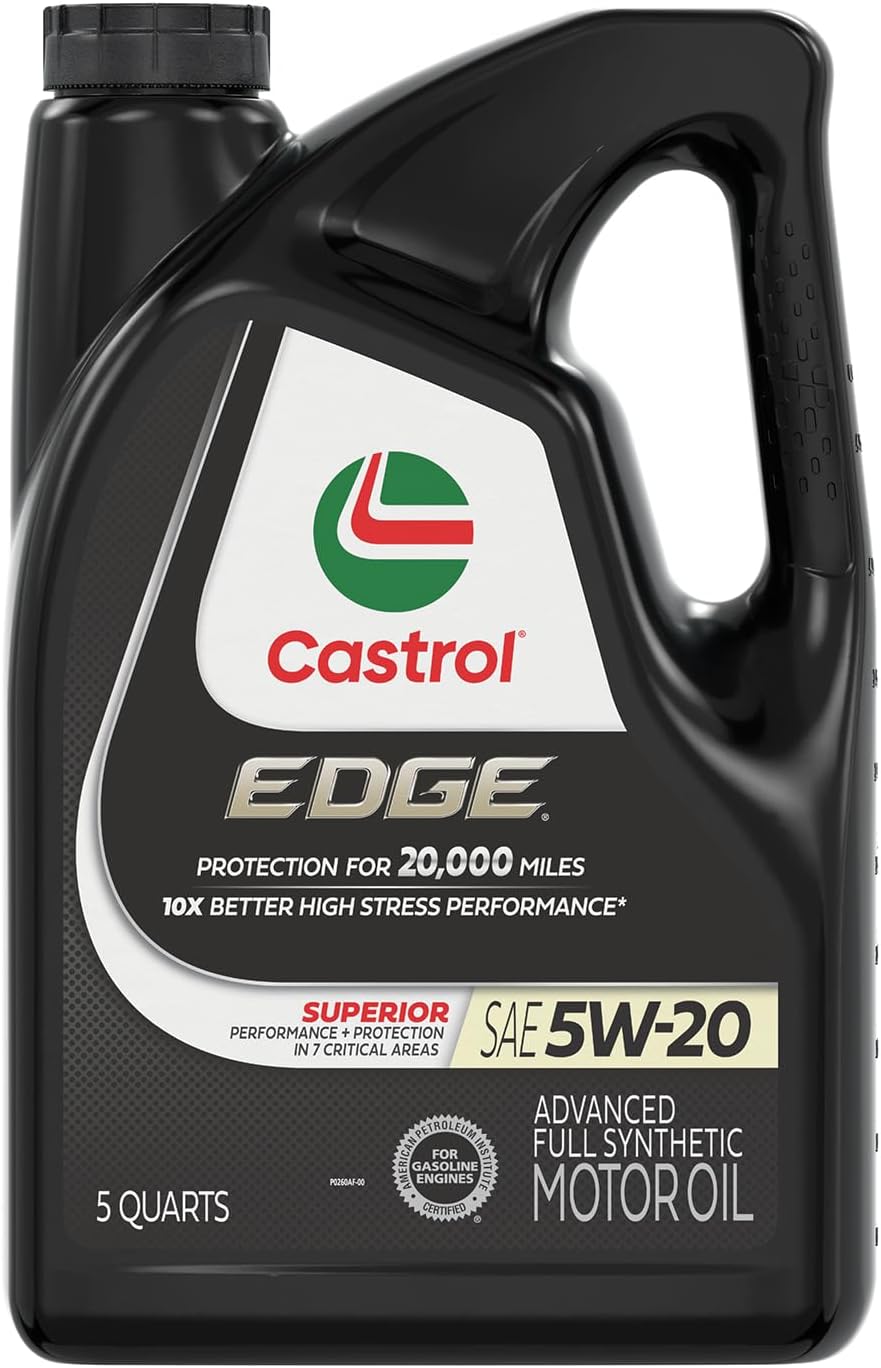
Castrol EDGE 5W-20 Full Synthetic Motor Oil, 5 Quart Jug
Best Full-Synthetic Engine Oil
| SAE Viscosity | 5W-20 |
|---|---|
| Volume | 5 Quarts |
| Viscosity Level | Low to Medium |
| Compatible Vehicle Type | Car, Truck |
| Unit Count | 160.0 Fluid Ounces |
Castrol EDGE 5W-20 is a full synthetic engine oil designed to deliver strong heat resistance and wear protection for modern gasoline engines. In practical use it replaces factory-spec 5W-20 oils during oil changes and is suitable for regular driving and highway use in a Jeep Grand Cherokee Limited that calls for 5W-20. Notable features include Castrol's additive package aimed at reducing sludge, maintaining viscosity under high temperature, and lowering friction for marginal fuel-economy gains. That translates to a smoother idle, stable performance during long highway runs or towing, and confidence in extended drain intervals when following manufacturer guidance. The oil meets API and ILSAC specifications and carries vehicle manufacturer approvals cited by Castrol, so it aligns with factory-quality protection. Limitations: it is a premium-priced synthetic compared with bulk conventional oils, and extended oil-change claims should not override the Grand Cherokee's recommended service intervals and filter changes. Overall it is a performance-focused full synthetic for owners who want robust thermal stability and wear control in a 5W-20 application.
Best for: DIY owners who prioritize thermal stability, cleaner internals, and long-term wear protection when servicing a Jeep Grand Cherokee Limited and who follow proper oil-change procedures.
Less Ideal for: Drivers who strictly follow minimal-cost maintenance or who prefer to stick with dealer-specified branded oils without aftermarket alternatives.
- Full synthetic formulation for improved high-temperature stability and reduced sludge formation
- Additive chemistry aimed at reducing friction for better engine efficiency
- Meets API and ILSAC specifications and manufacturer test requirements cited by Castrol
- Suitable for 5W-20 applications common in many modern gasoline engines
- Premium cost compared with conventional oils which may not suit budget-focused maintenance plans
Verdict: The best full-synthetic engine oil for DIY mechanics who want the highest thermal stability, improved cold starts, and better long-term wear protection than conventional oils.
Valvoline MaxLife High Mileage 5W-30 Synthetic Blend Motor Oil, 5 qt
Best Synthetic Blend Engine Oil

| Viscosity | 5W-30 |
|---|---|
| Size | 5 qt (Pack of 1) |
| Vehicle Service Type | Car, Truck |
| Flash Point | 394 Degrees Fahrenheit |
| SAE Grade | 5W-30 |
Valvoline MaxLife High Mileage 5W-30 is a synthetic blend designed to address common issues in engines with higher mileage. It is typically used as a routine oil change fluid for cars and SUVs, bringing seal conditioners to restore flexibility in hardened seals and detergents to fight sludge and deposits. For a Jeep Grand Cherokee Limited with 75,000 miles or more, this oil helps reduce oil consumption and limit leaks while offering improved wear protection and fuel-efficiency gains compared with conventional oils. The product meets current API and ILSAC specifications and includes friction-fighting additives that can make the engine run quieter and smoother. As a synthetic blend it gives many of the protective benefits of full synthetics at a lower cost, but it is not a full-synthetic formulation so extreme-temperature or extended-interval performance will not match top-tier full synthetics. Also check your Grand Cherokee’s factory fill capacity since the 5-quart bottle may require buying an extra quart for some engine variants.
Best for: Jeep Grand Cherokee Limited owners looking to extend the life of a higher-mileage engine who want better protection and leak control than conventional oil without paying full-synthetic prices.
Less Ideal for: Drivers who prioritize maximum thermal stability or the longest possible oil-change intervals should consider a full-synthetic 5W-30 specifically recommended for their Grand Cherokee engine instead.
- Formulated for high-mileage engines with seal conditioners to help reduce leaks
- Improved wear protection and sludge control versus industry-standard conventional oils
- Meets current API and ILSAC specifications for modern gasoline engines
- Synthetic blend delivers many benefits of full synthetics at a lower price
- Not a full-synthetic so offers less extreme-temperature and extended-interval protection than full synthetic oils
Verdict: The best synthetic blend engine oil for buyers seeking improved protection and performance over conventional oil without the full price of full-synthetic formulations.
Valvoline MaxLife Full Synthetic High Mileage 5W-30 Motor Oil, 5 qt
Best High-Mileage Engine Oil

| SAE Viscosity Grade | 5W-30 |
|---|---|
| Volume | 5 Quarts |
| Compatible Vehicle Type | Car, Truck |
| Viscosity Level | Low to Medium |
| Flash Point | 433 Degrees Fahrenheit |
Valvoline MaxLife Full Synthetic 5W-30 is a high-mileage motor oil designed to protect aging engines and extend service life. It is formulated with enhanced MaxLife technology that adds anti-wear additives, seal conditioners, and deposit-fighting chemistry so it helps reduce oil leaks, lower consumption, and fight sludge buildup in engines with many miles. Typical use is regular oil changes in older vehicles where preventing leaks and minimizing wear are priorities; the full synthetic base also improves viscosity stability across temperature swings for reliable cold starts and heat protection. Notable features called out by the manufacturer include claimed improvements over industry standards for wear, sludge defense, and heat protection. Practical benefits for a Jeep Grand Cherokee Limited with higher mileage include reduced oil burning, fewer minor leaks as seals condition, and consistent lubrication under towing or highway driving. Limitations are that compatibility should follow the vehicle manufacturer specifications and that benefits like leak reduction depend on the condition of existing seals and gaskets rather than fixing major mechanical failures.
Best for: Owners of higher-mileage Jeep Grand Cherokee Limited who prioritize keeping an aging engine running reliably and want an oil that focuses on seal conditioning, wear protection, and reduced oil consumption.
Less Ideal for: Drivers who have active major oil leaks, heavily damaged seals, or significant engine mechanical failures that require repair rather than preventive oil care.
- Formulated specifically for engines with 75,000+ miles with seal conditioners to help reduce leaks
- Full synthetic base provides improved viscosity stability for cold starts and high-heat protection
- Adds anti-wear additives and detergents to help reduce sludge and extend engine life
- Does not repair severely degraded gaskets or fix mechanical issues that cause major oil loss
Verdict: The best high-mileage engine oil for older or higher-mileage engines where seal-conditioning additives and anti-consumption properties help reduce leaks and oil burn.
Pennzoil Platinum Full Synthetic 5W-30 Motor Oil (5-Quart)
Best 5W-30 Engine Oil

| Viscosity grade | 5W-30 |
|---|---|
| Volume | 160 Fluid Ounces |
| Compatible vehicle type | Car |
| Automotive fit type | Universal Fit |
Pennzoil Platinum 5W-30 is a full synthetic motor oil designed to protect modern gasoline engines across normal driving conditions. It is typically used as a factory-quality replacement at scheduled oil changes and is suitable where a 5W-30 viscosity is recommended. Notable features include a gas-to-liquid base oil, industry-spec compliance (API and ILSAC GF-7A), and claimed cleaner pistons and wear protection based on lab sequences. In practice this translates to faster low-temperature oil flow for easier cold starts, strong resistance to high-temperature breakdown, and protection against wear that helps preserve horsepower and fuel economy. The product is available in 5-quart bottles for DIY servicing and is backed by a manufacturer protection warranty under specific conditions. Limitations: the extended 15,000-mile protection requires enrollment and adherence to specific vehicle and usage conditions and may not apply under severe driving; always follow the Grand Cherokee’s owner manual and oil-life monitoring when choosing drain intervals.
Best for: Drivers who want a widely recommended 5W-30 viscosity that balances easy cold starts with reliable protection at normal operating temperatures and prefer a full synthetic oil suitable for scheduled oil changes.
Less Ideal for: Drivers who require oils formulated for specialized conditions such as racing, heavy commercial duty, or vehicles that call for a different viscosity or manufacturer-specific oil beyond the listed approvals.
- Full synthetic formula made with gas-to-liquid base oil for stable high- and low-temperature performance
- Meets or exceeds common industry and OEM specs including ILSAC GF-7A and dexos1 Gen 3 where applicable
- Designed to keep pistons cleaner and reduce wear, supporting long-term engine health
- Available in 5-quart bottles convenient for at-home oil changes
- 15,000-mile protection guarantee has enrollment and vehicle eligibility requirements and excludes severe driving conditions
Verdict: The best 5W-30 engine oil for drivers who need a widely recommended viscosity that offers reliable cold-start flow and robust protection at normal operating temperatures.
Choosing the Right Jeep Grand Cherokee Limited Engine Oil: Key Factors to Consider
Viscosity Grade
Viscosity grade determines how the oil flows at cold startup and how it protects under high temperature and load. For the Grand Cherokee Limited, choosing the right SAE grade affects cold-start lubrication and oil pressure during highway speeds or towing.
A lower first number improves pumpability in cold weather and reduces initial wear on startup, while the second number indicates high-temperature film strength. If you frequently tow, carry loads, or drive in hot climates, prioritize a grade with stronger high-temperature viscosity retention. Conversely, for predominantly city driving and cold climates, better low-temperature flow prevents oil starvation during the first seconds after crank.
Base Oil Type
The base oil — conventional, synthetic blend, or full synthetic — affects performance across temperature extremes and long-term oxidation resistance. Full synthetic oils offer superior shear stability and oxidative resistance, which helps maintain viscosity and prevent sludge in the Grand Cherokee Limited's engine over extended drain intervals.
Synthetic blends can be a compromise for owners looking for improved protection over conventional oils at a lower cost than full synthetics. Consider the vehicle's mileage and expected service interval when selecting a base oil type, since high-mileage or heavily loaded engines benefit more from full synthetic formulations.
Additive Package and Deposit Control
Additives manage detergency, dispersancy, anti-wear, corrosion inhibition, and friction modification. For an engine like the Grand Cherokee Limited's, detergents and dispersants reduce sludge and keep oil passages and valve trains clean, preserving engine efficiency and reducing knock risk.
Anti-wear additives protect cam lobes, lifters, and bearings under boundary lubrication conditions. Corrosion inhibitors protect engine internals from acids formed during combustion. When selecting oil, look for clearly stated additive functions and industry approvals that indicate effective deposit control and protection.
High-Temperature Stability and Shear Resistance
Shear resistance indicates how well the oil holds viscosity under mechanical stress. An oil that thins excessively under shear and high temperature can allow metal-to-metal contact in critical surfaces, increasing wear. For Grand Cherokee Limited owners who tow, drive aggressively, or cover long highway miles, oils with strong high-temperature viscosity retention maintain film strength and protect bearings and piston rings.
Oxidation stability also matters because oxidized oil forms sludge and varnish, which degrade performance and can clog passageways. Choose oils with proven high-temperature performance metrics and manufacturer-recognized specifications that reflect shear and oxidation resistance.
Compatibility With Seals and Emissions Systems
Modern oil formulations must be compatible with engine seals to prevent leaks and with emissions-control hardware to avoid catalyst or sensor contamination. For the Grand Cherokee Limited, selecting oils that list compatibility with modern engine materials reduces the risk of external leaks on older seal compounds and prevents deposit formation that can affect oxygen sensors or catalytic converters.
Avoid oils with aggressive additive chemistries that can swell seals or leave behind residues. If your vehicle has higher miles, look for formulations that state specific compatibility with older seals or explicitly advertise suitability for high-mileage engines.
Manufacturer Specifications and Industry Approvals
Always verify that the chosen oil meets the vehicle manufacturer's recommended specifications and industry standards. Certifications such as API service categories and ILSAC or other relevant approvals indicate basic performance guarantees and ensure the oil provides the protection level the Grand Cherokee Limited engine requires.
Using oils without appropriate approvals can affect longevity and may complicate warranty interactions. Confirm both the viscosity grade and the required service classifications before making a selection.
Recommended Viscity Choices for Different Climates
Climate influences the ideal viscosity for the Grand Cherokee Limited. In regions with cold winters, selecting a lower cold-flow rating helps ensure quicker oil circulation at startup and reduces wear during the warm-up period. For most moderate climates, a mid-range 5W-30 grade offers a balance between pumpability and high-temperature protection.
Hotter climates or frequent towing calls for oils with better high-temperature film strength to resist thinning and protect bearings and piston rings. If you split seasons or travel between temperature extremes, consider using oils with broad-grade performance that maintain both low-temperature flow and high-temperature stability.
- Cold climates: prioritize lower first-number grades for pumpability
- Mixed climates: balanced grades for daily driving and occasional load
- Hot/towing use: choose oils with strong high-temperature viscosity retention
Synthetic Vs Conventional for the Grand Cherokee Limited
Full synthetic oils offer superior oxidation resistance and shear stability, making them a solid choice for owners who want extended drain intervals and maximum protection under stress. They help keep piston rings and bearings cleaner and resist breakdown at high temperatures.
Conventional oils can be acceptable for low-mileage, low-stress use if service intervals are strictly followed, but they generally lack the thermal and shear stability of synthetics. Synthetic blends can be a cost-effective middle ground when improved protection is desired without the full premium of a full synthetic option.
- Full synthetic: best for longevity, towing, and extended intervals
- Synthetic blend: compromise between cost and performance
- Conventional: acceptable for short intervals and gentle use
How Oil Choice Affects Fuel Economy and Emissions
Viscosity and friction modifiers in engine oil influence mechanical drag. Using a grade that is too thick for the operating conditions can increase internal friction and slightly reduce fuel economy, while an oil that is too thin at operating temperature risks protection and increases wear. For the Grand Cherokee Limited, choosing an oil that matches manufacturer viscosity guidance helps preserve designed fuel efficiency.
Some modern formulations include friction modifiers aimed at improving economy, but these can trade off with wear protection in severe conditions. Balance fuel economy benefits against long-term engine protection needs when picking an oil for daily commuting or spirited driving.
- Match viscosity recommendations to avoid unnecessary fuel penalty
- Consider formulations with economy-focused additives only for low-stress use
- Prioritize protection over marginal economy gains if towing or heavy loads are common
Drain Intervals and Maintenance Considerations
Oil drain intervals depend on the oil type and driving conditions. Full synthetics often support longer intervals, but heavy towing, repeated short trips, or dusty conditions justify shorter intervals regardless of oil type. For the Grand Cherokee Limited, inspect oil condition and follow manufacturer guidance for interval lengths.
Regular filter replacement is equally important, since a clogged filter reduces flow and accelerates oil degradation. If you extend drain intervals, use oils with proven oxidative stability and consider more frequent filter changes to remove contaminants and preserve additive effectiveness.
- Short trips and severe use: shorten intervals even with synthetic oil
- Extended intervals: ensure oil and filter ratings support longer service
- Check oil condition visually and by dipstick between services
High-Mileage Considerations for Older Grand Cherokee Limited Engines
Older engines often have wear, looser tolerances, and slightly degraded seals. Choosing oils formulated for high-mileage engines can help condition seals, reduce leaks, and minimize oil consumption by improving film strength. These formulations often include seal conditioners and higher-viscosity components to fill gaps from wear.
However, adding too-thick oils can increase crankcase pressure and emissions variability. Balance seal conditioning benefits with proper viscosity selection to ensure the engine remains lubricated without creating adverse effects.
- High-mileage formulations can reduce seepage and consumption
- Avoid overly thick oils that could interfere with emissions control
- Monitor oil consumption and leaks after changing formulation
Still looking for the perfect fit?
Select your Jeep Grand Cherokee configuration to see the most relevant Engine Oils recommendations
How We Chose the Best Jeep Grand Cherokee Limited Engine Oil
Our selection focused on oils that match the demands of the Grand Cherokee Limited engine layout and typical owner use. We filtered candidates by recommended viscosity ranges for the model and by modern formulation type, favoring full synthetic and high-performance blended oils that maintain viscosity under load. Key evaluation criteria included viscosity grade stability, wear and corrosion protection, deposit and sludge control, and compatibility with emissions system components such as catalytic converters and oxygen sensors. We also examined thermal shear resistance and low-temperature pumpability to cover cold starts and sustained high-load operation. Longevity and maintenance implications were considered by reviewing typical drain interval recommendations for each oil type and how additives affect interval extension. Noise, vibration, and harshness impacts were considered where formulations claimed friction-modifying benefits. We excluded any oils lacking clear technical specifications, those not meeting industry-standard certifications, and products without published viscosity-shear data or additive package summaries. The result is a tightly curated set of choices suited to the Grand Cherokee Limited's service needs and driving profiles.
Our full evaluation process is outlined in our review methodology.
FAQ
How often should I change engine oil in a Grand Cherokee Limited?
It depends on oil type and driving conditions. For full synthetic oils under normal driving, many owners follow manufacturer intervals but may safely extend a bit if conditions are mild. For frequent short trips, towing, or heavy-duty use, shorten intervals and inspect oil level regularly.
Can I switch from conventional oil to full synthetic in my Grand Cherokee Limited?
Yes, switching to full synthetic is generally safe and can improve protection and stability. Ensure you use the correct viscosity grade and monitor seals and consumption after the change, especially on higher-mileage engines.
What viscosity should I use for cold winters?
Choose a lower cold-start viscosity rating to improve pumpability and reduce wear at startup. A 5W-rated or lower grade is often recommended in colder climates, but always confirm the vehicle manufacturer's viscosity guidance before selecting an oil.
Are high-mileage oils necessary for an older Grand Cherokee Limited?
High-mileage oils can be beneficial if the engine shows signs of wear or minor leaks, since they include conditioners that help seals and thicker components to reduce consumption. They are not strictly necessary for every older engine, so evaluate based on oil consumption and leak history.
Will a different oil affect my Grand Cherokee Limited's emissions system?
Some additive chemistries can leave residues that affect oxygen sensors or catalysts, so choose oils with industry approvals and formulations that state emissions system compatibility. Avoid experimental or non-standard additives that do not list compatibility.
Final Verdict
Choose an oil that matches the Grand Cherokee Limited's recommended viscosity and meets recognized industry specifications. Prioritize full synthetic formulations if you tow, drive hard, or want longer service intervals, and consider high-mileage formulations for older engines with minor leaks or higher consumption. Balance fuel economy goals with protection needs: when in doubt, favor oils that preserve film strength and deposit control to extend engine life and reduce maintenance headaches.
Explore More:
- Check out all Jeep Grand Cherokee parts & accessories
- Explore Fluids & Chemicals
- Browse all Accessories
