

Note: This article contains affiliate links. If you click on these links and make a purchase, I may earn a small commission at no extra cost to you. This helps support my research and content. Read my full affiliate disclosure here.
Choosing the right engine oil for a Jeep Grand Cherokee 4.7L V8 matters more than many owners realize. The wrong viscosity or formulation can increase wear, reduce fuel efficiency, and worsen cold-start behavior, while the right oil helps maintain oil pressure, protect valve train components, and extend service intervals. This guide presents seven shortlisted engine oils chosen specifically for the 4.7L V8 configuration and explains why each type can make a difference in everyday driving and long-term engine health. You'll also find the evaluation criteria used to pick these options and practical tips for oil-change intervals and viscosity decisions.
Looking for other parts? See all Jeep Grand Cherokee parts & accessories.
Top Picks at a Glance
| Best Overall Engine Oil A well-rounded choice balancing protection, longevity, and everyday performance | Pennzoil Platinum Full Synthetic 5W-30 Motor Oil (5-Quart) |  |
| Best Budget Engine Oil A low-cost oil that meets basic protection and service requirements | Castrol GTX 10W-30 Conventional Motor Oil, 5 qt |  |
| Best Premium Engine Oil A top-tier oil formulated for maximum protection and extended drain intervals | Mopar Penzoil Ultra Platinum Full Synthetic 0W-40 (7 qt) |  |
| Best Full Synthetic Engine Oil Fully synthetic formulation for maximum wear resistance and thermal stability | Castrol EDGE 5W-30 Full Synthetic Motor Oil, 5 Quart Jug |  |
| Best Synthetic Blend Engine Oil A mix of synthetic and conventional oils for balanced performance and cost | Valvoline MaxLife High Mileage 5W-30 Synthetic Blend Motor Oil, 5 qt |  |
| Best High-Mileage Engine Oil Formulated with conditioners and seals to protect older engines and reduce leaks | Castrol EDGE High Mileage 5W-30 Full Synthetic Motor Oil, 5 Quart |  |
| Best 5W-30 Engine Oil A common viscosity spec offering a good balance of cold start and operating protection | Valvoline Extended Protection Full Synthetic Motor Oil SAE 5W-30, 5 qt |  |
Pennzoil Platinum Full Synthetic 5W-30 Motor Oil (5-Quart)
Best Overall Engine Oil

| SAE J300 Viscosity Grade | 5W-30 |
|---|---|
| Compatible with Vehicle Type | Car |
| Liquid Volume | 160 Fluid Ounces |
| Brand Name | Pennzoil |
Pennzoil Platinum 5W-30 is a full synthetic motor oil formulated to keep engines clean and protected across a wide range of temperatures. It is typically used as a routine service oil for daily-driven gasoline engines where a factory-quality 5W-30 is specified. Notable features include a gas-to-liquid base oil, claims of cleaner pistons versus industry standards, and formulations intended for faster cold starts and high-heat stability. In practice this translates to smooth cold starts, steady protection against wear, and stable viscosity under heat, which helps preserve power and fuel economy in older V8s like the 4.7L. The product is backed by a long protection guarantee when used per enrollment terms, but that warranty has enrollment and mileage conditions. The oil meets modern industry and several OEM specifications, so it fits recommended service intervals for many gasoline engines, though users should always confirm the 5W-30 grade in the Grand Cherokee 4.7L owner manual. The main trade-offs are that the warranty has eligibility restrictions and that extreme use cases like racing or heavy commercial duty fall outside the advertised coverage.
Best for: Buyers seeking a dependable, factory-quality 5W-30 that balances wear protection, thermal stability, and everyday value for routine maintenance on a Jeep Grand Cherokee 4.7L V8.
Less Ideal for: Do not choose this oil if you regularly subject the vehicle to racing, continuous heavy commercial use, or service conditions outside normal road driving where specialty formulations are required.
- Full synthetic gas-to-liquid base for improved cleanliness and thermal stability
- Formulated for fast low-temperature flow to aid cold starts
- Designed to reduce piston deposits and protect against wear
- Meets current industry and several OEM specifications for gasoline engines
- Protection guarantee requires enrollment and has strict eligibility conditions
Verdict: The best all-around engine oil that balances wear protection, thermal stability, and value for most routine automotive maintenance needs.
Castrol GTX 10W-30 Conventional Motor Oil, 5 qt
Best Budget Engine Oil

| SAE Viscosity Grade | 10W-30 |
|---|---|
| Liquid Volume | 5 Quarts |
| Compatible with Vehicle Type | Car |
| Viscosity Level | Low to Medium |
Castrol GTX 10W-30 is a straightforward conventional motor oil designed for routine engine service where a 10W-30 viscosity is recommended. It is typically used at regular oil-change intervals in older or higher-mileage engines and in machines that do not require synthetic formulations. The formula emphasizes sludge prevention and thermal protection to keep internal passages cleaner than many basic oils, which helps maintain smooth running and reduce wear over time. Packaged in a 5-quart bottle, it is convenient for DIY changes and covers most single-oil-change needs for V8 engines that call for 10W-30. Limitations include being a conventional oil rather than synthetic, so it will not provide the same extended high-temperature stability or longer change intervals as synthetic oils, and it may consume slightly more oil in some applications. For buyers focused on low cost while sticking to manufacturer viscosity recommendations, it delivers solid, no-frills protection for everyday driving and light towing loads.
Best for: Buyers prioritizing the lowest overall cost who need a reliable, factory-quality 10W-30 for routine maintenance on an older or higher-mileage Grand Cherokee V8 and who plan to follow standard service intervals.
Less Ideal for: Drivers who want longer synthetic change intervals, maximum high-temperature protection, or who regularly subject the vehicle to heavy towing or extended highway runs should consider a synthetic alternative.
- Meets common API and ILSAC viscosity specifications for 10W-30 service
- Formulated to reduce sludge build-up for cleaner engine internals
- 5-quart bottle size suits DIY oil changes for V8 engines
- Widely used, easy to find and familiar to independent mechanics
- Conventional base oil limits high-temperature stability and extended drain intervals compared with synthetic oils
- May be less suitable for severe-duty or high-performance applications
Verdict: The best low-cost engine oil for buyers prioritizing price while still meeting manufacturer viscosity and basic protection standards for regular service intervals.
Mopar Penzoil Ultra Platinum Full Synthetic 0W-40 (7 qt)
Best Premium Engine Oil

| SAE Viscosity Grade | 0W-40 |
|---|---|
| Liquid Volume | 7 Quarts |
| Compatible with Vehicle Type | Car |
| Viscosity Level | Medium to High |
This Mopar-branded Penzoil Ultra Platinum 0W-40 is a full synthetic motor oil packaged in a 7-quart supply intended for vehicles specified to use 0W-40. It delivers the high-viscosity protection and advanced additive chemistry expected from a premium oil, helping control wear at high operating temperatures and maintain fluidity during cold starts. Typical use is for service intervals where extended protection and stable viscosity under load matter, such as towing or sustained highway driving. Notable features include the 0W-40 SAE grade and a manufacturer-backed warranty; the 7-quart size matches vehicles that require larger fills so you can complete a change without buying multiple containers. Practical benefits include strong high-temperature film strength, consistent oil pressure in hot conditions, and compatibility with factory maintenance requirements when this grade is specified. Limitations are that 0W-40 is a heavier grade than common 5W-30 offerings and may not be recommended for all climates or engines that call for a different viscosity, so confirm your Grand Cherokee 4.7L V8 engine manufacturer recommendations before use.
Best for: Buyers who prioritize premium additive chemistry and longer protection intervals for a Jeep Grand Cherokee 4.7L V8 and are willing to use a 0W-40 viscosity when specified.
Less Ideal for: Drivers who prefer lower-viscosity oils for very cold climates or who need to strictly follow a different factory-specified viscosity should consider alternatives.
- Full synthetic formulation designed for extended protection and stable viscosity at high temperatures
- 0W-40 SAE grade provides strong cold-start flow and high-temp film strength
- 7-quart packaging lets you complete larger oil changes without buying multiple bottles
- Manufacturer branding and warranty support aligns with factory maintenance requirements
- Viscosity may be heavier than the factory-recommended grade for some climates or the 4.7L engine variants
Verdict: The best premium engine oil for buyers who want superior additive chemistry, extended protection, and longer drain intervals at a higher price point.
Castrol EDGE 5W-30 Full Synthetic Motor Oil, 5 Quart Jug
Best Full Synthetic Engine Oil

| SAE Viscosity Grade | 5W-30 |
|---|---|
| Volume | 5 Quarts |
| Formulation | Full Synthetic |
| Compatible Vehicle Type | Car, Truck |
| Unit Count | 160.0 Fluid Ounces |
Castrol EDGE 5W-30 is positioned as a premium full synthetic designed to keep engines clean and protected under stress. For a Jeep Grand Cherokee 4.7L V8 this oil offers consistent 5W-30 viscosity at startup and high-temperature stability during extended highway or towing runs, helping resist thinning and deposit formation. Castrol highlights advanced additives aimed at reducing wear, controlling sludge, and improving fuel economy through lower friction. It is licensed to current industry specs and approved by several manufacturer tests, which supports use in gasoline engines that call for a 5W-30 grade. Practical benefits for Grand Cherokee owners include better protection during high-load driving and potentially longer intervals between changes when following manufacturer guidance. Limitations are that the product description lists broad manufacturer approvals rather than a specific Jeep or Chrysler endorsement, so owners should confirm the 5W-30 grade matches their 4.7L V8 recommended viscosity and service specs before switching. Packaging in 5-quart jugs is convenient for DIY changes but heavier to handle without assistance.
Best for: Drivers of the Jeep Grand Cherokee 4.7L V8 prioritizing maximum engine protection and thermal stability during towing, highway miles, or high-load driving who are comfortable confirming the recommended 5W-30 grade for their vehicle.
Less Ideal for: Owners who must strictly use fluids with a specific Chrysler or Mopar approval listed in their maintenance schedule or those who prefer factory-specified branded oils without cross-checking specs.
- Full synthetic formula with additives aimed at wear protection and sludge control
- Stable 5W-30 viscosity suitable for normal and high-temperature operation
- Formulated for extended performance under high stress, useful during towing or long highway drives
- Available in 5-quart jug convenient for DIY oil changes
- Not explicitly specified as Chrysler/Jeep-approved for the 4.7L V8 in the product text so owners must verify compatibility with their service manual
Verdict: The best full synthetic engine oil for drivers seeking the highest level of engine protection, consistent viscosity at temperature extremes, and better oxidation resistance.
Valvoline MaxLife High Mileage 5W-30 Synthetic Blend Motor Oil, 5 qt
Best Synthetic Blend Engine Oil

| Viscosity | 5W-30 |
|---|---|
| Size | 5 qt (Pack of 1) |
| Vehicle Service Type | Car, Truck |
| Flash Point | 394 Degrees Fahrenheit |
Valvoline MaxLife High Mileage 5W-30 is a synthetic blend designed to address the needs of older engines by combining detergents, friction modifiers, and seal conditioners into a 5-quart package. It is typically used during routine oil changes for vehicles with higher mileage to help reduce leaks, lower oil consumption, and keep internal parts cleaner than conventional oils. The formula claims improved wear protection and better sludge defense than industry standards and meets current API and ILSAC performance categories relevant to modern gasoline engines. For a Jeep Grand Cherokee with the 4.7L V8 that calls for 5W-30, this oil gives the cost advantage of a blend while delivering many protective benefits of fuller synthetics, which can be useful in extending the life of aging valvecover and crankcase seals. Limitations include that it is not a full synthetic, so maximum thermal stability and the longest change intervals of top-tier full synthetics are not expected, and users who need the absolute highest temperature resistance may prefer a full synthetic specified for severe duty.
Best for: Drivers of a Jeep Grand Cherokee 4.7L V8 looking to protect an aging engine affordably while reducing leaks and deposits during regular service intervals.
Less Ideal for: Drivers who run extreme-duty conditions, long extended oil intervals, or who prefer the maximum heat resistance and longevity of a full synthetic oil should consider full synthetic alternatives.
- Formulated for high-mileage engines with seal conditioners to help reduce leaks
- Improved wear protection and sludge defense versus industry standards
- Extra detergents and friction-fighting additives to maintain engine cleanliness and efficiency
- Meets modern API and ILSAC performance categories for gasoline engines
- Synthetic blend is less thermally stable than full synthetic oils for extreme high-temperature or extended-interval use
Verdict: The best synthetic blend engine oil for buyers wanting improved protection and performance over conventional oil while keeping cost lower than full synthetics.
Castrol EDGE High Mileage 5W-30 Full Synthetic Motor Oil, 5 Quart
Best High-Mileage Engine Oil

| SAE Viscosity | 5W-30 |
|---|---|
| Vehicle Fit | For vehicles with over 75,000 miles |
| Container Type | Bottle |
| Liquid Volume | 160 Fluid Ounces |
| Meets Specifications | API SP/SN PLUS/SN/SM | ILSAC GF-6 |
Castrol EDGE High Mileage 5W-30 is designed to protect older engines by reducing wear, controlling deposits, and conditioning seals that commonly leak as mileage climbs. It is typically used at routine oil changes in cars with more than 75,000 miles to help reduce oil burnoff and keep the engine cleaner between services. Notable features include Castrol’s phosphorus replacement technology intended to reduce catalytic converter-damaging phosphorus, dispersants and detergents to limit sludge, and additives aimed at corrosion and timing-chain protection. For a Jeep Grand Cherokee 4.7L V8 this grade offers a balanced viscosity for everyday driving and highway miles while helping protect rings and valve train components that show wear on high-mileage V8s. The product is marketed for extended intervals up to 15,000 miles or one year under some conditions, though many owners on older engines prefer shorter intervals to monitor consumption. It is a factory-quality, full synthetic option that prioritizes longevity and emission system care over cost-focused conventional oils.
Best for: A Jeep Grand Cherokee 4.7L V8 owner who prioritizes protecting an aging engine and emission system and wants an oil that conditions seals and controls deposits to extend engine life.
Less Ideal for: Drivers who prefer strictly manufacturer-prescribed oil change intervals or who want a different viscosity grade specified for cold-climate start-up performance should consider other products.
- Formulated specifically for vehicles with over 75,000 miles to address seal conditioning and wear.
- Contains dispersants and detergents to reduce sludge and keep older engines cleaner.
- Phosphorus replacement technology lowers harmful phosphorus to help protect the catalytic converter and emissions system.
- Full synthetic 5W-30 viscosity provides stable protection across a range of temperatures.
- Recommended extended-change claims may be too long for very worn engines where more frequent oil checks are safer.
- Universal fit labeling means users should verify manufacturer recommendations for the Grand Cherokee 4.7L V8 before choosing extended intervals.
Verdict: The best high-mileage engine oil for vehicles with significant mileage that need extra seal conditioning, deposit control, and wear reduction to extend engine life.
Valvoline Extended Protection Full Synthetic Motor Oil SAE 5W-30, 5 qt
Best 5W-30 Engine Oil
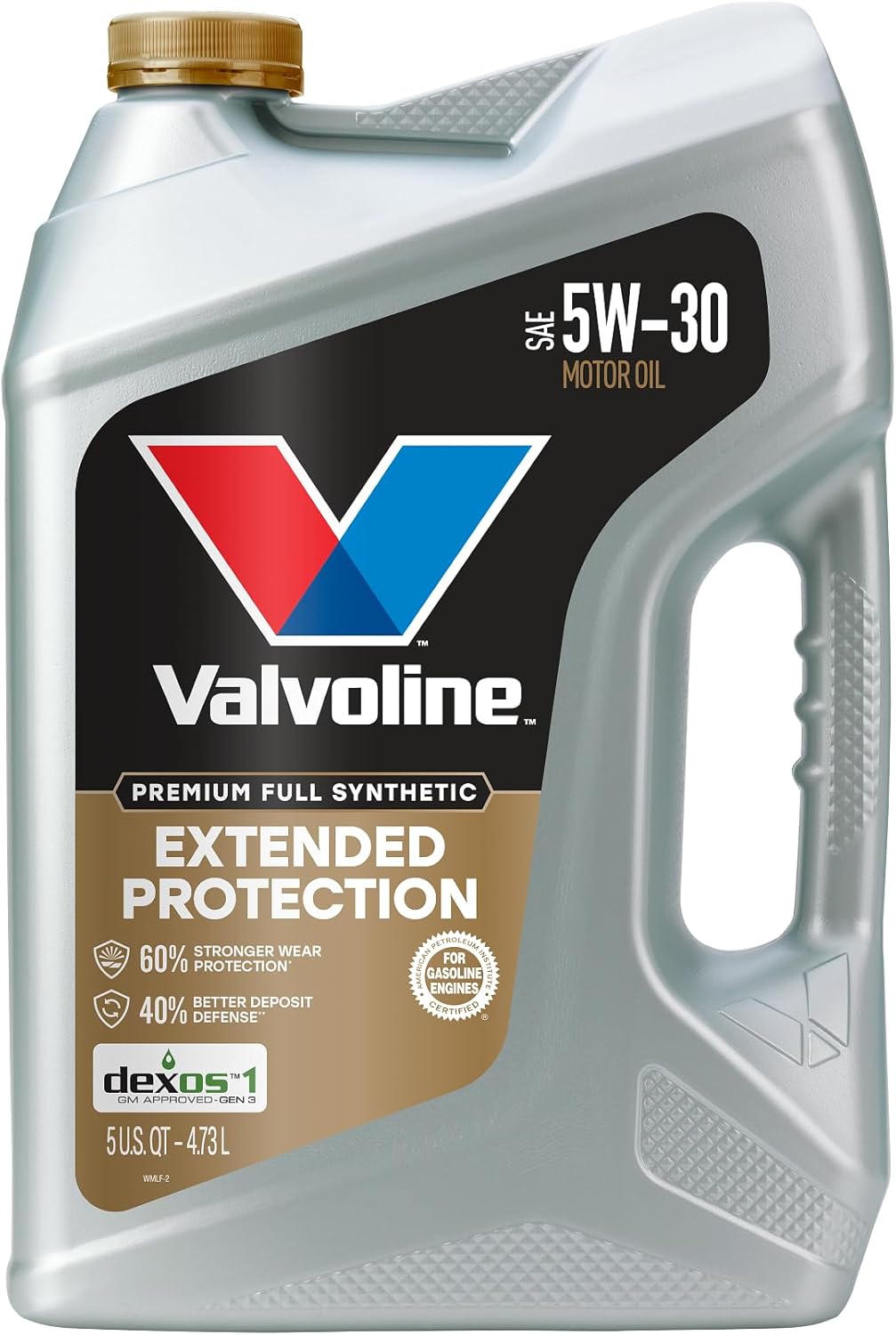
| SAE J300 Viscosity Grade | 5W-30 |
|---|---|
| Compatible with Vehicle Type | Car, Truck |
| Container Type | Bottle |
| Liquid Volume | 5 Quarts |
| Meets/Exceeds | ILSAC GF-7A, API SP, API SN with SN PLUS |
Valvoline Extended Protection 5W-30 is a full synthetic motor oil designed to protect gasoline engines through everyday driving and tougher conditions. It is typically used for routine oil changes where buyers want a 5W-30 viscosity that flows well on cold starts yet maintains film strength at operating temperature. Key features include Dual Defense Additive Technology and manufacturer claims of stronger wear, deposit and heat protection than industry standards, which translate to cleaner internals and reduced friction under load. The 5 quart bottle is convenient for a single change on many passenger vehicles. It meets current API and ILSAC specifications and lists manufacturer approvals relevant to modern gasoline engines. Limitations are that performance claims are manufacturer-stated rather than independently measured in this listing, and users should confirm factory-recommended specs for the Grand Cherokee 4.7L V8 before switching oils. For vehicles requiring a different viscosity or specific OEM-specified fluids, choose the grade recommended by the vehicle maker.
Best for: Buyers who want a versatile 5W-30 that delivers improved wear and deposit protection for regular driving and occasional heavy use in a gasoline engine and prioritize a proven full synthetic option for routine oil changes.
Less Ideal for: Drivers who must follow a specific non-5W-30 factory fluid specification or who need oils formulated for diesel engines or specialized high-temperature race applications.
- Full synthetic formula for stronger wear protection and heat resistance
- 5W-30 viscosity balances cold-start flow with protection at operating temperature
- Claims improved deposit control to help keep engine internals cleaner
- Meets modern API and ILSAC specifications and factory-related approvals
- 5 quart container size suits most single-oil-change needs
- Claims are manufacturer reported in product materials rather than independent test results
- Not suitable if the Grand Cherokee 4.7L requires a different viscosity or a manufacturer-prescribed specialty fluid
Verdict: The best 5W-30 engine oil for buyers who need a versatile viscosity that provides reliable cold-start flow and robust protection at normal operating temperatures.
Choosing the Right Jeep Grand Cherokee 4.7L V8 Engine Oil: Key Factors to Consider
Viscosity and Ambient Temperature
Viscosity determines how the oil flows at cold start and how it maintains film strength at operating temperature. For the 4.7L V8, pick a viscosity that ensures adequate cold-start lubrication without being so thin that high-temperature film strength falls off.
If you operate the vehicle in cold climates, a lower cold-grade rating helps reduce start-up wear by improving early oiling. Conversely, in consistently hot regions or for sustained towing, a higher hot-grade rating maintains oil pressure and film thickness. Check the owner's manual for the manufacturer recommended viscosity range and choose an oil that matches your typical driving conditions rather than an extreme-season formula.
Base Oil Type and Additive Chemistry
The base oil—conventional, synthetic blend, or full synthetic—affects oxidation resistance, thermal stability, and shear stability. Full synthetic oils typically resist breakdown better under high heat and heavy loads, which helps preserve oil pressure and reduce sludge risk in the 4.7L V8.
Additive packages provide detergents, dispersants, anti-wear agents, and friction modifiers. A robust detergent and dispersant system helps keep piston rings and lifter galleries clean, while anti-wear additives protect cam lobes and crank bearings. Look for oils that list anti-wear chemistry appropriate for older V8 architectures and that meet the right API and ILSAC/ACEA specifications.
High-Mileage Considerations
If your 4.7L V8 has substantial mileage, oil choice should account for seal condition, oil consumption, and sludge remediation. High-mileage formulations often include conditioners that help swell aging seals to reduce leaks and additives to reduce oil burn-off.
These oils may also contain extra detergents to help loosen deposits formed over years of service. When choosing a high-mileage oil, balance the desire to limit leaks with the need to maintain proper viscosity and wear protection. Monitor consumption and leaks after switching formulations, and select a product that stabilizes oil pressure without creating excess deposits.
Shear Stability and Film Strength
Shear stability indicates how well an oil maintains its viscosity under mechanical stress. The 4.7L V8 contains high-shear components where the oil film must remain intact under load. Oils with good shear resistance preserve their rated viscosity longer, protecting bearings and cam lobes.
Poor shear stability can lead to viscosity breakdown, higher clearances, and increased engine wear. For owners who tow, haul, or drive aggressively, prioritize oils with proven shear stability and polymers that resist mechanical breakdown.
Compatibility with Oil Change Intervals
Match oil performance to your planned service interval. Full synthetic oils commonly support longer drain intervals due to better oxidation resistance, while conventional oils may require more frequent changes. Check both the vehicle's recommended interval and your driving patterns.
Severe service conditions, such as many short trips, frequent idling, or heavy towing, shorten useful oil life. Choose an oil formulation that preserves protective properties for the interval you intend to run and be prepared to shorten intervals if conditions are severe.
Seal and Deposit Control
Oil compatibility with aging seals and its tendency to form deposits affects leaks and engine cleanliness. Formulations that help condition seals can reduce drip and seepage common on higher-mileage engines. At the same time, oils with good detergent/dispersant balance minimize varnish and sludge buildup in galleries and on valve covers.
Avoid blends that are overly aggressive in cleaning if the engine has long-set deposits, since rapid deposit removal can temporarily increase catch-can or filter load. Instead, prefer oils that provide steady cleaning and maintain low levels of insoluble byproducts.
Recommended Viscosity Options for the 4.7L V8
Selecting the right viscosity grades depends on ambient temperature and typical use. Common passenger-car viscosities offer a balance of cold-start flow and hot-film strength appropriate for this V8's clearances and oil pump capacity.
For moderate climates, a 5W-30-grade formulation often provides reliable cold-start lubrication and sufficient hot-temperature protection. In colder regions where winters are severe, a lower winter grade improves startup protection, while in hot climates or for heavy-duty use, consider an oil with a stronger high-temperature rating.
- 5W-30: Good balance for varied climates and daily driving
- 0W-20: May help fuel economy and cold starts but check manual for compatibility
- 10W-30 or heavier grades: Consider only if recommended for high-load or high-mileage situations
When to Use Full Synthetic Vs Blends
Full synthetic oils typically offer superior oxidation resistance and maintain viscosity under heat and shear better than blends. For the 4.7L V8, full synthetics can be a strong choice if you seek extended drain intervals, better protection under towing loads, or improved cold-start performance.
Synthetic blends provide some of the benefits of full synthetics at a lower cost and can be a reasonable compromise for everyday driving without heavy duty demands. Conventional oils remain acceptable when following conservative change intervals and operating under mild conditions.
- Full synthetic: Best for towing, high-mileage preservation, and longer drains
- Synthetic blend: Cost-effective compromise for moderate use
- Conventional: Adequate with frequent oil changes and light use
Oil Change Intervals and Service Tips
Oil change intervals should reflect driving habit and operating conditions. Short trips, stop-and-go traffic, and towing all accelerate oil degradation and warrant more frequent changes than long highway drives.
When switching oil types, monitor oil level and consumption closely during the first few hundred miles. Always use a fresh filter rated for extended intervals if you plan to lengthen the interval, and follow the vehicle's service recommendations for drain plug torque and oil capacity.
- Short trips and city driving: shorten intervals
- Highway cruising: longer intervals often acceptable with full synthetic
- Always top to the correct fill level and avoid overfilling
Managing High-Mileage 4.7L V8 Engines
High-mileage Grand Cherokee engines benefit from oils formulated to address seal condition and deposit control. Choose formulations that help limit leaks while still providing robust wear protection to older bearings and cams.
Regularly inspect for seepage around valve covers and the oil pan after a change. If oil consumption increases, consider slightly heavier viscosities within the manufacturer's acceptable range and increase the frequency of level checks.
- Use high-mileage formulations with seal conditioners if leaks are present
- Monitor consumption after changing oil type
- Consider higher hot-grade oils only when consumption and clearances justify it
Storage, Fueling, and Towing Considerations
If you tow frequently or carry heavy loads, the engine operates at higher sustained temperatures and under greater mechanical stress. Pick oils rated for those conditions with strong thermal stability and anti-wear protection.
For vehicles stored for long periods, use oils with good corrosion protection and change the oil before extended storage to remove combustion byproducts that can accelerate internal corrosion.
- Towing: favor oils with high thermal and shear stability
- Long storage: change oil beforehand and run the engine to circulate fresh oil
- Frequent heavy use: monitor oil condition and consider shorter intervals
Still looking for the perfect fit?
Select your Jeep Grand Cherokee configuration to see the most relevant Engine Oils recommendations
How We Chose the Best Jeep Grand Cherokee 4.7L V8 Engine Oil
We focused on selection criteria that reflect real-world needs for the Jeep Grand Cherokee 4.7L V8. Primary evaluation factors included viscosity suitability across expected ambient temperatures, the oil's wear protection and anti-wear additive package, and performance with the engine's oil pump and gallery clearances. We also considered formulation type, distinguishing between conventional, synthetic blend, and full synthetic base stocks, and checked compatibility with the engine's recommended service intervals. Thermal stability and resistance to oxidation were important for owners who tow or run sustained highway loads. Finally, we evaluated compatibility with higher-mileage engines by looking for seal-conditioning or low-volatility features.Excluded from consideration were oils formulated exclusively for diesel engines, oils that do not meet common passenger-car API specifications, and niche racing-only formulations that sacrifice longevity for peak performance. The list favors options that meet the balance of protection, drivability, and service-life relevant to the 4.7L V8.
Our full evaluation process is outlined in our review methodology.
FAQ
How often should I change the engine oil in a Jeep Grand Cherokee 4.7L V8?
It depends on driving conditions. Under normal highway driving, full synthetic oils can often support longer intervals, but for short trips, city driving, or towing, shorten intervals to protect the engine. Always follow the vehicle's service recommendations as a baseline and adjust for severe use.
Can I switch between conventional and synthetic oil in the 4.7L V8?
Yes, you can switch between types, but monitor oil level and consumption closely after the change. There is no need for special flushing unless the engine has heavy sludge; however, expect slightly different seal behavior and report any leaks or increased consumption.
Is it safe to use a lower-viscosity oil like 0W-20 to improve fuel economy?
Lower-viscosity oils can reduce friction and improve economy in some cases, but you must ensure the grade is approved for the 4.7L V8 by checking manufacturer guidance. Using too-thin an oil for sustained high-temperature operation can reduce film strength and increase wear.
What should I watch for after switching to a high-mileage oil?
After switching, check for reduced seepage around gaskets and valve covers as well as changes in oil consumption. Also watch for temporary increases in filter load as old deposits loosen. If leaks worsen or consumption increases significantly, consult a technician.
Does synthetic oil reduce engine sludge in older 4.7L V8s?
Synthetic oils generally resist oxidation and deposit formation better than conventional oils, which can help reduce new sludge buildup. Existing heavy sludge may not be removed immediately, so expect gradual improvement and monitor the oil and filter condition.
Which oil viscosity is best if I tow regularly with my Grand Cherokee 4.7L V8?
For regular towing, prioritize an oil with strong high-temperature film strength and shear stability. A commonly recommended approach is to use a higher hot-grade within the manufacturer's acceptable range to preserve oil pressure and protect bearings during sustained loads.
Final Verdict
Prioritize oil choices that match your climate and driving style for the Jeep Grand Cherokee 4.7L V8. Focus on viscosity that ensures cold-start protection without sacrificing hot-film strength, and choose a base oil type that aligns with your desired drain interval and towing needs. For higher-mileage engines, favor formulations that condition seals and control deposits while preserving wear protection. Balancing these tradeoffs will help you select an oil that protects engine life and maintains dependable performance.
Explore More:
- Check out all Jeep Grand Cherokee parts & accessories
- Explore Fluids & Chemicals
- Browse all Accessories
