

Note: This article contains affiliate links. If you click on these links and make a purchase, I may earn a small commission at no extra cost to you. This helps support my research and content. Read my full affiliate disclosure here.
If you tow, haul, or drive your 2016-2023 Toyota Tacoma hard, an upgraded transmission cooler can meaningfully lower fluid temperatures and reduce heat-related wear. Choosing the right transmission cooler for the Tacoma matters because stock cooling capacity is often marginal under heavy loads and hot-weather operation.This guide covers six shortlisted transmission coolers that suit the 2016-2023 Tacoma, explains the key selection criteria we used, and walks through practical considerations like mounting, hose routing, and capacity. Read on to see which styles and installations match your towing and daily-driving needs.
Looking for other parts? See all Toyota Tacoma parts & accessories.
Top Picks at a Glance
| Best Overall The best all-around choice for most situations | Garage-Pro Transmission Oil Cooler for Toyota Tacoma 2016–2023 |  |
| Best Quality Built to a higher standard if you want something more solid | CarLights360 Transmission Oil Cooler for Toyota Tacoma (Replacement for 3292004040) |  |
| Best Value The sweet spot between price and what you get | Sunbelt Transmission Oil Cooler for Toyota Tacoma 2016-2023 |  |
| Best Budget The cheapest option that still gets the job done reliably | VekAuto Engine Oil Cooler for Toyota Tacoma (2015–2023) |  |
| Highest Rated A top-rated pick with lots of positive feedback | A-Premium Transmission Oil Cooler for Toyota Tacoma 2016–2021 |  |
| Most Popular A crowd favorite that many people choose with confidence | TRQ Radiator, 1-Row Aluminum Core, Compatible with 2016–2023 Toyota Tacoma |  |
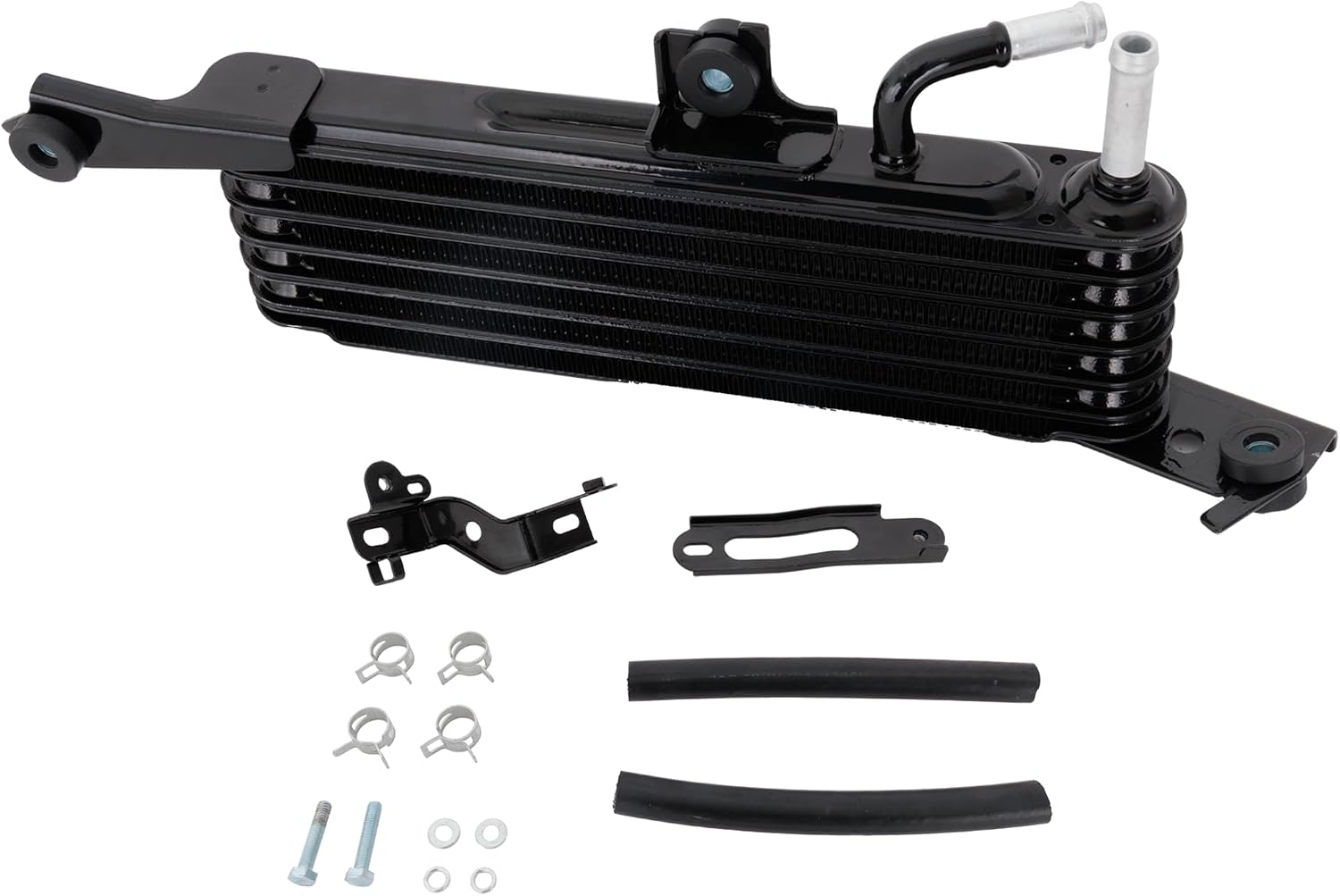
Garage-Pro Transmission Oil Cooler for Toyota Tacoma 2016–2023
| Compatible years | 2016-2023 |
|---|---|
| Vehicle fit | Toyota Tacoma |
| Material | Aluminum |
| Manufacturer | Garage-Pro |
This Garage-Pro transmission oil cooler is a direct-fit aluminum replacement made to match factory connections for Toyota Tacoma model years 2016 through 2023. It installs in place of the stock cooler and is typically used to restore cooling performance on a vehicle with a damaged or leaking cooler or to maintain factory cooling capacity under normal driving and towing. The aluminum construction helps dissipate heat efficiently and the unit lists compatible interchange numbers so it aligns with factory routing and fittings. Practical benefits include straightforward bolt-on installation for DIY mechanics or shops and a design intended to integrate with existing lines without modification. The product carries a one-year unlimited-mileage warranty which provides short-term peace of mind. Limitations are that it is a direct replacement rather than an upgraded high-capacity aftermarket cooler, so drivers who tow heavily or run extreme conditions may prefer a larger external cooler or a multi-pass unit for extra cooling headroom.
Best for: Buyers who want a reliable, factory-quality replacement cooler that installs like the original and restores normal transmission cooling without modifications.
Less Ideal for: Drivers who frequently tow heavy loads, engage in hauling in hot climates, or want maximum transmission cooling performance should consider a higher-capacity aftermarket cooler instead.
- Direct-fit design made to match factory routing and fittings for 2016–2023 Tacoma
- Aluminum construction for efficient heat dissipation
- Lists interchange and parts numbers for easy verification
- Straightforward installation suitable for DIY or professional replacement
- Designed as a factory-style replacement rather than a higher-capacity upgrade
Verdict: A straightforward, factory-style aluminum transmission cooler that restores proper cooling fitment for 2016–2023 Toyota Tacoma owners seeking a direct replacement.
CarLights360 Transmission Oil Cooler for Toyota Tacoma (Replacement for 3292004040)

| Cooling Row Quantity | 7 |
|---|---|
| Core Material | Aluminum |
| Housing Material | Steel |
| Inlet Attachment Type | Hose Barb |
| OEM Part Number | 3292004040 |
This transmission oil cooler is a direct-fit replacement designed for Toyota Tacoma applications using OEM number 3292004040. It uses a seven-row aluminum core housed in painted steel with hose barb inlet and outlet fittings, so installation ties into existing transmission cooler lines and typical mounting points. The multiple cooling rows and aluminum core improve heat dissipation compared with smaller coolers, which helps keep transmission fluid temperatures lower under towing or spirited driving. The painted steel housing gives corrosion resistance and factory-style appearance, but there is no integrated fan so airflow depends on vehicle airflow or an auxiliary fan if you need extra cooling at low speeds. The unit is a standard aftermarket grade part intended to match factory performance and fitment; buyers should verify the OEM number before purchase to ensure compatibility. For drivers pushing their Tacoma with towing or performance driving, this cooler ups thermal capacity without major installation changes, though it does not include mounting hardware or active cooling components.
Best for: Tacoma drivers who regularly tow, haul, or drive aggressively and want a higher-capacity, bolt-in transmission cooler to reduce fluid temperatures and protect the transmission under heavy load.
Less Ideal for: Owners looking for a complete active cooling kit with fan, lines, and mounting hardware or those who need a lightweight or ultra-compact cooler for tight installations.
- Seven cooling rows and aluminum core increase heat dissipation compared with smaller single-row coolers
- Painted steel housing offers durable, factory-style protection against corrosion
- Hose barb inlet and outlet match common transmission cooler lines for straightforward plumbing
- Designed as a direct replacement for OEM number 3292004040 for simplified fitment
- No integrated electric fan provided so low-speed cooling may require an auxiliary fan
- Mounting hardware is not included which may require sourcing brackets or fasteners
Verdict: A seven-row aluminum-core replacement cooler that lowers transmission fluid temperatures for Tacoma owners who tow or drive hard and want a simple bolt-in upgrade.
Sunbelt Transmission Oil Cooler for Toyota Tacoma 2016-2023

| Position | Front |
|---|---|
| Manufacturer | Sunbelt Radiators |
| Model | Automotive Transmission Oil Cooler |
| Manufacturer Part Number | SBTTO4050114 |
This Sunbelt transmission oil cooler is built as a direct replacement for Toyota Tacoma models from 2016 to 2023 and is intended to improve transmission temperature control under normal and heavy use. It installs in the front position and is engineered to match factory fit and mounting points, which simplifies swap-in installation for a DIYer or tech. The unit uses corrosion-resistant materials and a finned core to increase heat dissipation, so you should see lower operating temperatures during towing or repeated stop-and-go driving. Sunbelt states each cooler is inspected and performance-tested, which supports reliability for routine service use. Limitations are that this is a straightforward replacement cooler rather than a high-capacity racing or extreme-duty cooler, so users seeking maximum cooling for sustained heavy towing or motorsport will want an upgraded core or auxiliary cooler. For most Tacoma owners looking to restore or modestly improve transmission cooling, this offers a practical, factory-style option.
Best for: Buyers who want a practical, factory-style replacement to restore or modestly improve transmission cooling on a Tacoma without custom modifications and who prioritize fit and reliability.
Less Ideal for: Drivers who need an upgraded high-capacity cooling solution for frequent heavy towing, off-road racing, or prolonged high-load operation should consider purpose-built performance coolers instead.
- Designed to match factory fit and mounting points for straightforward installation
- Corrosion-resistant construction and finned core for improved heat dissipation
- Performance-tested units for consistent operation and quality control
- Specifically listed for Toyota Tacoma 2016–2023 fitment
- Not a high-capacity or auxiliary cooler for extreme towing or motorsport use
Verdict: A practical, factory-fit replacement cooler for 2016–2023 Tacomas that restores proper transmission cooling with minimal fuss.
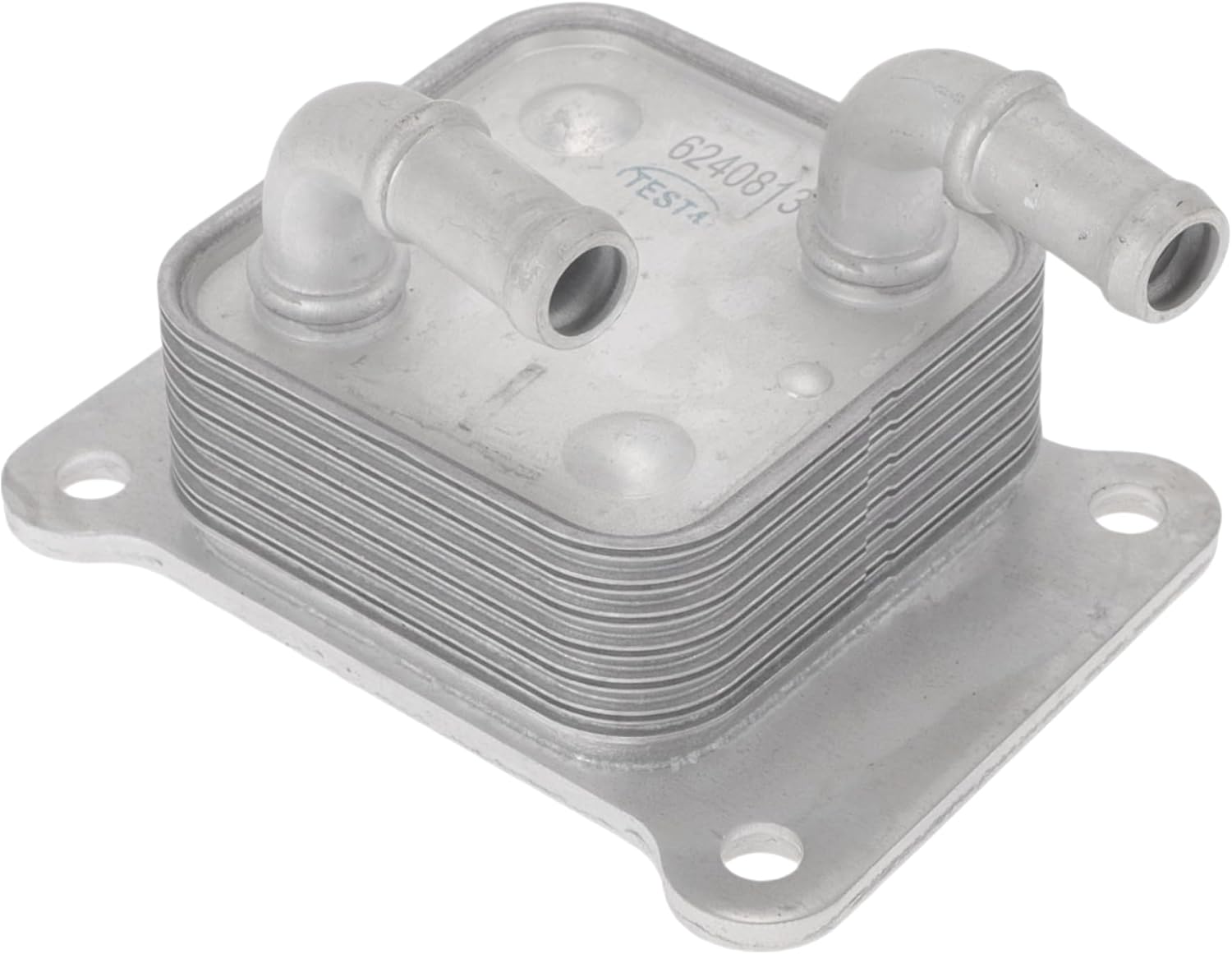
VekAuto Engine Oil Cooler for Toyota Tacoma (2015–2023)
| Fitment | Toyota Tacoma 2015-2023 |
|---|---|
| Material Type | Aluminum |
| Mounting Type | Bolt-on |
| Cooling Type | Water-Cooled |
This VekAuto engine oil cooler is a direct-fit, bolt-on replacement intended for Toyota Tacoma model years 2015 through 2023. Made from aluminum alloy, it uses oil-to-water cooling to remove excess heat from engine oil, which helps maintain lubrication, reduce component wear, and can extend oil life. Installation follows standard replacement steps: drain oil, remove mounting bolts and hoses, clean the gasket surface, and install the new cooler. The compact single-position design makes it suitable where space is limited and the aluminum construction improves corrosion resistance and thermal transfer over cheaper materials. Important limitations are that it is a basic, single-core cooler without integrated mounting hardware or performance enhancements for heavy towing or extreme-duty use, and fitment assumes the Tacoma variant matches the listed years. Buyers should expect a straightforward factory-style replacement rather than a high-capacity aftermarket upgrade for race or heavy towing applications.
Best for: Buyers replacing a worn or leaking factory oil cooler who prioritize an affordable, straightforward OEM-style replacement for everyday driving and occasional towing.
Less Ideal for: Drivers who regularly tow heavy loads, use the truck for hard off-road work, or need upgraded cooling capacity should consider a larger or multi-core performance cooler instead.
- Direct bolt-on fitment for Toyota Tacoma 2015–2023 simplifies replacement
- Aluminum alloy construction improves cooling efficiency and corrosion resistance
- Water-cooled design helps lower oil temperature and protect engine components
- Single-position, single-piece design is a basic replacement and not a high-capacity performance cooler
Verdict: A budget-friendly, factory-style aluminum oil cooler that restores proper oil cooling on 2015–2023 Toyota Tacomas without added complexity.
A-Premium Transmission Oil Cooler for Toyota Tacoma 2016–2021

| Material | Aluminum |
|---|---|
| Cooling Row Quantity | 6 |
| Flow Configuration | Crossflow |
| Reference Number | 3292004040, 19111, 918-559, 918559 |
This aluminum transmission oil cooler is a compact, direct-replacement style cooler intended to restore or improve cooling on compatible Toyota Tacoma 2016–2021 2.7L and 3.5L models. It uses a six-row crossflow core to shed heat from transmission fluid, helping reduce operating temperature and protect internal components from thermal wear. Typical use is as a factory-replacement or upgraded spare when the original cooler is corroded, leaking, or undersized for towing and repeated heavy use. The cooler’s small footprint makes it relatively easy to fit into the stock installation area, but installers may need a universal bracket and hoses to complete some installs. Built from aluminum, it resists corrosion and transfers heat efficiently, and the product references factory part numbers for straightforward verification. Limitations are that it is not a vehicle-specific full kit — mounting hardware and hoses are not guaranteed included — so expect a short additional parts or minor fabrication step during installation.
Best for: Buyers who prioritize dependable cooling restoration or a modest upgrade for Tacoma transmissions, especially those who want a factory-style replacement to protect shifting components during regular driving or light towing.
Less Ideal for: Drivers seeking a full bolt-on heavy-duty cooling kit with included brackets, fittings, and hoses should consider a complete kit instead of this standalone cooler.
- Aluminum construction for good heat transfer and corrosion resistance
- Six-row crossflow core increases surface area for faster cooling
- Direct replacement reference numbers listed for easy fit verification
- Compact core profile simplifies installation in the stock location
- Mounting hardware and hoses may not be included so additional parts could be required
- Not compatible with certain Tacoma special editions noted in the fitment
Verdict: Choose this compact aluminum cooler when you want a reliable, factory-replacement style way to lower transmission fluid temperature on a 2016–2021 Tacoma.
TRQ Radiator, 1-Row Aluminum Core, Compatible with 2016–2023 Toyota Tacoma

| Core Row Quantity | 1 |
|---|---|
| Core Thickness | 1.25 in |
| Transmission Oil Cooler Plate Quantity | 4 |
| Core Material | Aluminum |
| Flow Type | Cross Flow |
This TRQ radiator is a direct-replacement cooling unit built around a single-row aluminum core with an internal transmission oil cooler, intended for 2016–2023 Toyota Tacoma models. Installation is aimed at DIYers and shops alike since mounting points, hose ports, and the transmission cooler plate holes are set up to match factory locations, which minimizes modification during swap-outs. The aluminum core and plated transmission cooler give reliable heat transfer for everyday driving and towing light loads, while plastic tanks keep weight down. Notable features include a 1.25-inch core thickness, four transmission cooler plate connections, and top-right inlet with bottom-left outlet orientation. Practical benefits are straightforward fitment, factory-style layout for reusing hoses and brackets, and TRQ's how-to videos that simplify installation. Limitations to note are the single-row core design versus multi-row high-capacity radiators, which can be less effective under sustained heavy towing or extreme ambient heat, and some users report fan shroud or panel alignment issues on certain chassis configurations. Confirm clearances for the fan module during installation.
Best for: Buyers who want a reliable, factory-style replacement that fits without modification and who prioritize straightforward installation supported by video guidance.
Less Ideal for: Drivers who regularly tow heavy loads, run demanding off-road duty, or need maximum cooling headroom should consider multi-row or heavy-duty cooling upgrades instead.
- Direct-fit design with matching mounting points and hose ports for 2016–2023 Tacoma, reducing installation time.
- Aluminum core and plated internal transmission cooler provide effective heat transfer for normal driving and moderate towing.
- Pre-assembled connections and included transmission cooler plates simplify plumbing the transmission lines.
- TRQ offers step-by-step installation videos to help DIY installers complete the swap with common hand tools.
- Cross-flow core and standard inlet/outlet locations allow reuse of factory hoses and brackets in most cases.
- Single-row core has lower cooling capacity than multi-row or heavy-duty radiators under sustained high thermal load.
- Plastic end tanks are common but less durable over long term compared with full-metal tanks.
Verdict: Choose this TRQ direct-fit radiator if you want a drop-in, factory-style replacement for a 2016–2023 Tacoma that simplifies installation while restoring normal engine and transmission cooling.
Choosing the Right 2016-2023 Toyota Tacoma Transmission Cooler: Key Factors to Consider
Cooling Capacity and Core Design
Cooling capacity is the most important factor because it determines how effectively the unit lowers transmission fluid temperature during towing or repeated heavy shifts. Larger cores with more surface area and thicker cores typically transfer heat more effectively, but core design matters as much as size.
Stacked-plate or multi-pass heat exchangers often perform better in confined mounting spots because they move fluid through more surface area without requiring excessive frontal area. Tube-and-fin units can be effective when airflow is good, but they are more prone to clogging from road debris and may lose efficiency if fins are bent or blocked.
Fitment and Kit Completeness
A Tacoma-specific kit or a kit that clearly lists compatibility for 2016-2023 Tacoma reduces installation time and the risk of improper routing. Kits that include transmission cooler lines, fittings, clamps, and mounting brackets mean fewer trips to the parts store and a cleaner final installation.
Pay attention to how the cooler mounts relative to the bumper and radiator. A kit that offers multiple mounting points or a low-profile option will fit more easily behind the bumper or ahead of the condenser without requiring trimming or frame modifications.
Hose and Fitting Quality
The hoses and fittings carry hot, pressurized transmission fluid, so they must resist heat, abrasion, and pressure cycling. Look for DOT-rated hoses or those specified for automatic transmission fluid, with crimped fittings rather than barbed clamps where possible.
Corrosion-resistant fittings and proper sealing methods reduce leak risk. Poor-quality hoses or mismatched fittings can lead to leaks that degrade cooling performance and create service issues, so hose material and connection type are practical considerations for durability.
Mounting Location and Airflow
Where you mount the cooler affects both protection from debris and exposure to airflow. Front-of-vehicle mounts typically provide the best airflow but can be more vulnerable to stones and road damage, while inboard or behind-radiator mounts offer protection but reduced airflow.
Consider whether the installation will block the condenser or radiator airflow. Some configurations use a dual-cooler approach: a slim external cooler up front for airflow combined with an inboard heat exchanger to balance protection and performance.
Durability and Corrosion Resistance
Transmission coolers sit in a hostile environment with road salts, gravel, and high temperatures. Units with corrosion-resistant coatings, brazed cores, and stainless or aluminum fittings will last longer in varied climates.
Evaluate construction details such as brazed versus soldered joints and whether mounting hardware is plated or stainless. Components that withstand vibration and resist fatigue will reduce the chance of failure during heavy-duty use.
Serviceability and Installation Effort
Factor in how easy it will be to access the cooler for inspection, cleaning, or replacement. Cooler designs that allow easy flushing and that use accessible fittings make maintenance simpler.
If you plan to install the cooler yourself, choose a kit with clear instructions, appropriate-length hoses for the Tacoma chassis, and mounting hardware that aligns with existing holes. Higher installation complexity can increase labor time and the possibility of mistakes that affect reliability.
Types of Transmission Coolers and When to Use Them
There are several common configurations you will encounter: in-line stacked-plate coolers, tube-and-fin external coolers, and combined radiator-mounted heat exchangers. Each has tradeoffs in cooling efficiency, physical size, and resistance to debris.
Stacked-plate units are compact and often provide strong cooling in tight spaces, making them a good match when front-mount space is limited. Tube-and-fin external coolers typically offer more frontal area and work well when mounted behind a protective grille or lower bumper. Radiator-mounted heat exchangers are convenient but rely on radiator airflow and may be less effective during slow-speed towing.
- Stacked-plate: compact, efficient in restricted spaces
- Tube-and-fin: larger frontal area, good in high-airflow spots
- Radiator-mounted: easy plumbing, less independent cooling
Common Installation Locations on the Tacoma
Popular mounting locations on the 2016-2023 Tacoma include the lower front bumper area, in front of the radiator, or tucked behind the grille. Each location balances airflow exposure with protection from road debris.
Lower bumper mounts usually provide excellent airflow but may need a protective screen. Inboard mounts behind the radiator are safer from impacts but may require a larger core or dual-cooler approach to achieve the same cooling effect.
- Lower bumper: best airflow, higher debris risk
- Ahead of radiator: protection with moderate airflow
- Behind grille: discreet but may need larger core
Plumbing Tips for a Clean, Leak-Free Install
Route transmission cooler lines to avoid sharp bends and contact with hot exhaust components or moving suspension parts. Use proper hangers or clamps to prevent chafing and fatigue. If replacing lines, prefer crimped fittings and avoid hose clamps on slip-fit connections when pressure ratings are critical.
When connecting to factory ports, ensure fittings match thread type and sealing method. After installation, run the vehicle through its operating temperature range and check for leaks with the engine idling and with the transmission under load where safe.
- Avoid sharp bends and kinks in hoses
- Secure hoses with clamps or zip-ties away from heat sources
- Pressure-test connections before final reassembly
How Much Cooling Improvement to Expect
An effective aftermarket cooler can reduce transmission fluid temperatures by 20 to 60 degrees Fahrenheit under heavy towing compared with stock cooling alone, depending on core size and airflow. The actual benefit depends on mounting location, ambient temperature, and towing load.
Improvements are most noticeable during long uphill pulls, trailer towing in hot weather, or repeated towing cycles where heat-soak occurs. Choose a cooler sized for your typical towing weight rather than peak theoretical loads for the best balance of efficiency and packaging.
- Typical temp reduction range: 20-60 F under load
- Mounting and airflow strongly influence performance
- Match cooler capacity to expected towing demands
Maintenance and Long-Term Care
Inspect the cooler and lines periodically for leaks, dents, and fin damage. Clean debris and bugs from external coolers with gentle pressure washing, taking care not to fold the fins. If the cooler is behind the bumper, check mounts and fasteners after off-road trips.
Consider flushing the transmission cooling circuit when servicing the transmission to remove trapped debris. Replace hoses that show cracking or soft spots and re-torque fittings after the initial break-in period following installation.
- Regular visual inspections extend service life
- Clean fins gently to preserve heat transfer
- Flush cooling circuit during transmission service
Still looking for the perfect fit?
Select your Toyota Tacoma configuration to see the most relevant Transmission Coolers recommendations
How We Chose the Best 2016-2023 Toyota Tacoma Transmission Cooler
We focused on attributes that directly affect real-world performance and fitment for the 2016-2023 Toyota Tacoma. Primary evaluation criteria included cooling capacity under load, measured as increased fluid surface area and core thickness; vehicle-specific fitment or kit completeness that reduces fabrication; and heat exchanger design, such as stacked-plate versus tube-and-fin, because that determines efficiency and debris resistance.We also considered kit completeness and hose quality, including whether transmission cooler lines and fittings are included for a clean install; mounting options and compatibility with the Tacoma bumper or chassis; and durability factors like corrosion-resistant finishes and pressure ratings appropriate for transmission systems. Ease of installation — including the clarity of instructions and whether common tools suffice — was another important filter, since many owners perform the retrofit themselves.Exclusions: we excluded adaptors or components that required significant chassis modification, solutions that only addressed short-term fixes, and products with insufficient thermal specification data. The final set emphasizes practical, proven configurations that balance cooling performance, reliability, and straightforward installation for Tacoma owners.
Our full evaluation process is outlined in our review methodology.
FAQ
Do I need a transmission cooler for my 2016-2023 Tacoma if I only tow occasionally?
It depends on tow weight and frequency. Occasional light towing may be fine with stock cooling, but if you tow near the vehicle's capacity, in hot weather, or on steep grades, an aftermarket cooler provides extra protection and reduces heat-related wear.
Can I install a transmission cooler myself on a Tacoma?
Many owners can install a cooler with basic mechanical skills, common hand tools, and clear instructions. A complete transmission cooler kit that includes hoses, fittings, and brackets reduces complexity. If you are unsure about fluid line connections or testing under load, professional installation is advisable.
Where should I mount a transmission cooler on the Tacoma for the best results?
Mounting low in the front bumper area usually gives the best airflow and cooling, but it is more exposed to debris. If you prefer protection, mounting ahead of the radiator or behind the grille can work if the cooler has sufficient core area to compensate for reduced airflow.
How can I tell if my transmission cooler is failing or clogged?
Signs often include higher operating fluid temperatures, unusual transmission shifts, or fluid leaks near fittings. Reduced cooling efficiency under load and visible damage or heavy clogging on fins are also indicators that the cooler needs service or replacement.
Will installing a larger cooler affect transmission pressure or function?
A properly sized aftermarket cooler should not change transmission hydraulic pressure when installed correctly. It simply removes heat from the fluid. Use compatible line sizes and fittings and avoid adding excessive line length that could introduce resistance or risk of air ingress.
Is a universal transmission cooler a good option for the Tacoma?
Universal coolers can work, but they may require additional brackets, hose lengths, or fittings to achieve a neat installation. Choosing a kit with Tacoma-specific guidance or a cooler sized for typical Tacoma towing loads simplifies fitment and reduces custom work.
Final Verdict
For 2016-2023 Toyota Tacoma owners, prioritize cooling capacity, quality hoses and fittings, and a mounting location that balances airflow with protection. Match the cooler size to your typical towing load rather than the rare maximum to avoid unnecessary bulk and installation complications.A thoughtfully chosen transmission cooler that fits cleanly and uses durable lines will noticeably reduce fluid temperatures and extend transmission life during heavy-duty use. Focus on core design, kit completeness, and serviceability to choose with confidence.
Explore More:
- Check out all Toyota Tacoma parts & accessories
- Explore Transmission Coolers Maintenance & Repair Guides
- Explore Transmission & Drivetrain
- Browse all Auto Parts
