

Note: This article contains affiliate links. If you click on these links and make a purchase, I may earn a small commission at no extra cost to you. This helps support my research and content. Read my full affiliate disclosure here.
If your 2007-2011 Toyota Camry hesitates to start, a correct replacement starter motor fixes the most common cause of slow or no-crank conditions. Choosing the right starter matters because fitment, engagement design, and durability determine whether the car starts reliably in daily driving and under cold or high-mileage conditions. This guide covers the top shortlisted starter motors compatible with the 2007-2011 Camry, explaining the key specs and installation considerations.We evaluate options based on fitment accuracy, build quality, and long-term reliability, plus ease of installation and warranty coverage. Read on to find the best starter motor match for your Camry and the factors you should weigh before buying.
Looking for other parts? See all Toyota Camry parts & accessories.
Top Picks at a Glance
| Best Overall The best all-around choice for most situations | Ezexpreze 17825N Starter Motor |  |
| Best Quality Built to a higher standard if you want something more solid | AISIN Aftermarket Starter Motor ESMAZ-00330 |  |
| Best Value The sweet spot between price and what you get | IRONTREE TS17825N Starter Motor (replacement) |  |
| Best Budget The cheapest option that still gets the job done reliably | WAGSON 17825N Replacement Starter Motor |  |
| Highest Rated A top-rated pick with lots of positive feedback | Boatrip 17825 Starter Motor Replacement for Toyota Camry (2002–2017) |  |
| Most Popular A crowd favorite that many people choose with confidence | BDELI Replacement Starter Motor for 2007–2011 Toyota Camry (V6/3.5L) — PMGR 12V |  |
| Best Seller A high-volume bestseller chosen again and again | srosant Starter Motor Compatible with 2007–2011 Toyota Camry and Related Models |  |
Ezexpreze 17825N Starter Motor

| Volts | 12V |
|---|---|
| Power rating | 1.6KW |
| Number of teeth | 13 |
| Rotation | CCW |
This Ezexpreze 17825N starter is a no-frills, direct-replacement 12V unit intended to restore reliable starting without modification. It installs like a factory-style starter and is commonly used when the original starter fails or shows slow cranking. Key features include a 1.6 kW power rating, 13-tooth pinion, and counterclockwise rotation, which match the specifications needed for compatible Camry engines in the 2007 to 2011 range. The manufacturer states standardized production tolerances and factory-level quality controls, and many buyers report quick, straightforward installation and immediate starting performance. The product is backed by ISO 9001 and IATF 16949 certified production and a one-year guarantee. Expect solid day-to-day performance and an economical way to get a Camry back on the road, though long-term durability can vary with operating conditions and some users have reported premature failures on different applications. This starter is best when you need a direct, budget-conscious replacement that bolts in and starts reliably in typical use.
Best for: Drivers who want a straightforward, cost-conscious replacement that restores normal starting quickly without modifying the vehicle and value a balance of fitment and price.
Less Ideal for: If you prioritize extended warranties, heavy-duty duty-cycle use, or guaranteed long-term longevity under severe conditions, consider premium or dealer-sourced options instead.
- Direct-fit design made to match factory mounting and reduce installation time
- 1.6 kW power rating and 13-tooth pinion for appropriate crank engagement and adequate cranking power
- Manufactured in ISO 9001 and IATF 16949 certified facilities for consistent production quality
- Includes a one-year guarantee and reported easy installation by many owners
- Some users report early failures in demanding environments, so longevity may vary
- Limited warranty period compared with longer aftermarket or dealer warranties
Verdict: A practical, factory-style replacement starter that gets a 2007–2011 Camry back to reliable starting at an economical cost.
AISIN Aftermarket Starter Motor ESMAZ-00330
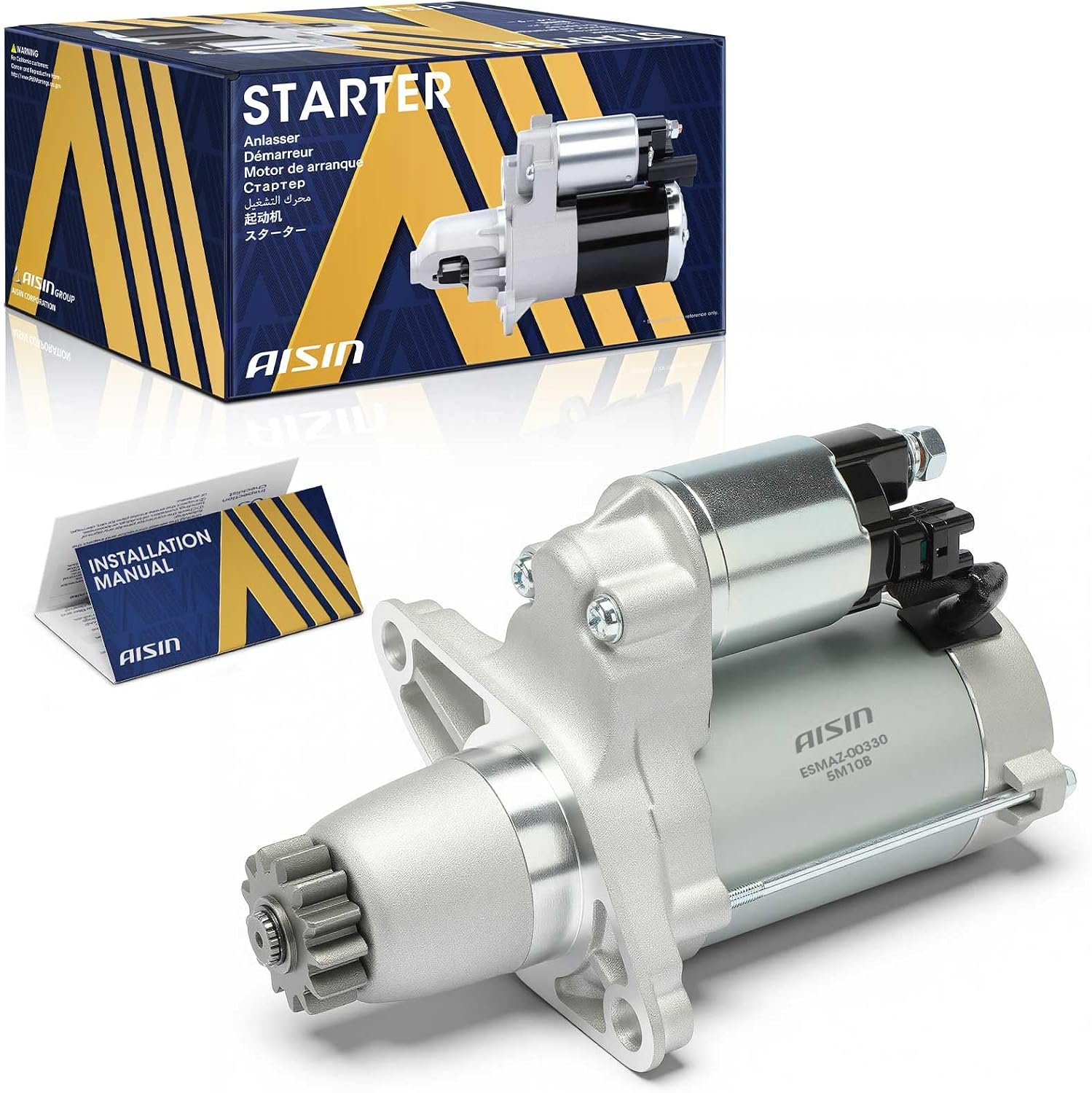
| Voltage | 12 Volts |
|---|---|
| Power Rating | 1.6 KW |
| Number of Teeth | 13 |
| Rotation | Counterclockwise |
This Aisin starter motor is built as a direct-replacement unit intended to restore reliable cranking on compatible Camry and other Toyota/Lexus engines. It supplies 1.6 kW of power with a 13-tooth drive and counterclockwise rotation, and arrives with an installation manual for plug-and-play swap-in. In practice the higher power rating and solid construction improve a tired starter’s ability to turn an engine quickly, which is helpful for performance-focused owners who want consistent, fast starts after modifications or higher-compression tune work. The unit’s electromagnetic switch and claimed environmental resistance suggest durability under repeated use, though real-world longevity depends on installation and vehicle condition. This starter is a single-vehicle fitment item so confirm rotation and tooth count against your 2007–2011 Camry’s original part; if those match, installation is straightforward but may require basic hand tools and safe battery disconnect procedures. There is no application-specific tuning—this restores starting performance rather than increasing engine power—so expect OEM-like operation with a bit more cranking capacity.
Best for: Drivers who push a 2007–2011 Camry hard or have engine modifications and prioritize reliable, quicker engine starts and durable replacement parts.
Less Ideal for: If you need a starter for a different vehicle or require electronic start features or variable-speed starting, this direct-replacement unit is not appropriate.
- Direct-replacement design for straightforward plug-and-play installation
- Higher power rating (1.6 kW) for stronger, quicker cranking
- Factory-brand manufacturer with components engineered for durability
- Includes installation manual and matches common reference part numbers
- Compatibility requires matching rotation and 13-tooth pinion so fit must be verified before purchase
- Does not provide electronic upgrades or performance modulation beyond stronger cranking
Verdict: Choose this Aisin starter when you want a durable, higher-power direct-replacement that restores fast, reliable starting on a 2007–2011 Toyota Camry.
IRONTREE TS17825N Starter Motor (replacement)

| Item model number | TS17825N |
|---|---|
| Manufacturer | IRONTREE |
| Wattage | 1.4 KW |
| Manufacturer Part Number | TS17825N |
| OEM Part Number | 17825N 16129 17449 19047 19205445 19306539 |
This IRONTREE TS17825N starter is designed as a drop-in replacement to restore starting function on compatible Toyota Camry models from the targeted model years. It mounts to the factory location and uses new internal components such as field coils, sealed bearings, and quality brushes to deliver the torque needed to crank a typical 4-cylinder Camry engine. Installation is straightforward for someone comfortable with basic mechanical work: remove the battery, clear the intake/accessory items and unbolt the old starter, then swap in this unit and reconnect wiring. The seller states the unit is fully tested and greased before shipping, which should reduce early failure risk. Practical benefits are reliable cold starts when the starter is healthy and a lower-cost alternative to dealership replacement. Reported longevity is mixed across user feedback so there is some variability in lifespan compared with higher-cost remanufactured units. Fitment must be checked against engine and year to ensure this specific part number matches the 2007–2011 Camry configuration before buying.
Best for: Buyers who want a budget-conscious, practical replacement starter to get a 2007–2011 Camry back on the road quickly and who are comfortable verifying fitment and performing or supervising a basic swap.
Less Ideal for: Drivers seeking a long-term, high-mileage guaranteed solution or those who prefer dealer-sourced remanufactured parts with extended proven lifespans should consider higher-end alternatives.
- Direct-replacement design for factory mounting and wiring for compatible Camry applications
- All-new internal components including sealed bearings and new brushes for immediate function
- Manufacturer says units are load-tested and pre-greased to improve out-of-box reliability
- Lower-cost option versus dealer or premium remanufactured starters
- Mixed user reports on long-term durability with some units failing around one year
- Fitment requires careful verification against engine code and year since multiple OEM part numbers exist
Verdict: A cost-effective, drop-in replacement starter that restores reliable starting for compatible 2007–2011 Camry engines when fitment is confirmed.
WAGSON 17825N Replacement Starter Motor

| Voltage | 12 Volts |
|---|---|
| Wattage | 16 KW |
| Material Type | Metal |
| Included Components | Starter |
This WAGSON 17825N is a straightforward replacement starter built to match factory mounting and function for affected Toyota Camry-era engines. It is used as a direct bolt-on to replace a failing starter and restore consistent cranking and quick starts. Notable features from the listing include 12 volt electrical compatibility and factory-style construction that reviewers report fits without modification and installs in roughly an hour for a DIYer following model-specific instructions. In practice the unit cranks smoothly, runs quieter than some aging originals, and has passed bench testing according to the brand. The practical benefit is a low-cost way to get a worn Camry back to reliable starts without buying a remanufactured or dealer part. Limitations are typical of economy replacements: long-term durability versus a higher-end reman or OE part is less proven, and if you lack basic tools or access under the vehicle professional installation will add cost. Confirm fitment for the 2007-2011 Camry before purchase to ensure the correct mounting and electrical connections.
Best for: Buyers looking to quickly restore reliable starting on a 2007–2011 Camry while keeping repair costs low and willing to install the part themselves or pay a basic shop labor rate.
Less Ideal for: If you prioritize the longest possible service life or prefer factory-sourced remanufactured parts with extended documented longevity, consider higher-end remanufactured or dealer options instead.
- Direct bolt-on fit reported for compatible Toyota models, simplifying DIY installation
- 12 volt design and factory-style construction for proper engine cranking function
- Low-cost alternative to remanufactured or dealer starters for budget repairs
- Multiple customer reports of quieter, faster cranking after installation
- Long-term lifespan not as documented as higher-priced remanufactured or dealer units
Verdict: An affordable, direct-replacement starter that brings a 2007–2011 Camry back to dependable starting without a large parts bill.
Boatrip 17825 Starter Motor Replacement for Toyota Camry (2002–2017)
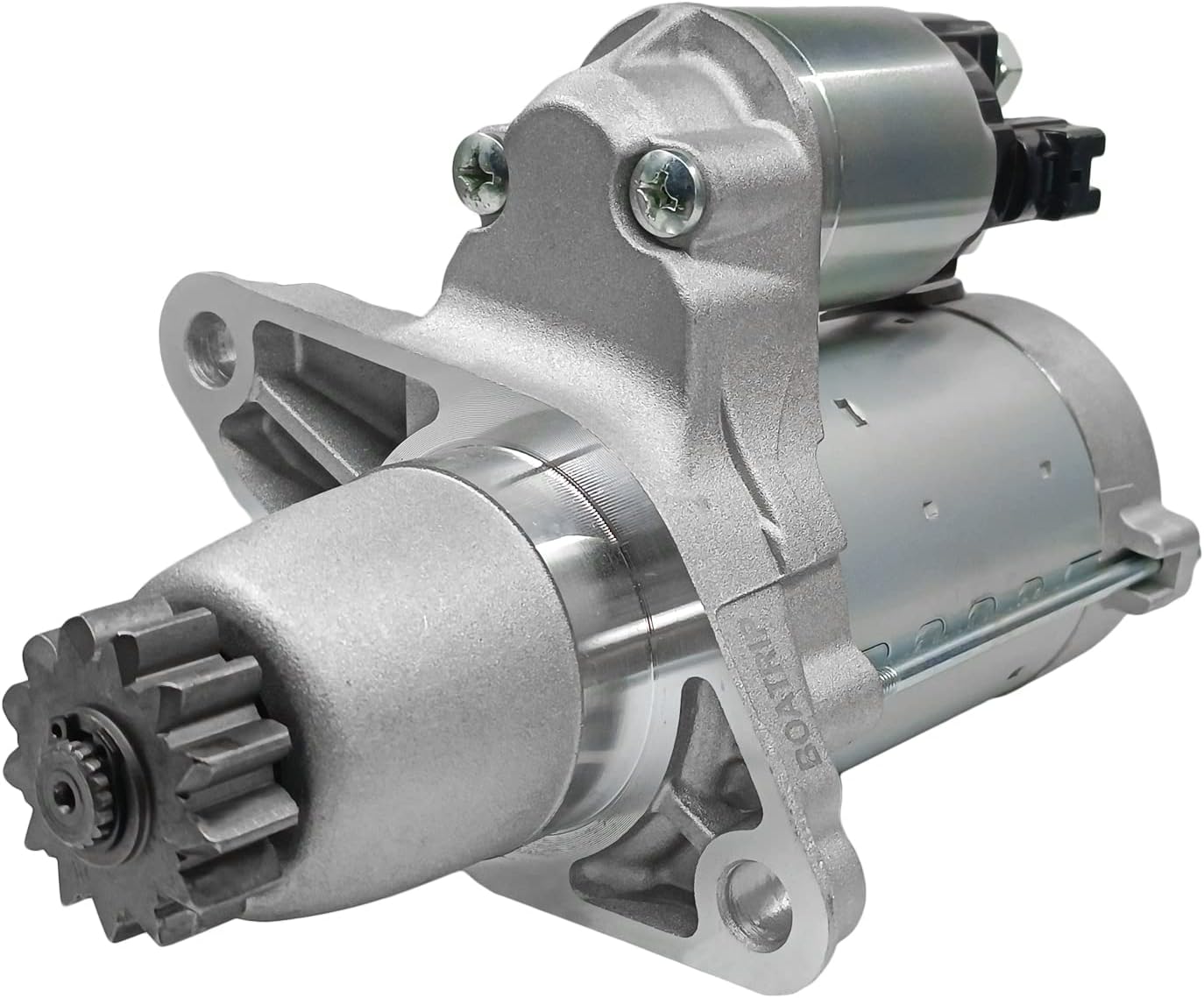
| Voltage | 12 Volts |
|---|---|
| Wattage | 1.6 KW |
| Manufacturer | Boatrip |
| Item model number | YWD8001 |
This Boatrip starter is a straightforward direct-replacement unit intended to restore reliable starting on compatible Toyota Camry model years in the specified fitment range. It installs like a factory-style starter and is used the same way as the original: remove the failed starter, bolt this unit in, connect the battery and signal wiring, and return the car to service. The product is built to meet OEM-style specifications and is advertised as manufactured from new components with standardized sizing for accurate fitment, which simplifies DIY or shop installation. Practical benefits include consistent cranking power from a 12V, 1.6 kW motor and a two-year replacement warranty that gives extra assurance for long-term reliability. Limitations to consider are occasional fitment quirks reported for the signal wire retainer and the fact it is an aftermarket unit rather than a factory-branded part, so longevity can vary with installation conditions and vehicle history. Expect good value and dependable starts when installed correctly on covered Camry model years within the listed fitment window.
Best for: Buyers who prioritize dependable starting and minimal downtime and who prefer a ready-to-install replacement that restores normal operation without seeking an OEM-labeled part.
Less Ideal for: Drivers who only accept factory-branded parts for every repair or those planning extensive engine modifications that change starter requirements should consider alternatives.
- Direct-fit design aimed at matching factory mounting and alignment for easier installation
- Rated 12V and 1.6 kW to deliver solid cranking power comparable to stock starters
- Manufactured to meet industry quality standards with new internal components rather than remanufactured parts
- Two-year replacement warranty provides added reassurance for long-term use
- Consistent user reports of easy installation and reliable starting on Camry models
- Aftermarket unit so long-term durability may vary compared with a factory-branded starter
- Some users report the signal wire connector does not click into place as securely as the original
Verdict: A reliable, direct-fit aftermarket starter that restores dependable starting for covered Toyota Camry model years while offering a two-year replacement warranty.
BDELI Replacement Starter Motor for 2007–2011 Toyota Camry (V6/3.5L) — PMGR 12V

| Voltage | 12 Volts |
|---|---|
| Wattage | 1.6 KW |
| Amperage | 20 Amps |
| Rotation | CCW |
This BDELI starter is an aftermarket replacement built to match the factory-style permanent magnet gear reduction (PMGR) starter used on the 2007–2011 Camry V6 3.5L. It is intended for direct replacement and is supplied with mounting hardware and shims so installers can align the unit without modification. The starter offers 12 volts and a 1.6 kW (16 kW listed as kW16 in specs) rating with a counterclockwise rotation and 13 teeth, which translates to the same engagement characteristics as the original on compatible Camry V6 engines. Buyers report straightforward bolt-on installation and reliable cranking power with no unusual noises when fitted correctly. Practical benefits include factory-style fitment, included adjustment shims, and a one-year replacement promise from the brand. Limitations to note are that supplied bolts may be lower quality than the starter itself so using known-good fasteners is advisable, and longevity can vary compared with higher-end remanufactured units. This is a value-focused choice for replacing a failed starter on specified Camry V6 models when you want a near-direct swap without dealer pricing.
Best for: Buyers who want a budget-friendly, near-direct replacement starter for a 2007–2011 Camry V6 and prefer options with multiple positive user reports to reduce risk.
Less Ideal for: Drivers seeking a premium remanufactured or OEM-sourced unit for maximum expected longevity or those unwilling to swap supplied fasteners for higher-quality hardware.
- Designed to match factory PMGR form and rotation for direct bolt-on replacement on 2007–2011 Camry V6 3.5L
- Includes shims and mounting hardware to simplify alignment during installation
- Reports of strong, consistent cranking and easy installation from multiple users
- Manufactured in ISO 9001 and IATF 16949 certified facilities and backed by a one-year replacement policy
- Some customers report the supplied bolts are low quality and may be worth replacing before installation
Verdict: A cost-conscious, bolt-on PMGR starter that delivers reliable cranking for 2007–2011 Camry V6 owners backed by strong user feedback.
srosant Starter Motor Compatible with 2007–2011 Toyota Camry and Related Models

| Starter Type | PMGR |
|---|---|
| Voltage | 12 |
| Power Rating | 1.6 |
| Rotation | CCW |
| Number of Teeth | 13 |
This srosant starter is a direct-fit replacement designed for 2007–2011 Toyota Camry applications and similar Toyota/Lexus models that use the same starter configuration. It is a 12V PMGR unit with a 13-tooth pinion and counterclockwise rotation intended to swap in where the factory starter is removed. Typical use is a straight replacement during a no-crank condition or when the original starter starts to fail; installation is the usual bolt-and-wiring swap and several reviewers report simple, bolt-on fit and reliable first starts. The listing emphasizes 100 percent new internal components, ISO/IATF factory certifications, and a one-year free replacement which should reassure cautious buyers. Practical benefits include OEM-style mounting, common replacement part numbers for easy cross-checking, and a warranty-backed return option. Limitations are that electrical specs beyond voltage and power rating are minimal in the listing, so garages should verify pinion count and rotation against the vehicle before purchase, and long-term durability beyond the warranty period depends on operating conditions.
Best for: A cautious buyer who wants a low-risk, factory-style replacement starter for a 2007–2011 Camry and values clear fitment references and a warranty-backed option.
Less Ideal for: Drivers seeking a performance-upgraded starter or a unit with extended lifetime testing records should consider higher-end or dealer-sourced alternatives.
- Direct-replacement PMGR design built to match factory mounting and pinion specifications for compatible Camry-era models
- Uses 100% new internal components and produced in an ISO 9001 and IATF 16949 certified factory
- Includes a one-year free replacement policy for added peace of mind
- Cross-referenced to many common Toyota part numbers to simplify fit verification
- Technical detail is limited to basic specs so buyers must confirm pinion teeth and rotation before installation
- Long-term reliability beyond the one-year replacement window is not documented in the listing
Verdict: A budget-friendly, factory-style replacement starter that matches common Camry-era specifications and includes a one-year replacement guarantee for reassurance.
Choosing the Right 2007-2011 Toyota Camry Starter Motor: Key Factors to Consider
Fitment and Compatibility
Correct fitment is the single most important factor when replacing a starter on a 2007-2011 Toyota Camry. The starter must match the engine bellhousing pattern, mounting bolt spacing, and electrical terminal layout so it installs without modification. Incorrect fitment can lead to misaligned pinion engagement, oil or coolant interference, and added stress on the ring gear.
Compatibility also covers the drive type and tooth count on the pinion. A mismatched pinion may not engage properly with the flywheel, producing grinding or failure to crank. Always verify the starter indexes and electrical connector style against the Camry's factory configuration before purchase.
Electrical and Solenoid Design
The starter solenoid controls pinion engagement and the heavy current flow to the motor. For the Camry, look for a solenoid integrated to the starter housing with robust terminals and appropriate wire harness fit. Poor solenoid design can cause intermittent engagement, slow cranking, or failure to engage, often presenting as clicking noises.
Also consider the condition and placement of the positive and ground terminals. Starters with clearly marked, sealed terminals and corrosion-resistant finishes reduce the chance of voltage drop and electrical faults that lead to weak starts.
Cranking Torque and Motor Build Quality
Cranking torque determines how effectively the starter turns the engine, especially during cold starts or on higher-compression variants. For the 2007-2011 Camry, adequate torque ensures smooth initial rotation without overworking the starter. Evaluate motor construction elements such as brush quality, field coil materials or permanent magnet configuration, and bearing types.
Higher-grade bearings and better brush carriers reduce wear and electrical arcing, extending service life. A sturdier motor housing and proper internal clearances help the starter resist vibration and heat over many thousands of starts.
Durability and Environmental Protection
Starters on the Camry are exposed to engine bay heat, moisture, and in some cases road splash. Units with seals, protective coatings, and robust casings better resist corrosion and internal contamination. Thermal protection to prevent overheating during extended cranking is beneficial for longevity.
Consider construction features that mitigate common failure modes such as worn commutators or water intrusion. A starter built with corrosion-resistant hardware and improved sealing can reduce the need for premature replacement on a vehicle that sees varied weather and driving conditions.
Ease of Installation and Serviceability
Many Camry owners or independent shops prefer a starter that installs with minimal disassembly of surrounding components. Factors like bolt accessibility, connector type, and whether the unit is pre-greased or comes with new mounting hardware affect installation time.
Serviceability also includes whether replacement parts like brushes or drive assemblies are available separately. Starters designed for simpler field service lower long-term maintenance costs and minimize downtime during replacement.
Warranty and Parts Availability
A clear warranty and access to replacement parts provide assurance and reduce ownership risk. For the 2007-2011 Camry, warranty terms indicate the manufacturer's confidence in durability and can be a deciding factor when comparing similar units.
Availability of replacement solenoids, brushes, or drive kits matters if you plan to extend service life by repairing rather than replacing the entire starter. Consider warranty length and what it covers, such as defects versus wear items, when evaluating overall value.
Common Starter Motor Symptoms on a 2007-2011 Camry
Recognizing early symptoms helps avoid sudden no-start situations. Typical signs include a single or repeated clicking noise when turning the key, very slow cranking, or no cranking at all. Electrical symptoms can also mimic starter failure, so checking battery condition and connections is important first.
Other indicators are intermittent engagement where the engine turns over sometimes but not reliably, or a grinding noise during engagement that suggests the pinion is not seating properly with the flywheel. Monitoring these symptoms lets you decide whether a starter replacement or additional electrical troubleshooting is needed.
- Clicking on key turn often points to solenoid or low-voltage issues
- Slow cranking can indicate weak motor torque or poor battery connections
- Grinding during engagement suggests misaligned pinion or damaged flywheel teeth
- Intermittent starts may arise from worn internal contacts or poor terminal connections
Pre-replacement Checks and Diagnostics
Before replacing the starter, verify the battery is fully charged and that battery terminals and ground straps are clean and tight. Voltage drop tests across the starter circuit can distinguish between electrical wiring issues and a failing starter unit. Confirming the starting system voltage under load helps determine if the motor itself is at fault.
You can also perform a bench test if the starter is removed, applying appropriate voltage while securing the unit to observe spin speed and drive engagement. For owners who prefer targeted troubleshooting, inspecting the starter solenoid for continuity and checking for visible corrosion on terminals often reveals repairable problems.
- Check battery charge and terminal corrosion first
- Perform a voltage drop test across starter positive and ground
- Bench test removed starter to observe motor spin and pinion engagement
- Inspect wiring harness and ignition switch if electrical tests are inconclusive
Installation Tips for Camry Owners
Prepare the vehicle by disconnecting the negative battery terminal and allowing the engine bay to cool. Support the vehicle safely if access is needed from below. Keep fastener locations organized and note torque values for the mounting bolts to ensure correct alignment and prevent distortion of the starter housing.
When installing, confirm the starter pinion meshes smoothly with the flywheel and that wiring terminals are snug and protected from heat and vibration. Reuse only OEM-grade mounting hardware or replace with equivalents to maintain correct spacing and prevent stress on the housing. After installation, perform a start test and re-check terminal tightness after a short drive.
- Disconnect battery negative before starting work
- Torque mounting bolts to factory specifications to avoid misalignment
- Ensure wiring terminals are tight and insulated from exhaust or heat sources
- Test-start after installation and re-check hardware after initial use
When to Repair Vs Replace Starter Components
Minor issues such as corroded terminals, a sticking solenoid, or worn brushes can sometimes be repaired, extending the life of the existing starter. However, repairability depends on the starter construction and availability of replacement parts. For a 2007-2011 Camry, evaluate the cost and expected remaining life before choosing repair over replacement.
If internal damage is extensive, or if the unit shows signs of bearing failure, overheating, or severe wear on the drive assembly, a full replacement is usually the most reliable option. Consider the vehicle's mileage and how long you intend to keep the Camry when making this choice.
- Repair terminal corrosion and loose connections when present
- Replace brushes or solenoid only if parts are available and the housing is otherwise sound
- Choose full replacement for bearing failure, overheating damage, or heavy wear
- Factor vehicle mileage and future ownership plans into the repair-versus-replace decision
Maintaining Starter Reliability Over Time
Regular battery and charging system maintenance reduces stress on the starter motor. Keep terminals clean, ensure charging voltage is within specification, and address oil or coolant leaks that could contaminate the starter. Periodic inspection of mounting hardware and connectors helps catch early corrosion or wear.
Avoid prolonged starter engagement by addressing underlying causes such as weak fuel delivery or ignition faults that lead to multiple start attempts. Maintaining the broader starting and engine systems contributes directly to the starter's lifespan on a Camry.
- Keep battery and charging system in good condition
- Inspect starter wiring and mounting hardware periodically
- Repair engine issues that cause repeated cranking attempts
- Protect the starter from oil or coolant leaks that accelerate wear
Still looking for the perfect fit?
Select your Toyota Camry configuration to see the most relevant Starter Motors recommendations
How We Chose the Best 2007-2011 Toyota Camry Starter Motor
Our selection process focused on the attributes that affect performance and ownership experience for a 2007-2011 Toyota Camry. We prioritized correct fitment to the Camry's engine and bellhousing, verified starter engagement type and gear tooth count, and assessed motor construction quality including solenoid integration and bearing design. Durability indicators such as materials, thermal protection, and recommended torque specs were weighed to estimate service life under typical Camry duty cycles. We also considered how straightforward installation and wiring access are for common DIY and shop replacements, plus warranty length and available replacement parts.Excluded items included universal starters that require major modification, refurbished units lacking documented rebuild standards, and any units with unclear compatibility for the 2007-2011 Camry. The final list favors units that balance correct mechanical fit, robust solenoid and drive designs, and realistic service-life expectations for Camry owners.
Our full evaluation process is outlined in our review methodology.
FAQ
What are common starter motor symptoms on a 2007-2011 Toyota Camry?
Common symptoms include clicking when turning the key, slow cranking, intermittent engagement, or grinding during cranking. Electrical issues such as poor battery connections can produce similar symptoms, so basic electrical checks are recommended first.
How do I test a starter on my 2007-2011 Camry?
Start with a fully charged battery and perform a voltage drop test across the starter circuit. If removed, a bench test with proper safety precautions can show motor spin and pinion engagement. Check solenoid continuity and inspect terminals for corrosion as part of the test.
Can I install a replacement starter myself on this Camry?
Many owners can install a starter with basic tools, but the job involves disconnecting the battery and accessing mounting bolts that may be under the engine. Follow torque specs and safety procedures; if access is difficult or if you are uncomfortable, seek professional assistance.
Are starter solenoid problems common on these Camrys?
Solenoid issues are a common failure mode because the part controls engagement and heavy current. Symptoms include clicking or intermittent engagement. Often solenoid faults can be diagnosed with continuity tests, but solenoid replacement or full starter replacement may be required depending on condition.
When is it better to replace the whole starter instead of repairing parts?
Replace the whole starter if there is bearing failure, severe wear on the drive assembly, overheating damage, or if replacement parts are not readily available. Full replacement is generally more reliable when internal wear is extensive.
What affects starter motor cost and value for this Camry?
Cost and value are influenced by construction quality, included warranty, and whether the unit is new or rebuilt. Also consider expected longevity and ease of installation, since a longer-lasting, properly fitting unit usually offers better value over time.
Final Verdict
Prioritize correct mechanical fit and solid solenoid and motor construction when choosing a starter motor for a 2007-2011 Toyota Camry. Confirm bolt pattern, electrical terminal layout, and pinion specifications to avoid engagement issues. Balance ease of installation and warranty coverage against anticipated service life and your ownership plans.Choosing a starter that matches the Camry's fitment and offers robust build quality will minimize future starting problems and repairs. Focus on the factors discussed above to pick a solution that restores reliable starting and delivers durable performance over time.
Explore More:
- Check out all Toyota Camry parts & accessories
- Explore Starter Motors Maintenance & Repair Guides
- Explore Electrical System
- Browse all Auto Parts
