

Note: This article contains affiliate links. If you click on these links and make a purchase, I may earn a small commission at no extra cost to you. This helps support my research and content. Read my full affiliate disclosure here.
Picking the right Hyundai Elantra car battery matters because a mismatch can leave you stranded or shorten battery life. You want a unit that delivers reliable cold starts, handles accessory load, and fits the Elantra’s battery tray and terminal layout. This guide presents six shortlisted options that meet common fitment and performance needs for the Elantra.We evaluated each pick using starter performance and long-term durability metrics, plus fitment and maintenance considerations. Read on to see the top options and the criteria we used to choose them.
Looking for other parts? See all Hyundai Elantra parts & accessories.
Top Picks at a Glance
| Best Reviewed A top-rated pick with lots of positive feedback | UPLUS Group 48 AGM Start-Stop Car Battery (12V, 70Ah) |  |
| Best Quality Built to a higher standard if you want something more solid | MARXON 48AGM Group 48 H6 L3 12V 70Ah Start-Stop AGM Car Battery |  |
| Best Budget The cheapest option that still gets the job done reliably | 1AUTODEPOT Group 48 (H6) 12V 70Ah AGM Car Battery, 760 CCA | 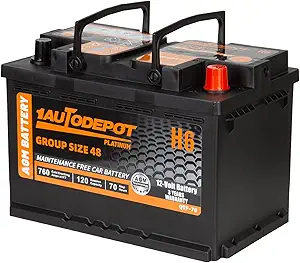 |
| Most Sold A high-volume bestseller chosen again and again | Mighty Max Battery MM-H6 Group 48 12V 70Ah AGM Car Battery |  |
| Best Value for Money The sweet spot between price and what you get | 1AUTODEPOT Group 47 (H5) 12V 60Ah AGM Car Battery, 680 CCA |  |
| Best Overall The best all-around choice for most situations | OPTIMA Batteries RedTop 35 Sealed AGM Starting Battery |  |
1. UPLUS Group 48 AGM Start-Stop Car Battery (12V, 70Ah)

| Voltage | 12 Volts |
|---|---|
| Nominal Capacity (20HR) | 70 Ah |
| Cold Cranking Amperage | 760 CCA |
| Reserve Capacity (RC) | 120 min |
| Battery Technology | AGM |
This UPLUS Group 48 AGM battery is a sealed, maintenance-free replacement aimed at vehicles that use start-stop systems or have higher electrical loads. It delivers strong starting power with a listed 760 CCA and 120 minutes reserve capacity, so it should crank reliably in cold conditions and support accessories during short trips. The AGM construction and enhanced negative paste claim longer cycle life than conventional flooded batteries, and the sealed design reduces acid leakage and vibration-related failures. Typical use is a direct fit replacement where a Group 48/H6/L3 battery is specified; installation is straightforward if terminal layout and hold-down type match the Elantra's battery tray and cable positions. Downsides are weight and size compared with smaller group batteries, which can complicate handling and require careful fitment checks for some model years. The manufacturer also notes local support and a three-year after-sales period which helps if problems arise.
Best for: Reliability-focused buyers who prioritize a durable, sealed AGM battery that copes well with frequent short trips, stop-start driving, and higher electrical loads.
Less Ideal for: Buyers who need a direct drop-in lighter-weight replacement or who prefer a smaller group battery for tight battery trays should consider alternatives.
- AGM design offers better vibration resistance and no free acid, improving durability in stop-start driving.
- High cold cranking amperage (760 CCA) suitable for reliable cold-weather starts.
- 120 minute reserve capacity provides extra electrical reserve for accessories and short-trip use.
- Sealed, maintenance-free construction reduces corrosion and the need for topping up.
- Manufacturer provides local US support and a three-year after-sales period.
- Group 48 size is heavier and bulkier than many Elantra stock batteries, so fit and handling require care.
- Terminal layout and hold-down type must be verified against the vehicle before installation to avoid compatibility issues.
Verdict A durable, high-cranking AGM Group 48 battery built for reliability in stop-start and accessory-heavy driving, but confirm physical fit and terminal layout for your Elantra before buying.
2. MARXON 48AGM Group 48 H6 L3 12V 70Ah Start-Stop AGM Car Battery
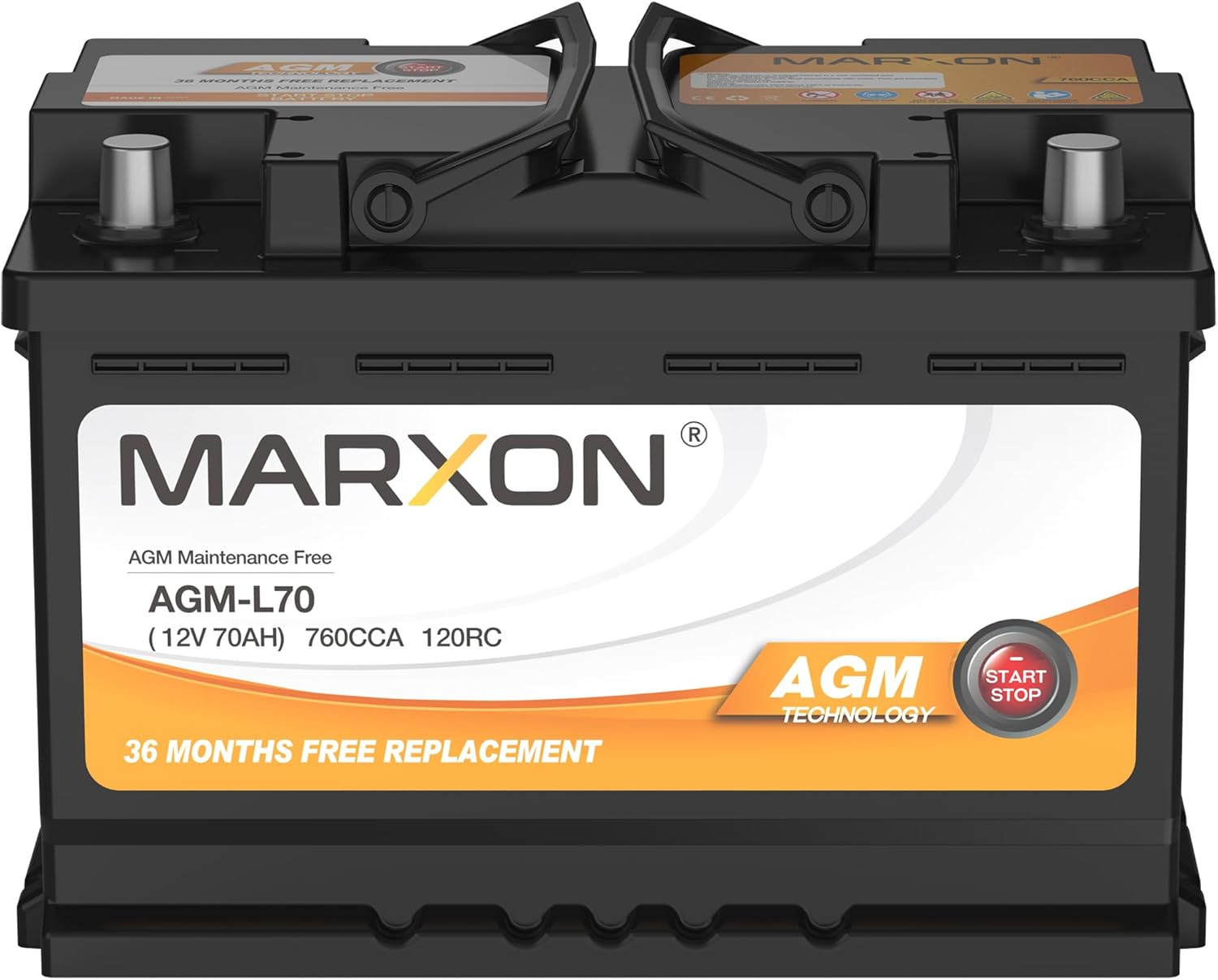
| Voltage | 12V |
|---|---|
| Capacity | 70Ah |
| Battery type | AGM |
| Item model number | Group 48 H6 L3 |
The MARXON Group 48 AGM battery is a 12V, 70Ah start-stop replacement built to deliver strong cranking and more durable charge acceptance than conventional lead-acid units. It installs like a standard Group 48 battery and is intended for cars that use start-stop systems; the AGM construction reduces leakage risk and allows deeper cycling and longer storage between uses. Notable features include faster charging acceptance compared with SLA batteries, a maintenance-free design, and claimed improved corrosion resistance from a proprietary alloy. In real-world use this means quicker recovery after repeated starts, reliable cold cranking for everyday driving, and lower risk of acid maintenance. Limitations are that claimed CCA varies across listings and real-world peak cold performance can differ from OEM batteries designed specifically for the vehicle; some users report lower-than-OEM amperage figures and recommend verifying fit and terminal orientation before purchase. For performance-focused drivers, the MARXON is a strong value option if you need start-stop capability and better cycle durability than standard flooded batteries.
Best for: Performance-oriented buyers who prioritize reliable starts and faster recharge in vehicles with start-stop systems and who want a cost-effective upgrade over standard flooded batteries.
Less Ideal for: Drivers who require exact OEM-matching cold-cranking ratings for extreme cold climates or who prefer dealer-specified battery replacements with guaranteed manufacturer fitment and specs.
- AGM design for reduced leakage and better deep-cycle durability compared with flooded batteries
- Start-stop compatible to restore idle-stop functionality and improve fuel economy
- Faster charging acceptance than SLA-type batteries for quicker recovery after discharge
- Maintenance-free construction eliminates the need to add water or acid
- Specified cold cranking amps vary by source so peak cold-start performance may be lower than some OEM batteries
- Group 48 size and terminal orientation must be confirmed for fitment before purchase
Verdict A budget-friendly AGM Group 48 battery that restores start-stop performance and faster recharge acceptance, but confirm cold-cranking specs and fit for your Elantra before buying.
3. 1AUTODEPOT Group 48 (H6) 12V 70Ah AGM Car Battery, 760 CCA

| BCI Group Size | 48 |
|---|---|
| Rated capacity | 70ah |
| Cold Cranking Amps (CCA) | 760 |
| Reserve Capacity (RC) | 120 |
This 1AUTODEPOT Group 48 AGM battery is a maintenance-free replacement designed for vehicles that require a Group 48 (H6) battery. It supplies 12 volts with 70 Ah capacity and 760 CCA, so it provides confident starting in cold weather and can support higher accessory loads than a typical flooded battery. The AGM construction is non-spillable, more vibration resistant, and holds charge better during periods of vehicle storage, which is useful if the car sits unused for weeks. It is marketed as compatible with start-stop systems and claims a longer cycle life than conventional batteries. On the downside it is heavier than flooded batteries and will require careful handling during installation, and you must confirm terminal orientation and fit in the Elantra battery tray before purchase. For a budget-focused buyer wanting stronger cranking power and improved durability over cheap flooded replacements, this battery delivers a compelling value, but expect the usual weight and fitment checks for a direct swap into your Hyundai Elantra.
Best for: Budget-conscious buyers who prioritize stronger starting power and longer service life than a basic flooded battery while keeping cost in mind.
Less Ideal for: Drivers who prefer the lightest possible battery for weight-sensitive builds or those who need a different battery group size or terminal layout than Group 48 for their Elantra.
- High cold cranking amps (760 CCA) for reliable cold-weather starts.
- AGM construction offers low self-discharge, non-spillable design, and greater vibration resistance.
- Rated reserve capacity of 120 minutes and 70 Ah capacity to support accessories and longer idle periods.
- Designed for start-stop applications and claims up to twice the cycle life of flooded batteries.
- Heavier than flooded batteries which makes handling and installation more difficult.
- Requires verification of terminal positions and physical fit before installation in the vehicle.
Verdict A cost-friendly AGM upgrade that gives the Hyundai Elantra stronger cold-start power and better long-term resilience than flooded batteries, provided you confirm fit and terminal orientation.
4. Mighty Max Battery MM-H6 Group 48 12V 70Ah AGM Car Battery
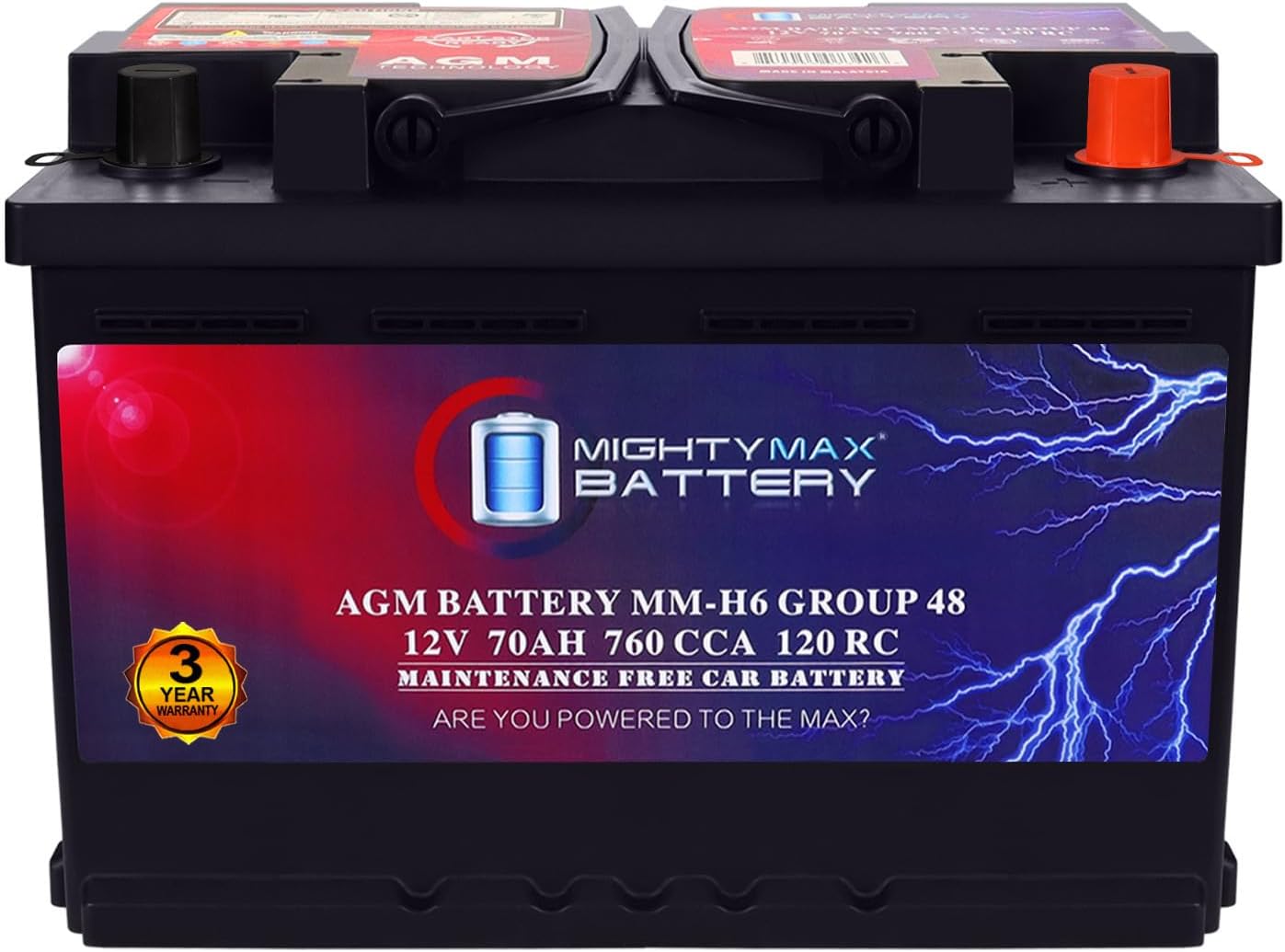
| Voltage | 12V |
|---|---|
| Capacity | 70 Amp Hours |
| Cold Cranking Amps | 760 CCA |
| Reserve Capacity | 120 minutes |
| Battery Type | AGM |
This Mighty Max MM-H6 is a 12V AGM Group 48 battery intended as a direct replacement for vehicles using that size; it provides 70 Ah, 760 CCA and a 120-minute reserve capacity for extended electrical support. As a maintenance-free, sealed AGM unit it installs where a Group 48 fits and can be mounted in multiple orientations except upside down. The AGM construction means no spilling, better deep-discharge recovery and improved vibration resistance compared with basic flooded batteries, which helps reliability in stop-start city driving and colder starts. Practical benefits include included mounting screws and clear terminal polarity. Limitations are the mixed reliability reports from other buyers and the need to confirm physical fit and terminal type for a specific Hyundai Elantra trim before buying. While the battery advertises a multi-year warranty and factory-quality safety certifications, warranty handling and return logistics have been flagged by some users so factor that into purchase decisions.
Best for: Risk-averse mainstream buyers seeking a maintenance-free, sealed replacement battery that prioritizes reliable cold starts and steady accessory support for daily driving.
Less Ideal for: Buyers who prefer dealer-backed replacements with in-person warranty swaps or who need a battery specifically guaranteed by Hyundai dealers should consider dealer or OEM options instead.
- AGM sealed design offers spill-proof installation and better deep-discharge recovery
- High cold cranking amps (760 CCA) for dependable starts in cold weather
- 120-minute reserve capacity supports longer run times for electronics
- Universal Group 48 fit and multiple mounting positions for flexible installation
- Some customer reports of early failures and challenging warranty/return processes
- Physical dimensions and terminal stud orientation still need verification for specific Elantra trim
Verdict A cost-effective sealed AGM Group 48 battery that delivers strong starting power and reserve capacity but requires careful fit and warranty consideration for long-term peace of mind.
5. 1AUTODEPOT Group 47 (H5) 12V 60Ah AGM Car Battery, 680 CCA

| BCI Group Size | 47 (H5) |
|---|---|
| Rated capacity | 60ah |
| Cold Cranking Amps (CCA) | 680 |
| Voltage | 12V |
| Reserve Capacity (RC) | 100 |
This 1AUTODEPOT Group 47 (H5) AGM battery is built as a maintenance-free replacement for vehicles that use the H5/Group 47 size, offering 680 CCA and a 60 Ah rated capacity. It is typically used as a direct-fit replacement to restore reliable starting, support accessories, and handle start-stop demands. The absorbed glass mat construction provides better vibration resistance, lower self-discharge, and improved heat and cold tolerance compared with conventional flooded batteries. Practical features include top-mounted Type A terminals with a left negative orientation and a leak-proof, non-spillable design that simplifies installation and handling. Buyers will get quicker recharging and a reserve capacity useful for short accessory loads when the engine is off. Limitations are that fitment must match Hyundai Elantra models that accept Group 47/H5 batteries and charging characteristics require a compatible charging voltage range; this battery may be heavier than standard flooded replacements and could need careful handling during install.
Best for: Practical optimizers who want the best balance of durable starting power and longer life for a Hyundai Elantra without paying premium brand prices, while prioritizing dependable day-to-day use and low maintenance.
Less Ideal for: If you need a battery for an Elantra that requires a different group size or a lighter weight option for tight under-hood access, choose a model matched exactly to that specification or a different form factor.
- AGM construction gives higher vibration resistance and lower self-discharge than flooded batteries
- 680 CCA provides strong cold-start performance for most climates
- Designed for start-stop demands and higher accessory loads
- Leak-proof, maintenance-free design reduces handling and maintenance concerns
- Requires correct Group 47/H5 fitment and terminal orientation for Hyundai Elantra applications
- Heavier than typical flooded batteries which makes handling and installation more cumbersome
Verdict A cost-conscious AGM replacement that delivers strong starting power and longer cycle life for Hyundai Elantra models that accept Group 47/H5 batteries.
6. OPTIMA Batteries RedTop 35 Sealed AGM Starting Battery

| Voltage | 12-Volt |
|---|---|
| Cold Cranking Amps | 720 CCA |
| Terminal | SAE Terminal |
| C20 Capacity | 44 AH |
| Reserve Capacity | 90 minutes |
The OPTIMA RedTop 35 is a sealed AGM starting battery built to deliver reliable engine starts and durable service in demanding conditions. It installs like a regular battery and is typically used as a direct replacement for compatible Hyundai Elantra battery trays and SAE post terminals. Notable features include SpiralCell plate construction for consistent high-current delivery, a 720 CCA rating for strong cold starts, and a maintenance-free, non-spillable design that allows mounting in multiple orientations. The battery’s advertised benefits are fast recharge, long reserve capacity and exceptional vibration resistance, which suit city driving, highway commuting, and occasional cold-weather starts. Important limits are that it is a starting battery rather than a deep-cycle unit, so it is not ideal for heavy accessory loads or deep-discharge applications, and its higher price and weight are factors to consider when replacing the factory battery. Check physical fit and terminal layout for your Elantra before purchase to ensure proper installation and hood clearance.
Best for: Balanced buyers who want a durable, ready-to-start replacement that reduces worry about cold starts and vibration damage while keeping maintenance minimal.
Less Ideal for: Drivers who need a budget-first replacement or who require a battery for sustained deep-cycle use such as extensive audio systems or off-grid power should look elsewhere.
- High cold cranking amps (720 CCA) for reliable starting in cold weather.
- Sealed AGM construction allows flexible mounting and is non-spillable.
- SpiralCell design and claimed high vibration resistance improve durability in rough roads.
- Maintenance-free operation with faster recharge and long reserve capacity for dependable everyday use.
- Heavier and more expensive than standard flooded replacement batteries.
- Designed for starting use only and not intended for frequent deep-cycle or heavy accessory duty.
Verdict A durable, high-CCA sealed AGM starter battery that is a practical, low-maintenance upgrade for Elantra owners who prioritize reliable starting and long-term durability.
Choosing the Right Hyundai Elantra Car Battery: Key Factors to Consider
Group Size and Fitment
Selecting the correct group size ensures the battery fits the Elantra’s tray and secures properly. A battery that is too large may not mount safely, while one that is too small can shift and cause terminal stress.
Fitment also includes terminal orientation and cable reach. Confirming these dimensions prevents installation hassles and avoids the need for extension cables or terminal adapters.
Cold-Cranking Amps (CCA)
Cold-cranking amps indicate a battery’s ability to start the engine in low temperatures and directly affects reliability during cold weather. Higher CCA values generally mean stronger starting performance, which is important if you drive in cool climates or make frequent short trips.
Evaluate CCA relative to the vehicle maker’s recommendation to ensure consistent starting without overtaxing the electrical system.
Reserve Capacity and Accessory Load
Reserve capacity measures how long a battery can run essential electrical systems if the charging system fails. For drivers who use infotainment, heated seats, or accessory power, a higher reserve capacity reduces the risk of a drained battery during idle or short trips.
This factor matters for avoiding mid-journey electrical failures and for providing buffer time during alternator faults or heavy accessory use.
Battery Construction and Durability
Build quality affects how a battery tolerates vibration, heat, and charge cycles. Look for features like reinforced plate design, corrosion-resistant terminals, and robust casing to extend service life under normal driving conditions.
Durability also correlates with expected cycle life and how well the battery resists sulfation and water loss. These construction choices influence long-term maintenance frequency and reliability.
Warranty and Expected Lifespan
Warranty terms provide insight into the manufacturer’s confidence and can offset replacement costs if early failure occurs. Consider both the length of the free-replacement period and prorated coverage after that period ends.
Expected lifespan estimates, when available, help set expectations for replacement intervals and allow you to weigh initial cost against likely service duration.
Maintenance and Installation Ease
Some batteries are low-maintenance or maintenance-free, reducing the need to check electrolyte levels or add distilled water. For most owners, a maintenance-free design simplifies ownership and reduces routine checks.
Installation ease covers terminal access, weight, and whether top or side terminals are used. Simpler installation reduces the chance of improper connections and makes DIY replacement more feasible.
FAQ
How do I know which battery size fits my Hyundai Elantra?
Check your vehicle’s owner manual or the battery tray for the recommended group size and terminal layout. These specifications ensure the unit mounts correctly and that cables reach without strain. If you are unsure, consult a professional to confirm fitment.
What CCA rating should I look for in colder climates?
In colder regions, choose a battery with a higher cold-cranking amp rating than the minimum recommended to improve starting reliability. The exact number depends on local temperatures and engine size, but prioritizing adequate CCA helps avoid hard starts during cold mornings.
Can I swap to a maintenance-free battery from a serviceable one?
Yes, you can switch to a maintenance-free battery as long as the group size, terminal orientation, and capacity match your vehicle’s requirements. Maintenance-free units reduce routine upkeep, but ensure the replacement meets the Elantra’s power and fitment specifications.
How often should I test my car battery?
It is common to test the battery annually and more often if you notice weak starts or frequent short trips. Regular testing helps detect diminished capacity or charging issues before complete failure, making preventative replacement more predictable.
Will a higher reserve capacity help if my alternator fails?
A higher reserve capacity gives you more time to run essential systems if the alternator fails, but it is not a long-term solution. It can provide a useful buffer to reach service, especially with accessory load, but you should address the charging system problem promptly.
How We Chose the Best Hyundai Elantra Car Battery
We focused on factors that directly affect real-world reliability and fitment for the Hyundai Elantra. Our editorial filters prioritized correct group size and terminal layout, sufficient cold-cranking amps for reliable starts in varied temperatures, and reserve capacity to support accessories and short idle periods. Durability metrics such as expected cycle life and warranty coverage were also important to estimate long-term ownership value. We included construction quality indicators like plate design and corrosion-resistant terminals because these affect maintenance and longevity. Ease of installation and standard safety features were considered to ensure straightforward replacement.We excluded batteries that do not match common Elantra group sizes or that lack clear specification sheets. Lightweight or specialty units intended for racing or nonstreet use were not considered. The final list reflects products that balance fitment, starting power, and service life for everyday driving needs.
Our full evaluation process is outlined in our review methodology.
Conclusion
Choosing the right Hyundai Elantra car battery means balancing correct fitment with sufficient starting power and reserve capacity. Prioritize group size and terminal layout first, then select a battery with CCA and reserve capacity that match your climate and accessory needs.Consider construction quality and warranty to estimate long-term value, and opt for maintenance features that fit your willingness to perform routine checks. These priorities will help you pick a reliable replacement that minimizes surprises.
Explore More:
- Check out all Hyundai Elantra parts & accessories
- Explore Car Batteries Maintenance & Repair Guides
- Explore Electrical System
- Browse all Auto Parts
