

Note: This article contains affiliate links. If you click on these links and make a purchase, I may earn a small commission at no extra cost to you. This helps support my research and content. Read my full affiliate disclosure here.
If your Hyundai Elantra is showing braking warnings or inconsistent ABS operation, choosing the right ABS wheel speed sensor matters for safety and drivability. You want a sensor that fits correctly, provides a clean, accurate speed signal, and holds up to road grime and exposure.This guide highlights seven shortlisted ABS wheel speed sensors for the Hyundai Elantra. We focus on fitment accuracy, signal reliability, and ease of installation so you can pick an option that restores correct wheel-speed reporting. Read on for the criteria we used and what to consider before replacing the sensor.
Looking for other parts? See all Hyundai Elantra parts & accessories.
Top Picks at a Glance
| Best Reviewed A top-rated pick with lots of positive feedback | A-Premium Front Right ABS Wheel Speed Sensor for Hyundai Elantra / Elantra GT |  |
| Most Popular A crowd favorite that many people choose with confidence | X AUTOHAUX ABS Wheel Speed Sensor Rear Right for Hyundai Elantra |  |
| Best Quality Built to a higher standard if you want something more solid | A-Premium ABS Wheel Speed Sensor Kit (4 PCS) for Hyundai Elantra 2001-2006 |  |
| Best Budget The cheapest option that still gets the job done reliably | Ensun ABS Wheel Speed Sensor, Front Left Driver Side for 2017-2020 Hyundai Elantra |  |
| Most Sold A high-volume bestseller chosen again and again | Dcmr Front Left and Right ABS Wheel Speed Sensor Pair for Hyundai Elantra (2010–2011) |  |
| Best Value for Money The sweet spot between price and what you get | Auto Parts Port Front ABS Wheel Speed Sensors (Set of 2) for 2007–2012 Hyundai Elantra |  |
| Best Overall The best all-around choice for most situations | TRQ Rear Left ABS Wheel Speed Sensor (Rear Driver Side) |  |
1. A-Premium Front Right ABS Wheel Speed Sensor for Hyundai Elantra / Elantra GT

| Compatible Models | Hyundai Elantra 2012-2016; Elantra GT 2013-2017 |
|---|---|
| Location | Front Right Passenger Side |
| Connector Pins | 2 Pins |
| Mounting Type | Flange Mount |
| Output Type | analog signal |
This A-Premium front right ABS wheel speed sensor is a direct-replacement style sensor for Hyundai Elantra (2012–2016) and Elantra GT (2013–2017) passenger-side front fitments. It transmits wheel rotation speed via a two-pin connector to the vehicle's anti-lock braking system and is flange-mounted for straightforward installation in the original sensor location. The part is molded from ABS and is supplied pretested to meet or exceed factory specifications, which helps restore ABS and traction control operation after a failed sensor. In practice it is used whenever a fault code or intermittent ABS/traction behavior indicates a bad front right sensor; installation typically requires basic hand tools and access to the wheel hub area. Limitations include dependence on correct fitment and connector match for the listed model years and that long-term durability can vary compared with higher-end branded sensors, though a one-year parts guarantee is provided.
Best for: Reliability-focused buyers who prioritize restoring proper ABS and traction control function on their Hyundai Elantra and prefer a tested, factory-style replacement part.
Less Ideal for: Shoppers seeking an enhanced-performance or heavy-duty aftermarket sensor for demanding off-road use or for vehicles outside the specified Elantra model years should look elsewhere.
- Designed specifically for front right passenger side fitment on listed Hyundai Elantra and Elantra GT years
- Two-pin connector and flange mount match factory-style installation for easier replacement
- Sold new and factory-tested to meet or exceed OEM specifications
- Includes a one-year unlimited-mileage parts guarantee
- Made from ABS plastic which may not match the longevity of higher-end materials
- Compatibility limited to the specific Hyundai Elantra and Elantra GT years listed
Verdict A factory-style, tested front right wheel speed sensor for specified Hyundai Elantra model years that restores ABS input with a simple replacement and a one-year guarantee.
2. X AUTOHAUX ABS Wheel Speed Sensor Rear Right for Hyundai Elantra

| Maximum Supply Voltage | 12 Volts (DC) |
|---|---|
| Mounting Type | Flange Mount |
| Output Type | Digital |
| Specific Uses For Product | Speed |
This X AUTOHAUX rear right ABS wheel speed sensor replaces the factory unit on compatible Hyundai Elantra models and restores the wheel speed signal used by ABS and stability control. It mounts with a flange and provides a digital speed output compatible with the vehicle wiring and connectors. Typical use is a direct swap when a speed sensor fails, returning proper wheel-speed readings to the vehicle computer and eliminating ABS warning lights or erratic braking behavior. The sensor is made from plastic and metal, rated for 12 V operation, and installs in the original sensor hole at the rear right wheel. Practical benefits include an easy fit for routine replacement and a low-cost single-unit option when only one side needs service. Limitations are that this is a single aftermarket sensor without additional hardware or diagnostics and longevity can vary versus higher-end factory-quality parts, so careful installation and connector inspection are advisable.
Best for: Buyers prioritizing convenience and a quick, simple repair who want an affordable direct replacement to clear ABS faults and restore normal braking behavior.
Less Ideal for: Drivers seeking a premium factory-quality long-term part or those wanting a matched pair and professional calibration included should consider alternatives.
- Direct-fit replacement for rear right wheel on 2007–2012 Hyundai Elantra models
- Digital output and flange mount match factory signal and installation style
- Works with standard 12 V vehicle electrical systems
- Sold as a single sensor so left-side replacement requires a separate purchase
- Aftermarket build quality may vary compared with higher-end factory-quality parts
Verdict A budget-friendly, direct-fit rear-right ABS speed sensor that gets a 2007–2012 Elantra back to normal quickly, but it is a single aftermarket unit rather than a premium factory replacement.
3. A-Premium ABS Wheel Speed Sensor Kit (4 PCS) for Hyundai Elantra 2001-2006

| Vehicle fitment | Hyundai Elantra 2001-2005, 2006 (to 8/31/06; without electronic stability control) |
|---|---|
| Quantity | Set of four (front and rear, driver and passenger) |
| Manufacturer part number | APABS3969 |
| OEM reference numbers | 5S7742, 5S7744, 5S7783, 5S7785, 6702D000, 6702D100, 6802D000, 6802D100, ALS573, ALS590, ALS594, ALS600, SU12309 |
This A-Premium kit supplies four wheel speed sensors to restore ABS and traction control input on compatible Hyundai Elantra models. Installed at the front and rear on both sides, the sensors measure wheel rotation and feed the vehicle control modules to enable anti-lock braking and stability functions. The listing emphasizes factory-quality fit and testing, and the set covers common OEM reference numbers so you can replace all sensors at once rather than mixing old and new units. For performance-driven owners the practical benefit is consistent wheel-speed readings and a clean baseline for ABS and traction systems after repair. Limitations to note are that fitment excludes Elantra models equipped with electronic stability control after 8/31/2006 and that this is an aftermarket kit, so installation may require sensor-specific harness routing and mounting checks compared with a factory part.
Best for: Performance-oriented Elantra owners who prioritize restoring accurate ABS and traction feedback and prefer replacing all sensors at once to maintain consistent vehicle control behavior.
Less Ideal for: Buyers looking for an exact factory-sourced part or owners of Elantra variants with post-8/31/2006 stability control should consider alternative options tailored to those configurations.
- Complete set of four sensors lets you replace all wheel sensors at once for consistent system behavior
- Covers specific Hyundai Elantra model years and lists multiple OEM reference numbers for straightforward matching
- Manufactured and tested to replicate factory-level performance according to the product description
- Not compatible with Elantra models that have electronic stability control after 8/31/2006
- Aftermarket part may require careful comparison to factory connectors and mounting during installation
Verdict A practical four-piece aftermarket sensor kit for Elantra owners who want a full-sensor replacement to restore reliable ABS and traction feedback.
4. Ensun ABS Wheel Speed Sensor, Front Left Driver Side for 2017-2020 Hyundai Elantra

| Compatible models | 2017-2020 Elantra |
|---|---|
| Position | Front Left Driver Side |
| Manufacturer | Liberty Auto Parts |
| Brand | Ensun |
This Ensun ABS wheel speed sensor is a direct-fit replacement for the front left (driver) position on 2017–2020 Hyundai Elantra, designed to restore wheel speed input for the ABS and traction-control systems. Installation is straightforward for a competent DIYer or technician because the sensor uses factory-style connectors and terminals that plug into the vehicle wiring harness. The product emphasizes ease of swap-out and claims premium connectors for a reliable electrical connection, which helps eliminate ABS warning lights and erratic ABS behavior when the original sensor fails. As a budget option it provides an affordable way to address ABS faults, but you should verify year and model fitment before buying. The unit is a single-sensor replacement rather than a multi-pack, and long-term durability versus higher-end OE-quality sensors may be lower, so expect it to be a cost-focused repair choice rather than a performance upgrade.
Best for: Budget-conscious owners looking for an inexpensive, do-it-yourself fix to restore ABS and traction control function on 2017–2020 Hyundai Elantra vehicles.
Less Ideal for: Those seeking a long-term OEM-equivalent or performance-grade sensor for heavy-duty use should consider higher-end factory-quality replacements or buying from a dealer.
- Direct-fit design with factory-style connector for straightforward installation
- Compatible specifically with 2017–2020 Hyundai Elantra front left position
- Affordable budget option to clear ABS/traction-control fault codes
- Connector and terminal design aimed at reliable electrical contact
- Sold as a single sensor rather than a multi-pack
- Longevity and build quality may not match higher-cost factory-quality sensors
Verdict A low-cost, direct-fit front-left ABS sensor that lets Elantra owners repair ABS faults quickly but may not match OEM longevity.
5. Dcmr Front Left and Right ABS Wheel Speed Sensor Pair for Hyundai Elantra (2010–2011)

| Maximum Supply Voltage | 12 Volts (DC) |
|---|---|
| Mounting Type | Flange Mount |
| Output Type | Push-Pull |
These Dcmr sensors replace the front left and right wheel speed sensors on 2010–2011 Hyundai Elantra models and restore the vehicle's ABS wheel speed input to the braking computer. They are flange-mount sensors with a push-pull output and are supplied as a two-piece set so you can change both sides at once. Typical use is direct replacement during routine ABS repairs or when an ABS light indicates a faulty wheel speed sensor; installation follows the factory mounting location and wiring. Notable features include compatibility with specific part numbers (ALS2336/ALS2275, 598103X500/598303X500) and a 12 volt electrical rating, which matches standard vehicle systems. The practical benefits are straightforward: a matched pair for balanced wheel speed readings, easier diagnosis by eliminating one variable, and restoring ABS function to help maintain braking stability. Limitations are that fitment is limited to specified Elantra 2010–2011 U.S.-built models and buyers should confirm OEM part numbers before ordering to ensure correct match and connector style.
Best for: A risk-averse mainstream buyer who prioritizes restoring factory braking function reliably and prefers replacing both front sensors at once to eliminate intermittent ABS faults.
Less Ideal for: Drivers looking for universal or multi-year fitment across many Hyundai model years or those who need detailed electrical test data for bench diagnostics should look elsewhere.
- Sold as a matched pair so both front sensors can be replaced at once
- Flange mount and push-pull output match common factory installation and signaling
- Specifically listed to replace known Hyundai part numbers for straightforward compatibility checking
- 12 volt rating aligns with standard vehicle electrical systems
- Compatibility limited to 2010–2011 Elantra models built in the U.S., so it will not fit other years or builds
- No detailed electrical resistance specification provided for bench verification
Verdict A practical, matched pair replacement that restores front ABS speed sensing on 2010–2011 Hyundai Elantra U.S.-built models, provided you confirm exact part number fitment.
6. Auto Parts Port Front ABS Wheel Speed Sensors (Set of 2) for 2007–2012 Hyundai Elantra

| Mounting Type | Wheel Mount |
|---|---|
| Output Type | Push-Pull |
| Specific Uses For Product | automotive, electrical |
| Material Type | Metal, Plastic |
These Auto Parts Port front wheel speed sensors come as a pair to replace the left and right sensors on 2007–2012 Hyundai Elantra vehicles. They mount to the wheel hub and provide push-pull output to the vehicle ABS and traction control systems, restoring accurate wheel speed readings after a sensor failure. The kit includes metal and plastic construction aimed at matching the function of the factory parts and ships ready to install for routine replacement jobs. Practical benefits include swapping both sides at once to keep readings balanced and reducing ABS warning lights and intermittent traction control faults. Limitations are that this is a direct replacement style part without enhanced water or heat-protection claims and fitment must be confirmed by matching OEM part numbers before purchase. For a professional installation some wiring or connector checks may be needed if the vehicle harness has damage or corrosion.
Best for: Practical optimizers seeking an affordable, straightforward replacement to clear ABS or traction-control faults and restore normal wheel speed signals on a Hyundai Elantra.
Less Ideal for: Drivers who need heavy-duty, high-temperature or off-road rated sensors should consider purpose-built performance or OEM alternatives.
- Sold as a matched left and right pair for consistent wheel speed readings
- Designed to replace factory sensors for a direct fit on 2007–2012 Hyundai Elantra
- Metal and plastic construction mirrors typical factory replacement materials
- No specific enhanced environmental sealing or durability claims beyond standard construction
- Requires confirming OEM part numbers for correct fitment
Verdict A cost-conscious matched pair of front wheel speed sensors that restores factory-style wheel speed signals for 2007–2012 Hyundai Elantra owners looking for practical, budget-friendly replacements.
7. TRQ Rear Left ABS Wheel Speed Sensor (Rear Driver Side)
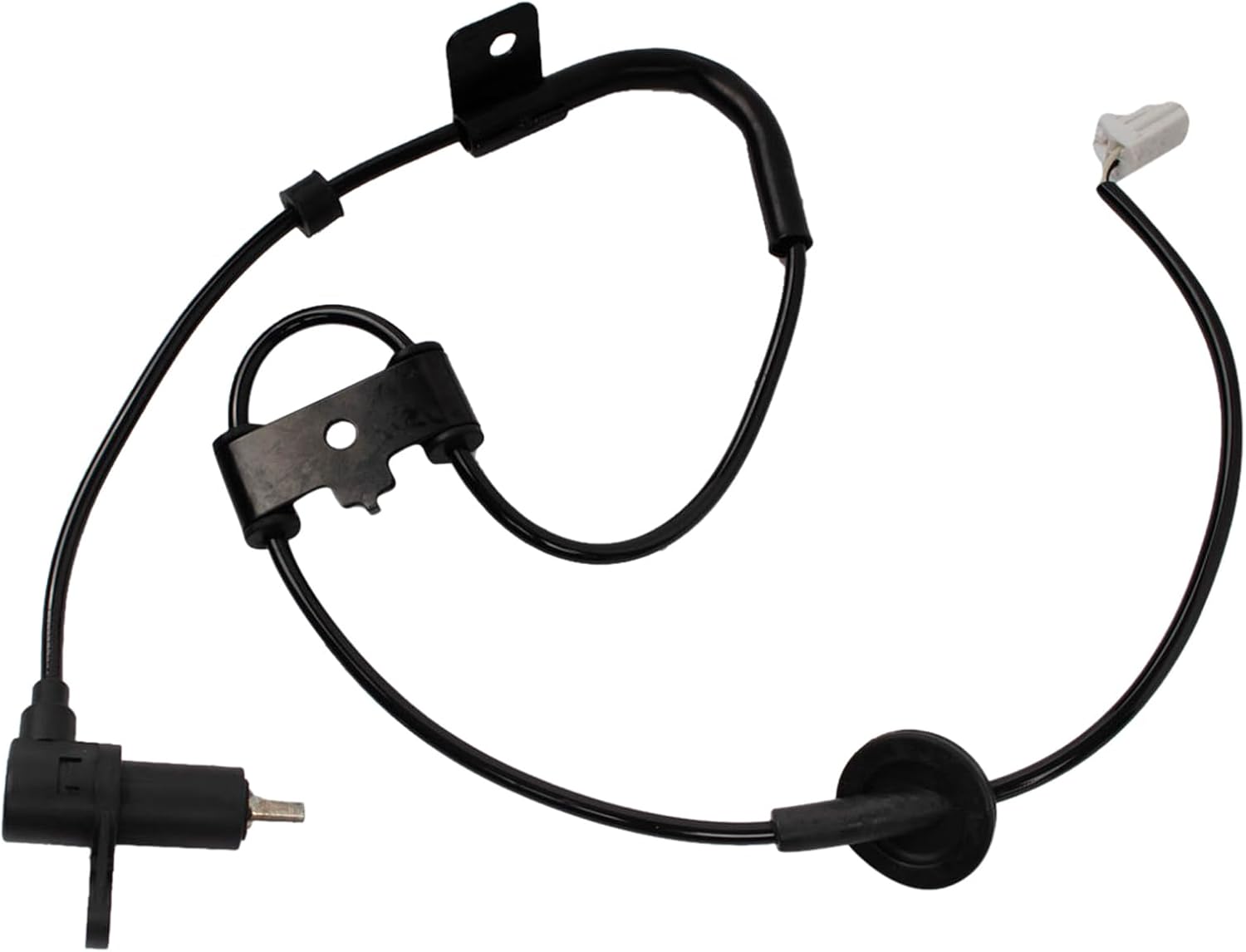
| Mounting Type | Flange Mount |
|---|---|
| Material Type | Acrylonitrile Butadiene Styrene |
| Item Type Name | ABS Wheel Speed Sensor |
This TRQ rear left ABS wheel speed sensor is a direct-replacement sensor intended to restore accurate wheel-speed input for the ABS and traction control systems. It installs as a flange-mount unit with pre-assembled wiring and harness clips so you can remove the wheel, unbolt the old sensor, and refit the new one without modifications on confirmed-fit vehicles. The sensor is made from ABS plastic and matches common OEM reference numbers, which helps keep connector fit and routing straightforward. In practice it clears speed-sensor fault codes and stops false ABS or traction-control activations when the replacement is compatible. Some users report consistently reliable operation while a small number found the OEM part solved their issue when this unit did not, so results can vary by vehicle condition and exact circuit fault. If you need a budget-friendly, ready-to-install rear driver-side sensor with good fitment for Elantra models listed, this is a practical option to try first.
Best for: Buyers seeking a balanced, cost-conscious replacement that restores ABS and traction control on supported Hyundai Elantra rear driver-side applications and prefer a straightforward DIY install.
Less Ideal for: Drivers who require guaranteed factory-quality parts for high-mileage or finicky ABS circuits or who prefer dealer-supplied replacements for full diagnostic support should consider factory-specified alternatives.
- Direct-fit flange-mount design with pre-assembled wiring for simpler installation
- Matches common OEM reference numbers to improve connector and routing compatibility
- Acrylonitrile butadiene styrene construction offers corrosion-resistant, lightweight housing
- Includes the sensor assembly only so you replace the failed component without extra parts
- Not always a guaranteed fix for every vehicle; a few buyers needed the factory-quality sensor to resolve their issue
- Limited material detail beyond ABS plastic which gives less insight into internal sensor electronics
Verdict A practical, budget-friendly rear driver-side replacement sensor that restores ABS/traction inputs on compatible Elantra models though a factory sensor may be needed in stubborn cases.
Choosing the Right Hyundai Elantra ABS Wheel Speed Sensor: Key Factors to Consider
Fitment And Mounting
Correct mechanical fit is fundamental. A sensor that matches the Elantra’s hub dimensions and mounting points reduces installation time and avoids improper alignment that can cause intermittent readings.
Check the sensor’s mounting boss, bolt pattern, and clearance to surrounding suspension parts. A unit that sits flush and secures with the OEM mounting hardware will generate more consistent readings and reduce the risk of vibration-induced failures.
Electrical Connector Compatibility
The sensor’s connector must match the vehicle harness for a reliable electrical connection. Mismatched connectors can lead to poor contact, corrosion, and false ABS warnings.
Confirm the number of pins, terminal type, and clip retention style. Sensors with molded, sealed connectors that match the Elantra harness reduce the need for splicing and lower the chance of moisture ingress causing intermittent faults.
Signal Accuracy And Output
ABS function depends on a clean, stable wheel-speed signal. Sensors vary in how they generate and transmit that signal, whether passive or active designs, and in their frequency and amplitude characteristics.
Consider sensors that provide consistent voltage or pulse patterns across the vehicle’s operating speed range. A sensor that produces strong, noise-free signals helps the vehicle’s control module interpret wheel speed correctly, improving ABS and traction responses.
Sealing And Environmental Durability
Wheel speed sensors are exposed to water, salt, mud, and temperature swings. Effective sealing and robust materials extend service life and maintain signal integrity.
Look for sensors with rubber grommets, O-rings, or molded housings that prevent moisture intrusion. Corrosion-resistant terminals and housing materials that withstand road chemicals will reduce premature failure and maintain reliable operation.
Ease Of Installation
A sensor that installs with minimal vehicle modification lowers labor time and the risk of installation errors. Straightforward installation also benefits DIYers and professional technicians alike.
Check for sensors that include clear wiring information, compatible connectors, and documented torque specs for mounting fasteners. Sensors designed to use existing harness routing and clips avoid additional wiring work and reduce the chance of connector strain.
Signal Diagnostics And Troubleshooting Support
Good documentation and known diagnostic characteristics make it easier to confirm a sensor’s condition. Knowing expected signal voltage, pulse patterns, and common fault codes simplifies troubleshooting.
Prefer sensors with published wiring pinouts and expected signal behavior so you can confidently perform basic checks such as continuity tests, resistance measurements, and live-signal observation with a scope or multimeter.
FAQ
What are common signs the Hyundai Elantra wheel speed sensor is failing?
Common signs often include the ABS warning light or traction control lamp illuminating, irregular brake feel when ABS activates, or erratic speedometer behavior. You may also notice stability control interventions that occur unexpectedly. These symptoms usually indicate the module is receiving inconsistent wheel-speed data rather than a brake system fluid issue.
Can I test the sensor wiring before replacing the sensor?
Yes, basic tests often help isolate the issue. Start with a visual inspection of the connector and wiring for corrosion or damage. Use a multimeter to check for continuity and proper reference voltage at the harness connector. Observing the live signal with an oscilloscope or frequency meter provides the clearest picture of whether the sensor is producing a clean speed pulse.
Is replacing a wheel speed sensor difficult on the Hyundai Elantra?
Difficulty varies by wheel location and whether the sensor is wheel-mounted or bearing-integrated. Many replacements involve removing a wheel and accessing the sensor mounting bolt, disconnecting the electrical connector, and swapping the sensor. Having the correct tools and following torque and routing guidance makes the process straightforward for mechanically inclined owners or technicians.
Will replacing the sensor clear ABS fault codes automatically?
Replacing a failed sensor may not clear stored fault codes by itself. Often the vehicle’s control module needs to run a successful self-test or be cleared with a scan tool. After installation, verify that the fault code does not reappear and that the system registers a valid wheel-speed signal.
Should I prefer OEM-style sensors or aftermarket options?
Both OEM-style and quality aftermarket sensors can be effective, depending on build quality and fitment accuracy. Prioritize sensors that document correct fitment and connector compatibility for the Elantra. Consider the quality of sealing, terminals, and signal specifications rather than brand labels alone.
Can a damaged tone ring cause the same symptoms as a faulty sensor?
Yes, damage, heavy corrosion, or missing teeth on the tone ring can produce erratic or no wheel-speed signals and trigger ABS warnings. Inspect the tone ring condition when diagnosing wheel-speed issues, since replacing only the sensor may not resolve problems caused by a compromised target ring.
How We Chose the Best Hyundai Elantra ABS Wheel Speed Sensor
We focused on factors that directly impact how well a wheel speed sensor restores ABS and traction control function on the Hyundai Elantra. Primary evaluation criteria included fitment accuracy to the Elantra’s hub and mounting points, electrical connector compatibility with the vehicle harness, and the sensor’s signal stability under real driving conditions. Durability against moisture, road salt, and debris was also key, along with thermal tolerance for under-vehicle environments. Ease of installation and availability of clear wiring or harness information rounded out the assessment.We excluded sensors that lacked vehicle-specific fitment data or that required significant vehicle-side modification. Units with unclear connector types, absent sealing features, or no documented wire pinouts were not considered. The resulting list emphasizes sensors that match Hyundai Elantra mechanical and electrical interfaces while offering dependable signal output and long-term durability.
Our full evaluation process is outlined in our review methodology.
Conclusion
When choosing a Hyundai Elantra ABS wheel speed sensor, prioritize correct fitment, connector compatibility, and signal reliability. Those factors most directly affect how well the ABS and traction systems interpret wheel speed and respond in critical situations.Balance ease of installation and environmental durability against diagnostic transparency. Addressing wiring, connector condition, and the tone ring during replacement reduces the chance of recurring faults and helps restore consistent braking and stability system performance.
Explore More:
- Check out all Hyundai Elantra parts & accessories
- Explore ABS Wheel Speed Sensors Maintenance & Repair Guides
- Explore Electrical System
- Browse all Auto Parts
