

Note: This article contains affiliate links. If you click on these links and make a purchase, I may earn a small commission at no extra cost to you. This helps support my research and content. Read my full affiliate disclaimer here.
If you own a Dodge Challenger, managing crankcase vapors can help preserve performance and reduce intake buildup over time. Choosing the right oil catch can matters because fit, mounting options, and filtration effectiveness all affect how well the system captures oil and moisture before they reach intake components. This guide covers seven shortlisted oil catch cans selected for this vehicle, with attention to build quality, ease of installation, and maintenance needs. Read on to understand the key criteria we used and what to expect from each top pick.
Looking for other parts? See all Dodge Challenger parts & accessories.
Top Picks at a Glance
| Best Reviewed A top-rated pick with lots of positive feedback | WENJTP 150ml Universal Baffled 3-Port Oil Catch Can with Breather Filter and Drain Valve |  |
| Most Popular A crowd favorite that many people choose with confidence | AICEL Baffled 300ml Aluminum Oil Catch Can with Breather Filter and Hose Kit |  |
| Best Quality Built to a higher standard if you want something more solid | EVIL ENERGY Baffled 300ml Oil Catch Can with Breather Filter and 5 ft NBR Hose Kit |  |
| Best Budget The cheapest option that still gets the job done reliably | AOCISKA Aluminum Baffled 300ml Oil Catch Can with Hose Kit |  |
| Most Sold A high-volume bestseller chosen again and again | RANSOTO Billet Oil Catch Can for 5.7L/6.4L HEMI (fits 2011+ Dodge Challenger/Charger, Chrysler 300, Jeep Grand Cherokee) |  |
| Best Value for Money The sweet spot between price and what you get | SPEEDWOW Universal Baffled Oil Catch Can Kit, 300 ml |  |
| Best Overall The best all-around choice for most situations | BOMLING 6.4L Billet Oil Catch Can Kit with Z-Bracket for 5.7/6.4 HEMI |  |
1. WENJTP 150ml Universal Baffled 3-Port Oil Catch Can with Breather Filter and Drain Valve

| Capacity | 150 Milliliters |
|---|---|
| Ports | 3 (2 inlets, 1 outlet) 3/8-18 NPT |
| Material | 6061 Aluminum |
| Fit Type | Universal |
| Includes | Breather filter, adapters, drain valve |
This compact catch can captures oil and moisture from the PCV/vent system and separates them with an internal baffle and low-micron bronze filter; it is designed to mount in tight spaces and can be plumbed to collect blow-by before it reaches the intake. Installation typically involves selecting the correct adapters and routing hoses from the Challenger's valve cover or PCV to the can and back to the intake or atmosphere depending on local rules. Notable features include a 360 degree adjustable mounting bracket, removable filter and accessories for cleaning, and a threaded drain valve for easy emptying. The billet 6061 aluminum body with anodized finish promises corrosion resistance for long-term use. Limitations to consider are the small 150 ml capacity which requires more frequent draining on higher-blow-by V8s and the universal adapter set may need replacement fittings for some Challenger model years to achieve a perfect fit and seal. Also modifications to emissions plumbing can affect smog compliance in some regions.
Best for: Reliability-focused owners who want a simple way to reduce oil vapor entering the intake and protect the Challenger's intake components without major modification.
Less Ideal for: Owners seeking a high-capacity, maintenance-free solution for heavily modified or forced-induction Challengers should consider larger, purpose-built cans designed for high blow-by rates.
- Baffled internals and low-micron bronze filter for improved oil and vapor separation
- Compact 150 ml size fits tight engine bays common on Challenger builds
- 360 degree adjustable bracket enables flexible mounting locations
- Billet 6061 aluminum construction with anodized finish for corrosion resistance
- Small 150 ml capacity means more frequent checks and draining on high-blow-by V8 engines
- Universal fittings may not perfectly match every Challenger model hose size requiring aftermarket adapters
Verdict A well-built, compact catch can that suits reliability-focused Dodge Challenger owners looking to reduce intake oil contamination, but its small 150 ml capacity means frequent maintenance on high-blow-by engines.
2. AICEL Baffled 300ml Aluminum Oil Catch Can with Breather Filter and Hose Kit

| Capacity | 300ml |
|---|---|
| Material | Aluminum alloy, silicone, stainless steel |
| Adapter fittings | 6mm, 8mm, 10mm |
| Breather | Included |
This AICEL catch can is a compact, budget-friendly baffled separator designed to capture oil and moisture from crankcase ventilation before it reaches the intake. Installation uses the included adapter fittings and clamps to connect into the PCV/vent hoses or it can be mounted as a sealed inline reservoir with the breather removed. The kit’s aluminum can and stainless fittings resist corrosion and the removable bottom makes draining and cleaning straightforward. Practical benefits include reduced intake valve and intake tract deposits on vehicles prone to GDI-related buildup and a small footprint that fits tight engine bays. Limitations are the small 300ml capacity and the basic quality of supplied hose and some hardware, so expect to replace the hose or fabricate a mount for a secure long-term install on heavier duty or high-mileage applications. The included small breather is useful for open-vent setups but will not substitute for a high-flow or multi-stage internal filter found on more expensive units.
Best for: A convenience-driven Challenger owner who wants an affordable, easy-to-install catch can to reduce intake deposits with minimal modification and maintenance effort.
Less Ideal for: Owners seeking a heavy-duty, long-interval solution for high-boost or high-mileage performance builds should consider larger, higher-end catch cans with advanced internal media and sturdier hardware.
- Compact 300ml baffled reservoir reduces oil and moisture entering the intake system
- Aluminum and stainless components resist corrosion and are serviceable via the removable base
- Includes multiple adapter fittings to fit common PCV hose sizes
- Comes with a breather filter for open-vent installations and basic mounting hardware
- Small capacity requires more frequent draining compared with larger catch cans
- Supplied hose and some hardware are basic and may need upgrading for a durable install
- No advanced internal media like stainless wool for extra vapor capture
Verdict A compact, wallet-friendly catch can that suits casual Dodge Challenger users who want simple, space-saving protection against intake contamination but will require some upgraded hose or hardware for long-term durability.
3. EVIL ENERGY Baffled 300ml Oil Catch Can with Breather Filter and 5 ft NBR Hose Kit

| Capacity | 300ML |
|---|---|
| Hose length | 5FT |
| Hose ID | 3/8" |
| Thread | M16×1.5 |
This EVIL ENERGY baffled catch can is designed to trap oil and moisture from the PCV/CCV system before they reach the intake, helping reduce valve and intake deposits on a high-revving Dodge Challenger. Installation is typical for aftermarket catch cans: mount the can in the engine bay, route the provided 3/8" ID NBR hose between the valve cover and intake or use the breather filter option for pre-PCV venting, and secure fittings with the included hardware. Notable features include a removable baffle and supplied stainless wool to improve oil separation, an M16x1.5 threaded inlet/outlet for a tight seal, and a 300ml reservoir sized for street and spirited driving. Practical benefits are cleaner intake components, easier inspection and draining via the dipstick, and a kit that includes most hoses and fittings. Limitations are the relatively small 300ml capacity for very aggressive or track-focused use, occasional reports of missing small parts on some shipments, and the included hose clamps are lower quality so upgrading clamps is advisable for long-term reliability.
Best for: Performance-oriented Challenger owners who prioritize keeping intake valves and intake tracts clean to preserve power and throttle response during spirited driving.
Less Ideal for: Drivers seeking a maintenance-free or large-capacity solution for frequent track days should consider a larger catch can or a professional-install system.
- Baffled design with removable baffle and stainless wool improves oil separation and reduces intake gunk.
- Includes a 5 ft NBR hose and M16x1.5 threaded fittings for a secure connection and heat/wear resistance.
- Comes with dipstick and hardware so the unit can be inspected and drained without removal.
- Breather filter option allows use as an open vent on pre-PCV setups or as an inline sealed can in PCV systems.
- 300ml capacity may require frequent draining under heavy track use.
- Some buyers report missing small components or inconsistent packaging.
- Supplied hose clamps are low quality and may need replacement for secure long-term fitment.
Verdict A compact, well-featured baffled catch can that suits performance-minded Dodge Challenger owners looking to reduce intake deposits, but plan to service it regularly and swap the clamps for better durability.
4. AOCISKA Aluminum Baffled 300ml Oil Catch Can with Hose Kit
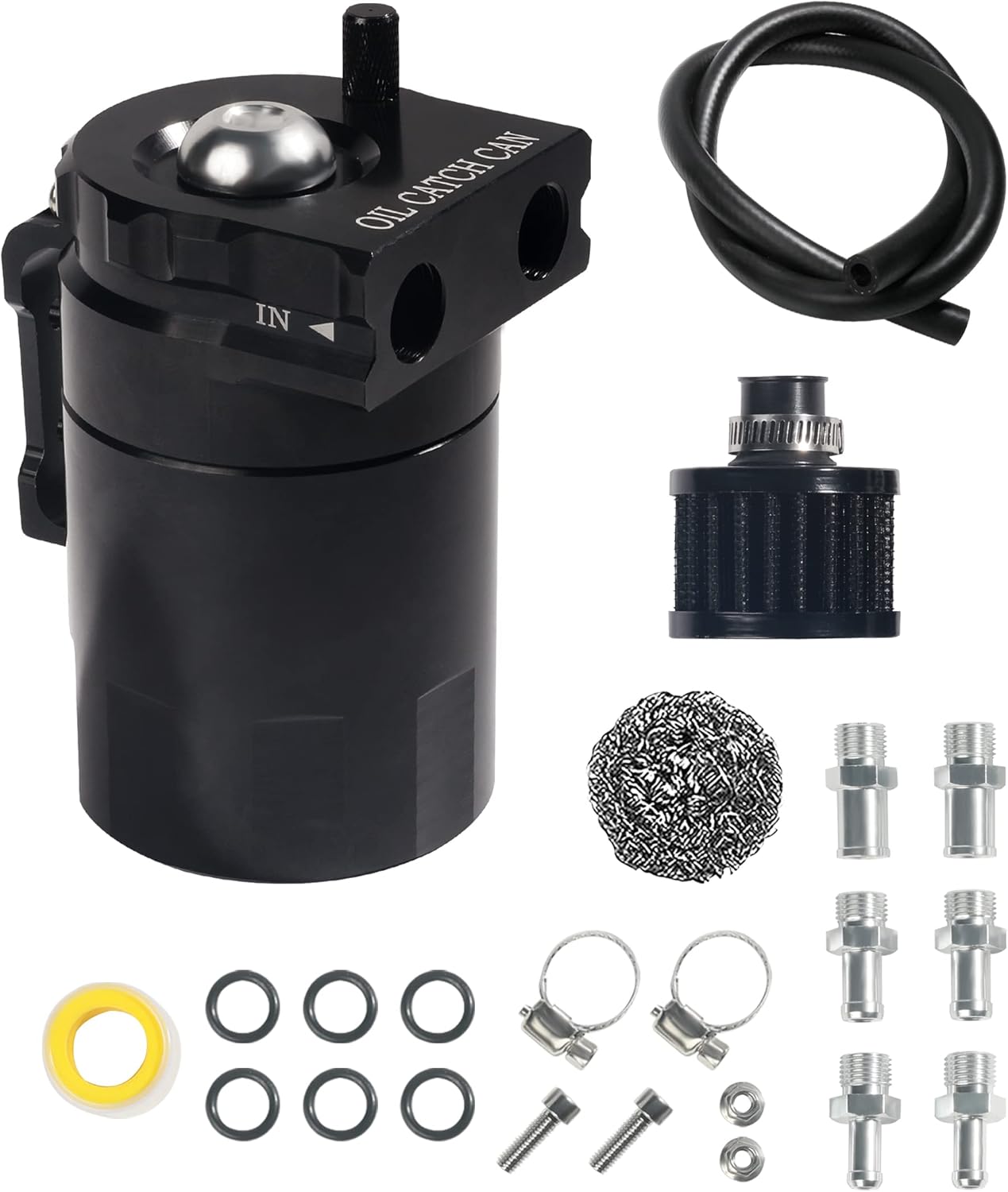
| Capacity | 300 Milliliters |
|---|---|
| Fit Type | Universal |
| Fuel Type | Petroleum |
| Item model number | JYH001 |
This 300ml aluminum catch can collects oil and water from the PCV/CCV system to help reduce intake carbon and sludge buildup on a Dodge Challenger. It installs inline between the crankcase ventilation and intake using the supplied hose kit and mounts with fabricated or vehicle-specific brackets since no dedicated Challenger bracket is included. The internal baffle and removable screen increase condensation and oil capture, and the bottom drain plus built-in dipstick make level checks and periodic draining straightforward. Because the can is universal, you may need extra hose length or to trim fittings for neat routing in the Challenger's engine bay, and the kit does not include a factory-quality mounting bracket. The aluminum body is corrosion resistant and lightweight, but the 300ml reservoir will require more frequent emptying on high-mileage or boosted Challengers. For owners willing to adapt the fitment, it is a low-cost way to slow intake contamination without complex plumbing.
Best for: Budget-conscious Challenger owners who want a simple, low-cost way to reduce intake carbon by capturing PCV/CCV oil before it reaches the intake manifold.
Less Ideal for: Owners seeking a plug-and-play, vehicle-specific solution or those with heavily modified or high-boost Challengers who need larger-capacity or multiple-catch-can setups.
- Baffled internal design and removable screen improve oil and water separation.
- Aluminum construction resists corrosion and keeps weight low.
- Included hose kit and bottom drain plus dipstick simplify installation and maintenance.
- No vehicle-specific mounting bracket so custom brackets or hardware are often required.
- 300ml capacity is small for high‑blow-by or boosted Challenger engines and needs frequent draining.
Verdict AOCISKA's 300ml baffled can is an inexpensive, effective catch can for Dodge Challenger owners willing to fabricate a mount and perform regular draining.
5. RANSOTO Billet Oil Catch Can for 5.7L/6.4L HEMI (fits 2011+ Dodge Challenger/Charger, Chrysler 300, Jeep Grand Cherokee)

| Compatible engines | 2011+ 5.7L and 6.4L HEMI |
|---|---|
| Fitment | Dodge Challenger and Charger, Chrysler 300, Jeep Grand Cherokee |
| Construction | CNC T6061 billet aluminum |
| Mounting | Z-style bracket with hardware |
This RANSOTO catch can is a bolt-on oil separator built specifically for 2011 and newer 5.7L and 6.4L HEMI engines found in the Dodge Challenger, Charger, Chrysler 300, and Jeep Grand Cherokee. It installs using the included Z-style bracket and mounting hardware and connects to the PCV/ intake plumbing with the supplied hoses. The CNC-machined billet body and anodized finish give the unit a durable, tidy appearance under the hood, while the knurled drain allows tool-free emptying during routine maintenance. In practice it traps oil and moisture before they reach the intake, which helps slow carbon buildup on intake valves and maintain long-term engine performance. Several buyers report the hoses and some hardware may need minor changes or clamps for a snug fit, and fitment around factory air boxes can be tight depending on the vehicle and any aftermarket intake. A few installations required alternative fasteners or re‑routing to access the drain easily. For a mainstream owner wanting factory-quality protection without complicated modification, this is a practical option that generally performs as intended.
Best for: Risk-averse mainstream HEMI owners who want a factory-style, bolt-on solution to reduce intake oil contamination and preserve engine longevity with minimal fuss.
Less Ideal for: Drivers seeking a universal, one-size-fits-all kit for many different engines or those unwilling to make small installation adjustments should look elsewhere.
- Vehicle-specific fit for 2011+ 5.7L and 6.4L HEMI engines reduces guesswork at purchase
- CNC-machined T6061 billet construction and anodized finish resist corrosion and look factory-quality
- Z-style bracket and included hardware enable a mostly bolt-on installation
- Tool-free knurled bottom drain makes periodic emptying quick and clean
- Hoses and supplied fittings may require additional clamps or replacement for a secure, leak-free connection
- Installation can be tight around factory intake components and may need minor modifications or alternative fasteners
- Some users reported occasional fitment ambiguity for SRT variants or vehicles with different factory mounting points
Verdict A durable, vehicle-specific billet catch can that provides straightforward, mostly bolt-on protection for 5.7L/6.4L HEMI Challengers while occasionally needing minor hose or mounting tweaks.
6. SPEEDWOW Universal Baffled Oil Catch Can Kit, 300 ml

| Fit Type | Universal Fit |
|---|---|
| Fuel Type | Gasoline |
| Manufacturer | SPEEDWOW |
| Item Weight | 2 pounds |
This SPEEDWOW catch can collects oil and moisture from the PCV/CCV system to help keep intake passages and combustion chambers cleaner on a Dodge Challenger. It uses a removable internal baffle and room for extra filter media, so condensed oil separates and drains to the reservoir instead of recirculating. The can has a screw-off bottom for easy draining and a dipstick that also doubles as a service port, which makes checking and removing fluid straightforward. The kit includes 3/8 inch NBR hoses, clamps, Teflon tape, and an aluminum mounting bracket so you can fit it into the Challenger’s engine bay without sourcing basic parts. Limitations to expect are the small 300 ml capacity that will need more frequent checks on higher-mileage or high-boost Challengers and a basic bracket and clamps that some installers replace with sturdier hardware for long-term use. Also avoid installing any filter element where it would break crankcase vacuum; follow PCV routing guidance for the Challenger when fitting this unit.
Best for: Practical optimizers who want a cost-effective, easy-to-install catch can that reduces intake contamination on a Dodge Challenger without requiring custom fabrication.
Less Ideal for: If you plan heavy track use, high-boost tuning, or long service intervals, choose a larger-capacity, purpose-built catch can with heavy-duty mounting hardware instead.
- Baffled internal design and removable media capacity improves oil separation before air is returned to the intake.
- Includes dipstick and removable drain for convenient inspection and servicing without removing the can from the mount.
- Supplied hoses and clamps use 3/8 inch NBR hose that resists oil and heat so you likely will not need replacement tubing.
- Compact 300 ml reservoir fits into tight engine bays like the Challenger’s without major modifications.
- 300 ml capacity is small for high-boost or high-mileage applications and requires more frequent draining.
- Included mounting bracket and hose clamps are functional but basic and may need upgrading for long-term durability.
Verdict A budget-friendly, compact baffled catch can that fits neatly in a Dodge Challenger but may need hardware upgrades and frequent draining for aggressive use.
7. BOMLING 6.4L Billet Oil Catch Can Kit with Z-Bracket for 5.7/6.4 HEMI

| Capacity | 4 ounces |
|---|---|
| Fit Type | Vehicle Specific |
| Product Grade | Replacement Part |
| Manufacturer | XUZHONG |
This BOMLING billet oil catch can is a compact, vehicle-specific kit intended to intercept oil and vapor before they re-enter the intake on HEMI engines. It installs in place of factory PCV/UPR routing using the included Z-bracket, hose ends, and fittings, and its internal baffling and diffuser encourage condensation so oil drains into the 4 oz reservoir. In normal use you mount the can, reroute the PCV hoses, and periodically drain the collected oil during maintenance. Customers report strong collection rates within a few thousand miles, which helps keep intake and valve areas cleaner and may reduce carbon buildup over time. The kit arrives with hardware and braided-sheath hoses for a tidy fit, though some installers note the hoses need trimming and occasional extra clamps or zip ties. The small 4 oz capacity means more frequent checks on high-mileage or high-boost cars, and the engine cover may need removal for fitment on some Challenger models. For a balanced buyer the kit offers good value, solid fitment, and clear protective benefits for HEMI engines.
Best for: Balanced all-round owners who want a practical, factory-replacement style solution to reduce intake contamination and extend engine cleanliness without extensive modifications.
Less Ideal for: Drivers seeking a high-capacity or remote-mount solution for track or forced-induction applications should consider larger or purpose-built systems instead.
- Vehicle-specific fit and Z-bracket make mounting straightforward on compatible HEMI engines
- Billet construction and baffled internals provide reliable oil/vapor separation
- Includes hoses, fittings, and mounting hardware for a mostly complete install
- Braided-sheath hoses and forged fittings improve durability and appearance
- Small 4 oz reservoir requires frequent draining on heavy-duty or high-mileage use
- May require removal of the engine cover and some trimming or extra clamps during installation
Verdict A well-equipped, vehicle-specific catch can that gives Dodge Challenger HEMI owners a cost-effective way to cut intake oil contamination, but its small reservoir means more frequent maintenance.
Choosing the Right Dodge Challenger Oil Catch Can: Key Factors to Consider
Fitment and Mounting
Correct fitment is essential because the catch can must integrate with the Dodge Challenger engine bay without interfering with other components. Consider mounting bracket options and whether the can sits in an accessible location for draining and inspection. Hose routing should be short and avoid sharp bends to maintain consistent vacuum and minimize oil pooling.
Brackets that offer multiple mounting points increase flexibility and reduce the chance of vibration-induced leaks. Pay attention to connections and clamps that seal well under heat and pressure to prevent vacuum loss or disconnection during spirited driving.
Build Materials and Sealing
Materials determine long-term durability and resistance to heat and corrosive contaminants. Aluminum or stainless steel bodies resist corrosion and handle engine-bay temperatures better than some plastics. Seals and O-rings should be rated for oil exposure and heat to prevent degradation and leaks.
Thread design, drain plug quality, and the presence of reinforced fittings all affect how reliably the system holds vacuum and prevents seepage. A well-sealed can maintains separation efficiency and reduces the need for frequent re-torquing or replacement parts.
Separation Method and Internal Design
How the catch can separates oil from blow-by gases directly affects effectiveness. Baffling, mesh elements, and internal chambers slow airflow and encourage oil droplets to coalesce and drain to the sump. Some designs include filter media or coalescing elements to improve capture rates for fine droplets.
A more effective internal design reduces the amount of oil that re-enters the intake, lowering deposit formation on intake valves and sensors. However, overly restrictive designs can create backpressure, so the internal layout should balance capture efficiency with unrestricted crankcase ventilation flow.
Capacity and Drainage
Catch can capacity influences how often you need to service it. Larger capacity reduces the frequency of emptying, which is convenient for infrequent maintenance intervals or for turbocharged applications that produce more oil carryover. However, very large cans may be harder to fit in tight engine bays.
Drainage design matters for clean, quick service. Bottom-drain plugs, petcock valves, or quick-disconnect fittings make emptying easier and reduce mess. Clear indicators of fluid level or sight tubes help you monitor fill without removing the can.
Hose and Fitting Quality
Hoses and fittings form the connection between the crankcase/PCV and the catch can, so durability and sealing are critical. Use hoses rated for oil and high temperature to avoid swelling or collapse. Fitment size must match factory ports or included adapters to ensure a leak-free joint.
Clamps, barb designs, and compression fittings all affect long-term security. Reinforced or braided hose options resist kinking and abrasion, while quick-release fittings simplify installation without sacrificing reliability.
Maintenance and Serviceability
Regular maintenance is part of using a catch can, so ease of serviceability affects overall ownership experience. Consider how often the unit needs draining, how straightforward the drain process is, and whether replacement filters or parts are readily available. Units with tool-free drains or clear fill indicators reduce the time spent on routine checks.
Also think about how easy it is to inspect internal components for clogging or degradation. Designs that allow simple disassembly for cleaning will extend service life and help maintain consistent performance over time.
FAQ
Do I need an oil catch can for my Dodge Challenger?
Many owners add a catch can to reduce oil and moisture entering the intake, which can help limit deposit buildup. Whether you need one depends on driving habits, engine condition, and how much blow-by your engine produces. It often helps in high-mileage or high-boost applications but is not always required for every vehicle.
How often should I drain the catch can?
Drain frequency varies with driving style, engine load, and catch can capacity. Check the can periodically during the first few weeks after installation to establish a baseline and then service as needed. Vehicles with more aggressive driving or forced induction usually require more frequent checks.
Will installing a catch can affect my vehicle warranty?
Modifications can have warranty implications depending on the warranty terms and local regulations. Installing a catch can is a reversible modification, but if a related component fails, manufacturers or dealers may investigate whether the modification contributed. Keep records and use quality components to reduce concern.
Can I install a catch can myself?
Many catch cans are designed for straightforward installation with basic tools and clear instructions. You should be comfortable routing hoses, mounting a bracket, and ensuring secure fittings. If you have limited experience or access is tight in the engine bay, professional installation can ensure correct placement and sealing.
Will a catch can cause engine problems if installed incorrectly?
Incorrect installation, such as creating vacuum leaks, using undersized hoses, or blocking vent paths, can lead to drivability issues. Follow installation guidance for routing and sealing, ensure hoses match the correct ports, and verify there is no restriction to crankcase ventilation. If uncertain, seek professional help.
How We Chose the Best Dodge Challenger Oil Catch Can
We prioritized fitment and compatibility with the Dodge Challenger engine layout, assessing how mounting locations, hose routing, and bracket options influence installation and long-term reliability. Build quality was evaluated through materials, sealing design, and internal baffling or filtration methods that affect oil separation and longevity. Ease of installation mattered since accessible fittings, clear instructions, and included hardware reduce install time and potential errors. Maintenance considerations were weighed by looking at drain mechanisms, catch capacity, and service intervals to minimize routine effort. Finally, performance attributes such as oil retention efficiency and how the unit handles blow-by under real driving loads were considered. We excluded products that lacked clear vehicle-specific fitment data, used questionable materials, or provided no service access for routine draining. The list focuses on catch cans and complete kits designed to work with the Dodge Challenger platform and on features that measurably affect installation and ongoing performance.
Our full evaluation process is outlined in our review methodology.
Conclusion
When selecting an oil catch can for a Dodge Challenger, prioritize fitment, durable materials, and an internal separation approach that balances capture efficiency with unrestricted ventilation. Consider capacity and a practical drain design to match your maintenance preferences. Tradeoffs include larger capacity versus fitment constraints and more aggressive internal baffling versus potential flow restriction. Focus on systems that offer clear service access, robust hose and fitting quality, and mounting options that suit the Challenger engine bay to get the best long-term results.
Explore More:
- Check out all Dodge Challenger parts & accessories
- Explore Engine
- Browse all Auto Parts
